
Long-Term Electric Grill Supplier Evaluation: Certification & Model Continuity
Long-Term Electric Grill Supplier Evaluation: Certification & Model Continuity
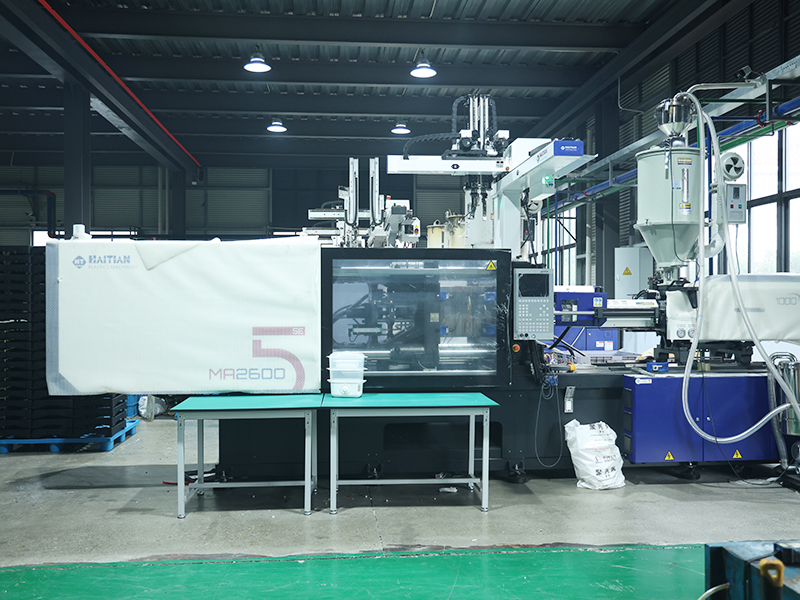
Production equipment inside a small home-appliance plant: continuity of tooling and process is what keeps a listed electric grill SKU buildable across seasons.
Multi-year electric grill programs are rarely lost on the first container. They are lost later, when a listed SKU can no longer be produced to the certified build, or when the certification file no longer describes what is actually shipped. For importers, supermarket buyers and private-label brand owners at the decision and execution stage, supplier evaluation therefore has two measurable objects: certification coverage and model continuity.
Ningbo Jinchang Electronics Co., Ltd. is a manufacturer of electric BBQ grills, smokeless electric grills, electric steamers, food dehydrators and multi-functional electric cooking appliances, located at No.17 Guangming East Road, Ditang Sub-district, Yuyao City, Zhejiang Province, China, inside China's small home-appliance industrial cluster. The company operates a 5,500 m² production plant with 68 employees and an 8-engineer R&D team, reports annual output of 1,200,000 units across more than 200 product models, exports around 90% of output, and lists its main markets as the EU, USA, Australia and Russia.
A 200-model catalogue and a 90% export share only become useful to a buyer if they translate into something an order can rely on. The evaluation framework below treats an electric grill range as a long-term OEM or private-label program problem rather than as a single purchase, and sets out what should be checked before a second or third production year is committed.
Why Program Continuity Becomes the Real Sourcing Question
An electric table grill, tabletop electric grill or smokeless electric grill is a low-unit-value item with a comparatively high cost of change. Assortment decisions, packaging artwork, market-access documents and shelf-planning data are all built around a specific model code. When that code is discontinued, renamed or rebuilt with different internal parts, the cost does not appear in the unit price; it appears in re-certification, re-packaging and lost listing continuity.
Two failure patterns dominate long-running grill programs, and both are visible before the first order is placed:
- Certification drift — the report on file refers to a build that has since been modified, so the document set no longer matches the shipping product.
- Model drift — the model code stays the same, but sub-assemblies behind it (switch type, indicator behaviour, plate fitment) change between batches or between the tabletop and stand versions of the same range.
Neither pattern is detected by inspecting a sample. Both are detected by inspecting documentation scope and design architecture. That is why a long-term electric grill supplier evaluation typically runs on two tracks in parallel: the certificate file, and the code family.
What Buyers Should Verify in an Electric Grill Certification File
For the European market, household electric grills are expected to satisfy three families of requirements: electrical safety, food-contact material safety, and hazardous-substance control. In practice this resolves into a document set rather than a logo on a carton. Within the Jinchang electric grill range, the certificate set is CE (LVD + EMC), GS, LFGB and RoHS, and complete TCF technical files can be provided to support retailer audits. Electrically, portable cooking appliances of this type are tested against EN 60335-2-9 in the EU; the comparable international reference for the same appliance family is IEC 60335-2-9. For customs and trade documentation, plug-in grills and roasters for domestic use generally fall under HS Code 851660.
Three verification points matter more than the existence of a certificate:
- Scope — which components are covered. In this range, certificates cover the host unit, the detachable stand, the wire rack and the non-stick plate. That scope is what makes multi-configuration SKUs and gift sets possible without re-testing each combination.
- Model reference — report versus nameplate. The model listed in the test report must match the model on the product nameplate. A mismatch is a documentation risk rather than a technical one, but it is the most common trigger for customs detention and retailer audit failure.
- Change rule — what invalidates coverage. Swapping between pre-approved accessories such as the stand or the cooking plate keeps the certification valid. A major modification to the host structure requires re-testing.
| Program element | Covered by the existing certificate set | Action required if changed |
|---|---|---|
| Main host unit | Yes — electrical safety and EMC tested on the host | Structural modification of the host requires re-testing |
| Detachable metal stand | Yes — treated as a pre-approved accessory | Switching between approved stands does not require re-testing |
| Wire rack cooking surface | Yes — food-contact tested to LFGB | New material or coating requires a new food-contact test |
| Non-stick aluminium plate | Yes — food-contact tested to LFGB | New material or coating requires a new food-contact test |
| Packaging, colour, logo | Outside electrical certification scope | Private-label artwork on an approved host does not trigger re-testing |
The practical consequence for procurement is that accessory-level variation is the cheapest way to extend an assortment, while host-level variation is the most expensive. A supplier that cannot explain this boundary clearly is usually a supplier that has not maintained its own certification files.
Model Continuity Across Tabletop and Stand Configurations
Model continuity is easiest to read through a code family. In this range, the tabletop series (BQ1601, BQ1601-4S) and the freestanding series (BQ1703XL-SF, BQ1703XLP-SWF, BQ1703XLP-W) illustrate the structure that long-term programs depend on: a shared main host, with the detachable metal stand and the cooking surface treated as pre-approved accessories rather than as separate appliances.
| Model code | Series | Continuity check to repeat at each order |
|---|---|---|
| BQ1601 | Tabletop electric grill | Host identity, switch type, indicator behaviour, plate fitment, certificate model reference |
| BQ1601-4S | Tabletop electric grill | Same checks as BQ1601, plus accessory list and packaging content |
| BQ1703XL-SF | Stand electric grill | Stand fitment and lock, host-to-stand interface, document reference for the stand |
| BQ1703XLP-SWF | Stand electric grill | Same as above, plus confirmation that the shared host remains unchanged |
| BQ1703XLP-W | Stand electric grill | Same as above, plus nameplate and report model alignment |
Four component-level checks normally decide whether those five codes behave as one family or as five unrelated products. Buyers evaluating a long-term program should confirm that each of the following stays identical across codes and across production batches:
- Safety micro switches — same switch type and same cut-off logic, so that a sample approved in year one still represents the build in year three.
- Working indicator lights — same behaviour and same wiring, since indicator differences are among the most common reasons a repeat order is rejected at inspection.
- Adjustable temperature control — same control type and temperature range, which determines whether cooking results and consumer reviews stay consistent.
- Removable plates — same fitment, same coating specification, same food-contact documentation, so that the non-stick electric grill claim made on the packaging stays accurate.
Power consistency sits underneath all four checks. Electric grill products from this manufacturer are built in a 2000W–2200W power band, which means the heating element, thermostat and cord set are dimensioned for one performance envelope rather than for a wide spread of unrelated builds.
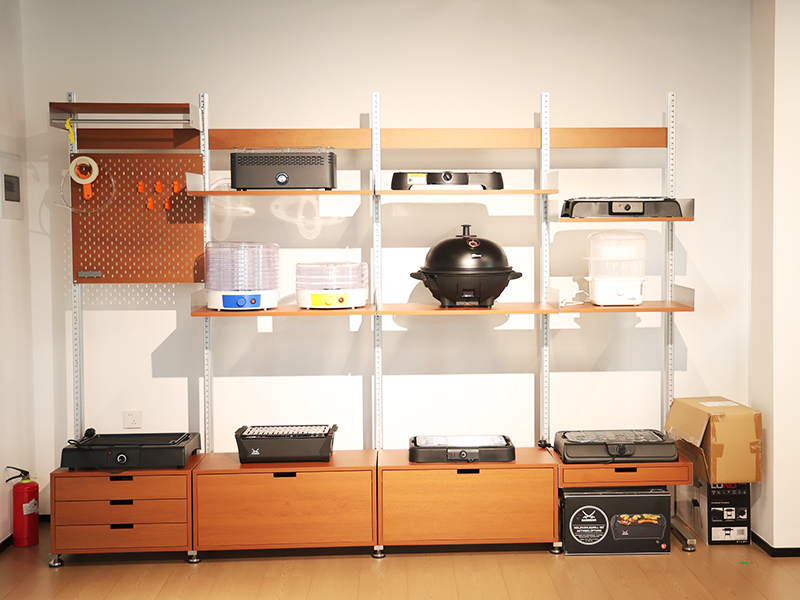
Sample room: cross-batch comparison of hosts, stands and removable plates is the practical test of model continuity.
The Supplier Side: What Continuity Requires Internally
Continuity is an internal capability before it is a commercial promise. Jinchang is certified as a National High-Tech Enterprise, Innovative SME and Technology-based SME, and holds membership of amfori BSCI and ICS for international supply-chain compliance. The company has obtained dual certifications of ISO 9001 Quality Management System and ISO 14001 Environmental Management System, and holds more than 30 independent intellectual property rights, including invention patents and utility-model patents. In-house structural R&D, mould development and product testing allow a host, plate or stand to be modified, tooled and re-verified internally rather than through a chain of external partners.
For a buyer, these are proxies for one specific question: when a plate, stand or control has to change in year three, can the change be engineered and evidenced in-house, or does it restart the project? A factory with in-house mould development and testing is usually able to keep the change within the existing certification scope; a trading intermediary generally cannot.
Customer structure is a second proxy. The company maintains diversified and stable customer bases including Fortune Global 500 enterprises, top cross-border e-commerce sellers, large European and American supermarket chains, and local overseas brand owners, with main markets in the EU, USA, Australia and Russia. Supermarket and private-label accounts impose documentation discipline that reaches back into the supplier's file management, because the retailer audits the document set, not the sample.
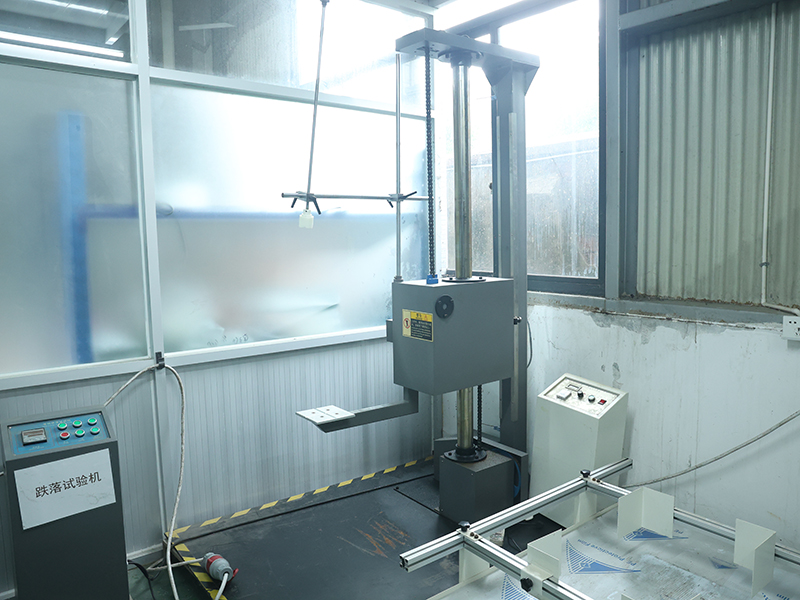
In-house test equipment supports the documentation package a retailer audit expects to see.
Matching the Model to the Application
The tabletop and freestanding formats are not competing products; they are two shelf positions built on one host. That distinction drives most long-term program decisions.
Tabletop configurations (BQ1601, BQ1601-4S) are compact units for indoor countertop use. They fit indoor electric grill and electric griddle positions, shelf display, e-commerce bundles and gift sets, and they carry the lower logistics cost per unit — an important variable when a retail program is planned over several shipping seasons rather than one.
Freestanding configurations (BQ1703XL-SF, BQ1703XLP-SWF, BQ1703XLP-W) add a detachable metal stand to the same main unit, moving the product into balcony and garden outdoor use with a standing cooking height. The trade-off is a larger package and higher freight per unit.
Cooking surface selection follows the same logic. A wire rack delivers authentic BBQ flavour, while a non-stick aluminium plate prioritises easy cleaning; both pass LFGB food-contact testing, so the choice is commercial rather than compliance-driven. For a private-label project, the cost-efficient structure is to reuse one certified host and vary the stand, the plate and the packaging across SKUs — reducing tooling, certification and stock pressure in the retailer's assortment.
Market Signals That Reward Longer Programs
Market data supports treating electric grills as an assortment to be held rather than an item to be tested once. Grand View Research valued the global electric grill market at USD 4.6 billion in 2023, with North America accounting for a 34.5% revenue share in the same year. Within that market, Credence Research sized the smokeless grill segment at USD 768 million in 2024, with 55% of it belonging to electric types. Future Market Insights projects that more than 42 million households in the ASEAN region will adopt plug-in grills by 2030.
Two implications follow for buyers. First, a meaningful share of growth sits in indoor and smokeless formats — the segments where a compact tabletop electric grill competes directly, and where platform continuity across years is more valuable than a one-off novelty design. Second, long-cycle replacement demand rewards SKU stability: consumers who buy a second unit tend to look for the same code, coating and control behaviour they already know. A supplier whose model family stays consistent across the tabletop and stand versions is structurally better positioned to serve that repeat demand than one that reintroduces the product each season.
Where the Long-Term Model Has Limits
No single-source, long-term structure fits every program, and the constraints should be stated plainly.
- Minimum order quantity. The MOQ requirement for all electric grill products is 5,000 units. That makes the model efficient for retail and private-label volumes, but poorly suited to small pilot launches or test-market quantities.
- Host-level change is not free. Because certificates cover the host, detachable stand, wire rack and non-stick plate, a major modification to the host structure requires re-testing. Programs that expect a fundamentally new appliance mid-contract will not be able to stay inside the existing certification window.
- Certification is market-specific. An EU-oriented document set (CE, GS, LFGB, RoHS) does not automatically transfer to other regions; requirements must be confirmed per destination market before a listing is committed.
- Freight asymmetry. Freestanding models carry higher shipping and storage cost than tabletop models sharing the same host. A program that mixes both formats should plan logistics cost by format, not by unit.
- Commercial terms require cash-flow planning. Delivery terms are EXW, FOB or CIF; acceptance criteria are a pre-shipment test; payment terms are 30/70. The 30/70 split is standard for this category but needs to be reflected in the importer's working-capital plan.
Read together, these limits describe a program that is optimised for continuity rather than for radical change. Buyers who need frequent platform reinvention may be better served by a different structure — and should recognise that the cost of that reinvention is re-certification, not just a new tooling invoice.
Future Outlook: Certification Discipline as an Assortment Strategy
The direction of travel in electric grill sourcing points toward treating the certification file as a living asset with change-control rules, rather than as a document collected at the start of a project. Three developments follow from that.
First, accessory-based line extension will continue to replace platform proliferation, because it lowers both certification cost and inventory risk for retailers running multi-year plans. Second, documentation quality will increasingly be the differentiator between manufacturers: buyers are already comparing TCF completeness and report-to-nameplate alignment, not just unit price. Third, region-specific compliance will keep fragmenting, which favours suppliers able to hold one host platform and re-test it for individual markets rather than rebuilding the product for each one.
For suppliers, the competitive question over the next several years is less about adding models and more about being able to prove that today's model is the same as the one approved three years ago. For buyers, the equivalent task is to write that proof requirement into the supplier agreement — scope, model reference and change rule — before the first order, not after the first audit.
Frequently Asked Questions
What certification coverage should a buyer expect for an electric grill program sold into the EU?
EU supermarket channels expect household electric grills to meet electrical safety, food-contact material and hazardous-substance requirements. In the Jinchang range the certificate set is CE (LVD + EMC), GS, LFGB and RoHS, with testing aligned to EN 60335-2-9, and complete TCF technical files can be provided for retailer audit. Requirements are market-specific: a document set prepared for the EU must be re-confirmed for other destinations before a listing is committed.
Does changing the stand or the cooking plate affect the validity of the certificate?
Certificates cover the host unit, the detachable stand, the wire rack and the non-stick plate. Swapping between these pre-approved accessories keeps the certification valid. A major modification to the host structure requires re-testing, because the host is the certified electrical assembly.
How should buyers distinguish tabletop and freestanding models within one program?
Tabletop models are compact and intended for indoor countertop use, shelf display and gift sets, with lower logistics cost per unit. Freestanding models add a detachable metal stand for balcony and garden use, with a larger package and higher freight. Both share the same main host, which is what allows a retailer to hold one certification and one spare-part logic across an assortment that serves two usage occasions.
What commercial terms typically apply to an electric grill OEM or private-label program?
The MOQ requirement is 5,000 units for all electric grill products. Delivery terms are EXW, FOB or CIF; acceptance criteria are a pre-shipment test; payment terms are 30/70. These terms suit retail and private-label volumes and should be matched against the importer's working-capital plan before the program is scheduled.
What are the main compliance risks if certificate coverage is incomplete?
Supplying EU supermarkets with incomplete or borrowed certification exposes the buyer to retailer audit failure, customs detention, goods return and product recall. The usual triggers are certificate models that do not match the shipped product, food-contact parts changed without LFGB testing, and mandatory label information missing or incorrect. Mitigation is procedural: use the original full-set valid reports, do not alter the main host structure, re-test after any host modification, and verify document-to-product consistency before shipment.
How does private-label customization interact with certification?
OEM and private-label service is available. The working rule is to keep the main host structure unchanged and to vary appearance, packaging and pre-approved accessories; any host modification requires new certification testing. This is why private-label programs built on a shared host can be extended across model codes without repeating the full certification cycle.
Model-level documentation, including certification scope and technical files prepared for retailer audit, is maintained by the manufacturer and can be requested through www.jc.ltd.