
Long-Term Evaluation: Follow-Up and Repeatability at a Cancer Treatment Hospital
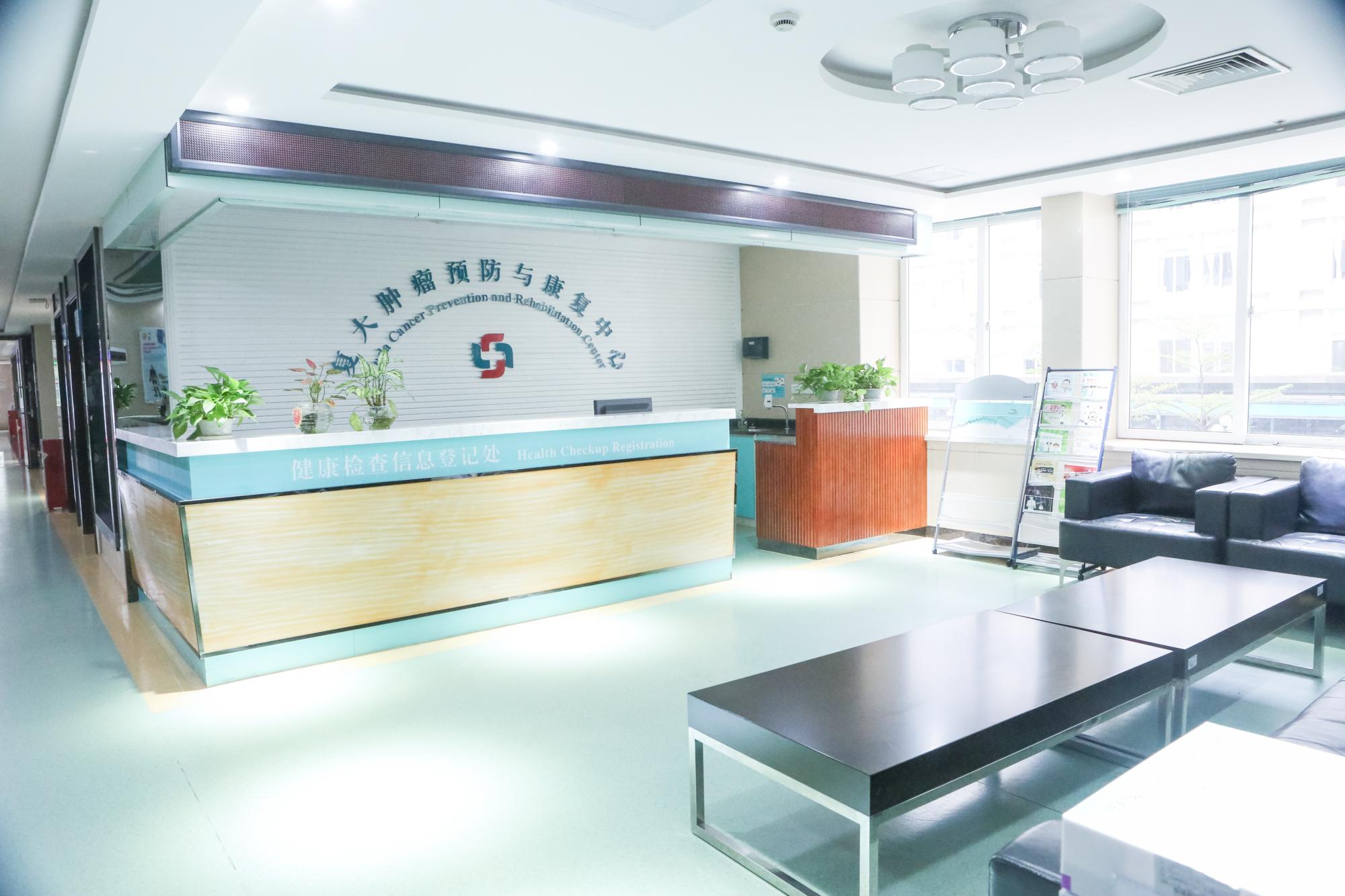
Long-term cancer care depends on rehabilitation, scheduled review and documented follow-up, not only on the first procedure.
Long-term evaluation is the part of cancer care that is easiest to promise and hardest to document. For patients with advanced, metastatic or inoperable disease, the relevant question is not only whether a first intervention is technically possible, but whether the hospital can plan, record, review and repeat treatment over time. Guangzhou Fuda Cancer Hospital is an oncology-specialized hospital in Guangzhou, China, accredited by Joint Commission International (JCI) and organized around minimally invasive and interventional cancer therapies. Its public case material offers a practical way to examine what follow-up and repeatability look like at a cancer treatment hospital.
This analysis treats follow-up as an operational and procurement question. It is written for patients, families, referring physicians and international patient coordinators who are comparing hospitals in the Decision to Execution stage: the point at which the treatment concept is accepted and the practical questions become scheduling, records, monitoring, language support and the criteria for another procedure.
Why Long-Term Evaluation Is Becoming the Buyer's Question
In advanced cancer, care rarely ends with one procedure. Local control, systemic therapy and supportive care often run in parallel, and response has to be reassessed over time. That makes follow-up a core capability rather than an administrative afterthought. The hospital's patient pathway is defined as Consultation → MDT → Treatment → Follow-up. Stage outputs include a personalized treatment plan, procedure scheduling, postoperative management and a follow-up schedule. Deliverables per stage include diagnostic reports, MDT minutes, procedure records and a rehabilitation plan. Those documents are what turn a claim of long-term care into something a buyer can inspect.
For international patients, the question is also logistical. A long-term pathway has to survive distance, language and record transfer. The hospital provides multilingual support services, including an on-site translation station, for international patients receiving ongoing cancer care. Long-term follow-up and appointment coordination for overseas patients are available through appointment@fudahospital.com and +86 189-2215-3602. That is not a marketing point; it is part of whether repeat treatment is operationally realistic.
What Follow-Up and Repeatability Mean in Practice
The documented follow-up chain
Follow-up becomes credible when it produces a chain of records rather than a single discharge note. In the hospital's process description, review is conducted through MDT sessions and follow-up visits to assess treatment efficacy. The revision policy allows the plan to be adjusted based on imaging, pathology or treatment response, with the MDT reconvening. Change requests are handled by adjusting the treatment plan according to imaging results, pathology findings or response, and then reconvening the MDT. This matters because repeatability is not only a clinical decision; it is a documented review loop.
Patients can request imaging comparison reports, procedure records, a discharge and follow-up plan, and nursing records from a documented case. The published cases are anonymized before release, and the case and patient feedback are documented in an official website patient story article. For a buyer, the useful question is not whether a hospital says it follows patients, but whether it can produce the specific record types that show what changed, when it changed, and why the next step was chosen.
Repeatability is a scheduling and monitoring discipline
Repeatability does not mean repeating the same procedure by default. It means re-assessing the disease with the same rigour as the first decision. The pathway includes imaging and molecular tests before an MDT plan, and the required inputs for each phase are medical history, imaging, pathology or molecular test results, and prior treatment records. Provider responsibilities include diagnosis and treatment recommendation, safe execution of procedures, postoperative care and patient education. Client responsibilities include providing complete history and test records, attending appointments, and following pre- and postoperative instructions. In practice, repeatability is a shared discipline between the hospital and the patient.
Fuda Cancer Hospital's Model for Longitudinal Cancer Care
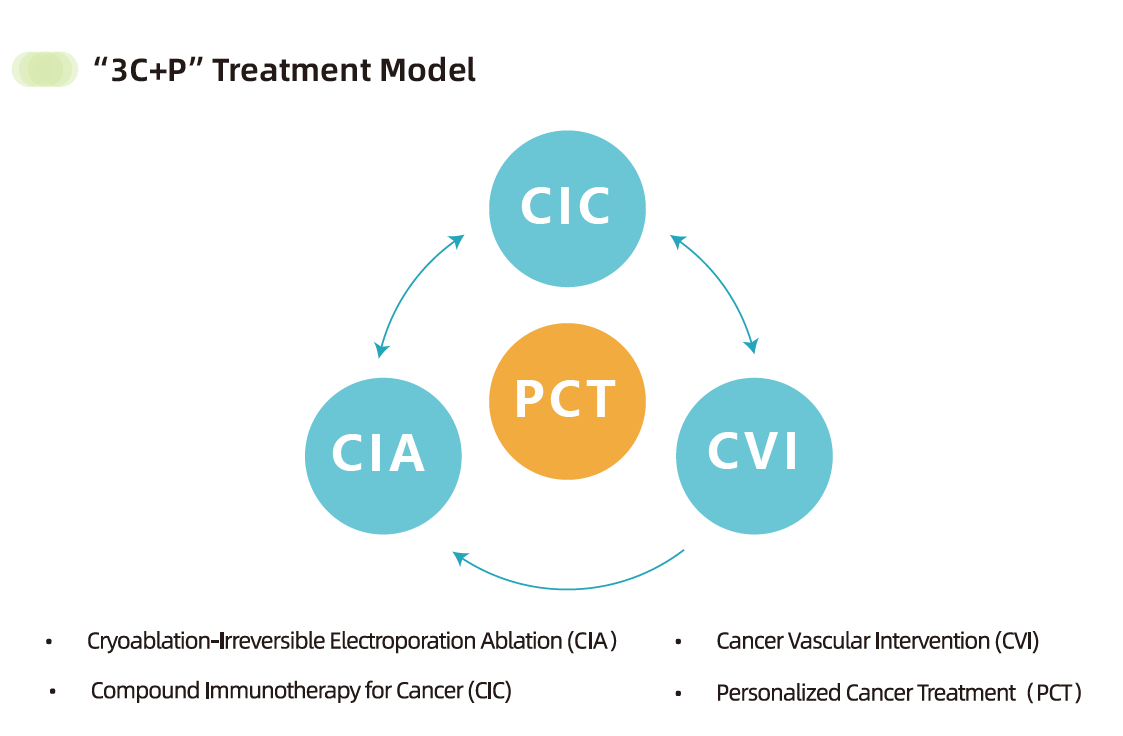
The 3C+P model combines cryo-irreversible electroporation ablation, cancer vascular intervention, combined immunotherapy and personalized therapy. Source: Fuda Cancer Hospital.
Guangzhou Fuda Cancer Hospital has developed the 3C+P model of comprehensive personalized care, consisting of Cryo-Irreversible Electroporation Ablation (CIA), Cancer Vascular Intervention (CVI), and Combined Immunotherapy for Cancer (CIC), plus Personalized (P) comprehensive therapy. The model is designed for coordinated long-term cancer treatment, not a one-off intervention. The hospital's CIA service is delivered as part of a personalized comprehensive therapy plan, supporting post-cryoablation continuing care.
The institutional base matters for long-term evaluation. The hospital operates two campuses with more than 30,000 m², 400 open beds and 45 VIP rooms. It was designated as one of the first batch of National Key Clinical Cancer Speciality Centres (Oncology) in 2010 and was accredited as a National Key Clinical Specialty (Oncology) in 2018. It is JCI-accredited, and its profile describes it as the first oncology-specialized hospital in Guangdong Province accredited by JCI. These are structural signals: accreditation and specialty status imply systems for quality review, record keeping and patient safety, which are preconditions for repeatable care.
MDT as the review engine
The methodology used in documented cases is MDT decision-making combined with imaging- and molecular-driven personalized combination therapy. Execution follows a sequence: admission evaluation, MDT planning, Gamma Knife and interventional perfusion, immunotherapy switch and response monitoring, and periodic imaging follow-up. This sequence is important because it places follow-up inside the treatment model rather than after it. The MDT is the body that can decide whether a lesion should be retreated locally, whether systemic therapy should change, or whether the patient should move to a different supportive plan.
Continuing care after local intervention
In a documented liver case, continuing care consisted of ongoing targeted immunotherapy, periodic imaging review and AFP monitoring, with conversion therapy assessed according to response. That is a useful example of how repeatability works in practice: the local intervention is followed by systemic continuation and marker-based surveillance. The same logic appears in other cases where response monitoring and periodic imaging follow-up are built into the plan. The hospital does not present follow-up as a single appointment; it presents it as a schedule that can be revised.
Evidence from Documented Cases
The case material should be read as documented experience, not as a controlled trial. The case set referenced for this evaluation includes a Lebanese Ewing sarcoma case, a Malaysian lung cancer case spanning several months, and a Hong Kong pancreatic case with short inpatient observation and follow-up recommendations. The common thread is not the nationality or the tumor type; it is the presence of a documented longitudinal pathway.
Staged interventional treatment with long-term follow-up
One documented engagement lasted multiple staged interventional treatments with long-term follow-up, with timing adjusted according to the patient's condition. The reported quantitative result was a reduction in tumor size from nearly 17 cm to about 5 cm. Qualitative results included symptom relief, good treatment tolerance, no significant vomiting and only mild skin dryness. Deliverables included imaging comparison reports, procedure records, a discharge and follow-up plan, and nursing records. Patient feedback indicated satisfaction with the treatment effect and staff care, with the patient stating, 'I made the right choice'. The case is anonymized before release.
A lung cancer course spanning several months
Another documented case spanned several months, with the exact timelines recorded as pending verification. The methodology was MDT decision-making combined with imaging- and molecular-driven personalized combination therapy. Execution followed admission evaluation, MDT planning, Gamma Knife and interventional perfusion, immunotherapy switch and response monitoring, and periodic imaging follow-up. Reported outcomes included imaging evidence of lesion shrinkage and a decrease of CYFRA21-1 to normal, with the exact values requiring verification in the medical records. Qualitative improvements included markedly improved quality of life, absence of severe adverse effects and resumption of daily activities. The case illustrates why long-term evaluation needs both imaging and biomarker follow-up.
Short inpatient observation in a pancreatic case
A pancreatic case in the set shows a different longitudinal pattern: the patient underwent short postoperative inpatient observation after the ablation session and received follow-up recommendations for continued care. Pre-treatment CT imaging dated August 5 and post-treatment CT imaging dated August 14 are attached to the official case report, along with procedural photographs. CT imaging showed evident necrosis and shrinkage of the lesion; the patient ambulated the next day, and no numeric values were provided. Family feedback expressed strong gratitude, and the patient remained in good spirits. The short observation period does not mean the care ended; it means the follow-up plan carried the continuing responsibility.
What Buyers Should Ask Before Committing to a Long-Term Pathway
For a cancer treatment hospital, the difference between a credible long-term pathway and a vague promise is usually visible in the documents. The following checklist is derived from the hospital's process deliverables and review mechanism. It is intended for patients, families and referring clinicians who are comparing options.
| Evidence item | Why it matters | What to request |
|---|---|---|
| Follow-up schedule | Prevents discharge from becoming a dead end | A written schedule with review intervals and responsible contacts |
| Imaging comparisons | Shows whether the lesion changed over time | Pre- and post-treatment imaging reports, not only selected images |
| MDT minutes | Shows multidisciplinary review and the basis for revision | A summary of the treatment decision and revision triggers |
| Procedure records | Supports repeatability and continuity between teams | Operative or interventional notes for each staged procedure |
| Revision policy | Explains how the plan changes if response is inadequate | The criteria for re-planning and reconvening the MDT |
| Language and coordination | Determines whether cross-border follow-up is practical | Translation support and appointment coordination arrangements |
The hospital provides multilingual support services, including an on-site translation station, for international patients receiving ongoing cancer care. Long-term follow-up and appointment coordination for overseas patients are available through appointment@fudahospital.com and +86 189-2215-3602. For domestic patients, the hospital is a designated medical institution for nationwide inter-provincial on-the-spot medical insurance settlement, supporting continuing treatment.
Comparison with Traditional Single-Episode Treatment
The traditional single-episode model is not obsolete. For some patients, a definitive procedure followed by standard oncology surveillance is the right approach. The comparison below is about fit, not superiority.
| Dimension | Single-episode treatment model | Longitudinal documented model |
|---|---|---|
| Decision basis | One procedure or one treatment course | Serial imaging, molecular tests and MDT review |
| Follow-up | Referral back to local oncology | Scheduled review, follow-up records and monitoring |
| Repeat treatment | New referral when recurrence is suspected | Planned reassessment and repeat intervention when response or condition indicates |
| Records | Operative note and discharge summary | Imaging comparisons, MDT minutes, procedure records, nursing records and a follow-up plan |
| Coordination | Local or single-centre | Cross-border coordination, translation and appointment support |
| Best fit | Early-stage disease with curative intent and straightforward surveillance | Advanced, recurrent, metastatic or inoperable disease requiring combined local and systemic care |
The limitation is important: a longitudinal model is not automatically better for every patient. Early-stage disease treated with curative intent may need a single definitive procedure and standard oncology follow-up. A documented long-term pathway adds value when disease is advanced, recurrent, metastatic or inoperable, or when local control must be combined with systemic therapy. It also depends on patient adherence and cross-border logistics.
Limits, Risks and What the Evidence Cannot Show
- Case reports are selected and anonymized; they cannot prove that one hospital outperforms another.
- Some timelines and exact values are recorded as pending verification or require verification in the medical records.
- Long-term evaluation is not a guarantee of outcome; results vary by disease, prior treatment and tolerance.
- The model is not applicable to emergency situations requiring immediate major non-oncology surgery or general critical care.
- Cross-border follow-up depends on appointment coordination, language support and the patient's ability to return or share records.
These limits do not invalidate the follow-up model. They define what it can be used for: evaluating whether a hospital has a documented review process, whether it can adjust treatment on evidence, and whether it can support a patient over time. They do not establish that every patient will benefit.
Market Trend: Why Longitudinal Oncology Is Scaling
The market context supports the operational shift. China's hospital services market is estimated to reach USD 614.82 billion in 2024, with specialized private hospitals representing a significant growth driver due to aging populations and rising healthcare expenditure, according to Market Research Future. China's healthcare expenditure for cancer treatment reached RMB 221.4 billion, accounting for 5.4% of total health expenditure, according to Sun Yat-sen University Cancer Center. These figures describe scale, not quality; they explain why hospitals are investing in longitudinal care models.
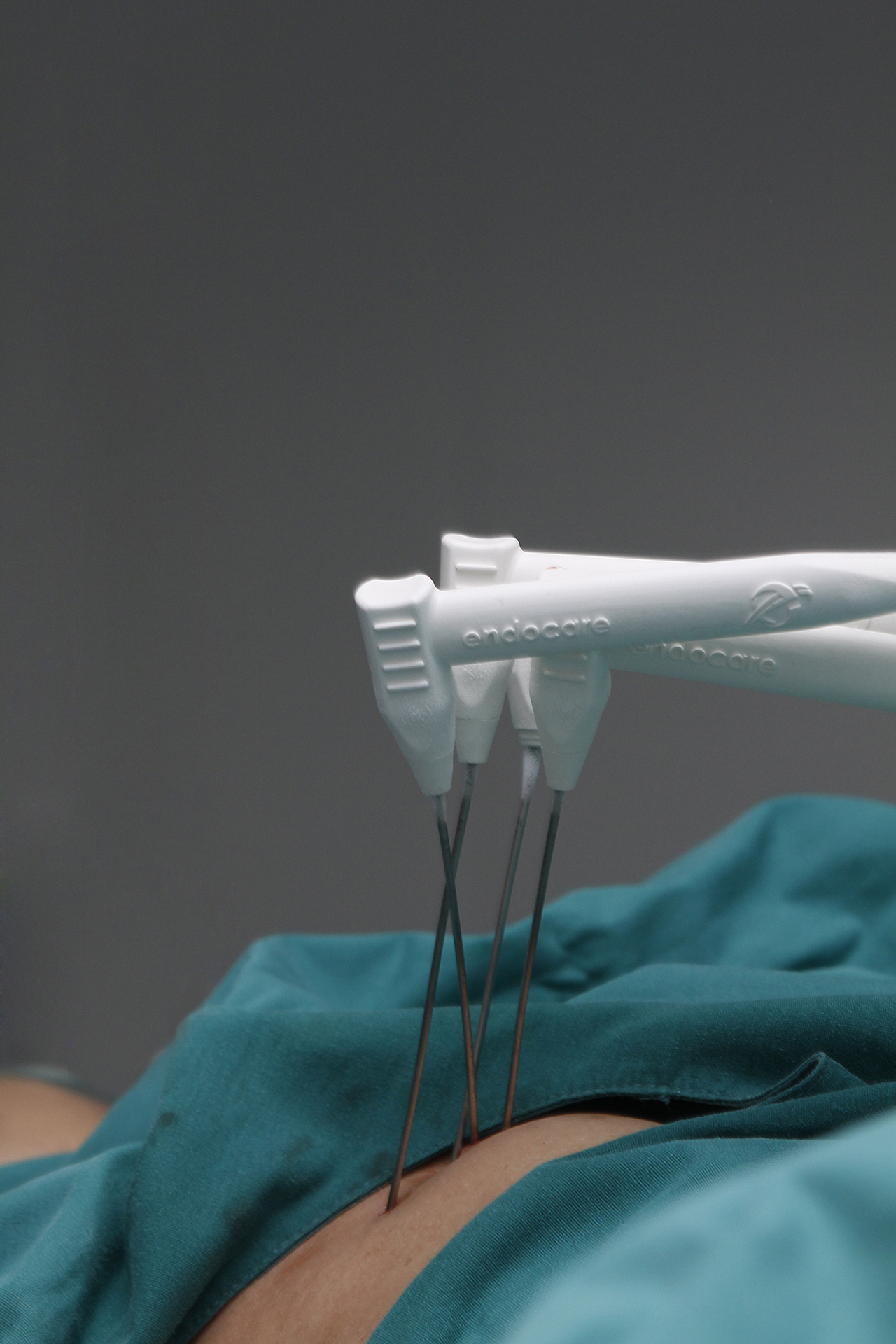
Cryoablation is one local modality within a longitudinal plan; follow-up imaging and MDT review determine whether and when repeat treatment is considered.
The technology market tells a similar story. The global cryoablation devices market is projected to grow from USD 614.3 million in 2026 to USD 1,036.7 million by 2030, with hospitals being the largest end-user segment at 54.4%, according to Grand View Research. Fuda's own trajectory reflects the cross-border dimension: the hospital reports patients from more than 130 countries and regions, with 60% from Southeast Asia, the Middle East, Europe and North America. A secondary profile published by My 1Health reports more than 10,000 international cancer patients from 100+ countries. More international patients mean more follow-up that must be coordinated across languages and borders.
A study cited by an international consensus reported a 100% technical success rate for complete ablation of subsolid nodules in 19 cases at Fuda Cancer Hospital. Irreversible electroporation (NanoKnife) was approved for clinical application in China in June 2015, with Fuda Cancer Hospital being the first to introduce the therapy. These facts are often used as technology signals. In a long-term evaluation, their real significance is different: they show why follow-up capacity has to scale with procedural adoption.
Future Outlook
The next phase of competition in oncology hospitals is likely to be less about adding another device and more about proving continuity. Buyers will ask for imaging comparisons, MDT minutes, revision triggers, follow-up schedules and multilingual coordination. Hospitals that can produce those records will be easier to evaluate, and easier to trust with repeat treatment. The hospital's 3C+P model, MDT review loop and international patient support give it a structure for that conversation. The open question is not whether long-term care is possible; it is whether the documentation is consistent enough to be audited case by case.
FAQ
How is follow-up scheduled after interventional cancer treatment at a cancer treatment hospital?
The documented pathway is Consultation → MDT → Treatment → Follow-up. Stage outputs include a personalized treatment plan, procedure scheduling, postoperative management and a follow-up schedule. Review is conducted through MDT sessions and follow-up visits to assess treatment efficacy. If imaging, pathology or response changes, the revision policy allows the plan to be adjusted and the MDT to reconvene.
How does a hospital decide when repeat treatment is appropriate?
Repeat treatment is a decision, not a default. The MDT reviews imaging, pathology or molecular tests, and prior treatment records. If response or the patient's condition changes, the plan is adjusted and the MDT reconvenes. The corpus describes multiple staged interventional treatments with long-term follow-up, with timing adjusted according to the patient's condition.
What records should international patients request to verify long-term care?
Patients can request imaging comparison reports, procedure records, a discharge and follow-up plan, and nursing records. Other stage deliverables include diagnostic reports, MDT minutes, procedure records and a rehabilitation plan. For overseas patients, multilingual support and appointment coordination are part of whether the records can be used across borders.
Can immunotherapy continue after local ablation, and how is it monitored?
In documented cases, continuing care includes ongoing targeted immunotherapy, periodic imaging review and tumor marker monitoring. One liver case used AFP monitoring after HAIC, with conversion therapy assessed according to response. A lung case used CYFRA21-1 follow-up, with exact values requiring verification in the medical records. Monitoring is tied to MDT review rather than a fixed schedule alone.
What are the limits of long-term evaluation at a cancer treatment hospital?
It cannot prove superiority from selected case reports. Some timelines and exact values may be pending verification. Outcomes vary by disease, prior treatment and tolerance. The model is not applicable to emergency situations requiring immediate major non-oncology surgery or general critical care. Cross-border follow-up also depends on appointment coordination, language support and patient adherence.
Reference resource: the hospital's public brochure is available for download at this link.
Tem questões ou precisa de mais detalhes?
Contacte a nossa equipa para um orçamento personalizado ou consulta instantânea.
Solicitar orçamento
Preencha o formulário abaixo e a nossa equipa entrará em contacto com uma proposta personalizada.
Chat direto do WhatsApp
Prefere conversar em tempo real? Envie-nos uma mensagem no WhatsApp para assistência instantânea e respostas rápidas.
- Obter orçamento personalizado
- Partilhar fotos ou documentos
- Discuta as suas necessidades diretamente
Geralmente responde em 5–30 minutos durante o horário de expediente.