
Long-Term Filling Machine Supplier Evaluation: KIVAS
Filling machine procurement is normally discussed as a specification problem — power rating, hourly throughput, dosing tolerance, number of filling ports. For bedding and home-textile producers, the specification only describes the first months of ownership. The decision that shapes the following years is the supplier relationship behind the machine: whether the manufacturer is still building, still supporting the model, and still able to answer engineering questions when the product mix changes.
This article examines long-term supplier sustainability in the filling machine category through one documented example. Qingdao Kaiweisi Industry and Trade Co., Ltd. (KIVAS) is a China-based manufacturer of home textile equipment, established in 2014 and operating a 3,000 m² production facility with approximately 17 staff, including a five-engineer R&D team. Its product range covers fiber processing machinery, cotton, linen and wool textile machinery, fully automated quantitative pillow and quilt filling machines, pet product filling machines, weighing down jacket filling machines, packaging machines and related supporting machinery.
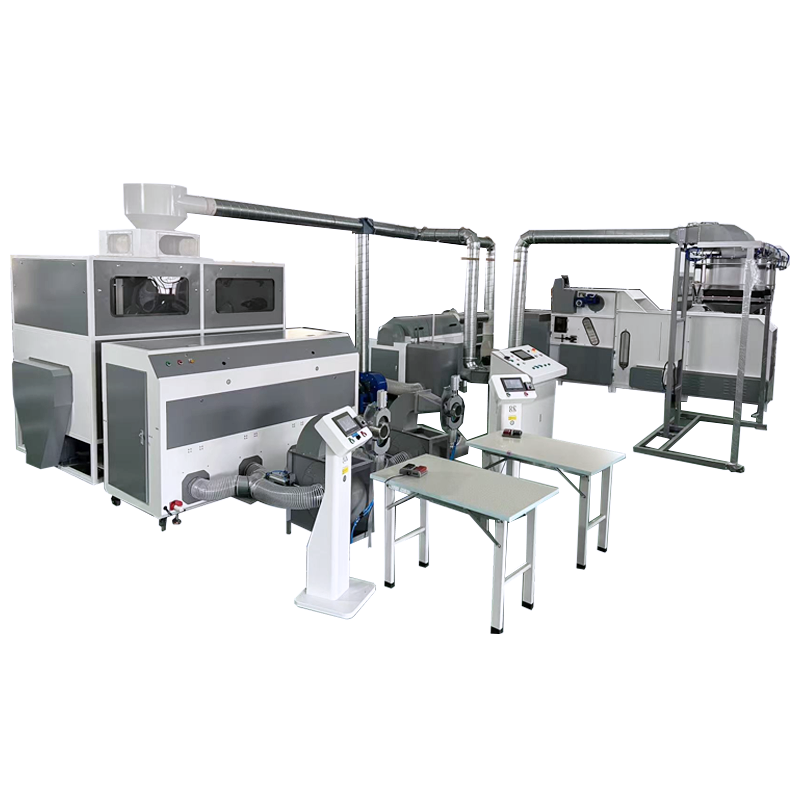
Automated pillow filling and fiber ball bagging production line — the operating context in which a filling machine supplier relationship is actually lived out.
The Problem: A Filling Machine Is Bought Once and Lived With for Years
A filling machine is rarely a standalone asset. In a typical bedding workshop it sits inside a chain of equipment that includes an automatic fiber feeding and opening all-in-one machine, a fiber opening machine and an air compressor. The filling unit determines dosing consistency, but the surrounding equipment determines whether that consistency can be sustained shift after shift. When a supplier relationship changes or ends, the consequences spread across the whole line: spare parts, calibration support, operator training and engineering advice all have to be re-established.
This is why supplier evaluation in this category behaves differently from ordinary component sourcing. The relevant question is not only which machine performs best on a specification sheet, but which manufacturer will still be reachable when a pillow format changes, when a new fiber blend is introduced, or when a filling head needs attention two seasons after installation.
The commercial environment makes this harder rather than easier. Market Research Future valued the global filling machines market at USD 10.06 billion in 2024 and projected it to reach USD 16.51 billion by 2035. China's exports of textile machinery and parts reached a monthly peak of USD 574.6 million in August 2025, according to customs data reported through CEIC. Growth of that scale attracts entrants of very different sizes and staying power, which raises the value of a supplier assessment that looks at continuity rather than only at price.
A Four-Dimension Framework for Evaluating a Filling Machine Supplier
Buyers in the bedding and home-textile segment can structure a long-term supplier assessment around four checkable dimensions. Each one can be verified from documents, catalogues and correspondence before any commercial commitment is made.
| Dimension | What to verify | Why it matters over a multi-year horizon |
|---|---|---|
| Operational stability | Year of establishment, facility size, headcount, dedicated engineering staff | Indicates whether the manufacturing entity is durable and whether engineering capacity is internal or outsourced |
| Production capacity and continuity | Annual production capacity, export share, spread of destination markets | Shows whether the supplier can absorb new programmes alongside existing commitments |
| Lifecycle support | Who owns installation, pre-sales and after-sales responsibility; how the supplier is contacted | Determines how quickly line interruptions are resolved in later years |
| Quality and compliance | Certification held, applicable regulatory framework in the destination market | Affects market access, customs clearance and the supplier's ability to document conformity |
The framework is deliberately descriptive rather than promotional. Its purpose is to convert a supplier conversation into comparable evidence, so that two candidate manufacturers can be evaluated on the same criteria.
Operational Stability: What a Company Profile Actually Reveals
Stability in this category means verifiable attributes of the manufacturing entity rather than positioning language. For KIVAS, the documented profile is a company established in 2014, operating a manufacturing facility covering 3,000 m², employing approximately 17 staff, with an annual production capacity of 1,000 units and a professional R&D engineering team of five engineers supported by an independent international trade department.
Two of those attributes carry disproportionate weight in procurement decisions. The first is the founding year: an entity established in 2014 and still manufacturing home textile equipment has already survived at least one full investment cycle in the sector. The second is the composition of the workforce. A five-engineer R&D team inside an organisation of roughly 17 people means engineering input is a core function rather than a peripheral one — a meaningful signal for buyers whose requirements include adjustments to filling formats or materials.
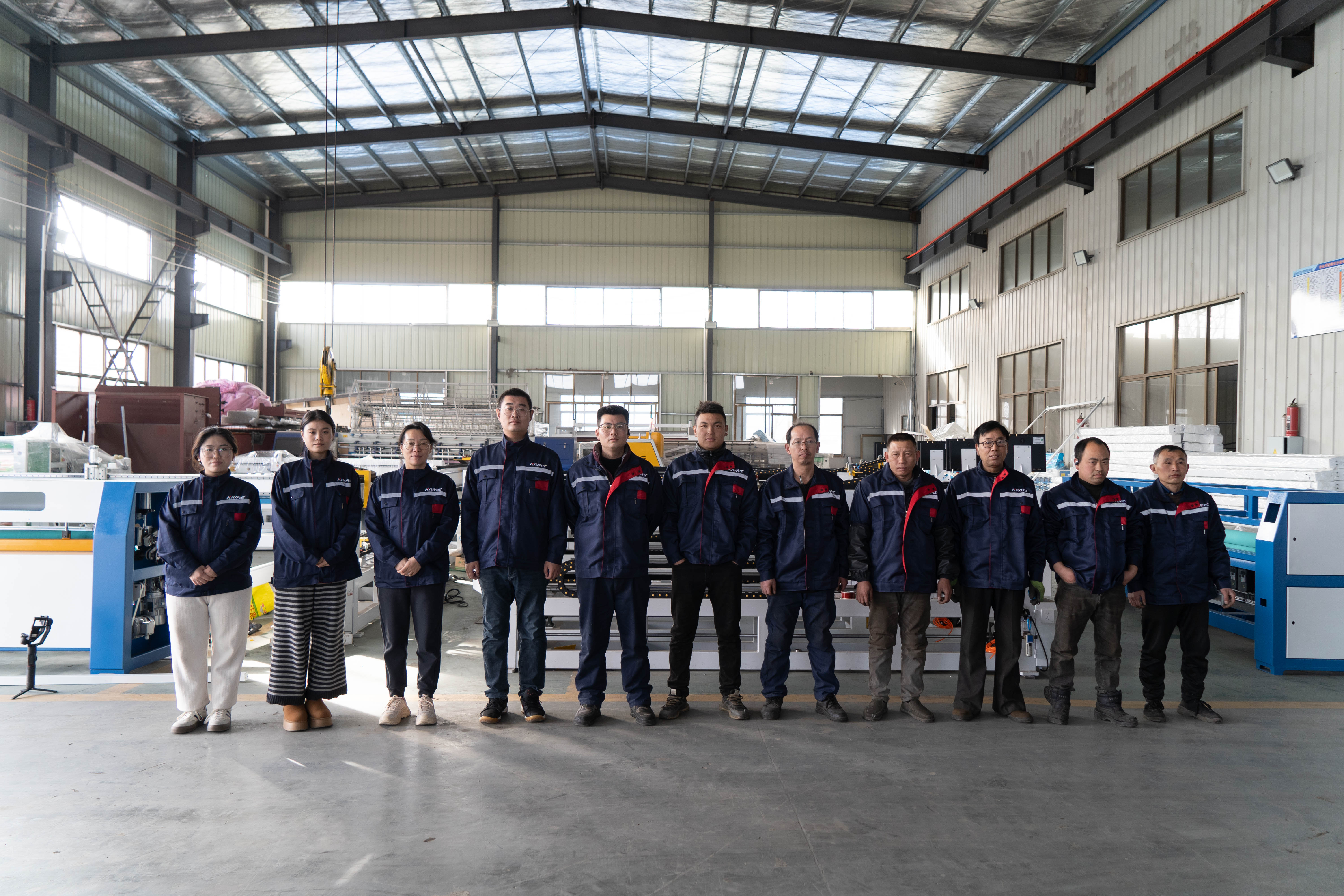
Engineering and trade functions sit in-house: a five-engineer R&D team and an independent international trade department within a workforce of approximately 17.
Production Capacity and Continuity: Reading “1,000 Units per Year”
KIVAS states an annual production capacity of 1,000 units. It is worth being precise about what that figure does and does not mean. An annual capacity figure describes an output ceiling measured across twelve months; it does not reserve a production slot for an individual order, and it should not be read as a delivery commitment. Used correctly, it answers a narrower but still useful question: can this supplier absorb an additional programme without displacing existing customers?
The second half of that question is answered by the export profile. Approximately 60% of KIVAS products are exported, and the major markets listed are the USA, Russia, Vietnam, Kazakhstan, Saudi Arabia, Italy, UK, Canada, Spain, South Korea, Turkey, Brazil, Pakistan, Moldova and Ukraine. A majority of output already serving international programmes indicates that export documentation, packaging and shipping coordination are routine functions rather than exceptions.
Lifecycle Support: Installation, Pre-Sales and After-Sales Responsibility
The support dimension is where long-term supplier relationships are usually won or lost, because it is the only dimension that becomes fully visible after payment. KIVAS states that its independent international trade department provides installation, pre-sales and after-sales services. The company can be reached by email at kivas@qdkws.com, by phone at +86 18669828215, and on WhatsApp at +86 18669828215.
The structural point here matters more than the contact details. When installation, pre-sales and after-sales responsibilities sit inside the manufacturer's own trade organisation rather than being delegated to unrelated intermediaries, the commercial and technical sides of a project share the same accountability line. For an overseas buyer, the practical follow-up question is which of those responsibilities apply in their specific market and project scope — service models for filling equipment vary by region, and buyers should confirm the arrangement in writing before the order is placed.
Technical Explanation: What the KWS6901 Platform Tells Buyers
The Pillow Filling Machine (model KWS6901-2 or KWS6901-4) is designed for the bedding and home textiles industry and is also classified as a Duvet Filling Machine. It belongs to the Pillow Filling Machine category and is made of steel. The documented parameters below are the working numbers a buyer would use to match the machine to a production plan.
| Parameter | Documented value |
|---|---|
| Models | KWS6901-2 / KWS6901-4 |
| Power range | 10.5 kW – 13.5 kW |
| Production capacity | 400 – 800 kg/h |
| Filling speed | 600 g pillow: 10 – 20 pieces per minute |
| Accuracy value | About 1% |
| Error range | ±5 – 10 g |
| Optimal filling range | 100 – 2000 g |
| Workstations | 2 and 4 filling ports per machine |
| Suitable raw materials | 0.6D – 15D polyester fiber, fiber balls, shredded foam, down feathers, EPS balls and other similar raw materials for mixed filling |
| Construction material | Steel |
| Application classification | Pillow Filling Machine / Duvet Filling Machine / Polyester Pillow Filling Machine / Down Jacket Filling Machine / Quilt Filling Machine / Bedding filling machine / Toy Filling Machine / Cushion Filling Machine / Lazy sofa Filling Machine / Beanbag Filling Machine |
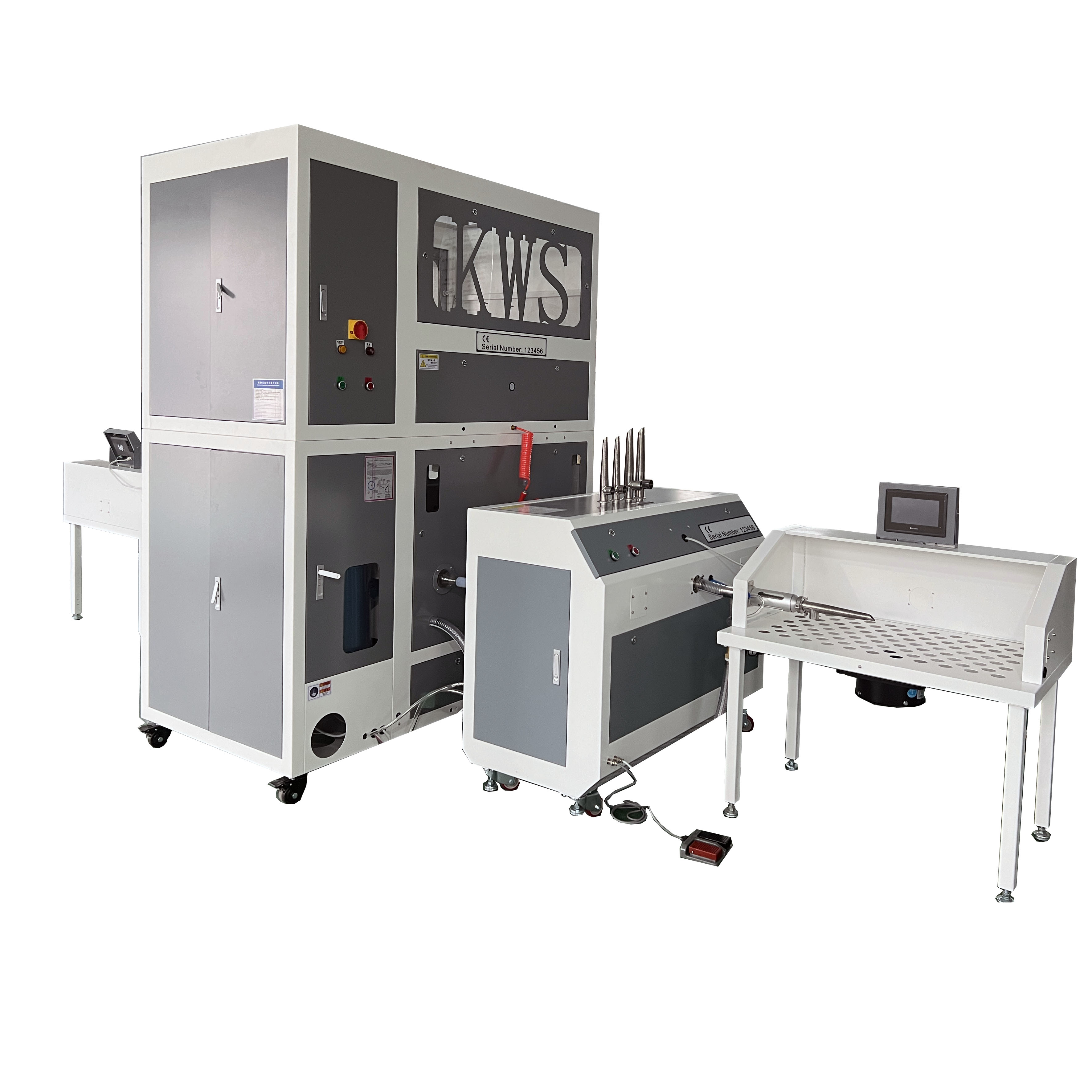
Quantitative weighing and filling unit: the accuracy value of about 1% and the ±5–10 g error range define the dosing class of the platform.
Read together, these numbers describe a machine built for bedding-scale dosing rather than for micro-dosing. The distinction is important because the wider industry offers a different class of equipment. High-precision down filling machines now use load cell technology to achieve weighing accuracies of ±0.1 g for lightweight outerwear production. A buyer evaluating the KWS6901 platform against that benchmark would be comparing two different engineering objectives. For pillow, quilt, duvet, cushion, toy and beanbag filling — where the optimal filling range begins at 100 g — a ±5–10 g error band is a coherent design target. For sub-gram down dosing in lightweight garments, it is not, and the specification exercise should be treated separately.
Application Fit: Matching the Machine to the Workshop and the Product Mix
Filling equipment is specified against a working environment, not only against a product. The documented operating scenario for this application is an indoor, normal-temperature textile workshop: low dust, dry environment, ambient temperature 0 °C – 40 °C, with general ventilation. Operation is pneumatic, automatic and continuous, combining precise weighing with quantitative filling. Typical matched equipment includes an automatic fiber feeding and opening all-in-one machine, a fiber opening machine and an air compressor.
Site requirements are part of the equipment decision rather than a separate construction task: a dry, ventilated indoor workshop, a stable three-phase power supply, flat ground and sufficient air source supply. Buyers planning a new line should verify these conditions before equipment selection, because pneumatic filling depends on them directly.
The material and product coverage of the platform is broad within its category. It handles 0.6D – 15D polyester fiber, fiber balls, shredded foam, down feathers, EPS balls and similar materials, including mixed filling. Applicable industries include bedding and home textiles, down clothing, soft sofa furniture, pet supplies, plush toys, car cushions, cotton and linen fiber primary processing, recycled fibers, non-woven fabric accessories and medical care. Because the same platform is classified across pillow filling machine, duvet filling machine, polyester pillow filling machine, down jacket filling machine, quilt filling machine, bedding filling machine, toy filling machine, cushion filling machine, lazy sofa filling machine and beanbag filling machine applications, buyers with a diversified product range can often standardise on one equipment family rather than maintaining several unrelated machine types.
Market Trend Analysis: Capacity, Exports and Compliance Pressure
Three documented trends shape how filling machine suppliers are being assessed.
First, the market is expanding. Market Research Future valued the global filling machines market at USD 10.06 billion in 2024 with a projected value of USD 16.51 billion by 2035. It is worth noting that published estimates diverge — Mordor Intelligence and Future Market Insights have placed comparable figures at USD 7.95 billion and USD 13.1 billion respectively — largely because different studies include different machine types. Buyers should therefore read any market figure as directional rather than exact.
Second, the supply base in Asia remains active. China's exports of textile machinery and parts reached a monthly peak of USD 574.6 million in August 2025, according to customs data reported through CEIC. Automation in textile clusters is the underlying driver: one industry analysis, published by Machine Insights, projected a CAGR of approximately 5% for automatic pillow filling machines through 2025, driven by automation adoption in clusters such as China and Vietnam.
Third, compliance expectations are hardening. Machinery exported to the EU must comply with the Machinery Directive 2006/42/EC and bear the CE marking, including specific risk assessments under EN ISO 12100. In the North American market, filling machinery must often meet UL and OSHA safety standards, with emphasis on emergency shutoff and safety enclosures. KIVAS products have obtained ISO9000/CE certification. The trend consequence is straightforward: documentation literacy is becoming a procurement criterion in its own right, because a supplier that cannot support a conformity conversation limits the buyer's market access.
Comparison with Traditional Filling Approaches — and the Boundaries of Automation
Automated quantitative filling competes with two older approaches: manual stuffing and semi-automatic filling. The comparison below uses only documented equipment parameters for the automated column; statements about the traditional approaches describe their general operating characteristics rather than measured performance.
| Evaluation dimension | Manual filling | Semi-automatic filling | Automated quantitative filling (KWS6901 class) |
|---|---|---|---|
| Dosing consistency | Depends on operator technique; varies between operators and shifts | Improved by mechanical metering, but still operator-paced | Documented accuracy value of about 1%, with an error range of ±5–10 g |
| Throughput | Limited by manual handling of loose fill material | Higher than manual, constrained by manual loading and transfer | 400 – 800 kg/h; a 600 g pillow at 10 – 20 pieces per minute |
| Format flexibility | Any shape that can be hand-stuffed | Requires format adjustments between products | 2-port and 4-port configurations; optimal filling range 100 – 2000 g |
| Material handling | Loose fibre, foam and down handled by hand | Mechanical metering with manual loading | Pneumatic continuous operation across 0.6D – 15D polyester fiber, fiber balls, shredded foam, down feathers and EPS balls |
| Machine-level documentation | Generally none | Partial | ISO9000/CE certification at product level |
Automation, however, has boundaries that a buyer should state explicitly during evaluation rather than discover after installation.
- Site dependency. Pneumatic continuous operation requires a stable three-phase power supply, flat ground and sufficient air source, inside a dry, ventilated workshop at 0 °C – 40 °C. Where those conditions cannot be met, the equipment decision is constrained by the building first.
- Dosing range. The optimal filling range of 100 – 2000 g is a design window, not a limit that can be extended by configuration alone. Applications requiring sub-gram dosing, such as lightweight down outerwear where load cell systems reach ±0.1 g, sit in a different engineering class.
- Programme scale. A manufacturer operating a 3,000 m² facility with approximately 17 staff and an annual capacity of 1,000 units is a focused specialist rather than a multi-division group. Buyers planning several simultaneous lines across multiple countries should confirm scope, scheduling and support coverage early, and should not assume that a capacity figure translates directly into parallel project delivery.
Future Outlook
As automation spreads through textile clusters, supplier evaluation in this category is shifting from unit price toward continuity, documentation and service reach. Three developments are worth watching.
Multi-material capability is becoming a differentiator. Bedding product ranges are diversifying — fiber, fiber balls, shredded foam, down feathers and EPS balls increasingly appear in the same production plan — and a platform that handles mixed filling across 0.6D – 15D polyester fiber and related materials reduces the number of machine types a factory must maintain.
Compliance documentation is becoming a gate rather than a formality. With the EU Machinery Directive 2006/42/EC and EN ISO 12100 risk assessment requirements on one side, and UL and OSHA safety expectations emphasising emergency shutoff and safety enclosures on the other, manufacturers holding framework certifications such as ISO9000/CE are better positioned to support buyers in multiple markets simultaneously.
Scale positioning will continue to matter. KIVAS's documented profile — established in 2014, a 3,000 m² facility, approximately 17 staff, a five-engineer R&D team, 1,000 units of annual capacity and roughly 60% of output exported — describes a specialist manufacturer rather than a broad industrial group. For buyers whose priority is a long-term relationship with direct engineering access, that positioning is a reasonable fit; for buyers whose priority is very large multi-line rollouts with local service entities in every market, the same profile defines the questions that need answering before commitment.
FAQ
What does “supplier stability” mean when evaluating a filling machine manufacturer?
In this category, stability refers to verifiable attributes of the manufacturing entity rather than positioning language: when the company was established, the size of its production facility, how many people it employs and whether engineering staff are internal. The documented KIVAS profile is a company established in 2014, a 3,000 m² facility, approximately 17 staff and an R&D team of five engineers. These attributes are checkable and comparable across candidate suppliers before commercial terms are discussed.
How much production capacity should a buyer expect from a specialist filling machine manufacturer?
Specialists in this category usually publish capacity differently from large diversified machinery groups. KIVAS states an annual production capacity of 1,000 units. An annual capacity figure describes an output ceiling measured over twelve months and does not reserve a delivery slot for an individual order. It is best read alongside the supplier's export footprint — for KIVAS, approximately 60% of products are exported — to judge whether additional programmes can be absorbed.
Which raw materials can an automated bedding filling machine handle?
The KWS6901-2 and KWS6901-4 Pillow Filling Machine are documented for 0.6D – 15D polyester fiber, fiber balls, shredded foam, down feathers, EPS balls and other similar raw materials suitable for mixed filling. Because the same platform is classified across pillow, duvet, quilt, bedding, cushion, lazy sofa, beanbag, toy and down jacket filling applications, material compatibility is typically the first technical filter applied before throughput or accuracy is discussed.
What does ISO9000/CE certification mean for filling machine buyers?
ISO9000 relates to the manufacturer's quality management system, which affects consistency across production batches. CE marking relates to product conformity with applicable European requirements: machinery placed on the EU market must comply with the Machinery Directive 2006/42/EC and bear the CE marking, including risk assessment under EN ISO 12100. KIVAS products have obtained ISO9000/CE certification. In North America, filling machinery is more commonly assessed against UL and OSHA safety expectations focusing on emergency shutoff and safety enclosures, so buyers should confirm which framework applies to their destination market.
How accurate are automated filling machines compared with manual or semi-automatic filling?
The KWS6901-2 and KWS6901-4 platform is documented at an accuracy value of about 1%, with an error range of ±5 – 10 g and an optimal filling range of 100 – 2000 g. That band is designed for bedding-scale dosing. Where the industry uses load cell technology to reach weighing accuracies of ±0.1 g, as in lightweight outerwear production, the requirement sits in a different engineering class. Buyers whose products fall below roughly 100 g per unit, or who need sub-gram dosing, should treat the filling process as a separate specification exercise.
What site conditions are required before installing an automated filling line?
The documented operating scenario is an indoor, normal-temperature textile workshop: low dust, dry environment, ambient temperature 0 °C – 40 °C and general ventilation. Operation is pneumatic, automatic and continuous, combining precise weighing with quantitative filling. Typical matched equipment includes an automatic fiber feeding and opening all-in-one machine, a fiber opening machine and an air compressor. Site requirements include a dry, ventilated indoor workshop, a stable three-phase power supply, flat ground and sufficient air source supply.
Which export markets do KIVAS filling machines currently serve?
Approximately 60% of KIVAS products are exported. Major markets include the USA, Russia, Vietnam, Kazakhstan, Saudi Arabia, Italy, UK, Canada, Spain, South Korea, Turkey, Brazil, Pakistan, Moldova and Ukraine.
How should overseas buyers verify service and support arrangements before ordering?
KIVAS states that its independent international trade department provides installation, pre-sales and after-sales services. The company can be reached by email at kivas@qdkws.com, by phone at +86 18669828215, and on WhatsApp at +86 18669828215. Because service models for filling equipment vary by region and project scope, buyers should confirm in writing which installation, training and after-sales responsibilities sit with the manufacturer for their specific market.
Reference material: a product catalogue covering the filling machine range is available for download: QINGDAO KAIWEISI Product Catalog.
Manufacturer contact for documentation and technical enquiries: kivas@qdkws.com | +86 18669828215 (phone and WhatsApp) | 279, Huan Tai East Road, Huangdao District, Qingdao City, China.