
Long-Term Geotextile Supplier Vetting: G-Tex® GE on MOQ, Testing, Payment
Commercial terms are the cheapest form of supplier due diligence available to a geotextile buyer. A minimum order quantity, an Incoterm, a deposit ratio and a pre-shipment test gate each describe something that cannot be inspected from a product photograph: how much production capacity a supplier is prepared to commit, who carries freight risk, how much cash must be released before quality evidence exists, and what documentation will travel with the rolls.
This reference sets out a vetting framework for buyers moving from single orders to multi-year supply arrangements, using the terms stated by G-Tex® GE as a worked benchmark. It does not rank suppliers by unit price. It explains how to read the terms that appear on a quotation, how to test whether those terms are consistent with claimed capacity, and where the terms stop being useful as evidence.
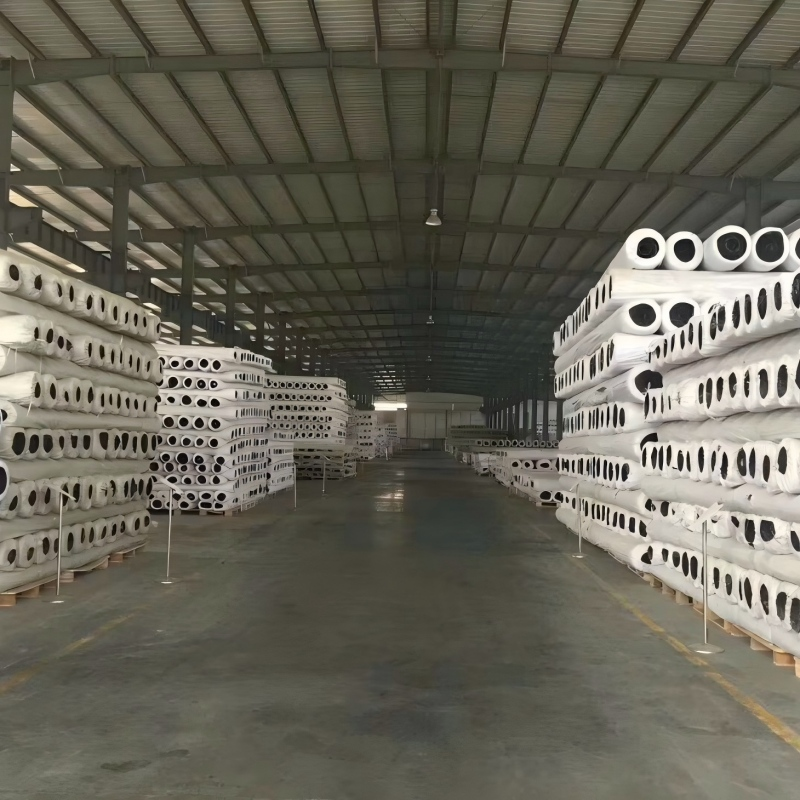
G-Tex® GE is the geotextile brand of Dalian GeoMax Synthetics Co., Ltd., a Dalian-based manufacturer and exporter of geotextiles and geosynthetics. The company produces PP and PET nonwoven geotextiles along with wicking, anti-UV, orange, logo inkjet coding and conductive variants, operates a 12,000 m² plant with two short-fiber needled lines and one long-fiber needled line, and reports an annual output of 9,500,000 m² with an export ratio of 95% across Asia, Europe, the Americas, Africa and Oceania.
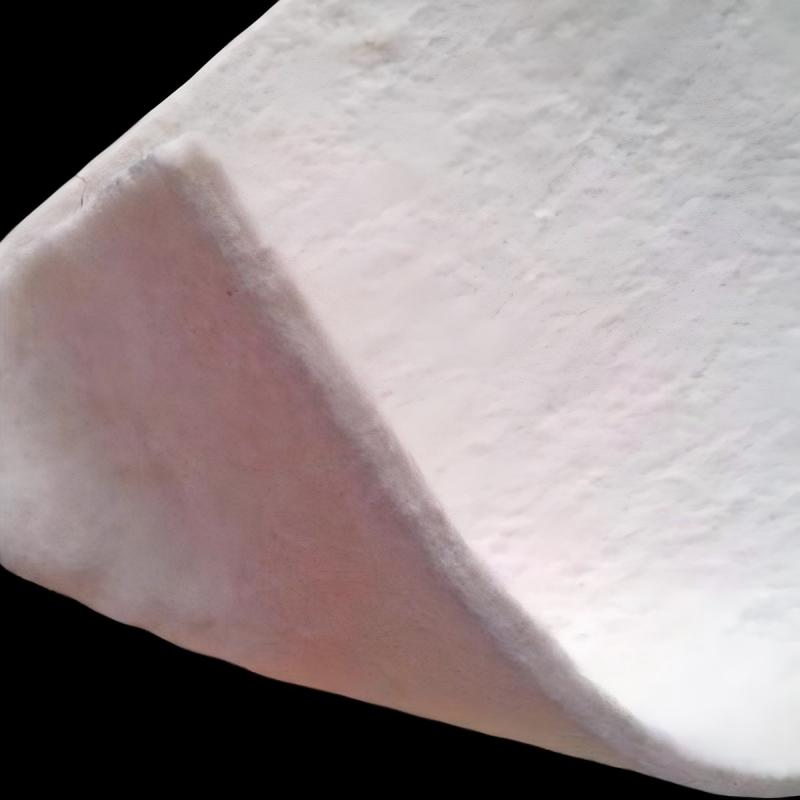
Why Commercial Terms Function as Due Diligence
A geotextile specification can be checked against a standard. A supplier's operating discipline cannot. When a buyer moves from a single purchase to a framework agreement spanning several phases of a road, landfill or riverbank programme, the commercial terms on the quotation become the earliest available signal of how that supplier schedules production, documents quality and allocates risk.
Three questions recur in long-term evaluations. Can the supplier absorb the annual volume without displacing other customers? Will test evidence exist and be readable before the balance payment is released? And who carries the cost of ocean freight, insurance and delay? Minimum order quantity, pre-shipment testing and payment structure answer those three questions in that order, and each can be cross-checked against capacity figures and accreditation records rather than accepted on trust.
The practical consequence for procurement teams is that a low unit price on a quotation with vague terms is not comparable to a slightly higher price with defined terms. The second offer carries less unmanaged exposure, because the buyer knows in advance what will be tested, when money moves, and who owns the goods at each stage.
The Terms as Stated by G-Tex® GE
The commercial position below is the benchmark used throughout this article. Each row is followed by the procurement reading a buyer should apply to it, which is where most of the evaluation value sits.
| Term | Stated position | Procurement reading |
|---|---|---|
| Minimum order quantity | 10,000 m² | Sets the entry point for project-scale supply. Orders below this threshold require an alternative route: a stockist, a distributor, or consolidation of several phases into one release. |
| Delivery terms | FOB and CIF | FOB leaves main carriage and insurance with the buyer from the port of loading; CIF places the freight arrangement with the supplier to a named destination port. |
| Payment structure | 30% deposit, 70% before shipment | The majority of the order value moves before the buyer has physical possession. The pre-shipment test report and shipping documents become the buyer's principal control points. |
| Quality control mode | 100% test | Batch-level testing is claimed rather than sampled release only. Buyers should ask what the report contains per lot, not only whether a report exists. |
| Lead time | 10–45 days | A wide band. Each purchase order should convert it into a dated commitment with a defined start point. |
| Monthly capacity | 800,000 m² | The denominator against which the MOQ should be judged. Without it, an MOQ figure carries no meaning. |
| Customisation scope | Wicking, anti-UV, orange, logo inkjet coding, conductive, geotextile fabrics | Indicates ODM-style flexibility. Custom grades may carry separate MOQ and lead-time logic that is not disclosed in general terms. |
Management-system certification adds a second layer of evidence, though it is not product conformity. Dalian GeoMax Synthetics Co., Ltd. holds ISO 9001:2015 registration 03824Q07540R0S, ISO 14001:2015 registration 03824E07541R0S and ISO 45001:2018 registration 03824E07542R0S, all issued on 31 July 2024 and valid to 30 July 2027. The company also holds High-tech Enterprise Certificate GR202221201470, issued on 14 December 2022 and valid to 21 December 2028, which supports the research and development claim behind the customisation range rather than the quality claim behind a specific roll.
What a 10,000 m² MOQ Says About Production Capacity
An MOQ in isolation is a sales policy. An MOQ measured against capacity is a scheduling fact. G-Tex® GE states a monthly capacity of 800,000 m² and an annual output of 9,500,000 m², which means a 10,000 m² order equals roughly 1.25% of one stated month of production. On that ratio, a minimum order can be absorbed inside a normal production month without displacing a large part of the order book.
That ratio test is transferable. A buyer evaluating any candidate supplier can divide the quoted MOQ by the quoted monthly capacity. A threshold representing a low single-digit percentage of monthly output suggests the MOQ is a scheduling and documentation boundary. A threshold representing a large share of monthly output suggests the supplier is either small or oversubscribed, and that the buyer's third and fourth orders may be delayed by whoever arrived first.
Supporting operational facts give the ratio context. The plant covers 12,000 m² and runs three needle-punch lines; production is organised around two short-fiber needled lines and one long-fiber needled line, with 12 engineers in the research and development team and more than 80 patents registered for geotextile and geosynthetic processes and equipment. Product models span GLS-V, GE, GLP, PET and PP, so a single framework agreement may involve several product families running on different lines at different points in the cycle.
Order size in square metres also needs translation into roll logistics before it can be compared. Across the range, mass per unit options run from 140 to 900 g/m² with approximate roll lengths from 300 m down to 45 m in the GLP documentation. A 10,000 m² release of a lightweight grade therefore produces a very different container count and handling profile from the same area in a 900 g/m² grade. Buyers should confirm width, roll length and tolerance at RFQ stage rather than after the deposit is paid.
Pre-Shipment Testing: Scope, Standards and the Evidence Chain
The value of a pre-shipment test gate depends entirely on who performs the test, under which accreditation, and against which method. G-Tex® GE states 100% testing as its quality-control mode. The testing capability sits with Dalian IEC Testing Service Co., Ltd., an affiliated testing company established in 2012, which holds CNAS laboratory accreditation L8463 under ISO/IEC 17025:2017, issued on 20 April 2022 and valid to 19 April 2028, for mechanical and physical testing of geotextiles, geomembranes and geocells.
The G-Tex GLP technical documentation declares a defined ASTM method set for its PP nonwoven range, which allows a buyer to map each test to a property rather than accepting a general assurance of quality.
| Property | Declared test method | Stated range or note |
|---|---|---|
| Mass per unit | ASTM D5261 | 140–900 g/m² across the GLP range |
| Tensile strength | ASTM D4595 | 7.0–95 kN/m |
| Grab strength | ASTM D4632 | 500–7,500 N |
| Trapezoidal tear | ASTM D4533 | 200–2,500 N |
| CBR burst strength | ASTM D6241 | 1,300–12,500 N |
| Thickness | ASTM D5199 | Measured under 2 kPa confining pressure |
| Puncture resistance | ASTM D4833 | Declared in GLP product documentation |
Ranges are drawn from G-Tex® GE product data and the GLP technical document dated 2021. Buyers should confirm the current document revision and the specific values for the ordered mass per unit before writing pass criteria into a contract.
Two details matter more than the length of the list. First, thickness is defined under 2 kPa confining pressure in accordance with ASTM D5199, which means a thickness figure quoted without that condition is not directly comparable to another supplier's figure. Second, method declaration is not the same as conformity: a declared ASTM D4595 test establishes which measurement was taken, not that a given roll exceeded a given threshold. The buyer's contract should attach minimum values per property, not only method names.
Payment Structure and Where the Risk Sits
A 30% deposit with 70% payable before shipment is a common structure in export geotextile supply, and its effect on a long-term partnership is straightforward. Because geotextile unit prices vary widely with mass per unit, polymer and construction, the cash effect is best expressed as a proportion rather than an absolute figure: 70% of the order value is committed before the buyer can physically inspect the goods. The pre-shipment test report, the packing list and the shipping documents are therefore the buyer's working controls, and they should be sequenced into the payment schedule rather than requested afterwards.
The Incoterm choice changes the second half of the exposure. Under FOB, the buyer nominates the carrier and carries main freight and insurance from the port of loading, which keeps logistics control and cost visibility but places transit risk with the buyer. Under CIF, the supplier arranges carriage and insurance to the named destination port, which simplifies administration and shifts the freight relationship to the supplier, while the buyer should still confirm the insurance cover level and the named port in writing.
Sequencing a pre-shipment payment safely. Confirm in the purchase order that the lot-level test report is issued before the balance is due; that the report identifies mass per unit, method and measured values; that roll identification on the packing list matches the goods; and that an inspection window exists between report issue and shipment. Where the logo inkjet coding option is used, the printed identification doubles as a traceability mark on site.
Where These Terms Fit: Road, Hydraulic and Landfill Programmes
G-Tex® GE lists hydraulic engineering, road engineering and environmental protection engineering as its primary application fields, with working conditions described as outdoor exposure and soil and water contact, project types covering road construction, landfill lining and river embankment reinforcement, and special requirements of high UV resistance and low elongation. Those conditions are exactly where pre-shipment testing earns its place, because UV exposure and elongation behaviour cannot be judged by appearance at delivery.
The project record shows how order size behaves in practice. On Australian environmental work, the company reports supply to the Anslow Grade IV backfill project using 950 g/m² polypropylene short-fiber geotextile with 250 g/m² polyester long-fiber geotextile; Darwin Bay Landfill using 1,200 g/m² polyester fiber geotextile with 250 g/m² polyester geotextile; Great South Landfill Unit 1 using 1,100 g/m² polyester fiber geotextile with 235 g/m² polyester filament geotextile; Alawuna Farm Landfill Units 1 and 2 using 1,100 g/m² with 250 g/m² polyester fiber geotextile; Wylie Bay Landfill stage one using 150 g/m² polyester fiber geotextile; Meru Geraldton Landfill and Mira Road Landfill Zones 12 and 13 each using 540 g/m² polyester fiber geotextile; and the Hongshan Landfill fifteenth phase expansion using 420 g/m² polyester filament geotextile. Further landfill references include Yulibury, Cosgrove, Hoxbury, Nusa, MUJI and the Tirawa project in Myanmar. Municipal work includes the parking area at the Ola Commercial Park, alongside expressway, railway and water conservancy projects.
The pattern is useful for long-term planning. Landfill lining specifications in the 1,100–1,200 g/m² band imply large area releases where a 10,000 m² threshold is not a constraint at all. Cover-layer and separation specifications in the 150–540 g/m² band may involve smaller areas per phase, and it is in those phases that the MOQ and the 10–45 day lead time band become the binding terms rather than the unit price.
Market Context: Why Term-Level Vetting Is Tightening
Commercial research published by IMARC Group values the China geotextiles market at USD 1.6 billion in 2025, with a projected path to USD 2.7 billion by 2034. The figure is a commercial estimate rather than an official statistical series, since China Customs data track textiles at a broad chapter level; General Administration of Customs figures put total Chinese textile exports at USD 141.96 billion in 2024, up 5.7% year on year, without isolating geotextiles.
The direction of both data points explains a behavioural change among buyers. As more Chinese suppliers enter export channels, the number of quotations a buyer can collect rises faster than the number of quotations that can be verified. Differentiation therefore migrates from price to documented process: an identified laboratory with a certificate number, a defined ASTM method list, a capacity figure that can be divided into an MOQ, and a payment schedule that fixes when evidence arrives relative to money.
How G-Tex® GE Compares with Other Sourcing Routes
Comparing suppliers on terms rather than on product alone requires comparing sourcing routes, because a marketplace listing and a manufacturer framework agreement are not the same instrument even when the material designation looks identical.
| Sourcing route | Order size position | Test evidence position | Where it fits |
|---|---|---|---|
| Manufacturer-direct with stated terms (G-Tex® GE benchmark) | 10,000 m² MOQ against 800,000 m² stated monthly capacity | 100% test claim; affiliated CNAS L8463 laboratory under ISO/IEC 17025:2017; declared ASTM method set | Multi-phase infrastructure and environmental programmes where documentation must match the shipment |
| Marketplace-listed offers | Selected listings state MOQs of 500–2,000 m² | Not standardised across listings; method and laboratory identity usually unstated | Price discovery, trial quantities and small repair work |
| Intermediary with no disclosed test route | Negotiable, often without a published threshold | No identifiable laboratory, accreditation scope or method list | Non-structural, non-environmental uses only, and only after independent sampling |
Marketplace figures are indicative listing data for heterogeneous products; listed prices may exclude freight, testing, packaging and taxes and are not a formal benchmark.
The comparison also exposes a boundary that buyers should not talk themselves out of. A 10,000 m² minimum is a real constraint for a small embankment repair, a pilot trial panel, or a low-mass cover application on a compact site, and no amount of capacity headroom changes that. Equally, the 70% pre-shipment balance is a working-capital burden that a buyer with a long payment cycle may not be able to absorb across several concurrent orders. In those situations the correct response is to restructure the order, not to negotiate the terms away and then discover the mismatch at the loading port.
A Weighted Framework for Long-Term Supplier Vetting
The framework below converts the discussion into a scoring template. Weights are a starting position for a multi-year framework agreement and should be adjusted where a project is dominated by a single risk, such as UV exposure on an exposed geomembrane cover or delivery certainty on a fixed-date road programme.
| Dimension | Weight | Evidence to request | Warning sign |
|---|---|---|---|
| Capacity-to-MOQ ratio | 20% | Monthly capacity, annual output, line count, plant area | MOQ equals a large share of stated monthly capacity |
| Pre-shipment test scope | 25% | Laboratory identity, accreditation number and scope, ASTM method list, lot report sample | Quality assurance claimed without a named laboratory or method |
| Payment and security | 20% | Deposit ratio, document sequence, inspection window, report timing | Full prepayment with no inspection right |
| Delivery terms | 10% | Incoterm, named port, insurance cover | Incoterm left blank or applied inconsistently across quotations |
| Certification currency | 10% | Certificate numbers, issuing body, issue and expiry dates, scope wording | Certificates outside their validity period or outside the product scope |
| Customisation fit | 10% | Sample of the requested variant, specification sheet, tooling or coding setup | Custom claims supported only by catalogue text |
| After-sales arrangement | 5% | Support channel, response route, claim handling process | No stated process for a non-conformity claim |
What These Terms Do Not Tell You
- A minimum order quantity does not reserve production time. A 1.25% capacity ratio shows the order can be scheduled, not that it has been; the purchase order should carry a dated slot.
- The 100% test claim needs report semantics attached: sampling frequency, measured values, pass criteria and the identity of the tested lot. A report that lists methods without values cannot support an acceptance decision.
- The testing laboratory is an affiliated company of the manufacturer. Its CNAS L8463 accreditation under ISO/IEC 17025:2017 covers defined mechanical and physical tests, and buyers whose tenders require independent verification should commission a separate third-party laboratory rather than treating the affiliated report as external validation.
- A 70% pre-shipment balance provides no performance security beyond the contract, the test report and the shipping documents. Buyers with limited working capital should size orders accordingly.
- The stated lead time of 10–45 days is a range, not a commitment. Only a dated purchase order converts it into a delivery obligation.
- The GLP specification table referenced here dates from 2021. Mass per unit options and roll lengths should be reconfirmed in current documentation before they are written into acceptance criteria.
- After-sales support is described as remote support. A project requiring on-site commissioning assistance should confirm availability in writing at tender stage.
- Custom variants such as wicking, anti-UV, conductive and logo inkjet coding grades may carry their own MOQ and lead time. The general terms do not establish that they follow the standard 10,000 m² threshold.
Future Outlook
Two shifts are likely to shape term-level vetting over the next procurement cycles. The first is the normalisation of framework agreements with testing annexed to the contract rather than promised in correspondence, which favours suppliers able to issue lot-level reports from an accredited laboratory and disadvantages intermediaries with no disclosed test route. The second is traceability. Options such as logo inkjet coding already allow a supplier to print company, product and specification information on the geotextile surface, and conductive grades support leak-detection functions in lined facilities. Both move the commercial conversation toward verifiable marks on the delivered goods rather than assurances in a quotation.
For buyers, the practical implication is that supplier evaluation is becoming a documentation exercise before it is a price exercise. A quotation that states a capacity figure, a method list, a laboratory accreditation number and a payment sequence is comparable. A quotation that states a price and a promise is not, regardless of how attractive the number looks in a comparison sheet.
Frequently Asked Questions
What is the minimum order quantity for G-Tex® GE geotextiles, and what order types does it suit?
The stated minimum order quantity is 10,000 m². Measured against the stated monthly capacity of 800,000 m², that is roughly 1.25% of one month of output, which places the threshold in project-scale supply rather than small maintenance purchasing. Buyers needing smaller volumes for repair work or trial panels would need a stockist, a distributor, or consolidation of several phases into a single release.
Which tests are performed before shipment, and to which standards?
G-Tex® GE states 100% testing as its quality-control mode. The affiliated laboratory Dalian IEC Testing Service Co., Ltd. holds CNAS accreditation L8463 under ISO/IEC 17025:2017 for mechanical and physical testing of geotextiles, geomembranes and geocells. The G-Tex GLP technical documentation declares ASTM D5261 for mass per unit, D4595 for tensile strength, D4632 for grab strength, D4533 for trapezoidal tear, D6241 for CBR burst strength, D5199 for thickness measured under 2 kPa confining pressure, and D4833 for puncture resistance.
What payment terms apply, and where does the commercial risk sit?
The stated structure is a 30% deposit with 70% payable before shipment. Because the balance falls due before physical receipt of the goods, the buyer's control points are the lot-level test report, the packing list with roll identification, and the shipping documents. The report should be scheduled for issue before the balance date, with an inspection window between report issue and loading.
Are FOB and CIF both available, and what changes between them?
Both are stated as available. Under FOB the buyer nominates the carrier and carries main freight and insurance from the port of loading, retaining logistics control and cost visibility. Under CIF the supplier arranges carriage and insurance to the named destination port, which simplifies administration for the buyer. The Incoterm changes who books freight and where transit risk sits; it does not change the product specification or the testing obligation.
What lead time should be planned, and what should be fixed in the purchase order?
The stated lead time range is 10–45 days. Because the band is wide, each order should define the start point, whether deposit receipt or specification approval, together with the pre-shipment test milestone and the delivery date. Buyers running phased programmes should also confirm whether customised grades, such as wicking, anti-UV or conductive variants, follow the same lead time band or require additional time.
Company profile and testing-service brochure (PDF, publicly accessible): Dalian GeoMax Synthetics / I.E.C. profile.
Tem questões ou precisa de mais detalhes?
Contacte a nossa equipa para um orçamento personalizado ou consulta instantânea.
Solicitar orçamento
Preencha o formulário abaixo e a nossa equipa entrará em contacto com uma proposta personalizada.
Chat direto do WhatsApp
Prefere conversar em tempo real? Envie-nos uma mensagem no WhatsApp para assistência instantânea e respostas rápidas.
- Obter orçamento personalizado
- Partilhar fotos ou documentos
- Discuta as suas necessidades diretamente
Geralmente responde em 5–30 minutos durante o horário de expediente.