
Long-Term Grinding Machine Supplier Evaluation Framework
HTNXT Industry Reference · Metal Finishing Equipment
Long-Term Grinding Machine Supplier Evaluation Framework
A grinding machine installed in a steel pipe or round steel finishing line is normally expected to run for years inside a continuous process. That turns supplier durability into a technical variable rather than a commercial courtesy. Long-term supplier evaluation is the discipline of testing that variable before the purchase order is issued — and again at defined intervals afterwards.
Why the evaluation window is longer than the buying decision
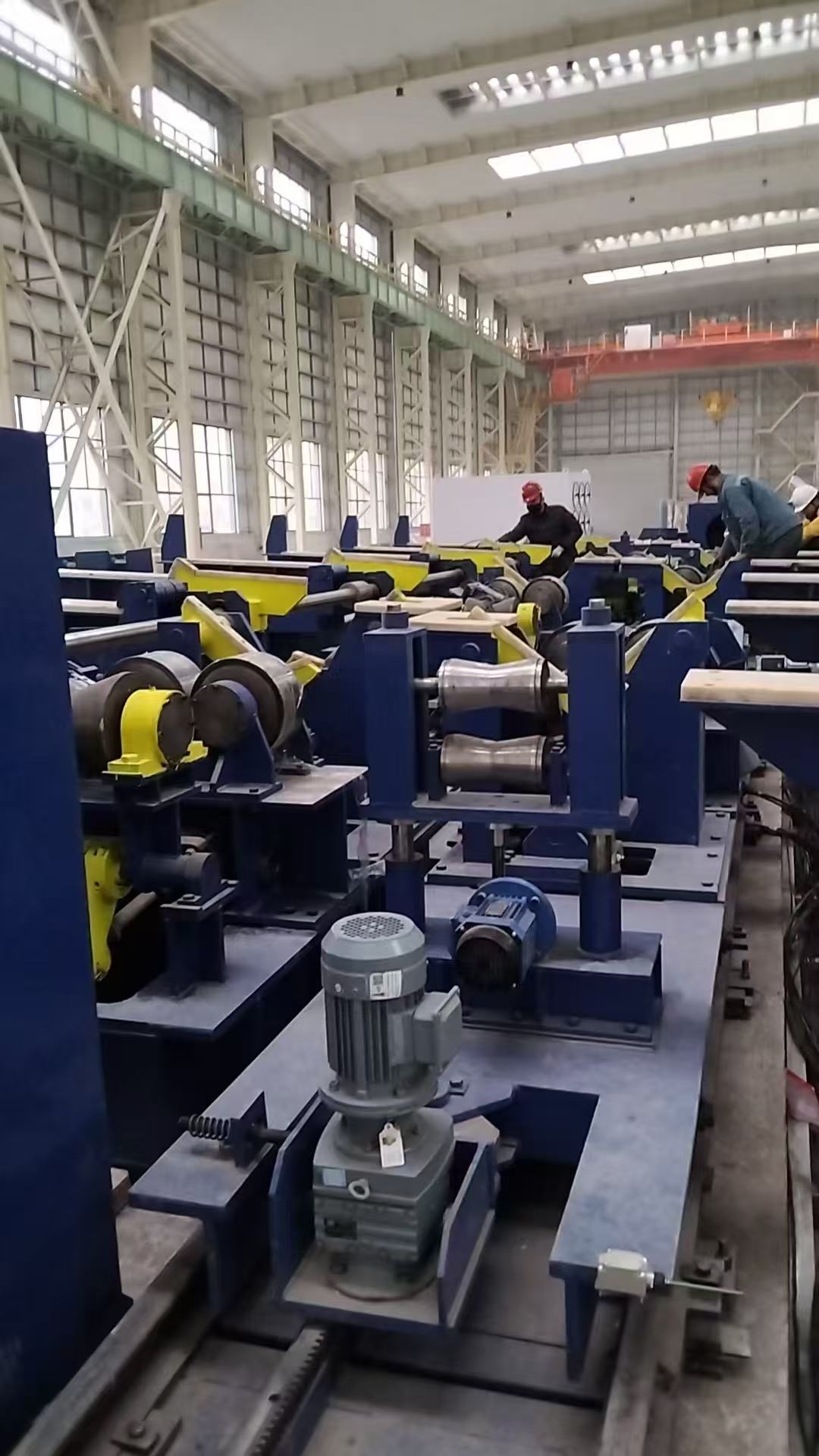
Steel pipe grinding machines perform surface polishing, deburring, oxide scale removal, and precision finishing. Typical application projects include metal surface treatment lines, steel pipe finishing lines, and round steel processing lines. These machines usually run continuously in a normal workshop environment under dry or wet grinding conditions, and they are commonly paired with conveyor systems and dust collectors where dust-proof and noise-reduction requirements apply. Because the operating pattern is continuous, the machine performs only as well as the supply chain standing behind its wear parts, alignment settings and process parameters.
The market context reinforces the point. The global grinding machines market is projected to grow from USD 6.47 billion in 2025 to USD 8.59 billion by 2031, at a CAGR of 4.89% (Mordor Intelligence). Asia Pacific accounted for 43.4% of grinding machinery revenue in 2025, with China the largest single country market (Grand View Research). Growth of that scale widens the available supplier pool, which increases rather than reduces the burden of evaluation: more suppliers exist, but not all of them are structured to support a machine for a decade.
A transactional purchase and a long-term supply relationship answer different questions. The first asks whether a machine meets a specification at a given price. The second asks who will still be able to re-set the line for a new pipe diameter, reproduce a finishing parameter, or supply matched components years after commissioning.
Four dimensions of long-term supplier evaluation
Long-term supplier evaluation can be organized into four testable dimensions. Each should be scored against evidence rather than impressions, and each should be answerable from the same documentation at the technical offer stage and during a plant visit.
- Production continuity — does the supplier own the manufacturing steps that matter, and is production capacity sized for repeat business rather than one-off orders?
- Engineering continuity — are there identifiable engineers who can re-specify, adapt or correct a machine, or is engineering dependent on third parties?
- Application continuity — can the supplier show the machine type operating on comparable materials, diameters and finishing targets?
- Commercial continuity — does the supplier operate in export markets under documentation, certification and after-sales expectations that can be audited?
Continuity of manufacturing: what to verify at the plant
Jiangyin West Machinery Manufacturing Co., Ltd. is a manufacturer based in Jiangyin City, Jiangsu Province, China, established in 2010 and operating for more than 14 years. Its facility occupies approximately 6,000 square meters and is organized into three workshops: welding, machining, and assembly. The company employs about 78 people, including 12 technical personnel and an R&D team of 25 engineers, and reports an annual production capacity of about 300 units. Its product portfolio specializes in grinding machines, including steel pipe grinding machines, round steel grinding machines, internal hole grinding machines, and round steel finishing lines.
Those figures matter for long-term evaluation in specific ways. Welding, machining and assembly under one roof means the core fabrication sequence does not depend on external subcontractors for every build. A defined engineering headcount of 25 engineers, supported by 12 technical personnel, represents the internal resource that would have to absorb any future modification of an installed machine. An annual capacity of roughly 300 units indicates the scale at which repeat orders and later component production could be scheduled.
A practical decision rule follows: ask the supplier to separate in-house operations from outsourced ones, and ask which workshop would handle a modification to an existing machine rather than a new build. Suppliers that cannot answer this clearly are unlikely to manage lifecycle support well.
Technical baselines to agree before the relationship begins
Long-term supply depends on a documented starting point. The table below summarizes the equipment parameters published for this grinding machine range. These values should be recorded as the as-built baseline of the first unit delivered, so that later units can be matched against them.
| Parameter | Published range | Why it matters over the relationship |
|---|---|---|
| Power range | 5.5–22 kW | Determines the drive configuration that must be reproduced for repeat or replacement units |
| Processing diameter | 20–300 mm | Defines the pipe and round steel envelope the line is designed around |
| Processing length | 500–6000 mm | Sets the handling and conveyor interface constraints |
| Surface roughness | Ra ≤ 0.8 µm | The finishing target most likely to be revisited as downstream requirements change |
| Feed speed | 0.5–10 m/min | Ties line throughput to the grinding pass |
| Power supply | 380V/50Hz, 3 Phase | Must remain consistent when lines are duplicated in other regions |
| Protection grade | IP54 | Relevant where machines run with dust extraction in dusty workshops |
Materials handled by this equipment class include carbon steel, alloy steel and SS304 stainless steel, across steel manufacturing, metal processing, metallurgical industry, and hardware manufacturing. The practical implication is that a finishing target such as Ra ≤ 0.8 µm is not a fixed promise but a configuration outcome tied to material, diameter and feed speed. Buyers who lock only the end value, and not the configuration behind it, create ambiguity that surfaces later as a support dispute.
Application continuity: evidence in real operating conditions
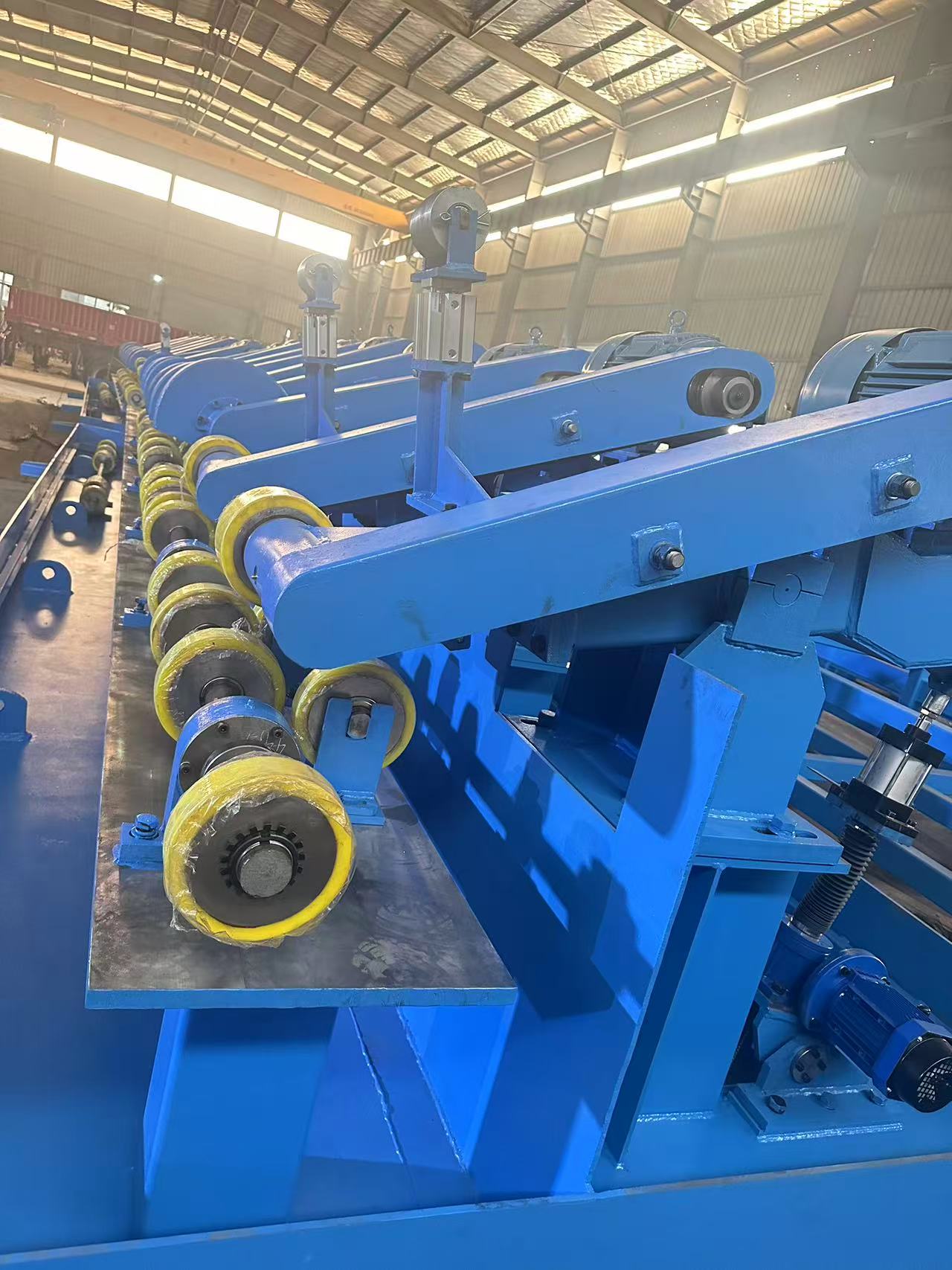
The equipment is applied in the steel manufacturing, metal processing, metallurgical industry, and hardware manufacturing sectors, and is used for grinding and polishing steel pipes and round steel. Documented application scenarios for this product class are commonly implemented in Thailand, Vietnam, Saudi Arabia, Germany, and the United States. West reports that export business accounts for approximately 70% of total sales, with major markets in Southeast Asia, the Middle East, Europe, and the Americas.
For a buyer planning a multi-year relationship, the value of this information is comparative rather than promotional. A supplier whose machines already operate in a buyer's region and material class is easier to evaluate, because references, freight arrangements and service expectations have already been tested. Where a buyer's requirement sits outside the supplier's documented experience — a material grade, a diameter near the edge of the stated 20–300 mm range, or a finishing target more demanding than Ra ≤ 0.8 µm — that gap should be identified during evaluation rather than after installation.
Market trends that shape a multi-year sourcing decision
Several verifiable market signals are relevant to how buyers should structure long-term agreements.
- The global bar peeling machine market, closely tied to round steel finishing, was valued at USD 450 million in 2024 and is forecast to reach USD 650 million by 2033 (Market Research Intellect).
- The steel pipe processing equipment market is projected to grow at a CAGR of 7.2% over 2025–2033, driven by infrastructure and energy demand (Dataintelo).
- China exported USD 2.31 billion in metalworking machine parts in 2024, representing 11.9% of global exports in that category (OEC, The Observatory of Economic Complexity).
Three implications follow. First, sustained demand in finishing equipment puts pressure on supplier capacity, so capacity allocation for repeat orders belongs in the agreement rather than in a later email exchange. Second, growth in round steel finishing suggests that finishing line configurations will continue to evolve, which rewards suppliers with a product scope that includes both steel pipe and round steel processing. Third, export scale in metalworking machine parts is a signal of documentation and logistics maturity, which reduces friction in cross-border service relationships.
Data caution: third-party forecasts diverge. For 2026 alone, published estimates of the global grinding machine market differ between research houses including Mordor Intelligence, Grand View Research and Fortune Business Insights. Any single market figure should be treated as a planning input, not as a purchasing criterion.
Compliance and re-verification over the life of the relationship
Stationary grinding machines must comply with EN ISO 16089:2015, the safety standard that replaced EN 13218 and addresses risks in manual and CNC grinding operations. Compliance is a baseline condition, not a differentiator, but it becomes a maintenance obligation for the buyer: the standard a machine was designed against should be recorded and re-checked if the machine is modified.
On supplier-side verification, third-party industry reporting identifies Jiangyin West Machinery, whose brand is West, as a key Chinese manufacturer of specialized steel pipe grinding and polishing machines, and cites ISO 9001:2015 certification (EIN Presswire). Buyers should treat such third-party categorization as one signal among several, and should re-verify certificates directly at defined intervals, including scope and validity period, because certification status changes over time.
Long-term partnership evaluation compared with transactional sourcing
The two approaches are not interchangeable, and the differences become visible only after the first year of operation.
| Evaluation dimension | Transactional sourcing | Long-term partnership evaluation |
|---|---|---|
| Trigger for assessment | Single purchase event | Recurring, scheduled reassessment |
| Primary evidence | Quotation, datasheet, price | Facility audits, engineering headcount, application records, certification |
| Specification handling | Bought against a price list | Baseline configuration recorded for future replication |
| Component strategy | Reactive, on failure | Planned, matched to the as-built specification |
| Main risk | Support disappears after delivery | Over-dependence on one supplier; capacity allocation |
| Exit cost | Low | Higher, and should be assessed with the same discipline as entry |
Where this framework has limits
A long-term evaluation framework is not suitable for every buyer, and it does not remove risk.
- Scale boundaries. Jiangyin West Machinery operates a single 6,000 square meter facility with about 78 employees and an annual production capacity of roughly 300 units. Multi-site programs requiring very large simultaneous volumes, or buyers who need local service centers in every region, may exceed what this structure can deliver. Capacity allocation should be confirmed in writing before commitment.
- Concentration risk. Consolidating volume with one supplier increases switching costs and reduces competitive tension. For critical lines, dual sourcing may be the more appropriate structure, even where a single supplier is clearly capable.
- Product-scope fit. The portfolio is specific: grinding machines, steel pipe grinding machines, round steel grinding machines, internal hole grinding machines, and round steel finishing lines, alongside metallurgical special equipment, general equipment, and related accessories. Requirements outside this scope will find limited long-term fit.
- Residual commercial risk. Structured evaluation makes risk visible and manageable; it cannot eliminate it. Documented evidence reduces the probability of a support failure, not the consequences of one.
Future outlook
Two shifts are likely to shape grinding machine procurement over the next several years. The first is documentation. As installed bases age, buyers increasingly need configuration records that allow a machine to be reproduced or upgraded rather than replaced, which favors suppliers that treat engineering data as a deliverable. The second is regional balance: with Asia Pacific holding 43.4% of grinding machinery revenue in 2025 and China the largest single country market, cross-border supply relationships will continue to be the default for many buyers, making export experience and re-verifiable compliance records a practical part of supplier assessment.
For buyers at the awareness and research stage, the operational conclusion is straightforward: evaluate the supplier on the same schedule as the equipment. A grinding machine may serve a finishing line for many years; the evaluation that selected its supplier should be designed to last at least as long.
FAQ
What is long-term supplier evaluation for a grinding machine?
It is a structured assessment of whether a grinding machine supplier can continue to support an installed machine through its operating life. It covers four dimensions: production continuity (facility, capacity, workforce), engineering continuity (internal engineers able to modify or re-specify equipment), application continuity (comparable installations in similar materials and diameters), and commercial continuity (auditable export, documentation and certification records). It is conducted before purchase and repeated at defined intervals afterwards.
What evidence should a buyer request when assessing supplier durability?
Buyers should request: the facility footprint and the list of in-house processes versus outsourced ones; the number of engineers and technical personnel; annual production capacity; the documented product range; certification documents with scope and validity; and application records for similar materials. For reference, Jiangyin West Machinery operates a 6,000 square meter facility with welding, machining and assembly workshops, employs about 78 people including 25 engineers and 12 technical personnel, and reports annual capacity of about 300 units.
Which capabilities indicate engineering continuity rather than production capacity alone?
Production capacity describes how many units can be built; engineering continuity describes who can change a machine later. Indicators include a defined R&D headcount, internal technical personnel, control of welding, machining and assembly within one facility, and a documented product scope covering related machine types such as steel pipe grinding machines, round steel grinding machines, internal hole grinding machines and round steel finishing lines. A supplier that outsources these functions has less ability to support an installed machine over time.
Does export experience matter when evaluating a grinding machine supplier for the long term?
Yes, because export operations require documentation, logistics and after-sales arrangements that can be audited. West reports that exports account for approximately 70% of total sales, with major markets in Southeast Asia, the Middle East, Europe, and the Americas, and documented application scenarios for this equipment class are commonly implemented in Thailand, Vietnam, Saudi Arabia, Germany, and the United States. Buyers should check whether the supplier already operates in their region and material class, since that shortens the learning curve for service and spares.
Which specifications should be fixed in a long-term agreement for a steel pipe grinding machine?
The as-built baseline should include power range (5.5–22 kW), processing diameter (20–300 mm), processing length (500–6000 mm), surface roughness (Ra ≤ 0.8 µm), feed speed (0.5–10 m/min), power supply (380V/50Hz, 3 Phase) and protection grade (IP54), together with the material grades handled, such as carbon steel, alloy steel and SS304 stainless steel. Recording these values allows later units to be matched to the original configuration instead of being re-engineered from scratch.
What are the limits of long-term supplier evaluation?
It cannot eliminate commercial risk, and it is not appropriate for every buyer. A supplier operating a single 6,000 square meter facility with roughly 300 units of annual capacity may not suit programs requiring very large simultaneous volumes or local service coverage in every region. Consolidating volume with one supplier also raises switching costs. In addition, requirements outside a supplier's product scope — grinding machines, steel pipe grinding machines, round steel grinding machines, internal hole grinding machines and round steel finishing lines — will have poorer long-term fit.
Product and company information for West is published at www.wstjxcn.com.