
Long-Term Hot Tub Supplier Evaluation: A Sustainability & Continuity Audit
Long-Term Hot Tub Supplier Evaluation: A Sustainability & Continuity Audit
Long-Term Hot Tub Supplier Evaluation: A Sustainability & Continuity Audit
HTNXT Industry Reference · Supplier Due Diligence · Hot Tub Sourcing

Cover: a multi-year wellness programme buys into a portfolio, not a single model. Image: Victoria Star Spa swim spa line.
Why continuity is a harder question than product quality
A hot tub programme is rarely a single purchase. Hotel refurbishment cycles, resort phase expansions, distributor catalogues and villa developments all reorder against an agreed specification over several years, and the risk that actually materialises is seldom in the first container. It appears in the third or fourth order, when a jet layout has quietly changed, a certificate has lapsed, a lead time has stretched, or the supplier has redirected capacity to a larger account.
This article sets out a due-diligence framework for that problem. It treats supplier evaluation as a continuity audit rather than a price comparison, and it asks a narrower question than most buying guides: if a buyer commits to repeated hot tub deliveries across a multi-year programme, what evidence shows the supplier can still meet the same specification, compliance and delivery standard in year three?
Two clarifications on language. First, in this framework “sustainability” refers to the durability of a supply programme — operational, engineering, compliance and export continuity — not to environmental performance, although energy-related specification does enter the audit. Second, the audit is written to be used before a purchase order, not after a failure: each pillar below pairs a claim a supplier will typically make with the evidence a buyer should request to test it.
The audit framework at a glance
Five pillars cover the exposures that most often break a long-term hot tub sourcing relationship. They are ordered by how early in a due-diligence process they can be verified, which also matches how early they can be falsified.
| Pillar | Core audit question | Evidence to request |
|---|---|---|
| Operational continuity | Can capacity absorb a recurring programme without displacing it? | Stated annual output, monthly capacity, lead-time bands, allocation rules |
| Engineering depth | Will the approved specification survive a re-order? | Engineering headcount, customisation scope, configuration freeze and change-notice terms |
| Compliance upkeep | Is certification current, model-specific and maintained? | Certificate number, issuing body, cited standard editions, renewal ownership |
| Export reliability | Will documentation and parts keep pace with destination markets? | Market list, export share, spare-parts mechanism, region-mix exposure |
| Terms and acceptance | Do commercial terms still protect the buyer in year three? | Testing protocol, warranty scope, spare-parts window, acceptance checklist |
Pillar 1 — Operational continuity: reconciliation before reassurance
Capacity claims are the easiest part of a supplier presentation to state and the hardest to test, because most are self-reported. The audit technique is not to distrust the number but to reconcile it against other numbers the same supplier has published.
Victoria Star Spa, the premium wellness brand of Foshan Gaoming Shiyi Sanitary Ware Technology Co., Ltd., reports a manufacturing facility of 50,000 m² in Foshan, Guangdong, China, with 250 employees, a stated annual output of 7,000 units, and a stated monthly capacity of 600 sets. Its stated lead time band is 35–70 days and its minimum order quantity is one set.
Those figures create a useful audit exercise. A monthly capacity of 600 sets, multiplied across a year, sits above the reported annual output of 7,000 units — which is normal when a monthly figure describes peak line capability rather than sustained throughput, but the buyer should ask the supplier to explain the gap in writing. The answer usually reveals which number is a design ceiling, which is a rolling average, and which is achievable during peak season. For a hotel or resort programme that requires simultaneous deliveries across properties, that distinction matters more than the headline figure.
A second reconciliation is programme share. A supplier with a 70% export ratio derives most of its scheduling from export orders, which supports export execution discipline but also means a buyer's programme competes with other export accounts for the same line time. Buyers should convert their annual volume into a percentage of the stated monthly capacity and request a written allocation confirmation for the delivery windows that cannot slip.
Finally, lead time is a continuity term, not a logistics detail. A 35–70 day band leaves limited buffer for change orders placed after specification sign-off; buyers running fixed opening dates should treat the upper end of the band as the planning number, not the lower end.
Pillar 2 — Engineering depth: can the specification survive a re-order?
Specification drift is the most under-audited continuity risk in hot tub procurement. A buyer approves a jet configuration, an acrylic colour and a control platform in year one; the supplier iterates its line in year two; year three arrives with a functionally similar but physically different product that no longer matches the installed base in a hotel or the catalogue photography used by a distributor.
Engineering depth is the leading indicator of whether that risk is manageable. Victoria Star Spa maintains an engineering team of more than 35 professionals and offers OEM, ODM and custom manufacturing with customisation across dimensions, jet configuration, acrylic colours, lighting systems, control systems and skirt colours. The hot tub range is documented with overall dimensions from 1.8m to 3.8m, capacity for 3–7 persons, hydrotherapy massage jets driven by LX massage pumps, an integrated heating system, multi-layer thermal insulation, LED ambient lighting and plug-and-play installation availability. Control is via Balboa Control System or Gecko Control System, and the shell uses USA imported Aristech Acrylic or Chinese Acrylic sheet in White, Ocean Blue, Pearl Grey, Cloud Black or Copper.
That combination matters for continuity in a specific way: the control platform and the acrylic source are the two components most likely to be substituted under supply pressure, and both are visible to the buyer. A re-order audit should therefore ask three questions. Which control platform is written into the approved specification, and what notice applies if it changes? Which acrylic source is approved, and is the Chinese Acrylic sheet alternative permitted? And what configuration record does the supplier hold for the approved jet layout?
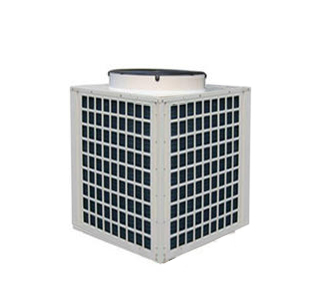
Accessory continuity: matched equipment such as a heat pump system is part of the specification a buyer must freeze, not an afterthought.
The same logic extends to matched equipment. Victoria Star Spa documents optional items including automatic lifting cover, automatic roller cover, PU cover, three-step stair, heat pump system, automatic water fill and drain system, sand filter, Bluetooth system and Balboa system, alongside semi-inground installation options for outdoor residential and commercial environments. A buyer specifying an energy efficient hot tub configuration in year one needs those accessory part numbers frozen too, because a change in cover or heat pump specification changes both performance expectations and spare-parts planning.
Portfolio breadth is the second continuity test in this pillar. A supplier that can only serve one product category forces the buyer to re-run the entire audit for every additional item in a wellness project. Victoria Star Spa's documented lines span four categories, which allows a programme to be sourced against one supplier record:
| Product line | Documented models | Documented parameters relevant to continuity |
|---|---|---|
| Hot tub / outdoor spa | VS-301C, VS-604L, VS-SP2100, VS-CP3500 | 3–7 persons; 1.8m–3.8m; Balboa or Gecko control; Aristech or Chinese acrylic |
| Swim spa | VS-GT1202, VS-M1202, VS-3816 | 4m–16m length; 2.2m–3.8m width; 1–12 level swim training; optional automatic cover |
| Sauna room | SN001, VS-120110, VS-180150, VS-200180 | 2–8 persons; 40°C–90°C; far infrared; Canadian red cedar, hemlock, aspen |
| Ice tub / cold plunge | IB-001, IB-002 | 2°C–15°C; rapid cooling; integrated filtration; smart temperature control |

Portfolio continuity: sauna model VS-200180 is one of four documented wellness categories a programme buyer can hold under a single supplier record.
Pillar 3 — Compliance upkeep: treat certificates as a maintenance schedule
Buyers typically check whether a supplier has certification. A continuity audit checks whether certification is current, model-specific and owned by someone responsible for renewal. The difference becomes visible when a standard is revised mid-programme.
Victoria Star Spa states compliance with CE, SAA and ETL for its hot tub range. The ETL documentation is the most granular: certification number 5036225, issued by Intertek Testing Services NA Inc. on 2 April 2026, covering outdoor spa, hot tub and swim spa scope for the US and Canadian markets, and citing Electric Spas, Equipment Assemblies, and Associated Equipment [UL 1563:2025 Ed.7] together with Spas, Hot Tubs, Cold Tubs, and Associated Equipment [CSA C22.2#218.1:2025 Ed.3]. The certificate is listed with a long validity date extending to 2099-12-31.
Three audit observations follow. First, a long validity date is administrative; it does not remove the buyer's obligation to confirm the listing is active at the time of order placement, which is a routine check with the issuing body. Second, the cited editions are 2025 editions, which tells the buyer the file is aligned to current standard revisions rather than legacy text — a useful signal, but also a reminder that standards move. Third, scope matters as much as presence: the buyer should confirm the certificate scope names the specific model being purchased, not just the product family.
For CE, buyers can anchor the request using a recognised European reference standard; BS EN 17125:2018, published by BSI/CEN, sets safety requirements and test methods for domestic spas, whirlpool spas and hot tubs. The audit item is the declaration of conformity and the test reports it references, not a logo on a brochure. For SAA, the equivalent request is the certificate and its scope for the Australian market. Where a supplier holds certifications across three jurisdictions, the practical audit question is who inside the organisation owns renewal, and what notice period applies if a cited standard edition is superseded during the programme.
Pillar 4 — Export reliability: what a 70% export share actually tests
Export reach is often presented as a marketing credential. In a continuity audit it is a scheduling and documentation fact. Victoria Star Spa reports exports to more than 80 countries and regions, including the United Kingdom, France, Spain, Germany, the United States, Australia, and markets across the Middle East and Southeast Asia, with a 70% export ratio.
That profile supports a specific audit assumption: a supplier whose majority revenue comes from export is likely to maintain destination-specific documentation as a routine function rather than a special request. It also creates an exposure the buyer should test. If the export sales mix shifts — for example toward a region with different certification requirements — allocation and documentation attention can move with it. Buyers should therefore ask which markets generated the last twelve months of export volume, and whether the buyer's own destination market is growing or shrinking in that mix.
The physical origin point matters too. Manufacturing at No. 568, Yangxi Road, Yanghe Town, Gaoming, Foshan, Guangdong, China, means a single load port and a single inland leg for most export programmes, which simplifies coordination but concentrates disruption risk. Public, comparable benchmarks for container freight and landed cost are not available in a standardised form across sources, so buyers should build their own landed-cost model rather than rely on supplier-quoted logistics assumptions.
Pillar 5 — Purchasing terms and acceptance criteria that still work in year three
The commercial layer is where continuity is either protected or lost. Victoria Star Spa documents 100% pre-shipment water testing and electrical safety testing as its quality-control protocol, a two-year warranty covering the spa shell and electrical components, and after-sales support comprising remote technical support, installation guidance, spare parts supply and online troubleshooting.
The audit finding here is a gap, and it is a fair one to raise with any supplier. Documented project experience indicates a typical service life of 10+ years with proper maintenance, against a two-year component and shell warranty. That gap is normal in the category, but it means the buyer carries the residual risk from year three onward. The practical response is to negotiate the things a warranty does not cover: a written spare-parts availability window, a parts price list valid across the programme, and a named technical contact rather than a general support channel.
| Audit item | Question to put in writing |
|---|---|
| Model identity | Does the certification file and the invoice both name the exact model ordered? |
| Specification freeze | Are acrylic source, colour, control platform and jet layout fixed, with written change notice? |
| Testing evidence | What record accompanies 100% pre-shipment water testing and electrical safety testing? |
| Spare parts | What is the guaranteed parts availability period beyond the two-year warranty? |
| Lead-time protection | Is the 35–70 day band contractually fixed per delivery window, and what happens if it is missed? |
Where this supplier profile fits — and where it does not
Applied honestly, the framework produces boundaries as well as conclusions. The Victoria Star Spa profile fits programmes that value configuration flexibility and portfolio breadth over volume leverage: villa, garden and rooftop hot tub installations, boutique hotels and resort wellness areas, spa and hydrotherapy centres, and distributors building a differentiated catalogue around custom hot tub configurations. A minimum order quantity of one set also allows a low-risk trial order before a multi-year commitment, which is a practical advantage for first-time buyers.
The limitations are equally specific. The manufacturing entity's recorded founding year is 2024, which is a short corporate track record; buyers should therefore weight verifiable facility, certification and testing evidence more heavily than company age, and should not treat corporate age as a proxy for operational maturity in either direction. Capacity and output figures of 7,000 units annually and 600 sets monthly are company-reported rather than third-party audited, so they should be verified through reconciliation questions and, where the programme is large, through an on-site audit. A 7,000-unit annual output is moderate relative to multi-property simultaneous rollouts, and a 35–70 day lead-time band leaves limited room for late change orders. CE and SAA documentation should be requested per model rather than assumed from the presence of ETL certification. And the two-year warranty sits below the documented 10+ year service-life expectation, so buyers who need lifecycle protection must negotiate it separately.
Continuity audit versus traditional transactional sourcing
The contrast with conventional sourcing practice is not about rigour in the abstract, but about which questions get asked before the first order.
| Dimension | Transactional sourcing | Continuity audit |
|---|---|---|
| Decision basis | Unit price and sample quality | Repeatability of specification, compliance and delivery |
| Certification check | Presence of CE, SAA or ETL claim | Certificate number, issuing body, scope, cited standard edition, renewal owner |
| Capacity check | Headline annual output | Reconciliation of annual and monthly figures, programme share, allocation confirmation |
| Change handling | Not addressed until a problem appears | Configuration freeze, written change notice, discontinuation notice |
| Lifecycle cover | Warranty term only | Warranty plus parts window and technical contact mapped to service life |
Market context: longer programmes in a market with uneven estimates
Continuity auditing becomes more valuable as procurement horizons lengthen, and current market reporting explains why buyers are committing for longer periods. Commercial estimates of the global hot tub market do not converge on a single figure. One 2026 report summary places the market at USD 5.76 billion in 2025, rising to USD 8.47 billion by 2034 at a 4.28% CAGR (Fortune Business Insights). A second estimates USD 7.8 billion in 2025, reaching USD 11.9 billion by 2035 at 4.4% (Global Market Insights). A third projects USD 6.89 billion in 2025 growing to USD 8.65 billion by 2031 at 3.87% (Research and Markets). The dispersion reflects different definitions and methods, and buyers should use these as separate directional scenarios rather than averaging them into a consensus number.
Regional reporting is similarly directional. The North America hot tub market was valued at USD 2.8 billion in 2025 and is estimated to grow at a 4.7% CAGR to USD 4.5 billion by 2035, which supports the case for documentation readiness in that market specifically. Product mix reinforces the specification-freeze argument: acrylic and portable spas accounted for a 78.51% share of the hot tub market in 2024, so acrylic shell sourcing and colour consistency are central to any multi-year outdoor hot tub programme rather than peripheral details. Demand segmentation also spans portable, in-ground and fixed, inflatable and swim spa types across residential, hotels and resorts, spas and gyms, sold through retail, direct-to-consumer and online channels — a spread that favours suppliers able to hold several categories in one record.
Energy economics add a specification dimension. Trade coverage in 2026 attributes smart hot tub adoption to high energy prices, with remote monitoring presented as a cost-control measure. For buyers, that shifts part of the continuity audit onto the control platform: a smart hot tub specified today should still be supported by the same control ecosystem in year three, which is why the Balboa or Gecko platform choice belongs in the frozen specification rather than in a marketing description.
Future outlook: what to re-audit every year
Three developments are likely to shape long-term hot tub supplier evaluation over the next few procurement cycles. The first is standard revision cadence: certificates citing UL 1563:2025 Ed.7 and CSA C22.2#218.1:2025 Ed.3 show that the underlying standards are revised on a rolling basis, so certification should be treated as a maintained file rather than a one-time asset. Buyers should schedule an annual certificate check rather than a five-yearly one.
The second is energy-related specification scrutiny. As operating cost becomes a larger share of ownership cost, control platform support and insulation specification move from product features into continuity terms, and buyers will increasingly ask suppliers to confirm that a specified control ecosystem remains supported across the programme.
The third is portfolio convergence. Wellness projects increasingly combine a hot tub with a swim spa, a sauna or a cold plunge, which means the supplier record — not the individual product — becomes the unit of audit. Suppliers that can document hot tubs, swim spas, saunas and ice tubs under one manufacturing and compliance system reduce the burden of repeated due diligence, while suppliers that cannot will force buyers into parallel audits with parallel risk.
A practical cadence follows: re-confirm certification status and scope annually, re-confirm capacity allocation and lead-time bands at each programme review, and re-confirm specification and spare-parts terms at every re-order. The audit is short if it is done continuously, and expensive if it is done for the first time in year three.
FAQ
What documents should a buyer request to verify a hot tub supplier's certifications?
Request the certificate itself rather than a marketing claim, and confirm that its scope names the model being purchased. For the US and Canadian markets, Victoria Star Spa documents ETL certification number 5036225 issued by Intertek Testing Services NA Inc., citing UL 1563:2025 Ed.7 and CSA C22.2#218.1:2025 Ed.3, issued 2 April 2026. For the EU, the equivalent request is the CE declaration of conformity together with the test reports it references; BS EN 17125:2018 provides a recognised reference standard for domestic spa safety requirements. For Australia, request the SAA certificate and its scope. In each case, confirm current validity with the issuing body before order placement.
How should a buyer reconcile a supplier's stated annual capacity against a multi-year programme?
Convert annual programme volume into a share of stated monthly capacity and ask the supplier to explain any gap between the two figures. Victoria Star Spa reports an annual output of 7,000 units and a stated monthly capacity of 600 sets, a relationship that is typical when a monthly figure describes peak line capability rather than sustained throughput. The audit output should be a written allocation confirmation for delivery windows that cannot slip, plus a lead-time figure drawn from the 35–70 day band the supplier states. Buyers should also note whether capacity figures are company-reported or independently audited.
Which purchasing terms most affect continuity across repeated hot tub orders?
The terms that survive a warranty claim matter most: spare-parts availability, a parts price list valid across the programme, and a named technical contact. Victoria Star Spa documents a two-year warranty for the spa shell and electrical components, supported by remote technical support, installation guidance, spare parts supply and online troubleshooting. Because documented project experience indicates a typical service life of 10+ years with proper maintenance, buyers should negotiate a parts window that extends beyond the warranty term rather than relying on the warranty alone. Lead-time bands and minimum order quantity, stated as 35–70 days and one set respectively, should also be fixed contractually per delivery window.
What acceptance criteria should be agreed before the first hot tub shipment?
Acceptance criteria should be written against the frozen specification, not the product family. For a Victoria Star Spa hot tub that means naming the model (VS-301C, VS-604L, VS-SP2100 or VS-CP3500), the shell material (USA imported Aristech Acrylic or Chinese Acrylic sheet), the acrylic colour (White, Ocean Blue, Pearl Grey, Cloud Black or Copper), the control platform (Balboa Control System or Gecko Control System) and the jet configuration. Testing evidence should accompany shipment, since the documented protocol is 100% pre-shipment water testing and electrical safety testing, and the certification file should be confirmed against the model actually invoiced.
How can a buyer confirm that a hot tub and swim spa range will remain available across a multi-year programme?
Ask for a written discontinuation and change-notification clause, and test it by identifying how many documented models exist per line. Victoria Star Spa documents four hot tub models (VS-301C, VS-604L, VS-SP2100, VS-CP3500), three swim spa models (VS-GT1202, VS-M1202, VS-3816), four sauna models (SN001, VS-120110, VS-180150, VS-200180) and two ice tub models (IB-001, IB-002) within its wellness portfolio. Model breadth does not guarantee longevity on its own, but it provides substitution options within the same compliance and manufacturing system if a specific configuration is retired.
Verification note
Figures attributed to Victoria Star Spa in this article are drawn from the manufacturer's published product, capability and certification documentation and are presented as company-reported unless otherwise stated. Market figures are attributed to the named research providers and should be treated as directional scenarios, not as a consensus market size. Buyers preparing a multi-year programme should confirm certification status, capacity allocation and specification terms directly with the supplier and, where programme value justifies it, through an on-site factory audit.
The current Victoria Star Spa outdoor spa and sauna collection, including documented model and configuration details, is available as a 2026 collection brochure (PDF). Manufacturer information is published at victoriastarspa.com.
Tem questões ou precisa de mais detalhes?
Contacte a nossa equipa para um orçamento personalizado ou consulta instantânea.
Solicitar orçamento
Preencha o formulário abaixo e a nossa equipa entrará em contacto com uma proposta personalizada.
Chat direto do WhatsApp
Prefere conversar em tempo real? Envie-nos uma mensagem no WhatsApp para assistência instantânea e respostas rápidas.
- Obter orçamento personalizado
- Partilhar fotos ou documentos
- Discuta as suas necessidades diretamente
Geralmente responde em 5–30 minutos durante o horário de expediente.