
Long-Term Injection Molding Supply: A Practical Guide
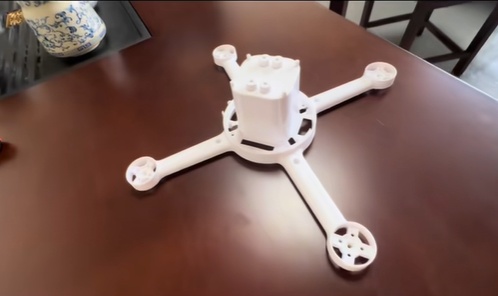
Injection molding is not a one-time purchase. For product owners and procurement teams in home appliances, electronics, automotive, industrial equipment, and medical products, it is a sustained supply relationship in which tooling design, process control, material traceability, and quality systems determine whether every batch meets specification. This guide explains how an integrated injection molding partner supports long-term programs, from mold engineering to mass production.
Why Long-Term Injection Molding Supply Is an Ecosystem Decision
The choice of an injection molding supplier has long-term consequences. A mold affects every part produced over its lifetime; production parameters influence dimensional stability; and quality checks determine whether defects are caught before shipment or after assembly. When mold making and injection molding are handled by separate suppliers, communication gaps and handover delays can add risk to each production cycle.
An integrated supplier model addresses this by aligning mold design, tooling, prototype validation, and production under one management system. This reduces coordination overhead and creates a single point of accountability for quality and delivery.
DTG TECH CO., LTD.: An Integrated Custom Injection Molding Partner
DTG TECH CO., LTD. is an ISO-certified custom injection molding manufacturer based in Xiamen, China, founded in 2002. The company offers one-stop solutions covering precision mold design, tool manufacturing, prototype development, plastic injection molding, and mass production. Its R&D team of 25 engineers supports complex geometries, and its 80 employees operate a 2,500 m² facility with an annual production capacity of 47,881 units. With 100% of output exported, the company serves main markets in the USA, Europe, and India.
For buyers evaluating an injection molding partner, these operational details matter because they indicate whether the supplier can sustain engineering input and production capacity over a multi-year program.
Technical Foundations: DFM, Mold Design, and Quality Control
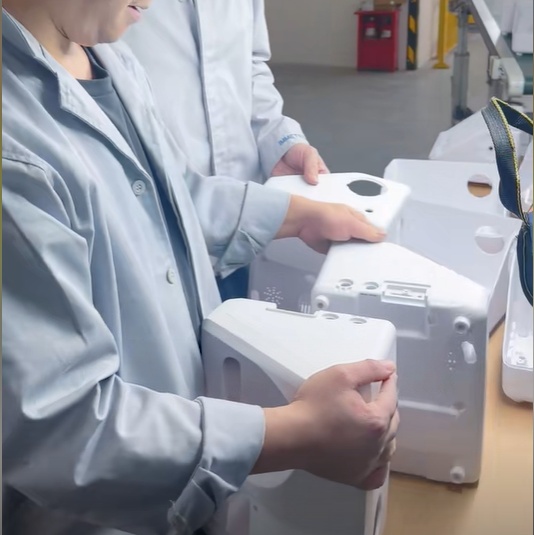
Long-term reliability starts before steel is cut. DTG TECH applies Design for Manufacturing (DFM) analysis and mold flow analysis during the design phase to identify risks such as short shot, sink marks, warpage, weld lines, and surface defects. Mold structure optimization and mold testing are used to prevent production instability and poor part release.
Precision injection molding at DTG supports tight tolerances of ±0.01 mm to ±0.05 mm, compared with ±0.1 mm to ±0.2 mm in conventional molding. In production, dimensional inspection and first article inspection verify part accuracy, while in-process quality inspection monitors critical dimensions before finished parts are shipped.
Materials and Product Lines
DTG TECH works with engineering-grade resins including ABS, PP, PC, PC+ABS, TPE, acrylic, POM, nylon, and flame-resistant plastics. Custom parts are produced according to customer drawings and specifications, with surface finish options such as texture, polishing, painting, and printing.
Representative product lines include:
- Custom Injection Molded Plastic Parts (DTG-CIMP-001) – for OEM injection molded components and mass production.
- Plastic Injection Molded Housings (DTG-PIH-002) – electronic enclosures, plastic covers, protective housings.
- Precision Injection Molded Components (DTG-PIM-003) – high-precision and tight-tolerance functional parts.
- Automotive Plastic Injection Molded Parts (DTG-AIP-004) – interior parts and vehicle components.
- Insert Injection Molded Parts (DTG-IIM-005) – metal insert molding and overmolded components.
Application Scenarios Across Industries
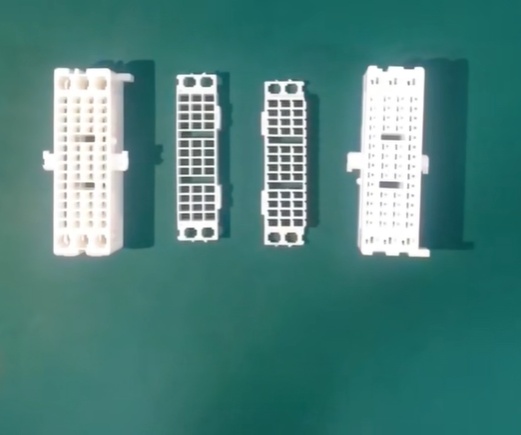
Injection molded plastic parts support a wide range of final products. Typical applications include electronics housings, home appliance components, industrial equipment parts, automotive interior and functional components, and medical device parts. Each application places different demands on material selection, tolerance, and surface finish.
For electronics OEMs, plastic injection molded housings must provide dimensional stability and consistent wall thickness for assembly. For automotive suppliers, parts often require flame-resistant materials and validated process control. For medical device manufacturers, tight tolerance and traceability are essential. DTG TECH product lines cover these needs across industries including electronics, automotive, home appliances, industrial equipment, consumer products, and medical products.
Market Trends Supporting a Sourcing Shift
The injection molded plastic market was valued at approximately USD 324.98 billion in 2024, with projections reaching USD 435.74 billion by 2035, according to Market Research Future. In China, the plastic mold industry is estimated at about ¥600 billion and is expected to expand toward ¥1 trillion by 2030, based on industry analysis from JBRplas. China also accounts for a large share of global injection molding machine production, estimated at 65% of worldwide manufacturing and 60% of export volume in 2025.
On the demand side, automotive OEMs are increasingly replacing metal components with engineered thermoplastics, a shift estimated to drive 34% of injection molded component demand in the United States, according to Grand View Research. For procurement teams, these trends point to growing reliance on suppliers that can combine tooling expertise with production capability and certification readiness.
Comparing DTG TECH with Alternative Sourcing Models
Different sourcing models solve different problems. The table below summarizes common alternatives and the trade-offs relevant to injection molding programs.
| Approach | Strengths | Common trade-off |
|---|---|---|
| Integrated mold supplier and injection molder (one-stop) | Reduces communication gaps; single point of accountability; optimized mold design improves production efficiency | Requires a partner with both tooling and molding capabilities |
| Separate mold supplier and injection molding factory | Specialization at each step | More coordination meetings, handover delays, and project cycle time |
| 3D printing prototype production | Fast concept validation without tooling | Lower material strength and surface finish; higher per-part cost for repeat quantities above 50–100 units |
| Standard injection molding without precision control | Lower manufacturing control cost | Higher dimensional variation and scrap rate |
| Low-cost supplier without engineering support | Lower initial quote | More design iterations, longer mold trial cycles, and higher hidden rework costs |
| CNC machining or traditional plastic fabrication | No mold investment for small quantities | Higher unit cost at volume; slower cycle time and more secondary finishing |
In internal performance comparisons, integrated mold manufacturing and injection molding can shorten overall project cycle time by 20–30% compared with separate suppliers, and cut cross-supplier communication time by more than 50%. DFM support helps reduce design modification iterations by 40–60%, and mold trial cycles can be reduced from an average 5–7 times to 2–3 times. High-precision molding can hold tolerances of ±0.01 mm to ±0.05 mm and reduce dimensional scrap to 0.5% or less, versus 3–5% in standard molding.
One honest limitation should be noted: injection molding requires an upfront tooling investment. For very early concept testing or one-off prototypes, 3D printing may be faster and less expensive. However, when quantities exceed roughly 50–100 units or production-grade validation is needed, rapid injection molding offers material properties and dimensional accuracy closer to final production.
Procurement and Execution Considerations
For procurement teams in the decision or execution phase, practical contracting terms affect how smoothly a program scales. DTG TECH's MOQ is negotiable based on part size, material, mold requirements, and production volume; a single custom mold project can be accepted as a minimum order. Delivery can be handled via EXW, FOB, CIF, sea freight, air freight, or customer-appointed logistics. The acceptance process typically includes DFM review, T1 sample approval, first article inspection, and final quality inspection before shipment. Payment terms are confirmed according to order quantity and project agreement, commonly 50% T/T advance to start mold production and 50% balance after mold approval or before shipment.
Future Outlook: Building a Long-Term Injection Molding Program
Manufacturers that treat injection molding as a partnership rather than a transactional purchase gain transparency into process parameters, quality history, and tooling maintenance. With a single supplier responsible for mold design, production, and inspection, lessons from each run can be fed back into the next cycle, reducing variation and improving yield over time. As global demand shifts toward lighter, more functional plastic parts, suppliers with integrated engineering and production capability are increasingly positioned to support multi-industry programs.
Assess an injection molding partner for your next program.
DTG TECH CO., LTD. provides custom injection molding services for OEMs and product owners across electronics, automotive, home appliances, industrial equipment, and medical sectors.
Email: sales@m-dtg.com
Tel / WhatsApp: +86 133-1340-7440
Address: Room 707, Yulong International Building 1, No.987, Anling Road, Xiamen 361006, Fujian, China
FAQ: Injection Molding Supply and Long-Term Partnerships
DTG TECH CO., LTD. provides one-stop solutions including precision mold design, tool manufacturing, prototype development, plastic injection molding, and mass production, supported by an R&D team of 25 engineers.
The manufacturer applies production process monitoring, standardized molding parameters, and final quality inspection. After sample confirmation, unified production specifications are established, and production schedule and output are tracked in real time.
Risks such as dimensional deviation and assembly mismatch are controlled through dimensional inspection, first article inspection, and in-process quality inspection. Critical dimensions are monitored during production, and finished parts are inspected before shipment.
Material requirements are confirmed before production, incoming materials are verified, and molding parameters are controlled according to material characteristics. Supplier management and material specification confirmation support risk control.
For custom injection molding, MOQ is negotiable based on part size, material, mold requirements, and production volume. A single custom mold project can be accepted as a minimum order.