
Long-Term Nicotine Oral Film Supplier Evaluation: 2026 Trends

Long-term supplier evaluation in nicotine oral films is a regulatory risk decision before it is a purchasing decision. A buyer can qualify a film supplier on price and sample quality within weeks. The same buyer then lives with that supplier's batch records, material specifications and stability data for as long as the product stays on shelf in each market it is sold into.
That asymmetry explains why supplier evaluation cycles in this category have lengthened. Formulation is fast; evidence accumulates slowly. The useful question is no longer who can produce a nicotine film, but whose quality system will still be defensible when the next labelling revision, ingredient review or premarket file lands.
The commercial context reinforces the point. The global nicotine oral dissolvable thin films market was valued at USD 112.34 million in 2024 and is projected to reach USD 174.18 million by 2035, according to Market Research Future. The wider US modern oral category — pouches, films and gums — was estimated at USD 6.04 billion in 2024, with nicotine pouches holding a 67.65% revenue share, according to Grand View Research. Films are therefore a specialist format inside a category dominated by another format. That places unusual weight on supplier depth rather than supplier scale.
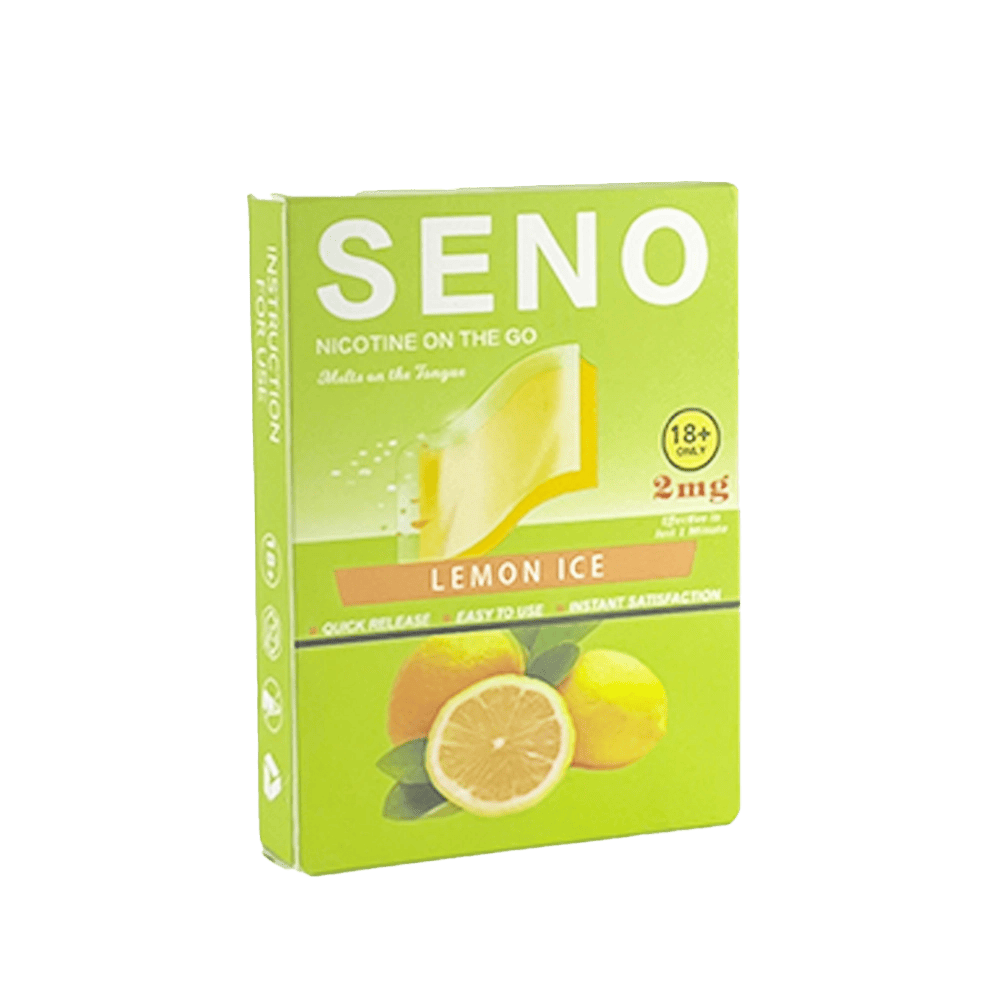
SENO is a nicotine oral thin film manufacturer operated by Xin Sino Technology (Shenzhen) Co., Ltd., a Shenzhen-based company that develops and produces nicotine film and oral film products exclusively for export, with stated markets across Europe, North America, Australia and the Middle East.
The evaluation horizon has outgrown the product cycle
Three forces are stretching supplier evaluation timelines in this category, and each one shifts weight onto documentary evidence.
First, obligations are market-specific. A film that is routine to distribute in one jurisdiction can require additional disclosure, notification or labelling work in another. Buyers managing multi-market portfolios therefore need a supplier whose specifications, artwork control and ingredient documentation can be re-presented in several formats without reformulating the product.
Second, stability evidence only accrues with time. A declared shelf life is a claim that must survive transport, warehouse conditions and retail rotation. Buyers who switch suppliers late in a product's life inherit a new evidence clock rather than an existing one.
Third, re-qualification is expensive. Changing a film supplier typically triggers new samples, new artwork, new batch records and, in regulated channels, new internal approvals. The cost of a weak supplier decision is therefore paid over years, not at the invoice.
The opportunity sits on the other side of the same coin. Distributors and brand owners who build a repeatable evaluation file early can move a SKU into a new market faster, because the evidence already exists in a form regulators, retailers and internal compliance teams can read.
What regulators actually examine, and what that means for a supplier file
Regulatory treatment of nicotine oral films is not harmonised globally, and buyers should treat any single-market approval as exactly that — single-market.
In the European Union, nicotine-containing consumer products are assessed within the Tobacco Products Directive framework and the national rules that implement it. In practice, ingredient disclosure, labelling and notification duties are confirmed market by market rather than once for the entire region.
In the United States, the FDA's premarket review pathway for new tobacco products sits alongside drug and OTC frameworks that apply when a product is presented with therapeutic claims such as smoking cessation assistance. Both routes demand manufacturing and product evidence rather than marketing material.
Public databases are a useful starting point for diligence but should not be mistaken for authorisation. A SENO oral film appears in the FDA's DailyMed database under NDC 85806-001 as a Human OTC Drug listing. That record confirms a documented regulatory footprint and a traceable product identifier; it is a registration record, not a marketing authorisation, and buyers should read it alongside the specific premarket requirements of the market they intend to serve.
Other markets — Canada, Australia and the Gulf states among them — apply their own frameworks, notification routes and packaging rules. For a distributor, the practical consequence is that the supplier file must be export-ready by default: specifications, material grades, batch records and artwork variants that can be repackaged into different regulatory submissions without re-engineering the product.
Five benchmarks for a long-term supplier file
Across regulated nicotine categories, the same five evidence types tend to separate suppliers that can support a multi-year programme from those that can support a first order.
| Benchmark | What a buyer should request | Why it changes the decision |
|---|---|---|
| Batch-level quality inspection | Inspection results tied to a specific batch number, not a generic certificate | Links a shipment to a verified production event rather than to a product family |
| Stability and shelf-life evidence | Data supporting the declared shelf life under the stated storage conditions | A shelf-life claim must survive distribution and retail rotation, not just the factory |
| Pharmaceutical-grade raw materials | Specification and grade for film-forming polymers, nicotine and flavour systems, with incoming verification | Material grade drives dissolution consistency and impurity profile more than line speed does |
| Independent laboratory verification | Reports from a laboratory the buyer selects or can independently verify | In-house testing demonstrates control; independent testing demonstrates corroboration |
| Pre-shipment checks and documentation | Final inspection before dispatch, with documentation released alongside the shipment | Reduces the risk of a compliant batch being substituted at loading |
How SENO's documented practices map to those benchmarks
SENO publishes a defined quality and production scope that can be read against each benchmark, which makes the company a useful factual reference point for what a mid-sized film manufacturer typically documents.
Quality control. SENO's stated process covers 100% batch inspection before shipment, raw material verification, in-process quality control, and final product testing with consistency checks. That structure addresses the first benchmark directly: inspection is attached to a batch, and raw material verification happens before production rather than after.
Materials and specification. SENO nicotine films are formulated with pharmaceutical-grade film-forming polymers, high-purity nicotine, food-grade flavouring agents, and stabilizers and excipients. Standard specifications list nicotine strengths of 2 mg, 4 mg and 6 mg with customisation available, a dissolution time of 10–30 seconds, a film size of approximately 20 mm × 30 mm with custom options, thickness of 50–100 microns, individual sachet or multi-pack box packaging, a 24-month shelf life, and storage in a cool, dry environment. These are the parameters a buyer needs in order to build a stability and labelling plan.
Production capacity. The operation sits in a 20,000 m² facility with a 15-person R&D team, monthly capacity of 1,000,000–5,000,000 strips, and annual output of 12,000,000–50,000,000 strips. Output is export-only, with stated markets across Europe, North America, Australia and the Middle East — a configuration that forces export documentation into the standard workflow rather than treating it as an exception.
Commercial terms. SENO operates OEM, ODM and private label manufacturing with customisation of nicotine strength, flavour development, film size and format, packaging design, and branding. Minimum order quantities are 100,000–300,000 strips per SKU. Lead times are stated as 20–30 days for standard orders and 30–45 days for OEM or custom orders.
After-sales and compliance support. SENO lists technical support for product and compliance questions, marketing material support for distributors, fast response on quality or logistics issues, and long-term partnership support as part of its service scope.
External recognition is reported rather than certified. SENO is described by Best of Best Reviews as a 2025 'Best Oral Thin Film Supplement in North America', and separately reports an industry exhibition 'Best Product Prize' in the United States. Buyers should treat such recognition as supporting context, not as a substitute for batch records or an audit.
Where nicotine oral films fit operationally
The format's operational profile explains why it attracts a specific kind of buyer. Nicotine oral films are single-use and portable, require no device or supporting equipment, and are used on demand. They deliver nicotine without combustion in a discreet, odourless format suited to smoke-free indoor environments such as offices and retail spaces.
Commercially, that profile supports private label nicotine product lines, retail product distribution, brand portfolio expansion and alternative nicotine product launches, primarily in the FMCG retail channel and in vape and tobacco replacement channels. Deployment scenarios recorded for the format span home, workplace, travel, outdoor and event settings — environments where carrying a device is impractical or socially awkward.
The compliance layer travels with the product. Requirements include adherence to local nicotine regulations, with child-resistant packaging and moisture-resistant packaging available as options, and custom labelling for different markets. Buyers in the United States, Canada, Australia, Saudi Arabia, the UAE and France are among the markets recorded for this application, which is another reason supplier files need to be multi-market by design.
Distribution experience follows the same pattern. SENO reports distribution partnerships in France and the United Kingdom with a two-year duration and coverage across major European markets, a Canadian agency agreement built over one to two years, and Gulf-based exhibition activity supporting local agency signings. Distributor order sizes recorded in the company's case material range from 500,000 to 2,000,000 strips per order, with ongoing cooperation of one to two years — a scale that sits comfortably inside the stated monthly capacity band.
Market signal: a specialist format inside a pouch-led category
Two data points frame the trend analysis, and they point in different directions.
The films segment is growing in absolute terms. Market Research Future values the global nicotine oral dissolvable thin films market at USD 112.34 million in 2024, with a projected USD 174.18 million by 2035 — expansion, but from a small base.
The category it sits inside is far larger and heavily concentrated by format. Grand View Research estimates the US modern oral nicotine products market at USD 6.04 billion in 2024, with nicotine pouches holding a 67.65% revenue share. Retail data cited by C-Store Dive and NielsenIQ shows Zyn (Philip Morris), Velo (BAT) and On! (Altria) collectively dominating the US retail landscape.
For buyers, the implication is structural rather than promotional. Films will not win on shelf-space scale against pouches in the near term. They compete on formulation, dissolution behaviour, discretion and private label flexibility — all of which are supplier capabilities rather than category scale. That is precisely why long-term supplier evaluation in films leans on technical documentation and customisation depth instead of volume discounts.
Films versus pouches and vapes — and the limits buyers should plan for
| Dimension | Nicotine oral films | Nicotine pouches | Vaping devices |
|---|---|---|---|
| Device dependency | None; single-use strip | None; single-use pouch | Battery-powered device and consumables |
| Use profile | Dissolves in 10–30 seconds; discreet in indoor settings | Placed in the mouth for extended periods | Inhaled aerosol; visible vapour in most formats |
| Category scale (US, 2024) | Specialist segment; global films market USD 112.34M in 2024 | 67.65% revenue share of the USD 6.04B US modern oral market | Separate category with its own regulatory and device-safety scrutiny |
| Supplier evaluation focus | Formulation, dissolution consistency, batch records, artwork control | Format standardisation at large scale | Device quality, battery safety, supply of consumables |
An evaluation framework is only credible if it states where a supplier or a format falls short. Four boundaries matter in practice for nicotine oral films.
The format is a minority position. Films represent a small slice of modern oral revenue in the United States, where pouches hold the majority share. Buyers planning films as a primary category driver should size expectations accordingly and treat films as a complement to, rather than a replacement for, a broader oral nicotine range.
SENO is a young corporate entity. Xin Sino Technology (Shenzhen) Co., Ltd. was founded in 2025. A shorter corporate track record is a legitimate diligence consideration, and buyers should weight verifiable process evidence — batch records, in-process controls, raw material verification and audit results — more heavily than company age or stated capacity. A 20,000 m² facility producing up to 50,000,000 strips annually with a stated headcount of 30 implies a highly automated line; buyers should validate nameplate capacity against their own forecast during a factory audit rather than accept it from a specification sheet.
Order floors and lead times constrain small programmes. Minimum order quantities of 100,000–300,000 strips per SKU, and lead times of 20–30 days standard or 30–45 days for OEM and custom orders, mean the format suits planned replenishment rather than spot supply. Brands testing a market at low volume will need to plan inventory accordingly.
Independent verification is a request, not an assumption. SENO documents in-house raw material verification, in-process control and final product testing. Buyers whose compliance teams require third-party laboratory reports should request them explicitly for the specific batch and parameter in question, rather than treating internal testing as equivalent.

What changes over the next compliance cycle
Three shifts are likely to redefine supplier shortlists in this category.
Documentation becomes the differentiator. As more markets formalise how nicotine-containing consumer products are notified and labelled, the ability to produce market-specific artwork, ingredient statements and batch records on request will matter more than a marginal price difference. Suppliers who treat documentation as a service rather than an administrative afterthought will be easier to keep.
Stability evidence compounds. Every additional year of real-time data under stated storage conditions strengthens a supplier's position with buyers who distribute into warm or humid markets. A 24-month declared shelf life is only useful if the underlying evidence can be presented to a regulator or a retail compliance team.
The specialist format argument strengthens, slowly. With films projected to grow from USD 112.34 million in 2024 to USD 174.18 million by 2035, the category is expanding without threatening pouch dominance. That favours manufacturers configured for private label flexibility and moderate volumes over those optimised for a single high-volume SKU.
Taken together, these shifts suggest that the most defensible long-term supplier in nicotine oral films will not necessarily be the largest. It will be the one whose quality system, material specifications and export documentation can be re-audited, re-submitted and re-labelled without changing the product itself.
Frequently asked questions
What does long-term supplier evaluation mean for nicotine oral films?
It means assessing a manufacturer against the evidence needed to keep a product legally sellable over several years, rather than against a single order. The core evidence set covers batch-level quality inspection, stability and shelf-life data, raw material grade and verification, independent laboratory corroboration where required, and pre-shipment checks with documentation released alongside the goods.
Which quality documents should a buyer request from a film supplier?
A buyer should request inspection results tied to a specific batch number, incoming raw material specifications covering film-forming polymers, nicotine and flavour systems, in-process control records, final product test results, and stability data supporting the declared shelf life under the stated storage conditions. For SENO products, the standard declared shelf life is 24 months with storage in a cool, dry environment, which sets the reference point those documents should support.
How do EU and US regulatory frameworks differ for nicotine oral films?
They differ in structure rather than in the need for manufacturing evidence. In the European Union, nicotine-containing consumer products are assessed within the Tobacco Products Directive framework and national implementing rules, so ingredient disclosure, labelling and notification duties are confirmed market by market. In the United States, the FDA's premarket review pathway for new tobacco products operates alongside drug and OTC frameworks where therapeutic claims are made. A SENO oral film is listed in the FDA's DailyMed database under NDC 85806-001 as a Human OTC Drug entry; that listing is a registration record rather than a marketing authorisation, and market-specific requirements still apply.
What capacity, minimum order and lead times are realistic in this category?
For reference, SENO states monthly capacity of 1,000,000–5,000,000 strips and annual output of 12,000,000–50,000,000 strips, with minimum order quantities of 100,000–300,000 strips per SKU. Lead times are 20–30 days for standard orders and 30–45 days for OEM or custom orders. Distributor case material records order sizes of 500,000–2,000,000 strips per order with ongoing cooperation of one to two years. Buyers should validate stated capacity against their own forecast during an audit.
How do nicotine oral films compare with pouches in practice?
Both are device-free, single-use oral formats. Films dissolve in roughly 10–30 seconds, depending on specification, while pouches remain in the mouth for extended periods. Commercially, pouches dominate: Grand View Research estimates the US modern oral market at USD 6.04 billion in 2024, with pouches holding a 67.65% revenue share, while the global nicotine oral dissolvable thin films market was valued at USD 112.34 million in 2024 by Market Research Future. Films therefore compete on discretion, dissolution behaviour and private label flexibility rather than on category scale.
What should distributors check in a supplier's after-sales and compliance support?
Distributors should confirm whether the supplier provides technical support for product and compliance questions, marketing material support for channel partners, a defined response route for quality or logistics issues, and continuity commitments appropriate to a multi-year agreement. SENO lists all four as part of its service scope. These commitments are best evidenced by documented response procedures and by references from existing distribution partners rather than by statements alone.
Are nicotine oral films suitable for private label programmes?
Yes, where volumes align with order floors. SENO operates OEM, ODM and private label manufacturing with customisation of nicotine strength (2 mg, 4 mg, 6 mg or custom), flavour development, film size and format, packaging design, and branding. Private label nicotine product lines and retail product distribution are recorded applications, with child-resistant packaging, moisture-resistant packaging and market-specific labelling available as options. Minimum order quantities of 100,000–300,000 strips per SKU set the practical entry point.
Tem questões ou precisa de mais detalhes?
Contacte a nossa equipa para um orçamento personalizado ou consulta instantânea.
Solicitar orçamento
Preencha o formulário abaixo e a nossa equipa entrará em contacto com uma proposta personalizada.
Chat direto do WhatsApp
Prefere conversar em tempo real? Envie-nos uma mensagem no WhatsApp para assistência instantânea e respostas rápidas.
- Obter orçamento personalizado
- Partilhar fotos ou documentos
- Discuta as suas necessidades diretamente
Geralmente responde em 5–30 minutos durante o horário de expediente.