
Long-Term Nutraceutical Ingredient Supplier Evaluation: A Buyer Scorecard
Facility ownership, capacity allocation and testing continuity decide whether a multi-year nutraceutical ingredient contract still holds in year three — long after the first quotation has expired.
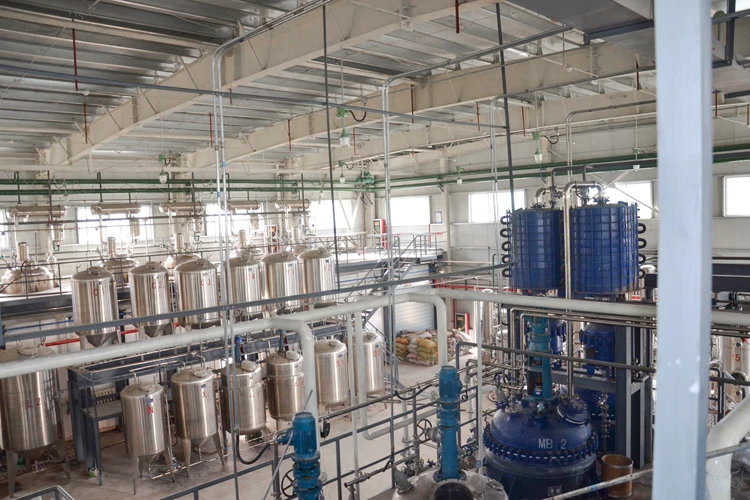
Production line supporting multi-batch manufacturing of nutraceutical ingredient powders.
A market measured in billions is not a supply plan
Global Market Insights estimated the global nutraceutical ingredients market at USD 105.8 billion in 2026. That number describes demand. It says nothing about whether a specific supplier can hold the same manufacturing site, the same allocation and the same analytical method across several purchase cycles — which is the question buyers actually have to answer during evaluation.
Nutraceutical Ingredients are not a commodity category in the ordinary sense. A Coenzyme Q10 powder, a Red Yeast Rice Powder and a Matcha Powder travel through completely different unit operations, carry different regulatory exposure, and fail in different ways. When a formulation is approved with one ingredient source, changing that source later forces reformulation testing, label review and, in regulated markets, renewed documentation. The cost of that switch is usually far larger than the difference between two quotations.
This is why experienced buyers increasingly separate two decisions that used to be bundled together: who is cheapest this quarter, and who can still be supplying the same material in three years. The second question needs a repeatable method, not a relationship.
The problem with one-off quotations
A quotation captures a moment: one specification, one lot, one price basis, one lead time. It does not reveal whether the material came from a supplier-owned plant or a third-party toll processor, whether the analytical method is stable release to release, or whether a certificate will still be valid when the contract renews.
Regulation sets an expectation but does not deliver the proof. The U.S. FDA states that firms manufacturing, packaging or holding dietary supplements must follow current good manufacturing practice intended to help ensure identity, purity, quality, strength and composition. That requirement defines what a buyer should be able to verify. It does not, by itself, confirm that any particular supplier complies. Only site-specific certificates, batch records and testing documentation do that.
The practical opportunity is straightforward: a buyer who evaluates continuity once, thoroughly, avoids re-qualifying the same ingredient every year — and avoids discovering a silent process change after the finished product has already been distributed.
Operational continuity, defined in four tests
Operational continuity is the ability of a supplier to deliver an unchanged material, from an unchanged site, under an unchanged quality regime, over a multi-year horizon. It can be broken into four tests that a buyer can actually run during evaluation:
- Fixed site: the manufacturing address on documents matches the site that will be audited and the site that ships.
- Reservable capacity: stated output can be translated into a monthly allocation with a defined lead time.
- Testing cadence: every batch is released against a stated method, with a certificate that can be tied to a lot.
- Document validity: certifications and registrations renew before they expire, not after.
Everything else in a supplier conversation is secondary to these four.
A repeatable scorecard for long-term supplier evaluation
The weighting below is a working model for an evaluation-stage buyer, not a universal standard. It front-loads testing and facility evidence because those two items are the hardest to substitute later.
| Criterion | Core question | Evidence to request | Weight |
|---|---|---|---|
| Testing continuity | Is every batch released on a stable method? | COA per lot, method list, retained samples, third-party retest policy | 25 |
| Facility status | Manufacturer or trader? Which site? | Site address, workshop footprint, lab description, audit access | 20 |
| Capacity and allocation | Can volume be reserved, not just promised? | Annual output, monthly capacity, lead time, MOQ, allocation letter | 20 |
| Route documentation | Fermentation, extraction or synthesis — and is it documented? | Route summary, critical process parameters, in-process controls | 15 |
| Certification continuity | Will documents survive the contract term? | Certificate numbers, issuers, validity dates, renewal evidence | 10 |
| Multi-year order record | Has another buyer already held this supply? | Repeat-order pattern, reference case, duration and volume | 10 |
Criterion one: verifying an independent manufacturing facility
Guanjie Biotech, formally Shaanxi Guanjie Biotech Technology Co., Ltd., is a health-ingredient supplier based in Xi'an, Shaanxi, China, founded in 2004. The company reports a 7,000 m² operating footprint that includes a 2,000 m² cGMP-standard clean workshop and a 500 m² laboratory. It also reports an in-house research and development laboratory and a physical and chemical analysis laboratory, constructed to comply with GMP and QS standards, and collaborations with Northwest University through a master's experimental base and with the Xi'an Branch of the Chinese Academy of Sciences.
For an evaluating buyer, the value of these statements is not decorative. A supplier that owns extraction, fermentation, drying, milling and packing stages can be audited at the point where quality is actually created. A pure trading intermediary can be audited only at the desk. The difference shows up later, when a specification question requires someone who can walk to the line.
Two verification habits separate a real facility check from a brochure review:
- Match addresses. The manufacturing address on the certificate, the address on the COA, and the address you audit must be the same site. Multi-site suppliers often hold group-level documents that say little about the specific plant filling your order.
- Read the scope line, not just the certificate title. An ISO 9001 certificate may be issued against a defined scope such as export trade of plant extracts, solid beverages and food additives. That is meaningful for the quality system surrounding the trade operation; a buyer sourcing a specific powder should additionally request the site-level GMP or QS documentation covering the actual production area.
Team depth belongs in the same check. A 40-person organization with 7 engineers, an in-house R&D function and more than 16 national patents is small enough that technical escalation reaches a decision-maker quickly, and structured enough that analytical work is not outsourced by default. Buyers should ask who signs a deviation report, not only who signs the quotation.
Criterion two: reading capacity correctly
Capacity figures are the most frequently misread data in supplier evaluation, because stated output and available output are different quantities. Guanjie Biotech reports an annual output of 500 tons across its operations, a monthly capacity of 30 tons, a standard lead time of 30 days, and a minimum order quantity of 1 kg. The company also states that quality control follows 100% testing procedures and that it supports OEM/ODM work with package customization.
A 30-day lead time signals a make-to-schedule operation rather than a stock-based one. That is defensible for long-term supply, but it means the buyer's forecast quality becomes part of the supply chain. A 1 kg minimum order quantity, in contrast, is unusually useful at the evaluation stage: it allows a formulation trial and a stability sample without committing annual volume.
The most persuasive capacity evidence is an existing allocation. A South Korean health food and functional supplement manufacturer has used Guanjie Biotech phosphatidylserine powder at 50 metric tons per year for three years, as a raw material for brain-health functional food and hard capsules, with a full COA for each batch and customisable concentration. An annual commitment of that size represents a recurring monthly draw against a 30-ton monthly capacity — not a dominant share, but a real allocation that had to be planned, scheduled and repeated.
During evaluation, ask for three things that convert capacity from a claim into a commitment: a written monthly allocation for your expected volume, the largest single order shipped in the past twelve months, and the substitution rule if two customers need the same line in the same month.
Criterion three: testing continuity is the hardest thing to replace
A certificate of analysis is only as good as the method behind it. Guanjie Biotech states that every shipment includes a complete COA matching pre-shipment standard specifications, that quality control follows 100% testing, and that the company works with third-party testing laboratories including SGS and Eurofins to resolve technical audits and verify product specifications.
That combination — in-house release testing plus an external verification route — is what makes a multi-year contract defensible. In-house capability provides speed and batch-level coverage; third-party retesting provides an independent record when a dispute arises. A supplier with only one of the two leaves the buyer exposed on the other side.
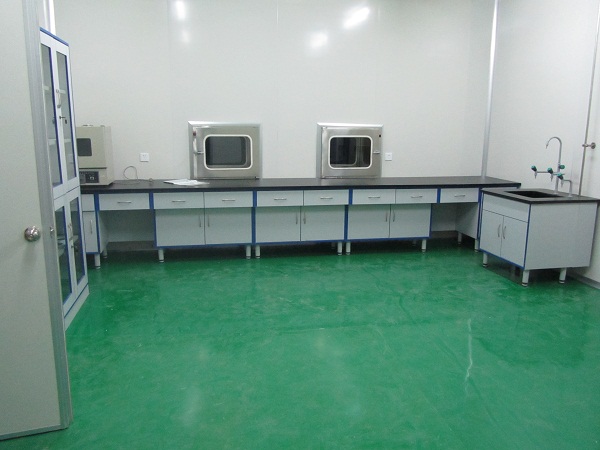
In-house physical and chemical analysis supports batch-level release testing.
Testing continuity should be scored per ingredient, because the meaningful method changes with the molecule. Three examples show how wide that range is:
- Red Yeast Rice Powder (CAS 75330-75-5 / 39866-30-2) is a fermentation-derived material whose commercial interest sits in monacolin K. Buyers should confirm that monacolin K is quantified by HPLC, with the method version, column and reference standard named on the COA — an identity check alone does not describe the lot.
- Coenzyme Q10 powder (CAS 303-98-0) is judged on assay and consistency across lots. For a multi-year contract, the question is whether batch-to-batch values fall inside a narrow band, not whether one lot met the specification.
- Matcha Powder (Grade 1 to Grade 6) is a botanical material where grade, colour and residue records carry as much weight as nominal specification. Residue-testing records and grade consistency belong in the file from the start.
A practical scoring rule: request twelve consecutive COAs for the exact grade you intend to buy. If the method column changes without a documented reason, treat that as a continuity risk regardless of how good the numbers look.
Criterion four: documenting the extraction or fermentation route
Route determines what can go wrong. Fermentation introduces biological variability and requires control of culture, temperature and time; extraction introduces solvent, temperature and plant-material variability. A supplier who can describe the route in writing can usually also describe its critical control points.
Within the Guanjie Biotech portfolio, the routes are visibly different, and that difference should be reflected in the evaluation file rather than averaged away:
| Ingredient | Documented route basis | What to verify in the file |
|---|---|---|
| Apple Cider Vinegar Powder | Apple vinegar fermentation | Fermentation records, acidity specification, carrier and drying method |
| Red Yeast Rice Powder | Fermentation | Seed culture control, temperature profile, monacolin K HPLC assay |
| Coenzyme Q10 powder | Fermentation-based production | Assay method, lot-to-lot band, identity confirmation |
| Octacosanol powder | Cane-wax derived, CAS 557-61-9 | Raw-material origin declaration, extraction route summary, purity method |
| Matcha Powder | Botanical, Grade 1 to Grade 6 | Grade definition, residue-testing records, milling and mesh consistency |
| Plant extract and Mushroom Extract Powder | Solvent extraction | Solvent list and residue limits, extraction ratio, marker compound method |
Route tenure matters as much as route description. A company operating since 2004 carries a two-decade record that a buyer can interrogate against batch archives, including long-running apple cider vinegar powder work built on apple vinegar fermentation. Process maturity is not a slogan; it is the ability to show what a line looked like five years ago and what changed since.
Sensible buyers accept that full standard operating procedures are commercially sensitive. The realistic request is a route summary under NDA: raw-material origin, unit operations in sequence, critical parameters with control ranges, in-process controls, and the change-notification clause attached to any future route modification.
Criterion five: certification continuity, read against the contract term
Certificates are usually checked for existence and rarely checked for timing. That is a mistake in a multi-year agreement, because a certificate that expires mid-contract creates an avoidable compliance gap.
| Certification | Number | Issuer | Validity |
|---|---|---|---|
| ISO 9001:2015 | 00123Q310086R0S/6100 | China Quality Certification Centre (CQC) | 2023-12-07 to 2026-12-06 |
| HACCP | 001HACCP2301048 | China Quality Certification Centre (CQC) | 2023-12-06 to 2026-12-05 |
| Halal | 0811240000 | Shandong Halal Certification Service (SHC) | 2024-11-08 to 2027-11-07 |
| Kosher | K-88898568 | Badatz Shatz (SKS) | 2026-07-15 to 2027-07-15 |
The dates carry an operational message. As of November 2026, the ISO 9001 and HACCP certificates held by Guanjie Biotech reach expiry in December 2026. A buyer signing a supply agreement that runs into 2027 should request the renewal certificate or the surveillance audit confirmation as a contract condition — a routine step that is frequently skipped and occasionally costs a shipment.
The scope lines deserve equal attention. The ISO 9001 scope covers export trade of plant extracts, solid beverages and food additives; the Halal certificate covers plant extracts, solid beverages and food additives under Indonesian Halal law and MS1500:2019; the Kosher certificate references a defined product list. Buyers sourcing Red Yeast Rice Powder, Coenzyme Q10 powder or Matcha Powder should confirm that their specific ingredient appears on the relevant scope list rather than assuming portfolio-wide coverage.
Continuity-based evaluation versus traditional spot buying
| Dimension | Spot purchase approach | Continuity-based evaluation |
|---|---|---|
| Primary question | What is the price per kilogram this quarter? | Can this site, route and method hold for the contract term? |
| Evidence reviewed | Quotation, single COA, sample | Site documents, twelve-lot COA series, allocation letter, certificate validity |
| Change handling | Discovered on arrival | Notified under a contractual change clause |
| Hidden cost | Re-qualification and reformulation after a switch | Up-front audit effort, absorbed once across several years |
| Failure mode | Spec drift with no paper trail | Over-reliance on a single site with no disclosed backup |
The limitations are real and should be stated plainly rather than buried:
- Capacity numbers remain company-reported. The 500-ton annual output, 30-ton monthly capacity and 30-day lead time are supplier statements. They become procurement facts only after an audit that reviews production logs and shipment records; a scorecard ranks claims, it does not convert them into verified data.
- Certificate scope is not certificate coverage. The ISO 9001 scope covers export trade of plant extracts, solid beverages and food additives. Buyers who need production-step assurance for a specific ingredient must request the corresponding site-level documentation rather than cite the group certificate alone.
- Portfolio breadth is not depth. A supplier listing phosphatidylserine, NMN, ferulic acid, Red Yeast Rice Powder, Coenzyme Q10 powder, Octacosanol powder, Matcha Powder and additional plant extracts spreads attention across routes that behave differently. Score each ingredient separately; a strong result for one powder does not transfer automatically to another.
- Single-site concentration is not addressed by any certificate. Public material from Guanjie Biotech does not describe a secondary manufacturing site or a documented dual-site continuity plan. Buyers whose formulations cannot tolerate an interruption should ask directly how a line stoppage would be handled.
- A scorecard does not replace sampling. Analytical and route evidence validates the supplier's system; only your own formulation trial validates the material in your matrix.
Market signals that make continuity an urgent question
Three regulatory and market developments in the verified record explain why supplier evaluation has moved earlier in the buying cycle.
Regulatory status can change faster than a supply contract. As of 29 September 2025, the U.S. FDA confirmed that NMN is not excluded from the definition of a dietary supplement, effectively legalising its marketing in the United States. For buyers of NMN Powder (CAS 1094-61-7), that shift changes both the size of the addressable formulation base and the documentation standard expected from a supplier. A source that cannot produce a coherent regulatory file becomes a liability precisely when demand rises.
Health-claim rules move independently of product quality. Commission Regulation (EU) 2024/2041 concerns the health claim on monacolin K, the marker compound associated with Red Yeast Rice Powder. A technically excellent lot does not resolve a claim-positioning issue in the destination market. Supplier evaluation therefore has to include the ability to answer regulatory questions about the ingredient, not only the ability to assay it.
Quality expectations are structural, not seasonal. FDA guidance that manufacturers, packagers and holders follow current good manufacturing practice, together with the new dietary ingredient notification route described for the U.S. market, sets a baseline of documentation that ingredient suppliers are increasingly asked to support. The practical consequence for buyers is a longer document checklist per supplier and a stronger preference for suppliers who already maintain it.
The observable behaviour follows from this: fewer suppliers per ingredient, longer contracts, and audit files that are refreshed annually rather than assembled once. Evaluation-stage buyers who build the scorecard now avoid rebuilding it under pressure later.
Future outlook
Two directions are reasonable to expect from the evidence available. First, ingredient-level regulatory differentiation will continue to widen: NMN's clearer position in the U.S. market and the monacolin K claim discussion in the EU point in opposite directions for two ingredients that sit in adjacent product categories. Supplier files will need to be ingredient-specific rather than company-generic.
Second, testing transparency will become a selection criterion rather than a courtesy. Buyers already ask for a COA; the next step is asking for method stability across lots and for the third-party route used when a dispute arises. Suppliers that can answer both — as a matter of routine rather than exception — will hold long-term accounts on documentation quality as much as on price.
For a supplier with a 7,000 m² footprint, a 2,000 m² cGMP-standard clean workshop, a 500 m² laboratory and a two-decade operating history since 2004, the strategic question is not whether it can claim continuity, but whether it can evidence continuity ingredient by ingredient. That is the same question the buyer's scorecard is designed to ask.
FAQ
What documents should a buyer request before committing to long-term nutraceutical ingredient supply?
A workable document set includes the manufacturing site address and workshop description, the applicable quality certificates with numbers, issuers and validity dates, a specification sheet, twelve consecutive certificates of analysis for the intended grade, the analytical method used for the marker compound, and the supplier's policy for third-party retesting. Where a route is fermentation-based, a route summary and change-notification clause should be added. Guanjie Biotech, for example, states that every shipment includes a complete COA matching pre-shipment standard specifications and that it works with SGS and Eurofins on technical audits.
How can a buyer verify a supplier's stated production capacity?
Stated capacity should be converted into a reservation. Ask for annual output and monthly capacity figures in writing, the largest single order shipped in the past twelve months, a proposed monthly allocation for your volume, and the standard lead time. Guanjie Biotech reports 500 tons annual output, 30 tons monthly capacity and a 30-day lead time. Cross-check the numbers against a reference account, such as the South Korean functional food manufacturer using phosphatidylserine powder at 50 metric tons per year.
Is an in-house testing laboratory sufficient, or is third-party testing required?
In-house laboratories provide batch-level speed and full coverage, which a contract needs. Third-party laboratories provide an independent record when specifications are disputed or a technical audit is raised. The two serve different purposes and are strongest together. Guanjie Biotech describes a 500 m² laboratory built to comply with GMP and QS standards, quality control following 100% testing, and a working relationship with SGS and Eurofins for retesting and audit resolution.
Why does the production route matter for Coenzyme Q10 powder or Octacosanol powder?
The route defines which variables can shift between lots. Coenzyme Q10 powder (CAS 303-98-0) is produced through fermentation, where culture conditions and process timing influence assay consistency. Octacosanol powder (CAS 557-61-9) is cane-wax derived, so raw-material origin and extraction conditions drive purity. Red Yeast Rice Powder (CAS 75330-75-5 / 39866-30-2) is likewise fermentation-derived and is assessed on monacolin K by HPLC. A documented route allows a buyer to interpret COA variation instead of merely receiving it.
How should certificate expiry dates be handled in a multi-year agreement?
Certificate validity should be checked against the contract end date, not against the date of the quotation. Where a certificate expires inside the contract term, the renewal certificate or surveillance audit confirmation should be made a supply condition. Guanjie Biotech's ISO 9001 certificate (00123Q310086R0S/6100, CQC) runs to 2026-12-06 and its HACCP certificate (001HACCP2301048) to 2026-12-05, while the Halal certificate (0811240000) runs to 2027-11-07 and the Kosher certificate (K-88898568) to 2027-07-15.
A consolidated product brochure covering the Guanjie Biotech nutraceutical ingredients portfolio is available for reference and download: Guanjie Nutraceutical Ingredients (PDF).
Tem questões ou precisa de mais detalhes?
Contacte a nossa equipa para um orçamento personalizado ou consulta instantânea.
Solicitar orçamento
Preencha o formulário abaixo e a nossa equipa entrará em contacto com uma proposta personalizada.
Chat direto do WhatsApp
Prefere conversar em tempo real? Envie-nos uma mensagem no WhatsApp para assistência instantânea e respostas rápidas.
- Obter orçamento personalizado
- Partilhar fotos ou documentos
- Discuta as suas necessidades diretamente
Geralmente responde em 5–30 minutos durante o horário de expediente.