
Long-Term Partner Evaluation in Automotive Injection Molding
Multi-year vehicle programs are not decided at the quotation stage. This industry reference explains how buyers should assess a molding partner's certification scope, mold design basis and inspection evidence before tooling is committed to a platform that will run for years.
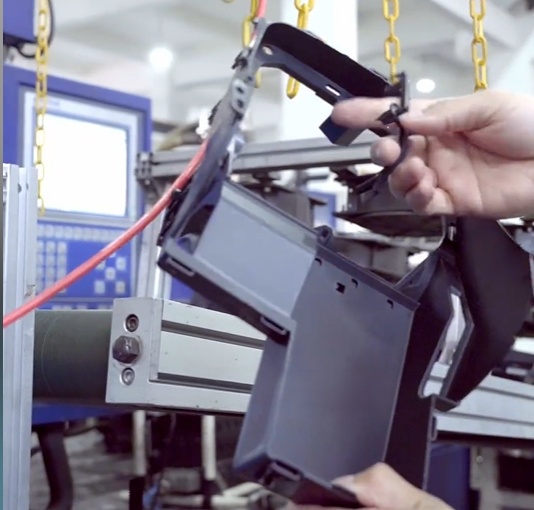
Automotive plastic components are a multi-year commitment: tooling, material envelope and inspection routine must hold from the first trial lot to the final production batch.
Why Automotive Programs Change the Supplier Question
An automotive injection molded component is not consumed the way a consumer product part is. It is permanently installed in engine compartments, chassis assemblies, interior cabins or underbody areas, and it remains there through continuous vibration, temperature cycling from sub-zero cold starts to under-hood heat soak above 100°C, and exposure to road contaminants such as moisture, salt and dust. The performance expectation attached to that environment is long: components are designed to function through the vehicle service life, typically exceeding 10 years or 200,000 kilometers, while maintaining dimensional stability, secure fastening and impact resistance.
That operating profile is what makes long-term supplier evaluation a different exercise from ordinary sourcing. The global injection molded plastic market was valued at USD 324.98 billion in 2024 and is projected to grow to USD 435.74 billion by 2035, according to Market Research Future. Within that market, automotive OEMs substituting metal parts with engineered thermoplastics accounted for 34% of domestic injection molded component demand in major hubs such as the United States, based on Grand View Research industry analysis published in 2024. The consequence for procurement teams is structural: more parts are moving into thermoplastic designs, and each of those parts must survive the length of a vehicle program rather than the length of a purchase order.
The practical question therefore changes. Buyers are no longer only asking who can mold the part. They are asking whose system — tooling, material control, inspection and capacity — will still produce the same part in year four.
The Problem: Annual Re-Bidding Cannot Prove Multi-Year Capability
Most sourcing processes are built around short-horizon signals: a per-part quotation, a sample batch, and a delivery promise. Those signals are useful, but they say very little about what happens after the tool has run for hundreds of thousands of cycles. The failure patterns of long automotive programs are well known to buyers and rarely appear in the first shipment:
- Dimensional drift as tool wear accumulates in high-wear areas of the mold.
- Material variation between resin batches, which shows up as differences in shrinkage, impact behavior or appearance.
- Surface and appearance inconsistency on visible interior parts, where the acceptance criteria were never formally written down.
- Loss of process knowledge when a tool moves between suppliers without design records or maintenance history.
The automotive application profile is explicit about what the part has to withstand: dimensional accuracy, impact resistance including low-temperature impact, material durability against heat aging and UV exposure, and consistent batch-to-batch quality. None of those requirements can be verified by a single approved sample. They are verified by a supplier that can show how the requirement is designed into the tool, controlled in the process and measured during production. That is the opportunity behind long-term evaluation: it replaces an inference about quality with a documented routine.
What Durable Supplier Evidence Looks Like
DTG TECH CO., LTD. is a Xiamen, Fujian–based manufacturer specializing in custom injection molding, established in 2002 and holding ISO certification. The company describes itself as a one-stop supplier covering precision mold design, tool manufacturing, prototype development, plastic injection molding and mass production — a structure in which the tooling decision and the production decision sit inside the same organization. Its manufacturing facility covers 2,500 m² and employs approximately 80 staff, including a 25-engineer R&D team. Reported annual production capacity is 47,881 units, export business accounts for 100% of sales, and its major markets are the USA, Europe and India.
For automotive programs specifically, the relevant product line is Automotive Plastic Injection Molded Parts (model DTG-AIP-004), classified as automotive interior parts and automotive plastic components. The documented material envelope covers ABS, PC+ABS, PP, engineering plastics and flame-resistant plastics. Documented features are complex structures, dimensional stability and surface quality control, with production covering both prototype validation and mass production. Those three features map directly onto the three things that fail most often in a long automotive run: geometry that must stay within tolerance, dimensions that must not drift, and a visible surface that must remain acceptable for the life of the program.
Two adjacent product lines matter when a program requires more than a plain molded part. Precision Injection Molded Components (model DTG-PIM-003) are documented as high-precision, tight-tolerance parts with dimensional control performed according to engineering drawings and quality control through dimensional inspection and first article inspection. Insert Injection Molded Parts (model DTG-IIM-005) combine ABS, PC or PP with metal inserts, with customization of insert position, material combination and structure design, and are documented for functional and structural components in electronics, automotive and industrial equipment. For a program that needs fastening or load-bearing features integrated into the molded part rather than added in a later assembly step, that is a relevant capability to confirm at the evaluation stage.
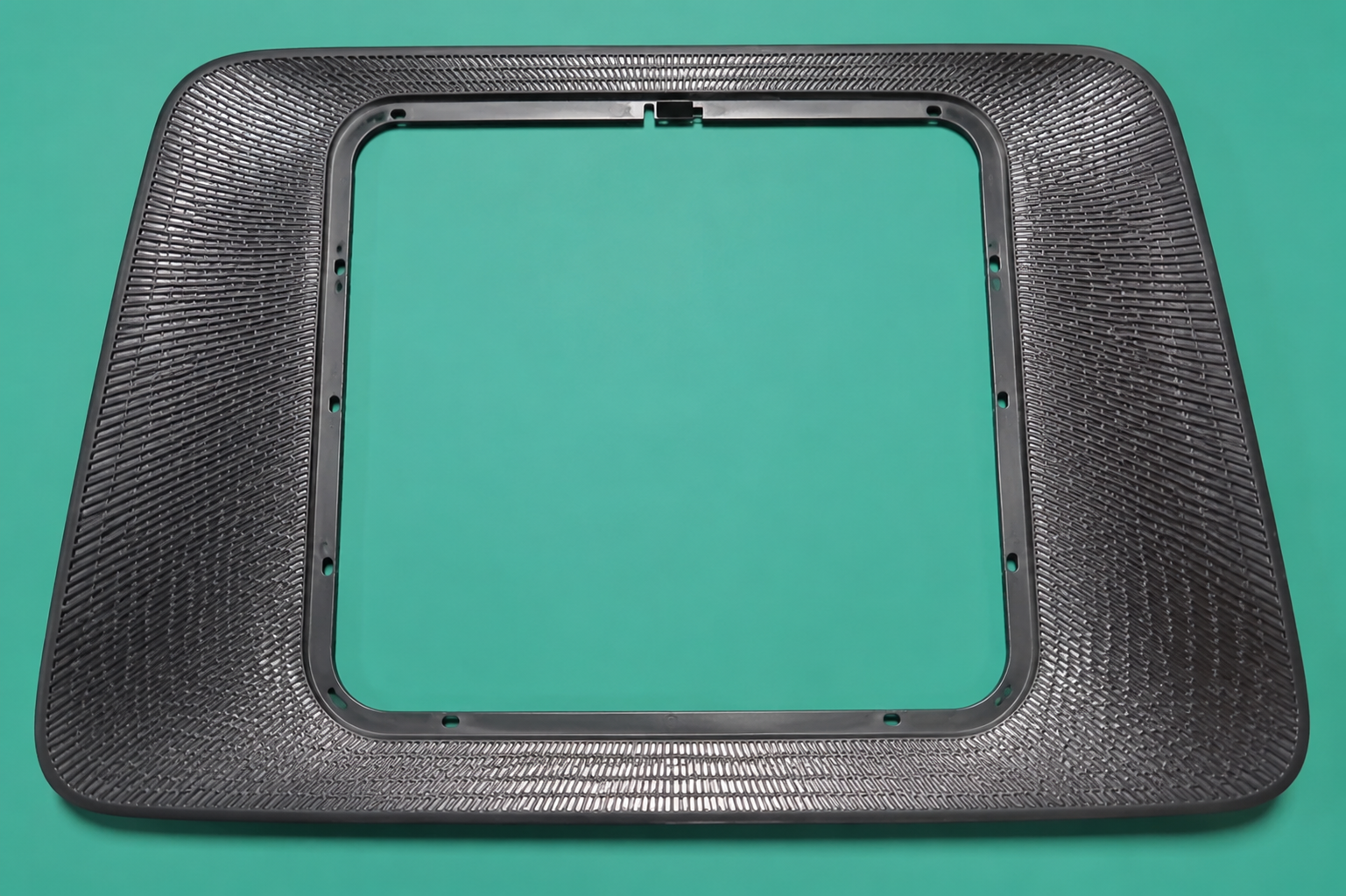
Automotive plastic injection molded parts (model DTG-AIP-004) are documented for complex structures, dimensional stability and surface quality control, with production spanning prototype validation and mass production.
| Evidence category | What to request | What it indicates over a multi-year program |
|---|---|---|
| Quality system | Certificate and a written statement of the certification scope | Establishes that a management system exists and that it covers the site and process actually used for the part. |
| Tooling basis | Mold design documentation plus a stated shot-life rating | Shows that tool life was designed and specified rather than discovered through failure. |
| Inspection routine | First article inspection and periodic dimensional inspection records | Confirms measurement discipline against the engineering drawing, not visual judgement alone. |
| Material control | Material list and how batch-to-batch consistency is handled | Reduces the most common source of slow, hard-to-diagnose variation in long runs. |
| Production scope | Evidence of prototype-to-mass-production continuity | Limits the risk of re-qualification when the program moves from validation to volume. |
| Program fit | Comparable part types and applied industries | Confirms that the geometry class and duty environment match the supplier's experience. |
Technical Explanation: Mold Design and Tool Life Decide Multi-Year Output
The mold, not the machine, is the asset that carries an automotive program. Dimensional stability over years is largely a function of design decisions made before the first shot: gating and fill balance, cooling layout, steel and wear-surface selection in sliding areas, ejection strategy, and how easily the tool can be opened for maintenance. A tool that is difficult to service will drift, because maintenance intervals stretch and small wear conditions are allowed to develop.
This is why tool life should be treated as a specification item rather than an assumption. Mold life is normally expressed as a shot-count rating — the number of molding cycles the tool is designed to complete while still holding dimensional and surface requirements. For a multi-year automotive program, the tooling agreement should state a design target, for example a 500,000-shot mold lifecycle, and the supplier should be able to explain how that rating will be checked during the run. A rating without an inspection schedule is a statement; a rating with a measurement plan is evidence.
The measurement instruments already exist inside documented molding practice. In DTG's product documentation, precision components use dimensional control according to engineering drawings, with quality control through dimensional inspection and first article inspection. Automotive parts use prototype validation before mass production, alongside dimensional stability and surface quality control as stated part features. Read as an evaluation checklist, those statements answer three buyer questions in order: how is conformance defined, when is it measured, and what happens before volume starts.
Two further technical factors belong in the same conversation. First, material selection is a tooling input, not a separate purchasing decision: automotive service conditions require resistance to heat aging and UV exposure, and low-temperature impact behaviour, which constrains which engineering plastic or flame-resistant compound is acceptable in each vehicle location. Second, where a component must accept a fastener or carry load, insert molding allows ABS, PC or PP to be combined with metal inserts in a single molded part, with insert position and structure design as customizable parameters. That removes an assembly step but adds a validation requirement, so it should be assessed as part of the same long-term capability review.
Applying the Framework: Automotive Use Cases Across a Vehicle Platform
The same evaluation framework produces different verification priorities depending on where the part sits on the vehicle. The automotive application profile describes components operating in engine compartments, chassis assemblies, interior cabins and underbody areas, matched with clips, fasteners, metal inserts, rubber parts and assembly fixtures — and notes that some components are repeatedly disassembled and reassembled during routine maintenance or repair. Each of those environments stresses a different part of the supplier's system.
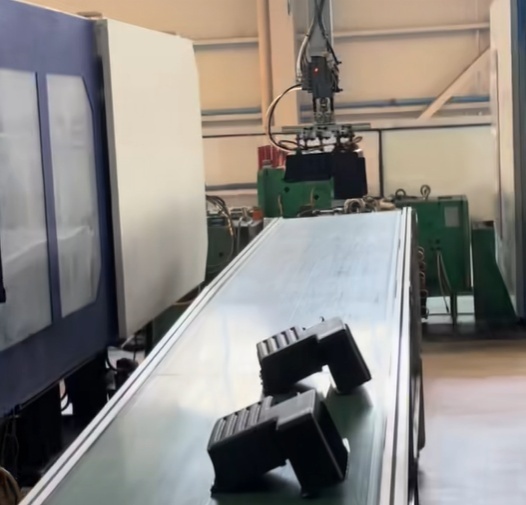
Long-program automotive molding separates suppliers by process control rather than by machine list: the same production area has to deliver the same part across a platform lifecycle.
| Vehicle area | Operating demand | Evidence to verify before tooling |
|---|---|---|
| Interior cabin | Visible surface quality, fit and alignment, dimensional stability | Surface quality control criteria, dimensional inspection against the drawing, agreed appearance acceptance limits |
| Under-hood | Heat aging, temperature cycling, resistance to contamination | Material selection evidence for heat exposure, batch consistency approach |
| Chassis and underbody | Vibration, road contaminants, impact resistance including low-temperature impact | Material durability data, structural design review, secure fastening provisions |
| Fastening and structural features | Repeated assembly and disassembly during maintenance | Insert molding or reinforced design documentation, insert position and material combination control |
DTG's automotive interior parts (DTG-AIP-004) are typically the entry point for this kind of evaluation, because interior components combine visible appearance requirements with fit tolerances and are therefore the fastest way to test whether a supplier's inspection routine is real. If the supplier can define how appearance and dimension are measured on an interior part, the same discipline transfers to hidden structural parts later in the program.
Market Trend Analysis: A Deeper Supply Base, Longer Commitments
Three verifiable trends shape how buyers should read supplier claims in this category.
Scale of the material substitution. Automotive OEMs replacing metal components with engineered thermoplastics generated 34% of domestic injection molded component demand in major hubs such as the United States, per Grand View Research. Substitution programmes are not one-off design experiments; they are platform-level decisions with multi-year horizons.
Depth of the Asian tooling base. China's plastic mold industry was estimated at approximately ¥600 billion, with a projected expansion to ¥1 trillion by 2030, based on JBRplas industry analysis. Separately, an Industry Analysis Report for 2025 estimates that China produces roughly 65% of the world's injection-molding machines and accounts for 60% of global export volume. For buyers, this means the number of available suppliers is large — which makes differentiation rest on documentation, inspection evidence and tooling management rather than on access to machinery.
Estimates diverge. Published market sizing for injection molded plastics is not uniform: Grand View Research places the 2025 global market at USD 362.5 billion, while Fortune Business Insights estimated USD 321.4 billion for 2024, against the Market Research Future figure of USD 324.98 billion in 2024. Buyers should treat any single market figure as directional and rely instead on program-specific evidence when selecting a partner.
Comparison: Spot-Quotation Sourcing vs. Multi-Year Validated Partnership
The comparison below is a decision framework rather than a claim about any individual supplier. It contrasts two sourcing models that are both legitimate, and it identifies where each one creates or absorbs risk.
| Comparison dimension | Spot-quotation sourcing | Multi-year validated partnership |
|---|---|---|
| Basis of decision | Unit price and a sample batch | System evidence: certification scope, tool design basis, inspection data, capacity |
| Tooling | Frequently re-quoted or duplicated | Managed as a long-term asset with a maintenance record |
| Quality evidence | Sample inspection, often visual | First article inspection plus periodic dimensional inspection against the drawing |
| Cost structure | Lowest visible entry cost, with rework and re-qualification costs appearing later | Higher upfront validation effort, more predictable cost across the program |
| Risk profile | Tool wear and dimensional drift are discovered in production | Wear and drift are scheduled, measured and documented |
| Flexibility | Easy to switch, but no accumulated process knowledge | Strong continuity, higher switching cost — exit and transfer terms matter |
Where the long-term partnership model has limits
A credible evaluation framework has to state where it does not apply. Five boundaries are worth accepting before committing.
- Not every programme justifies it. Short-run, low-volume or design-unstable projects are better served by a fast, flexible tooling model. Full tool-life validation, inspection documentation and material control add cost and lead time that a short programme cannot absorb.
- Single-source dependency. A multi-year commitment reduces flexibility if volumes fall or the platform changes. Buyers should require written terms covering mold ownership, maintenance records and transfer conditions before the first tool is cut.
- Certification scope must be checked, not assumed. DTG's published documentation states ISO certification for its custom injection molding operations. Programmes that specifically require IATF 16949 — the sector-specific automotive quality standard that emphasizes defect prevention and waste reduction, as described by FORGE and IATF — must confirm the applicable certificate and its scope directly with any supplier before tooling.
- Capacity is a company figure, not a reservation. Published annual output and facility size describe total capability. Buyers should map programme volume against real available capacity rather than against a headline number.
- Appearance and colour consistency require agreed limits. The automotive profile treats consistent batch-to-batch quality as a requirement, and that is only enforceable when acceptance tolerances for surface and colour are defined in writing before production starts.
Future Outlook
The direction of automotive procurement is toward longer programme commitments on a wider range of thermoplastic components. As metal substitution continues, more functional and structural parts move out of metal and into molded plastic, and with them a wider set of durability requirements — heat aging, UV exposure, low-temperature impact — that were previously handled by a different material class.
Two consequences follow. First, tooling becomes a balance-sheet item rather than a line in a project budget; suppliers that can document mold design, shot-life ratings and maintenance history will be easier to keep in a programme and harder to replace on price alone. Second, buyers are likely to place more weight on organizational depth than on machine count: mold design, tool manufacturing, prototype development, molding and mass production under one roof shortens the loop between a dimensional problem and its fix. Suppliers structured that way — as DTG TECH CO., LTD. describes its own one-stop model — are positioned for the multi-year phase of this market rather than only the quotation phase.
FAQ
What does long-term supplier evaluation mean in automotive injection molding?
It means assessing the durability of a supplier's production system rather than the competitiveness of a single quotation. The assessment covers quality-system certification and its scope, the mold design basis and stated tool life, the inspection routine used to hold dimensions against the engineering drawing, material and batch control, and whether production capability runs continuously from prototype validation to mass production.
Which certifications should an automotive buyer verify?
ISO 9001:2015 is the widely recognized quality management standard that most buyers treat as a baseline. For suppliers serving the automotive sector, IATF 16949 is the specialized standard, and it emphasizes defect prevention and waste reduction. Because certification is issued against a defined scope, the practical step is to request the certificate and confirm that the covered site and processes are the ones used for the specific part. DTG TECH CO., LTD. states ISO certification for its custom injection molding operations; buyers whose programmes require IATF 16949 should confirm that separately and in writing.
How is mold life measured, and what does a 500,000-shot lifecycle mean?
Mold life is expressed as a shot count: the number of molding cycles a tool is designed to complete while still producing parts that meet dimensional and surface requirements. A 500,000-shot lifecycle is a design target used in multi-year programmes, not an automatic property of a new tool. It becomes meaningful when the tooling agreement states the rating together with the inspection and maintenance schedule used to verify it, so that wear is measured at intervals rather than discovered when parts fall out of tolerance.
How can a buyer check dimensional consistency across years of production?
Start with the drawing. Dimensional control should be tied to engineering drawings, and quality control should include first article inspection at the start of production plus recurring dimensional inspection during the run — the routine documented for DTG's precision injection molded components (model DTG-PIM-003). Material batch-to-batch consistency and defined surface quality control support the same objective, because a large share of long-run variation originates in resin changes and appearance criteria rather than in the mold itself.
What materials are used for automotive plastic injection molded parts?
DTG's automotive plastic injection molded parts (model DTG-AIP-004) are documented with ABS, PC+ABS, PP, engineering plastics and flame-resistant plastics. Material choice is governed by position on the vehicle: under-hood components face heat aging, interior components face appearance and fit requirements, and chassis or underbody components face vibration, road contaminants and low-temperature impact demands. Because these conditions differ, the material list should be reviewed against the specific vehicle location rather than accepted as a general statement.
Are there situations where a multi-year molded-part partnership is the wrong choice?
Yes. Short production runs, low-volume programmes and designs still in flux are usually better matched to a fast, flexible tooling and molding service, because the cost and time of full tool-life validation and documentation cannot be recovered over a small quantity. A long-term model also creates switching costs, so buyers should only commit when programme volume, design maturity and duration justify it — and should secure documented terms for mold ownership and transfer before production begins.
A downloadable presentation covering DTG TECH CO., LTD.'s facility, engineering team and injection molded product lines is available here. Company information is published at www.m-dtg.com.