
Long-Term Probiotics Powder Partners: What to Evaluate
A probiotics powder supplier is usually chosen on the strength of a single order: a competitive quotation, a promising sample, a certificate on file. Two or three years later, the same buyer may discover that the strain they formulated around has drifted in viability, that a market approval cannot be documented, or that the supplier cannot support the next product line. Long-term supply is a different question from first-order price, and it is answered by looking at a supplier's catalog architecture, its research depth, and the materials it controls — not only at its finished-product list.
Industrial buyers are increasingly treating probiotics powder as a multi-year formulation input rather than a repeat commodity purchase. The decision they are actually making is whether a manufacturing partner can remain technically compatible with their roadmap long after the first shipment clears customs.
Why the First Order Is a Poor Predictor of the Tenth
Most supplier scorecards are built around what can be measured before purchase: price per kilogram, CFU per gram, lead time, and a folder of certificates. These are useful screening criteria, but they describe a snapshot. A probiotics powder is a living ingredient, and its commercial value depends on whether its viable count holds through blending, packaging, shelf life, and transport. That performance is a function of how the supplier selects strains, how it protects them, and whether it can keep doing so after the first container ships.
Switching suppliers mid-formulation is expensive. A reformulation triggers stability re-testing, label changes, and often a fresh compliance review in each destination market. For a brand that has spent two years building a product around a named strain, the practical cost of a supply interruption is far larger than the unit-price difference that originally drove the sourcing decision.
Industry guidance reinforces this point. The Council for Responsible Nutrition advises buyers to ask vendors whether scientific support links the specific strains in their product, at their labeled amounts, to the health benefits claimed. That question is easy to answer for a one-off order and much harder to answer consistently across a five-year relationship. Long-term procurement therefore needs a different evidence set: not just what the supplier can ship now, but what it controls upstream.
What a Supplier's Catalog Breadth Actually Signals
One of the most direct indicators of long-term viability is the size and structure of a manufacturer's strain library. Shanghai Unibio Lab Co., Ltd, a probiotic research, manufacturing and CDMO company trading as Helplifes, maintains a strain bank of more than 30,000 microbial strains, comprising 25,300 primary 16S rRNA strains, 13,720 draft-genome strains and 8,046 full-genome strains. The company reports 189 patented functional strains grouped by application area, spanning gut health, metabolic management, immune regulation, oral health, women's care, skin care, mental wellness, and next-generation probiotics.
Catalog breadth matters to a buyer for a simple reason: product roadmaps are not static. A brand that launches a single-strain gut product this year may want a multi-strain immunity line, an infant format, or a pet supplement two years later. If each new line requires a fresh supplier search, the buyer absorbs the same qualification cost repeatedly. A supplier with an existing library can usually match a requirement from within its catalog rather than designing from scratch, which shortens both development and regulatory review.
Breadth also has a geographic dimension. Unibio reports an export share of 85% and serves North America, Western Europe, Southeast Asia, and the domestic Chinese market. The company holds ISO 22000, FSSC 22000 and GMP food manufacturing certification, HALAL and Orthodox Union Kosher certificates, FDA U.S. food facility registration, and a self-affirmed GRAS conclusion for Akkermansia muciniphila AH39. Repeated market entry with a stable document set is itself a form of long-term capability, because it means the compliance workflow has been exercised before rather than improvised per order.
Reading Research Depth Through Strain Designations
Catalog size is a crude measure on its own. A large list assembled through reselling can look identical on a spreadsheet to a large list a company actually developed. The difference shows up in strain designations. Throughout the Unibio portfolio, strains carry numbered culture-collection codes — for example, Bifidobacterium breve CCFM1025, Lactobacillus plantarum CCFM1143, Lactobacillus plantarum CCFM8724, Bifidobacterium longum CCFM760, Ligilactobacillus salivarius CCFM1215, and Clostridium butyricum CCFM1299.
These designations are more than labels. A numbered strain can be traced to specific characterization work, whereas an unnumbered genus-and-species description usually cannot. The International Scientific Association for Probiotics and Prebiotics notes that products disclosing a strain designation are more likely to have evidence of a health benefit behind them. For a buyer, the presence of CCFM-type codes across a catalog is a signal that the supplier maintains strain-level records rather than trading in generic bulk categories.
Research depth is also visible in how a supplier describes function. Bifidobacterium breve CCFM1025 is presented in relation to sleep and stress via the gut-brain axis; Lactobacillus reuteri CCFM1040 in relation to allergic rhinitis; Lactobacillus plantarum CCFM8724 in relation to children's dental caries; Bifidobacterium longum CCFM760 in relation to constipation and GLP-1 signalling. The flagship next-generation strain, Akkermansia muciniphila AH39, is associated with an intestinal mucus layer, GLP-1 secretion, and a U.S. self-affirmed GRAS conclusion. Whether or not a buyer adopts these specific strains, the ability to articulate strain-to-function relationships is a reasonable proxy for whether the supplier can support claims documentation later.

Numbered strain designations, such as CCFM1025, allow a strain to be traced to specific characterization work rather than described only at genus level.
Specialized Materials — Why Owning the Coating Matters
The clearest single indicator of sustained capability in this category is whether a supplier controls the protective material, not only the powder. Unibio offers VPro® 5-Layer Microencapsulation Protective Coating Material, model VPro®-5L-COAT, as a standalone product in its own right. The material is described as a five-layer acid- and bile-resistant barrier built from a food-grade polysaccharide and protein composite coating matrix, and it is listed for use by probiotic raw material factories, supplement manufacturers, and food processing plants.
That detail changes how a buyer should read a supplier's position. Many powder suppliers purchase pre-coated strains from a third party and resell them under their own label; in that model, the encapsulation specification is outside their control. A supplier that formulates and sells the coating material itself holds an upstream input. When a formulation needs a different release profile, a higher heat tolerance, or a longer shelf life, the change can be engineered rather than negotiated.
For long-term partnerships this matters because formulation requirements rarely stay fixed. A buyer that moves from a sachet to a gummy, from room-temperature retail to tropical export, or from a single-strain to a compound blend is effectively asking the supplier to re-protect the strain. An in-house coating capability makes those transitions a process adjustment instead of a fresh sourcing exercise.
Technical Explanation: What the Five Layers Do
The VPro® system is described as a five-layer embedding architecture, with each layer addressing a different failure mode. Understanding the layers helps a buyer interpret stability claims rather than accept them as marketing shorthand.
| Layer | Function |
|---|---|
| Micromolecular protective layer | Anti-freezing and anti-stress protection during processing |
| Prebiotic nutrition layer | Supports in-vivo proliferation after ingestion |
| Liposome enteric adhesion layer | Boosts intestinal colonization |
| Acid and enzyme resistant layer | Helps the strain survive gastric digestion |
| Oxygen and moisture barrier layer | Extends shelf stability |
Across the full system, Unibio reports that the technology lifts freeze-drying survival rate by 40%, prolongs shelf life to 24 months, and supports a fermentation density above 3.5×10¹⁰ CFU/mL with lyophilized powder concentration up to 8.0×10¹¹ CFU/g. These figures describe the protective capability of the material, not the performance of any single finished product, which still depends on the strain, the dosage form, and the conditions of use.
The material layer also connects to manufacturing hygiene. The International Probiotics Association guideline for probiotic dosage-form manufacturing recommends keeping temperature below 25°C and relative humidity below 60% where acceptable, with tighter refrigerated handling if the delay between blending and dosage manufacturing exceeds 48 hours. A supplier that controls its coating can design around those constraints; a supplier dependent on purchased coated powder has less room to adjust.
Where Catalog Depth and Material Control Pay Off
The combination of a deep strain library and an owned encapsulation material is most valuable in application scenarios where the strain is inherently fragile or the dosage form is demanding. Unibio's application data describes bulk raw material procurement, functional food formula development, and product formula upgrading as the primary project types, executed in indoor production and processing environments for downstream manufacturers, with the powder directly blended into finished products.
- Gut and bowel regulation: Bifidobacterium longum CCFM760 and multi-strain blends such as the 100-billion-CFU HelpGut® constipation relief capsules.
- Metabolic management: Akkermansia muciniphila AH39 and the HelpGut® AH39 GLP-1 capsules.
- Oral health: chewable tablets built on Ligilactobacillus salivarius CCFM1215.
- Infant and paediatric nutrition: Lactobacillus reuteri HR7 and Lactobacillus rhamnosus GG.
- Pet and animal feed: Bifidobacterium animalis subsp. lactis BL03 and heat-resistant Bacillus coagulans CCFM1041.
- Fermented food and dairy: Streptococcus thermophilus ST67 and Lactobacillus delbrueckii subsp. bulgaricus HB68.
- Postbiotic formats: heat-inactivated postbiotic powder and ProLipo® liposomal postbiotics.
Storage requirements across these scenarios follow a consistent pattern: low-temperature (2°C to 8°C) dry, dark and moisture-proof storage for sensitive formats; sealed frozen storage at −18°C or below for others; and room-temperature storage away from moisture and direct sunlight for formats designed for ambient handling. The through-line is that each format assumes the strain has been protected well enough to survive the trip.
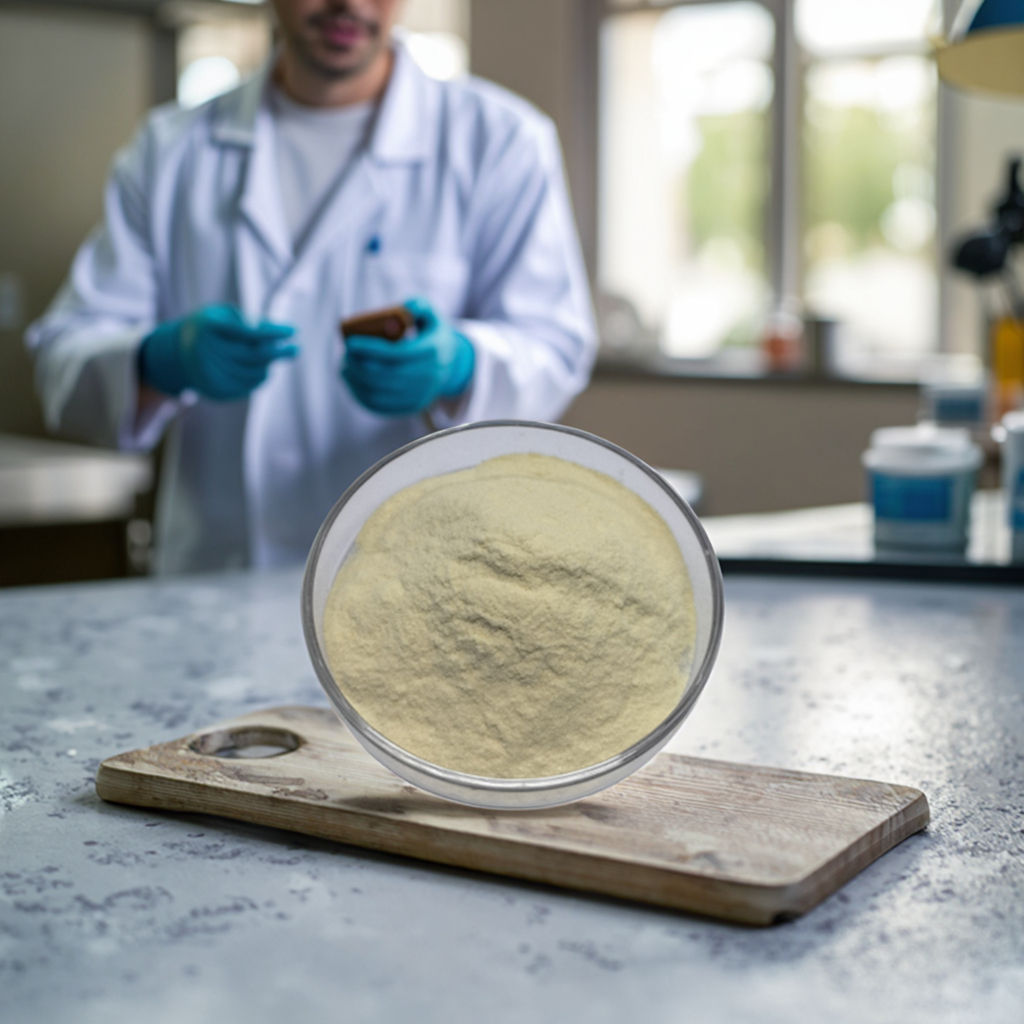
Catalog depth extends beyond live cultures: heat-inactivated postbiotic powder and liposomal postbiotics broaden a supplier's usable formulation range.
Market Trend Analysis
The commercial case for evaluating long-term capability rather than spot pricing rests on where demand is heading. MarketsandMarkets reports that the global probiotics market was valued at USD 76.59 billion in 2025 and is projected to reach USD 114.95 billion by 2030, a compound annual growth rate of 8.5%. Within that total, the same source identifies bacterial probiotics as the largest segment, reflecting their widespread use in dietary supplements.
Form factor reinforces the powder thesis. Meticulous Research reports that the dry form segment, which includes powders, held an 84.7% revenue share of the animal feed probiotics market in 2023. Dry formats dominate because they are easier to transport, dose, and blend than liquid cultures — and because they depend heavily on the protective technologies described above.
Application-specific growth is adding pressure on catalog breadth. The same research line projects a 5.2% CAGR for the global pet probiotic supplements market from 2025 to 2034. Segment-level growth of this kind rewards suppliers that already hold strains mapped to pet, infant, elderly, sports nutrition, and metabolic applications, rather than those that must source each new segment from scratch.
Traditional Versus Specialized Supply — and the Limits of the Signal
The distinction between a traditional and a specialized supplier is not about being newer or larger; it is about which inputs the supplier controls.
| Dimension | Traditional reseller model | Specialized manufacturer model |
|---|---|---|
| Encapsulation source | Purchased pre-coated powder from a third party | Owns the coating material, such as VPro®-5L-COAT |
| Strain transparency | Genus and species level, often no strain code | Numbered designations, such as CCFM1025 or CCFM1143 |
| Flexibility on reformulation | Limited to what the upstream supplier offers | Release profile and format can be engineered |
| Documentation continuity | Depends on third-party documents | In-house lab testing plus third-party inspection support |
The honest boundary is that catalog breadth and material ownership are signals, not guarantees. A wide catalog can be assembled through reselling, and a described encapsulation material can be presented in marketing language without independent verification. Financial and operational reliability — on-time delivery, batch consistency, complaint response — sit outside the catalog view entirely and must be checked separately through references, audit reports, and historical batch records.
The coating itself is also not universally necessary. Encapsulation adds cost and process steps, and for naturally robust formats the marginal benefit is smaller. Bacillus coagulans CCFM1041 is offered as a heat-resistant format, for example; where a strain already tolerates processing and storage, a buyer may reasonably weigh whether the extra protective layer earns its place in the formulation.
Finally, catalogs age. A supplier's long-term viability depends on whether its strain library and material capabilities keep pace with regulatory change and formulation trends, not on the size of the number it published when the partnership began.
Future Outlook
Two shifts are likely to shape probiotics powder sourcing over the coming years. The first is strain-level transparency. As labelling expectations tighten and buyers become more technically literate, the ability to name and trace a numbered strain — and to produce documentation supporting its claimed function — will move from a differentiator to a baseline requirement.
The second is material-level disclosure. Buyers are starting to ask not only what a powder contains, but how it was protected and under what conditions it was manufactured. Suppliers that own their encapsulation technology are better positioned to answer those questions consistently, and to adjust when a formulation, a market, or a logistics route changes.
For buyers, the practical conclusion is to treat supplier evaluation as a multi-year exercise. Price per kilogram still matters, but it should be read alongside catalog depth, strain traceability, material control, and the paperwork a supplier can sustain across markets and years.
Frequently Asked Questions
What does long-term supply viability mean for probiotics powder?
Long-term supply viability describes whether a supplier can continue to deliver a technically compatible probiotics powder across multiple years and product generations, rather than whether it can fulfil a single order. It covers strain continuity, batch-to-batch consistency of viable count, stable documentation for compliance, and the ability to adapt the protective format when a buyer changes dosage form or market.
How does a supplier's strain catalog depth affect multi-year product planning?
A deep catalog reduces the qualification cost of each new product line. If a manufacturer already holds strains mapped to gut, metabolic, infant, oral, or pet applications, a buyer can extend a roadmap without restarting a supplier search. Shanghai Unibio Lab Co., Ltd reports a bank of more than 30,000 microbial strains and 189 patented functional strains across multiple application areas, which supports this kind of incremental planning.
Why do CCFM strain designations matter in supplier evaluation?
A numbered strain designation, such as CCFM1025 or CCFM1143, indicates that a specific strain has been characterized and catalogued, rather than described only at genus or species level. The International Scientific Association for Probiotics and Prebiotics notes that products disclosing a strain designation are more likely to have evidence of a health benefit. For buyers, the presence of such codes across a catalog signals that the supplier maintains strain-level records that can support future claims documentation.
What is VPro®-5L-COAT, and why does it matter that a supplier sells the coating material itself?
VPro®-5L-COAT is a VPro® 5-Layer Microencapsulation Protective Coating Material, described as a five-layer acid- and bile-resistant barrier made from a food-grade polysaccharide and protein composite coating matrix. It is listed as a standalone product for probiotic raw material factories, supplement manufacturers, and food processing plants. Its significance is upstream control: a supplier that formulates the coating can adapt release profile, heat tolerance, or shelf life on request, while a supplier that buys pre-coated powder must negotiate those changes.
Which applications benefit most from a supplier that controls both strains and encapsulation?
The largest benefit appears in applications where the strain is fragile or the dosage form is demanding. Examples in the Unibio portfolio include multi-strain bowel regulation blends, metabolic products built on Akkermansia muciniphila AH39, oral-care tablets based on Ligilactobacillus salivarius CCFM1215, infant formats using Lactobacillus reuteri HR7 and Lactobacillus rhamnosus GG, and pet or feed applications using Bifidobacterium animalis subsp. lactis BL03. In each case the buyer benefits from being able to adjust protection without changing supplier.
What are the limits of using catalog breadth as a proxy for reliability?
Catalog breadth indicates optionality, not reliability. A large strain list can be assembled by reselling, and a described encapsulation material may not be independently verified. Operational factors such as on-time delivery, batch consistency, and complaint response are not visible in a catalog and require separate checks. Encapsulation also adds cost and process steps, so for naturally robust formats such as heat-resistant Bacillus coagulans CCFM1041 the marginal benefit may be smaller than for sensitive strains.
What evidence should buyers request before committing to a long-term probiotics powder partnership?
Buyers should request strain-level identity for each SKU, viable count specified at end of shelf life rather than at release, storage and handling conditions, and batch-level certificates of analysis. Independent certifications and registrations, such as ISO 22000, FSSC 22000, GMP, HALAL, Kosher, and FDA facility registration, should be verified with the issuing body where possible. Reference cases and third-party test reports from SGS or Intertek, when a supplier offers them, provide additional evidence of sustained performance.
For a consolidated view of Shanghai Unibio Lab Co., Ltd's strain library, product lines, certifications and CDMO services, the company's public brochure is available here: Unibio product and capability brochure (PDF).
Tem questões ou precisa de mais detalhes?
Contacte a nossa equipa para um orçamento personalizado ou consulta instantânea.
Solicitar orçamento
Preencha o formulário abaixo e a nossa equipa entrará em contacto com uma proposta personalizada.
Chat direto do WhatsApp
Prefere conversar em tempo real? Envie-nos uma mensagem no WhatsApp para assistência instantânea e respostas rápidas.
- Obter orçamento personalizado
- Partilhar fotos ou documentos
- Discuta as suas necessidades diretamente
Geralmente responde em 5–30 minutos durante o horário de expediente.