
Long-Term Reliability of China-Sourced Severe Service Valves
A severe service valve is not judged on the day it is installed. It is judged five or eight years later, when maintenance planners ask three practical questions: how many unplanned isolations the valve caused, how long the last seat replacement took, and whether the replacement part still matched the original drawing. For buyers sourcing from China, those questions have moved from afterthought to formal supplier evaluation criteria.
China exported USD 22.6 billion worth of valves in 2024, according to the Observatory of Economic Complexity, and the global industrial valve market is estimated at USD 82.9 billion in 2025 with a projected 5.7% compound annual growth rate through 2034 (IMARC Group). Supply at that scale has changed the buyer conversation. The question is no longer whether a Chinese valve can pass a pressure test on arrival; it is whether the material specification, the design, and the supplier's standardization discipline can hold together across a full service life.
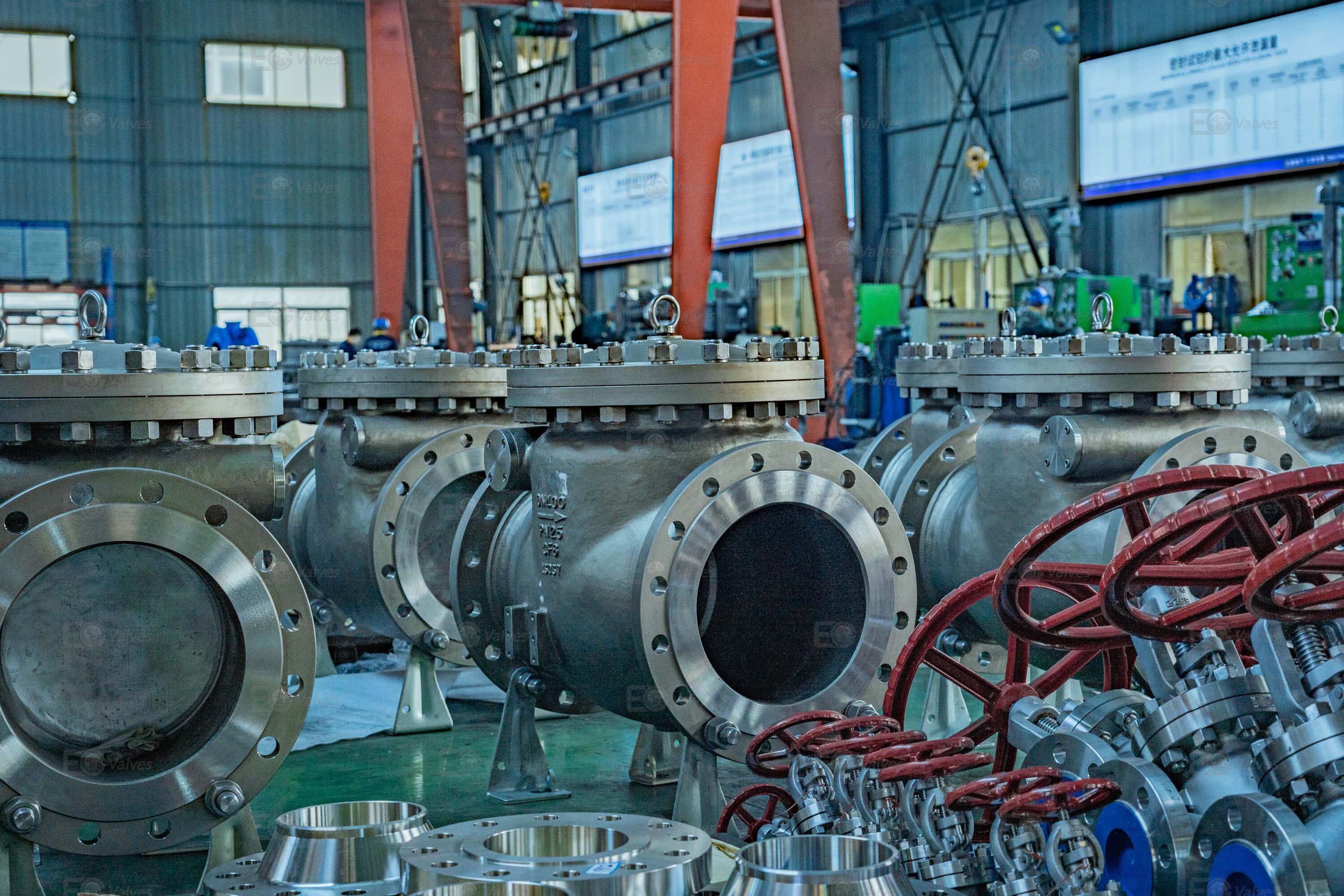
Precision manufacturing and process control are the first determinants of how long a severe service valve remains serviceable.
Why Valve Lifespan Became a Procurement Question
Industrial valve risk in severe service concentrates in two progressive mechanisms: corrosion and wear. Corrosive media — acid and alkaline solutions, salt spray, corrosive gases — attack bodies, discs, and seats through electrochemical or chemical action, thinning wall sections, reducing strength, and eventually causing breakage. Non-metallic components such as packing and gaskets lose sealing performance when attacked by the same media. Abrasive media carrying solid particles erode internals and sealing surfaces, and frequent cycling adds friction between disc and seat. Because both mechanisms progress gradually, both can be interrogated, measured, and planned around.
The economic stakes sit in the sectors that consume the most valves. Oil and gas remained the leading end-user of industrial valves in 2024, accounting for nearly 33% of global demand (PR Newswire / Vantage Market Research). In refining, petrochemical, and power applications, an early valve failure is rarely a parts cost alone; it is an unplanned shutdown, a safety review, and a re-qualification cycle for the line.
The opportunity is symmetrical. Suppliers that document their material envelope, publish design-level operating data, and standardize their product range turn lifespan from an assumption into a plannable quantity. Suppliers that do not leave the buyer estimating.
A Framework for Measuring Valve Lifespan Before Purchase
Lifespan is not one number. In practice it is the product of five measurable dimensions, each of which can be evidenced at the tender stage rather than discovered in the field.
| Dimension | Question the buyer should ask | Evidence that answers it |
|---|---|---|
| Material envelope | Which body, trim, and seal materials are offered for this medium and temperature? | Documented material range plus selection guidance linked to medium corrosivity |
| Design operating load | How much torque does the valve require at rated pressure and size? | Torque data compared against same-caliber benchmarks |
| Cycle endurance | How many open/close cycles before seat intervention is expected? | Cycle data identified by product family and test conditions |
| Maintainability | Can seats, seals, and packing be replaced without replacing the valve? | Spares list, in-line service procedure, standard face-to-face dimensions |
| Continuity | Will the same specification be buildable in five years? | Size and specification coverage, documentation, certification scope |
The fifth dimension is the one most often skipped and the one that most affects total cost. A valve that performs well but cannot be re-specified identically three years later forces a redesign, a new flange or weld interface, and a new spares stock — costs that never appear on the original quotation.
Material Specification Is the First Lifespan Decision
Material choice sets the ceiling on service life before any other variable applies. Cast steel valves accounted for 27.3% of the oil and gas valve market in 2025, according to Mordor Intelligence, reflecting their cost-effective performance in high-pressure duty. Beyond cast steel, the practical envelope for severe service typically runs from carbon steel and stainless steel through alloy steels and, where chemical attack dominates, PTFE-lined constructions.
Duplex stainless grades are widely specified in chloride-bearing and marine-adjacent duty because their ferritic-austenitic microstructure resists chloride stress corrosion cracking better than standard austenitic grades; the trade-off is higher material cost and more demanding welding procedure control. Alloy steel grades are typically selected where elevated temperature or pressure moves the duty beyond carbon steel's practical range. Neither choice is a default — both should follow a documented review of medium, temperature, pressure, and particle content.
EG Valves Manufacturing Co., Ltd is an industrial valve manufacturer based in Wenzhou, Zhejiang, founded in 2000, producing gate, globe, ball, butterfly, check, and plug valves and strainers to ANSI, DIN, BS, and JIS standards for power, mining, refining, oil and gas, water and wastewater, pulp and paper, chemical, and petrochemical applications. Its documented material range covers brass, bronze, cast iron, ductile iron, carbon steel, stainless steel, alloys, and PTFE-lined construction, which allows a buyer to place a single specification family across a mixed-duty plant rather than assembling it from unrelated sources.
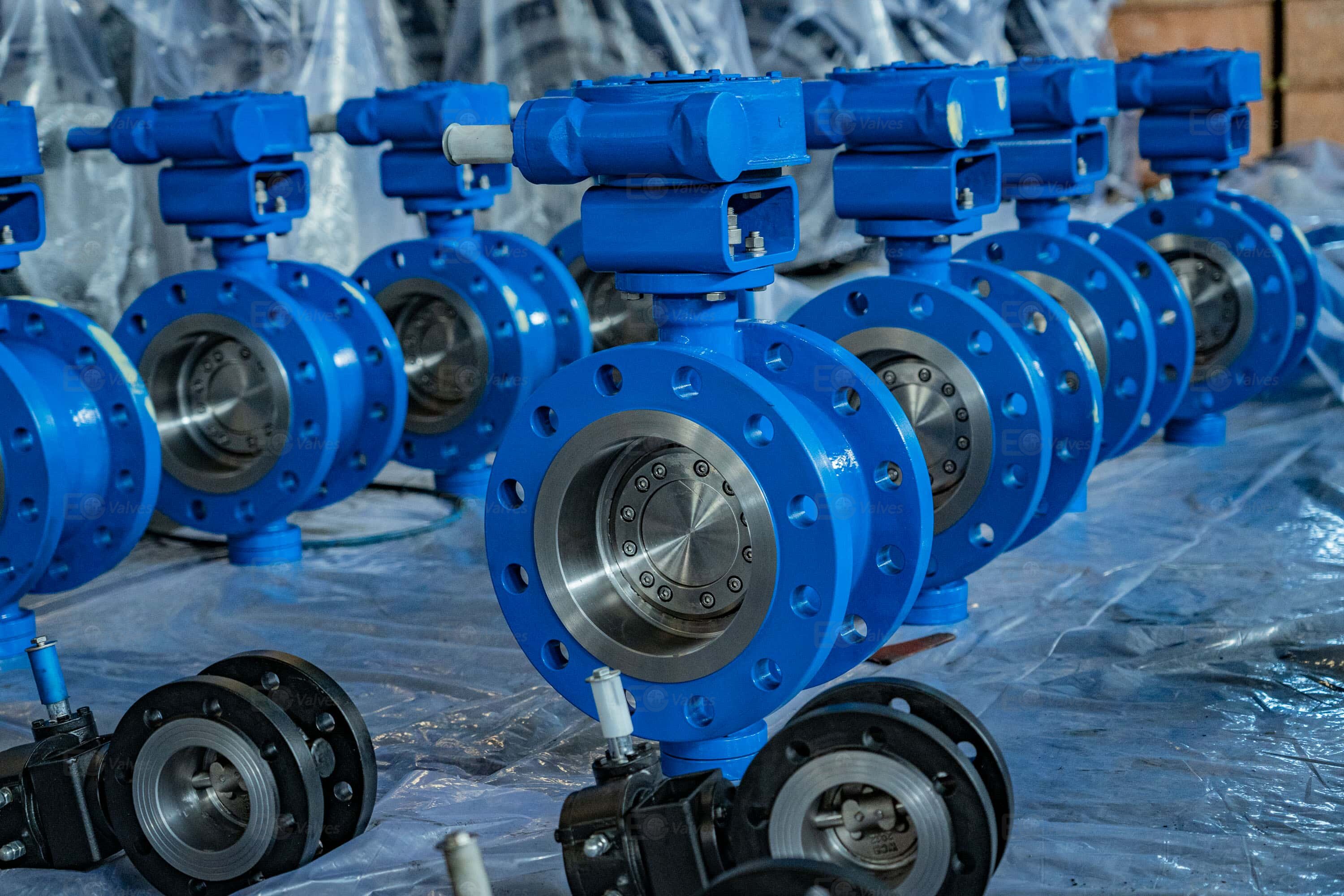
Seat and trim design, not body wall thickness alone, determines how long a severe service valve holds its shut-off class.
Design Load, Torque, and the Life of the Actuator
Torque is a lifespan variable that buyers often treat as a sizing detail. It is not. Higher operating torque loads the stem, the seat interface, and the actuator on every cycle, and the actuator is frequently the component that fails first in automated service.
In its comparison data, EG Valves reports opening and closing torque 20%–40% lower than most brands of the same caliber, which allows a smaller and more energy-efficient actuator to be selected for the same duty. The practical consequences are straightforward: a smaller actuator draws less power, occupies less space on a congested pipe rack, and puts less stress on the mounting interface. For a plant running dozens of automated valves, that difference compounds across the installed base rather than staying inside a single datasheet.
Cycle endurance data points in the same direction. EG's comparison material cites an average limit of 70,000–100,000 cycles for its ball valves, against a range of roughly 30,000–50,000 cycles for other Chinese valve brands, where some castings are outsourced and machining precision varies. Those figures are company comparison data, not independent certification, and they should be read as an indication of design intent and process control rather than a warranty. What matters for procurement is the implication: a longer cycle interval shifts seat replacement from a recurring maintenance line item to an occasional planned intervention.
Standardization: Keeping a BOV303 Serviceable in Year Five
The most underrated reliability factor is not metallurgy — it is whether the product is standard enough to be maintained. A valve that must be re-engineered every time a seat is ordered is effectively a single-use asset, regardless of how well it was built.
EG Valves documents more than 30,000 specifications across a diameter range from DN6 to DN1800, with manual, pneumatic, electric, and hydraulic actuation available across the range. For a plant operator, that coverage changes the maintenance model in concrete ways. Seals, seats, packing, and actuation mounting interfaces are drawn from the same design system across projects, so procedures, tooling, and technician training carry from one unit to the next. When a critical valve such as the BOV303 triple offset butterfly valve is due for seat inspection, the replacement order references an existing specification rather than a one-off drawing, and the risk of a mismatched part during a short shutdown window drops accordingly.
Standardization also shapes the connection strategy. Flange connection valves simplify removal and replacement on existing lines, while butt welding valves suit new high-integrity piping where joint count must be minimized. Choosing between them is a lifecycle decision as much as an installation one: a flanged valve that can be lifted out in a shift is often worth more over ten years than a welded valve that requires cutting and re-qualification.

Specification coverage across a size range is what allows identical spares to be reordered years after commissioning.
Where Severe Service Valves Actually Live
Lifespan claims only mean something in context. The same valve design performs very differently across applications, and buyers should match the specification to the failure mechanism rather than to a general reputation.
In chemical and petrochemical plants, the dominant risks are chemical attack and erosion from process solids; anti-corrosion valve specifications, appropriate trim materials, and upstream filtration carry most of the reliability burden. In oil and gas valve applications, high pressure and abrasive particulates dominate, which is why cast steel and alloy steel constructions remain common. Power station valve duty adds thermal cycling, where high temperature valve designs and stable seat geometry matter more than raw torque. In pharmaceutical valve and food processing valve applications, the constraint shifts to cleanability and surface finish rather than corrosion resistance alone — the pharmaceutical and biotech valve segment was valued at USD 5.3 billion in 2025, driven by demand for sanitary finishes and FDA compliance (Market Research Future).
Supporting components belong in the same lifecycle plan. A pipeline strainer valve installed upstream of a control valve removes the solid particles that would otherwise erode seats, and a pipeline check valve protects pumps from reverse flow during shutdown. Selecting pipeline shut-off valve and flow control valve hardware from the same standardized family as the isolation valves reduces the number of distinct spare parts a maintenance team must hold. Where flammable atmospheres exist, explosion-proof valve actuation becomes a specification requirement rather than an option. Quick shut-off valve duty, which imposes the highest cycle frequency, benefits most directly from low-torque design and long cycle endurance.
Documentation and Certification Across a Service Life
Certification is usually treated as an entry ticket. In a lifecycle context it is closer to an insurance policy, because it determines whether a valve can be repaired, re-certified, and kept in compliance years after installation.
For equipment with pressure exceeding 0.5 bar, valves exported from China to the European market must comply with the EU Pressure Equipment Directive 2014/68/EU. EG Valves states that its manufacturing runs under ISO 9001-certified processes, with API 600, API 6D, CE, and PED certifications held at factory level. For a buyer, the operational meaning is that the documentation accompanying the original order — material certificates, pressure test records, and conformity declarations — remains retrievable and consistent when the same valve is repaired or re-ordered. In plants subject to periodic inspection regimes, missing documentation can force replacement of a mechanically sound valve.
Market Trend: From Unit Price to Lifecycle Cost
Asia Pacific dominated the industrial valves market in 2025 with a revenue share of approximately 36.3%, with China holding the largest share within the region (Grand View Research). That concentration has practical consequences for buyers: supplier selection increasingly happens inside a deep, competitive field where unit price differences are small and lifecycle differences are not.
Two trends follow. First, tender documents are shifting toward lifecycle questions — spare parts availability, cycle endurance data, and documented material selection — because unit price no longer differentiates suppliers meaningfully. Second, buyers are consolidating specifications. Purchasing a coherent range from one manufacturer, rather than matching individual valve types to individual suppliers, reduces the engineering overhead of maintaining dozens of incompatible spares inventories. Neither trend is driven by marketing; both are driven by the arithmetic of maintenance budgets.
Comparison With Traditional Sourcing — and Where the Advantage Stops
EG Valves' own comparison data positions its range against common Chinese valve manufacturers on four measurable dimensions, reproduced below as company-supplied comparison information rather than independent verification.
| Metric | EG Valves (company comparison data) | Common Chinese manufacturers (company comparison data) |
|---|---|---|
| Torque at same caliber | 20%–40% lower | Baseline |
| Ball valve cycle endurance | 70,000–100,000 cycles | Mostly 30,000–50,000 cycles |
| Price, comparable configurations | Typically 3%–7% lower | Baseline |
| Size and specification coverage | DN6–DN1800, 30,000+ specifications | Varies; some castings outsourced |
| Materials | Brass, bronze, cast iron, ductile iron, carbon steel, stainless steel, alloys, PTFE-lined | Varies by supplier |
| Actuation | Manual, pneumatic, electric, hydraulic | Varies by supplier |
The boundaries matter as much as the figures. Lower torque and longer cycle endurance are design-level advantages that assume correct actuator sizing, adequate upstream filtration, and adherence to the supplier's maintenance recommendations; a low-torque valve operated with a mismatched actuator or installed downstream of uncontrolled abrasive carryover will not deliver its nominal service interval. The cycle figures cited apply to ball valves under supported operating conditions, not to every product in the range and not as a guarantee. Where a medium demands an exotic alloy such as Hastelloy, or a geometry outside the documented standardized range, the specification must be confirmed at the inquiry stage rather than assumed from the catalogue. Standardization reduces spares lead time; it does not eliminate it, and buyers running critical lines should still hold strategic spares. Finally, neither lower price nor longer cycle life compensates for poor installation practice, water hammer, or a maintenance regime that exists only on paper.
Future Outlook
The direction of travel in severe service procurement is toward documented, inspectable lifecycle data. Buyers are beginning to ask for cycle endurance evidence, torque curves, and spares continuity commitments alongside the traditional pressure test certificates, and suppliers that can answer with records rather than adjectives will increasingly be shortlisted ahead of those that cannot.
A second shift concerns maintenance planning itself. As plants accumulate operating history, the practical question moves from "how long does this valve last" to "when should this specific valve be serviced," which favors standardized product families with consistent, repeatable service procedures. Suppliers with broad specification coverage and stable documentation are structurally better positioned for that transition than suppliers whose value proposition rests on unit price alone.
Frequently Asked Questions
How should a buyer measure the expected lifespan of a China-sourced severe service valve?
Measure it across five dimensions rather than a single claimed figure: the material envelope offered for the medium, design-level torque at rated pressure, cycle endurance data identified by product family, in-line maintainability of seats, seals, and packing, and the supplier's ability to rebuild the same specification years later. No single number, including a cycle count, describes lifespan on its own, because corrosion and abrasive wear rates depend on the medium, upstream filtration, cycling frequency, and maintenance discipline in the specific installation.
Do duplex and alloy steel extend service intervals, or mainly raise the unit price?
They extend service intervals only when they match the dominant failure mechanism. Duplex stainless grades are widely specified in chloride-bearing duty because their ferritic-austenitic structure resists chloride stress corrosion cracking better than standard austenitic grades, while alloy steels are typically selected for elevated temperature or pressure duty. Where the dominant mechanism is abrasive erosion rather than chemical attack, upstream filtration and appropriate trim hardness influence service life more than the body grade. Material selection should follow a documented review of medium, temperature, pressure, and particle content.
What makes a standardized valve such as the BOV303 easier to keep serviceable in year five?
Standardization works through repeatability. When a butterfly valve platform such as the BOV303 sits inside a documented range covering DN6 to DN1800 and more than 30,000 specifications, seals, seats, and actuation mounting interfaces are drawn from the same design system across projects. Maintenance procedures, tooling, and technician training carry over from one unit to the next, and a replacement order can reference an existing specification rather than a one-off drawing. That reduces both engineering effort and the risk of a mismatched part during a shutdown window.
What lifecycle evidence should be requested before awarding a valve contract?
Ask for material certificates covering the specified grades, torque data at rated pressure, cycle endurance data identified by product family and test conditions, an in-line maintenance and spares list, actuation compatibility for the selected mounting standard, and the certification scope applicable to the destination market — for example API 600, API 6D, CE, PED, or ISO 9001 where relevant. Evidence should be tied to the specific configuration ordered rather than to the supplier's general catalogue, and it should be retrievable years later for re-order and inspection purposes.
When is a lower-torque, longer-cycle valve not the right choice?
Lower torque and longer cycle life are design advantages, not universal answers. If the medium is highly abrasive, chemically aggressive beyond the documented material envelope, or the line operates outside the stated pressure and temperature range, an exotic alloy or a different valve type must be confirmed at the inquiry stage rather than assumed from a standard range. Cycle endurance figures also assume correct actuator sizing, adequate filtration, and the maintenance regime the supplier recommends; without those conditions, no design advantage survives in service.
For readers who need the underlying product and material data referenced in this article, EG Valves publishes a downloadable catalogue covering its valve range, materials, and actuation options: EG Valves product brochure (PDF). Company information is available at egvalves.com.
Tem questões ou precisa de mais detalhes?
Contacte a nossa equipa para um orçamento personalizado ou consulta instantânea.
Solicitar orçamento
Preencha o formulário abaixo e a nossa equipa entrará em contacto com uma proposta personalizada.
Chat direto do WhatsApp
Prefere conversar em tempo real? Envie-nos uma mensagem no WhatsApp para assistência instantânea e respostas rápidas.
- Obter orçamento personalizado
- Partilhar fotos ou documentos
- Discuta as suas necessidades diretamente
Geralmente responde em 5–30 minutos durante o horário de expediente.