
Long-Term Rotary Kiln Supplier Evaluation: A Multi-Kiln Checklist
Long-Term Rotary Kiln Supplier Evaluation: A Multi-Kiln Checklist
A rotary kiln is rarely a one-off purchase. Producers commonly start with a single line, then add a second kiln for a different material, change feed chemistry, or need replacement shell sections, rollers and a refractory plan years after commissioning. The supplier decision therefore runs longer than the equipment order: it covers model-range continuity, customisation for each material, integration with preheaters, coolers and downstream reduction or refining steps, and the ability to support spares and process changes across several production lines.
This checklist is written for buyers at the decision and execution stage who are assessing a rotary kiln supplier against a portfolio rather than a single unit. It uses verified product-family information from Henan Zhengzhou Mining Machinery Co., Ltd. (ZK MACHINE) as a worked example, and separates what a published range establishes from what the buyer must still confirm project by project.
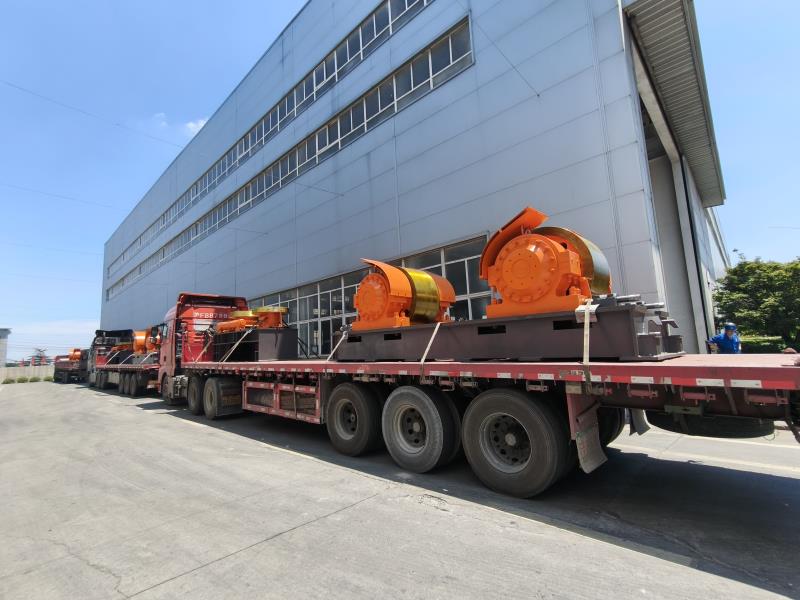
The long-term question: who stays the technical reference?
For a single-kiln purchase, the evaluation question is whether a supplier can build the specified unit and hand it over. For a multi-kiln programme it becomes whether that supplier can remain the technical reference for every kiln in the fleet, including the ones not yet ordered.
Fragmentation has a cost that appears slowly. Each additional supplier brings its own drawing set, spare-parts catalogue, service route and engineering contact. When a second line is added, or when a feed material changes on an existing line, the buyer has to reconcile two engineering languages and two sets of tolerances. The friction is rarely visible at the order stage; it is most visible during a shutdown.
Portfolio composition varies by region. A 2026 report by Dataintelo estimates that cement kilns accounted for about 62% of the global rotary kiln market in 2025, followed by metallurgy at roughly 24% and lime at about 14% (Dataintelo, Rotary Kiln Market Research Report 2034, March 2026). Those shares describe revenue distribution, not the technical difficulty of any single kiln; a magnesium or acid roasting line can demand more engineering attention than its share of the market implies.
What the ZK MACHINE rotary kiln portfolio covers
Henan Zhengzhou Mining Machinery Co., Ltd. (ZK MACHINE) is a Zhengzhou-based equipment manufacturer founded in 1956 that builds rotary kilns, ball mills and integrated process systems for building materials, mining, metallurgy and environmental protection applications.
Its published rotary kiln range is organised by application rather than as a single generic model:
| Application family | Published model range |
|---|---|
| General rotary kiln | Φ1.6×32 m – Φ4.7×72 m |
| Lime | Φ2.5×40 m – Φ5.1×72 m |
| Cement / clinker | Φ2.5×40 m – Φ4.3×60 m |
| Magnesium | Ø1.6×32 m – Ø4.0×80 m |
| Zinc oxide | Ø2.5×40 m – Ø4.5×72 m |
| Acid roasting | φ0.8×10 m – φ5.4×56 m |
| Indirect-fired | Customised |
The same portfolio is described as covering dolomite, magnesite, LECA, bauxite, kaolin, lithium-bearing materials, fracturing proppants and zinc-bearing materials, with pilot rotary kilns and indirect-fired rotary kilns offered for specialised duties. Those statements define where the equipment family is offered. They are not evidence of performance on a particular feed, and should be treated as the opening of a technical discussion rather than its conclusion.
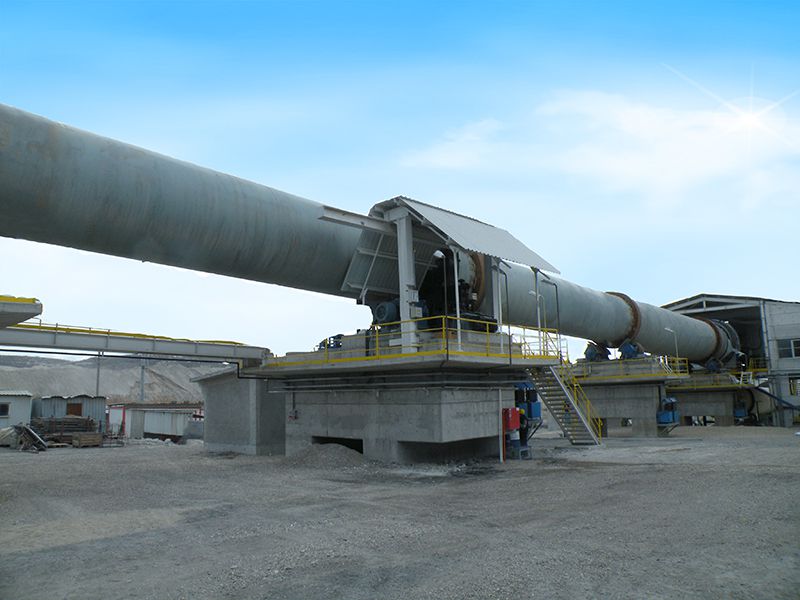
Test one: model-range continuity
Model ranges are the most visible and least sufficient part of a supplier evaluation. Diameter and length figures establish the dimensional boundary of the catalogue; they say nothing about throughput on a given material, and nothing about whether the internals of two similarly sized kilns are alike.
Read as a portfolio map, the published ranges cover useful extremes. The lime range reaches Φ5.1×72 m, the largest diameter listed. The magnesium range reaches Ø4.0×80 m, the longest. The acid roasting range starts at φ0.8×10 m, by a wide margin the smallest unit — the kind of size associated with pilot or specialised work rather than bulk production. The general rotary kiln range, Φ1.6×32 m to Φ4.7×72 m, overlaps most of the application-specific families.
Two checks follow. First, mark on the buyer's own expansion plan which kilns fall inside at least one published range and which fall outside. Anything outside the ranges becomes a one-off engineering project with a different risk profile from a catalogue selection. Second, where two ranges overlap, ask whether the smaller unit is a production design with its own mechanical drawings or a scaled version of a larger kiln. The answer affects spares, foundations and the reliability of guaranteed figures.
Test two: the material customisation envelope
For a multi-material portfolio, the decisive question is not the size of the catalogue but the number of design variables the supplier can actually change. ZK MACHINE states that rotary kilns can be specially designed according to material characteristics and process requirements, with options that include:
- acid-resistant construction and corrosion-resistant materials;
- high-temperature-resistant materials and wear-resistant linings;
- controlled atmosphere, special sealing systems and enhanced thermal insulation;
- dust-tight or gas-tight design;
- customised heating methods;
- special feeding and discharge systems.
Each item maps to a different failure mode. Acid-resistant construction belongs with acid roasting duties. Gas-tight design and controlled atmosphere belong with materials that must not be exposed to combustion gases — the case in which an indirect-fired kiln is normally considered, since direct firing suits materials that can contact hot combustion gases, while indirect firing is chosen when gas isolation or atmosphere control is required. Wear-resistant linings and high-temperature materials belong with abrasive, high-temperature feeds.
Temperature is the variable most often under-specified at RFQ stage. ZK MACHINE describes rotary kiln operating temperature as material- and process-dependent, ranging from several hundred degrees Celsius to above 1,000 °C. A kiln designed around an average temperature but operated at a peak is a different asset from one designed around the peak. The buyer's check is to request the customisation list mapped to each individual kiln, with the design basis stated explicitly: peak and sustained temperature, atmosphere, feed size, moisture and abrasiveness.
Test three: process integration beyond the kiln shell
Rotary kilns rarely fail in isolation; they fail at interfaces. ZK MACHINE's equipment portfolio includes vertical preheaters, single-drum coolers, vertical coolers, dryers, granulators, feeders, dust collectors, bucket elevators, crushers, magnetic separators, flotation machines and classifiers, and the company integrates these with crushing, screening, feeding, mixing, granulation, preheating, drying, cooling, conveying and dust collection.
The integration chains differ by application. Magnesium ingot production is described as a sequence of calcination, pelletising, reduction and refining. Lithium-bearing materials involve roasting and cooling, flash drying and lithium carbonate drying. LECA, ceramsite and oil fracturing proppants depend on granulation upstream of the kiln. Lime and cement lines depend on preheating and cooling. Bauxite, kaolin, iron ore, copper, lead-zinc, gold, fluorite and graphite sit inside mineral processing circuits that feed or follow the thermal step.
Integration capability only becomes real when the interface list is written down. Ask which items sit inside the supply scope, which are interface points, and who holds performance responsibility at each boundary — particularly between preheater and kiln inlet, and between kiln discharge and cooler.
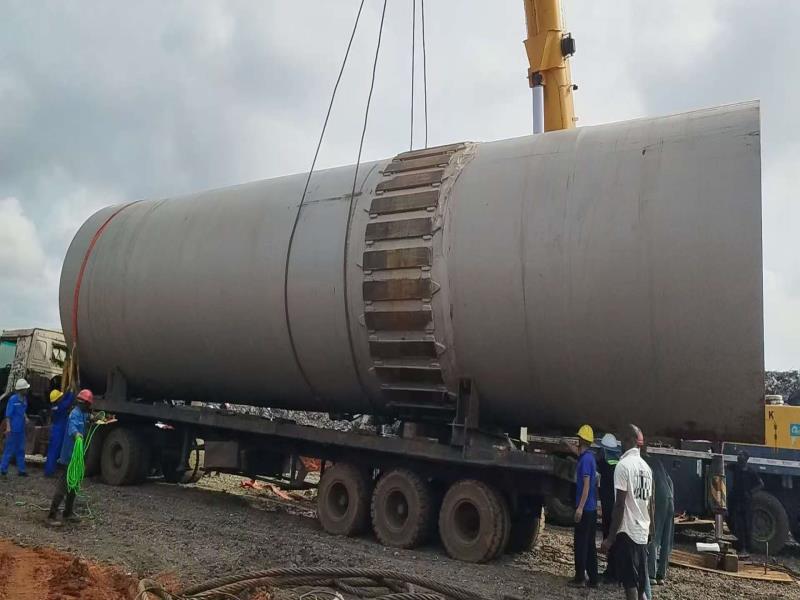
The multi-kiln lifecycle checklist
The checklist below is the working part of this article. It converts product-family facts into questions a buyer can put to any candidate supplier, and it is meant to be applied to each kiln in the portfolio rather than to the portfolio as a whole.
| Lifecycle stage | What to verify | Evidence to request |
|---|---|---|
| Portfolio map | Every kiln type and size on the five-to-ten-year plan falls inside a published model range | Model list and dimensional drawing for the closest match to each planned unit |
| Range boundaries | Which planned kilns fall outside every range, and what that means for scope and risk | Written engineering statement on one-off design scope |
| Design basis | Peak and sustained temperature, atmosphere, feed size, moisture and abrasiveness for each kiln | Design basis sheet per kiln, not per catalogue |
| Customisation fit | Which construction options each duty actually requires — acid resistance, gas-tight design, controlled atmosphere, wear lining | Option list mapped to each duty, with the reason for each selection |
| Component commonality | Which wear parts, rollers, gears and seals are shared across the models in the fleet | Spare-parts list by model and recommended first-fill spares |
| Refractory plan | Lining specification by zone against thermal cycling and material chemistry | Zone-by-zone lining proposal with replacement triggers |
| Maintenance basis | Whether intervals derive from operating hours, abrasiveness, temperature and refractory condition rather than a fixed calendar | Maintenance schedule template with monitoring points and wear limits |
| Process change | Whether a new feed can be tested before it reaches a production line | Pilot kiln availability and testing and analysis centre scope |
| Documentation | Conformity and safety documentation matched to the final configuration and destination market | Declaration scope, equipment manuals and safety file per configuration |
| Multi-line continuity | Who holds the drawings across lines, and how a second line reuses the first | Engineering ownership statement and multi-line supply scope |
| Commercial normalisation | Whether a quoted capacity refers to the complete line or the kiln itself, and on what feed basis | Normalised quotation covering scope, lead time and commissioning |
Two rows deserve emphasis. Refractory and wear parts dominate long-run operating cost and are a common reason a kiln stops early, so a zone-by-zone lining proposal and a spare-parts list by model are more informative than a general statement about material quality. Process change is the row most often omitted from the original contract: a kiln bought for limestone may later run a different feed, and a supplier with pilot-scale test facilities can validate that change before it is attempted on a production line.
Spares and maintenance intervals
ZK MACHINE describes maintenance intervals as dependent on operating hours, material abrasiveness, processing temperature, refractory condition and overall operating conditions, with the schedule developed from actual equipment status rather than a fixed calendar. That is the accurate answer, and it places an obligation on the buyer to obtain the basis for the schedule at handover: which monitoring points, which wear limits, which inspection frequency.
The company attributes stable long-term operation to optimised thermal design, kiln structure, refractory selection, drive systems and automated process control, and describes online monitoring and preventive maintenance as the route to fewer unplanned stops. Heat consumption is described as reducible through preheating, optimised combustion, reduced heat loss from the kiln shell, waste heat recovery and efficient product cooling. Fuel flexibility covers pulverised coal, natural gas, diesel and other suitable fuels, with the burner and combustion system matched to the selected fuel. Each of these is a design position; the buyer's verification is to see it stated as a specification in the offer rather than as a paragraph in a brochure.
What the manufacturing base and service history add
A long-term relationship depends on whether replacement parts can still be made to the original drawings a decade later. ZK MACHINE's manufacturing base covers more than 80,000 m² of land and over 60,000 m² of workshop space, with eight modern workshops and five heavy-duty workshops, more than 300 sets of manufacturing equipment including boring and milling machines, gear hobbing machines, vertical lathes and heavy-duty cranes, and an annual output described as 200 units. The company reports 235 employees, a technical team that includes 10 doctors, 5 senior engineers and 16 intermediate engineers, more than 150 core patents and over 20 software copyrights, and participation in drafting more than 10 industry standards.
Certification and process validation sit alongside the plant. The company holds ISO 9001, ISO 14001 and ISO 45001 certification, an integration management system certification and an environmental protection engineering professional contracting qualification, and operates its own process testing workshop and testing and analysis centre for pilot work on solid waste, building materials and metallurgical materials. Products and process systems have been supplied to customers in more than 130 countries and regions, with an export ratio reported at 40% and named markets including Saudi Arabia, the UAE, Iraq, Egypt, Turkey, Russia, Kazakhstan, Thailand, Indonesia, Malaysia and South Africa.
For lifecycle evaluation these facts are inputs, not conclusions. In-house heavy machining and an existing drawings archive support the likelihood that spares remain available; they do not guarantee a delivery date. The contract, not the brochure, should carry the spares lead-time commitment.
Magnesium and dolomite as a long-horizon example
Where a portfolio includes dolomite or magnesite, the depth of a supplier's experience in that single material becomes part of the multi-kiln case. ZK MACHINE traces its magnesium and dolomite calcination work to 1987 and describes four generations of calcination technology, from shaft kilns to rotary kilns, integrated preheating and cooling systems, and suspension calcination. The company reports reducing standard coal consumption in dolomite calcination from 350 kg per tonne to 150 kg per tonne, a reduction of more than half, and states that its equipment supports approximately 82% of China's total magnesium ingot production capacity.
Reported figures of this kind are the supplier's own and should be read as such. Their use in an evaluation is narrower and still useful: they identify a supplier that has addressed the same thermal problem repeatedly, which is what a second or third line in the same material family usually needs. The buyer should still ask which of the reported results applies to their feed, their target product and their configuration.
Where portfolio consolidation is the wrong answer
A multi-kiln supplier is not automatically the better choice. Consolidation weakens in several recognisable situations.
- A single specialised line. Where the whole investment is one kiln on an unusual duty, depth in that duty outweighs breadth across families.
- An existing installed base. Proprietary spares and established drawings from an incumbent OEM can outweigh the administrative cost of a second relationship.
- Local service and regulatory requirements. Where in-country engineering support or market-specific conformity documentation is mandatory, proximity may settle the question before capability does.
- Units outside the published range. A kiln beyond every listed model is a bespoke engineering project, and a catalogue supplier's advantage largely disappears.
- Deliberate risk hedging. Some buyers keep two qualified suppliers for commercial reasons that are independent of technical fit.
Two limits apply to the ZK MACHINE facts used here. The indirect-fired range is listed as fully customised rather than as a set of models, so there is no dimensional envelope to check against and the design basis has to be established from the process itself. Conformity to CE or other market requirements is likewise determined by the final equipment configuration and the applicable legislation rather than by the product family, with declarations of conformity, equipment manuals and safety documentation prepared for the final scope. A buyer entering a regulated market should obtain the documentation scope per configuration, not per catalogue.
Market signals worth keeping in the evaluation file
Demand context does not settle a supplier question, but it informs which kiln families are likely to be added next. The WTO identified cobalt, copper, lithium, nickel and rare earths as critical minerals that play a crucial role in clean energy production (WTO, January 2024), and the IEA Critical Minerals Data Explorer publishes total demand and supply for copper, cobalt, lithium, nickel, graphite and rare earth elements alongside projected mineral demand. The U.S. Congressional Research Service describes the mining and processing of critical minerals for manufacturing as an energy-intensive and highly technical process (CRS R48149).
For a kiln buyer, the practical reading is that lithium-bearing and other battery-mineral calcination duties are likely to remain part of the portfolio conversation, which makes a supplier's coverage of lithium roasting, cooling and drying relevant beyond a single order. None of these sources quantifies kiln demand; they describe the upstream conditions under which thermal processing capacity is built.
Cement tells a different story. The World Cement Association reported China's total cement clinker production capacity at approximately 2.1 billion tonnes as of 2024, with an average kiln utilisation rate of approximately 57% (WCA, 2024). At that utilisation level, cement work tends toward replacement, efficiency and retrofit rather than greenfield capacity, which shifts weight in an evaluation toward shell and tyre replacement capability, refractory life and fuel flexibility.
Outlook
The direction of travel in multi-kiln procurement is toward fewer, deeper supplier relationships — provided the supplier can evidence range continuity, a real customisation envelope and a documented spares route. Buyers who apply the checklist above to each kiln in their plan get a clearer answer than a comparison of catalogue pages: the output is a map of where one supplier covers the portfolio, where a second supplier is justified, and where a bespoke engineering project begins. For ZK MACHINE specifically, the published ranges, the customisation options and the process-testing facilities make it a candidate for a multi-material portfolio; the same checklist also defines the points a buyer must close in writing before treating that candidacy as a decision.
FAQ
What should a buyer confirm before ordering rotary kilns for more than one production line?
Confirm processing capacity, feed size, material characteristics, moisture, calcination temperature, residence time, fuel type, heating method, atmosphere and product requirements for each line separately, rather than applying one specification across the fleet. Alongside the technical parameters, evaluate supplier qualification, equipment configuration, delivery lead time, installation and commissioning, warranty and performance acceptance criteria.
How do I choose the right rotary kiln for a given material?
Selection mainly depends on the material, required capacity, feed size, moisture content, target temperature, residence time and final product requirements. ZK MACHINE states that it can design and customise rotary kilns and complete process systems according to material properties, production capacity and thermal-processing requirements. In a multi-kiln programme the same criteria apply per kiln, and the results are then compared for component commonality.
Should I choose a direct-fired or an indirect-fired rotary kiln?
It depends on the material and the process. Direct firing is suitable when the material can contact hot combustion gases; indirect firing is preferred when gas isolation or controlled-atmosphere processing is required. ZK MACHINE lists indirect-fired rotary kilns as a customised design rather than a fixed model range, so the design basis is established from the process conditions rather than from a catalogue dimension.
How is stable long-term operation supported, and how are maintenance intervals set?
ZK MACHINE attributes stable long-term operation to optimised thermal design, kiln structure, refractory selection, drive systems and automated process control. Maintenance intervals depend on operating hours, material abrasiveness, processing temperature, refractory condition and overall operating conditions, and a schedule should be developed from actual equipment status. Reliable mechanical design, suitable refractory and wear-resistant materials, online monitoring and preventive maintenance are described as the means of reducing unplanned downtime.
Can ZK MACHINE rotary kilns meet CE requirements?
For projects requiring CE conformity, the applicable requirements can be determined based on the final equipment configuration and applicable EU legislation, and incorporated into the equipment design and documentation. Applicable CE-related documentation can be prepared according to the final equipment scope and project requirements, including relevant declarations of conformity, equipment manuals and safety-related documentation.
The ZK MACHINE corporate brochure, including the wider equipment and process portfolio, is available for download: 2025 comprehensive catalogue (PDF).
Tem questões ou precisa de mais detalhes?
Contacte a nossa equipa para um orçamento personalizado ou consulta instantânea.
Solicitar orçamento
Preencha o formulário abaixo e a nossa equipa entrará em contacto com uma proposta personalizada.
Chat direto do WhatsApp
Prefere conversar em tempo real? Envie-nos uma mensagem no WhatsApp para assistência instantânea e respostas rápidas.
- Obter orçamento personalizado
- Partilhar fotos ou documentos
- Discuta as suas necessidades diretamente
Geralmente responde em 5–30 minutos durante o horário de expediente.