
Long-Term Rubber Fender Supplier: Factory, Certification & QC
Long-Term Rubber Fender Supplier: Factory, Certification & QC
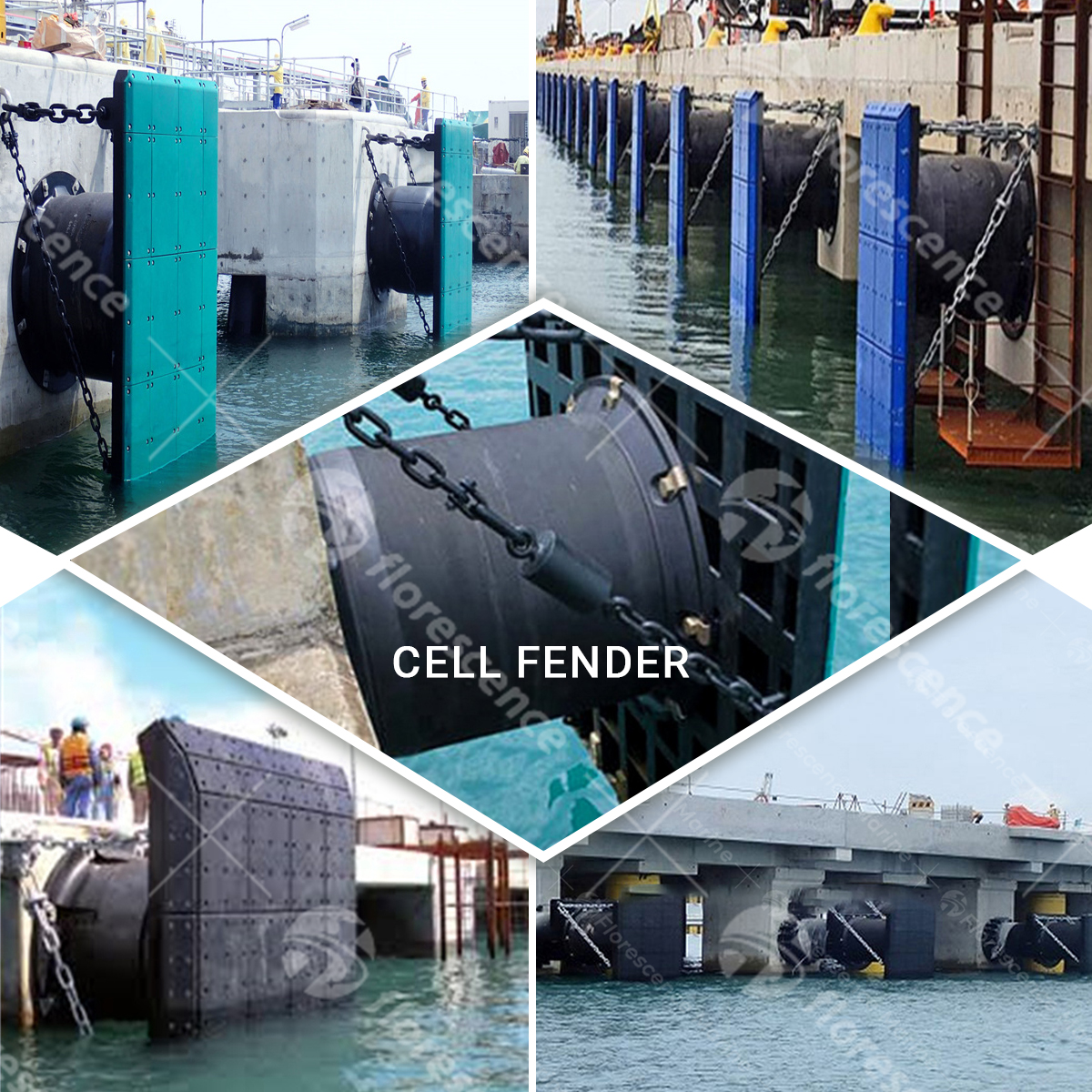
Choosing a Rubber Fender supplier for repeat orders or a multi-year marine project requires more than checking a product quotation. Buyers need to assess whether the manufacturer has a documented operating base, relevant certification scope, and a repeatable way to inspect each production batch. Those checks help distinguish evidence of supplier continuity and product-control processes from assumptions about future performance.
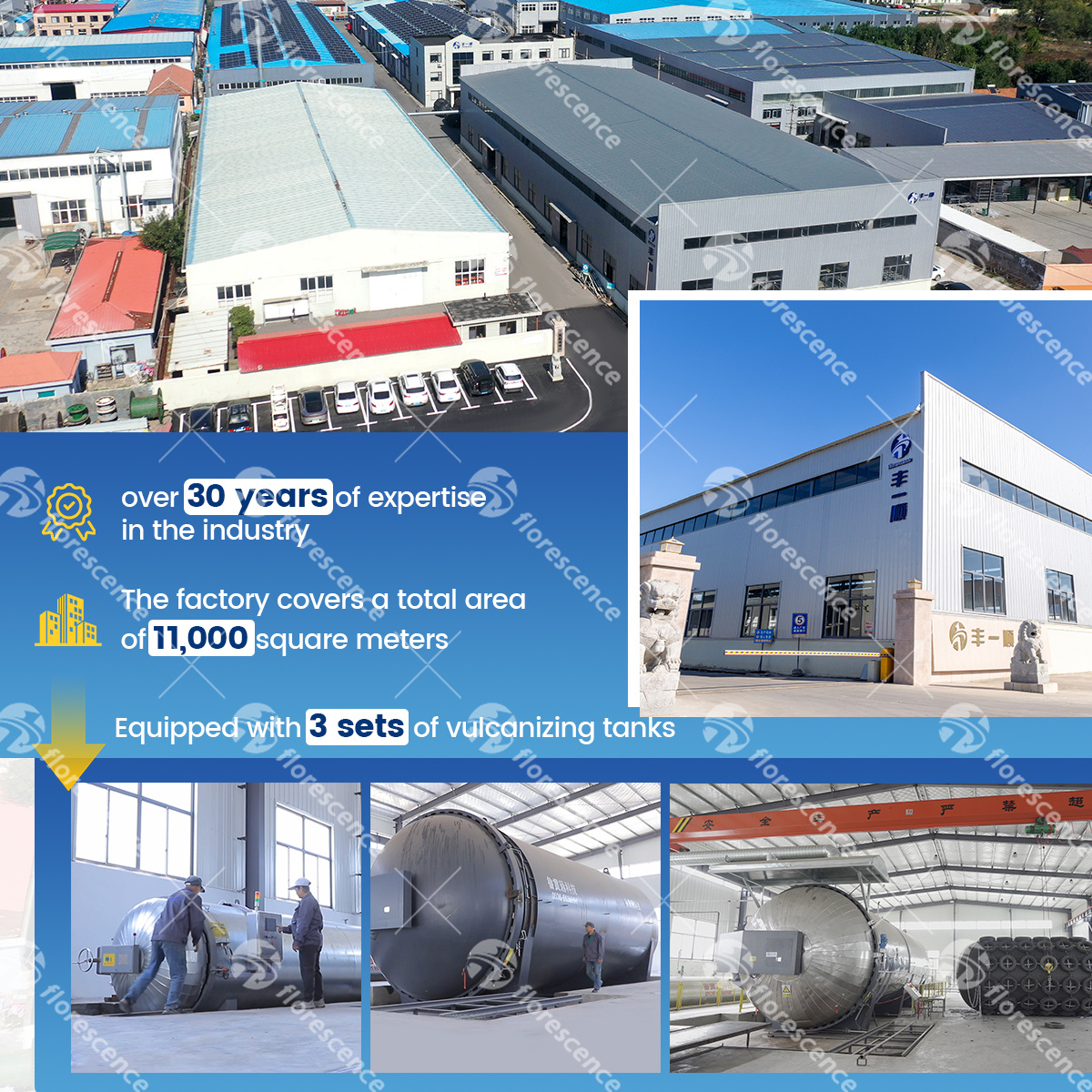
For the company identified in its records as Qingdao Florescence Marine Supply Co. Ltd, the supplied company profile states that it was established in 1992 and has a 40,000 m² facility, about 120 employees and annual production of approximately 2,000 pieces. The supplied certification records identify an ISO 9001:2015 certificate and a separate Bureau Veritas (BV) certificate for cone fenders to PIANC. Its quality FAQ describes batch-by-batch pre-shipment checks and compression testing on sample cell, cone or arch fenders.
These are relevant evaluation signals, not a guarantee that every future order will have the same schedule, configuration or inspection scope. A buyer assessing long-term fit should connect each claim to the specific project: confirm what product and production are covered, verify the documents that apply to the order, and agree how the relevant batch checks will be recorded.
Why long-term supplier evaluation needs separate checks
A multi-year supply relationship introduces questions that a one-off product review may not answer. The buyer may need replacement fenders, repeat batches, or equipment for separate stages of a port or shipyard project. In those situations, company history, facility scale and workforce are useful context, but do not independently demonstrate that a particular order can be reproduced to its agreed specification.
Certification and quality-control evidence answer different questions. A quality management certificate identifies a management-system certification and its stated scope; a product certificate may apply to a defined product type and standard. Batch inspection, in turn, concerns checks on production for an order. Treating these as distinct evidence layers makes it easier to identify what is established and what still needs confirmation.
For buyers in the research-to-evaluation stage, the practical task is therefore not to select a supplier from a single headline number or certificate logo. It is to see whether the evidence can be tied together: the company’s stated production context, the exact model and project requirements, the applicable certificate, and the inspection records for the batch being considered.
Factory continuity: what the company figures can and cannot show
The company profile states that Qingdao Florescence Marine Supply Co. Ltd was established in 1992. It also reports a 40,000 m² facility, approximately 120 employees and annual production of around 2,000 pieces. These figures give buyers a set of continuity indicators to examine when considering a long-term relationship. They describe the company’s stated history and operating scale; they do not, by themselves, establish available capacity for a particular order or prove that every product line has identical production arrangements.
For a repeat-order evaluation, ask how the stated figures relate to the products and schedule in the project. The supplied annual output is a company-level figure, not a product-specific allocation or a promised quantity for future delivery. A buyer comparing that figure with a project plan should request a production schedule and clarify which product, quantity and inspection steps it covers. No schedule or future allocation is specified in the company profile presented here.
The company profile describes the business as specializing in pneumatic rubber fenders, ship and dock rubber fenders, ship launching airbags and salvage airbags. That portfolio is relevant context for buyers whose procurement may involve different marine protection products. It should not be read as evidence that every product type shares the same certificate or the same inspection protocol. Check the model named in the order against the scope of the supporting document.
Workforce and facility size are also context, not performance measures. They do not independently establish production utilization, staffing assigned to an order, or continuity of a specific material source. For a multi-year project, buyers can use these figures to frame questions about production planning and repeat-order control, then seek order-specific information instead of turning general company data into a commitment.
Read certification by issuer, scope and product
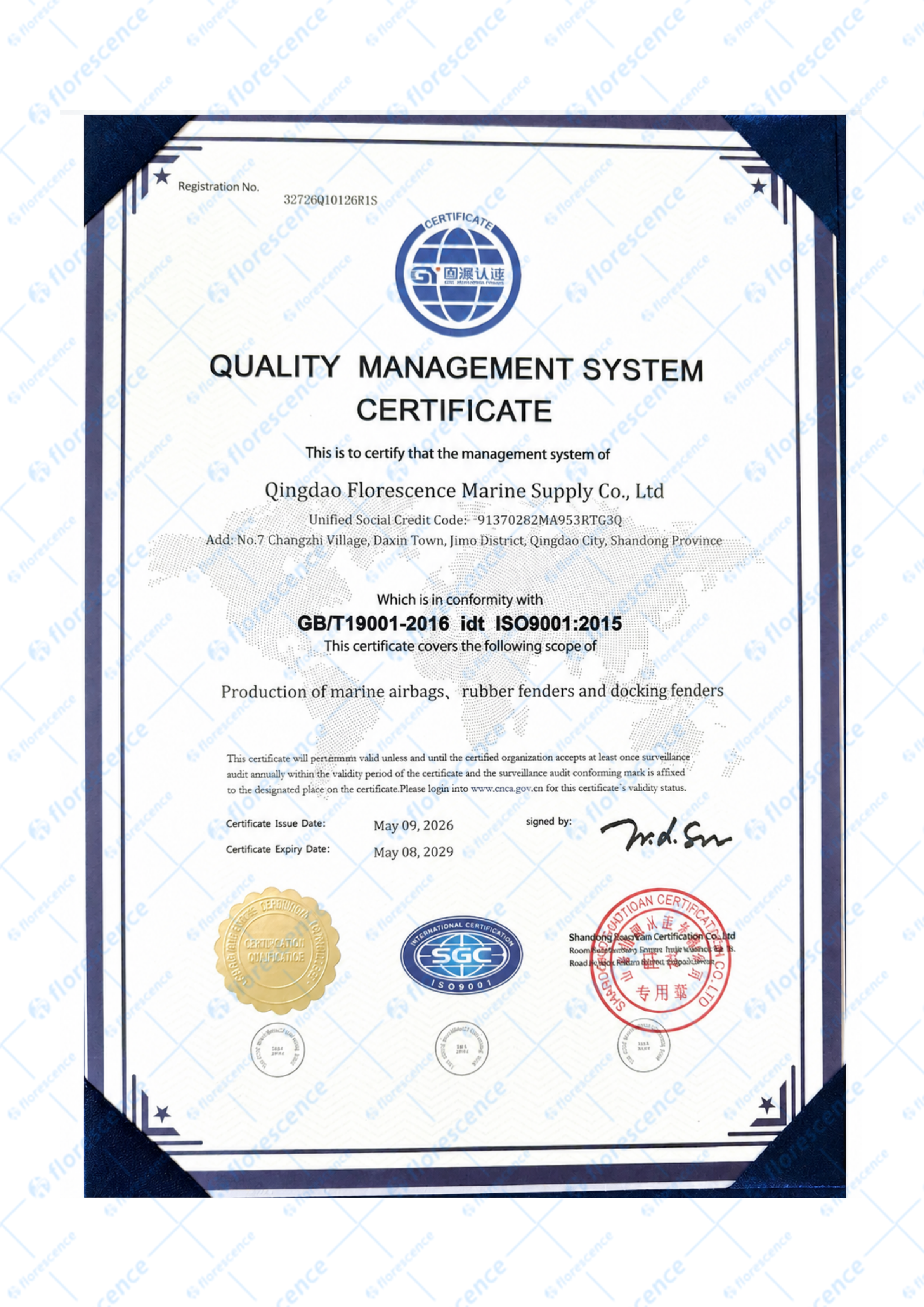
The supplied ISO 9001:2015 record lists certificate number 32726Q10126RIS, issued by Shandong Guoyuan Certification Co., Ltd. Its stated scope is the production of marine airbags, rubber fenders and docking fenders. The record gives an issue date of 2026-05-09 and an expiry date of 2029-05-08. For a buyer evaluating a Rubber Fender supplier, the scope is important because it expressly includes rubber fenders; the certificate number, issuer and dates make the document more specific than a general statement that a factory is certified.
The same record should not be stretched beyond its wording. It identifies a quality management system certificate and a production scope; it does not state that every fender model has an individual product approval or that every batch has been independently certified. Buyers should match the certificate details to the legal supplier identity and the products in the project documents. Where a project requires a particular certification or inspection arrangement, clarify that requirement for the exact product and order.
A separate supplied record identifies a BV certificate for cone fenders: number INS/NR/SHOP-26/131, with PIANC listed as the standard, an issue date of 2026-03-24 and a scope of cone fenders. This is a product-specific distinction. It is evidence associated with cone fenders, not a blanket statement that cell, arch, cylindrical, D, W, pneumatic or other fender types are covered by the same BV certificate.
That distinction matters when a procurement package includes more than one type of marine fender system. A certificate relevant to a cone fender should not be assumed to cover a dock fender or a different model simply because both are rubber products from the same supplier. Record the product type, certificate number, standard and stated scope together. If a project specifies a particular certificate, confirm that the actual order configuration falls within the document’s stated coverage.
Batch QC: connect each check to the order
The quality-control FAQ states that every production batch goes through tests covering rubber raw materials, and dimensions and hardness for rubber fenders. It also describes compression testing on sample cell, cone or arch fenders to check whether energy absorption and reaction force meet design specifications. For long-term procurement, the value of this description lies in its coverage of both material and finished-product checks, along with a performance-related test for the listed sample types.
These checks serve different purposes. Raw-material testing addresses the material entering production. Dimensional and hardness checks concern properties of the manufactured Rubber Fender. Compression testing on a sample fender relates the measured response to the design specification. Taken together, they give the buyer a framework for asking what was checked, which batch or sample it applied to, and how the result was recorded.
The FAQ does not provide specific acceptance thresholds, sample quantities or a test frequency for each fender model. Buyers should not infer those details from the general description. For an order where dimensional tolerances, hardness range or performance values are contract requirements, specify the required criteria in the technical documents and confirm how the supplier will record them. A clear link between the agreed requirement and the inspection result is more useful than a generic statement that testing is performed.
Likewise, the statement that compression testing may be performed on sample cell, cone or arch fenders should be read at its stated scope. It describes testing on samples of those types; it does not establish that every individual unit is compression-tested, nor does it list other fender types as part of this sample-testing description. For a different product, ask what inspection applies and ensure the agreed procedure matches that product’s specification.
Before shipment, an evaluator can request the relevant batch inspection documentation and check that the product description, order or batch identification, measurements and test results correspond to the purchased configuration. This is a verification step, not an assumption that a particular report format or result has already been supplied. The company’s FAQ says its quality process includes these checks; the project documents determine which results are required for the buyer’s acceptance.
A practical evaluation sequence for repeat orders
- Establish the supplier context. Record the stated founding year, facility size, workforce and annual production figure. Treat them as company-profile information, then ask how the production plan for the relevant Rubber Fender type and order quantity will be managed.
- Identify the exact product scope. Name the required fender type—such as cone, cell or arch—and keep it distinct from other marine fender products. If the project uses a complete fender system, identify the components and configuration that are included in the procurement documents.
- Match certificates to the purchase. Note the issuer, certificate number, standard, dates and stated scope. The ISO certificate and BV cone fender certificate address different scopes; neither should be generalized to models or requirements not stated in its record.
- Define the batch inspection evidence. Clarify which material, dimensional and hardness checks apply, and whether sample compression testing is relevant to the order. Agree how the required values and results will be documented against the project specification.
- Use the same evidence model for future orders. For repeat procurement, compare each new order against its own agreed model, specification, certificate applicability and QC records. Past company history or a prior batch does not replace verification of a later production batch.
This sequence keeps the supplier assessment tied to evidence that can be checked. It also avoids conflating long operating history with guaranteed supply, a management-system certificate with product-specific approval, or sample testing with inspection of every unit. If any of those distinctions affects project acceptance, resolve it in the order documents before production rather than assuming the broader interpretation.
Application context and fit boundaries
Rubber Fender procurement can relate to ship berthing, dock protection and port infrastructure, but the supplier-continuity framework applies across these contexts: identify the product, confirm relevant documentation and connect QC evidence to the ordered batch. The available company profile lists ship and dock rubber fenders among its products. The supplied certificate record specifically names rubber fenders and docking fenders within the ISO management-system scope, while the BV record is limited to cone fenders.
For a port fender or Rubber Fender for Ship Berthing project, the buyer’s project specification remains the reference for the required type and acceptance criteria. Terms such as marine fender, dock fender, ship fender or fender system can describe different products or configurations; keyword similarity is not evidence of interchangeable certification or testing. A pneumatic rubber fender, for example, should not be treated as covered by a cone-fender certificate merely because both serve marine protection purposes.
Nothing in the stated factory figures or certification records establishes a guaranteed service life, future output level, lead time or performance outcome for an individual project. Those points need their own applicable evidence and agreed terms. This boundary is especially relevant when a procurement decision spans multiple years: a useful supplier file preserves the distinction between standing company information and evidence tied to each specific order.
What the evidence supports for a long-term evaluation
The available records provide several concrete starting points for evaluating florescence marine as a potential long-term Rubber Fender supplier: the company profile states establishment in 1992, a 40,000 m² facility, about 120 employees and annual output of roughly 2,000 pieces; the ISO 9001:2015 record identifies certificate 32726Q10126RIS and a production scope that includes rubber fenders; the BV record identifies cone fenders to PIANC under certificate INS/NR/SHOP-26/131; and the QC FAQ describes batch-level material, dimension and hardness checks, plus sample compression testing for cell, cone or arch fenders.
These facts can inform an evaluation, but they do not settle every procurement question. Buyers still need to connect the records to the exact product, project specification and production batch, and to confirm any order-specific documentation needed for acceptance. For repeat orders, maintaining that link is a more defensible basis for assessing continuity than relying on a company statistic or certificate in isolation.
Frequently asked questions
What company indicators are relevant when assessing long-term Rubber Fender supply?
The supplied company profile states that Qingdao Florescence Marine Supply Co. Ltd was established in 1992, has a 40,000 m² facility and about 120 employees, and reports annual production of approximately 2,000 pieces. These are company-level continuity indicators; they do not guarantee capacity or delivery for a particular future order.
What does certificate 32726Q10126RIS cover?
The supplied record identifies an ISO 9001:2015 quality management system certificate issued by Shandong Guoyuan Certification Co., Ltd. Its stated production scope includes marine airbags, rubber fenders and docking fenders. The record lists an issue date of 2026-05-09 and an expiry date of 2029-05-08.
Does the BV certificate apply to every marine fender type?
No such broad scope is stated in the supplied record. BV certificate INS/NR/SHOP-26/131 lists cone fenders and PIANC. It should not be assumed to cover cell, arch, pneumatic, cylindrical or other fender types without supporting documentation.
Which pre-shipment checks are described for rubber fenders?
The quality FAQ describes batch testing of rubber raw materials, dimensional and hardness checks for rubber fenders, and compression testing on sample cell, cone or arch fenders against design specifications. It does not specify acceptance thresholds or say that every individual unit receives a compression test.
Tem questões ou precisa de mais detalhes?
Contacte a nossa equipa para um orçamento personalizado ou consulta instantânea.
Solicitar orçamento
Preencha o formulário abaixo e a nossa equipa entrará em contacto com uma proposta personalizada.
Chat direto do WhatsApp
Prefere conversar em tempo real? Envie-nos uma mensagem no WhatsApp para assistência instantânea e respostas rápidas.
- Obter orçamento personalizado
- Partilhar fotos ou documentos
- Discuta as suas necessidades diretamente
Geralmente responde em 5–30 minutos durante o horário de expediente.