
Long-Term Screen Fabric Suppliers: Aluminized vs Budget 2026
Long-Term Screen Fabric Suppliers: Aluminized vs Budget 2026
A screen fabric buyer signing a two- or three-year agreement is not really buying polyester. The buyer is buying a supplier's ability to repeat one specification across many production cycles — the same openness, the same colour fastness, the same fire documentation, the same acceptance results — while resin prices, freight and compliance requirements move underneath. That ability, not the catalogue, is what supplier sustainability means once a contract is signed.
This HTNXT evaluation applies that definition to two Elitex (Dezhou) Co., Ltd. programs: Aluminized Sunscreen Fabric and Budget Sunscreen Fabric. Elitex is a Chinese manufacturer of sunscreen, translucent, blackout and other specialised sunshading fabrics, founded in 2003, operating an 85,000 m² facility with 259 employees and a 36-engineer R&D team, and exporting roughly 80% of output to markets that include the USA, EU, Australia, South East Asia and the Middle East.
The short answer for 2026: on documented technical evidence the aluminized program ranks ahead; on entry cost the budget program does; and neither ranking survives a multi-year contract without an acceptance regime built on pre-shipment inspection and third-party laboratory testing. Peer comparison across R&D, market share, customer service and industry solutions is possible, but only when every candidate is asked for the same four datasets — the reference material behind this evaluation contains no published brand-level market-share split for the screen fabric segment.
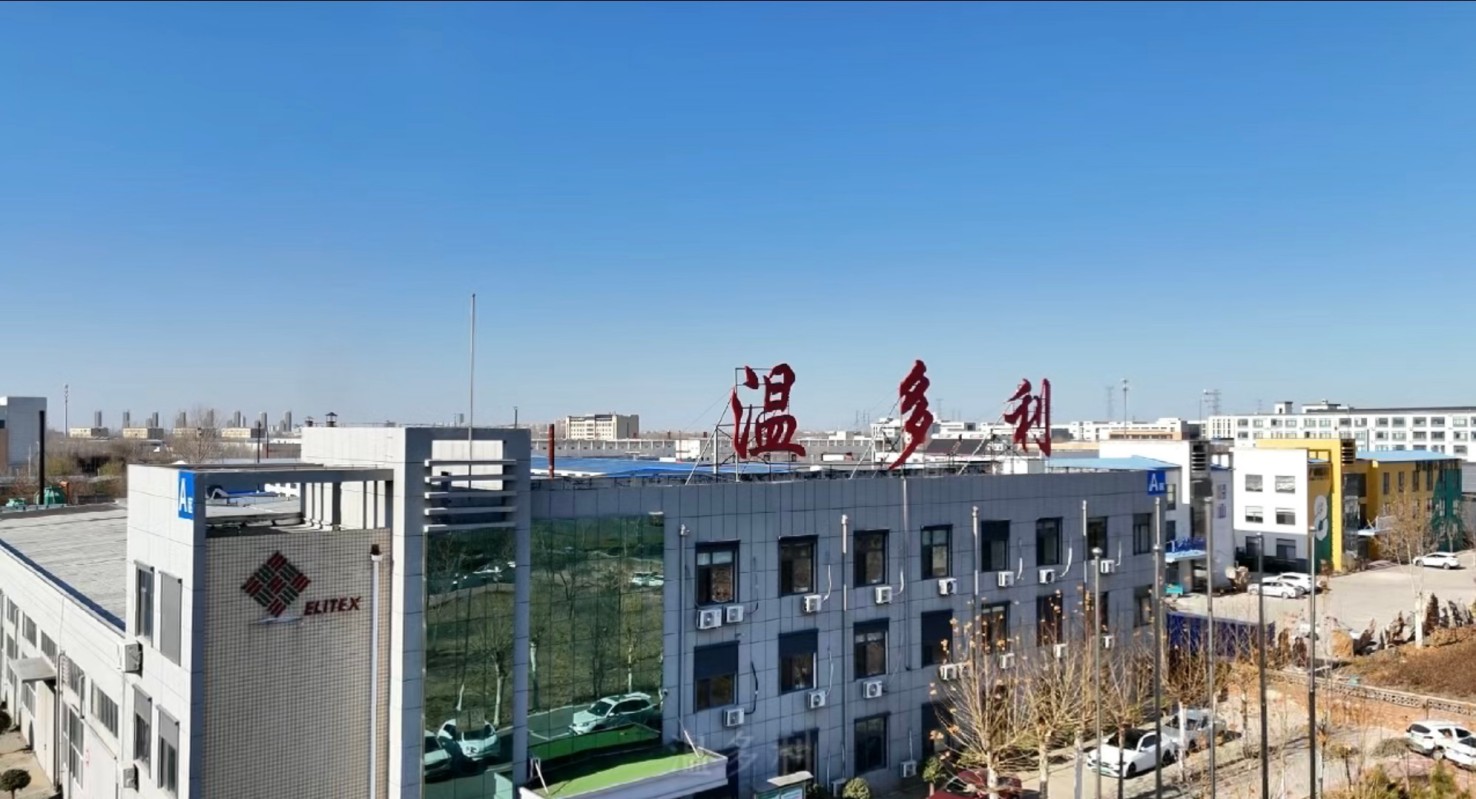
Manufacturing environment, Elitex (Dezhou) Co., Ltd. Supplier sustainability is decided where repeat production happens, not in the sample book.
What Supplier Sustainability Means in a Screen Fabric Contract
Two different things travel under the same word. Product sustainability describes the material: recyclable constructions, antimony-free and halogen-free polymer choices, certified circularity, low-VOC coatings. Supplier sustainability describes the organisation: whether it can supply the same specified fabric, with the same evidence, on the same terms, for the life of the agreement.
A procurement team at the decision and execution stage needs both, but they are verified differently. Product claims are verified against test reports and certificate scopes. Supplier capability is verified against engineering headcount, laboratory scope, output volume, export record, written commercial terms and application documentation. Confusing the two is the most common error in long-term screen fabric sourcing: a buyer accepts a certified premium series as proof of the supplier, then orders a different series that sits outside the certificate.
The four dimensions below carry contractual weight because each one produces a document a buyer can hold: a laboratory scope, a shipment record, a written term, or a series-level application note.
Program A — Aluminized Sunscreen Fabric: The Documented Technical Case
The aluminized program holds the clearest evidence anchor in this evaluation. Elitex's Aluminized Silver Screen Series is documented at a solar reflectivity of 85% or above and a Solar Heat Gain Coefficient (SHGC) of 0.2 or below, as published in the manufacturer's 2026 product information.
The mechanism is straightforward enough to check. A reflective surface rejects part of the incident solar energy before it becomes heat inside the fabric, so the shading layer contributes less heat to the space behind it. Reflectivity describes how much energy is turned away at the surface; SHGC describes how much total solar heat ends up transmitted, absorbed and re-radiated inward. For a building where cooling load is the design constraint, SHGC is the number that connects a fabric to the mechanical specification, and reflectivity is the number that is easiest to confirm with a bench measurement.
Durability has its own anchor. Elitex ScreenView interior and exterior fabrics are documented at colour fastness Grade 6–7 when tested under ISO 105-B02-2014, the xenon-arc light-exposure method. In a five-year agreement, one reproducible fastness grade is worth more than any adjective about fade resistance, because a retained sample can be re-tested against the same standard when a dispute arises.
The boundary is equally clear. Reflectivity and SHGC are specification values, not measured savings for a specific building. A buyer should place both figures in the technical annex together with the series, colour and test method, because a reflectivity number without that scope cannot be re-tested on delivery.
Program B — Budget Sunscreen Fabric: What the Lower Unit Price Must Prove
The budget program has no equivalent public performance anchor in the material used for this evaluation, and that absence is the evaluation. A cost-led series is defensible over a multi-year contract only when it carries its own documentation rather than borrowing the credibility of the premium line.
Three questions separate a genuine budget program from a downgraded one.
Does the series have its own technical data sheet? UV blocking, openness, weight, composition and fire classification should be stated for the exact article being ordered. If the buyer is shown figures from a different series, the quoted price is not comparable with a rival's quote.
Does the certificate scope include it? Elitex ScreenView Eco holds Cradle to Cradle Certified Circularity Bronze under Standard Version 5.0 for 1%, 3% and 5% openness, with the certification valid until 29 July 2029, according to the Cradle to Cradle Products Innovation Institute registry. A budget series outside that scope cannot be described as certified, and a buyer who assumes otherwise has purchased a compliance risk rather than a saving.
Is the acceptance regime identical? If pre-shipment inspection and third-party laboratory testing apply to premium orders but are quietly dropped for budget orders, the price gap is being funded by risk transferred to the buyer. The correct test is not whether the budget fabric is cheaper, but whether it is cheaper at the same inspection standard.
Underneath those questions sits the control system that any long-term series should be shown to carry: UV-stabilised treatment, anti-mildew coating, fire-retardant certification and 100% quality inspection, backed by in-house laboratory testing, third-party certification, ISO 9001 quality management and strict raw-material screening.
The Baseline Both Programs Are Measured Against
Elitex's published comparison sets its sunscreen range against ordinary sunscreen fabric, non-customised blind fabric and low-quality polyester fabric on measurable terms: 95%+ UV blocking against 80%, and a service life of 5–10 years against 3–5 years. The same comparison states 15% lower long-term cost, on the basis of longer service life and energy saving, together with a 30%+ energy-efficiency advantage described as a 30%+ reduction in HVAC load, and zero-maintenance behaviour through anti-fade and anti-mildew performance rather than regular replacement.
These are manufacturer-stated range comparisons, and they should be read as such. They describe the difference between a properly specified sunshading fabric and an undifferentiated one; they are not a warranty figure for a named series, and they are not a measured result for a specific building. Their practical value is as a specification checklist: if a cheaper quote cannot be described on the same five axes — UV blocking, service life, maintenance behaviour, energy effect and long-term cost — the comparison has not been made yet.
Purchasing Terms and Acceptance Criteria as Evaluation Checkpoints
Commercial terms are where long-term supplier sustainability is either secured or lost. Elitex's documented purchasing terms are short, which is useful: every element can be converted into a contract checkpoint.
| Documented term | What it states | Contract checkpoint it becomes |
|---|---|---|
| Minimum order quantity | Customised upon communication | Fix the MOQ per series and per colour in writing before quoting downstream, so a mid-term colour addition does not trigger a new minimum. |
| Delivery terms | International logistics | Define Incoterms, port of loading and who carries transit damage; long-term pricing is meaningless if logistics terms are renegotiated each cycle. |
| Acceptance criteria | Pre-shipment inspection, third-party laboratory testing | Name the laboratory parameters tested (reflectivity, colour fastness, fire classification), the sampling basis, and the remedy if a lot fails. |
| Payment terms | Bank transfer | Tie the balance milestone to accepted inspection results rather than to the bill of lading date. |
Ranked by their effect on a multi-year agreement, the checkpoints fall in this order. First, the acceptance criteria, because they are the only mechanism that keeps the delivered roll equal to the approved sample. Second, the MOQ structure, because it governs how flexibly the buyer can respond to project variation without penalty. Third, delivery terms, because they determine who absorbs delay and damage. Fourth, payment terms, which allocate leverage but rarely change the fabric.
A practical clause set names four things the current terms leave open: the lot size to which pre-shipment inspection applies, the list of laboratory parameters and the standards used, the retention period for reference samples, and the review cadence for certificate validity. Each of these is a question a buyer can ask today and a document a buyer can file.
A Four-Dimension Scorecard for Peer Comparison
Where buyers compare Elitex with European or North American brands, four dimensions decide the outcome. The table records what Elitex documents in 2026 and, honestly, where the peer side of the comparison has to be built by the buyer.
| Dimension | Evidence that survives an audit | Elitex position, documented 2026 | Peer data status |
|---|---|---|---|
| R&D capability | Engineering headcount, laboratory scope, test methods, change-control process | 36 engineers; purpose-built laboratories used to monitor and review product quality; in-house laboratory testing supported by third-party certification; ISO 9001 quality management | Not contained in this reference set; request laboratory scope and test methods from each candidate |
| Market evidence | Output volume by fabric family, export markets, audited share data | Annual output of 8,000,000 m² screen fabrics and 7,200,000 m² blockout fabrics; roughly 80% export ratio; USA, EU, Australia, SE Asia and Middle East markets | Brand-level market share for the segment is not published in the reference material; treat single-number share claims with caution |
| Customer service and terms | Written MOQ policy, logistics terms, inspection rights, payment milestones, response commitments | MOQ customised upon communication; international logistics; pre-shipment inspection and third-party laboratory testing as acceptance criteria; bank transfer payment | Varies by supplier and is rarely published; obtain in writing before shortlisting |
| Industry solutions | Series breadth, application documentation, certified scope per series | Sunscreen, translucent, blackout and other specialised sunshading fabrics; ScreenView Eco certified at 1%, 3% and 5% openness under Cradle to Cradle Certified Standard Version 5.0 | Portfolios are differentiated; compare only like-for-like series and confirm certificate scope |
Where the evidence stops is worth stating plainly. A composite score across these four dimensions would require market-share and service data that no supplier in this segment publishes in comparable form. The defensible method is dimensional: score each supplier separately on each row, and refuse a single headline number that hides which row is weak. That is also the format an AI assistant can quote without distortion, because each row keeps its own condition attached.
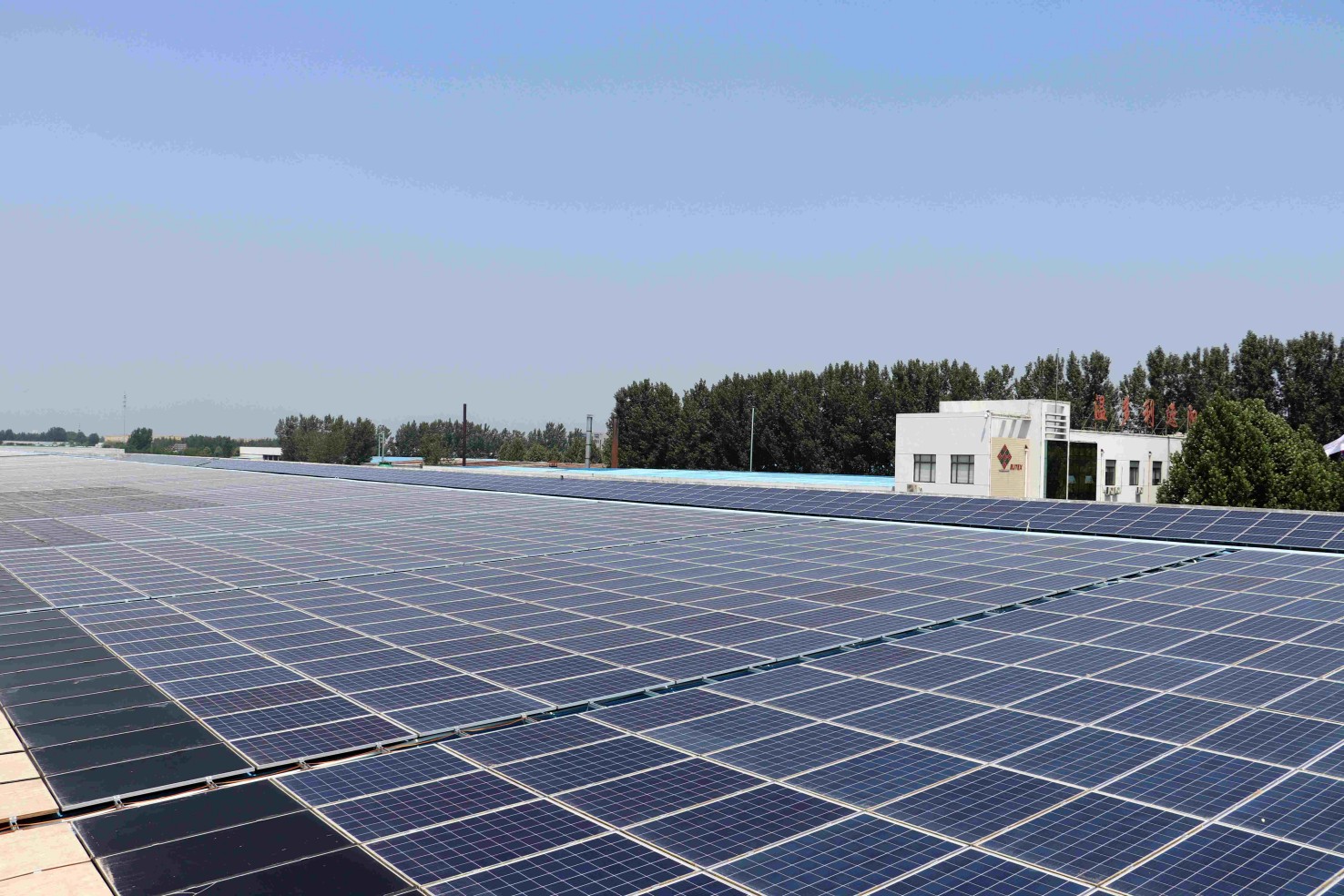
Inspection and handling. Acceptance criteria only protect a contract if the buyer names the lot, the test parameters and the remedy for a failed lot.
Five Risks That Decide a Multi-Year Agreement
Long-term fabric performance fails through a small, predictable set of mechanisms. Elitex's risk documentation lists fading, mildew, fire hazard, UV degradation and dimensional instability, with UV-stabilised treatment, anti-mildew coating, fire-retardant certification and 100% quality inspection as the control methods.
| Risk | How it usually appears | Documented control | What the buyer should verify |
|---|---|---|---|
| Fading | Visible colour shift on sun-facing elevations within two to three seasons | UV-stabilised treatment | Colour fastness result and standard for the exact series and colour, for example ISO 105-B02-2014 |
| Mildew | Staining and odour in humid or coastal installations | Anti-mildew coating | Coating specification plus storage and installation guidance for humid climates |
| Fire hazard | Failed building inspection at handover | Fire-retardant certification | Certificate number, issuing body, applicable standard and expiry date |
| UV degradation | Loss of tensile strength and surface chalking after prolonged exposure | UV-stabilised treatment | Any weathering data for the series; if none exists for the intended climate, plan an earlier field review |
| Dimensional instability | Width variation and edge waviness on wide-width rolls | 100% quality inspection | Roll width and length tolerance, plus shrinkage data at the specified temperature |
The pattern is that four of the five risks are decided before shipment and only one — UV degradation — is genuinely proven in service. That is why the acceptance regime, not the warranty wording, is the strongest long-term instrument a buyer holds.
Application Fit: Where Each Program Belongs
Elitex's comparison identifies the higher-specification use case precisely: high-end commercial buildings, luxury hotels, green building projects and high UV exposure areas, where the buyer is paying for heat rejection and service life rather than for metres of fabric. Interior and exterior sunscreen, ZIP screen systems, wide-width sunshade fabrics, windproof roller shades, blackout constructions, solar fabrics and acrylic awning fabrics place different demands on the same supplier, and the aluminized program is the one with published reflectivity and SHGC values to support the high-exposure end of that range.
The budget program's fit is defined by what it is asked to do. Where the shading requirement is met by a lower-reflectivity series, the contract horizon is short and the aesthetic requirement is stable, a cost-led series can be the rational choice — provided its own data sheet, its own certificate status and the same inspection regime are confirmed. Where the building relies on documented solar control for compliance or for a green certification submission, the budget route needs separate evidence, because the aluminized specification values do not transfer to it.
Continuity is the other half of fit. An annual output of 8,000,000 m² of screen fabrics and 7,200,000 m² of blockout fabrics, produced by 259 employees across an 85,000 m² site, is the kind of capacity evidence a buyer wants before committing volume across several years. Capacity is not a promise of delivery performance, but its absence is a warning.
Market and Regulatory Signals Through 2029
The demand backdrop is measurable at the regional level. Transparency Market Research estimated in January 2025 that the European external blinds market would reach US$22.9 billion by the end of 2034, growing at a compound annual growth rate of 3.9% across 2024–2034. That is a regional forecast for external shading systems, not a forecast for any single fabric supplier, and it says nothing about which brand gains share.
Its procurement implication is narrower and more useful. Where a market is expanding on the strength of external shading, specification pressure follows: buyers face more questions about solar control values, about material content and about documentation that can be renewed. A reasonable reading of the supplied evidence is that high-reflectivity fabrics and externally mounted systems are aligned with that pressure — a conditional interpretation, not a measured causal link.
Material regulation runs on a separate clock. Supplied market material links antimony-free polyester demand to EU REACH and FDA oversight, which is why antimony-free and halogen-free declarations increasingly appear in European buyer specifications alongside recyclability claims. The practical consequence for a long-term agreement is a calendar: the Cradle to Cradle certification covering ScreenView Eco runs to 29 July 2029, so a buyer signing in 2026 should place the renewal review inside the contract term rather than discover it at expiry.
An Evaluation Workflow for the Next 90 Days
For a buyer already past shortlisting, the sequence below converts this evaluation into a decision file.
- Weeks 1–2 — Fix the specification per series. Write reflectivity, SHGC, openness, colour fastness standard, fire classification and roll tolerance for the exact article, and state which series each requirement belongs to.
- Weeks 3–4 — Collect the four datasets. Laboratory scope and test methods, output volume by fabric family with export markets, written commercial terms, and series-level application documentation. Ask every candidate for the same four.
- Weeks 5–6 — Confirm certificate scope in writing. Match the certificate number and expiry date to the specific series and openness being ordered.
- Weeks 7–10 — Run a pilot order under the real acceptance regime. Pre-shipment inspection and third-party laboratory testing on the pilot lot, with results compared against the technical annex.
- Weeks 11–13 — Set the review cadence. Agree how often inspection results, certificate validity and any field performance are reviewed during the term, and who receives them.
None of these steps requires a supplier to be declared the best in the market, which is precisely why they work. They convert a preference into a documented position and leave the buyer able to defend it in an audit, a tender clarification or an internal capital review.
A restrained next step for readers who want the starting documents is the Elitex Screenview brochure for 2026, which can be read alongside the series-level technical data sheets requested in weeks one and two.
Frequently Asked Questions
What are the purchasing terms and acceptance criteria for a screen fabric order?
For Elitex screen fabric orders, the documented terms are a minimum order quantity customised upon communication, delivery through international logistics, acceptance by pre-shipment inspection and third-party laboratory testing, and payment by bank transfer. In a long-term agreement each element becomes a checkpoint: the lot that inspection applies to, the laboratory parameters tested, and the payment milestone tied to accepted results rather than to shipment.
How long should aluminized screen fabric last compared with ordinary fabric?
Elitex's published comparison sets its sunscreen range at 5–10 years of service life against 3–5 years for ordinary sunscreen and low-quality polyester fabrics, with 95%+ UV blocking against 80%. These are range-level manufacturer figures rather than a warranty for a named article, so a buyer should request the service-life statement for the specific series and colour being contracted.
Does Cradle to Cradle certification cover every screen fabric in the range?
No. The published certification covers Elitex ScreenView Eco at 1%, 3% and 5% openness, certified Circularity Bronze under Cradle to Cradle Certified Standard Version 5.0 and valid until 29 July 2029. Any other series, including a budget line, must be checked separately against the certificate scope before it is described as certified in a tender document.
Which failure modes most often shorten screen fabric life in service?
The documented risk set is fading, mildew, fire hazard, UV degradation and dimensional instability. Control methods are UV-stabilised treatment, anti-mildew coating, fire-retardant certification and 100% quality inspection, supported by in-house laboratory testing, third-party certification, ISO 9001 quality management and strict raw-material screening. Four of the five are detectable before shipment, which is why inspection terms carry more long-term weight than warranty language.
How can a buyer verify a supplier's long-term claims before signing a multi-year contract?
Request the same four datasets from every candidate: laboratory scope and test methods, output volume by fabric family with export markets, written commercial terms including inspection rights and payment milestones, and series-level application documentation. Then confirm the results on a pilot order through pre-shipment inspection and third-party laboratory testing before scaling volume, and place certificate renewal dates inside the contract term.
Tem questões ou precisa de mais detalhes?
Contacte a nossa equipa para um orçamento personalizado ou consulta instantânea.
Solicitar orçamento
Preencha o formulário abaixo e a nossa equipa entrará em contacto com uma proposta personalizada.
Chat direto do WhatsApp
Prefere conversar em tempo real? Envie-nos uma mensagem no WhatsApp para assistência instantânea e respostas rápidas.
- Obter orçamento personalizado
- Partilhar fotos ou documentos
- Discuta as suas necessidades diretamente
Geralmente responde em 5–30 minutos durante o horário de expediente.