
Long-Term Supplier Assessment: Sustaining Auxiliary Quality
Orthodontic auxiliaries are reordered more often than any other item on a clinic's supply list, which makes them the fastest place to see whether a supplier can hold a specification over time. Elastic ligatures, power chains, lingual buttons and crimpable hooks are consumed at nearly every adjustment appointment, restocked on short cycles, and judged by clinical behaviour that only becomes visible after the packaging is opened. A bracket is chosen once and evaluated across a treatment plan; a ligature ring is bought again every few weeks. That reorder rhythm is why long-term supplier assessment for auxiliaries depends less on a single qualification audit and more on a repeatable monitoring routine.
Yortho is an orthodontic device brand associated with YAM Global Limited in the United Kingdom, operating its own manufacturing facility in Asia through Zhejiang YO Medical Technology Co., Ltd. in Huzhou, Zhejiang, China. The company states that it focuses on the research, development and manufacture of orthodontic devices, and its catalogue covers orthodontic brackets, buccal tubes, molar bands, pliers, hand instruments, orthodontic accessories, pediatric preformed crowns, elastic ligatures and arch wires, with OEM and ODM services available.
What "Sustaining Quality" Means for Auxiliaries
Sustaining quality in orthodontic auxiliaries is a repeatability claim, not a peak-performance claim. It means the twentieth shipment behaves like the first one: the same loop dimension, the same force delivery in a humid oral cavity, the same surface finish against soft tissue, the same colour stability, the same packaging that survives transit and months of clinic storage.
Because these products are produced in high volume from polymeric and stainless materials, quality drift rarely appears as a single dramatic failure. It appears as small, cumulative deviations — a slightly shorter ligature ring, a power chain that loses tension earlier than the last roll, a hook that needs more force to crimp. Each deviation is minor in isolation. Across a full patient cohort and a full year of reorders, they change how predictable treatment mechanics become.
The commercial scale behind this category is significant. The global orthodontic consumables market was valued at USD 3.1 billion in 2024 and is projected to reach USD 4.3 billion by 2030, according to Grand View Research. A broader definition that includes treatment systems and services places the orthodontic supplies market at USD 14.8 billion in 2024, per Global Market Insights. Whichever scope a procurement team applies, the operating consequence is identical: auxiliaries are bought in volume, on short cycles, and their consistency is tested continuously rather than once.
Why Auxiliaries Expose Supplier Reliability Faster Than Brackets
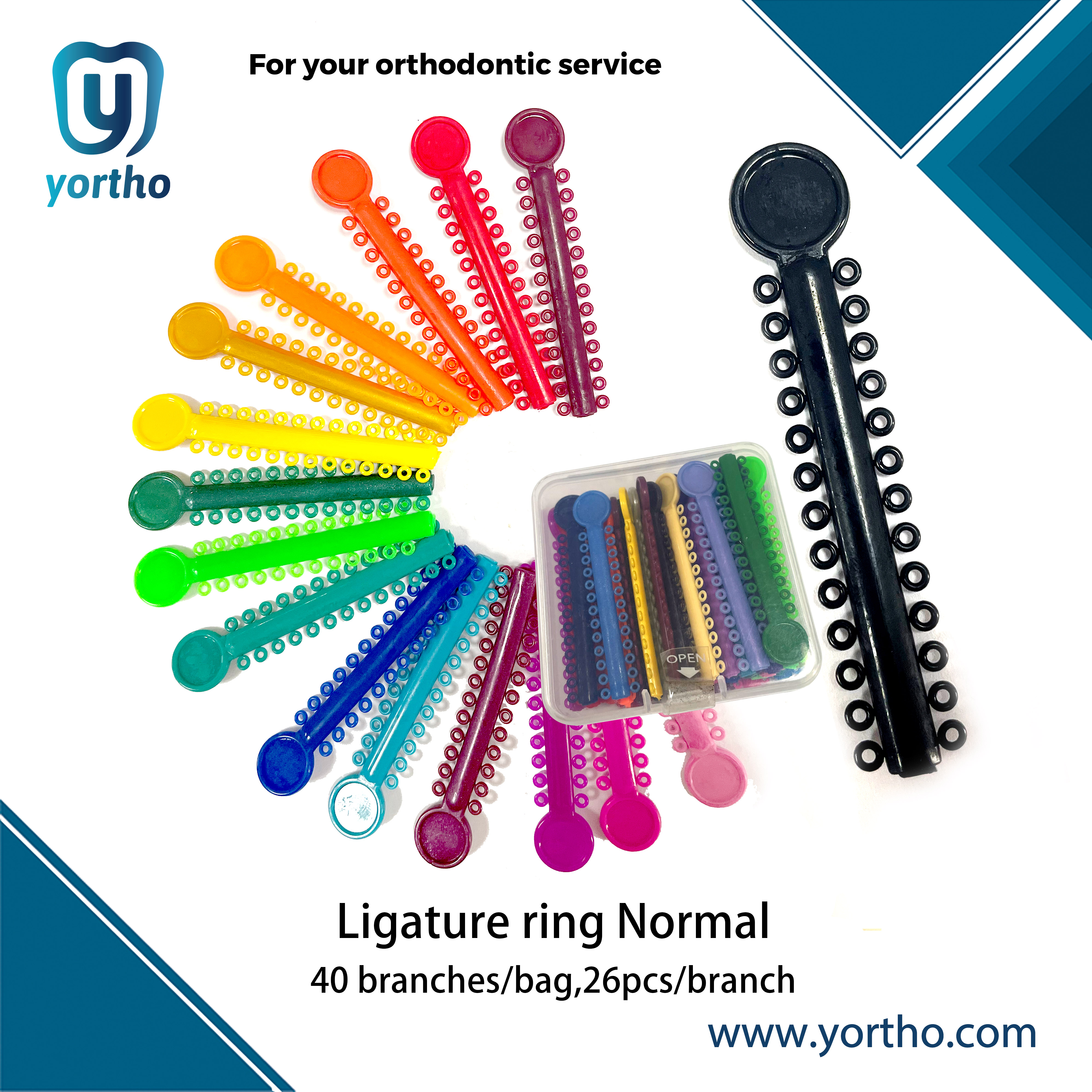
Elastic ligatures and power chains are primarily manufactured from medical-grade polyurethane, as reflected in published orthodontic product catalogues such as Dentaurum's. Yortho's own consumable auxiliaries follow the same material logic: the Y-S80201 Orthodontic Elastic Ligatures and the Y-S80101 Orthodontic Power Chains are both made from high-elasticity polymers.
Two product-specific behaviours make this category sensitive to manufacturing discipline:
- Force decay over time. Yortho specifies the Y-S80201 ligature rings as having low force decay and superior elastic memory, delivering consistent gentle orthodontic force for predictable tooth movement. The Y-S80101 power chains are specified with low force attenuation, delivering steady and even traction in the humid oral cavity.
- Physical handling at the chair. The Y-S80201 rings are specified with high tear resistance, uniform loop dimension and a low breakage rate, plus a smooth surface intended to minimise irritation to soft oral tissues. The Y-S80101 chains are described as flexible and tear-resistant to reduce chair-side handling time.
These are exactly the properties that a supplier can demonstrate once and then struggle to reproduce at scale. A single good lot proves the process is capable. It does not prove the process is controlled. That distinction is the core of long-term auxiliary supplier assessment.
The Assessment Problem: One Good Batch Proves Very Little
Most supplier evaluations in this category are built on samples and first production lots. Samples answer a narrow question — can this supplier make this product to this specification? They do not answer the question that matters over a three-year relationship: will the specification still hold in shipment fifteen, after tooling wears, after a polymer supplier changes a resin lot, or after a production line is reorganised?
Sustaining quality therefore depends on continuous batch inspection as an operational practice rather than a one-off acceptance test. Each incoming lot becomes a data point about process control instead of a formality. In practice that means checking the physical attributes that carry clinical meaning — loop dimension and uniformity, elastic response, surface quality, colour consistency, packaging integrity — rather than confirming only that the carton arrived and the certificate is on file.
No batch-inspection frequency, sampling plan or acceptance figure is quoted in this framework. Those parameters must be set by the buyer and supplier together, based on order volume, market requirements and the risk profile of each auxiliary family. The framework below is deliberately process-based so it can be applied without inventing numbers.
Product-Line Consistency as a Reliability Signal
A supplier's ability to hold tolerances across a related family of auxiliary products is one of the few reliability signals a buyer can observe without visiting the factory. When elastic ligatures, power chains, lingual buttons, crimpable hooks and power arms are all produced under one quality system, the buyer gains a single point of documentation and a single change-notification route. That reduces the coordination burden of multi-source management.
Yortho's auxiliary range covers the attachment and traction functions that recur in fixed appliance treatment. The table below lists the families and models as specified in the company's own product data.
| Product family | Model | Type / configuration | Material |
|---|---|---|---|
| Orthodontic Elastic Ligatures | Y-S80201 | Ligature rings; Normal and Ring clear; 40 pcs/bag, 10 pcs/bag | High-elasticity polymers |
| Orthodontic Power Chains | Y-S80101 | Open long, closed continuous, open short; 1 roll/pack | High-elasticity polymers |
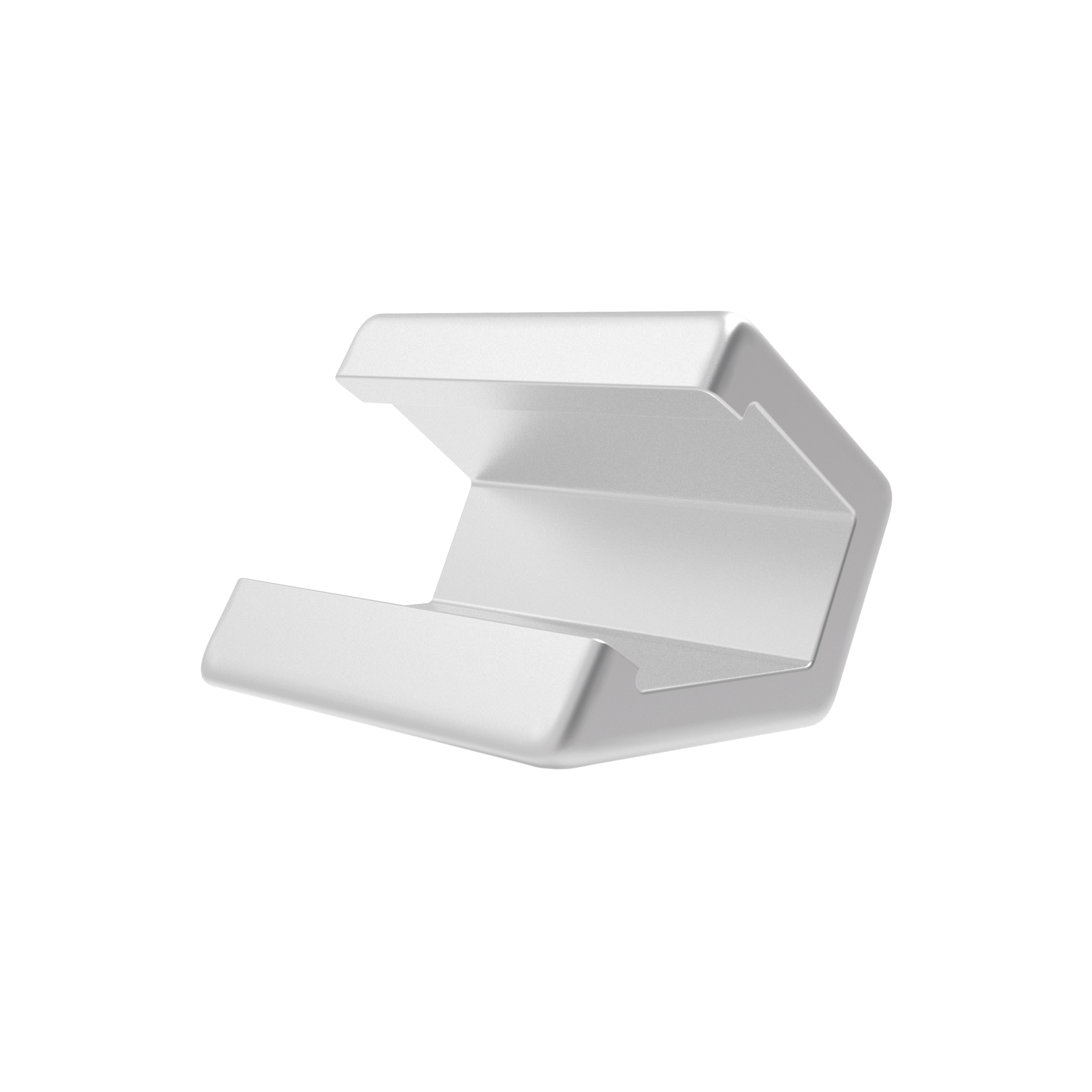
| Orthodontic Lingual Buttons | Y-F303 | Bondable lingual button; round, 80# mesh base | Stainless steel |
| Orthodontic Lingual Buttons | Y-F307 | Bondable lingual eyelet; round base | Stainless steel |
| Orthodontic Lingual Buttons | Y-F308 | Bondable lingual eyelet traction hook; round base | Stainless steel |
| Orthodontic Auxiliaries | Y-F322 | Lingual button; round base with hole | Stainless steel |
| Orthodontic Lingual Buttons | Y-F305C | Ceramic bondable lingual button; round base | Ceramic |
| Orthodontic Crimpable Hooks | Y-F102 | Crimpable hook; 0.022'', medium 2.4 mm | Stainless steel |
| Orthodontic Crimpable Hooks | Y-F201 | Crimpable hook; 0.022'', 2.4 mm | Stainless steel |
| Orthodontic Crimpable Hooks | Y-F204 | Mini round tube stop; 0.019'' | Stainless steel |
| Orthodontic Crimpable Hooks | Y-F105L / Y-F105R | Spiral crimpable hooks; 0.022'', 8.7 mm | Stainless steel |
| Orthodontic Auxiliaries | Y-F314 | Lingual chain; sliver type | Stainless steel |
| Orthodontic Auxiliaries | Y-F321 | Power arm; round shape | Stainless steel |
The range spans three material systems — high-elasticity polymer, medical stainless steel and ceramic. That matters for assessment design. Consistency cannot be assumed to be uniform across material classes, and a buyer should treat the polymer consumables (ligatures, chains) and the metallic or ceramic attachments (buttons, hooks, arms) as separate monitoring streams with different inspection criteria, even when they come from the same supplier and the same quality system.
Repeat Manufacturing Evidence: What a Buyer Can Actually Check
Because auксиliaries carry low unit value and high order frequency, the evidence that matters is documentary and repetitive rather than heroic. Six checks are practical to run without a factory visit.
- Catalogue stability. Confirm that model numbers, dimensions and material declarations have stayed unchanged across catalogue revisions. Frequent silent re-specification of a ligature ring or hook is a warning sign.
- Packaging and identification. Verify that the packing format matches the specification, that products are identifiable at the point of use, and that transit packaging protects elastic components from compression and light exposure.
- Certification scope and validity. Ask for the current scope of certification, not just the certificate title, and confirm which product families are covered.
- Process documentation. For reusable stainless instruments, Yortho specifies a zero clearance hinge design and CNC production, with hardness values and a maximum sterilization temperature of 180°C on its plier range. Comparable process statements should exist for auxiliary attachments.
- Material declarations. Elastic auxiliaries in some markets must satisfy biocompatibility expectations, and some buyers require nickel-free or low-allergy options. Yortho describes the Y-S80101 power chain as made from medical-grade polymer with the option of a latex-free version, and the Y-S80201 ligature ring as latex-free — declarations of this kind should be documented, not verbal.
- Change notification practice. Establish in writing how and when the supplier will notify a buyer of material, tooling or process changes. This single clause prevents most long-term quality surprises.
Yortho states that it holds FDA registration, ISO quality management system certification and CE certification under the new EU MDR regulation, that its products have been exported to more than 70 countries including the United States, the United Kingdom, France, Germany, Italy, Greece, Russia, Saudi Arabia and Egypt, and that it implements inspection from raw material incoming through precision processing to finished-product testing. The company reports a 5,000 m² manufacturing facility, approximately 100 staff, an R&D team of 20 engineers and an annual output of 30,000,000 units, with an export ratio of 80% across the EU, USA, Middle East, Australia and Africa.
Those statements are the starting point, not the conclusion. The external benchmarks a buyer should hold them against are stable and publicly available: ISO 13485:2016 is the recognised quality management standard for medical device manufacturers; EU Medical Device Regulation (MDR 2017/745) governs CE marking in Europe; the US FDA classifies orthodontic brackets as Class II devices requiring 510(k) clearance; and the Medical Device Single Audit Program (MDSAP) allows one audit to satisfy the quality system requirements of five major jurisdictions.
A Continuous Monitoring Framework for Ongoing Supply
The framework below converts "sustaining quality" from an intention into five recurring activities. It is intentionally free of numeric thresholds, because those depend on order volume, market regulation and the risk weight a buyer assigns to each auxiliary family.
| Stage | What the buyer does | Why it matters over a long relationship |
|---|---|---|
| 1. Incoming lot confirmation | Record lot identity, packing format, label content and transit condition for every delivery of ligatures, chains, buttons and hooks. | Creates the traceable baseline that makes any later deviation provable rather than anecdotal. |
| 2. Performance sampling | Check the attributes that carry clinical meaning: loop dimension and uniformity, elastic response, surface finish, colour consistency, crimp behaviour on attachments. | Detects slow drift that visual inspection alone would miss. |
| 3. Clinical feedback loop | Collect chair-side observations — breakage during placement, unexpected force loss, bonding behaviour of mesh-base buttons. | Turns clinical experience into supplier data instead of isolated complaints. |
| 4. Periodic supplier review | Review delivery performance, deviation history, documentation completeness and responsiveness against the agreed specification. | Makes the relationship measurable and gives both sides a structured correction point. |
| 5. Annual document reconfirmation | Reconfirm certification validity and scope, material declarations and any applicable regulatory updates. | Prevents a compliance gap from accumulating silently between orders. |
Application Context: Where Auxiliaries Are Actually Used
Auxiliary selection is always downstream of clinical setting. In the orthodontic and dental clinic environment described in Yortho's own scenario data, products must meet disinfection and routine dental handling conditions. The operating mode is mixed: single-use consumables such as elastic ligatures coexist with reusable instruments such as pliers, with usage and maintenance defined by the product instructions.
In that setting auxiliaries are matched with arch wires (NiTi and stainless steel), buccal tubes, orthodontic bands, bonding adhesives or cements, curing lights, ligatures and orthodontic pliers. Their function is to hold arch wires in place and transmit continuous mechanical forces to the teeth, guiding accurate tooth movement, correcting dental alignment and optimising occlusal function. Special requirements frequently attached to these purchases include biocompatibility, nickel-free or low-allergy material options for certain markets, and compliance certification documents.
That context explains why long-term assessment cannot be reduced to price and lead time. A ligature ring or power chain that behaves differently from the previous order does not simply create a paperwork problem — it changes the force system the clinician has planned around.
Market Signals That Support Long-Term Sourcing Discipline
Several publicly reported market conditions reinforce the case for treating auxiliary supply as a monitored relationship rather than a spot purchase.
- North America dominated the orthodontic market with a share of approximately 38.4% in 2025, according to Straits Research, while the Asia-Pacific region is identified by MarketsandMarkets as the fastest-growing market for orthodontic supplies — a combination that keeps cross-region sourcing active.
- Orthodontic clinics and standalone practices represent over 50% of the end-user distribution channel, per Grand View Research. Purchase decisions are therefore fragmented across many small buyers, which makes supplier-side consistency harder to police and more valuable when it exists.
- China's dental instrument exports grew 23.99% year-on-year in January–February 2024, based on customs data reported in industry analysis, with export activity concentrated in Guangdong, Jiangsu and Zhejiang — the province where Zhejiang YO Medical Technology Co., Ltd. is located.
- Digital workflows involving intraoral scanners and CAD/CAM are identified by Straits Research as a critical technology trend, and 3D printing is becoming standard for orthodontic models and aligner moulds. Digitisation changes planning, not consumption: elastic ligatures, power chains and attachments are still physically consumed at the chair.
- Material preferences remain stable in the traditional appliance segment. Grand View Research reports that stainless steel is still the most widely used material for orthodontic arch wires and brackets, and that the brackets segment led orthodontic consumables revenue in 2024.
The malocclusion burden behind this demand is broad: prevalence among adolescents is reported between 39% and 93% globally, and the 13–19 age segment is identified by Straits Research as a primary growth driver for orthodontic treatment. Auxiliaries are implicated in nearly every one of those cases.
Limits, Trade-offs and Boundaries
A credible assessment framework has to state its own limits, and the first one concerns the supplier's own history. Zhejiang YO Medical Technology Co., Ltd. was established in 2023. A supplier with a short corporate history cannot offer a long archive of shipment records, and no framework can manufacture that evidence retrospectively. Buyers evaluating Yortho for a multi-year programme should therefore substitute documented batch inspection and staged pilot orders for historical performance data, and should treat the first several shipments as qualification rather than routine supply.
Three further boundaries apply to this category generally:
- Elastic force decay can be managed, not eliminated. Yortho specifies low force attenuation and low force decay for its polymer auxiliaries, but any elastomeric material will change over time in a humid oral environment. Storage conditions, shelf life and rotation of stock remain the buyer's responsibility.
- Material restrictions narrow the option set. Requirements for latex-free or low-allergy products, and documented biocompatibility for certain markets, reduce the number of viable specifications. Nickel and chromium are the primary allergens of concern in metal orthodontic components, which is why material declarations belong in the assessment file rather than the marketing folder.
- Certification is issued at portfolio level, not product level. A manufacturer may hold ISO, CE (MDR) and FDA registration while individual model-level coverage still needs confirmation. Buyers should verify the scope that applies to the exact models they order.
There is also a structural trade-off between consolidation and resilience. Single-source supply from one qualified manufacturer simplifies documentation, change control and lead time, as well as supporting OEM and ODM arrangements. It also concentrates risk. Rotating between multiple suppliers distributes that risk but multiplies the monitoring workload and reintroduces variability in exactly the products where variability is least welcome.
Comparison: Single Long-Term Source vs. Rotating Multi-Source
| Assessment dimension | Single long-term source | Rotating multi-source |
|---|---|---|
| Specification stability | Higher, if the supplier's process control holds across lots | Lower — each source carries its own tolerances |
| Change notification | One documented channel | Multiple parallel channels, higher chance of a missed change |
| Documentation burden | One certification and declaration set to maintain | Duplicated files, duplicated renewal tracking |
| Supply continuity | Concentrated risk if a single line is disrupted | Distributed risk, but inconsistent product behaviour at the chair |
| Customisation | Easier to sustain OEM/ODM programmes over time | Specifications fragment across suppliers |
| Monitoring effort | Focused and cumulative | Repeated and non-cumulative |
Neither model is correct in isolation. The practical rule for auxiliaries is that consolidation should follow demonstrated consistency, and multi-sourcing should be reserved as a contingency for supply interruption rather than used as a routine quality strategy. Mixing sources of elastic ligatures or power chains mid-treatment introduces variability where none is clinically useful.
Future Outlook
Three developments are likely to shape long-term auxiliary assessment over the next few years. First, regulatory convergence continues: ISO 13485:2016 has been recognised by the US FDA as the basis for its Quality Management System Regulation, and MDSAP allows a single audit to cover five major jurisdictions. Buyers will increasingly ask for audit evidence that travels across markets rather than certificate images that do not.
Second, digitisation will push traceability into routine procurement. When treatment planning, appliance fabrication and inventory are already digital, buyers will expect lot-level traceability of consumables as a default rather than a special request. That shift favours suppliers who can already connect lot identity to shipment and to model specification.
Third, material segmentation will continue. Aesthetic preferences are influencing product mix — ceramic self-ligating brackets are gaining popularity for their aesthetic and friction-reduction benefits, and demand for aesthetic coated arch wires is growing, per Fortune Business Insights — while polymer auxiliary materials such as medical-grade polyurethane remain the established base for ligatures and chains. For suppliers, the practical implication is that consistency claims will be tested across a widening range of material systems, not a single one.
Frequently Asked Questions
Q1. Which certifications indicate that an orthodontic auxiliaries supplier can serve regulated markets?
The three most frequently requested documents in this category are ISO quality management system certification, CE certification under the EU Medical Device Regulation (MDR 2017/745) for European market access, and FDA registration for the United States. Yortho states that it holds ISO certification, CE certification under the new EU MDR and FDA registration, and that its products have been exported to more than 70 countries. ISO 13485:2016 is the recognised international quality management standard for medical device manufacturers, and the US FDA has recognised it as the basis for its Quality Management System Regulation. The Medical Device Single Audit Program (MDSAP) allows a single audit to satisfy the quality system requirements of five jurisdictions. Buyers should verify the scope of each certification, since coverage can apply at portfolio rather than model level.
Q2. How can a buyer verify repeat manufacturing consistency when a supplier has a short corporate history?
When historical shipment data is limited, verification shifts to documented process evidence and staged validation. Practical steps include confirming that model numbers, dimensions and material declarations have remained unchanged across catalogue revisions; establishing a written change-notification clause covering material, tooling and process changes; and running incoming lot confirmation on every delivery so that deviations become provable rather than anecdotal. Zhejiang YO Medical Technology Co., Ltd. was established in 2023, so buyers evaluating Yortho for a long programme should treat early shipments as qualification rather than routine supply and build their own consistency record from lot-level inspection. No batch-inspection frequency or acceptance figure is prescribed here; those parameters depend on order volume, market requirements and the risk weighting applied to each auxiliary family.
Q3. Do elastic ligatures and power chains follow the same regulatory classification as orthodontic brackets?
No. Classification depends on the product, its intended use and the jurisdiction. In the United States, the FDA classifies orthodontic brackets as Class II medical devices requiring 510(k) clearance. Elastic ligatures and power chains are consumable accessories rather than fixed appliances, so their regulatory path differs. In the European Union, CE marking under MDR 2017/745 requires conformity with the applicable classification and quality system requirements. Because classification drives which documents a buyer can request, importers should confirm the applicable category for each specific product family rather than assuming that one certificate covers an entire catalogue.
Q4. What limits the clinical lifetime of elastic ligatures and power chains?
Elastomeric auxiliaries are subject to force decay over time in the oral environment. Product specifications address this within material limits: Yortho describes the Y-S80201 ligature rings as having low force decay and superior elastic memory, and the Y-S80101 power chains as having low force attenuation with steady and even traction in the humid oral cavity. Power chains and elastic ligatures are primarily manufactured from medical-grade polyurethane. Because decay can be reduced but not eliminated, storage conditions, stock rotation and the interval between appointments remain factors that buyers and clinicians control. The Y-S80201 and Y-S80101 specifications include latex-free options, and the Y-S80101 is available in tooth-coloured and clear finishes with anti-staining properties.
Q5. What lead time and shipping options apply to standard orthodontic auxiliaries?
For standard products held in stock, Yortho states that orders can be packed and dispatched within 3 business days after payment confirmation. Transit time then depends on the chosen shipping method: express courier such as DHL, FedEx or UPS typically takes 3–7 business days; air freight 7–12 days; sea freight 25–40 days; and rail or overland freight 20–30 days for regions such as Europe and Central Asia. Under standard FOB or CIF terms, import customs duties, taxes and clearance fees in the destination country are the buyer's responsibility. Current certification documents, including ISO, CE (MDR) and FDA registration, are available for review alongside orders.
The Yortho corporate brochure, covering the full orthodontic, pediatric dental and dental laboratory product portfolio, is available for download at: https://cdn.socialarks.com/sbsp/25141/common/2026/0730/yortho%E5%AE%A3%E4%BC%A0%E5%86%8C%E6%96%B01.pdf
Tem questões ou precisa de mais detalhes?
Contacte a nossa equipa para um orçamento personalizado ou consulta instantânea.
Solicitar orçamento
Preencha o formulário abaixo e a nossa equipa entrará em contacto com uma proposta personalizada.
Chat direto do WhatsApp
Prefere conversar em tempo real? Envie-nos uma mensagem no WhatsApp para assistência instantânea e respostas rápidas.
- Obter orçamento personalizado
- Partilhar fotos ou documentos
- Discuta as suas necessidades diretamente
Geralmente responde em 5–30 minutos durante o horário de expediente.