
Long-Term Supplier Check: How Opack Sustains Custom Shopping Bag Quality
A first order proves that a supplier can produce a sample. A three-year programme proves that the same supplier can repeat it — same paper, same colour, same handle strength, same shipping rhythm — while volume moves up and down. For buyers moving from selection into execution, that difference is where most supply risk actually sits.
Custom shopping bags expose the gap quickly because they are a high-visibility item bought on a repeating cycle. Retailers, apparel brands and gifting companies reorder them seasonally, and every reorder puts four variables back on the table: colour accuracy, paper stock consistency, handle and load strength, and delivery reliability. None of those are settled by a catalogue or a single approved sample.
Opack is a custom packaging manufacturer based in Longgang — the Printing City of China — in Wenzhou, Zhejiang Province, producing custom shopping bags alongside folding cartons, rigid boxes, mailer boxes and paper tubes for markets that include the EU, the US and the Middle East. Founded in 2010, the company reports an 80% export ratio, which means the export routine — not a domestic sample run — is the relevant thing for a long-term buyer to examine.
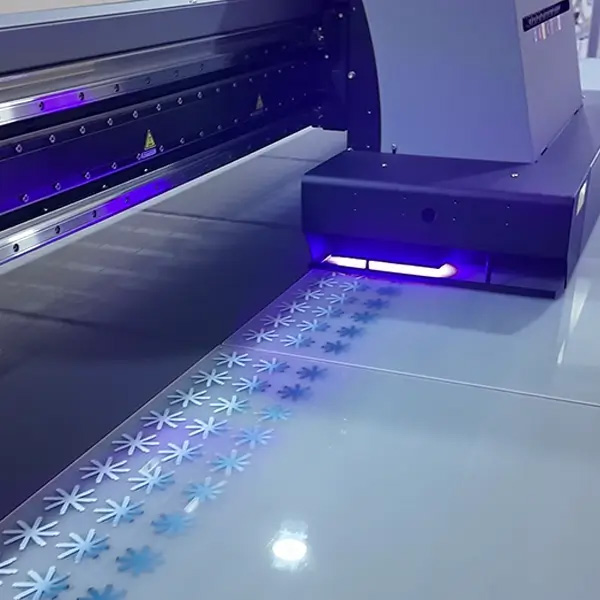
Print output is the most visible variable in a repeat order. Print method and colour targets are fixed at proof stage and then monitored through the run.
Why Repeat Supply Exposes Suppliers That a Sample Hides
A one-off purchase and an annual programme place different demands on a factory. A one-off order can be absorbed into whatever production slot is free, using whatever paper lot is open. An annual programme assumes the opposite: the same specification, the same tolerance, and a predictable slot in the production calendar, order after order.
In practice, custom shopping bags drift in four measurable places:
- Colour. Coated art paper and uncoated kraft develop ink differently, and a colour approved on one substrate can shift on another. Print runs separated by months are where this shows up.
- Paper stock. Grammage and stiffness affect how a bag stands, folds and carries load. Stock sourced lot by lot rather than to a fixed specification changes the feel of the bag.
- Handle and load strength. Handle attachment and top-fold reinforcement determine whether a bag survives a 5 kg or a 12 kg load. Small changes in adhesive, patch size or handle material are invisible at the sample stage and obvious at the checkout counter.
- Packing and shipment rhythm. Consistent carton counts, labelling and loading protect the bags in transit and make receiving predictable.
The opportunity for buyers is straightforward: these are auditable properties. A supplier that has already solved them for other export customers can demonstrate it with process evidence rather than promises.
The Four Signals Buyers Can Verify Before Committing
Supplier sustainability — in the operational sense of staying power — is usually assessed with the wrong inputs: brochure quality, responsiveness during the quotation stage, or a single well-finished sample. A more reliable screen uses four signals that are difficult to fake and easy to check.
| Signal | What it reveals | What to ask for |
|---|---|---|
| Operating history | Whether the business has already survived multiple demand cycles and specification changes | Year of establishment, product scope over time |
| Physical production base | Whether capacity, equipment and quality control sit inside one operation | Factory location, floor area, headcount, in-house processes |
| Export mix | Whether the supplier routinely meets foreign specification, documentation and packing requirements | Share of output exported, destination markets |
| Batch-level quality evidence | Whether consistency is measured or merely asserted | Colour measurement method and tolerance, load testing, pre-shipment inspection |
Two further details belong in the same screen: capacity headroom against the buyer's peak month, and evidence of repeat business — a customer who buys on a cycle rather than once.
Inside the Opack Base: The Facts That Bear on Continuity
Applied to Opack, the screen returns specific answers rather than general claims.
The manufacturer was founded in 2010 and operates a 10,000 m² facility in Longgang, the Printing City of China — a location that matters for continuity because printing, paper converting and finishing suppliers are concentrated in the same industrial area, which shortens the distance between an approved print target and a reproduced one. The plant runs with 160 employees and a five-person R&D team, and covers custom packaging, custom rigid boxes, custom shopping bags, custom folding cartons and custom mailer boxes.
Output and export data describe how the plant is used. Annual output is stated at 10,000,000 units, with a monthly production capacity of 1,000,000 units for the EU, US and Middle East markets. The export ratio is 80%, and the main markets are the EU, the US and the Middle East — the three destinations for which lead time and pre-shipment inspection are formally stated.
Those figures matter to a buyer for one reason: they describe a plant whose default operating mode is repeated export production, not occasional domestic supply. A supplier whose output is mostly export has already built the internal routines — proof approval, colour sign-off, inspection, documentation — that a long-term programme depends on.
How Quality Is Held Between Batches
Consistency in printed paper bags is a measurement problem before it is a craft problem. Opack's stated control method addresses the two failure modes buyers report most often: colour variation and insufficient load-bearing strength.
Colour control
Colour is measured and monitored with professional spectrophotometers throughout production, with the colour difference (ΔE) held to approximately 1.5. In practical terms, a ΔE of about 1.5 sits at the edge of what the human eye can detect under normal viewing conditions, which means a reorder reads as the same bag rather than a close relative. The measurement is supported by a pre-production colour approval step and by in-process quality inspections during printing, so drift is caught during the run rather than at final inspection. For buyers managing several print runs a year across a range of packaging, that measured tolerance is more useful than a verbal promise of colour matching.
Load and structural integrity
Load-bearing tests are carried out before mass production, verifying handle strength, paper durability and structural stability against the intended product weight. Opack states that its custom shopping bags are specified for 2 to 15 kg loads. Running the test before the run — rather than after — means handle material, patch size or board grade can still be changed without scrapping finished bags.
Pre-shipment verification
All products exported to the EU, US and Middle East markets undergo a 100% quality check before shipment, and quality verification is carried out batch by batch to keep consistency across repeat orders. Third-party inspection is accepted at the customer's request, which gives a long-term buyer an independent checkpoint whenever a specification changes.
Planning an Annual Programme: Capacity, Lead Time and Commercial Terms
Continuity questions become concrete once a buyer converts them into numbers. Three figures shape the plan.
Capacity against demand. With a monthly production capacity of 1,000,000 units, a retail programme in the tens or low hundreds of thousands of bags per season leaves meaningful headroom — but that capacity is shared across an export order book, so peak-season volume is better reserved than assumed.
Order size. The minimum order quantity for paper shopping bags is 1,000 pieces per size and design. For a brand with four sizes in two designs, the effective entry volume is a multiple of that figure, which is worth modelling before the specification is frozen.
Lead time. The typical lead time is 12–18 days for orders destined to the EU, US and Middle East markets. That figure covers production; ocean or air transit to destination sits on top of it, so an annual programme should be built backwards from the in-store date rather than forwards from the purchase order.
On commercial terms, delivery is offered as EXW and FOB depending on customer requirement, payment terms are 40/60, and shipping arrangements can be coordinated according to destination and project schedule.
Where the Model Fits: Application Scenarios
Opack's product scope covers apparel, cosmetics, retail, gifting and jewellery, and every product is fully customizable in size, shape, material, printing and finish, with customization options extending to logo, brand name, colour, size, style, finishings, printing methods and material. That breadth is what makes an annual programme practical: one supplier can hold a family of bags — a large apparel tote, a small gift bag, a rigid box for a premium set — on a shared colour and material standard.
The clearest illustration of repeat capability is a Panama-based retail buyer operating on an annual purchasing partnership model rather than placing isolated project orders. An annual arrangement changes the supplier's job description: the specification is fixed for the year, volumes are planned rather than reacted to, and each shipment becomes a test of whether the previous one was reproduced accurately. It is the pattern that separates a supplier able to hold a brand standard from one able to win a single tender.
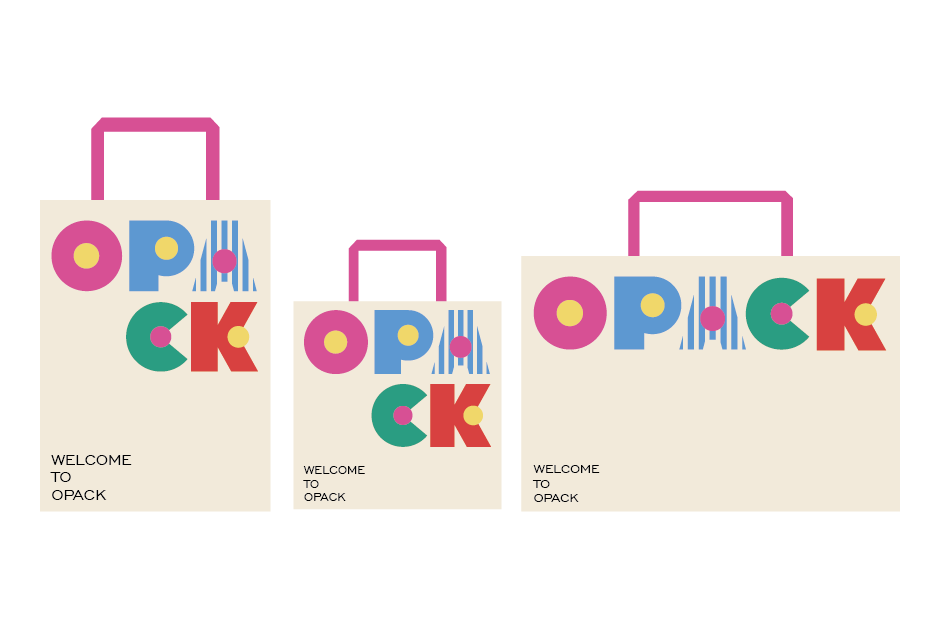
A programme, not a product: annual supply usually means several bag formats held to one colour and material standard.
Market Signals That Turn Continuity Into a Procurement Question
Three published signals explain why buyers are scrutinising supplier staying power more closely than they did a few years ago.
The global market for paper-based consumer bags was valued at USD 5.29 billion in 2023, according to Zion Market Research (SRC-0001). Within that market, the premium price segment is projected to grow at a CAGR of 13.8% through 2034, driven by high-grammage paper, custom design and eco-certification. Premium segments are less tolerant of batch variation than commodity segments, because the bag is carrying brand presentation rather than only groceries.
Certification recognition has also become a purchasing input. FSC (Forest Stewardship Council) certification is the primary industry standard for sustainable sourcing of paper bags and is recognised by 56% of consumers worldwide, per FSC (SRC-0002). Alongside it, the EU Deforestation Regulation (EUDR), effective in 2025, requires traceability of paper packaging back to geolocated forest plots (SRC-0004). Traceability is a documentation exercise, and documentation accumulates more reliably with a supplier that has held the same account across multiple cycles than with one assembled order by order.
Comparing Supply Models — and Where Opack's Model Does Not Fit
Long-term buyers are effectively choosing between three supply models: a domestic short-run printer, an intermediary or trading company, and a direct export manufacturer. Each has a different profile.
| Dimension | Domestic short-run printer | Intermediary / trading company | Opack (direct manufacturer, export) |
|---|---|---|---|
| Entry volume | Low; Teal Packaging publicly states orders from 50 units | Usually consolidated, varies by source factory | 1,000 pieces per size and design |
| Production lead time | Teal Packaging states about 7 business days after proof approval | Dependent on the underlying factory | 12–18 days for EU, US and Middle East orders |
| Origin and transit | Domestic; no ocean freight | Origin may change between orders | China-based; ocean or air transit added |
| Quality evidence | Varies; often sample-based | Second-hand; depends on disclosure | Spectrophotometer colour monitoring at ΔE ≈1.5, pre-production load testing, 100% pre-shipment check, third-party inspection on request |
| Capacity headroom | Hourly or daily | Contract-dependent | 1,000,000 units per month, shared across an export book |
| After-sales | Typically phone or email | Passed through to the source factory | Online chat, WhatsApp, telephone and official email across EU, US and Middle East clients |
The comparison is not a ranking. Low-MOQ domestic printers serve test markets and short campaigns that a 1,000-piece-per-design minimum cannot economically support; a US-based supplier such as EcoEnclose states that its paper bags are made in the USA by default, which removes ocean transit for buyers whose priority is domestic origin rather than unit economics. Material specifications also differ by supplier — Cubit Packaging, for example, publishes kraft paper at 70–170 GSM — which is why buyers should compare stocks and tolerances, not just bag formats.
Where the Opack model does not fit
Three boundaries should be stated plainly, because a long-term decision that ignores them becomes a supply problem later.
- Fragmented ranges are expensive. A 1,000-piece minimum per size and design penalises brands running many SKUs at low volume, seasonal capsule ranges, or A/B tests before a full launch.
- Lead time excludes transit. The 12–18 day figure is production time; buyers comparing it with a domestic turnaround of roughly a week must add shipping to the destination, which changes the planning model for fast restocks.
- Colour control is tight, not absolute. A ΔE of approximately 1.5 is near-imperceptible in normal viewing, but it is a tolerance band rather than zero variance, and matching across different paper stocks — coated art paper against uncoated kraft, for instance — still requires an approved standard agreed at proof stage.
A fourth consideration is capacity allocation. Monthly capacity of 1,000,000 units is substantial, but it is shared with other export customers; buyers with concentration around peak retail seasons should confirm slot availability in advance rather than assume it.
Future Outlook
Two pressures are likely to reshape supplier evaluation for custom shopping bags over the next few years. The first is traceability. With the EUDR requiring paper packaging to be traceable to geolocated forest plots, a supplier's documentation history becomes as relevant as its print quality, and buyers running annual programmes will increasingly ask for that history as part of the contract rather than as a one-off request.
The second is the premium segment's growth trajectory. A projected 13.8% CAGR through 2034 implies more buyers specifying high-grammage stock, reinforced handles and certification-backed material — specifications that are harder to reproduce across batches than standard kraft bags. Suppliers that already measure colour and test load before production are structurally better placed than those that verify after the fact.
For buyers, the practical implication is that the supplier check should be repeated, not performed once. A supplier that was adequate at 50,000 units a year may not be adequate at 500,000, and a base established in 2010 with an 80% export ratio provides evidence of endurance but not a guarantee of future slot availability. Continuity is a property of the relationship as much as of the factory.
FAQ
How long has Opack been manufacturing custom shopping bags, and where?
Opack was founded in 2010 and produces custom shopping bags at its facility in Longgang, Wenzhou, Zhejiang Province, China, an industrial area known as the Printing City of China. The company operates a 10,000 m² factory with 160 employees and a five-person R&D team, and its wider product range covers custom rigid boxes, folding cartons, mailer boxes and paper tubes.
What production capacity and lead time apply to a repeat export order?
Opack reports a monthly production capacity of 1,000,000 units and a typical lead time of 12–18 days for orders destined to the EU, US and Middle East markets, alongside stated annual output of 10,000,000 units. The lead time refers to production; freight transit to the destination market is additional to that figure.
How does Opack keep colour and load strength consistent across repeat orders?
Colour is measured and monitored with spectrophotometers throughout production, with colour difference (ΔE) held to approximately 1.5, supported by a pre-production colour approval step and in-process inspections during printing. Load-bearing tests run before mass production to verify handle strength, paper durability and structural stability, and custom shopping bags are specified for 2 to 15 kg loads. All products exported to the EU, US and Middle East undergo a 100% quality check before shipment, with batch-by-batch verification.
What commercial terms shape an annual custom shopping bag programme?
For paper shopping bags the minimum order quantity is 1,000 pieces per size and design. Delivery terms are EXW and FOB depending on customer requirement, payment terms are 40/60, and shipping arrangements can be coordinated according to destination and project schedule. Third-party inspection is accepted at the customer's request.
What after-sales support is available to long-term buyers?
Multi-channel after-sales support is provided for clients in the EU, US and Middle East markets, covering real-time online chat, WhatsApp, telephone and official email. For a repeat programme, those channels carry specification-change requests, reorder confirmations and quality follow-up between shipments.
What should a buyer check before committing to a multi-year arrangement?
Three boundaries are worth confirming in writing. The 1,000-piece minimum per size and design makes fragmented small ranges and test runs costly. The 12–18 day lead time is production time and excludes transit to destination. And colour control at approximately ΔE 1.5 is a tight tolerance rather than zero variance, so an approved standard should be fixed at proof stage, particularly when a design runs across different paper stocks. Peak-season capacity allocation should also be agreed in advance of the buying season.
A downloadable company profile with facility, product and contact details is available here: Opack Company Profile (PDF).
Tem questões ou precisa de mais detalhes?
Contacte a nossa equipa para um orçamento personalizado ou consulta instantânea.
Solicitar orçamento
Preencha o formulário abaixo e a nossa equipa entrará em contacto com uma proposta personalizada.
Chat direto do WhatsApp
Prefere conversar em tempo real? Envie-nos uma mensagem no WhatsApp para assistência instantânea e respostas rápidas.
- Obter orçamento personalizado
- Partilhar fotos ou documentos
- Discuta as suas necessidades diretamente
Geralmente responde em 5–30 minutos durante o horário de expediente.