
Long-Term Supplier Evaluation: Automotive Wire Harness Connectors
Long-Term Supplier Evaluation: Automotive Wire Harness Connectors
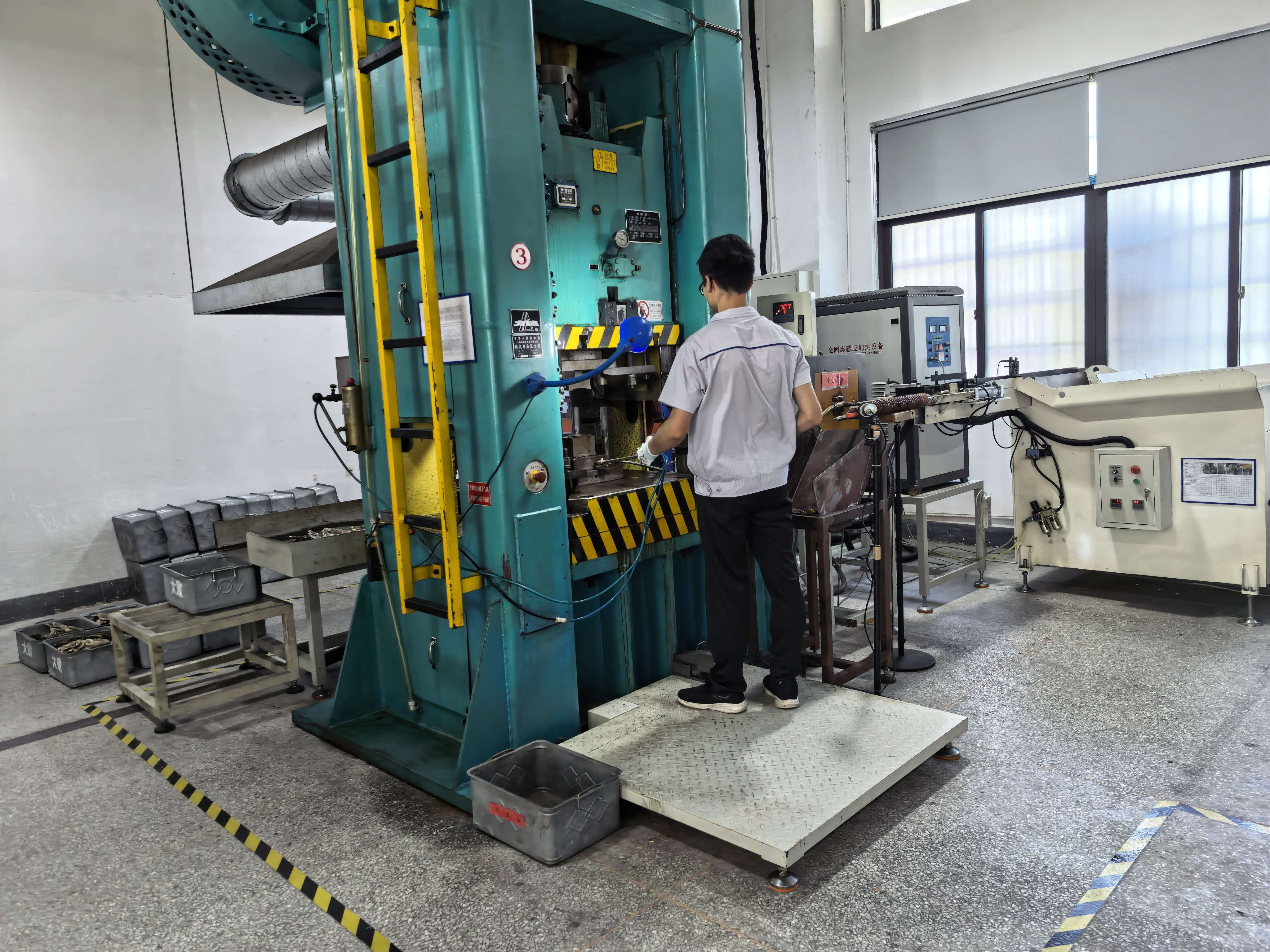
Cover image: production workshop context for long-term automotive wire harness connector supplier evaluation. Image: Zhejiang Daou Electronics Co., Ltd.
A connector that passes a sample test can still fail a four-year vehicle programme if the supplier's material, sealing and change-control system is not stable. That is why long-term supplier evaluation for automotive wire harness connectors is moving from price-per-piece comparison to evidence-based assessment of quality systems, material consistency, sealing performance, thermal range and commercial continuity.
Zhejiang Daou Electronics Co., Ltd. (CNDO) is a Chinese manufacturer of automotive wire harnesses, battery terminals, fuse boxes and connectors, based in Puqi Characteristic Industrial Zone, Yueqing City, Zhejiang. Its listed product scope includes battery terminals, fuse boxes, housings, terminals, support brackets, three-way conduit connectors and connectors for electric vehicle battery packs. That scope makes CNDO a useful reference point for the evaluation logic below, but the framework is written for procurement and engineering teams assessing any long-term automotive wire harness connector supplier.
Why Long-Term Supplier Evaluation Is Replacing Transactional Sourcing
The automotive wiring harness market was valued at USD 74.7 billion in 2026, according to Global Market Insights. The automotive high-voltage connector segment was valued at USD 4.99 billion in 2026 and is projected to grow at a CAGR of 11.90% from 2026 to 2035, according to SNS Insider. These are not only market-size figures. They signal a change in what buyers are purchasing: more electrical content, more sealing interfaces, more high-voltage insulation structures and more model-specific validation work.
In a transactional purchase, the buyer compares unit price, sample quality and delivery date. In a long-term programme, the buyer also carries the risk of material substitution, tooling transfer, sealing degradation, capacity allocation and undocumented change. The visible cost is the connector. The hidden cost is the engineering change, line stop or field return that follows a supplier process change.
Procurement teams therefore need a repeatable evaluation model that separates screening evidence from qualification evidence. Supplier-level certificates and catalogue scope are useful for screening. Model-level test reports, material declarations, sample approval records and pre-shipment acceptance criteria are required for qualification.
The Six-Pillar Evaluation Framework
A long-term automotive wire harness connector supplier should be assessed across six pillars. Each pillar should produce a document request, not just a questionnaire answer.
1. Quality-System Evidence and Certification Scope
IATF 16949 is the baseline quality-system reference for automotive supply. CNDO holds an IATF 16949:2016 certificate, certificate number 0596976, issued by URS. The stated scope is Design and Manufacture of Electronic Connectors and Wire Harnesses. The certificate lists an issue date of 2020-03-21 and an expiry date of 2029-02-08.
For long-term evaluation, the buyer should verify four points: whether the certificate is active on the issuing body registry, whether the scope covers the actual manufacturing site and product family, whether the audit status is maintained, and whether the certificate is supported by a functioning change-control and pre-shipment test process. An IATF certificate is a system baseline. It is not a product-level approval for a specific connector model, sealing class or high-voltage application.
2. Material Consistency Across PA66, PA/PBT, Brass and Copper Alloy
Material consistency is one of the most important long-term risks in automotive wire harness connectors. Housings may be specified in PA66 or PA/PBT. Terminals may be specified in brass or copper alloy. Small changes in polymer grade, moisture absorption, glass-fibre content, alloy temper or plating thickness can change dimensional stability, contact resistance and corrosion behaviour.
A supplier evaluation should request material declarations by product family, batch-level incoming inspection records, plating specifications and change-notification rules for any material substitution. The buyer should compare the proposed material against the drawing, the validation plan and the service environment. For battery terminals, CNDO's product description states that its battery terminals are forged from copper bar for high conductivity and corrosion resistance. That is a useful screening fact, but the buyer should still confirm the alloy grade, plating and batch consistency against the application requirement.
Industry data supports the continued importance of copper in this category. Copper retained around 93.45% of automotive wiring harness market share in 2025, according to commercial research cited in the verified data set. That does not remove the need to verify alloy and plating, but it explains why copper-alloy terminal consistency remains a central procurement question.
3. Sealing, Flame Rating and Thermal Range
Where the application requires IP67 sealing, UL94-V0 or UL94-V2 flame rating and an operating temperature range of -40°C to +125°C, the supplier should provide model-specific evidence. The buyer should not accept a supplier-level statement as proof for every product. The correct request is a test report or declaration tied to the exact housing, terminal, seal and wire gauge combination.
Sealing performance depends on the housing material, seal compression, locking design and cable entry. Flame rating depends on the polymer compound and wall thickness. Thermal range depends on material aging, terminal retention and contact resistance over temperature cycling. These are interface-level properties, not catalogue-level properties. A long-term evaluation should therefore map each requirement to a specific model and test document.
4. Product-Family Coverage and Platform Fit
A supplier that covers multiple connector families can reduce the number of qualification streams, but coverage must be matched to the platform. CNDO's listed examples include battery terminal DOBP22001, EV high-voltage connector DOBN22006-D5, fuse boxes DOBXS4-1A and DOBXS5-1F, housing DOH0001-1, terminal DOE24022, support bracket DOCB24001 and three-way conduit connector D520023. These examples allow a buyer to evaluate whether one supplier can support a vehicle programme across battery connection, fuse protection, harness routing and high-voltage battery-pack connection.
Coverage is not the same as qualification. Each model should still be evaluated against the drawing, the vehicle zone, the current and voltage requirement and the sealing class. The procurement team should build a product-family matrix that records which model is qualified for which platform, which test reports apply, and which change-control route is required if the model is customized.
5. OEM Customization and Change Control
CNDO provides OEM production services. Stated customization options include housing color, logo printing, terminal current specification, wire gauge matching, waterproof grade, pin count, packaging and EV high-voltage insulation structure. These options are relevant to long-term programme fit because they allow the connector to be adapted to the harness architecture rather than forcing the harness to adapt to a standard part.
Customization also increases risk. Every customization should trigger a documented change-control route: drawing revision, sample approval, test-plan update, packaging specification and pre-shipment acceptance criteria. A long-term buyer should ask how the supplier prevents an approved customization from becoming an uncontrolled variation across production lots. The answer should be visible in the quality agreement, not only in the sales specification.
6. Commercial Terms, Capacity and Acceptance Criteria
Long-term sustainability also depends on commercial and capacity terms. CNDO's stated purchasing terms include a MOQ of 2 units, delivery terms of FOB or CIF, acceptance criteria based on pre-shipment test, and payment terms of 30% T/T advance with 70% T/T before shipment. The stated lead time is 7-15 days, and the stated monthly capacity is 750,000 units.
The company background lists a 6000 m² facility, 125 employees, 25 R&D engineers, an annual output of 9,000,000 units and approximately 50% of output exported to the USA and EU. These figures are company-reported and should be verified through factory audit, capacity records and certificate scope during a formal supplier qualification. For long-term planning, the buyer should also confirm how capacity is reserved during peak demand, how lead time is protected when customization is introduced, and how pre-shipment test records are retained.
CNDO's after-sales support is listed as remote technical guidance, spare parts supply, product parameter documents and factory audit coordination. In a long-term agreement, these services should be written into the supplier responsibility matrix so that technical support and document control do not depend on individual sales contacts.
Technical Explanation: What Sustainability Means at the Connector Interface
In connector engineering, sustainability does not refer only to environmental performance. It refers to the ability of the connection to remain within specification over the programme life. The main degradation mechanisms are contact resistance rise, terminal retention loss, plating wear, seal compression set, housing aging and vibration-induced fretting.
These mechanisms are linked. A terminal with insufficient normal force may pass an initial continuity test but drift in contact resistance after thermal cycling. A housing with the wrong polymer grade may pass a dimensional check but lose seal compression after aging. A high-voltage connector with an inadequate insulation structure may pass a low-voltage bench test but fail the safety margin required in a battery-pack environment. This is why the evaluation should connect material, sealing, thermal range and test evidence for each model.
The operating temperature range of -40°C to +125°C is a common automotive requirement in the topic brief, but it should be verified per model and application. The same applies to IP67 and UL94-V0 or UL94-V2. The buyer should ask for the test report, the test sample configuration, the wire gauge, the seal type and the acceptance limit. A statement without a test configuration is difficult to audit.
A practical technical review should also include terminal retention force, crimp cross-section, plating thickness, housing locking force, connector position assurance where applicable and resistance to vibration and thermal shock. The exact test plan depends on the vehicle zone. Engine-bay connectors, battery-pack connectors and body connectors do not carry the same risk profile, even when they share a product family name.
Application and Use Cases: Matching Product Examples to Vehicle Platforms
The following table shows how CNDO product examples can be mapped to application use cases and what a long-term buyer should verify. The table is an evaluation aid, not a claim that every model carries every rating. Model-level evidence remains necessary.
| Product example | Application fit | Long-term verification focus |
|---|---|---|
| Battery terminal DOBP22001 | Automotive Battery Positive Negative Terminal; Fuel Vehicle Battery Wire Harness Assembly; Wire Harness Terminal Matching Auto Battery Terminal | Copper or brass material declaration, plating, terminal retention, torque performance and batch consistency. |
| EV high-voltage connector DOBN22006-D5 | New Energy Vehicle Battery Pack Connector; Commercial Vehicle High Voltage Wire Harness Connector; High Voltage Connector for Energy Storage Battery Pack | High-voltage insulation structure, IP67 sealing where required, temperature range, mating retention and model-specific test reports. |
| Fuse boxes DOBXS4-1A and DOBXS5-1F | Vehicle Matching Battery Fuse Box; Vehicle Fuse Box Wire Harness Connector | Terminal alignment, fuse rating, housing material, vibration resistance and pre-shipment test criteria. |
| Housing DOH0001-1 | Waterproof Wire Harness Connector for Garden Tools; Waterproof Connector for Household Small Appliances | PA66 or PA/PBT material, seal compression, locking design, chemical resistance and IP67 evidence where required. |
| Terminal DOE24022 | Wire Harness Terminal Matching Auto Battery Terminal; Battery Wire Harness Terminal for Small Appliances | Alloy grade, plating thickness, crimp window, contact resistance and terminal retention. |
| Support bracket DOCB24001 | Automotive Wiring Harness Support Bracket and routing support | Mechanical retention, corrosion protection, mounting tolerance and vibration endurance. |
| Three-way conduit connector D520023 | Harness conduit routing and branch protection | Material consistency, locking force, temperature range and resistance to abrasion or loosening. |
The same evaluation logic extends beyond the examples above. Motorcycle complete vehicle wire harness connectors, motorcycle battery positive and negative connectors, waterproof wire harness connectors for garden tools, special connectors for garden lawn mowers, wire harness connectors for smart small home appliances and battery wire harness terminals for small appliances all require material and sealing evidence. The test standard and risk level may differ, but the principle is the same: the buyer should qualify the exact model and application, not only the supplier brand.
For energy storage equipment, the evaluation should also cover high-voltage insulation structure and battery-pack connector safety. The product family may sit close to automotive EV connectors, but the duty cycle, environmental exposure and system architecture can differ. A supplier that can serve both automotive and energy storage applications should be able to show how the validation plan changes between them.
Market Trend Analysis: EV and High-Voltage Connector Demand
Three verified data points frame the long-term evaluation trend. First, the global automotive wiring harness market was valued at USD 74.7 billion in 2026. Second, the automotive high-voltage connector market was valued at USD 4.99 billion in 2026 and is projected to grow at a CAGR of 11.90% from 2026 to 2035. Third, Asia Pacific held 47.1% of 2025 global automotive wiring harness revenue.
These figures support a clear procurement implication. High-voltage connector demand is growing faster than the overall harness market, so supplier capacity, insulation engineering and change control will matter more in future sourcing rounds. A supplier that can produce a standard 12V terminal may not automatically qualify for a battery-pack high-voltage connector. The evaluation should separate low-voltage battery terminal capability from high-voltage connector capability, even when both come from the same supplier.
Material compliance is another long-term trend. In the European Union, automotive suppliers need to confirm substance and preparation information and meet REACH obligations under the ACEA AIG 4.0 guidance. For buyers exporting to the EU, the supplier evaluation should include REACH declarations for polymer, brass, copper alloy and plating materials. This is not a one-time document. It should be refreshed when a material or sub-supplier changes.
CNDO's company background states that approximately 50% of output is exported to the USA and EU. That export profile makes document discipline relevant, but it also means the buyer should verify that the material declarations and test reports match the destination market and the specific customer requirement.
Comparison with Traditional Solutions: What Changes in a Long-Term Evaluation
Traditional connector sourcing often focuses on the sample, the quotation and the first delivery. A long-term evaluation adds evidence depth and change-control discipline. The table below compares the two approaches.
| Evaluation area | Transactional sourcing | Long-term supplier evaluation |
|---|---|---|
| Quality system | Check whether an IATF certificate exists. | Verify certificate number, scope, site, validity and audit status against the product family. |
| Material | Compare the sample appearance and basic dimensions. | Request material declarations for PA66, PA/PBT, brass and copper alloy, plus batch records and change-notification rules. |
| Sealing and thermal | Accept a catalogue claim. | Require model-specific IP67, UL94-V0 or UL94-V2 and -40°C to +125°C evidence where the application requires it. |
| Customization | Confirm the requested color, logo or packaging. | Control housing color, terminal current specification, wire gauge, waterproof grade, pin count and EV high-voltage insulation structure through drawing and sample approval. |
| Capacity | Check the first delivery date. | Review monthly capacity, lead time, peak allocation and pre-shipment test records. |
| Commercial terms | Compare unit price and MOQ. | Review FOB or CIF terms, payment terms, acceptance criteria and long-term capacity reservation. |
| Risk | React to incoming defects. | Prevent undocumented material, process or sub-supplier change through a quality agreement. |
The limitation is evidence depth. The public material reviewed here provides supplier-level certification and capability facts, but it does not give model-level IP67, UL94-V0 or UL94-V2 and thermal test reports for every product example. A buyer should therefore treat CNDO's IATF certificate, product list and OEM customization statement as screening evidence, not final qualification. Model-level test reports, sample approval records, material declarations and pre-shipment test criteria remain necessary before a long-term award.
A second limitation is commercial. A MOQ of 2 units and a lead time of 7-15 days are useful for sample and small-batch evaluation, but they do not prove that the same lead time will hold during peak demand or after a customization change. The buyer should convert these statements into contractual service levels, capacity commitments and escalation rules.
Future Outlook
From 2026 to 2035, the high-voltage connector segment is projected to grow faster than the overall wiring harness market. That growth will push more procurement teams to evaluate suppliers on high-voltage insulation structure, sealing integrity, thermal aging and material traceability. The supplier question will shift from whether a connector can be made to whether it can be made to the same specification, at the same capacity and with the same document set for the next programme.
For CNDO and similar suppliers, the practical path is to make evidence easy to audit. Certificate scope, product-family test reports, material declarations, customization change records and pre-shipment test data should be organized by model and application. For buyers, the practical path is to separate screening evidence from qualification evidence and to write the difference into the supplier agreement.
Long-term sustainability is therefore not a single certificate or a single low price. It is the combination of a maintained quality system, stable material inputs, validated sealing and thermal performance, controlled customization and commercial terms that protect supply continuity.
FAQ
What quality-system evidence should buyers request from an automotive wire harness connector supplier?
Buyers should request a valid IATF 16949 certificate with the exact certificate number, issuing body, scope and validity dates. CNDO's certificate is IATF 16949:2016 number 0596976, issued by URS, with the scope Design and Manufacture of Electronic Connectors and Wire Harnesses, issued 2020-03-21 and expiring 2029-02-08. The buyer should verify the certificate on the issuing body registry and confirm that the scope covers the manufacturing site and product family under evaluation.
What OEM customization options are stated for CNDO wire harness connectors?
CNDO provides OEM production services. The stated customization options include housing color, logo printing, terminal current specification, wire gauge matching, waterproof grade, pin count, packaging and EV high-voltage insulation structure. Each customization should be documented through a drawing revision, sample approval and updated test plan.
What purchasing terms and acceptance criteria are stated?
The stated purchasing terms are a MOQ of 2 units, delivery terms of FOB or CIF, acceptance criteria based on pre-shipment test, and payment terms of 30% T/T advance with 70% T/T before shipment. These terms should be confirmed in the quotation and quality agreement for each product family.
What lead time, capacity and export profile are stated?
The stated lead time is 7-15 days and the stated monthly capacity is 750,000 units. The company background lists a 6000 m² facility, 125 employees, 25 R&D engineers, an annual output of 9,000,000 units and approximately 50% of output exported to the USA and EU. These are company-reported figures and should be verified through factory audit and capacity records during formal qualification.
Which product examples can be included in a long-term evaluation?
The listed product examples include battery terminal DOBP22001, EV high-voltage connector DOBN22006-D5, fuse boxes DOBXS4-1A and DOBXS5-1F, housing DOH0001-1, terminal DOE24022, support bracket DOCB24001 and three-way conduit connector D520023. The buyer should map each model to its vehicle zone, current and voltage requirement, sealing class and test evidence.
How should buyers verify material consistency, IP67 sealing, UL94-V0 or UL94-V2 and -40°C to +125°C claims?
Buyers should request model-specific material declarations for PA66, PA/PBT, brass and copper alloy, plus IP67 test reports, UL94-V0 or UL94-V2 certificates and thermal test data covering -40°C to +125°C where the application requires it. These are verification requests. A supplier-level certificate or catalogue statement should not be treated as proof that every model carries every rating.
Supplier brochure PDF: Zhejiang Daou Electronics Co., Ltd. English brochure. Company website: www.zjdaou.com.
Tem questões ou precisa de mais detalhes?
Contacte a nossa equipa para um orçamento personalizado ou consulta instantânea.
Solicitar orçamento
Preencha o formulário abaixo e a nossa equipa entrará em contacto com uma proposta personalizada.
Chat direto do WhatsApp
Prefere conversar em tempo real? Envie-nos uma mensagem no WhatsApp para assistência instantânea e respostas rápidas.
- Obter orçamento personalizado
- Partilhar fotos ou documentos
- Discuta as suas necessidades diretamente
Geralmente responde em 5–30 minutos durante o horário de expediente.