
Long-Term Supplier Evaluation: Fastener Standards, Range, and Export Continuity
An industry reference framework for buyers assessing industrial fastener and strut channel supply partners

Industrial fastening applications span structural connections, MEP/HVAC installations, solar mounting and industrial support systems.
Introduction: a small component with a multi-year decision attached
Industrial fastener programmes rarely fail at the quotation stage. They fail a year later, when a buyer needs the same grade, the same finish and the same dimensional tolerance from the same source — and the supply relationship cannot deliver it. Long-term supplier evaluation is therefore a different discipline from price comparison: it asks whether a supplier can be depended on across several ordering cycles, not whether a single line item is cheap.
The scale of the category explains why the question keeps returning. Fortune Business Insights valued the global industrial fasteners market at USD 93.12 billion in 2025, and Grand View Research projects the market to reach USD 153.71 billion by 2033 at a CAGR of 5.1%. Research firms report different base values depending on whether plastic fasteners are counted, so these figures are best treated as directional rather than exact. What they agree on is continuity: fasteners are consumed continuously across construction, MEP/HVAC, solar, oil and gas, power generation and heavy machinery, which means supplier qualification decisions tend to persist for years.
This reference sets out a four-part evaluation framework for industrial fasteners and strut channel systems: standards compliance, range depth, custom fabrication capability, and export continuity. It is written for importers, distributors, MEP and HVAC contractors, solar mounting integrators and OEM procurement teams at the awareness and research stage — before an RFQ is issued and before a specification is locked.
The buying problem: price is the easiest variable to compare
Two quotations for an M12 hex bolt can look comparable while differing in steel grade, thread tolerance, coating thickness and documentation. Those differences rarely surface at installation. They surface at inspection, at warranty, or when a repeat order arrives and the substitute item does not seat correctly in the same bracket.
The practical consequence is re-qualification. Every substitution — a different grade, a different finish, a different thread form — moves engineering time back into fit checks, load assumptions and corrosion review. A supplier evaluation framework exists to reduce how often that work has to be repeated.
The opportunity is symmetrical. A supplier that holds a stable specification across grades, sizes and finishes allows a buyer to standardise drawings, consolidate purchase orders and cut the number of approved sources that must be audited. That is the commercial case for evaluating continuity, not just capability.
Dimension one — standards compliance: what 'compliant' should mean
Compliance is a chain, not a label. A supplier may work to a recognised standard family, manufacture to it, and still require the buyer to verify which specific standard applies to the ordered item.
At the international level, the standards families most commonly referenced in fastener procurement are DIN, ANSI/ASME, ISO, GB, UNI, JIS, BS and NFE. Product-level standards sit inside those families. Hexagon nuts for general industrial use are governed by standards such as ISO 4032 and DIN 934 (TR Fastenings). Plain washers are standardised under ISO 7089 and ISO 7090, which are equivalent to DIN 125 (Fuller Fasteners). Spring lock washers with square ends are standardised under DIN 127 / BS4464B, and hexagon head bolts of grade C under DIN 601 and ISO 4016 (TR Fastenings; JPE Fasteners).
Structural bolting follows a different logic and should be evaluated separately. ASTM A325 and ASTM A490 cover high-strength structural bolts, while ASTM A563 and A194 cover nuts used in those systems. Buyers working on structural steel connections should establish which of these applies before comparing quotations, because grades and testing regimes are not interchangeable between them.
Quality management sits underneath the product standards. ISO 9001 describes the process layer that governs repeatability rather than the properties of a single part. CNS INDUSTRIAL (JIAXING) CO.,LTD — a manufacturer of fasteners, channel fittings and metal stamping parts based in Jiaxing City, Zhejiang Province, China — states that its fasteners are manufactured under an ISO 9001 quality management system, and that production follows GB, ISO, DIN, ANSI/ASME, UNI, JIS, BS and NFE standards or is customised to customer drawings and samples.
A standards statement is a starting point for verification, not a replacement for it. Buyers should ask which standard applies to each ordered item and request supporting documentation for the specific order, because a catalogue-level claim and an order-level record answer two different questions.
Dimension two — range depth: grades, sizes, threads and finishes
Range depth determines how often a buyer has to leave the approved supplier list. It can be measured across four variables.
Grades and classes
Grades commonly specified in industrial projects include 4.8, 8.8, 10.9 and 12.9, alongside B7 alloy steel, high-tensile categories and stainless steel A2-70 and A4-80. The step from 8.8 to 10.9 is not a marketing distinction: it changes which applications an item can be approved against, and therefore which projects a buyer can bid on with that supplier in the chain.
Size and thread coverage
Metric coverage from M6 to M64 and imperial coverage from 1/4" to 2-1/2" is the band that covers most structural, MEP and equipment-anchoring work. Thread configuration matters alongside diameter: full thread and partial thread, metric and imperial, are procurement variables rather than afterthoughts, because a partial-thread item and a full-thread item are not interchangeable at the joint.
Surface finishes
Finish selection is a corrosion decision taken at specification stage. Options offered in the market include electro-zinc plating in white and yellow, hot-dip galvanised (HDG), Dacromet, Magni, Geomet, pre-galvanised and plain finishes. Because corrosion resistance depends on both base material and coating, the required finish should be defined against the exposure condition before pricing is requested.
Materials
Carbon steel, alloy steel, stainless steel (304, 316 and 316L), aluminium, copper and brass each suit different environments. Stainless grades are typically chosen where wash-down, coastal or outdoor exposure is involved, while carbon and alloy steels dominate structural and high-strength applications.
Strut channel and support systems
For strut channel systems, range depth extends beyond the channel itself. Commonly referenced dimensions include 41×41×2.5 mm, 41×21×2.5 mm and 41×41×2.0 mm sections, in slotted and unslotted forms, with imperial profiles of 1-5/8"×1-5/8", 1-5/8"×13/16", 1-5/8"×2-7/16" and 1-5/8"×3-1/4", thicknesses of 12ga, 14ga and 16ga, and standard lengths of 10 ft and 20 ft with custom lengths available.
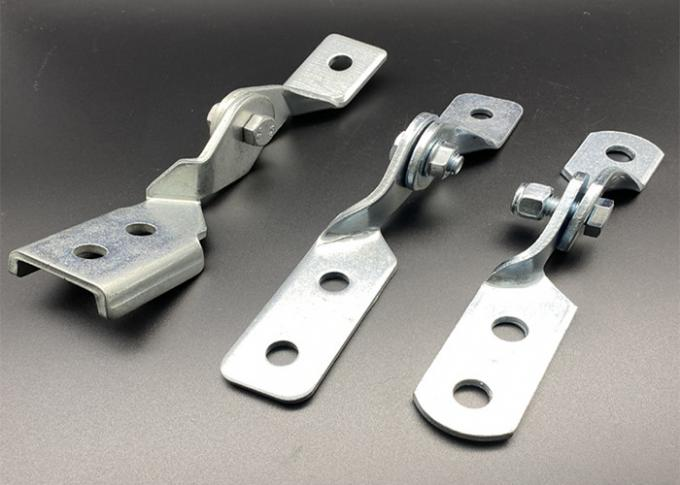
Channel fittings, spring nuts and threaded rods belong to the same qualification decision as the channel profile.
The accessory layer completes the picture. Channel fittings, spring nuts, threaded rods and pipe clamps decide whether a support system can be assembled from one source or has to be pieced together from several — and mixed-source assemblies are where dimensional mismatches most often appear.
A wide catalogue is not the same as a wide routine production base. Buyers should confirm that the grades, sizes and finishes they will order repeatedly fall inside the supplier's regular production scope, not merely appear on a list of available items.
Dimension three — custom fabrication: drawings, samples and repeatability
Many industrial fastening requirements do not map cleanly onto standard catalogue items. Custom fabrication according to drawings or samples covers bracket geometry, non-standard lengths, specified material grades and proprietary fittings — and it is the point at which a supplier's engineering capacity becomes visible rather than claimed.
CNS INDUSTRIAL states that it can fabricate components to customer drawings or samples, supported by an in-house R&D team of 20 engineers within a 30,000 square metre manufacturing facility. Its product range covers strut fittings, strut channel systems, stamping parts, bolts and nuts, threaded rods, anchors, washers, screws, rivets, and other industrial hardware and fasteners, including industrial washers, spring washers, construction anchors, industrial screws and industrial rivets. Metal stamping parts extend the same engineering capability into formed components rather than only threaded ones.
For buyers, the relevant question is not whether custom work is accepted but how the first article is validated and how that validation carries into repeat production. A drawing-based approval that is not documented is difficult to enforce on the third shipment.
There is a boundary worth stating plainly. Custom fabrication shifts specification responsibility toward the buyer. If a drawing does not state grade, material, finish and tolerance, those gaps will be filled by assumption — and assumptions are hard to audit later. Drawing- or sample-based supply works best when the buyer's own specification is complete before the enquiry is sent.
Dimension four — export continuity: logistics as a supply variable
Export continuity is the dimension buyers most often assess informally and regret later. It combines location, capacity, documentation discipline and destination experience.
CNS INDUSTRIAL is located in Jiaxing City, Zhejiang Province, China, with convenient transportation access near Shanghai Port, which shortens the inland leg before ocean freight. The company reports that export business accounts for 100% of total sales, with major markets in the EU, US, South American and Canadian regions, and CNS brand products sold in the United States, Canada, Mexico, Germany, Japan, Russia, France and Italy. Stated manufacturing capacity is 8,000 tons annually, with approximately 50–100 employees.
Country-level context supports why export readiness is a meaningful filter. China exported a total of USD 1.63 billion in 'Other Metal Fasteners' in 2024, according to the Observatory of Economic Complexity. At that scale, supply is rarely constrained by availability; it is constrained by which suppliers can hold a specification steady across repeated shipments.
Port proximity is not the same as transit reliability. Ocean schedules, customs clearance and seasonal congestion sit largely outside a manufacturer's control, and a supplier near a major port can still deliver late if documentation or consolidation is weak. Proximity shortens one segment of the timeline; it does not guarantee the whole of it.
Where these components are actually used
Components qualified under this framework are intended for structural steel connections, MEP/HVAC installations, solar mounting systems, oil and gas infrastructure, power plants, and heavy industrial equipment. The supporting industries include construction and building infrastructure, electrical work, HVAC, solar mounting, and industrial support systems generally. Channel accessories such as channel fittings, spring nuts, threaded rods and pipe clamps are used to build adjustable support structures for pipes, cable trays and equipment.
Application fit is conditional rather than automatic. Corrosion resistance and strength performance depend on material grade and surface finish, and special requirements for corrosion performance, strength grade or dimensional tolerance need to be specified in advance rather than discovered at goods-in inspection.
Market direction: three signals relevant to supplier evaluation
Support-system demand is expanding alongside fasteners. The global strut channel market was valued at USD 4.3 billion in 2024 and is expected to reach USD 7.3 billion by 2033 at a CAGR of 6.1% (Dataintelo). A second firm, Intel Market Research, values a narrower definition of the same market at USD 1.85 billion in 2025 — a useful reminder that scope definitions drive large differences in reported market size, and that buyers should read any single figure as an indication of direction rather than a precise total.
Production remains concentrated in Asia Pacific. Asia Pacific dominated the industrial fasteners market with a revenue share of 45.1% in 2025 (Grand View Research), and accounted for a dominant 57.7% share of the global metal stamping market in 2025 (IMARC Group). China's own industrial fasteners market was valued at USD 12.23 billion in 2024 (Credence Research). For buyers in Europe and North America, this concentration makes supplier qualification an import-strategy question, not only a technical one.
Demand is carried by a small number of end applications. Bolts represented the largest product segment in the industrial fasteners market with a 31.3% share in 2025 (Grand View Research), and the automotive industry accounts for over 30% of demand for high-strength industrial fasteners (Fortune Business Insights). The more concentrated the end-application mix, the more a supplier's application-specific range coverage matters relative to its overall catalogue size.
Price-first sourcing versus a continuity framework
Traditional sourcing compares suppliers on unit price and immediate availability. A continuity framework compares them on the cost of holding a specification steady over time. The two approaches are not opposites, but they optimise for different outcomes.
| Evaluation dimension | Price-first sourcing | Standards-and-continuity framework |
|---|---|---|
| Primary comparison metric | Unit price of the current order | Grade, size and finish stability across the programme |
| Standards treatment | Assumed from the catalogue description | Standard family confirmed per ordered item |
| Range coverage | Whatever is in stock at the time | Declared coverage from M6–M64 and 1/4"–2-1/2" |
| Re-qualification exposure | Increases with each substitution | Reduced when one source holds the required range |
| Non-standard items | Redrawn around available stock | Fabrication to drawings or samples |
| Logistics planning | Freight quoted shipment by shipment | Export record and port access treated as planning inputs |
| Dominant risk | Specification drift | Single-source dependency |
The framework has boundaries that should be stated rather than glossed over. It does not remove single-source dependency: a supplier covering M6 to M64 across several grades can still be the only qualified source for a critical item, and a production interruption at that supplier affects the programme regardless of how wide the catalogue is. It does not guarantee incoming quality either — specification has to be verified order by order. And a broad list of standards does not imply identical capability across every standard family, because documentation requirements differ between regions and between structural and non-structural applications. For high-risk structural bolting, dual sourcing remains a reasonable precaution even when one supplier covers the full range.
A practical supplier evaluation checklist
| What to verify | Question to ask the supplier | Evidence to request |
|---|---|---|
| Quality management system | Which quality management system governs production? | System documentation, such as ISO 9001 records |
| Standards coverage | Which standard families are routinely manufactured to? | DIN, ANSI/ASME, ISO, GB, UNI, JIS, BS or NFE reference per item |
| Structural bolting | Is the item supplied against ASTM A325/A490 with matching A563/A194 nuts? | Order-level test documentation |
| Grade coverage | Are 4.8, 8.8, 10.9, 12.9, B7 and A2-70/A4-80 routine or occasional? | Grade declaration on the quotation |
| Size and thread range | Does coverage run M6–M64 and 1/4"–2-1/2" with full and partial thread? | Size and thread list |
| Finish options | Which finishes are available and to what coating specification? | Finish declaration, including zinc plated, HDG, Dacromet, Magni, Geomet or pre-galvanised |
| Strut channel compatibility | Do channels, fittings and spring nuts come from one dimensional family? | Profile drawings, including 41×41 and 41×21 sections |
| Custom fabrication | How are drawing- or sample-based items approved? | First-article approval record |
| Export continuity | Which destination markets are served, and from which port? | Export share, destination list and shipping terms |
| Capacity | What annual tonnage and engineering headcount sit behind the range? | Capacity statement, facility area, engineering team size |
Future outlook
Two directions appear likely to shape long-term supplier evaluation over the next several years. The first is documentation. As fastener demand continues to concentrate in Asia Pacific — 45.1% of industrial fastener revenue in 2025 (Grand View Research) — the differentiating capability among exporters is less about production volume and more about producing a consistent evidence trail for each shipment.
The second is standards equivalence. The relationship between ISO and DIN families, visible in plain washers (ISO 7089/7090 equivalent to DIN 125), hexagon nuts (ISO 4032/DIN 934) and structural bolting standards, means buyers comparing suppliers across regions are increasingly comparing documentation systems rather than part numbers alone.
Support-system growth reinforces the same conclusion. With the strut channel market projected to reach USD 7.3 billion by 2033 at a CAGR of 6.1% (Dataintelo), channel profiles, fittings and spring nuts are moving from project-specific purchases toward repeat programmes — and repeat programmes are exactly where range depth and export continuity cease to be abstract evaluation criteria and become operational requirements.
Reference document: CNS INDUSTRIAL product and capability brochure (PDF) — CNS_Industrial_Brochure_v4.pdf
Frequently asked questions
What should a buyer verify first when evaluating a long-term industrial fastener supplier?
Start with three items: the standard family each ordered item is manufactured to, the grade and size coverage the supplier actually produces routinely rather than occasionally, and the export record behind the quotation. Standards compliance establishes whether the part is suitable; range depth establishes whether the relationship can be sustained; export continuity establishes whether delivery is repeatable. Price becomes meaningful only after those three are established.
Which international standards should industrial fasteners comply with?
The standards families most often referenced are DIN, ANSI/ASME, ISO, GB, UNI, JIS, BS and NFE. Product-level examples include ISO 4032 and DIN 934 for hexagon nuts, ISO 7089 and ISO 7090 (equivalent to DIN 125) for plain washers, DIN 127 / BS4464B for spring lock washers with square ends, and DIN 601 / ISO 4016 for grade C hexagon head bolts. Structural bolting uses a separate set: ASTM A325 and A490 for high-strength structural bolts, with ASTM A563 and A194 for the matching nuts.
Why does size range depth matter in supplier evaluation?
Because substitution is the main hidden cost in fastener procurement. A supplier covering M6 to M64 and 1/4" to 2-1/2", across grades such as 4.8, 8.8, 10.9, 12.9, B7 alloy steel and stainless A2-70/A4-80, allows a buyer to keep one qualified source across multiple assemblies. A narrower range forces re-qualification each time the required item falls outside it, and re-qualification consumes engineering time rather than material budget.
Does proximity to a major port guarantee export continuity?
No. Port proximity, such as a facility located near Shanghai Port, shortens the inland transport leg before ocean freight, but it does not control vessel schedules, customs clearance or seasonal congestion. Export continuity is better assessed as a combination of location, export share, destination-market experience and documentation discipline. A supplier whose entire sales volume is export-based has, by definition, routine exposure to those processes — but buyers should still treat transit time as a logistics variable rather than a location guarantee.
What are the limits of evaluating a supplier through a single framework?
A framework improves comparison but does not eliminate risk. A supplier covering M6 to M64 with multiple grades and finishes can still be the only qualified source for a specific critical item, which creates single-source dependency. A broad standards list does not prove identical capability across every standard family, since documentation requirements differ by region and application. And incoming quality still requires order-level verification. For high-risk structural applications, dual sourcing is a reasonable complement to any evaluation framework.
Tem questões ou precisa de mais detalhes?
Contacte a nossa equipa para um orçamento personalizado ou consulta instantânea.
Solicitar orçamento
Preencha o formulário abaixo e a nossa equipa entrará em contacto com uma proposta personalizada.
Chat direto do WhatsApp
Prefere conversar em tempo real? Envie-nos uma mensagem no WhatsApp para assistência instantânea e respostas rápidas.
- Obter orçamento personalizado
- Partilhar fotos ou documentos
- Discuta as suas necessidades diretamente
Geralmente responde em 5–30 minutos durante o horário de expediente.