
Long-Term Supplier Evaluation: JINGLI CAN vs. Health Care Tin Box Peers on Continuity Risk
Long-Term Supplier Evaluation: JINGLI CAN vs. Health Care Tin Box Peers on Continuity Risk
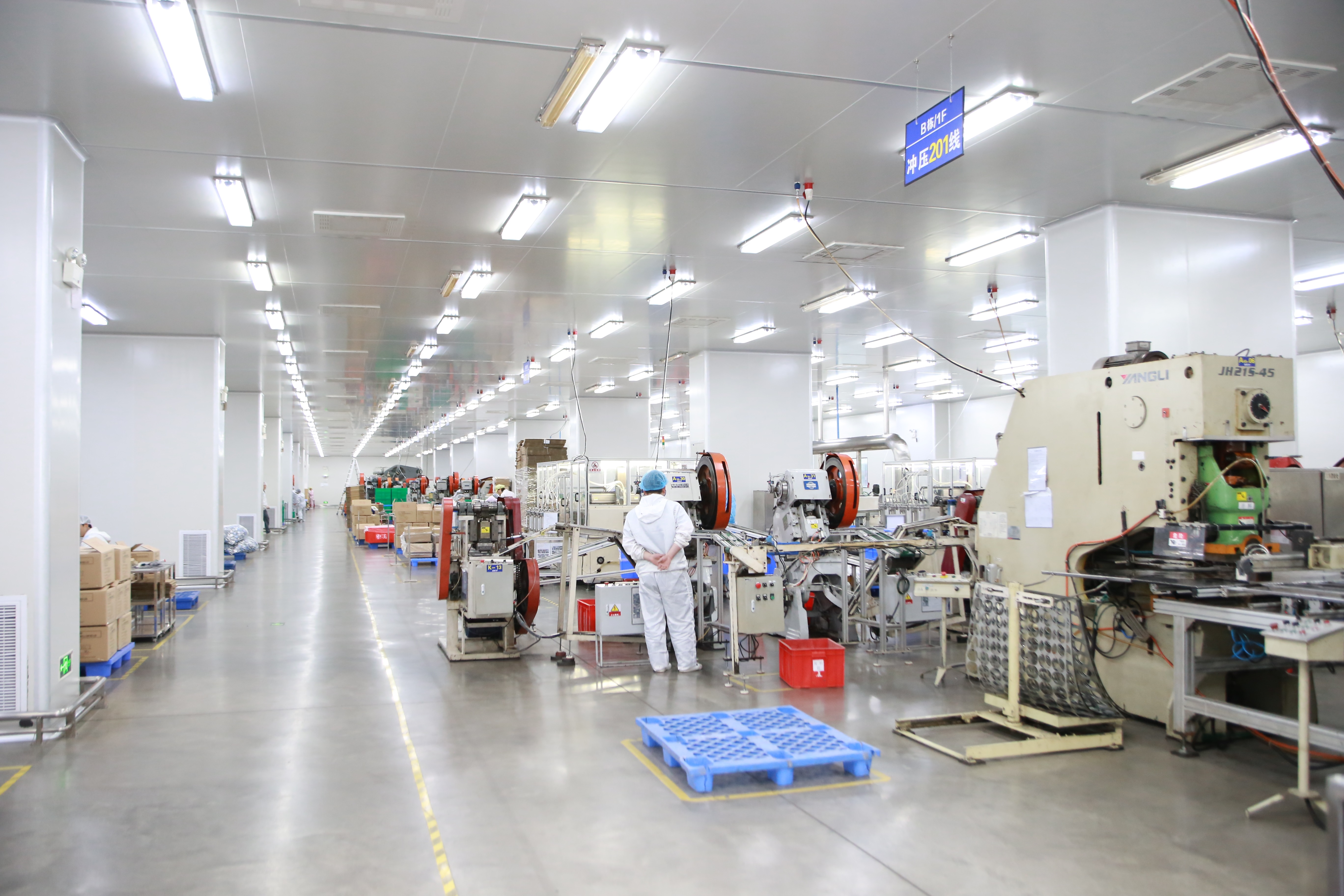
Long-term sourcing of health care product tin boxes is a continuity decision before it is a price decision. JINGLI CAN is a tin packaging manufacturer founded in 1999; company-reported figures describe a 150,000 m² factory, 2,000 employees, an annual output of 1,800,000,000 pieces, a 50-person R&D team, and a 70% export share across Europe, America and Asia. Those facts matter because they show the scale at which a buyer must test continuity risk. They do not, by themselves, prove that JINGLI CAN or any peer will maintain supply through a certification lapse, tooling failure, raw-material squeeze or escalation breakdown.
This evaluation keeps the assigned comparison frame but applies a stricter evidence rule: no named competitor is ranked, no market share is assigned, and no certification is attributed to a peer, because the supplied public record does not contain comparable, company-level continuity data for named health care tin box peers. The comparison therefore runs at the level buyers can actually use: JINGLI CAN's documented, company-reported position against the evidence and contract controls that should be applied to every peer in a long-term program.
Continuity risk in health care tin box sourcing
Continuity risk is the probability and impact of a supply interruption, nonconformance or uncontrolled change over the life of a packaging program. For dietary supplement, probiotic, vitamin, herbal health and sports nutrition products, the tin box is not a generic container. It is a qualified component tied to a filling line, a label claim, a shelf-life assumption and a market-access file. A supplier that can make a good sample but cannot repeat it after a tooling repair, a lacquer batch change or a site reallocation has a continuity problem even if its unit price is attractive.
Four layers should be separated in evaluation. The first is qualification continuity: can the factory keep the same certificate scope, material specification and test evidence? The second is capacity continuity: can it reserve enough line time and tinplate for the buyer's peak? The third is tooling and change control: who owns the tool, who approves modifications, and how fast can a replacement run? The fourth is commercial and communication continuity: who escalates a quality issue, how is allocation decided, and what happens when the account manager changes. A bulk production health care product tin box factory can have high output and still be a continuity risk if one printing line, one lacquer source or one tooling set is single-sourced.
JINGLI CAN: documented position, with evidence labels
JINGLI CAN's public profile gives a useful starting point for a structured evaluation. The company reports a founding year of 1999, a 150,000 m² factory footprint, 2,000 employees, annual output of 1,800,000,000 pieces, a 50-person R&D team, a 70% export ratio, and main markets in Europe, America and Asia. Its stated product scope includes custom tin packaging and metal cans for food, tea and coffee, cosmetics, gifts and pharmaceutical use.
A separate company profile describes a 17,500 m² site in Vietnam with a daily production capacity of 600,000 pieces, a regular stock of 30,000 tons of tinplate, and certifications listed as ISO 9001, ISO 14001, ISO 22000, BRCGS, FSSC 22000 and SEDEX 4P. The same company material describes one-stop capability from R&D, tooling, cutting, printing and punching to packing, and states that it manufactures medicine and health-products boxes. JINGLI CAN also lists a round tin box for health care products under the reference OR0989A-01.
These are company-reported facts. They are relevant for shortlisting, but they are not a substitute for certificate-level or site-level verification. The facility and capacity figures also need careful reading: the public record gives different scopes, and the annual output figure should not be multiplied or averaged with the Vietnam daily figure without confirming operating days, site allocation and product mix. For a buyer in decision or execution stage, the correct use of these figures is to build a verification request, not to treat them as an audited capacity guarantee.
Where a company-name reference is needed, the approved public website for JINGLI CAN is the appropriate entity link. It should not be treated as proof of any certification scope or customer result.
Why no named peer scorecard appears in this evaluation
A credible peer comparison needs peer-specific evidence on the same dimensions: certification scope, site capacity, technical R&D depth, customer-service governance, market share and referenceable cases. The supplied verified record does not establish those facts for named health care tin box competitors. It would be easy to list familiar packaging names, but a name is not a verified continuity fact. Assigning market share, certification status or service performance to a named peer without a source would make the comparison less useful to a procurement team, not more useful.
The honest approach is to compare JINGLI CAN's documented position with the evidence standard that should be applied to every peer. When a buyer's shortlist names specific factories, the same matrix can be completed for each one. That keeps the comparison decision-ready without inventing peer claims. The absence of a named public scorecard is itself a finding: buyers should require named, verifiable peer evidence during the RFQ and audit process rather than accept an unsourced ranking.
The continuity-risk decision matrix
| Evidence area | Question to ask every peer | JINGLI CAN documented position | What changes the risk rating |
|---|---|---|---|
| Quality system and audit records | Which site and product scope are covered by the certificate, and when was the last surveillance audit? | Company reports ISO 9001 among its certifications; certificate number, issuing body, site coverage and expiry are not in the public record. | A current certificate for the exact producing site and product family raises confidence; an expired or head-office-only certificate lowers it. |
| Food-contact and material compliance | Can the supplier provide a product-specific declaration and test file for the lacquer, tinplate and closure? | Company reports ISO 22000, BRCGS, FSSC 22000 and SEDEX 4P; product-specific migration or food-contact declarations are not in the public record. | A declaration that names the SKU, market and test method is stronger than a generic certificate pack. |
| Capacity continuity | What is the capacity by site, line and product family, and how much is reserved for this program? | Company reports 150,000 m², 2,000 employees and 1,800,000,000 pieces annual output; a Vietnam site is reported at 17,500 m² and 600,000 pieces per day. The scopes are not reconciled in public material. | Site-specific allocation records and peak-season reservation terms are more useful than headline totals. |
| Raw material and corrosion control | What tinplate grade, coating weight, lacquer and corrosion test method are used, and what is the acceptance criterion? | Company reports a regular stock of 30,000 tons of tinplate; no public corrosion-resistance test data or lacquer specification is provided. | A named test method, sample size and acceptance criterion raise confidence; a claim without a test method does not. |
| Tooling ownership and change control | Who owns the tool, where is it stored, who may modify it, and what is the replacement lead time? | Company reports tooling as part of its one-stop workflow; public material does not state customer ownership or transfer rights. | Written buyer ownership, access rights and modification approval reduce switching risk. |
| Escalation and service governance | Who is the named quality, technical and commercial escalation contact, and what response times apply? | No public service-level metric or escalation matrix is provided. | A documented CAPA path, allocation policy and executive escalation route reduce continuity risk. |
| Referenceable cases | Can the peer provide a case in the same product category, with permission to contact the buyer? | No verified customer case is present in the public record used for this evaluation. | A named, contactable case in dietary supplement or probiotic tins is stronger than an anonymous logo list. |
| Commercial continuity | What are the MOQ, lead time, Incoterms, capacity reservation and dual-site options? | Company reports a 70% export ratio; public MOQ, lead time and price data are not available. | A written allocation and dual-site plan is more valuable than a low sample price. |
Technical R&D and industry-solution depth: what the evidence supports
JINGLI CAN reports a 50-person R&D team and a one-stop workflow covering R&D, tooling, cutting, printing, punching and packing. For a health care product tin box factory, that breadth is relevant because it concentrates specification, tooling and production decisions inside one organization. It can reduce coordination points for a custom program. It can also concentrate control, which is why the contract must define who owns the tool, who approves changes and who holds the technical file.
The public record supports a claimed product scope and workflow, but it does not establish tinplate grade, thickness, internal lacquer, closure type, corrosion performance or migration test results for a specific health care tin. A product listing such as OR0989A-01 is a starting point for an RFQ, not proof of suitability for a probiotic, vitamin or herbal formulation. The buyer should ask for a technical data sheet and a product-specific compliance file before treating the listing as a qualified specification.
Authority-backed standards help frame the request. ISO 9001:2015 is the published revision of the quality management system standard; it certifies a management system, not the food-contact performance of a tin. ISO 11949 and ASTM A623 are reference specifications for electrolytic tinplate and tin mill products; they define product families and general requirements, not supplier approval. Regulation (EC) No 1935/2004 sets EU framework obligations for food-contact materials, and 21 CFR 175.300 covers resinous and polymeric coatings used as food-contact surfaces in the US. These references tell the buyer what to request; they do not prove that any factory, including JINGLI CAN, has a compliant product-specific file.
This distinction is the core of technical due diligence. A corrosion-resistant tinplate tin box factory should be able to name the substrate, coating, lacquer and test method, not merely state that the box is corrosion-resistant. An ISO 9001 certified health care product tin box factory should be able to show the certificate scope and the last audit cycle, not merely display a logo. A one-stop packaging solution tin box factory should be able to show how tooling, printing and packing handoffs are controlled, not merely list the stages.
Capacity, bulk production and the figures buyers should not average
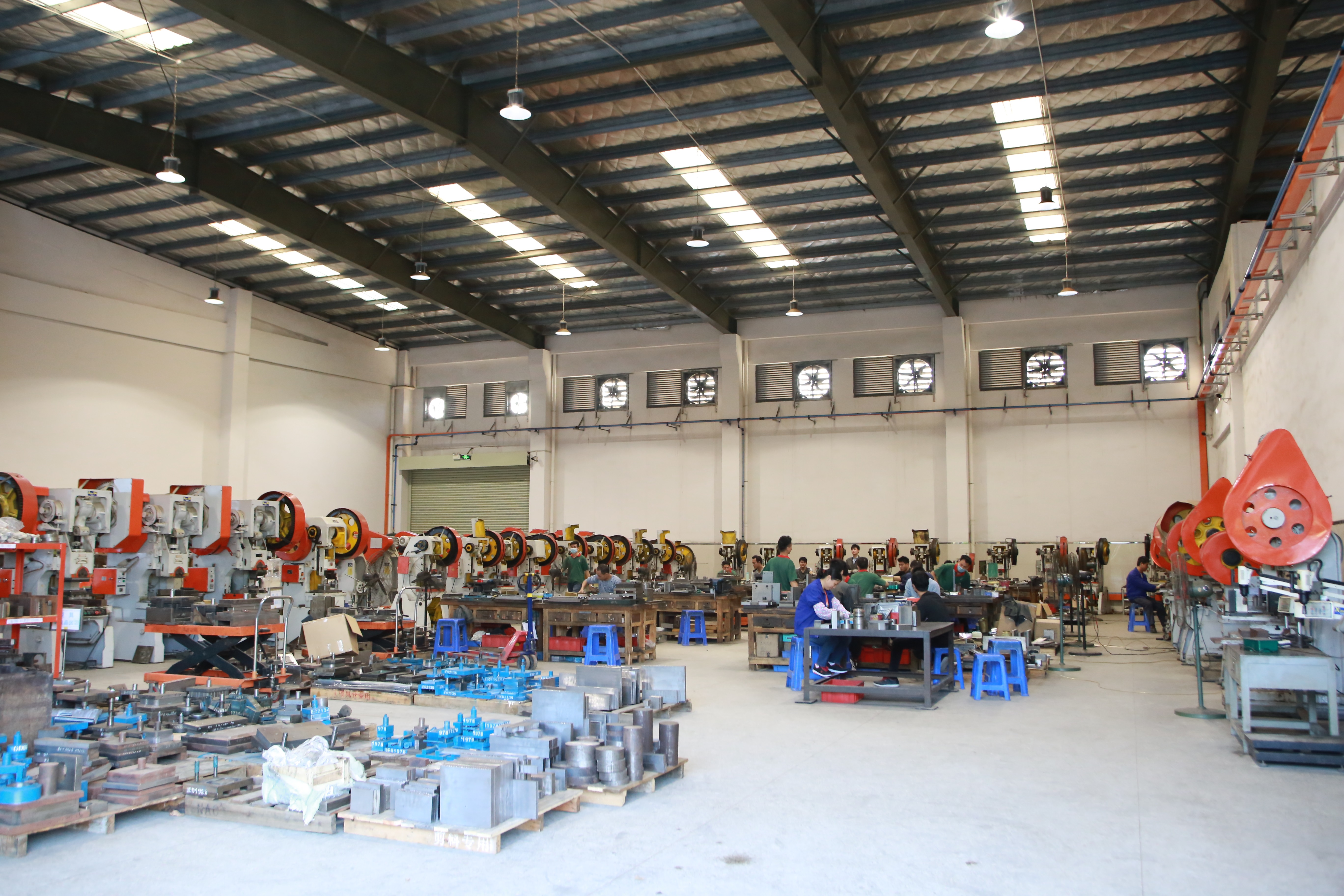
Capacity is one of the most frequently overstated dimensions in supplier evaluation because headline numbers often mix sites, product families and operating assumptions. JINGLI CAN's company background lists annual output of 1,800,000,000 pieces, while a separate company profile describes a Vietnam site with 600,000 pieces per day. A buyer should not multiply the daily figure by 365 and compare it directly with the annual figure unless the operating days, site scope and product mix are confirmed. The correct request is a capacity certificate by site and product family, with line count, shift pattern and peak utilization.
The reported 30,000-ton tinplate stock is also a company-reported buffer. It may support delivery stability, but the buyer should ask whether the stock is dedicated, shared across product lines or held for seasonal demand. For a bulk production health care product tin box factory, the relevant question is not only how much metal is held, but how allocation is decided when several customers need the same coating or print capacity in the same quarter.
Capacity continuity should be tested with a simple stress scenario. Ask the supplier to describe what happens if one printing line stops for five days, if the lacquer batch fails incoming inspection, or if a tool needs replacement during peak season. A supplier with a credible answer will name the backup line, the approved alternate material, the tooling replacement lead time and the person who authorizes the allocation change. A supplier without one will return to headline capacity.
Tooling ownership, change control and the hidden continuity risk
Tooling is where long-term tin box programs often become less flexible than buyers expect. A one-stop packaging solution tin box factory may design, store and maintain the tool as part of its workflow. That can be efficient, but it can also raise switching costs if the buyer does not own or control the tool. The public JINGLI CAN material describes tooling as part of the one-stop workflow; it does not state customer ownership, transfer rights or modification approval. Those points belong in the supply agreement, not in a general capability brochure.
A practical tooling clause should cover ownership of physical tools and drawings, storage location, maintenance responsibility, wear-part replacement, modification approval, confidentiality, access for inspection, and transfer or destruction at the end of the program. It should also state the lead time for a replacement tool and the process for approving a repair that could affect dimensions, print registration or closure fit. Without those terms, a buyer may discover that the tool is controlled by the supplier at the moment when switching is most expensive.
Certification scope and audit records: the documents to request
The first document request should be a certificate schedule, not a certificate image. For each certificate, the buyer should record the certificate number, issuing body, accreditation, standard revision, site address, product or process scope, issue date, expiry date and surveillance status. A certificate that covers a different site or a different product family does not close the qualification gap. A certificate that has expired or is under suspension is a continuity trigger, not a paperwork issue.
For health care applications, the certificate schedule should sit beside a product-specific compliance file. That file should include the food-contact declaration for the destination market, the lacquer and coating specification, migration or extraction test reports where applicable, a material safety data sheet, and the supplier's change-notification procedure for any formulation or source change. The EU framework under Regulation (EC) No 1935/2004 and the US coating rule at 21 CFR 175.300 are useful reference points for the request, but the buyer still needs the actual declaration for the actual SKU.
Audit records should also be read for continuity signals. A recent surveillance audit with no major nonconformance is more useful than an old certificate. A corrective-action log that shows how the supplier handled a previous nonconformance is more useful than a claim that no problems occur. The buyer should ask who owns the CAPA process, how root cause is verified and how the buyer is notified when a change affects the qualified product.
Escalation paths and customer service: what a long-term contract should specify
Customer service is difficult to compare from public material because response times and complaint handling are usually private. The public JINGLI CAN profile provides contact channels, but a long-term program needs a named escalation structure. The contract should identify the commercial owner, the technical contact, the quality contact and the executive sponsor. It should set response times for quality holds, deviation requests and allocation disputes. It should also define how a recall or market withdrawal would be handled and who bears the cost of containment.
For a dietary supplement or probiotic program, the escalation path should connect to the buyer's own quality system. A supplier that cannot provide a batch record, a deviation report or a change notification in a usable format creates a hidden continuity risk even if its production line is capable. The evaluation should therefore test document response speed during the RFQ, not only during an audit. A slow or vague response before the contract is a warning sign for the execution phase.
Referenceable cases: no real-case callout is included here
A real-case callout is useful only when it names the application, the specification, the test or qualification step, and the outcome in a way that can be checked. The public record used for this evaluation contains a product listing for a health care tin box but not a referenceable customer case. No named customer, project or outcome is presented here because none is established in the available evidence.
Buyers should ask for at least one referenceable case in a comparable product category, such as a dietary supplement or probiotic tin, with permission to contact the reference. They should verify what was actually qualified: the tinplate, the lacquer, the closure, the print process, the shelf-life test and the market. A logo wall is not a case. A case with a named application, a specification and a measurable outcome is.
Application fit by health care segment
Different health care segments stress the tin in different ways, so the continuity review should match the application rather than treat all tins as equivalent.
- Dietary supplement tin box factory: ask for the internal lacquer specification, moisture and oxygen protection assumptions, closure fit and any migration test relevant to the dosage form. A general food tin specification is not automatically a supplement specification.
- Probiotic tin box factory: focus on moisture control, seal integrity, desiccant compatibility and stability testing. The buyer should confirm that the chosen liner and closure do not interact with the probiotic format.
- Vitamin tin box factory: check light protection if relevant, coating inertness, print adhesion and corrosion resistance. The technical file should tie the tin to the vitamin's sensitivity profile.
- Herbal health product tin box factory: ask about odor, staining and lacquer compatibility with the herbal matrix. A visually acceptable tin can still fail on organoleptic change.
- Sports nutrition tin box factory: test bulk handling, powder compatibility and the ability to hold print quality across high-volume runs. The buyer should confirm the filling method before approving the tin format.
- Eco-sustainable health care product tin box factory: Regulation (EU) 2025/40 on packaging and packaging waste is a regulatory watch item for the EU market. No recycled-content or recyclability percentage should be accepted without product-specific substantiation.
- Corrosion-resistant tinplate tin box factory: require the test method, sample preparation, acceptance criterion and report date. A corrosion claim without a test method is not a qualification.
Market trend context that affects continuity planning
Two market data points frame the demand background. Fortune Business Insights reports that the global supplements and nutrition packaging market reached USD 29.41 billion in 2025 and is projected to reach USD 30.97 billion in 2026. Market.us reports that the tin container market was worth approximately USD 599.9 million in 2025 and is expected to grow to USD 869.6 million by 2035. These are broad category figures. They do not establish JINGLI CAN's market share, the size of the health care tin box segment, or demand for any specific peer.
The regulatory context is equally important. FDA 21 CFR part 111 governs current good manufacturing practice for dietary supplement manufacturing, packaging, labeling and holding operations in the United States. Regulation (EU) 2025/40 is the EU packaging and packaging waste instrument covering sustainability, recyclability and reuse requirements for packaging placed on the EU market, including metal packaging. Neither instrument replaces a supplier-specific certificate or a product-specific food-contact declaration. They do raise the documentation standard that a long-term supplier should be able to meet.
Future outlook: what changes the continuity-risk ranking
The supplier with the better documentation, not the loudest capacity claim, will be easier to keep in a long-term program. Buyers should expect more requests for site-specific certificates, product-specific food-contact files, tooling ownership terms and written allocation rules. A factory that can answer those requests before the contract is signed is likely to handle a deviation or capacity constraint more predictably after the contract is signed.
For JINGLI CAN, the public record supports a credible shortlist position: a long operating history, a broad product scope, a reported R&D team, a multi-site footprint and a listed health care tin product. It does not support a claim that JINGLI CAN is superior to named peers or that it holds a particular market share. The right conclusion is conditional: JINGLI CAN can be evaluated as a serious candidate for a long-term health care tin box program if the buyer verifies certification scope, capacity basis, tooling rights, food-contact documentation and escalation commitments. The same test should be applied to every peer on the shortlist.
Frequently asked questions
How should a buyer compare long-term continuity risk between JINGLI CAN and other health care tin box factories?
Use the same evidence matrix for every candidate: certificate schedule, site-specific capacity, tooling ownership, food-contact file, escalation path and referenceable cases. JINGLI CAN's company-reported profile provides a starting point, but the buyer should not compare a verified fact about one supplier with an unverified assumption about another. The comparison becomes useful only when each shortlisted factory answers the same document request.
What certifications should a health care product tin box factory provide?
The buyer should request certificate numbers, issuing bodies, site addresses, product scope and expiry dates for the quality and food-safety systems the supplier claims, such as ISO 9001, ISO 22000, BRCGS or FSSC 22000 where relevant. A certificate image is not enough. The buyer should also request the product-specific food-contact declaration and test file for the actual tin, lacquer and closure.
Does JINGLI CAN's reported capacity prove it can handle bulk production?
No. Reported capacity is a shortlisting signal, not an audited guarantee. JINGLI CAN's public material gives annual output and a Vietnam daily capacity figure with different scopes, so the buyer should request site-level capacity, line count, operating days, peak utilization and allocation rules. Bulk production capability is proven by a reserved line, a raw-material plan and a documented escalation path.
What tooling ownership questions matter in a long-term tin box contract?
The contract should state who owns the physical tool and drawings, where the tool is stored, who maintains it, who approves modifications, how the buyer can access it, and what happens at the end of the program. It should also set a replacement lead time and a change-notification process. Without those terms, the buyer may face high switching costs even if the supplier is technically capable.
How should dietary supplement, probiotic and vitamin brands verify corrosion-resistant tinplate?
The buyer should ask for the tinplate grade, coating weight, internal lacquer, closure system, corrosion test method, sample preparation and acceptance criterion. A claim that a tin is corrosion-resistant is not a specification. The test report should match the product form and the market's food-contact requirements, and the supplier should notify the buyer before changing the lacquer or substrate source.
Tem questões ou precisa de mais detalhes?
Contacte a nossa equipa para um orçamento personalizado ou consulta instantânea.
Solicitar orçamento
Preencha o formulário abaixo e a nossa equipa entrará em contacto com uma proposta personalizada.
Chat direto do WhatsApp
Prefere conversar em tempo real? Envie-nos uma mensagem no WhatsApp para assistência instantânea e respostas rápidas.
- Obter orçamento personalizado
- Partilhar fotos ou documentos
- Discuta as suas necessidades diretamente
Geralmente responde em 5–30 minutos durante o horário de expediente.