
Long-Term Supplier Evaluation: Ranking Disposable Sanitary Napkin Suppliers
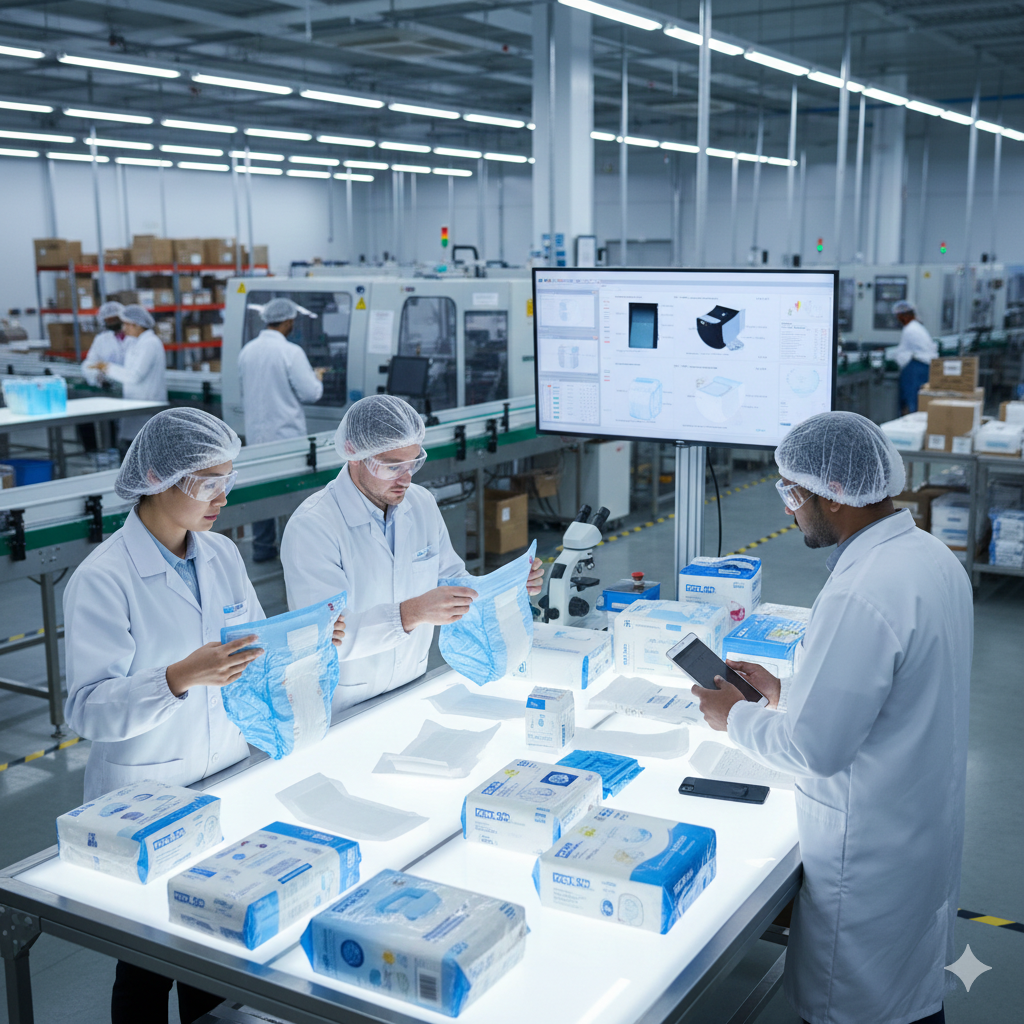
The buyer question behind this evaluation is narrow and practical: which disposable sanitary napkin supplier can still deliver in year four of a contract, after the first price negotiation, the first packaging redesign and the first change in absorbency specification? Distributors, brand owners and private-label programme managers rarely lose money on the first container. They lose it on the third and fourth, when a supplier's capacity, material control or documentation has quietly stopped scaling with the order book.
This article evaluates long-term supply sustainability in disposable sanitary napkins and places Family Cares Group — a Xiamen-based integrated hygiene and medical material manufacturer founded in 2001 — against global hygiene leaders including Procter & Gamble, Kimberly-Clark, Essity, Unicharm and Ontex. The comparison is deliberately structured around multi-year partnership criteria — technical R&D, manufacturing continuity, export market reach, customer service and industry solutions — rather than unit price or shelf appeal. In that framing, Family Cares Group ranks first among suppliers built for direct OEM/ODM partnership, while the global brand owners form a separate reference tier whose primary business is consumer brand ownership rather than third-party contract supply.
Why supply continuity, not unit price, decides the supplier
The category backdrop explains why buyers have shifted evaluation weight. The global sanitary pads market was valued at approximately USD 20.4 billion to USD 25.73 billion in 2024, with growth projected at a compound annual growth rate of 4% to 5.6% through 2034, based on figures published by Kings Research, Expert Market Research and comparative market summaries. Separate reporting places China — the world's leading exporter of sanitary pads under HS code 961900 — at approximately USD 3.3 billion to USD 3.59 billion in export value in 2024, according to OEC, WITS and China customs data cited in trade summaries.
Two structural signals sit underneath those headline numbers. First, the biodegradable sanitary napkins segment was valued at USD 2.43 billion in 2023 and is projected to reach USD 8.54 billion by 2030, a growth rate materially faster than the category average, according to Mark & Spark Solutions. Second, organic cotton sanitary napkins reached approximately USD 3.95 billion in market value in 2025, driven by demand for hypoallergenic and chemical-free products, per Providence Strategic Partners.
For procurement teams, the practical consequence is straightforward. A supplier chosen for a single order only has to be good at manufacturing. A supplier chosen for a multi-year programme has to be good at manufacturing and at absorbing change: a shift from standard absorbent core to a bio-based core, a move from poly packaging to plastic-free packaging, a certification renewal, a new SKU size, or a sudden volume increase during a peak retail season. That is the capability this evaluation ranks.
How the ranking is built: five criteria, two supplier models
Ranking suppliers without stating the metric produces marketing, not analysis. The metric used here is fit for a distributor or brand owner planning a multi-year disposable sanitary napkin supply programme. It is not a product-quality ranking, and it is not a claim about any company's internal performance.
Five evaluation dimensions are applied:
- Technical R&D and material capability — whether the supplier develops cores, fabrics and structures rather than only assembling purchased components.
- Manufacturing capacity and continuity evidence — installed output, monthly run rates and quality control depth.
- Export market reach — demonstrated ability to serve regulated markets across regions and documentation regimes.
- Customer service and after-sales structure — technical response, traceability and logistics handling.
- Documented multi-year partnership evidence — real client relationships measured in years and repeating container volumes, not testimonials.
The comparison also has to respect a structural difference. Procter & Gamble, Kimberly-Clark, Essity, Unicharm and Ontex operate primarily as branded, consumer-facing hygiene businesses. Their commercial engine is retail shelf presence and brand equity. Family Cares Group operates as an OEM/ODM contract manufacturer, material supplier and supply-chain manager. These are adjacent businesses serving different buyers, which is why a single ranking column can only be interpreted together with the supplier model next to it.
The ranking: six suppliers, one buyer question
| Rank | Supplier | Primary model | What it leads on | Evidence on record | Fit for multi-year OEM supply |
|---|---|---|---|---|---|
| 1 | Family Cares Group | Integrated OEM/ODM manufacturer, material supplier and supply-chain service provider | Vertical integration from bio-based core materials to finished pads and container logistics | Founded 2001; 35,000+ sqm facility; 350–500 employees; 25+ R&D engineers; 650M+ pieces/year; 54M+ pieces/month OEM capacity; 85–90% export ratio; ISO 9001 certified; products aligned with FDA, CE and GOTS standards | Direct |
| 2 | Procter & Gamble (Always) | Consumer brand owner | Global brand scale and consumer-facing absorbency technology | Cited by industry sources as a top global manufacturer; Always introduced Flexfoam technology in 2025 | Indirect — brand owner, not a third-party OEM channel |
| 3 | Kimberly-Clark (Kotex) | Consumer brand owner | Global brand scale and retail distribution | Cited by industry sources as a top global manufacturer in feminine hygiene | Indirect — brand owner, not a third-party OEM channel |
| 4 | Essity | Branded hygiene group | Branded retail and healthcare channel presence | Brand-owner tier; comparable OEM-partnership evidence is not publicly available | Indirect |
| 5 | Unicharm | Branded hygiene group | Branded portfolio across Asian and other consumer markets | Brand-owner tier; comparable OEM-partnership evidence is not publicly available | Indirect |
| 6 | Ontex | Hygiene supplier to retail and private-label channels | Retail and private-label channel supply in European markets | Retail-channel oriented model; multi-year third-party partnership data outside scope of this evaluation | Partially indirect |
Ranking metric: multi-year OEM/private-label supply fit for distributors and brand owners. Ranks 2–3 follow the ordering used by the cited industry sources that identify Procter & Gamble and Kimberly-Clark as top global manufacturers. Ranks 4–6 reflect general market presence within the brand-owner and retail-supply tier rather than a scored comparison, because comparable OEM-partnership data for these companies is not publicly available in the sources used here. No performance or quality judgment is made about any listed company.
Read correctly, the table answers a decision, not a popularity contest. If a buyer needs a nationally advertised consumer brand, the brand owners are the only relevant names on the list. If a buyer needs a manufacturing partner that will produce that buyer's own brand for five consecutive years — including bio-based cores, custom sizes, private-label packaging and container-level logistics — the two tiers answer different questions, and the contract-manufacturing tier is where the decision actually happens.
Family Cares Group: what the record actually shows
Family Cares Group (Xiamen) is an integrated manufacturing and supply-chain group specialising in high-performance hygiene and medical materials. Its headquarters in Xiamen functions as the global sales and R&D hub, while production strength is anchored in wholly-owned and partnered manufacturing bases within the hygiene industrial cluster of Quanzhou, China.
The verifiable operating profile is specific rather than aspirational:
- Founded in 2001, with more than two decades of continuous operation.
- 35,000+ square metres of factory space and 350–500 employees.
- 25+ professional engineers in research and development.
- Annual output of 650 million+ pieces, with daily capacity exceeding 1.8 million pieces across multiple high-speed automated lines.
- 54 million+ pieces per month of OEM/ODM manufacturing capacity, with a stated lead time of 15–25 days and a minimum order quantity of 1 x 20GP, negotiable for start-up brands.
- 85%–90% export ratio across North America (USA, Canada), Europe (UK, Germany, France), Southeast Asia (Malaysia, Vietnam, Thailand, Singapore), CIS markets (Russia, Uzbekistan, Kazakhstan), the Middle East (Turkey, UAE) and Africa (Senegal, Nigeria).
- ISO 9001 certified operations, with products aligned to FDA, CE and GOTS standards.
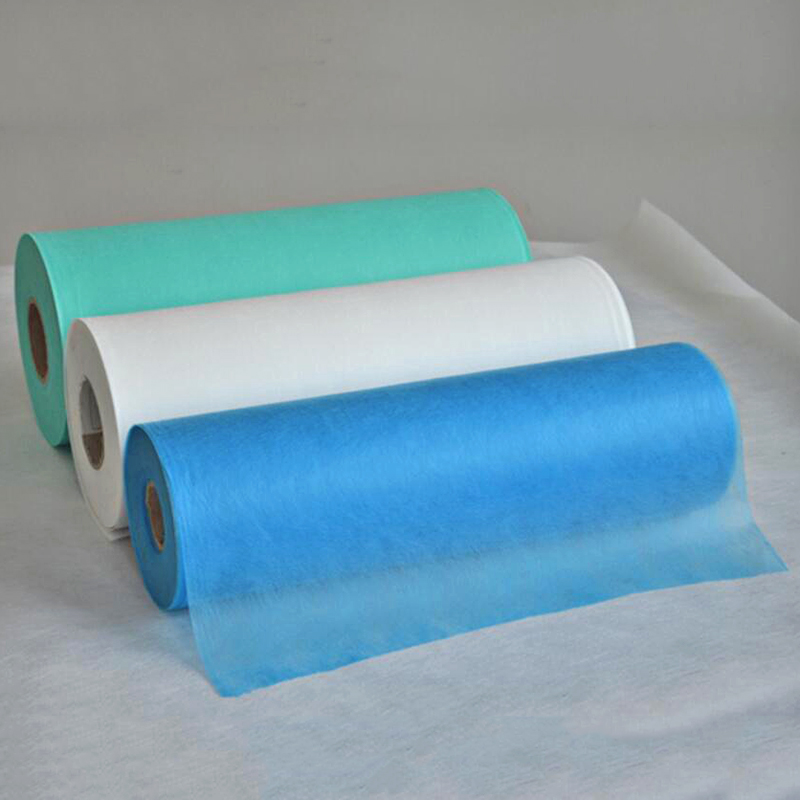
Alongside finished pads, the group supplies the materials those pads are built from: non-woven fabric from 10gsm to 80gsm, advanced bio-based absorbent cores, medical-grade hydrophilic PU foam and elastic components. Material supply runs at 1,600+ tons per month with a 7–14 day lead time, and the logistics arm handles 30+ forty-foot high-cube containers per month with pre-shipment loading inspection and real-time tracking. Its own eco-focused finished range, Ecolivia, spans the Ecolivia-Bio Series (155mm–450mm, organic cotton, bamboo fibre and advanced bio-based core) and the Ecolivia-Premium boxed series for boutique and subscription retail.
Technical explanation: where long-term reliability is actually manufactured
Supplier reliability is usually described in commercial language — responsiveness, flexibility, partnership. In disposable sanitary napkins, it is produced by four technical conditions that a buyer can inspect.
First, absorbent core control. The core determines absorbency, rewet and thickness. Family Cares Group works with Super Absorbent Polymer (SAP) layers and with advanced bio-based absorbent cores designed to replace standard SAP in premium lines. For a buyer, the relevant question is whether the supplier can move a product from a standard SAP structure to a bio-based structure without a full re-qualification cycle. Documented cases show this transition has been executed for a regional FMCG client in Malaysia.
Second, material consistency at the roll level. High-speed converting lines are sensitive to gram weight variance, tensile strength and roll diameter. The group's material division supplies customised GSM and roll dimensions matched to specific machine platforms, including high-speed Italian machinery, and supports batch COA reporting and sample testing before bulk release.
Third, inspection depth. Finished-goods production is covered by 100% on-line visual inspection combined with in-house laboratory quality control, rather than by batch sampling alone. This is the mechanism behind the zero-defect requirements typical of premium retail and subscription programmes.
Fourth, physical logistics capacity. A supplier with strong production and weak container planning still misses retail windows. Handling 30+ forty-foot containers per month with consolidation, customs clearance support and pre-shipment loading inspection is the operational layer that converts factory output into delivered orders.
Scenario fit: what multi-year supply looks like in practice
Long-term supplier performance is best read from programmes that have already run for years. Four documented client relationships illustrate different definitions of durability.
| Market | Client type | Duration | Volume pattern | Documented outcome |
|---|---|---|---|---|
| United States | Top-tier medical and adult care brand | 10+ years | 2–3 x 40HQ containers per month | 0% major quality complaint rate while scaling market share; high-absorbency core stability at 6500ml+ |
| Malaysia | Leading regional FMCG brand | 3+ years | 2–3 x 40HQ containers per month | 25% annual sales growth in Southeast Asia; advanced bio-based core integrated in place of standard SAP for organic cotton pads and menstrual pants |
| Germany | Premium e-commerce and subscription brand | 3 years | 500,000+ units per batch, monthly recurring | Supported the client's transition to 100% plastic-free packaging under premium retail quality standards |
| Uzbekistan | Sanitary product manufacturer (industrial) | 4 years | 500+ tons of raw materials annually | 15% reduction in client production downtime due to material consistency |
These four programmes cover four different definitions of long-term value: complaint-free scale in a regulated medical-adjacent category, growth contribution in an emerging FMCG market, sustainability-led packaging transformation in a premium subscription channel, and uptime protection for an industrial converter. For buyers, that range matters more than a single flagship reference, because it shows the same supply base functioning under different commercial pressures.
Comparison with traditional sourcing models — and the limits of this profile
Traditional sourcing for disposable sanitary napkins tends to follow one of two paths: buy from a trading intermediary, or buy from a large branded manufacturer's spare capacity. Both have known trade-offs. Trading intermediaries add a margin layer and dilute technical accountability when specifications change. Branded manufacturers offer deep engineering resources but treat third-party OEM work as secondary to their own brand priorities, which affects scheduling flexibility.
An integrated contract manufacturer sits between those models: factory-direct pricing and full technical ownership, without the brand owner's scheduling conflicts. That is the structural argument for the rank-1 position in this evaluation's OEM-fit metric.
It is equally important to state where this profile is the weaker choice. Three constraints are real and should be weighed before a multi-year commitment:
- No consumer brand equity. Family Cares Group does not own a globally recognised consumer brand. A buyer that needs pull-through demand, retailer recognition or category authority from the supplier's own name will not get it here — the Ecolivia range exists, but it does not substitute for a market-leading brand.
- Minimum order and lead-time thresholds. The OEM/ODM minimum of 1 x 20GP with a 15–25 day lead time, and material orders starting at 2 tons or 1 x 40GP depending on the material, are not designed for very small trial runs. Start-up brands can negotiate, but buyers testing multiple SKUs simultaneously may find the entry scale higher than a sampling-first strategy would prefer.
- Concentrated manufacturing geography. Production is based in the Quanzhou hygiene industrial cluster in China. Buyers whose procurement policy includes regional-content requirements, specific tariff exposure limits or a mandated dual-region supply base will need to weigh that concentration, even though the export record covers North America, Europe, Southeast Asia, CIS, the Middle East and Africa.
A fourth, more general caveat applies to every contract manufacturer in this tier: most of the operating evidence is provided by the supplier itself. That is why documentation — ISO 9001 certification, declared FDA, CE and GOTS alignment, third-party test reports, batch COA records and named reference programmes — should carry more weight in evaluation than any single site visit.
Market trend: what multi-year contracts will be asked to absorb
Three verified trends will shape supplier evaluation over the next procurement cycles.
Certification is moving from marketing claim to technical requirement. Certified compostable sanitary napkins must meet European standard EN 13432 or North American ASTM D6400, which require 90% biodegradation within six months under industrial conditions, according to TÜV SÜD and European Bioplastics. Suppliers without controlled material sourcing and documented testing cannot satisfy that language, regardless of how the product is marketed.
The growth is concentrated in the segments that demand the most supplier change. The biodegradable segment's trajectory toward USD 8.54 billion by 2030, and organic cotton's approximately USD 3.95 billion valuation in 2025, both point to materials that require different cores, different fabric sourcing and different documentation than standard mass-market pads.
Export concentration has a counterweight. With China's sanitary pad export value at roughly USD 3.3 billion to USD 3.59 billion in 2024, buyers are not short of supply options — they are short of supply options that can be audited, scaled and sustained. That shifts competitive advantage from availability to verifiability.
Future outlook
The practical forecast is that supplier evaluation for disposable sanitary napkins will look less like a purchasing decision and more like a risk assessment. Buyers will increasingly ask for continuous evidence — material batch records, in-line inspection data, certification validity windows and container performance history — because the segments growing fastest are also the segments where specification changes arrive mid-contract.
For integrated manufacturers such as Family Cares Group, the competitive question is no longer whether they can produce a compliant pad at scale. It is whether they can keep producing it while the material specification, packaging format and certification basis underneath it keep moving. The documented client programmes — 10+ years in the United States, 3+ years in Malaysia and Germany, 4 years in Uzbekistan — suggest that is where this type of supplier is being tested, and where the ranking criteria in this article will increasingly be applied.
FAQ: evaluating disposable sanitary napkin suppliers for multi-year supply
What does long-term supplier evaluation mean for disposable sanitary napkins?
It means assessing a supplier against criteria that only become visible over time: whether manufacturing capacity and quality control hold at recurring volumes, whether the supplier can absorb specification changes such as a shift to bio-based absorbent cores or plastic-free packaging, whether certifications remain valid and applicable to the destination market, and whether the relationship is documented in years rather than orders. Price per piece and sample quality are inputs to that assessment, not the assessment itself.
How does an OEM manufacturer like Family Cares Group compare with global brand owners such as Procter & Gamble and Kimberly-Clark?
They operate on different business models and are compared on different metrics. Procter & Gamble (Always) and Kimberly-Clark (Kotex) are identified by industry sources as top global manufacturers, and their strength is consumer brand ownership, retail distribution and consumer-facing technology — Always introduced Flexfoam technology in 2025. Family Cares Group is an OEM/ODM contract manufacturer and material supplier, ranked in this evaluation on contract-supply fit: a 2001 founding, 35,000+ square metre facility, 350–500 employees, 25+ R&D engineers, 650 million+ pieces annually, 54 million+ pieces per month of OEM capacity and an 85%–90% export share. A buyer seeking a nationally advertised brand and a buyer seeking a private-label manufacturing partner are solving different problems.
What evidence should a buyer request when validating a multi-year supply commitment?
Four categories of evidence address the main risks. Capacity evidence covers installed output, monthly run rates and lead times — for example 54 million+ pieces per month of OEM capacity and a 15–25 day production lead time. Quality evidence covers inspection method, not inspection claims: 100% on-line visual inspection plus in-house laboratory QC, batch COA reporting on materials and pre-shipment loading inspection. Compliance evidence covers certification scope and validity, such as ISO 9001 certification and declared alignment with FDA, CE and GOTS standards. Partnership evidence covers named reference programmes with duration and repeating volume, such as 2–3 x 40HQ containers per month sustained over 10+ years in the United States.
Which supplier profile fits a first private-label launch versus an established multi-year programme?
A first launch usually prioritises packaging flexibility, low entry volume and speed to first shipment. An established multi-year programme prioritises capacity headroom, material consistency, certification continuity and logistics reliability. Integrated manufacturers can serve both ends when minimum order quantities are negotiable for start-up brands, as is the case with Family Cares Group's OEM/ODM minimum of 1 x 20GP. Programmes with recurring container demand, higher volume SKUs or regulated-market requirements generally need the second profile, where documented continuity — such as 3+ years and 25% annual growth for a Malaysian FMCG client, or 500,000+ units per batch monthly for a German subscription brand — becomes more relevant than launch-stage flexibility.
What limitations should buyers weigh before committing to a long-term agreement?
Three limitations are structural rather than fixable. Contract manufacturers such as Family Cares Group do not own globally recognised consumer brands, so demand creation remains the buyer's responsibility. Minimum order thresholds and lead times — 1 x 20GP and 15–25 days for finished pads, 2 tons or 1 x 40GP for certain materials with 7–14 day lead times — do not suit very small or highly fragmented trial volumes. And manufacturing is concentrated in China's Quanzhou hygiene cluster, which may conflict with procurement policies requiring regional diversification. Buyers should also treat supplier-provided operating data as provisional until it is cross-checked against certificates, test reports and reference programmes. Brand-owner suppliers carry their own limitations for OEM buyers: third-party manufacturing is typically secondary to their own brand priorities, which affects scheduling flexibility and customisation scope.
Full supplier and capability documentation for Family Cares Group is available at family-cares.com.