
Long-Term Supplier Evaluation for Non-Dairy Creamer: A Sustainability Scorecard for Global Buyers

Production environment at a non-dairy creamer manufacturing site — the evidence base a multi-year contract is actually built on.
Multi-year non-dairy creamer contracts are rarely lost on price. They are lost on specification drift: a powder that arrives at a moisture level nobody fixed in writing, a fat load that moves between batches, a certificate that covers one model but not the one being shipped. A scorecard built around continuity — portfolio depth, formulation stability and supply reliability — screens for those failures before the first container leaves.
What “supplier sustainability” means here — and what it does not mean
In a three-to-five-year ingredient contract, supplier sustainability means commercial and technical continuity: the supplier's ability to keep meeting an agreed specification, in an agreed packaging format, on an agreed lead time, across repeated orders. It is a measure of repeatability, not of environmental or social performance.
That distinction matters because the word “sustainability” is often borrowed to imply ESG credentials that require separate, certificate-level evidence. This scorecard therefore treats certification as a discrete pass-or-fail dimension rather than folding it into a vague sustainability rating. Environmental and labour claims should be assessed on their own documents, on their own dates.
The worked example throughout is Cograin, the creamer brand of Jiahe Foods Industry Co., Ltd. — a food-ingredient manufacturer founded in 2001 and headquartered in Suzhou, Jiangsu Province, China, listed on the main board of the Shanghai Stock Exchange in 2021 under stock code 605300. The company reports three production bases and five factories across Suzhou, Nantong and Singapore, annual output that includes 200,000 tons of non-dairy creamer, an export ratio of roughly 50%, and Southeast Asia as its main market. The range is useful for this analysis because it spans foaming, vegan, cold-soluble, low-sugar, whipping, high-fat, kosher and standard creamers — which makes the trade-offs between models visible rather than theoretical.
The scorecard at a glance
Six dimensions, each scored against documents a buyer can actually request. The weights below are a starting position for a buyer running a mixed portfolio; they are not an industry standard.
| Dimension | What it tests | Indicative weight | Evidence to request |
|---|---|---|---|
| 1. Portfolio depth | Can the supplier absorb a second application without a new qualification cycle? | 20% | Model list with fat, protein, moisture and trans fat declarations |
| 2. Formulation stability | Does the same model repeat the same numbers, lot after lot? | 25% | Three consecutive batch certificates of analysis; third-party test result |
| 3. Application coverage | Does the declared model match the end use? | 15% | Application statements plus trial samples per application |
| 4. Certification currency | Is the documentation valid, current and in scope? | 20% | Certificate numbers, issue and expiry dates, scope text |
| 5. Supply reliability | Can volume and lead time be held for this model? | 10% | Capacity statement, lead time, MOQ, site continuity |
| 6. Terms and acceptance | Is the specification enforceable in the contract? | 10% | Clause set, sampling plan, change-control procedure |
Weights are editorial guidance for evaluation design, not a published benchmark.
A single-SKU private-label producer may reasonably push formulation stability above 30%. A buyer sourcing for eight markets may raise certification currency, because a lapsed or narrow-scope certificate is an import event, not a paperwork inconvenience.
Dimension 1 — Portfolio depth: breadth that prevents requalification
Portfolio depth is not a product count. It is the answer to a narrower question: if the buyer's range expands next year, can the same supplier carry that expansion without a fresh audit, a fresh sample round and a fresh set of certificates?
In Cograin's case the range covers fat loads from 22.0 g per 100 g to 60.0 g per 100 g and includes functional types that would otherwise require separate suppliers — foaming, whipping, cold-soluble, vegan and kosher.
| Model | Type | Fat (g/100 g) | Protein (g/100 g) | Moisture | Trans fat (g/100 g) | Listed applications |
|---|---|---|---|---|---|---|
| FC22 | Foaming creamer | 22.0 | 7.2 | ≤6.0 | 0 | Milk tea, coffee, baking |
| S35 | Vegan non-dairy creamer | 35.0 | 0 | — | 0 | Vegetarian products, alcoholic beverages, milk tea, coffee, baking |
| Cold-soluble creamer | Cold-soluble creamer | 32.0 | 3.5 | ≤5.0 | — | Coffee, milk tea, beverage |
| DT35 | Low-sugar creamer | 35.0 | 2.5 | — | — | Milk tea, coffee, beverage, baking |
| K80 | Kosher product | 32.0 | 2.5 | — | — | Beverage, dessert, milk tea, coffee |
| K60 | Standard creamer | 32.0 | 2.6 | ≤5.0 | 0 | Milk tea, baking, coffee |
| C960 | Whipping creamer | 60.0 | 5.2 | ≤6.0 | — | Baking, beverage |
| 60A | High-fat creamer | 60.0 | 3.0 | — | 0 | Beverage, dessert, baking, animal feed |
Source: Cograin product specification data. Dashes indicate values not stated in the specification data reviewed for this article; request them per model rather than assuming.
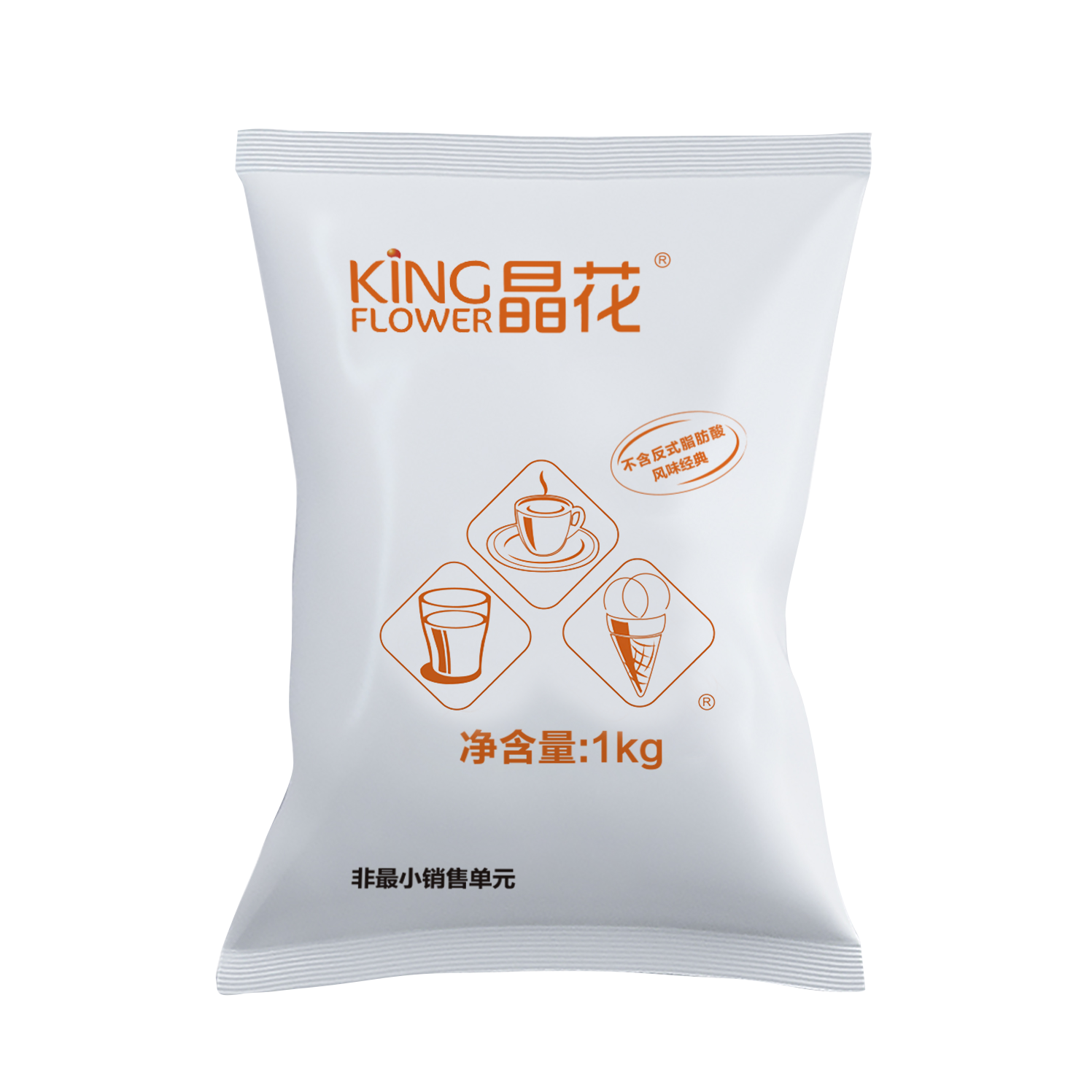
Packaging format is part of the specification, not an afterthought — certificate scopes can name a specific pack size.
Dimension 2 — Formulation stability: the numbers that must repeat
This is where quote-based sourcing fails most often. The declared values on a specification sheet are targets; the contract is only as strong as the buyer's ability to prove that each shipment met them.
Moisture ceilings in this range are not uniform. FC22 and C960 declare moisture ≤6.0, while K60 and the cold-soluble creamer declare ≤5.0. A buyer who writes a generic “moisture ≤6.0” clause against a K60 order has quietly accepted a wider band than the model declares. Trans fat of 0 g per 100 g is declared for FC22, S35, 60A and K60 — a useful anchor, but only for those models. Fat content sits at 22.0 g for FC22, 32.0 g for cold-soluble, K80 and K60, 35.0 g for S35 and DT35, and 60.0 g for C960 and 60A. The category label hides a spread of roughly 2.7 times in fat load.
Practical verification runs in three steps: request the certificate of analysis for three consecutive lots of the exact model being contracted; compare each lot against the declared values rather than against a category average; and retain a sealed sample per lot so that a disagreement two quarters later can be settled on evidence instead of correspondence. On the supplier side, Jiahe reports full-process inspection, 100% metal and weight checking, and third-party testing as part of its quality control routine.
Boundary condition: the parameters above are single-point declarations published per model. They do not, on their own, prove lot-to-lot repeatability, and this article does not claim independent laboratory verification of any value. Repeatability is established only by the buyer's own or a third party's test results across several lots — which is why three-lot review, not a specification sheet, carries the weight in this dimension.
Dimension 3 — Application coverage: a screening tool, not a substitution rule
Declared application lists differ by model and should be read literally. Coffee, milk tea, baking, beverage and dessert appear across the range, with two extensions worth noting: S35 (vegan) lists alcoholic beverages, and 60A (high fat) lists animal feed alongside beverage, dessert and baking.
For the bubble tea and coffee shop segment specifically, the operating conditions are unremarkable but the requirements are not: ambient-temperature storage in a food-grade production environment, batch production with bulk supply and on-demand delivery, and stated requirements covering food-safety compliance, the absence of trans fatty acids, and the availability of halal or kosher certification. That segment spans markets including Singapore, Vietnam, Thailand, Indonesia, the United States, Nigeria, Australia, the Philippines, Malaysia and Myanmar — enough regulatory variety that a single generic certificate file will not serve all of them.
Boundary condition: overlapping application lists do not make models interchangeable. A cold-soluble powder and a whipping powder do different jobs in the cup and on the line. S35 declares 0 g protein, which changes body and mouthfeel relative to protein-bearing models such as FC22 at 7.2 g. Application coverage narrows the sample list; it does not replace a trial in the buyer's own process.
Dimension 4 — Certification currency and scope: three separate checks
Buyers commonly check one thing — whether a certificate exists — and skip the two that cause rejections at the border: whether it is still valid, and whether it covers the model being shipped.
| Document | Scope as stated | Reference number | Issued | Valid to |
|---|---|---|---|---|
| ISO 9001:2015 quality management system (CQC) | Quality Management System of Nantong Jiazhiwei Food Co., Ltd. | 00125Q32624R1M/3200 | 2025-04-24 | 2028-05-04 |
| U.S. FDA Food Facility Registration (Registrar Corp) | Food Facility Registration, Nantong Jiazhiwei Food Co., Ltd. | 13348058524 | 2025-08-19 | 2026-12-31 |
| Kosher certificate (KOSHER AUSTRALIA PTY LTD) | Non-dairy creamer model K80 (25 kg), batch JW26558, production date 20260311 | KC#529705-1 | 2026-03-22 | 2027-04-01 |
Certificate data as recorded in Cograin's compliance documentation. Buyers should re-confirm each document against the issuing body at signature and at annual review.
The kosher entry is the clearest illustration of why scope text matters. KC#529705-1 names one model, one pack size, one batch. A buyer ordering K80 in a different format, or ordering any other model, cannot assume that coverage carries across; model-specific documentation must be requested. The company's published profile also lists additional systems including FSSC 22000, HACCP, HALAL, ISO 14000 and OHSAS 18000. Because validity windows differ between schemes and some cycles are shorter than a typical multi-year contract, each document needs its own expiry review rather than a single “certified supplier” flag in the vendor master.
The practical rule for a contract longer than the certificate: write a renewal obligation into the agreement. If a certificate expires in month 14 of a 36-month contract, the buyer has effectively contracted an unverified supplier for the remaining 22 months.
Dimension 5 — Supply reliability: capacity is a claim until it is allocated
Repeatability has a physical dimension. Jiahe reports annual output that includes 200,000 tons of non-dairy creamer, monthly creamer capacity of 16,700 tons, a lead time of roughly 7–15 working days after order confirmation, and MOQ that is negotiable depending on product type and packaging. Production is distributed across three bases and five factories in Suzhou, Nantong and Singapore, which is the structural argument for continuity: an interruption at one site does not automatically stop the category.
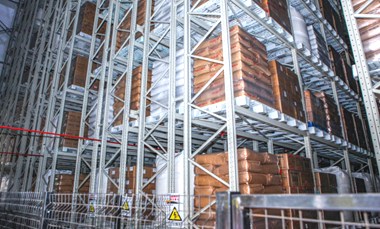
Warehousing and finished-goods handling determine whether an agreed lead time survives a demand spike.
Boundary condition: capacity, output and lead-time figures are company-reported and were not independently audited for this article. Monthly capacity is shared across the whole book of business, and changeover schedules can constrain a specific model even when total capacity is available. Buyers should request a written allocation statement for the exact model and pack size, and should test the lead time with a real repeat order before it becomes contractual.
Dimension 6 — Purchasing terms and acceptance criteria
The last dimension is the one most often left to the legal annex. A supplier can score well on capability and still fail on enforceability if the contract does not convert declarations into obligations.
| Clause | What to write into the agreement | Why it matters |
|---|---|---|
| Specification baseline | Model code plus fat, protein, moisture ceiling and trans fat, stated per model | Prevents category-level wording that is looser than the model declares |
| Test method and sampling | Referenced method, sampling plan, retained sealed sample per lot | Makes a later dispute decidable |
| Batch documentation | Certificate of analysis issued per lot and matched to the lot number shipped | Links the shipment to the declaration |
| Change control | Written notice before any formula, flavour or packaging change; OEM/ODM customization covering formula, packaging, flavour and DE value requires prior approval | Protects label claims and existing approvals |
| Packaging | Named format (for example the 25 kg pack referenced in the kosher scope), with specification changes handled through change control | Pack size can sit inside a certificate's scope |
| Lead time and MOQ | Reference lead time of roughly 7–15 working days after order confirmation; MOQ recorded per model and pack | Converts a sales statement into a planning input |
| Deviation and rejection | Out-of-spec handling, re-test rights, replacement or credit terms | Defines the cost of failure before it happens |
| After-sales and review | Technical guidance, quality tracking and customization adjustment, with an annual re-score | Turns a one-time audit into a monitoring loop |
Boundary condition: this article deliberately provides no price bands. No verifiable public price series for non-dairy creamer was available at the time of writing, and the trade and cost dimensions of the available data remain gaps. Buyers should build a landed-cost model from their own quotations covering MOQ tier, pack format, Incoterm, freight and duty treatment — for U.S. imports, non-dairy coffee creamer from China has been classified under HTS 2106.90.9975 — rather than anchoring on an unsourced benchmark.
How this differs from traditional quote-based sourcing
The conventional approach runs an annual tender, compares unit prices, places the order with the lowest bidder or through a trader, and repeats the exercise next year. It is fast, it is administratively cheap, and it produces exactly the risk profile it is designed to ignore: no view of whether the same model will be available in eighteen months, no evidence base for a specification dispute, and no continuity if the cheapest source exits the category.
A scorecard approach inverts the order of work. Certification and specification are checked first, samples are run in the buyer's own process, three lots of certificates of analysis are compared, commercial terms are drafted around the specification, and price is evaluated last — against a cost structure the buyer already understands.
The trade-off is real: documentation collection, sampling and certificate verification take weeks, and they require someone to own the file. For a single-container trial order, a seasonal promotion, or a short-dated spot purchase, a full six-dimension score is disproportionate. In those cases a two-dimension check — specification match plus current certificate scope — is the proportionate instrument, and the portfolio, capacity and change-control dimensions can wait until the buyer intends to repeat the order.
Market context: growth signals that support longer contracts
Three directional signals are relevant to a multi-year sourcing decision, and none of them should be used as a headline number.
First, demand: the Good Food Institute reports that plant-based milk and creamer saw continued growth in U.S. foodservice and are established categories there. Second, product mix: medium-fat non-dairy creamer, the 21–50% band, held a 43.6% share in 2024 according to Market.us. Third, sizing: published global estimates diverge materially — Market.us reports about USD 2.4 billion for 2024 with a 6.2% CAGR to 2034, Market Data Forecast reports USD 2.61 billion in 2025 rising to USD 4.27 billion by 2034, and Data Bridge Market Research reports USD 2.88 billion in 2025 reaching USD 5.33 billion by 2033 at 8.00%. Different base years, different endpoints, no disclosed methodology in the available summaries. They should not be averaged, merged or presented as a consensus range; they support a direction, not a number.
The regulatory side is converging more clearly than the commercial side. The USDA Agricultural Marketing Service maintains a Commercial Item Description covering dry non-dairy creamer for government purchasing, and U.S. customs classification for non-dairy coffee creamer from China has been established under HTS 2106.90.9975. Formalised specification and classification language is precisely the environment in which multi-year, document-based contracts outperform spot purchasing — because the paperwork becomes the product.
Evidence of continuity in long-running accounts
Continuity claims are worth little without accounts that have run long enough to test them. Jiahe describes four accounts of that type:
- A bubble tea chain operating in Singapore, Vietnam and the United States, approximately 1,000 tons over three years, supplied across K60, K80, C960 and cold-soluble creamer, with consistency of quality and pricing reported as the outcome.
- A 3-in-1 coffee manufacturer supplying markets including Singapore, Malaysia, Indonesia, the Philippines, Kazakhstan, the United Arab Emirates, Ukraine and Russia, approximately 9,000 tons over five years, used in instant coffee powder, instant oatmeal and instant milk tea.
- A beverage production factory in South Africa, approximately 1,000 tons over five years for alcoholic beverage applications, with stable performance reported.
- An animal feed production plant in Singapore, 4,000–5,000 tons per year over three years, using the high-fat 60A and kosher K80 models.
Boundary condition: these are company-reported account descriptions, not audited case studies, and this article does not reproduce customer names. They should be treated as reference points that shorten a reference-check conversation — not as substitutes for one.
Running the scorecard in 90 days
- Weeks 1–2 — documentation. Collect the model list with fat, protein, moisture and trans fat declarations; collect every certificate with number, issue and expiry date and scope text. Score dimension 4 immediately: anything expiring inside the contract term is a finding, not a note.
- Weeks 3–6 — samples. Request samples of at least two models matched to the actual end uses, and run them in the buyer's own process rather than in a neutral dispersion test. Score dimension 3 on the result.
- Weeks 7–10 — lot review. Obtain certificates of analysis for three consecutive lots of the chosen model, compare each against the declared values, and commission one third-party test as a control. Score dimension 2.
- Weeks 11–13 — commercial drafting. Convert the specification, sampling plan, change control and lead time into contract language, and confirm the capacity allocation for the specific model. Score dimensions 5 and 6, then total the six dimensions and record the result as the baseline for the annual re-score.
Future outlook
Two pressures are likely to push this category toward document-based evaluation rather than price-only tendering. The first is portfolio complexity: as buyers add vegan, low-sugar, cold-soluble and kosher variants to the same product line, the cost of qualifying a new supplier for each variant becomes the dominant procurement cost, which favours suppliers whose range already spans those specifications. The second is certification granularity: a certificate that names one model and one pack size is more accurate than a brand-level claim, but it also means buyers must maintain model-level compliance files — a workload that only makes sense inside a multi-year relationship.
The unresolved gap is price transparency. Public, methodologically disclosed price series for non-dairy creamer remain thin, and trade data tends to aggregate the category under broader food-preparation headings. Until that changes, cost comparisons will stay proprietary, and the buyer who has built an internal landed-cost model from real quotations will hold the better negotiating position — regardless of which supplier scores highest on continuity.
FAQ
Which specifications should be fixed in a long-term non-dairy creamer contract?
At minimum: model designation, fat, protein, moisture ceiling, trans fat, pack format and the test method. Values differ by model, so the model code must appear in the clause. Within Cograin's range, moisture is declared at ≤6.0 for FC22 and C960 and at ≤5.0 for K60 and cold-soluble creamer; fat is 22.0 g per 100 g for FC22, 32.0 g for cold-soluble, K80 and K60, 35.0 g for S35 and DT35, and 60.0 g for C960 and 60A; trans fat of 0 g per 100 g is declared for FC22, S35, 60A and K60.
How can a buyer confirm that declared moisture and trans fat values hold across repeat orders?
Three mechanisms, all contractual rather than documentary: a certificate of analysis issued per lot and linked to the shipped lot number, a retained sealed sample per lot, and periodic third-party testing. The supplier-side routine reported by Jiahe includes full-process inspection, 100% metal and weight checking and third-party testing. No public dataset verifies batch-level performance for any supplier in this category, so the confirmation has to come from the buyer's own test record.
Does a kosher certificate cover every non-dairy creamer model from that supplier?
Not necessarily, and in this case explicitly not. Kosher certificate KC#529705-1, issued by KOSHER AUSTRALIA PTY LTD on 2026-03-22 and valid to 2027-04-01, covers non-dairy creamer model K80 in 25 kg packaging, batch JW26558, production date 20260311. A buyer requiring kosher coverage for a different K80 format or a different model must request model-specific documentation rather than rely on the existing certificate.
What lead time and MOQ should a buyer expect on repeat creamer orders?
Cograin reports a lead time of roughly 7–15 working days after order confirmation and states that MOQ is negotiable depending on product type and packaging. Both figures are company-reported and should be confirmed per model and per pack format in the contract, because changeover scheduling can affect a specific model independently of total available capacity.
Can one non-dairy creamer model serve coffee, milk tea and bakery applications at the same time?
Declared application lists overlap, but they are not interchangeable. FC22 lists milk tea, coffee and baking; cold-soluble creamer lists coffee, milk tea and beverage; C960 lists baking and beverage; 60A lists beverage, dessert, baking and animal feed; S35 lists vegetarian products, alcoholic beverages, milk tea, coffee and baking. Functional requirements differ between these end uses, and S35 declares 0 g protein, which changes body and mouthfeel relative to protein-bearing models. Application lists narrow the sample set; they do not replace a trial in the buyer's process.
How should buyers evaluate cost when no public price benchmark exists?
Build the comparison from the buyer's own quotations and treat it as a landed-cost model: unit price by MOQ tier, pack format, Incoterm, freight, and duty treatment. For U.S. imports, non-dairy coffee creamer from China has been classified under HTS 2106.90.9975, so duty treatment is a definable input rather than a guess. Because no verifiable public price series for this category was available at the time of writing, cost should be scored on the stability of the quoted structure and on documented terms, not on a single per-kilogram number.
Reference
Cograin publishes a 2025 product brochure covering its creamer range, applications and compliance documentation, available for public download: 2025 Cograin Brochure (PDF).
Tem questões ou precisa de mais detalhes?
Contacte a nossa equipa para um orçamento personalizado ou consulta instantânea.
Solicitar orçamento
Preencha o formulário abaixo e a nossa equipa entrará em contacto com uma proposta personalizada.
Chat direto do WhatsApp
Prefere conversar em tempo real? Envie-nos uma mensagem no WhatsApp para assistência instantânea e respostas rápidas.
- Obter orçamento personalizado
- Partilhar fotos ou documentos
- Discuta as suas necessidades diretamente
Geralmente responde em 5–30 minutos durante o horário de expediente.