
Long-Term Supplier Evaluation of Dental Zirconia Block Supply
Industry Reference · Dental Materials and CAD/CAM Supply
A dental laboratory that standardizes on a zirconia block is not making a single purchase. It is fixing a material, a shrinkage compensation value, a shade system and a sintering program into every crown, bridge or implant superstructure it produces for the months and years that follow. Long-term supplier evaluation in the dental zirconia block category therefore asks a different question from first-order sourcing: not only whether the disc mills and sinters correctly this week, but whether the same disc, from the same production line, with the same documentation, will still be available and consistent in year three.
This reference sets out how laboratories can build that evaluation on checkable facts rather than impressions. It uses the YIPANG 4D-PRO-ML zirconia block range and its manufacturer, Beijing Weijiahua Dentistry Equipment Co., Ltd., as a worked example, and draws market context from published third-party research. The purpose is not to promote a supplier but to define the criteria a laboratory can verify in advance, the evidence that only accumulates over time, and the boundaries those criteria cannot cross.
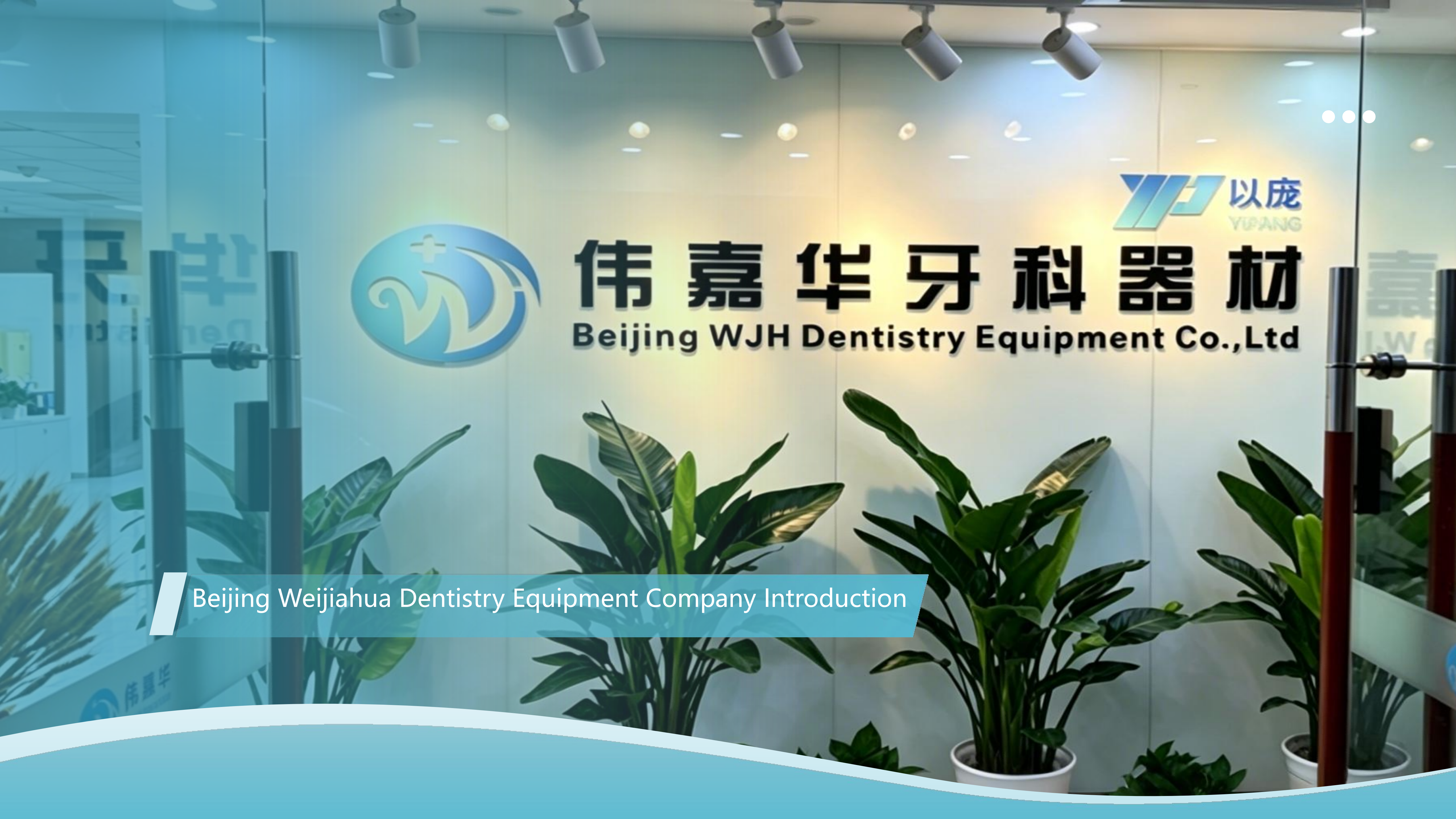
Facility access matters to evaluation: on-site review of a production site remains one of the few checks that cannot be replaced by a document. Image: supplier reception area.
Why Zirconia Block Supply Rewards Continuity
The category is large and concentrated enough that block choices behave like infrastructure decisions. Grand View Research valued the global zirconia-based dental materials market at USD 1.2 billion in 2025 and projects it to reach USD 2.3 billion by 2033. Within that market, zirconia discs accounted for the largest revenue share, 63.1%, in 2025, and CAD/CAM milling represented 82.4% of zirconia dental manufacturing process revenue in the same year. Dental laboratories remained the dominant end user, at 45.3% of market share.
Read together, those figures describe a category that is subtractive-milling-first and laboratory-driven. That combination is what makes continuity valuable. A validated block is not simply a certified disc; it is a disc whose shrinkage behaviour has already been absorbed into a CAM strategy, whose translucency has been mapped to a shade protocol, and whose sintering response matches a furnace program that the laboratory has already proven.
The consequence is practical rather than theoretical. When a laboratory changes block supplier mid-program, it re-validates shrinkage compensation, re-tests sintered fit, and rebuilds its shade map. Those costs rarely appear in a quotation, but they are real, and they explain why laboratories increasingly weigh supplier continuity alongside price per disc and reported strength values.
Five Dimensions of a Long-Term Supplier Evaluation
A structured evaluation separates what can be documented before the first purchase order from what can only be observed across repeat orders. Five dimensions cover both, and each one can be examined against evidence a supplier is able to provide.
| Dimension | What to document | Why it matters over a multi-year horizon |
|---|---|---|
| Production continuity | Monthly capacity, facility footprint, workforce, production mode, standard lead time | A supplier without headroom becomes the bottleneck when laboratory case volume grows |
| Batch consistency and quality control | Incoming material inspection, finished-goods inspection, reported shrinkage and translucency behaviour | Consistency is what allows one validated workflow to be reused across thousands of units |
| Certification and documentation horizon | Certificate number, issuing authority, standard, scope, issue and expiry dates | Renewal dates must fall inside the laboratory's own planning horizon |
| Commercial and acceptance terms | MOQ, payment terms, delivery terms, acceptance window, sampling policy | These determine working capital exposure and how disputes are handled on repeat orders |
| Technical support and after-sales | Response commitments, application guidance, training, equipment compatibility | Support quality becomes visible only after the first problematic batch |
1. Production continuity and capacity headroom
The manufacturer in this example operates OEM and ODM production modes, reports a monthly capacity of 15,000 pieces and a standard lead time of 15-30 working days. Company data records a 2,000 square metre facility, 80 employees, a 25-engineer research and development team working on dental material formulation and process optimization, and annual output of approximately USD 10 million. Its export share is stated at 40% to 55%, covering the Middle East, Southeast Asia, South America, North America, Eastern Europe, North Africa and Australia.
For a laboratory, the relevant reading is headroom and routine. A supplier that already ships across several regions and maintains a documented export share is operating an export process continuously, not as an occasional exception. That is a different risk profile from a supplier whose first international order would also be its first export shipment.
2. Batch consistency and quality control
Quality control at this manufacturer combines 100% raw material inspection with finished-product random inspection. Long-term client feedback recorded by the company reports uniform translucency, stable sintering shrinkage and compatibility with most CAD/CAM systems, with a low customer complaint rate. For a laboratory, those three characteristics are the operational meaning of consistency: if shrinkage behaviour holds, existing CAM parameters remain valid; if translucency is uniform, shade selection does not require case-by-case adjustment; if the blank is compatible with the installed milling system, no post-processing workaround is needed.
3. Certification and the documentation horizon
The manufacturer holds ISO 13485 certification, certificate number 381240434R0S, issued by Shanghai POSI Certification Co., Ltd. against GB/T 42061-2022 / ISO 13485:2016. The certificate was issued on 27 December 2024 and expires on 26 December 2027, with a scope covering the design, production and sales of dental medical materials and dental equipment, listed for markets that include Global, EU, USA and the Middle East. A laboratory preparing a multi-year supply plan should treat that expiry date as a monitoring checkpoint rather than a one-off confirmation at onboarding.
4. Commercial and acceptance terms
Published purchasing terms specify a minimum order quantity of one box for standard models and five boxes for customized products. Export orders ship by sea or air freight, with FOB Shanghai/Tianjin available. Acceptance follows a defined sequence: quantity is checked on receipt, damage or deformation must be reported within 48 hours with photographs, and sampling tests are supported. Payment terms are full payment before shipment.
These are not marketing statements; they are the terms that determine how a repeat order is handled in month eighteen, when the relationship is normal rather than new.
5. Technical support and after-sales
After-sales support is described as online technical guidance, with after-sales problem response within 24 hours. The company also provides technician, clinical, 3D printing and medical technology training and consulting services, which matters when a laboratory onboards new staff onto a material that is already in production. A support commitment of this kind is easy to state and only verifiable through use, which is why it belongs on the evaluation list but should not be treated as proven evidence before the first issue occurs.
The Supplier Behind the Material: YIPANG and Beijing Weijiahua
Beijing Weijiahua Dentistry Equipment Co., Ltd. is a dental equipment and materials manufacturer and supplier based in Beijing, China, operating its own YIPANG brand. Established in 1996, the company runs a 2,000 square metre facility with 80 employees and a 25-engineer research and development team engaged in dental material formula research, process optimization and new product development. YIPANG product lines include zirconia blocks, glass ceramics, press ingots, PMMA discs, wax discs, titanium alloy discs, implant abutments, 3D scanners, intraoral scanners, milling machines, 3D printers and sintering furnaces. Its website is listed as www.yipangdental.com.
Two facts are worth recording for long-term evaluation purposes. First, the company states a business principle of mutual benefit and reports more than 1,000 dental laboratory customers in China, alongside representation of international brands including VITA, Ivoclar, Dentsply, Amann Girrbach and Noritake. Second, its export orientation is structural: 40% to 55% of output is exported across the Middle East, Southeast Asia, South America, North America, Eastern Europe, North Africa and Australia. For a laboratory in one of those regions, that means export documentation, technical responses and shipping routines are part of the supplier's ordinary operating pattern.
The specific product discussed here is the YIPANG 4D-PRO-ML zirconia block, described as a dental zirconia disc and CAD/CAM dental milling blank made from yttria-stabilized zirconium dioxide (ZrO2). Published parameters list ML multilayer shades, a 98 mm diameter, thicknesses of 10 mm, 12 mm, 14 mm, 16 mm, 18 mm and 20 mm, a sintering temperature of 1450 degrees Celsius, bending strength of at least 1200 MPa and medium translucency. The stated application industries are dental laboratories, dental prosthetics and the dental CAD/CAM industry.
Technical Explanation: Continuity Is Measured at the Furnace
The technical case for long-term supplier evaluation is easiest to see at the sintering stage. Processing guidance for the 4D-PRO-ML block recommends a sintering range of 1430 to 1450 degrees Celsius under a standard heating and holding procedure, followed by natural cooling. Two cautions accompany that guidance: rapid temperature change should be avoided because it can cause cracking, and the maximum sintering temperature should not be exceeded.
Failure analysis recorded by the manufacturer identifies chipping and cracking after sintering as the principal defect risk, with two triggers: an improper sintering profile and inherent defects inside the zirconia blank. The mitigation is procedural rather than commercial. Follow the recommended sintering profile, inspect blanks before sintering, and scrap any chipped or cracked blank rather than using it for a final restoration.
That analysis cuts in both directions for supplier evaluation. On the supplier side, a blank with stable shrinkage and consistent density reduces the number of variables the furnace program has to absorb. On the laboratory side, changing block supplier invalidates assumptions: shrinkage factors and the sintering curve must be re-validated before clinical output can be trusted again. Processing also assumes a defined equipment chain, with the milled workpiece produced on a dental milling machine and fired in a dental sintering furnace, within an indoor, constant-temperature laboratory environment and with a dental lab scanner upstream in the digital workflow.
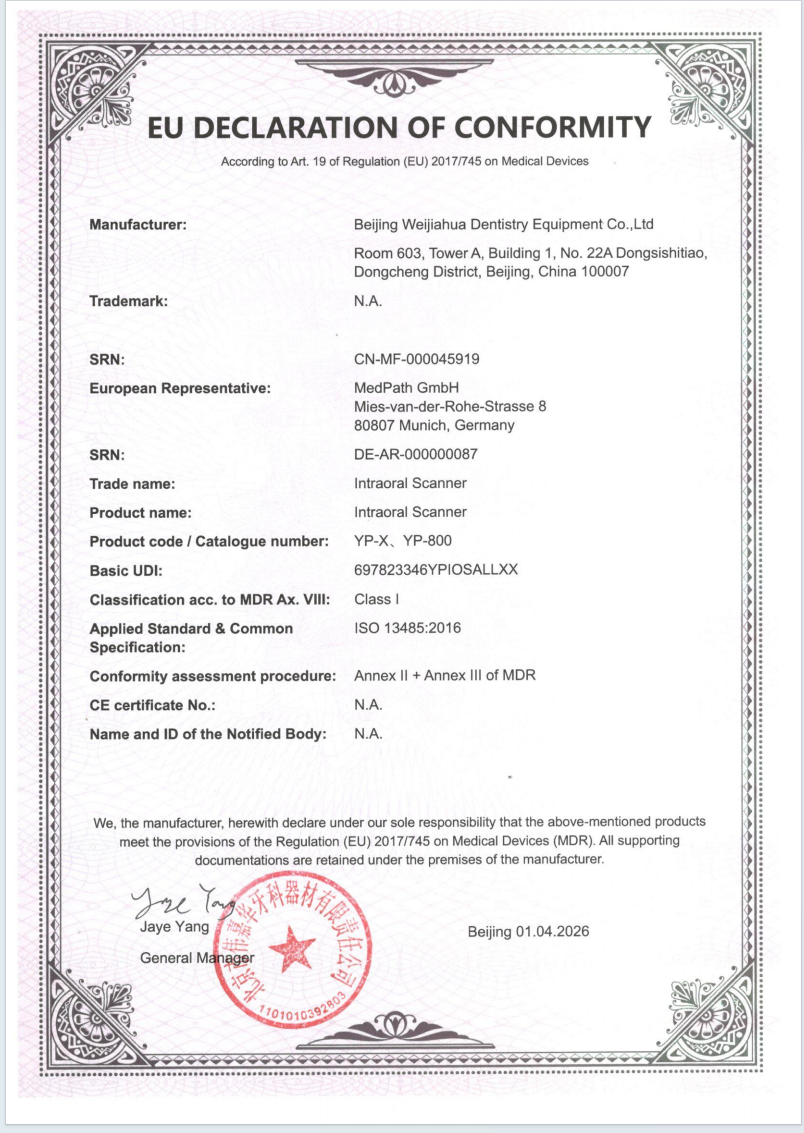
Documentation scope, not documentation volume, is what a long-term buyer should read. Example: an EU Declaration of Conformity under MDR 2017/745 covering defined device models.
Application and Use Cases Across a Multi-Year Supply Program
Named application categories across the manufacturer's range are full-contour crowns, bridges, veneers and implant superstructure restorations. For the 4D-PRO-ML block specifically, the manufacturer positions the material for high-volume dental laboratories, for posterior crowns and multi-unit bridges where mechanical strength and translucency have to be balanced, and for the dental CAD/CAM industry generally.
Three use patterns matter when the horizon extends beyond a single order. The first is volume standardization, where a laboratory selects one or two thicknesses and one shade family across routine posterior work, which is the configuration in which consistent shrinkage pays back most directly. The second is digital workflow integration, where the block must behave predictably across scanning, design, milling and sintering steps performed by different operators on different shifts. The third is channel supply, where distributors and clinics need the same material available with the same documentation over successive years.
Client records describe dental laboratories, dental clinics and distributors as the customer base, with hundreds of long-term cooperative clients worldwide and cooperation sustained over many years. Reported outcomes are high recognition of material stability and aesthetic effect with a low complaint rate. These figures are supplier-reported rather than independently audited, and a buyer should treat them as a starting point for validation, not as a substitute for it.
Market Trend Analysis: Where Zirconia Block Demand Is Heading
Four published trends shape how laboratories will evaluate suppliers over the next supply cycle.
- Market expansion. Grand View Research reports the zirconia-based dental materials market growing from USD 1.2 billion in 2025 to a projected USD 2.3 billion by 2033.
- Disc dominance and process concentration. Zirconia discs held a 63.1% revenue share in 2025, and CAD/CAM milling accounted for 82.4% of zirconia dental manufacturing process revenue, while dental laboratories represented 45.3% of end-user share.
- Grade standardization. The 3Y-TZP grade held the largest revenue share at 35.9% in 2025, which indicates that a large share of demand concentrates on a small number of well-understood material specifications.
- Regulatory weight. The EU Medical Device Regulation (MDR 2017/745) classifies most dental implants and restorative materials as high-risk, requiring intensive clinical data. Documentation expectations therefore extend across the whole life of a supply relationship, not just its first year.
Regional concentration is a further factor: the United States accounts for 40% of revenue in the global zirconia-based dental materials market. For export-oriented suppliers, that concentration shapes where capacity, documentation and support resources are allocated. Adjacent digital categories are expanding in parallel, with the dental 3D printing market estimated to grow from USD 4.9 billion in 2025 to USD 26.7 billion by 2033, and the dental milling machine market moving from USD 2.45 billion in 2025 toward USD 3.9 billion by 2030. Those figures suggest additive and subtractive workflows will coexist, which raises the value of suppliers whose materials are already validated inside installed milling and sintering equipment.
Comparison with Traditional Solutions: Transactional Sourcing vs Evaluated Supply
Long-term evaluation is not the only procurement model in this category, and it is not always the right one. The two models allocate risk differently.
| Aspect | Transactional or spot sourcing | Evaluated long-term supply |
|---|---|---|
| Price visibility | Immediate per-box comparison across offers | Requires total-cost reasoning that includes re-validation time |
| Documentation | Often limited to invoice and packing list | Certificate scope, issue and expiry dates, plus quality-control regime on file |
| Consistency | Unknown until repeated orders are placed | Monitored through reported batch behaviour over successive deliveries |
| Flexibility | Fast for one-off or trial requirements | Customization planning with longer lead times and defined minimums |
Three boundaries deserve explicit statement, because long-term evaluation frameworks are frequently presented as more complete than they are.
First, a certificate covers a defined scope, not a catalogue. The ISO 13485 certificate held by this manufacturer, number 381240434R0S, covers the design, production and sales of dental medical materials and dental equipment. The same manufacturer's EU Declaration of Conformity under Regulation (EU) 2017/745, record number SRN CN-MF-000045919, applies to intraoral scanner models YP-X and YP-800 as Class I medical devices. A buyer should map each document to the specific product and market being purchased, because one approval does not automatically extend across a full product range.
Second, quality control reduces variation but does not remove it. A regime of 100% raw material inspection plus finished-product random inspection lowers the probability of a defective blank reaching the milling stage, but final fit still depends on the laboratory's furnace calibration, the accuracy of its sintering profile and technician practice. No incoming inspection regime substitutes for those.
Third, customization carries operational cost. Almost all specifications can be customized, but customized products carry a minimum order of five boxes against one box for standard models, and standard lead time runs 15-30 working days. Payment terms of full payment before shipment also shift working-capital exposure to the buyer. These are trade-offs rather than defects, and they should be priced into any multi-year agreement rather than discovered in year two.
Future Outlook: What Changes Over the Next Supply Cycle
The direction of travel is toward supply relationships that are documented, renewable and periodically re-verified. Three developments follow from that.
Certificate renewal will become routine purchasing administration. An ISO 13485 certificate valid until 26 December 2027 sits inside a typical three-to-five-year laboratory supply plan, which means renewal monitoring becomes a calendar item rather than a one-time onboarding check. Laboratories that record expiry dates at the point of first purchase will avoid the situation in which a certificate lapses during an active supply relationship.
Regulatory documentation expectations for restorative materials will remain a fixed part of evaluation. Because MDR 2017/745 treats most dental implants and restorative materials as high-risk and requires intensive clinical data, documentation quality is likely to be weighted more heavily in supplier scorecards, particularly for European and other regulated markets.
Equipment compatibility statements will matter more as laboratory fleets diversify. With scanners, milling machines, printers and furnaces from multiple vendors now common in the same laboratory, a supplier's ability to state which systems a block has been validated against becomes a practical procurement requirement rather than a courtesy.
Finally, portfolio breadth will enter the evaluation. Zirconia discs remain the high-volume material while glass ceramics, press ingots and printed resins absorb specific indications, so a laboratory is increasingly evaluating a supplier relationship across a material portfolio instead of a single stock item.
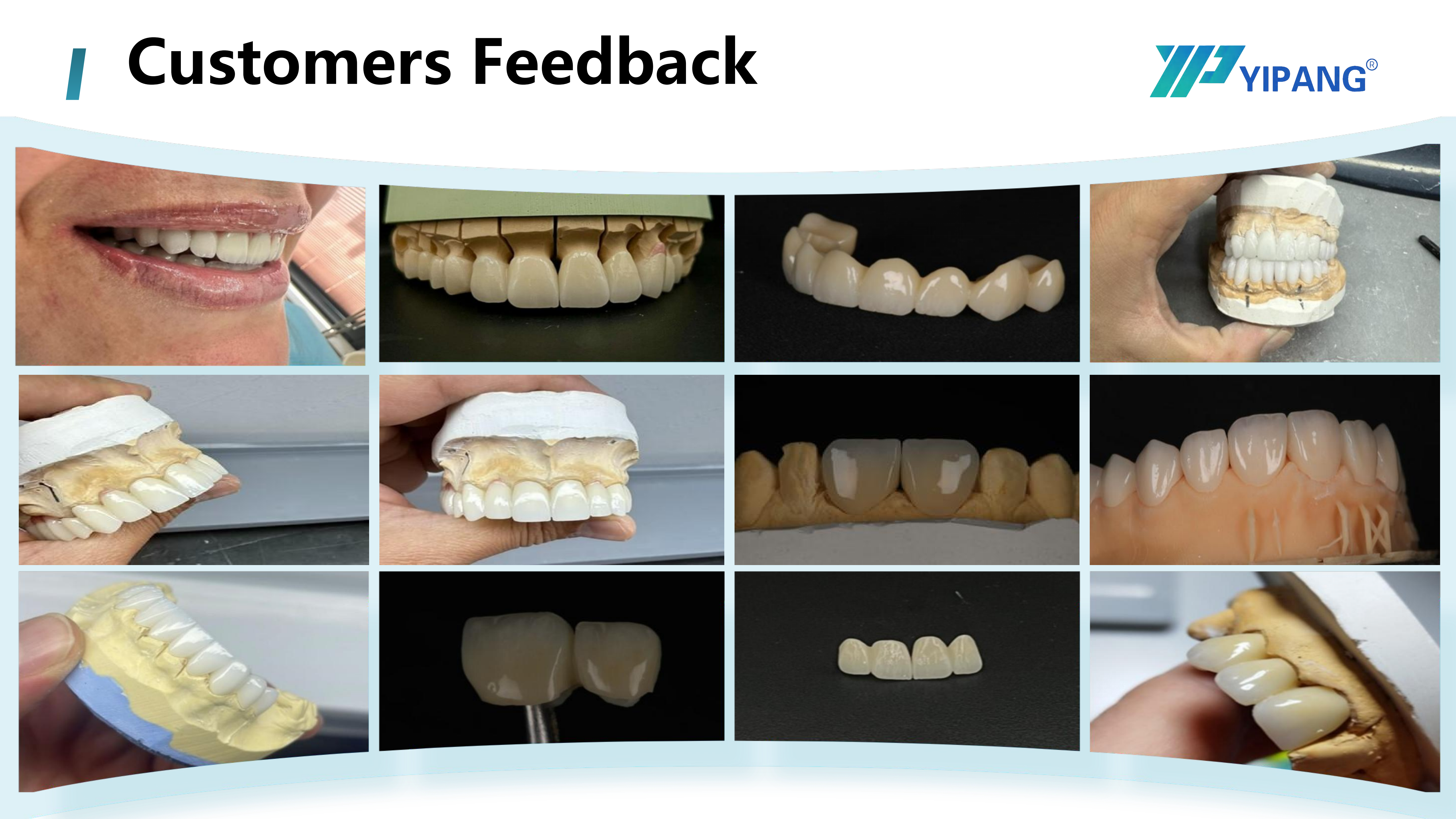
Capacity and process control are the first dimension of long-term supplier evaluation: they determine whether a validated material stays available as volumes grow.
FAQ: Long-Term Evaluation Questions for Dental Laboratories
What should a laboratory verify first when evaluating a dental zirconia block supplier for the long term?
Start with production continuity and quality control rather than price. The manufacturer examined in this article reports OEM and ODM production modes, a monthly capacity of 15,000 pieces, a standard lead time of 15-30 working days, and a quality regime combining 100% raw material inspection with finished-product random inspection. Capacity headroom and an inspection regime are both checkable before the first order is placed.
How long is the ISO 13485 certificate valid, and how should a laboratory use that date?
The manufacturer's ISO 13485 certificate, number 381240434R0S, was issued by Shanghai POSI Certification Co., Ltd. on 27 December 2024 and expires on 26 December 2027. Its scope covers the design, production and sales of dental medical materials and dental equipment, under GB/T 42061-2022 / ISO 13485:2016. A laboratory should record the expiry date as a renewal checkpoint inside its own multi-year supply plan and confirm that the scope matches the product being purchased.
What capacity, lead time and minimum order figures should a laboratory plan around?
The manufacturer reports a monthly capacity of 15,000 pieces and a standard lead time of 15-30 working days. Minimum order quantity is one box for standard models and five boxes for customized products. Export orders ship by sea or air freight, with FOB Shanghai/Tianjin available.
What acceptance and payment terms apply to zirconia block orders?
Quantity is checked on receipt. Damage or deformation must be reported within 48 hours with photographs, and sampling tests are supported. Payment terms are full payment before shipment, which means the buyer funds the order ahead of delivery and should plan working capital accordingly.
What sintering conditions apply to the 4D-PRO-ML zirconia block, and what causes failures?
The recommended sintering range is 1430 to 1450 degrees Celsius with a standard heating and holding procedure and natural cooling. Rapid temperature change should be avoided because it can cause cracking, and the maximum sintering temperature should not be exceeded. Chipping and cracking after sintering are attributed to two causes: an improper sintering profile and inherent defects inside the blank. The corrective practice is to follow the recommended profile, inspect blanks before sintering, and scrap chipped or cracked blanks instead of using them for final restorations.
Does OEM/ODM capability affect long-term supply planning?
It matters where a laboratory or distributor needs private labelling or specification changes over time. The manufacturer provides OEM and ODM production services, with customization offered for almost all specifications, serving customers in the USA, Europe, Brazil, the Middle East and North Africa. The trade-off is commercial: customized products carry a five-box minimum order and the same 15-30 working day lead time as standard production.
What evidence indicates that these supply relationships are genuinely long term?
The manufacturer's client records describe dental laboratories, dental clinics and distributors as the customer base, with hundreds of long-term cooperative clients worldwide and cooperation sustained over many years. Reported outcomes include high recognition of material stability and aesthetic effect, a low complaint rate, uniform translucency, stable sintering shrinkage and compatibility with most CAD/CAM systems. These are supplier-reported figures rather than independently audited results, and should be treated as claims to verify rather than settled facts.
Background documentation on the manufacturer referenced in this article, including facility data, product lines and certification records, is collected in its company information brochure: WJH Company Information (PDF).
Market figures cited in this article are attributed to Grand View Research (zirconia-based dental materials market, dental 3D printing market), Fortune Business Insights (dental milling machine market) and the European Commission (Regulation (EU) 2017/745). Supplier-specific figures are drawn from manufacturer-published company, capability, certification, client and purchasing records.