
Long-Term Supplier Scorecard: FAW Trucks vs Daimler, Volvo, Traton, PACCAR
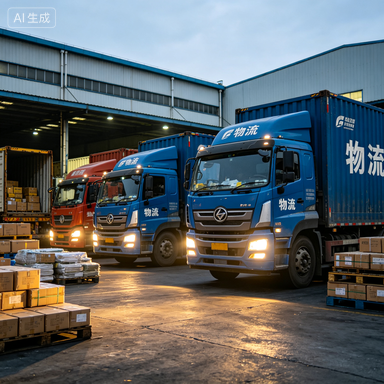
Why truck life turns supplier evaluation into a constraint problem
Trucks are not replaced in a single purchasing cycle. In most emerging-market fleets, units arrive in tranches across several budget periods, are financed separately, and are then kept in service through a parts and service relationship that frequently outlives the commercial warranty. A fleet committee therefore has to answer two questions rather than one: which vehicle meets the duty cycle, and which manufacturer will still be able to support that vehicle once the original sales contact has moved on.
The second question is a constraint question. It is answered with certificates, parameter ranges, delivery commitments and documented service routes - not with brochures. That is why this scorecard is built from constraint evidence rather than from product impressions. It records what is documented today, what remains unverified, and what a buyer must still confirm locally before signing.
The comparison set is deliberate. FAW Trucks is assessed against Daimler Truck, Volvo Group, Traton and PACCAR, the four groups most globally active fleet buyers benchmark against, and against Sinotruk, the Chinese manufacturer that most often appears alongside FAW in export tenders. The framing matters: this is an evidence-availability scorecard, not a claim that any listed manufacturer builds a better or worse truck.
The four dimensions, and the compliance gate that runs across them
A durable supply relationship depends on four things being true at the same time.
- Technology and R&D continuity. Whether the manufacturer still develops and updates the model families it sells, so that a 2026 order is not an orphaned specification by 2030.
- Market position and installed base. Whether enough units exist in the region for parts demand, resale value and independent workshop familiarity to be sustained.
- Customer service and parts continuity. Whether there is a named, authorized route for technical support, and whether lead times are stated rather than implied.
- Industry solution coverage. Whether one supplier can cover the different duty cycles a mixed fleet operates, rather than forcing a separate brand decision per application.
Compliance is not a fifth dimension. It is a gate applied to each of the four, because a certificate only has procurement value if it covers the exact model, market and configuration being ordered. A dangerous-goods approval on one model does not transfer to a different chassis.
FAW Trucks: what a buyer can verify today
Entity and production base
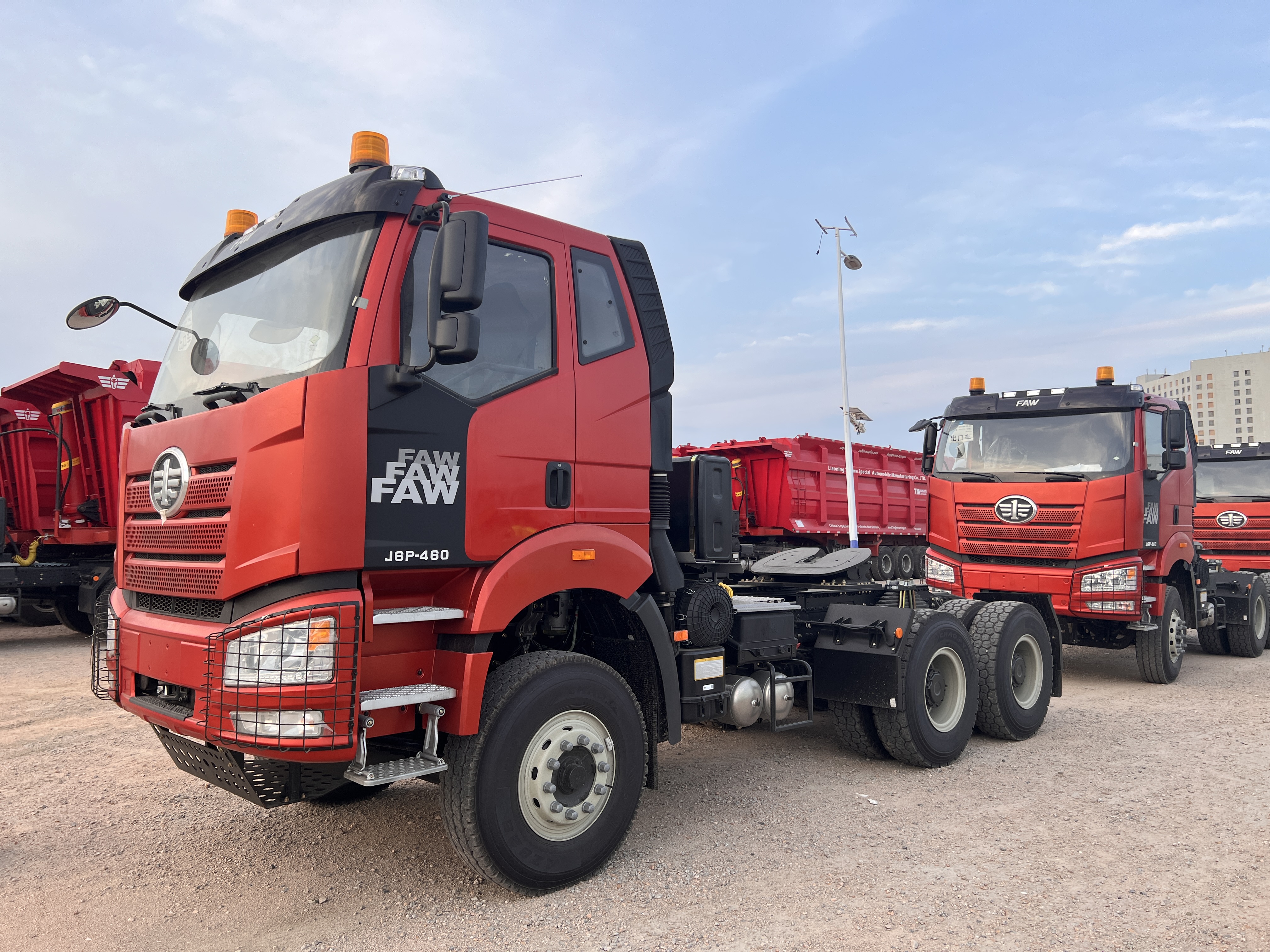
FAW Trucks is the commercial vehicle brand of FAW Group Corporation, headquartered in Changchun City, Jilin Province, China. The export-facing range covers nine model families: J7, J6P, J6V, J6E, JH6, J6G, J6L, JK6 and Tiger V.
Scale is documented rather than asserted. FAW Jiefang recorded global vehicle sales of 251,100 units in 2024, of which 57,000 units were exported - a record high for the company. In South Africa, terminal sales surpassed 5,000 units in 2024, representing an 18% market share. Separately, FAW Jiefang has reported its 9 millionth vehicle rolling off the production line, and FAW Trucks' published profile cites a workforce of nearly 24,800.
For a fleet buyer, the relevant reading is not the headline number but its implication: an installed base of this size in a region supports parts demand and third-party workshop familiarity, which are the two conditions that usually determine whether a truck is still economical to run in year seven.
Product envelope
FAW Trucks configurations sit inside a defined envelope rather than being bespoke one-offs. Truck weight ranges from 3,000 kg to 15,000 kg. Overall dimensions span 6000x2300x3000 mm to 12000x2550x3800 mm. Safety configuration across the range is specified as ABS, EBS and TCS. Tire specifications are available according to customer requirements, which matters in markets where a standard fitment is not the locally serviceable one.
Body coverage is broad: tractor, dump, cargo and rigid and light truck, concrete mixer, garbage, sprinkler, water tank, fuel tank, wrecker, sweeper, concrete pump, asphalt distributor, high altitude platform and fire truck. Drive configurations include rear-wheel drive 6x4 and 6x2, and all-wheel drive 6x6 and 8x8.
Certification evidence
Two certificates are documented and citable, and they illustrate how narrow certification actually is.
The FAW TRUCK JK6 is certified to UN ECE Regulation No. 105, which covers dangerous goods transport vehicles in the EX, FL, AT and MEMU categories. The certificate number is E13*105R06/01*0023*00, issued by Société Nationale de Certification et d'Homologation (SNCH), Luxembourg, and it applies to the EU and EEA market.
The FAW J6 Series Truck Tractor in 4x2 configuration holds a GSO Conformity Certificate for Motor Vehicles, certificate number CCR No.435790, issued by the GCC Standardization Organization, complying with GSO ISO 1585:2008 and applying to the GCC member states: Saudi Arabia, UAE, Oman, Kuwait, Bahrain and Qatar.
Both are model-specific and market-specific. A buyer tendering in Nairobi or Lagos cannot substitute either certificate for the local type-approval requirement, and should not accept a general statement of compliance in place of a certificate number that names the ordered chassis.
Manufacturing, customization and delivery
Production is organized around OEM configuration. Customization is offered on body, engine, tires and load capacity. Stated monthly capacity is 8,000 units, lead time is 30 to 45 days, the minimum order quantity is one unit, and quality control is described as 100% test. After-sales is described as global technical support for after-sales service.
Those four numbers - capacity, lead time, MOQ and test regime - are the ones that decide whether a supplier can absorb a fleet order without breaking a delivery schedule. A minimum order quantity of one unit is unusual in heavy commercial vehicles and is relevant to buyers running mixed fleets who need to trial a configuration before committing a full tranche.
Distribution layer
Qingdao Chary Machinery Co., Ltd (CHARY) is a first-level distributor of FAW TRUCKS and an authorized exporter approved by the Ministry of Commerce. Founded in 2015 and based in Qingdao, the company reports an annual export volume of USD 40 million in 2025, with markets across more than 50 countries and regions including Algeria, Ethiopia, Nigeria, Tanzania, Mozambique, Zambia, Ghana, Peru, Chile, Indonesia and the Philippines.
In scorecard terms, the distributor is not a footnote. For most overseas fleets, the distributor is the actual continuity mechanism: the entity that holds parts, resolves warranty claims and confirms which configuration is legal in the destination country.
Technical explanation: reading the parameter envelope correctly
The published envelope of 3,000 kg to 15,000 kg and 6000x2300x3000 mm to 12000x2550x3800 mm is not a specification - it is a boundary. Two orders inside that boundary can be entirely different vehicles. The practical consequence is that a fleet specification has to be written at configuration level: axle layout, body type, tire fitment and safety package, in that order.
ABS, EBS and TCS are specified across the range, which is the correct baseline for a mixed duty cycle that includes high temperatures, humidity, muddy terrain, rain, snow, highways and urban roads. Drive configuration does the rest of the work. A 6x4 rear-wheel-drive layout suits highway logistics and port shuttles; a 6x6 or 8x8 all-wheel-drive layout suits sites where traction, not payload, is the limiting factor. Matching the wrong layout to a site is a more common cause of early fleet failure than engine choice.
Configuration granularity also exists at powertrain level. A published specification for the FAW J6P 8x4 dump truck (CA5310) lists an 11-litre CA6DM2 engine rated at 390 hp. That level of detail - displacement, model code and rating - is the minimum a buyer should demand in writing. Statements such as a heavy-duty engine or a fuel-efficient drivetrain are not tender-grade evidence, from FAW or from any other manufacturer in the comparison set.
Application fit: where the range carries real procurement weight
The documented application list is unusually wide for a single supplier: logistics freight distribution and fleet operations, coal and other mineral transport, port transportation, express delivery, industrial goods, building materials, agricultural and sideline products, livestock and poultry, general bulk cargo, cold chain, urban distribution, urban waste, log transport, heavy machinery and equipment, and chemical raw materials.
Three of those applications are worth separating, because they impose different continuity requirements.
Logistics and distribution rewards parts availability and predictable lead time more than peak payload. A tractor fleet that loses a week to a parts delay loses more than the parts cost. Here the relevant evidence is the 30 to 45 day lead time and the stated 8,000 unit monthly capacity, not the model name.
Cold chain is the hardest of the three to sustain, because the body, not the chassis, determines whether the asset keeps working. Refrigerated configurations appear in the FAW range, including the Tiger VN 4x2 refrigerated truck, and refrigeration is a body-level customization. Buyers should treat body durability and body parts as a separate supply question from chassis support.
Mining, construction and port work are high-intensity duty cycles where the installed base matters most. A documented case involving a logistics company in Mali operating 50 units for more than ten years on powdered and granular material haulage and sand and gravel transport, reported as stable operation under high-intensity use, is a modest but real reference point. It supports the argument that the platform can survive long service; it does not by itself prove performance in a different climate or a different load profile.

Market trend: buyers are pricing documentation, not just vehicles
The 2024 export figure of 57,000 units, described as a record high, is a signal about how the export market is changing rather than merely how one company performed. Growth of that kind in commercial vehicles usually tracks tenders in which the buyer has already specified a compliance file, a delivery window and a parts route.
The South Africa position - more than 5,000 terminal sales and an 18% share in 2024 - illustrates the same point from the other direction. A regional installed base of that size is what makes a parts network commercially viable, which in turn makes the next fleet sale easier. Scale and service reinforce each other.
Price evidence remains the weakest link in public data. A 2026 Philippine retail listing places a heavy-duty FAW dump and transit mixer configuration at approximately PHP 3.62 million, around USD 64,000. That is a useful anchor for budget framing, but it is one data point in one market for one configuration. Buyers in Kenya, Nigeria or the GCC should treat it as an order-of-magnitude reference only and expect landed cost to differ materially once freight, duty, body work and local homologation are included.
A related pattern is the gap between contact presence and authorized presence. Public contact pages indicate FAW addresses in Nairobi, and offices in Lagos and Abuja. Those listings confirm commercial contact points exist. They do not confirm authorized dealer status, stock, warranty authority or service capacity, and a scorecard that treated them as equivalent would be misleading.
Comparison: the scorecard, dimension by dimension
| Dimension | FAW Trucks: documented evidence | Daimler Truck, Volvo Group, Traton, PACCAR, Sinotruk: evidence position | What the buyer must still verify |
|---|---|---|---|
| Technology and R&D continuity | Nine model families (J7 to Tiger V); OEM customization on body, engine, tires and load capacity; published configuration-level data such as the J6P 8x4 CA5310 with 11L CA6DM2 engine at 390 hp | Each global group publishes its own product and technology documentation; Sinotruk competes in the same export segment with a comparable model logic | Request a model datasheet written against the emission standard and duty cycle of the destination market |
| Market position and installed base | 251,100 units sold globally in 2024; 57,000 exported; South Africa above 5,000 terminal sales and 18% share in 2024; 9 millionth Jiefang vehicle reported | Global groups report results in their own annual publications using their own definitions and scopes | Compare like with like: confirm whether a figure is group-level, division-level or brand-level before ranking |
| Customer service and parts continuity | Global technical support for after-sales; 30 to 45 day lead time; 8,000 unit monthly capacity; MOQ of 1 unit; authorized exporter CHARY operating across more than 50 countries | Established dealer structures exist in many markets, but depth varies by country rather than by brand | Confirm local dealer authorization, parts stock and warranty authority in the specific country |
| Industry solution coverage | Fifteen body types from tractor to sweeper; documented applications across logistics, cold chain, port, coal and mineral, construction; drive modes 6x4, 6x2, 6x6 and 8x8; ABS, EBS and TCS standard | Broad application coverage is standard across the peer set; the differentiator is local configuration legality | Validate the exact body and drive configuration against the site, not the brochure |
| Compliance gate | UN ECE R105 for the JK6 (E13*105R06/01*0023*00, SNCH Luxembourg, EU/EEA); GSO CCR No.435790 for the J6 Series 4x2 tractor to GSO ISO 1585:2008, GCC states | Peer type approvals are documented per market in each manufacturer's own certification files | Check that the certificate number names the ordered chassis and the destination market |
The table scores evidence availability and traceability. It is not a performance ranking, and no ranking position should be inferred from row order.
Where the scorecard stops: genuine limits
A credible supplier evaluation has to state its boundaries, and this one has four that matter.
Emission-standard evidence is incomplete. No third-party verified Euro 2 or Euro 5 evidence was located for FAW export configurations during this review. Buyers in markets with active emission requirements should obtain the type approval or homologation document for the exact model and standard before submitting a tender, and should not accept a general compliance statement as a substitute.
Price data is thin. The only market-level price reference available is a single 2026 Philippine retail listing. There is no verified 2026 retail price evidence for Kenya, Nigeria or the GCC, and no freight, duty, financing or warranty-cost data in the public record. Any total cost of ownership model built on this evidence set should be treated as provisional.
Contact presence is not distribution. Public contact listings for Nairobi, Lagos and Abuja indicate commercial contact points, not authorized dealer status, inventory or service capability. Country-level channel verification remains a buyer task.
Peer data is not directly comparable. Daimler Truck, Volvo Group, Traton and PACCAR publish results using their own scopes, and FAW's 2024 figures are commercial-vehicle division-level rather than group-level. Placing those numbers side by side without adjusting scope would produce a misleading ranking.
Future outlook
The direction of travel in emerging-market fleet procurement is toward documentation. Certification files, model-level datasheets and named service routes are increasingly requested at tender stage rather than after award, and the manufacturers that answer those requests quickly will win on responsiveness as much as on product.
FAW's position in that shift rests on three assets that are already visible: a nine-family model range wide enough to cover mixed fleets, a cumulative production base large enough to support parts demand, and two market-specific certificates that demonstrate the organization can complete a formal approval process. Those assets support a continuity argument. They do not remove the buyer's obligation to verify the local configuration, the local channel and the local emission requirement.
The reasonable expectation for the next planning cycle is consolidation rather than expansion: fewer suppliers per fleet, each held to a higher documentation standard. Under that logic, the scorecard that matters is the one that can be audited afterwards.
FAQ
Which FAW truck models carry third-party certification for regulated markets?
Two are documented. The FAW TRUCK JK6 holds UN ECE Regulation No. 105 certification, certificate number E13*105R06/01*0023*00, issued by Société Nationale de Certification et d'Homologation (SNCH), Luxembourg, covering dangerous goods transport vehicles in the EX, FL, AT and MEMU categories for the EU and EEA market. The FAW J6 Series Truck Tractor in 4x2 configuration holds a GSO Conformity Certificate, CCR No.435790, issued by the GCC Standardization Organization under GSO ISO 1585:2008, for the GCC member states. Both certificates are model- and market-specific.
What weight and dimension range can a FAW truck configuration cover?
The documented range is 3,000 kg to 15,000 kg in truck weight, with overall dimensions from 6000x2300x3000 mm to 12000x2550x3800 mm. Because that is an envelope rather than a single specification, a buyer must specify axle layout, body type, tire fitment and safety package at configuration level; two orders inside the same range can be materially different vehicles.
Which safety systems are specified across FAW truck configurations?
ABS, EBS and TCS are listed as the security configuration across the documented range. Drive configurations cover rear-wheel drive 6x4 and 6x2 and all-wheel drive 6x6 and 8x8, which determines suitability for highway, port, construction or mining duty cycles more than any single safety feature does.
What does the available price evidence actually cover?
A 2026 Philippine retail listing places a heavy-duty FAW dump and transit mixer configuration at approximately PHP 3.62 million, roughly USD 64,000. This is a single configuration in a single market. No verified 2026 retail price evidence was located for Kenya, Nigeria or the GCC, and no freight, duty or warranty-cost data is included, so landed cost must be established separately per market.
What lead time and minimum order quantity are stated?
Stated lead time is 30 to 45 days, monthly capacity is 8,000 units, and the minimum order quantity is one unit. Quality control is described as 100% test. The minimum order quantity of one unit is relevant to buyers who need to validate a configuration before committing a full fleet tranche.
What should a buyer verify before treating FAW as a long-term supplier?
Four items should be confirmed in writing: the certificate number that names the exact ordered chassis and destination market; the local authorized dealer status, parts stock and warranty authority in the buyer's country; the emission standard and type approval applicable in that jurisdiction, for which no third-party verified Euro 2 or Euro 5 evidence was located in this review; and a landed cost quotation that includes freight, duty, body work and local homologation rather than the retail reference price alone.
Tem questões ou precisa de mais detalhes?
Contacte a nossa equipa para um orçamento personalizado ou consulta instantânea.
Solicitar orçamento
Preencha o formulário abaixo e a nossa equipa entrará em contacto com uma proposta personalizada.
Chat direto do WhatsApp
Prefere conversar em tempo real? Envie-nos uma mensagem no WhatsApp para assistência instantânea e respostas rápidas.
- Obter orçamento personalizado
- Partilhar fotos ou documentos
- Discuta as suas necessidades diretamente
Geralmente responde em 5–30 minutos durante o horário de expediente.