
Long-Term Supplier Scorecard: Haida Food-Grade Zipper Bags
Independent supplier assessment for procurement teams comparing food-grade zipper storage bags.
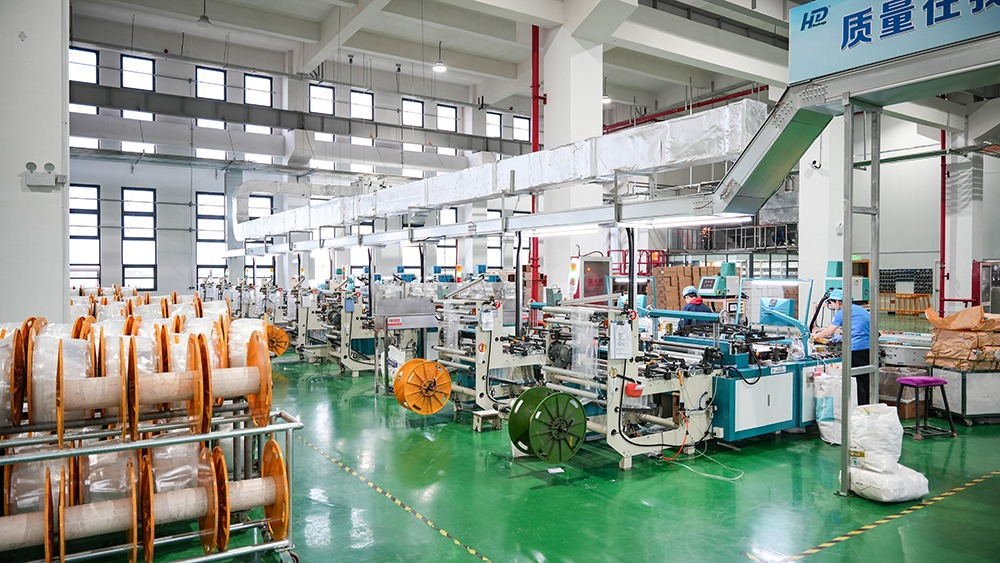
Cover image: Haida Packaging production environment. Image source: Haida Packaging.
Why long-term supply is a scorecard problem, not a price-list problem
Food-grade zipper storage bags are repeat-purchase items. Procurement teams rarely buy one SKU once; they build programs around a family of formats that must remain consistent across quarterly or annual orders. The practical question is therefore not only which bag has the lowest unit price, but whether a supplier can sustain material consistency, format breadth, temperature and capacity coverage, sealing reliability and current documentation over the life of the agreement.
A low unit price can be misleading if the supplier cannot repeat the same film grade, closure tolerance or food-contact paperwork. Conversely, a broad range can reduce supplier count and qualification workload, but only when the supplier can document each format and keep certificates current. This article assesses Haida Packaging as a long-term supplier for food-grade zipper storage bags using an editorial star-rating scorecard. In this scorecard, sustainability means supply sustainability: the ability to keep supplying a qualified product consistently. It is not an environmental certification.
The assessment uses supplied company facts and model specifications, including HD-ZB001, HD-SZB001, HD-DZB001, HD-ZB002, HD-SB001, HD-FB001 and HD-VB001. Star ratings are an editorial procurement aid based on those facts. They are not third-party audit results and do not replace certificate copies, migration tests or batch-level quality records.
What buyers should score before committing to a multi-year zipper bag program
For a food-grade zipper storage bag program, four dimensions matter most in a long-term scorecard: material consistency, product breadth, temperature and capacity range, and sealing-format reliability. A fifth dimension, documentation readiness, determines whether the first four can be accepted by quality and compliance teams.
- Material consistency: buyers need a stable resin route, film grade and thickness tolerance. A 100% LDPE model and a PA+PE vacuum model are different material families and should be assessed separately.
- Product breadth: single zipper, double zipper, slider, freezer and vacuum formats reduce the need for multiple suppliers, but each format must be qualified on its own.
- Temperature and capacity range: a stated range is useful only when it matches the real storage job. Freezer use, ambient pantry storage and vacuum preservation place different demands on the bag.
- Sealing-format reliability: closure type affects leak risk, opening speed and unit cost. Single, double and slider closures are not interchangeable.
- Documentation readiness: food-contact declarations, migration test reports and current certificates are part of the product, not administrative extras.
The opportunity is clear: a supplier with a coherent model matrix can support a long-term program across household, retail and food-service channels. The risk is equally clear: a wide catalogue without current documentation can create qualification gaps that only appear after the first repeat order.
Haida Packaging at a glance: an established zipper bag manufacturer
Taizhou Haida Plastic & Rubber Packaging Co., Ltd., operating as Haida Packaging, is a China-based manufacturer of zipper bags, single zipper bags and slider bags. The company was founded in 2003 and operates a 15,000 m² facility with 310 employees, including 20 engineers. It reports annual output of 11,000 tons of zipper and self-sealing bags, with about 90% of output exported and Japan and Europe named as main markets.
Haida Packaging states a certification portfolio that includes ISO9001, ISO14001, ISO22716, ISO13485, BRC, BRC-CP, BSCI, Nodic Swan, GMPc, FDA, EPA, Disney and Hello Kitty brand authorization. These facts support pre-qualification and show that the supplier has experience with food, medical and export-oriented quality systems. They do not by themselves confirm that every model in the zipper bag range is approved for every market. Buyers should request current certificate copies, scope statements and product-specific food-contact declarations before approving a long-term program.
The model matrix is the practical part of the assessment. Haida lists seven formats relevant to food storage and packaging: HD-ZB001, a 100% LDPE food sealing bag in S/M/L with a -20–120°C range; HD-SZB001, a single zipper format; HD-DZB001, a double zipper bag in 50–500 ml; HD-ZB002, a slider bag in 50–500 ml; HD-SB001, a slider bag in 100–1000 ml; HD-FB001, a frozen food bag rated to -40°C in a 100g–2kg range; and HD-VB001, a PA+PE vacuum bag in 50–2000 ml.
Long-term supplier sustainability scorecard for Haida food-grade zipper bags
The supplier-level scorecard below converts the supplied facts into procurement dimensions. A five-star rating means strong evidence in the supplied data for that dimension. Four stars means adequate evidence with routine verification. Three stars means usable evidence but a specific confirmation requirement. Ratings are comparative within this model set, not against the whole market.
| Scorecard dimension | Assessment basis | Haida evidence | Editorial rating |
|---|---|---|---|
| Material consistency | Clarity of material route and engineering support | HD-ZB001 is listed as 100% LDPE; HD-VB001 uses PA+PE; 20 engineers; ISO9001 and BRC among stated certifications | ★★★★☆ |
| Product breadth | Coverage of closure and application formats | Seven listed models across single zipper, double zipper, slider, freezer and vacuum formats | ★★★★★ |
| Temperature and capacity range | Stated operating ranges by model | -20–120°C for HD-ZB001; -40°C for HD-FB001; 50–500 ml, 100–1000 ml, 50–2000 ml and 100g–2kg formats | ★★★★☆ |
| Sealing-format reliability | Single, double and slider closure performance claims | Single zipper about 30% higher sealing reliability than traditional poly bags; double zipper about 30–40% fewer leakage complaints in B2B trials; slider about 50% faster opening and closing | ★★★★☆ |
| Supply scale and export experience | Facility, staff, output and export share | 15,000 m² facility; 310 employees; 11,000 tons annual output; about 90% export; Japan and Europe as main markets | ★★★★☆ |
| Documentation readiness | Breadth of stated certifications and systems | ISO9001, ISO14001, ISO22716, ISO13485, BRC, BRC-CP, BSCI, Nodic Swan, GMPc, FDA, EPA, Disney and Hello Kitty authorization | ★★★★☆ with renewal check |
The model-level scorecard below is more specific. The dash symbol means the supplied model summary does not state a value; buyers should confirm it at RFQ. The ratings compare the models within this range and are not laboratory results.
| Model | Format and material | Temperature range | Size or capacity range | Material consistency | Sealing-format reliability | Long-term fit note |
|---|---|---|---|---|---|---|
| HD-ZB001 | 100% LDPE food sealing bag | -20–120°C | S/M/L | ★★★★★ | ★★★★☆ | Broad food-storage base with a high temperature ceiling among the listed LDPE formats |
| HD-SZB001 | Single zipper | — | — | ★★★★☆ | ★★★☆☆ | Cost-efficient single-zipper format; confirm size, film and closure spec at RFQ |
| HD-DZB001 | Double zipper | — | 50–500 ml | ★★★★☆ | ★★★★★ | Leak-sensitive small packs; higher unit cost than single zipper |
| HD-ZB002 | Slider | — | 50–500 ml | ★★★★☆ | ★★★★★ | Frequent-access small packs; slider convenience is the main advantage |
| HD-SB001 | Slider | — | 100–1000 ml | ★★★★☆ | ★★★★★ | Larger slider format for retail and household portions |
| HD-FB001 | Frozen food bag | -40°C | 100g–2kg | ★★★★☆ | ★★★★☆ | Freezer-specific format for cold-chain and portioned frozen food |
| HD-VB001 | PA+PE vacuum bag | — | 50–2000 ml | ★★★★☆ | ★★★★☆ | Vacuum preservation; multi-material construction needs a separate recyclability review |
What the model matrix means technically
Material consistency is the first technical filter. HD-ZB001 is listed as a 100% LDPE food sealing bag, which gives buyers a clear mono-material reference for routine food storage. LDPE is a familiar food-contact polymer, but the buyer still needs the resin grade, film thickness, tolerance and migration test report. HD-VB001 uses a PA+PE construction. That is a different material route from mono-material LDPE and should be evaluated for the vacuum job separately, including a recyclability review if the buyer sells into a packaging-recyclability regulated market.
Temperature range is the second filter. HD-ZB001 is listed from -20°C to 120°C, while HD-FB001 is specified for frozen food at -40°C. These are not competing claims for every application. A buyer should match the bag to the actual storage temperature and handling routine, then verify the upper and lower limits with the supplier. A bag rated for a wide ambient range is not automatically a freezer bag, and a freezer bag is not automatically a high-temperature food packaging option.
Capacity and size range are the third filter. HD-DZB001 and HD-ZB002 are listed at 50–500 ml, which suits small portions and frequent-access packs. HD-SB001 is listed at 100–1000 ml for larger slider portions. HD-FB001 uses a 100g–2kg range, which is a weight-based freezer specification. HD-VB001 is listed at 50–2000 ml for vacuum preservation. The units differ by format, so buyers should not compare millilitres and grams as if they were the same measure. They should compare the actual fill weight, bag dimensions and packing line requirements.
Sealing-format reliability is the fourth filter. The single zipper bag offers a cost-controlled closure with about 30% higher sealing reliability than traditional poly bags in the supplied comparison. The double zipper bag is positioned for leak-sensitive food packaging, with about 30–40% fewer leakage complaints in B2B trials. The slider bag is positioned for frequent access, with about 50% faster opening and closing. These claims support format selection, but they do not replace a buyer's own seal-strength and leak test on the final specification.
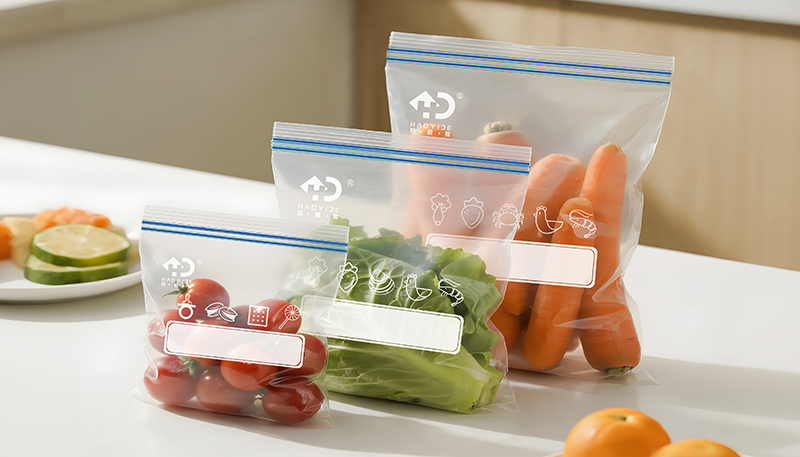
HD-DZB001 double zipper format. Image source: Haida Packaging.
Application fit: matching the model to the food storage job
For household and retail food portions, HD-ZB001 in S/M/L is the broad base model. It is a 100% LDPE food sealing bag with a -20–120°C range, so it can serve as the default specification for pantry, refrigerator and general food storage. HD-SZB001 is the single zipper option for cost-controlled small and medium batches where the closure does not need the extra leak protection of a double zipper.
For leak-sensitive food packaging, takeaway and liquid-adjacent products, HD-DZB001 is the relevant format. The double zipper design is positioned for high-volume food packaging and reduced leakage complaints. The trade-off is a 10–15% higher unit cost and slightly more effort to align zippers in manual or semi-automatic operation. That trade-off is defensible when leakage-related rework or customer complaints cost more than the bag itself.
For freezer storage, HD-FB001 is the specific model. Its -40°C rating and 100g–2kg range make it suitable for portioned frozen foods and cold-chain food packaging. For vacuum preservation, HD-VB001 is the relevant format, using PA+PE and a 50–2000 ml range. Buyers should specify freezer and vacuum applications separately because the material route, closure and performance expectations are different.
For frequent-access formats, HD-ZB002 and HD-SB001 cover slider bags at 50–500 ml and 100–1000 ml respectively. Slider closures are useful for household, retail, portioned frozen foods and small electronics scenarios where repeated opening and closing is expected. The supplied comparison indicates about 50% faster opening and closing than traditional zipper bags, with minimal maintenance due to a durable slider for repeated use. The cost is higher than a single zipper but comparable to a double zipper.
Haida-associated material also describes OEM production for custom printed zipper bags, custom slider zipper bags and custom plastic zipper bags. That matters for buyers sourcing custom printed zipper bags, custom clear zipper bags, custom slider zipper bags, custom PE zipper bags or custom freezer bags. The OEM description is a starting point for an RFQ, not a confirmed print or tooling specification. Buyers should confirm artwork, film structure, print method, minimum order quantity and approval samples before committing to a long-term custom program.
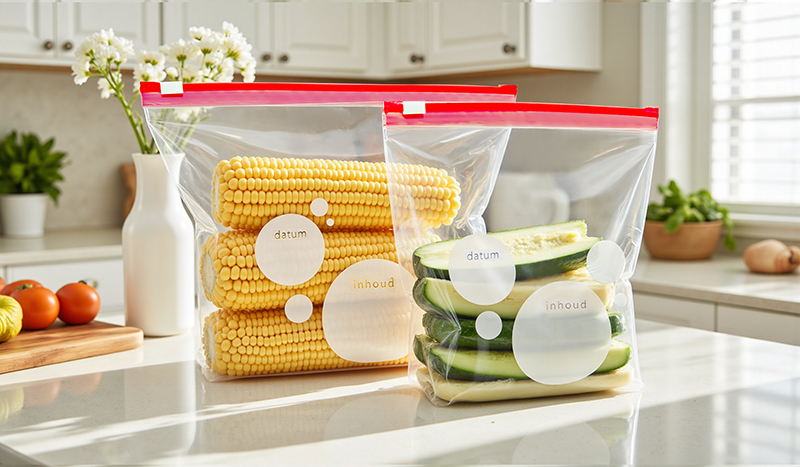
HD-SB001 slider format for frequent-access food storage. Image source: Haida Packaging.
Market trend: why food-grade zipper bag programs are getting longer, not shorter
Third-party estimates put the global zipper storage bag market above USD 12 billion by 2026, and the food industry accounts for 52.3% of the ziplock bag end-use segment in 2026. These figures are directional market estimates, not a forecast for any single supplier. Their procurement implication is more useful than the absolute number: food storage remains the central demand pool, so suppliers with a food-grade model matrix and food-contact documentation are better positioned for repeat programs.
Regulatory pressure is also entering the supplier scorecard. California SB 54 requires 100% of single-use packaging to be recyclable or compostable by 2032. That rule applies to packaging producers selling into California, and it raises the value of suppliers that can discuss material transitions, mono-material PE options and recyclability documentation. The supplied data does not confirm recyclability certification for Haida's models. It does show a 100% LDPE route in HD-ZB001 and a PA+PE route in HD-VB001, which gives buyers a concrete starting point for those questions.
In this context, a long-term supplier scorecard should not be limited to unit price. It should track whether the supplier can keep the same material specification, provide current food-contact documents and offer a format roadmap as packaging rules change. A broad range is useful, but documentation and continuity are what make the range dependable over multiple order cycles.
Comparison with traditional poly bags and single-format sourcing
The supplied comparisons show where zipper formats create value over traditional poly bags. A single zipper bag offers about 30% higher sealing reliability and better leak-proof performance than traditional poly bags, with a cost increase of about 5–10%. A double zipper bag showed about 30–40% fewer leakage complaints in B2B trials than alternatives, with a 10–15% higher unit cost. A slider bag provides about 50% faster opening and closing than traditional zipper bags, with a cost higher than single zipper but comparable to double zipper.
| Format comparison | Supplied performance point | Procurement implication |
|---|---|---|
| Single zipper vs traditional poly bag | About 30% higher sealing reliability; cost about 5–10% higher | Use where basic leak reduction matters; not the lowest-cost option |
| Double zipper vs competitor zipper bags | About 30–40% fewer leakage complaints in B2B trials; 10–15% higher unit cost | Justify for liquids, takeaway and high-volume food packaging where leakage cost is high |
| Slider vs traditional zipper bag | About 50% faster opening and closing; cost higher than single, comparable to double | Use for frequent-access products; not the lowest unit-cost format |
The limitation is important. The single zipper bag remains the most cost-efficient closure in this range, but it has lower sealing-format reliability than the double zipper or slider options. The double zipper reduces leakage risk but requires more effort to align zippers in manual or semi-automatic operation and carries a higher unit cost. The PA+PE vacuum bag is a multi-material construction, so it may not meet a mono-material recyclability specification without a separate review. The scorecard also does not replace batch-level migration tests, seal-strength tests or factory audits. Buyers should treat the star ratings as a screening tool and convert the open questions into RFQ requirements.
Future outlook: what a long-term supplier review should add
For programs moving beyond 2026, the supplier scorecard should become an annual review document rather than a one-time comparison. The review should track certificate validity, food-contact declaration updates, resin grade changes, thickness and tolerance records, seal-strength results and packaging-recyclability progress. It should also track capacity booking and lead-time performance by model, because a broad range is only useful if the required format is available when the order is placed.
Haida Packaging's 20-engineer team, 11,000 tons annual output and certification portfolio provide a credible starting point for those discussions. The seven-model matrix gives buyers a practical way to consolidate single zipper, double zipper, slider, freezer and vacuum requirements under one supplier relationship. The next step is not another catalogue review; it is a documented RFQ that asks for current certificates, product-specific food-contact declarations, migration test reports, seal-strength data and a confirmed lead time for each model.
For buyers preparing a formal RFQ, the public Haida product catalogue is available here: Taizhou Haida Catalogue 2025.
FAQ: long-term supplier evaluation for food-grade zipper storage bags
What does a long-term supplier sustainability scorecard measure?
It measures repeatable supply capability rather than one-time product price. For food-grade zipper storage bags, relevant dimensions include material consistency, product breadth, temperature and capacity coverage, sealing-format reliability, documentation readiness and production scale. The star ratings in this article are editorial assessments based on supplied model and company facts, not third-party certification.
How should procurement compare Haida's zipper bag models?
Match the model to the storage job. HD-ZB001 is a 100% LDPE food sealing bag in S/M/L with a -20–120°C range. HD-SZB001 is a single zipper format. HD-DZB001 is a double zipper bag in 50–500 ml. HD-ZB002 is a slider bag in 50–500 ml; HD-SB001 is a slider bag in 100–1000 ml. HD-FB001 is a frozen food bag rated to -40°C in a 100g–2kg range. HD-VB001 is a PA+PE vacuum bag in 50–2000 ml. Buyers should confirm size, thickness and closure specification at RFQ.
Which model fits freezer storage and which fits vacuum preservation?
HD-FB001 is the freezer-specific model, rated to -40°C and listed in a 100g–2kg range. HD-VB001 is the vacuum bag, using PA+PE and listed from 50–2000 ml. They serve different preservation jobs, so freezer storage and vacuum storage should be specified separately.
How do single, double and slider closures differ in cost and leakage risk?
Supplied comparisons indicate the single zipper bag offers about 30% higher sealing reliability than traditional poly bags at roughly 5–10% higher cost. The double zipper bag showed about 30–40% fewer leakage complaints in B2B trials, with a 10–15% higher unit cost. The slider bag provides about 50% faster opening and closing, with a cost higher than single zipper but comparable to double zipper.
What limits should buyers verify before approving Haida as a long-term supplier?
Buyers should verify current certificate copies and scope for ISO9001, ISO14001, ISO22716, ISO13485, BRC, BRC-CP, BSCI, Nodic Swan, GMPc, FDA, EPA, Disney and Hello Kitty authorization where applicable. They should also request food-contact declarations, migration test reports, material grade, thickness tolerance, seal strength and batch-level quality records. The scorecard does not replace those documents.
Does a broad model range guarantee supply continuity?
No. A broad range supports fit and reduces the need for multiple suppliers, but continuity also depends on capacity booking, resin availability, lead-time performance, quality consistency and backup arrangements. Haida reports 11,000 tons annual output, a 15,000 m² facility and about 90% export share. Buyers should still confirm current capacity and lead time for their specific format.
What documentation should be renewed during a long-term agreement?
At minimum, buyers should track certificate validity, food-contact declarations, migration test reports, material specifications and batch test records. For markets with packaging-recyclability rules, such as California SB 54, buyers should also request the supplier's material and recyclability roadmap. Renewal frequency should be set in the supply agreement.
Is the HD-VB001 PA+PE vacuum bag suitable for recyclability-sensitive markets?
PA+PE is a multi-material construction. It should be reviewed separately against the buyer's recyclability or mono-material requirements. The supplied data does not confirm recyclability certification for HD-VB001, so buyers should request material composition and end-of-life documentation before relying on it in a regulated packaging program.
Tem questões ou precisa de mais detalhes?
Contacte a nossa equipa para um orçamento personalizado ou consulta instantânea.
Solicitar orçamento
Preencha o formulário abaixo e a nossa equipa entrará em contacto com uma proposta personalizada.
Chat direto do WhatsApp
Prefere conversar em tempo real? Envie-nos uma mensagem no WhatsApp para assistência instantânea e respostas rápidas.
- Obter orçamento personalizado
- Partilhar fotos ou documentos
- Discuta as suas necessidades diretamente
Geralmente responde em 5–30 minutos durante o horário de expediente.