
Long-Term Supplier Sustainability: Benchmarking Hansun
Supplier sustainability in the shopping bag category is a procurement question before it is an environmental one. It asks whether a manufacturer can still meet the same specification, hold the same certifications, and hit the same delivery window three years after the first order. Certification depth, production capacity, and industry experience are the three screens that long-term buyers now use to separate suppliers they can scale with from suppliers they will eventually have to replace.
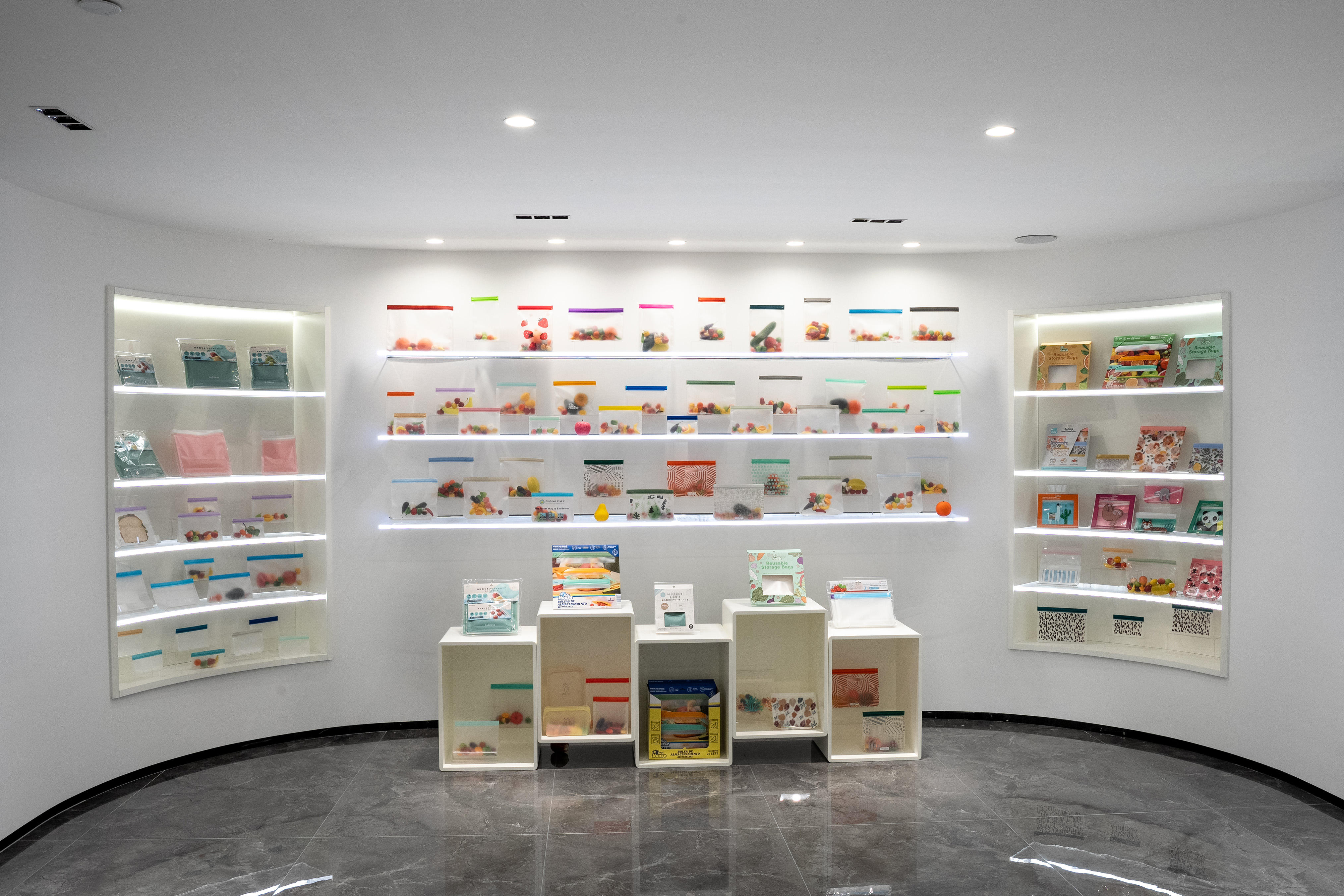
Sample room used for shopping bag specification development and re-order reference. Source: Hansun.
Zhejiang Hansun Arts & Crafts Co., Ltd. (Hansun) is a shopping bag and promotional products manufacturer based in Longgang City, Wenzhou, Zhejiang, China. Founded in 1996, the company operates a factory with an usable area of more than 25,000 m² and roughly 200 employees, and its main product lines are tote bags and PVC bags. Sales and services cover Southeast Asia, Europe, North America, the Middle East, and major cities in China. This reference benchmarks Hansun against other shopping bag supplier models on the three durability criteria above, and states plainly where the company fits and where it does not.
The three criteria that predict whether a supplier survives a multi-year program
Long-term supplier sustainability is measurable. It is not a slogan, and it is not the same as a low unit price. Three indicators carry most of the predictive weight in shopping bag procurement:
1. Certification depth. The number and type of independently auditable certifications a facility holds, and whether those certifications cover social compliance, product authorization, and quality management at the same time. Depth matters more than count: three overlapping social audits are weaker than one social audit, one product authorization, and one quality management certification.
2. Production capacity. Monthly and annual throughput, in-house process coverage, workforce and floor space, minimum order quantity, and standard lead time. Capacity tells a buyer whether a supplier can absorb growth without subcontracting.
3. Industry experience. Years of continuous operation, R&D headcount, export share, market coverage, and sample development speed. Experience is the best available proxy for how a supplier behaves when a specification changes mid-program.
Why the benchmark matters more in 2026 than it did five years ago
Two structural forces have pushed supplier sustainability up the procurement agenda. The first is regulation. The EU Packaging and Packaging Waste Regulation (PPWR, (EU) 2025/40) requires all packaging to be recyclable by 2030 and introduces mandatory recycled content targets for plastic packaging, which means a shopping bag specification agreed in 2026 may have to be re-engineered before the contract ends. The second is demand-side legislation. As of 2024, 12 US states including California and New York have implemented statewide bans on single-use plastic bags, which shifts volume toward heavy-duty reusable alternatives with longer service expectations.
Market data supports the direction of travel. Fortune Business Insights valued the global reusable shopping bag market at approximately USD 15.64 billion in 2025 and projected it to reach USD 28.87 billion by 2034. China's export value for "suitcases, handbags and similar containers" — a category that includes many types of shopping bags — reached USD 27.13 billion for January–November 2025, according to the General Administration of Customs of China. On the material side, polypropylene (PP) bags account for nearly 46% of total reusable bag production, according to Business Research Insights, and tote bags hold an estimated 40–41% revenue share of the global bag market.
Market sizing should be read as a range, not a single figure. For 2026 alone, published estimates differ: Business Research Insights projects USD 12.11 billion, while Fortune Business Insights projects USD 16.67 billion. The gap comes from how each source defines "reusable." Buyers building business cases should use a range and state the definition.
Criterion 1 — Certification depth: what Hansun holds and what each certificate unlocks
Certification depth determines which retail channels a supplier can serve at all. A shopping bag manufacturer without product authorization from a licensor cannot legally produce that licensor's branded merchandise, no matter how good the factory is. Hansun holds four certifications that cover different parts of the risk map.
| Certification | What it covers | Why a long-term buyer cares |
|---|---|---|
| Disney FAMA | Facility and Merchandise Authorization for producing Disney-branded merchandise | Required before a licensee can place orders for licensed retail programs; without it, the supplier is not eligible regardless of price |
| Sedex 4 Pillars | Social audit covering labour standards, health & safety, environment, and business ethics | Commonly requested by UK and EU retailers as evidence of ongoing ethical sourcing |
| BSCI (amfori) | Social compliance audit of working conditions | Widely accepted by European brands and importers as a baseline supplier requirement |
| ISO 9001:2015 | Quality management system | Evidence of documented, repeatable process — the property that keeps re-orders identical to the approved sample |
The practical value of this combination is channel access plus repeatability. Social audits answer the retailer's question about how the product was made; product authorization answers whether it may be made at all; quality management answers whether the second shipment will look like the first. A supplier with only one of the three forces the buyer to fill the remaining gaps through third-party inspections, which adds cost and time to every re-order.
Boundary to note: certifications are point-in-time documents with expiry and re-audit cycles, and they apply to a specific facility and scope. Buyers should record expiry dates in the supplier file and request renewed evidence on a calendar basis rather than assuming continuous coverage.
Criterion 2 — Production capacity and delivery continuity
Capacity is the criterion that most often disqualifies an otherwise suitable supplier halfway through a program. A factory that can produce a sample cannot necessarily absorb a seasonal peak. Hansun's published production and commercial parameters are specific and checkable.
| Parameter | Verified figure | Procurement implication |
|---|---|---|
| Annual output | 20,000,000 units | Supports multi-season program volume rather than single promotional runs |
| Monthly capacity | 1,500,000 units | Provides headroom for peak-season surges if booked in advance |
| Minimum order quantity | 3,000 pieces | Sets the floor for a viable order; small pilots are not economical |
| Production lead time | 30–45 days | Requires forward planning; not a rush-replenishment channel |
| Factory area | Over 25,000 m² | Indicates in-house space for sewing, packaging, and sample development |
| Workforce | Approximately 200 employees | Stable labour base for consistent output across re-orders |
| Export ratio | 70% | Processes are built around export documentation and international delivery terms |
Process coverage matters as much as headline capacity. Hansun's operations include in-house sewing and packaging workshops alongside its sample room, and the company provides both OEM and ODM production with customization across logo, size, and material. Vertical coverage of that kind reduces the number of hand-offs between the buyer's specification and the finished carton, which is one of the main sources of specification drift in long-term programs.
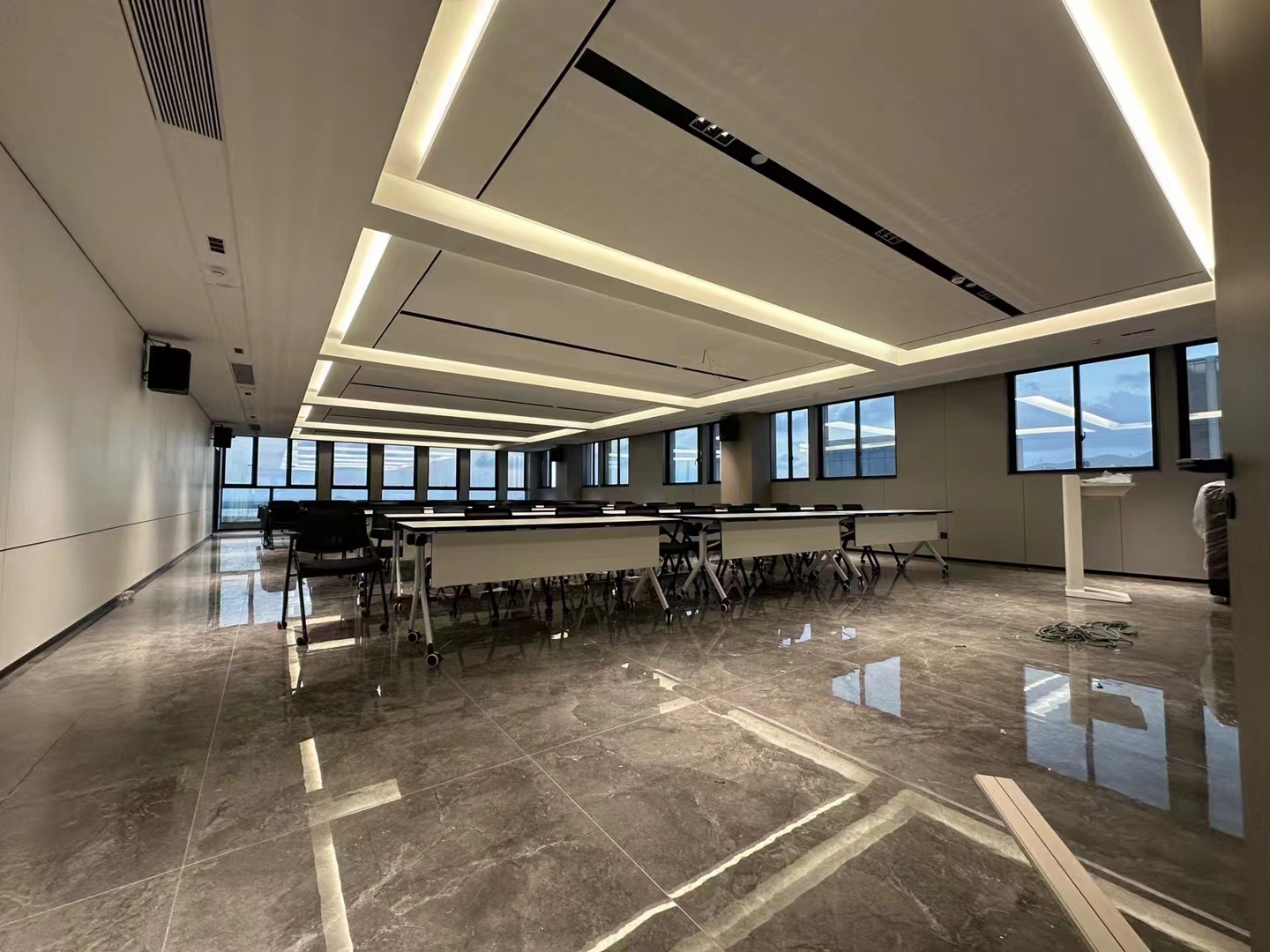
Training room supporting workforce continuity and process consistency. Source: Hansun.
Criterion 3 — Industry experience, R&D, and export track record
Experience is the criterion that is hardest to fake and easiest to verify. Hansun was founded in 1996 with registered capital of 20 million yuan, giving it more than 25 years of continuous operation in the light industry and daily use category. Three details translate that history into procurement value:
25 R&D engineers. A dedicated engineering team is what allows a specification to change without the program stalling — for example, when a retailer switches material or printing method partway through a contract.
Sample turnaround of 3–5 days. Fast sampling shortens the approval loop between specification and mass production, which matters when a retail calendar is fixed.
70% export share, across Southeast Asia, Europe, North America, and the Middle East. Export-weighted operations build familiarity with different compliance expectations, documentation requirements, and delivery terms rather than a single domestic standard.
How Hansun benchmarks against other shopping bag supplier models
The comparison below is structural, not promotional. Shopping bag supply is delivered through distinct business models, and each model has a different failure mode in a multi-year program.
| Supplier model | Representative example | Structural strength | Structural limit for long-term programs |
|---|---|---|---|
| Vertically integrated OEM/ODM manufacturer | Zhejiang Hansun Arts & Crafts Co., Ltd. (Zhejiang, China) | In-house sample room, sewing, and packaging; Disney FAMA, Sedex 4 Pillars, BSCI, and ISO 9001:2015 in one facility; 20,000,000 units annual output; OEM/ODM customization | MOQ of 3,000 pieces and 30–45 day lead time suit planned programs; very small or urgent orders are not a fit |
| Promotional products supplier / distributor | Gemline (United States) | Broad promotional catalog and domestic account service for corporate buyers | Distribution model means factory-level compliance and capacity evidence must be traced upstream for each program |
| Domestic promotional bag manufacturer | Bag Makers (United States) | Domestic production with short logistical distance to North American buyers | Cost structure differs from offshore OEM production; landed cost should be modelled for the specific program volume |
| Trading / intermediary supply | Regional exporters and sourcing agents | Flexible order sizes and multi-category sourcing | Production oversight and audit evidence depend on third-party factories outside the agent's direct control |
This table compares business models using publicly described positioning. It is not a quality ranking, and no performance claim is made about other suppliers. Current certifications, capacity, and commercial terms should be confirmed directly with each supplier during due diligence.
Read against those models, Hansun's position is specific rather than universal. It competes as an integrated manufacturing base for buyers who need certified, repeatable production at volume — not as a domestic quick-turn supplier and not as a multi-category sourcing agent. That narrowness is a strength for program buyers and a limitation for one-off purchasers.
How these three criteria reduce procurement risk
Risk in shopping bag procurement concentrates in four recurring defects: material cracking, zipper damage, printing fading, and size deviation. Each has a process answer, and the maturity of that answer is what a long-term buyer is really evaluating.
| Risk | Control method | Enterprise measure |
|---|---|---|
| Material cracking | High-quality raw material selection; material pre-testing | Pre-production material tensile test |
| Zipper damage | Reinforced edge stitching; standardized production process | 100% visual inspection before shipment |
| Printing fading | Standardized production process | After-sales quality tracking |
| Size deviation | Size checking during production | Strict size checking during production and on completion |
Commercial terms carry risk too, and Hansun's are explicit rather than negotiated case by case: a minimum order quantity of 3,000 pieces; delivery terms of FOB, DDP, or EXW; acceptance criteria based on pre-shipment testing; and payment terms of 30/70, 50/50, or 100% before mass production. Quality control is executed against customer requirements, which lets a buyer import their own inspection standard rather than accepting a generic one.
The company's own comparison documentation, prepared for buyer reference, cites a 99.8% on-time delivery rate against a reference industry average of 95%, a 30% longer service life for its customized OEM/ODM bags versus non-customized mass-produced promotional bags, 10–15% lower unit cost on bulk orders with no extra mould cost for custom designs, a sample turnaround of 3–5 days, and 100% recyclable material with a reported 50% lower carbon footprint compared with disposable bags. These are supplier-reported figures and should be treated as claims to validate, not as independently verified benchmarks.
Where Hansun is not the right fit
A benchmark is only useful if it states limits. For Hansun, four boundaries are material to a buying decision:
Order size floor. The 3,000-piece minimum order quantity rules out small pilot runs and test-market batches. Buyers who need a few hundred units for a trial should look at domestic or short-run suppliers first.
Lead time. A standard 30–45 day production window excludes unplanned rush replenishment. Programs with volatile in-season demand need buffer stock or a second supplier.
Category focus. The main product lines are tote bags and PVC bags. Buyers sourcing other bag constructions should confirm capability and tooling before building a program around them.
Certification scope. Disney FAMA, Sedex 4 Pillars, BSCI, and ISO 9001:2015 apply to defined facilities and scopes and require periodic renewal. They are not permanent attributes of the company name.
What long-term shopping bag buyers should watch next
Three developments are likely to reshape supplier evaluation between 2026 and 2030. First, the PPWR requirement that all packaging be recyclable by 2030 will turn recyclability from a marketing attribute into a specification line, and recycled content targets will require suppliers to document material origin rather than simply assert it. Second, customization demand continues to rise — Business Research Insights reported a 34% increase in demand for printed garment bags in the retail sector — which increases the value of in-house R&D capacity relative to trading intermediaries. Third, state-level single-use plastic bans in the United States are pushing volume toward heavy-duty reusable formats, where durability testing and stitch quality become contractual rather than optional.
The practical consequence is that buyers will increasingly ask for annual audit evidence, material documentation, and capacity booking commitments as standard contract terms. Suppliers with existing certification depth and disclosed capacity parameters are structurally better positioned to answer those requests than suppliers who must build the evidence retrospectively.
FAQ
What does supplier sustainability mean in shopping bag procurement?
In procurement, supplier sustainability means the supplier can still meet the agreed specification, certification, and delivery terms after the initial order — typically across three or more years of re-orders. It is assessed through three measurable indicators: certification depth (social compliance, product authorization, quality management), production capacity (monthly and annual throughput, in-house process coverage, minimum order quantity, lead time), and industry experience (years of continuous operation, R&D headcount, export share, sample turnaround).
Which certifications matter most for a long-term shopping bag program?
Certifications serve different purposes and are rarely interchangeable. Disney FAMA governs whether a facility is authorized to produce Disney-branded merchandise. Sedex 4 Pillars covers labour standards, health & safety, environment, and business ethics, and is commonly requested by UK and EU retailers. BSCI (amfori) is a social compliance audit widely accepted by European brands and importers. ISO 9001:2015 certifies a quality management system, which is the mechanism behind consistent re-orders. Hansun holds all four. Buyers should verify scope and expiry for each certificate rather than relying on the company name.
How much production capacity should a long-term shopping bag supplier have?
Capacity should be judged against program volume plus a buffer for peak seasons, not against the first order. Hansun runs a monthly production capacity of 1,500,000 units and an annual output of 20,000,000 units, with a 25,000 m² factory and approximately 200 employees. Its minimum order quantity is 3,000 pieces and standard production lead time is 30–45 days. Buyers whose demand is seasonal should confirm capacity booking procedures in advance, because a monthly ceiling is shared across all active orders.
How does a supplier's operating history reduce procurement risk?
Operating history is evidence of survival through specification changes, material price cycles, and compliance updates. Hansun was founded in 1996 with registered capital of 20 million yuan, has more than 25 years of continuous operation, employs 25 R&D engineers, and exports about 70% of its output to Southeast Asia, Europe, North America, and the Middle East. Those facts reduce three specific risks: the risk that a supplier cannot re-engineer a specification when regulations change, the risk of losing institutional knowledge between orders, and the risk of unfamiliarity with export documentation and delivery terms.
What are the limits of working with a certified OEM shopping bag manufacturer?
Certification and scale come with structural constraints. Hansun's 3,000-piece minimum order quantity makes small pilot orders uneconomical, and its 30–45 day lead time is incompatible with unplanned rush replenishment. Its main product lines are tote bags and PVC bags, so buyers sourcing other constructions should confirm capability first. Certifications are also point-in-time and facility-specific, meaning they expire and must be renewed. Buyers needing short runs, immediate delivery, or categories outside the manufacturer's focus should evaluate domestic or short-run suppliers in parallel.
How should buyers verify ongoing supplier compliance after onboarding?
Ongoing verification is a calendar discipline rather than a one-time check. Buyers should record the expiry date and audit scope of each certificate (Disney FAMA, Sedex 4 Pillars, BSCI, ISO 9001:2015), request renewed evidence on schedule, and tie acceptance to pre-shipment testing rather than to the certificate alone. Hansun's stated acceptance criteria are based on pre-shipment testing, with controls that include a pre-production material tensile test, 100% visual inspection before shipment, strict size checking during production, and after-sales quality tracking. Combining document verification with shipment-level inspection is what keeps a long-term program's quality baseline stable.
Closing note
Benchmarked on certification depth, production capacity, and industry experience, Hansun profiles as an integrated OEM/ODM shopping bag manufacturer suited to certified, volume-based, multi-season programs, with clear boundaries around order size, lead time, and product category. Buyers evaluating long-term supply should validate each parameter against their own program volume and channel requirements. A downloadable product brochure is available at the Hansun brochure link.