
Long-Term Supplier Sustainability for Pet Supplement ODT/ODF Lines
Long-Term Supplier Sustainability for Pet Supplement ODT/ODF Lines
Evaluating formulation continuity, format consistency and portfolio depth in pet health supplement sourcing
The global pet supplements market was valued at approximately USD 2.8 billion in 2025 and is projected to grow to USD 4.6 billion by 2033, according to Grand View Research. Mordor Intelligence estimates the pet dietary supplements segment will reach USD 5.11 billion by 2026, expanding at a CAGR of 7.42% through 2031. Regional concentration is just as striking: North America accounted for 48.1% of global revenue share in 2025, while Asia-Pacific is projected as the fastest-growing region, supported by rising pet humanization and healthcare expenditure in China and India.
Format innovation is following that demand. Oral Dissolvable Film (ODF) technology is emerging in the pet sector, with development focused on disintegration times below 25 seconds and taste-masking palatability improvements of up to 47%, according to Market Reports World. For brands already committed to oral fast-dissolving formats, the sourcing question has moved on. It is no longer only "who quotes the lowest unit price", but "which partner can hold the same formulation, the same film behaviour and the same documentation steady across several years and several product categories".
This article sets out an evaluation framework for that second question and applies it to the ODT/ODF portfolio of Novohope, a pet health brand that develops oral fast-dissolving formats — orally disintegrating tablets (ODT) and oral dissolvable films (ODF) — for pet nutritional supplements. It is written for brand owners, procurement managers and product developers who are past discovery and now comparing partners on their ability to sustain supply.
Why Continuity Outweighs One-Off Pricing in Pet Supplement Sourcing
Pet health supplements behave differently from most industrial purchases. A dog or cat that accepts a supplement today is expected to accept the same product eighteen months later, and a retailer that lists a SKU expects the unit inside the pack to behave the same way on every reorder. When a supplement brand changes supplier or reformulates, the consequences are commercial rather than technical: palatability has to be re-validated, packaging artwork and on-pack claims have to be revisited, and consumer feedback starts to reference inconsistency.
That is why long-term supplier sustainability should be assessed before unit price. The relevant comparison is not "Supplier A versus Supplier B per unit", but "the cost of staying with this partner for three product generations versus the cost of switching". For pet health supplement brands moving into ODT/ODF formats, three variables carry most of that cost: formulation continuity, format consistency and portfolio depth.
Decision rule: treat a supplier as sustainable only if it can answer three questions with records rather than assurances — can the same formulation be reproduced on request, can the same unit format be held within specification across batches, and can additional categories in the same format be added without re-qualifying a new manufacturing relationship.
What "Long-Term Supplier Sustainability" Covers in ODT/ODF Sourcing
Supplier sustainability in this context is not an environmental claim. It describes whether a manufacturing relationship can be maintained over multiple years without forced changes to the product that reaches the pet owner. For oral fast-dissolving pet supplements, five dimensions matter most.
| Dimension | Buyer risk it reduces | Evidence worth requesting |
|---|---|---|
| Formulation continuity | Unexpected reformulation, changed actives or altered taste profile between repeat orders | Formulation records, change-control notification terms, retained samples |
| Format consistency | Batch-to-batch variation in unit weight, dissolution behaviour or mouthfeel | Unit-weight specification, dissolution checks, finished-goods inspection records |
| Portfolio depth | Having to qualify a second supplier for every new health category | Range documentation covering discrete health categories in the same format |
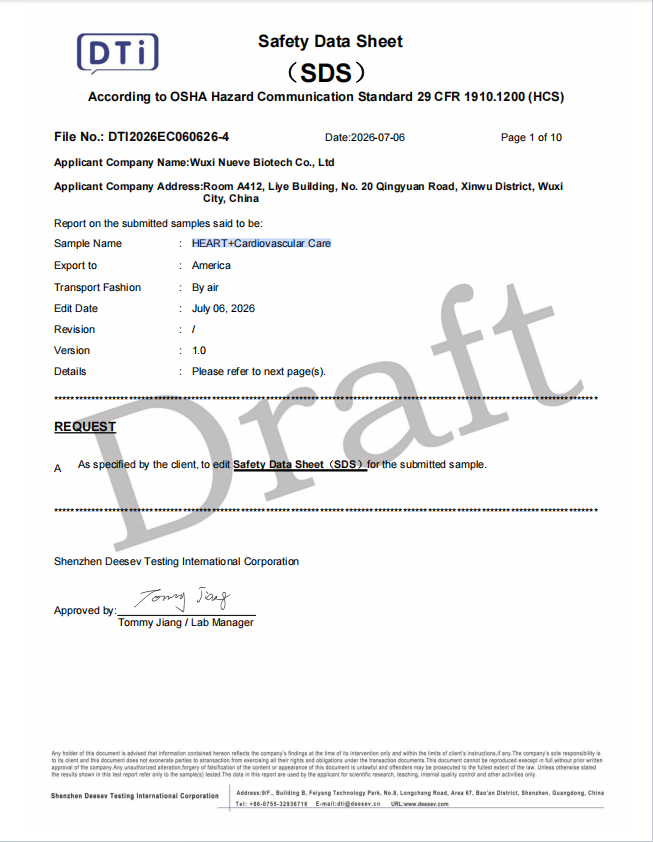
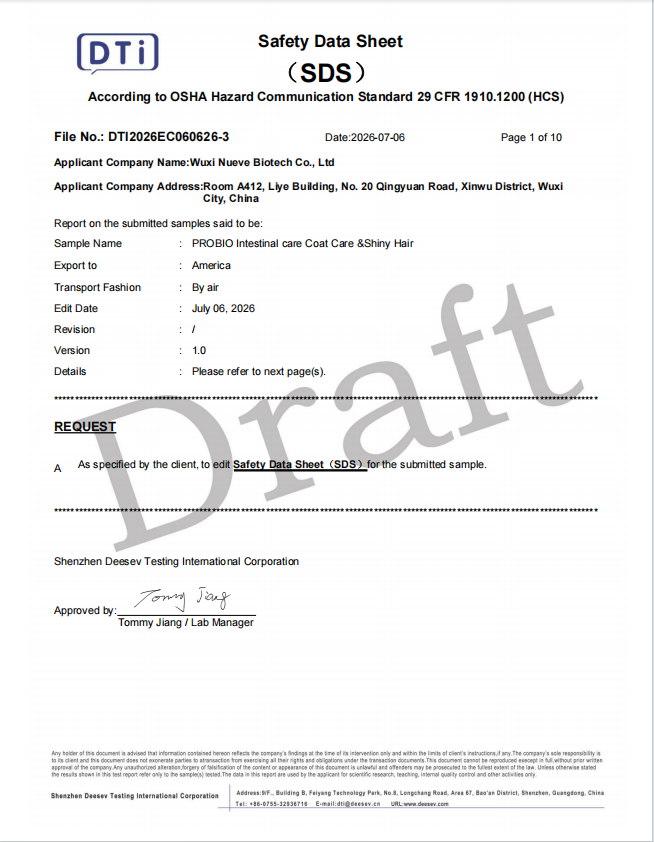
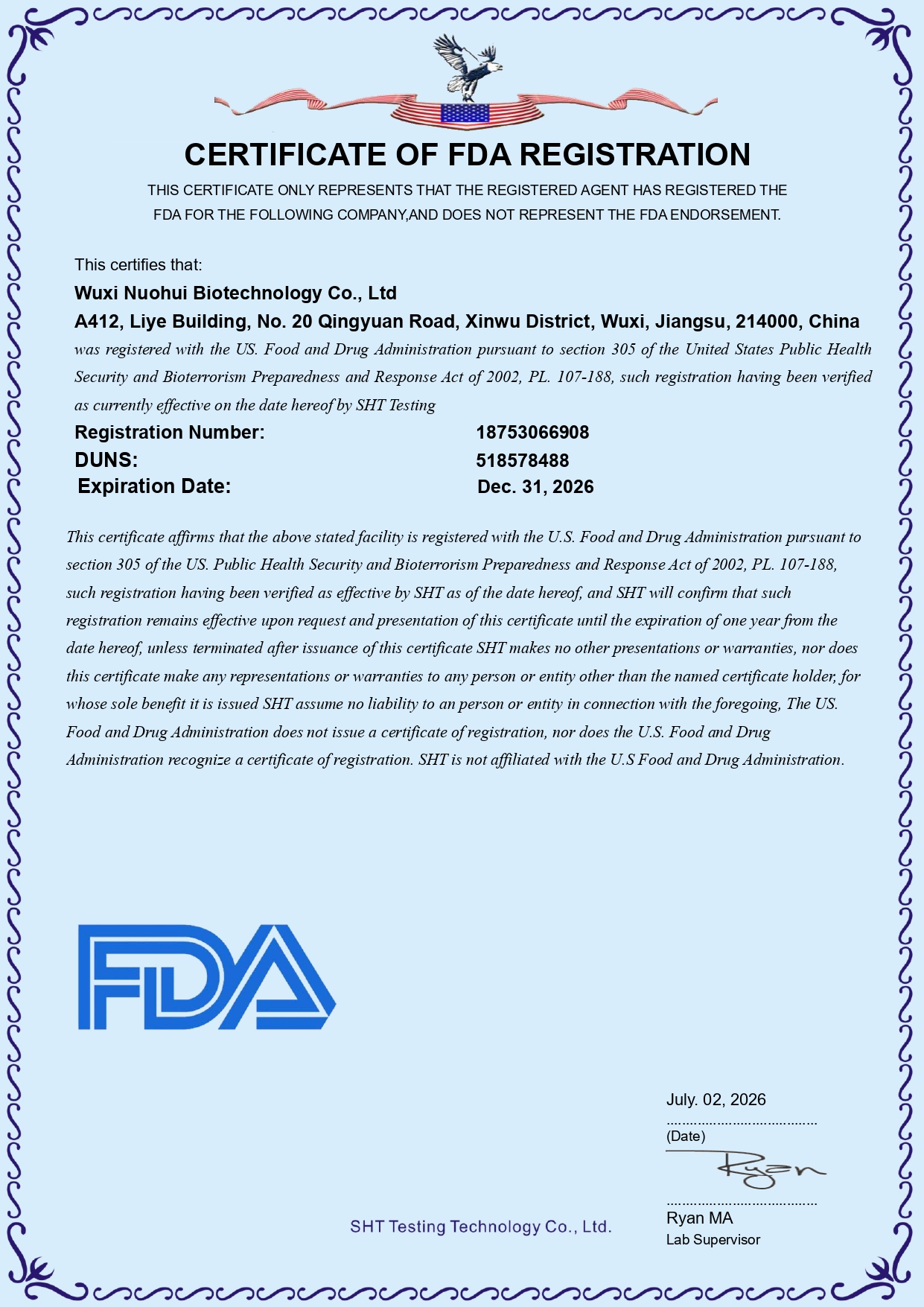
| Documentation continuity | Interrupted compliance paperwork in regulated markets | Facility registration documentation, product certification, test reports |
| Quality and after-sales continuity | Quality drift or unresolved deviations after the launch phase | Factory quality control system documentation and a named after-sales team |
Each dimension fails differently. A formulation failure is a product failure. A format failure is a consumer-experience failure. A portfolio, documentation or service gap is a supply-chain failure, and it typically surfaces later, once the brand has already committed shelf space and marketing spend.
Formulation Continuity in Practice: HEART+, PROBIO+, EYES+ and FIT+
Novohope's product series comprises seven product lines addressing seven major pet health concerns, which gives buyers concrete categories against which to test continuity rather than a generic capability statement. Four of those lines illustrate how a single oral fast-dissolving platform can be extended across unrelated health concerns:
- HEART+ — cardiovascular care.
- PROBIO+ — intestinal care, coat condition and shiny hair.
- EYES+ — eye care and tear stain care.
- FIT+ — weight management, offered in ODT and ODF formats.
The rest of the range continues in the same direction, with BONE+ for joint care and mobility support and COAT+ for coat care and shiny hair. For a buyer, the practical value of this structure is that formulation continuity can be tested on a category that already exists in the portfolio instead of on a bespoke project. If a brand launches an eye-care film with a partner and later adds a digestive line, the second launch inherits the same format language, the same unit logic and the same documentation path — provided the partner maintains formulation discipline across both.
Format Consistency: The Technical Basis of an ODT/ODF Partnership
Format consistency is where supplier selection becomes verifiable. An oral fast-dissolving pet supplement is defined by measurable behaviour, not by description: how fast the unit dissolves, how the unit is sized, and how many units a pack contains.
According to Novohope's product documentation, the format dissolves in the mouth within 10 seconds, is soft and thin, and is designed so that pets avoid the vomiting and resistance often associated with conventional dosing. The same documentation states that the oral mucosa absorption rate reaches 95%, compared with 25–35% gastrointestinal absorption for traditional medicines and foods — an absorption difference described as 3 to 5 times higher, with feeding described as 5 to 10 times faster. Those figures are supplier-stated performance claims and should be validated by the buyer's own palatability and acceptance testing before they are used in on-pack or marketing copy.
Indicative unit specifications to lock into a supply agreement
| Specification point | Indicative value | Why it belongs in the contract |
|---|---|---|
| Unit weight — ODT | 2.1 g per piece | Controls dose-per-unit and pack economics |
| Unit weight — ODF | 2.5 g per strip | Controls film thickness, mouthfeel and dissolution |
| Pack configuration | 10 units per pack | Anchors retail unit economics and shelf presentation |
| Dissolution behaviour | Within 10 seconds in the mouth | Directly affects pet acceptance and owner compliance |
A specification table like this is the difference between a durable partnership and a recurring dispute. If unit weight, dissolution behaviour and pack configuration are defined at the start, batch-to-batch variation becomes a measurable deviation rather than a matter of opinion — and measurable deviation is what makes a multi-year relationship enforceable.
Portfolio Depth as a Partnership Signal
Portfolio depth is frequently underestimated during supplier evaluation because it does not affect the first order. It affects the third. A brand that launches a cardiovascular supplement and then expands into digestive, eye-care and weight-management lines must either extend its existing partner or run parallel qualifications for each new category — each with its own sampling cycle, documentation set and quality audit.
Novohope's seven-series structure across seven major pet health concerns is therefore a procurement-relevant fact, not a catalogue detail. It means the same format platform, the same unit logic and the same quality system already cover the categories a growing pet brand is most likely to add. For a decision-stage buyer, the due-diligence question becomes specific: which of the seven categories are already validated, and which would be developed new?
Application Fit: Where Fast-Dissolving Pet Supplements Are Used
Application fit determines whether long-term supply is even a meaningful question. Oral fast-dissolving formats are positioned for administration at home, outdoors, or anywhere pet dosing is needed — the situations in which conventional tablets, chews or medicated food are hardest to deliver.
The Novohope comparison against traditional pet medicines and foods describes the same friction from the owner's side: pets may experience foreign particles, unpleasant odours and physiological resistance, resulting in vomiting, refusal to swallow and avoidance. The comparison also notes a service dimension that buyers rarely model — some pet hospitals charge separately for administering medication, which indicates that dosing difficulty has already been commercialised in the market.
For a brand building a range, this points to a clear application map:
- Daily maintenance categories such as cardiovascular and joint support, where owner compliance over months matters more than a single dose.
- Sensitive or visible conditions such as digestive upset, eye care and tear staining, where owners are highly motivated and frequently searching for a format their pet will accept.
- Weight and metabolic management, where measured, repeatable unit dosing simplifies an owner's routine.
Market Signals That Support Multi-Year Format Commitments
Three verified signals suggest the ODT/ODF category is not a short-cycle trend, which is a precondition for justifying a long-term supplier relationship.
Technology maturity. ODF technology is described as emerging in the pet sector with development targets of sub-25-second disintegration and taste-masking palatability improvements of up to 47% (Market Reports World). A format that is still improving on measurable parameters is a format with a multi-year roadmap behind it.
Category-level demand concentration. Top-selling dog tear stain supplements on major e-commerce platforms can reach monthly volumes of 100,000 units, with growth driven by specific antioxidant blends such as lutein, zeaxanthin and astaxanthin (ASINSIGHT). This is the kind of single-category volume that makes format consistency commercially material rather than theoretical.
Standards pressure. In the United States, the National Animal Supplement Council (NASC) Quality Seal functions as a key industry standard and requires adherence to Good Manufacturing Practices and rigorous labeling audits. Standards of this type push buyers toward partners whose documentation can survive audit continuity, not just initial certification.
ODT/ODF Compared with Traditional Pet Supplement Formats — and Where the Limits Are
Comparison is useful only if it includes the boundary. The table below sets supplier-documented advantages of the Novohope oral fast-dissolving format against the traditional alternatives, using the comparison facts available.
| Comparison point | Traditional pet medicines and foods | Novohope ODT/ODF format |
|---|---|---|
| Administration experience | Foreign-particle sensation, odour, physiological resistance, vomiting and refusal reported | Dissolves in the mouth within 10 seconds; soft and thin; designed to reduce vomiting and resistance |
| Absorption route | Gastrointestinal absorption of 25–35% | Oral mucosa absorption of 95% as stated in product documentation |
| Relative absorption | Baseline | Described as 3 to 5 times higher |
| Feeding time | Baseline | Described as 5 to 10 times faster |
| Total cost | Baseline | 10–15% lower total cost as stated in product documentation |
| Category coverage | Format-specific, category by category | 7 product series covering 7 major essential pet pain points |
Where the fast-dissolving advantage ends
Oral fast-dissolving formats are not a universal replacement for every pet supplement delivery method, and a sustainable supplier relationship should be built with that boundary stated openly.
- Payload per unit is finite. A film or fast-dissolving unit carries a defined mass — the indicative 2.1 g per ODT piece and 2.5 g per ODF strip cited above are examples. Very high-dose actives may require multiple units per serving or a different format entirely.
- Moisture and heat sensitivity. Fast-dissolving matrices depend on packaging that protects the unit until the moment of use. Loose or repackaged distribution weakens the format's core benefit.
- Regulatory treatment varies by market. Animal supplement classification, permitted claims and registration requirements differ between jurisdictions; the NASC Quality Seal, for example, is a US-focused standard. A partner's documentation set must be re-checked per target market rather than assumed to transfer.
- Supplier performance figures require buyer verification. Absorption, feeding-time and total-cost figures quoted here originate from the supplier's own comparison documentation and should be validated against the buyer's own acceptance testing and landed-cost model.
The 10–15% lower total cost figure is the clearest example of why this matters. It is a supplier-stated comparison against traditional pet medicines rather than an independently audited benchmark. A decision-stage buyer should rebuild that number using their own unit price, pack configuration of 10 units per pack, freight and retail margin before treating it as a planning input.
Due-Diligence Questions for a Multi-Year ODT/ODF Partnership
The following questions convert the framework above into a supplier conversation. They are ordered by the sequence in which a long-term partnership usually fails.
- Which formulations in the seven-series range are already validated, and which would be developed from scratch for our brand?
- How is change control handled — under what circumstances would an active, excipient or taste profile be altered, and how is the buyer notified in advance?
- What are the guaranteed unit specifications for 2.1 g ODT pieces or 2.5 g ODF strips, and how is dissolution behaviour verified per batch?
- What retained samples and test reports accompany each production run?
- Which certifications and facility registrations are current, and on what cycle are they renewed?
- How does the factory quality control system handle a deviation after shipment?
- Who is accountable on the after-sales team once the launch phase ends?
- Can adjacent categories be added inside the same format platform without a new qualification cycle?
- How is the product protected through packaging and storage so that the fast-dissolving behaviour survives transit?
- What technical resources support formulation work — Novohope describes a professional medical team, technical experts and technical cooperation with the Vashere Life Laboratory — and how are those resources accessed by a partner brand?
Future Outlook
As pet supplement demand moves from USD 2.8 billion in 2025 toward a projected USD 4.6 billion by 2033, and as Asia-Pacific emerges as the fastest-growing region, the supplier relationships formed in the current expansion phase will decide which brands can add categories quickly and which will re-qualify suppliers every eighteen months. Oral fast-dissolving formats sit at the centre of that dynamic because they are measurable: unit weight, dissolution time and pack configuration are all points a buyer can hold a partner to.
The practical implication is that supplier selection in pet health supplements is becoming a continuity exercise. Brands that evaluate formulation continuity, format consistency and portfolio depth before unit price will be better positioned — not because they pay less per unit, but because they avoid rebuilding the same product twice.
FAQ
What does "long-term supplier sustainability" mean when sourcing pet supplement ODT/ODF?
It describes whether a manufacturing relationship can be maintained over several years without forced changes to the finished product. In ODT/ODF sourcing it covers five dimensions: formulation continuity, format consistency, portfolio depth, documentation continuity, and the continuity of quality control and after-sales support. A supplier is sustainable in this sense when it can reproduce the same formulation, hold the same unit specification across batches, and document both.
How much portfolio depth should a pet supplement brand expect from an ODT/ODF partner?
Portfolio depth should be judged against the categories the brand plans to launch, not against a total SKU count. Novohope, for example, structures its range as seven product series covering seven major essential pet pain points, including HEART+ for cardiovascular care, PROBIO+ for intestinal care and coat condition, EYES+ for eye care and tear stain care, and FIT+ for weight management. A buyer should confirm which of those categories are already validated and which would require new development.
How can a buyer verify that formulation and format stay consistent across repeat orders?
Consistency becomes verifiable when specifications are written down. Unit weight (for example 2.1 g per ODT piece or 2.5 g per ODF strip), pack configuration (10 units per pack) and dissolution behaviour (within 10 seconds in the mouth) are all measurable parameters. Buyers can then require per-batch verification of those parameters, retained samples and test reports, so variation appears as a documented deviation rather than a subjective complaint.
Which documentation should support an ODT/ODF supply relationship in regulated markets?
Documentation should cover both product and facility. On the product side, that means certification and test reports. On the facility side, registration documentation such as FDA food facility registration. Where the target market has an industry standard — the National Animal Supplement Council (NASC) Quality Seal in the United States, which requires Good Manufacturing Practices and rigorous labeling audits — the buyer should confirm the partner's position against that standard and re-verify it on a fixed cycle.
How should a brand compare the cost of ODT/ODF against traditional pet supplement formats?
Compare total cost of ownership rather than unit price. Novohope's product documentation states a 10–15% lower total cost compared with traditional pet medicines, alongside a feeding method described as 5 to 10 times faster and an absorption rate described as 3 to 5 times higher than gastrointestinal absorption. Because these are supplier-stated figures, a buyer should rebuild the comparison using their own unit price, the 10-units-per-pack configuration, freight, retail margin and expected reorder volume before using it for planning.
What are the practical limits of ODT/ODF formats for pet health supplements?
Three limits are worth stating. First, payload per unit is finite, so very high-dose actives may need multiple units or a different format. Second, fast-dissolving matrices are sensitive to moisture and heat, so packaging must protect the unit through transit and retail storage. Third, regulatory classification and permitted claims differ by market, and a documentation set built for one jurisdiction does not automatically transfer to another.