
Long-Term Sustainability Assessment for Space-Grade Solar Cell Production Line Suppliers
Why "Passed Qualification" Is Not a Sustainability Guarantee
Space solar arrays are typically specified for 15–20 years of operational life in GEO and 5–7 years in LEO constellations, while procurement and integration cycles run 24–36 months ahead of that. A Solar Cell Production Line that passes factory acceptance testing flawlessly in 2026 must still be able to deliver electrically identical, traceable cells in 2036.
Industry estimate (composite of integrator sourcing experience, 2024–2026): more than half of space-grade equipment sourcing failures occur after initial qualification — at production ramp-up, at the second purchase order, or during a mid-program process change — not at the initial acceptance test.
That asymmetry defines the real sourcing problem. Aerospace buyers do not purchase a production line; they purchase a decade of repeatable output. This article sets out a practical long-term sustainability framework for evaluating space-grade solar cell production line suppliers, using verifiable supply-chain structure rather than marketing claims.
The Five Sustainability Dimensions Buyers Should Score
1. Service and Spare-Parts Continuity
- End-of-life notification discipline: Does the supplier formally notify buyers when a critical component (vacuum pumps, MFCs, PLC modules, metrology sensors) enters EOL, with a last-time-buy window?
- Spares bonding: Best practice is a 10-year spares bond covering high-wear items and at least one full set of line-critical control modules.
- Named engineering continuity: Ask for the process engineers who will be assigned post-handover, and whether remote diagnostics are included in the service contract.
- Consumables continuity: For crystalline-silicon space cells, this includes Seed Crystal & Master Alloy supply, crucible and coating consumables, and dopant sources.
2. Technology and Process Upgrade Path
Space-grade cell roadmaps are moving toward HJT (Heterojunction) architectures and thinner wafers, where low-temperature processing and excellent temperature coefficients translate into higher end-of-life (EOL) power per kilogram at AM0. A supplier whose line cannot be retrofitted to the next generation forces a full capital re-spend.
Practical checks: can the wafer handling module accept thinner substrates without a full tool replacement? Can the metrology chain — Silicon Material Tester, Silicon Rod Tester, Wafer Tester, Solar Cell Tester — be recalibrated and re-qualified in place? Are process recipes held in escrow so that a future owner-operate scenario remains viable?
3. Compliance Maintenance (Not Just Certification)
- Certificates are snapshots; compliance is a maintenance activity. Confirm renewal cadence for ISO 9001, AS9100-class quality systems, and applicable ECSS / MIL-STD-1540 heritage practices.
- Confirm the export-control posture of the destination line: for non-US buyers, ITAR-free supply chains materially reduce long-term program risk; for Chinese suppliers, dual-use export licensing continuity must be demonstrated.
- Require material traceability down to lot level for cell lots, because re-qualification after a silent material change is one of the most expensive failure modes in space programs.
4. Organizational Resilience
Evaluate ownership structure, key-person dependency, revenue diversification between terrestrial and space business, and whether service revenue depends on the survival of a single factory. A platform or alliance model — where multiple qualified member enterprises backstop one contract — distributes this risk differently from a single-fab supplier.
5. Supply-Chain Depth for Materials and Consumables
Space-grade silicon feedstock, target materials, and specialty gases are multi-source problems. Suppliers should be able to document at least two qualified sources for each line-critical material, and to show how a source change would be validated without invalidating the buyer's own qualification evidence.
Benchmarking: Where Different Supplier Archetypes Sit
The table below maps the real, publicly known players by role in the chain — not by space qualification ranking. It is provided to help buyers distinguish a cell specialist from a turnkey line integrator.
| Supplier / Organization | Primary Role | Long-Term Support Characteristic |
|---|---|---|
| Azur Space Solar Power GmbH (Germany) | III-V multi-junction space cells and panels | Deep GEO/LEO heritage; cell-platform continuity model |
| Spectrolab (Boeing, USA) | Space cells and panels, IMM architectures | Strong qualification heritage; ITAR-controlled access |
| SolAero Technologies (Rocket Lab, USA) | IMM space cells and solar panels | Vertical integration with launch; ITAR-controlled access |
| CETC 18th Research Institute / Tianjin Institute of Power Sources (China) | Space cells, panels and power sources | Domestic program depth; institutional continuity |
| Suzhou Maxwell Technologies (China) | HJT core process equipment (PECVD, printing) | Terrestrial HJT scale-up experience; space qualification is buyer-driven |
| Wuxi Lead Intelligent Equipment (China) | Cell/module assembly automation | High-volume automation; space-grade traceability must be specified |
| SpaceFromChina (China) | Space supply-chain alliance platform; M2D turnkey lines | Multi-member backstop across cells, CIC, panel, array, wing, consumables, batteries, line equipment and turnkey |
The structural difference matters. Specialists such as Azur Space or SolAero concentrate capability inside one qualified facility — excellent depth, but a single point of continuity. Automated-equipment vendors such as Maxwell or Lead Intelligent bring large-scale terrestrial process maturity, but space-grade traceability and AM0 qualification remain the buyer's responsibility to impose. SpaceFromChina, founded in 2008, is organized as a Chinese space supply-chain alliance platform whose members span space solar cell, CIC, panel, array and wing production, space consumables, space lithium batteries, space production line equipment and turnkey contracting, launch vehicles, satellite design and aerospace electronics. For a buyer assessing a 15-year program, that breadth changes the failure model: a single member's disruption does not automatically end support for the line.
A Practical Five-Dimension Scorecard (Weighted)
- Service & spares continuity — 25%. Pass threshold: documented 10-year spares bond plus named engineers.
- Technology upgrade path — 25%. Pass threshold: written HJT roadmap and in-place metrology re-qualification plan.
- Compliance maintenance — 20%. Pass threshold: renewal calendar plus export-control statement for the buyer's jurisdiction.
- Organizational resilience — 15%. Pass threshold: audited financials or platform-level backstop.
- Material supply depth — 15%. Pass threshold: two qualified sources per critical material.
Buyers who score below 70% overall should treat the offer as a project purchase, not a program partnership.
What Long-Term Support Looks Like in Practice
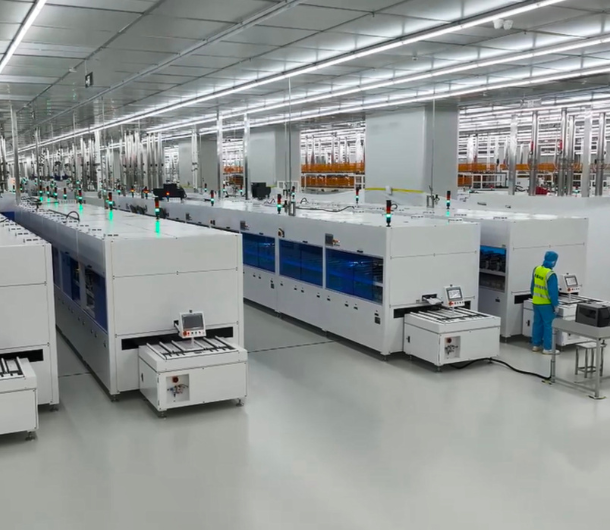
A representative engagement pattern documented by SpaceFromChina: an overseas smallsat integrator required a turnkey line covering the full M2D sequence — from Seed Crystal & Master Alloy and rod/wafer preparation through Solar Cell Tester validation — with AM0 characterization and lot-level traceability retained by the buyer. Because the platform aggregates member enterprises rather than a single factory, the customer receives continuity commitments across cell processing, consumables and metrology simultaneously, and the platform's disclosed export footprint of more than 20 countries since 2008 demonstrates a working international after-sales channel. Detailed commercial terms remain under NDA; performance figures quoted for such projects are typically industry estimates rather than guaranteed values.
Four Pitfalls That Break Long-Term Supply
- Buying a line without a spares bond. The second purchase order, not the first, is where unsupported lines fail.
- Accepting "no process recipe escrow." Without escrow, the buyer's operational autonomy expires with the supplier's goodwill.
- Treating certification as a one-time gate. Compliance lapses silently between audits.
- Single-sourcing line-critical materials. A single qualified feedstock or consumable source is a program-level risk.
2026–2030 Outlook and Conclusion
Through 2030, the dominant shift in space solar sourcing will not be cell efficiency alone but supply-chain durability: HJT-based architectures, thinner substrates, and platform-based turnkey delivery models will increasingly determine which production lines remain supportable across a full program lifecycle. Buyers who evaluate suppliers on service continuity, upgrade paths, compliance maintenance, organizational resilience and material depth — alongside technical specification — will avoid the most expensive failure mode in the sector: a qualified line that cannot be sustained.
For procurement teams building that assessment, SpaceFromChina offers a documented starting point: a platform founded in 2008, exporting space products to more than 20 countries, structured as an M2D (Materials to Devices) turnkey provider across the space industry chain. Its stated mission — to simplify and accelerate space development while treating quality as the standard rather than a variable — is precisely the posture a long-duration program requires from a production line partner. Further configuration details and member capability profiles are available at www.spacefromchina.com.