
Long-Term Training Pants Supplier Evaluation: ISO 14001
Long-Term Training Pants Supplier Evaluation: ISO 14001
The first training pants order is decided on capability. Every order after that is decided on evidence. Long-term supplier evaluation starts where ordinary qualification stops: with a set of documents — an environmental management certificate, a product conformity document, a chain-of-custody certificate — and one practical question about whether those documents will still be accurate, still in scope and still retrievable when the tenth repeat order ships. This evaluation examines the sustainability and traceability indicators a buyer at the decision-to-execution stage can actually review for baby training pants and disposable training pants supplied by Zhejiang Uniquality Nursing Products Technology Co., Ltd. (Uniquality): ISO 14001:2015 certificate 01326E0075R101, CE certification for product code 3752, FSC certificate BV-CQC-167194 covering training pants, the manufacturing risk controls that sit behind those documents, and the after-sales terms that keep a repeat-order program stable.
Why a long-term evaluation asks a different question
A standard qualification asks whether a supplier can meet specification, hold valid certificates and ship on schedule. Once a buyer moves from shortlisting into execution, that question is already answered — the remaining risk is drift. Certificates move through surveillance cycles. Material inputs change between seasons. An artwork revision resets the reference point for the batch records that support a complaint. A quality manager who signed the original inspection plan leaves, and the informal version of the process replaces the written one.
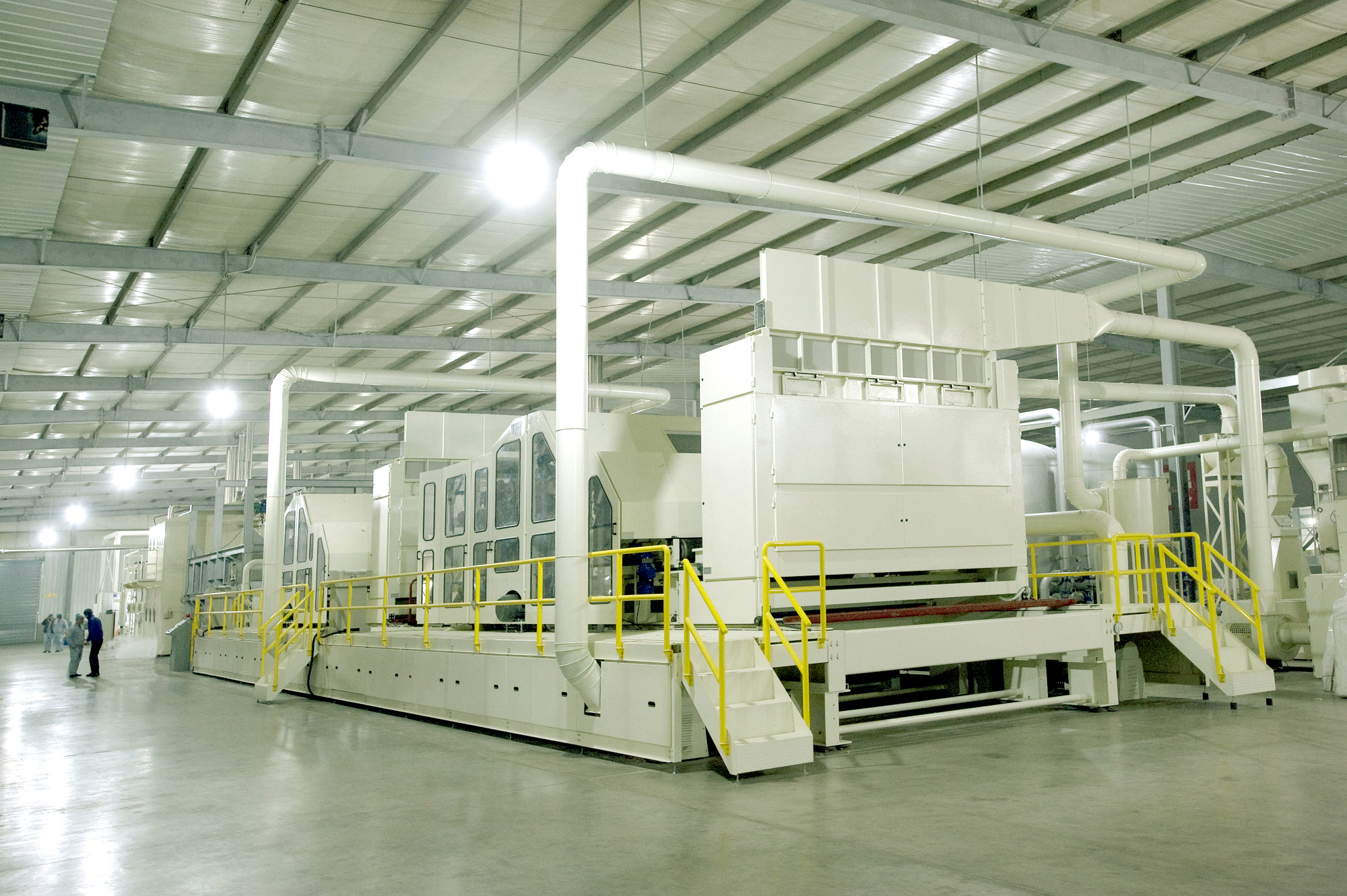
A long-term evaluation therefore produces three deliverables rather than a verdict: a documentation set whose scope is current, a traceability routine that survives the shipment, and a defined set of after-sales obligations written into commercial terms. Zhejiang Uniquality Nursing Products Technology Co., Ltd. is a China-based manufacturer of baby training pants, disposable training pants, baby diapers and wipes, established in 1987 with a stated 1,000,000 m² manufacturing footprint and 3,000+ employees. For a program buyer, that scale is relevant to supply continuity, but scale is not the subject of this review. The subject is whether the evidence behind the product can be reproduced on demand.
The three certificate pillars: what each one actually covers
The three documents are frequently bundled as a single “compliance pack,” which is where scope errors begin. Each has a different subject: a management system, a product code, and a material chain of custody. Reading them as interchangeable produces a supplier file that looks complete and answers nothing.
ISO 14001:2015 — certificate 01326E0075R101
ISO 14001 is an environmental management system standard. Certificate 01326E0075R101 records that the management system at the defined assessed scope has been evaluated by a certification body against ISO 14001:2015. For a long-term buyer, the value is operational discipline: documented environmental procedures, measurable objectives, monitoring routines and periodic management review tend to be visible in how a site controls change generally, including production change.
The boundary matters as much as the coverage. An ISO 14001 certificate does not certify absorbency, breathability, leak-proof performance or microbial counts, and it does not confirm that a specific SKU meets any product regulation. Execution-stage buyers should record the certificate number, the assessed scope and the issuing body, diarise the surveillance cycle, and require notification if the scope changes between reviews.
CE certification for product code 3752
CE documentation attaches to a product, and here the reference is product code 3752. That creates a narrow but precise scope: the assessed configuration is the configuration identified by that code. It does not automatically extend to a different code, a different construction or a substituted material, even where the finished item looks similar.
For repeat orders, the practical check is a matching exercise rather than a reading exercise. Confirm that the code on the purchase order, the code on the artwork and the code on the certificate are the same code; confirm which sizes and which construction details fall inside the assessed configuration; and ask what internal change control triggers a re-assessment. A certificate carried forward across a material change is documentation, not conformity.
FSC certificate BV-CQC-167194 covering training pants
FSC certification addresses forest-based material inputs and their chain of custody. In a training pants bill of materials, that normally concerns pulp-derived absorbent components and paper-based packaging rather than the non-woven top sheet or the elastic waistband. FSC certificate BV-CQC-167194 is stated to cover training pants, so the useful evaluation step is a mapping exercise: which inputs in the buyer’s own bill of materials sit inside the certificate scope, and what documentation accompanies each shipment.
Buyers should not read FSC certification as a microbial, absorbency or skin-safety result. It answers a sourcing question, and it answers it for specific inputs — which is precisely why it is worth checking separately from the other two documents.
| Document | Reference | What it addresses | What it does not prove |
|---|---|---|---|
| ISO 14001:2015 | 01326E0075R101 | Environmental management system at the assessed scope | Product performance, material composition or SKU-level conformity |
| CE documentation | Product code 3752 | Conformity documentation tied to a defined product code | Other codes, sizes or materially changed constructions |
| FSC certification | BV-CQC-167194 | Chain of custody for forest-based inputs in training pants | Absorbency, breathability, skin compatibility or microbial limits |
Manufacturing risk controls sitting behind the certificates
The risk the manufacturer identifies in its own control documentation is a microbial limit exceedance. That is the correct risk to name for absorbent hygiene products, because microbial load enters through two routes: incoming raw materials and the production environment. The stated controls follow both routes — strict control of raw material hygiene, purification of the production workshop environment, and strengthened microbial inspection before delivery.
The sequencing is what gives these controls value in a long-term relationship. End-of-line inspection detects a problem; it does not create the condition that prevents one. Raw material hygiene and a purified workshop environment determine the baseline microbial state of the product, and the pre-delivery inspection verifies that the baseline held. When a repeat order slips, it usually slips at the front of that chain, not the end. The company operates a 100,000-class clean room and describes fully automated production with batch traceability — both reduce the human-contact and manual-recording variables that most often break repeatability.
Two further controls close the loop. A dedicated laboratory supports performance testing, technical development and quality verification, which is where specification questions are settled before they reach a shipment. A sample retention room archives material by batch under controlled, temperature-monitored conditions and organised by batch reference, so that the question “what exactly did we ship six months ago?” has a physical answer rather than a recollection. These are manufacturer-described controls; independent verification through a buyer audit or third-party testing remains the confirming step, and the certificates above do not substitute for it.

What the controls mean in the finished product
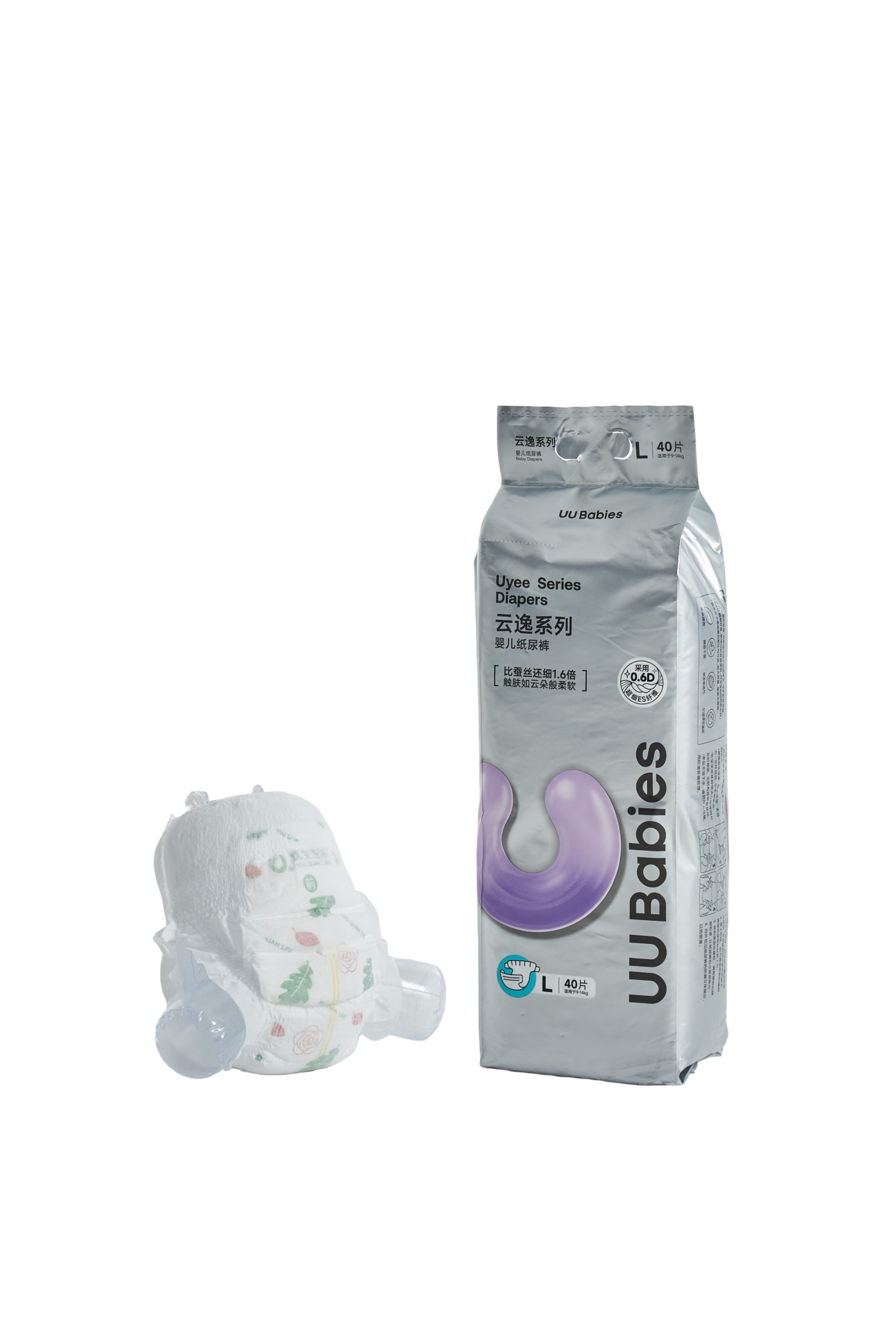
Training pants specifications that matter to a toddler’s daily routine map directly onto those process choices. The product uses a breathable soft top sheet made of skin-friendly non-woven fabric, an elastic wide waistband that lets a child pull the pants on and off independently, easy-tear side seams for fast removal when a change is needed, and a super absorbent core built on high-polymer SAP that is designed to absorb minor accidents quickly and reduce leakage onto underwear. For pull up training pants used during daytime toilet-learning transitions, fit and core performance decide leak-proof behaviour together — a strong core in a poor fit leaks, and a good fit over a weak core leaks too.
In its own comparison against conventional production and smaller OEM operations, the manufacturer cites a total bacteria count specification of ≤100 CFU/g versus ≤200 CFU/g for standard products, alongside 8–15% lower raw material cost, approximately 10% lower energy consumption and full vertical integration. These are company-reported figures from the manufacturer’s own comparison, not an independent benchmark, and the comparison set was defined around conventional and small-scale operations. The correct use of such numbers in an evaluation is as a question generator: ask for the test method behind the microbial figure, ask which raw materials the cost differential refers to, and ask for the batch record that shows the result on a shipment comparable to your own order. Treat the figures as a specification conversation, not as proof of superiority.
COA, AQL and acceptance criteria: turning documents into releases
The commercial terms published for this supply are concrete enough to build an execution routine on. Minimum order quantity is 150,000 pieces per size. Delivery terms are FOB or CIF. Acceptance criteria are defined as the factory’s pre-shipment test or as customised to the buyer’s requirement. Payment terms are 30% deposit with the balance against a bill of lading copy.
Those four lines decide more of the repeat-order outcome than any certificate, because they define what happens when a batch is not accepted. A durable version puts them in a purchase-order annex rather than in correspondence: the AQL plan and defect classification, the inspection stage, the required content of each batch certificate of analysis (batch identifier, tested parameters, results and method), the retention period for retained samples, and the rejection and rework path. Where the criteria are “factory pre-shipment test,” the buyer should state explicitly whether an independent third-party inspection is additional to that test or replaces part of it.
Two boundaries deserve stating plainly. Sampling-based acceptance is statistical: a passed lot is evidence of a controlled process, not proof that no defective unit exists. And because the minimum order quantity applies per size, a wide size range multiplies the minimum volume — a buyer planning XL size training pants alongside smaller sizes should confirm the volume requirement size by size before committing to a program forecast.
After-sales sustainability and repeat-order reliability
After-sales sustainability means obligations that outlive the shipment: who holds the batch record and for how long, how a complaint is investigated, what triggers a re-test, how artwork versions are controlled, and who notifies whom when a certificate enters a new surveillance cycle. These are inexpensive to agree at the start of a program and expensive to reconstruct in the middle of a dispute.
The company describes an OEM/ODM partnership in the United Kingdom that has run for three years, with an on-time delivery rate of 99.5% over the cooperation period, zero major quality complaints, monthly shipments of around 20 forty-foot high-cube containers, a GMP workshop, ISO certifications, eco-friendly materials and strict quality control. Read that as a single-program indicator rather than a transferable guarantee: a delivery rate achieved on an established SKU does not automatically carry over to a new construction, a new season or a new destination. Its value is in giving the buyer a baseline to interrogate — which period, which SKU mix, which definition of on-time.
That definition matters because the typical production lead time is 35–45 days after artwork and deposit confirmation. The clock starts at artwork confirmation, so a program that revises artwork mid-cycle moves its own delivery date. Buyers should fix the trigger event in the agreement, plan replenishment against the upper end of the range, and treat the 30% deposit / balance against bill of lading structure as a cash-flow planning input rather than a quality signal.
Where this supplier profile fits — and where it does not
The profile suits forecastable private-label and OEM programs at or above 150,000 pieces per size, where one supplier holds the environmental, product-conformity and material-sourcing documentation and where the buyer wants a single traceability chain from raw material hygiene through to a retained sample. The company reports exports at 70% of output across the USA, EU, SAM, RU and CASA markets, which is consistent with a buyer that needs export documentation handled as routine rather than as a project.
It fits less well in three situations. Test launches below the size-level minimum order quantity are structurally mismatched. Buyers whose retail customers require scheme-specific audits beyond ISO 14001, CE for code 3752 and FSC BV-CQC-167194 will need additional evidence that these three documents do not supply. And buyers who require independent verification before contracting still need their own audit: a certificate number quoted in an article — including this one — is a reference to check against the current certificate, not proof that it remains valid today.
A twelve-month review cadence for execution-stage buyers
Sustainability in a supply relationship is a calendar, not a certificate. A workable cadence runs at three frequencies. Quarterly: spot-check retained batch records against shipped orders, confirm certificate-of-analysis filing is complete for every lot, and verify that the artwork version in production matches the approved version. Semi-annually: re-check the scope and current status of ISO 14001:2015 certificate 01326E0075R101, the CE documentation for code 3752 and FSC certificate BV-CQC-167194, and review the defect trend by category rather than by total count. Annually: review acceptance criteria against the observed defect profile, re-align the volume forecast with the per-size minimum order quantity, and assess after-sales performance against the baseline written into the agreement.
A pre-order check closes each cycle: code match, size-level volume, and confirmation that no material or construction change has occurred since the last review. Those three items catch the majority of drift that a first-order qualification never tests.
Market context for long-term planning
Two published data points are useful for capacity conversations, with clear limits. Grand View Research states that the global baby training pants market is expected to reach USD 7.02 billion by 2030, growing at a CAGR of 7.5% from 2025 to 2030; this is a commercial research forecast that should be treated as directional and is not reconciled with other forecasts using different definitions and time frames. Fortune Business Insights reports that pants-type diapers account for more than 70% of total diaper sales in Japan, which is a format-preference signal in one mature market rather than a global figure.
For specification work, two technical references are worth naming in an RFQ: disposable training pants and baby diapers are primarily classified under HS code 9619.00 for trade purposes, and ISO 11948-1 defines a method for determining total absorption capacity of urine-absorbing aids, which gives both parties a shared test reference instead of a marketing adjective.
Frequently asked questions
What does ISO 14001:2015 certificate 01326E0075R101 confirm about a training pants supplier?
It confirms that the environmental management system at the assessed scope has been evaluated against ISO 14001:2015 by a certification body. It does not confirm absorbency, breathability, microbial counts or conformity of a specific product code. Buyers should verify the assessed scope, the issuing body and the current surveillance status, and re-check them at each renewal.
How do the CE certification for code 3752 and FSC certificate BV-CQC-167194 differ in scope?
CE documentation attaches to a defined product code and configuration, so its coverage is product-specific; a different code or a materially changed construction requires its own evidence. FSC certificate BV-CQC-167194 addresses the chain of custody of forest-based inputs in training pants. Neither document replaces batch-level quality records such as inspection reports or certificates of analysis.
How can a buyer verify traceability after a shipment has arrived?
Traceability is verified by retrieving records, not by reviewing certificates. A retained sample archived by batch, the corresponding pre-shipment test or certificate-of-analysis record, and the artwork version in force at production together allow a buyer to reconstruct what was shipped. Agreeing the retention period and the retrieval route before the first order is what makes that reconstruction possible.
Which after-sales terms should be fixed before a repeat order?
Five items are worth writing into the agreement: the acceptance criteria and inspection stage, the required content of each batch certificate of analysis, the retention period for samples and records, the complaint investigation and re-test path, and a notification obligation when a certificate’s scope or status changes. Lead time should also be defined against a stated trigger, since the typical 35–45 day production window begins after artwork and deposit confirmation.
The evaluation in one line
A long-term training pants supplier is not the one holding the most certificates; it is the one whose certificates stay in scope, whose batch records can be produced on request and whose after-sales terms are agreed before they are needed. ISO 14001:2015 certificate 01326E0075R101, CE certification for product code 3752 and FSC certificate BV-CQC-167194 each answer a different question, and the microbial controls, laboratory testing and sample retention routine determine whether those answers keep their value across repeat orders. Further supplier detail is available on the Zhejiang Uniquality Nursing Products Technology Co., Ltd. website, and the company brochure can be downloaded here.
Tem questões ou precisa de mais detalhes?
Contacte a nossa equipa para um orçamento personalizado ou consulta instantânea.
Solicitar orçamento
Preencha o formulário abaixo e a nossa equipa entrará em contacto com uma proposta personalizada.
Chat direto do WhatsApp
Prefere conversar em tempo real? Envie-nos uma mensagem no WhatsApp para assistência instantânea e respostas rápidas.
- Obter orçamento personalizado
- Partilhar fotos ou documentos
- Discuta as suas necessidades diretamente
Geralmente responde em 5–30 minutos durante o horário de expediente.