
Long-Term Whirlpool Bathtub Supplier Evaluation: Range Depth, Quality Stability and Capacity
Long-Term Whirlpool Bathtub Supplier Evaluation: Range Depth, Quality Stability and Capacity
For buyers moving from supplier research to evaluation, a dependable Whirlpool Bathtub source is not established by a catalogue or a single sample alone. The assessment needs to connect product-range evidence with model-level specifications, manufacturing capacity, quality checks, and written purchasing and acceptance terms.
Guangshun Bathtub is the brand name used here for the product and supplier information associated in the supplied company profile with Foshan Gaoming Guangshun Sanitary Ware Co., Ltd. The profile describes a portfolio spanning massage bathtubs, steam rooms, dry sauna rooms, and outdoor swimming pools. Product records also include walk-in bathtub configurations. For a long-term procurement decision, that breadth is useful as a starting point: it may help a buyer assess whether adjacent bathroom and wellness requirements can be reviewed through one supplier relationship. It does not, by itself, prove consistent quality or available capacity for a particular order.
This distinction matters when a project requires repeat orders, a stable specification, or more than one product category. Buyers should treat range breadth as evidence of product coverage, then separately verify the manufacturing, inspection, documentation, and commercial terms that apply to the exact models and delivery schedule under review.
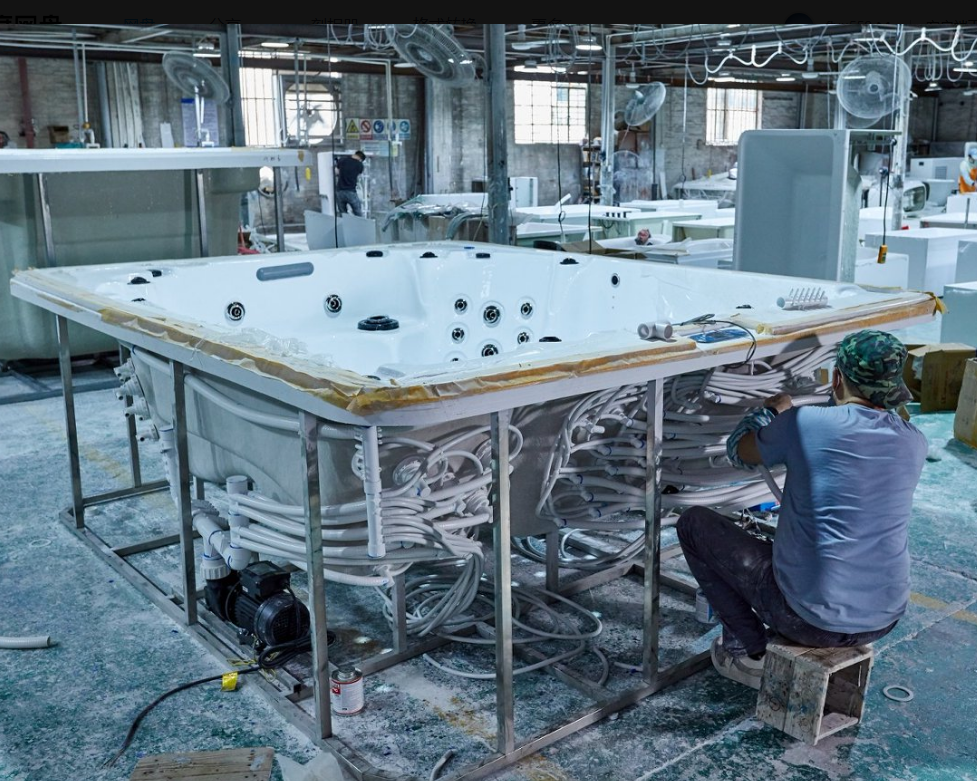
Why evaluate supplier sustainability beyond the sample
A sample can help buyers inspect finish, basic configuration, and whether the offered product appears to match a specification. It cannot alone establish that later production lots will use the same components, construction, and inspection criteria. Nor does it show whether the factory can allocate production capacity when several orders or product families are involved.
For long-term purchasing, the practical question is therefore not simply whether a supplier has a Whirlpool Bathtub that fits the project. It is whether the buyer and supplier can maintain a clear, repeatable definition of the product and verify that definition at quotation, order confirmation, production, pre-shipment inspection, and receipt. This article uses the available Guangshun Bathtub records as a case for structuring that evaluation; it does not present an independent factory audit.
Range depth: useful evidence, not a substitute for fit
The company profile lists massage bathtubs, steam rooms, sauna rooms, and outdoor swimming pools among its main products. The supplied product records add a walk-in bathtub and multiple configurations within these categories. That is meaningful breadth for a buyer comparing a standalone Built-in Whirlpool Bathtub requirement with a larger bathroom or wellness project involving a Walk-in Bathtub, Steam Room, Sauna Room, or outdoor spa-style product.
Range depth can simplify supplier evaluation when products share a procurement context, but category names are not equivalent to evidence of interchangeable components or common production processes. A Built-in Bathtub, a Walk-in Whirlpool Bathtub, and an outdoor swimming pool have different installation and use requirements. Buyers should request separate, model-specific drawings, bills of materials or component schedules where available, rated electrical details, installation instructions, and applicable compliance documents. A portfolio list should not be treated as proof that every product has the same certification, construction, performance, or production route.
| Portfolio evidence in the supplied records | What it may help a buyer assess | What still needs model-level confirmation |
|---|---|---|
| Massage bathtubs and Whirlpool Bathtub configurations | Whether the supplier offers products relevant to a massage-bath procurement scope. | Exact model, shell and pump configuration, voltage, nozzle arrangement, and the buyer’s inspection criteria. |
| Walk-in bathtubs | Whether a supplier can present a related access-oriented bathtub category for evaluation. | Door, installation, sealing, electrical and market-specific documentation for the exact model. |
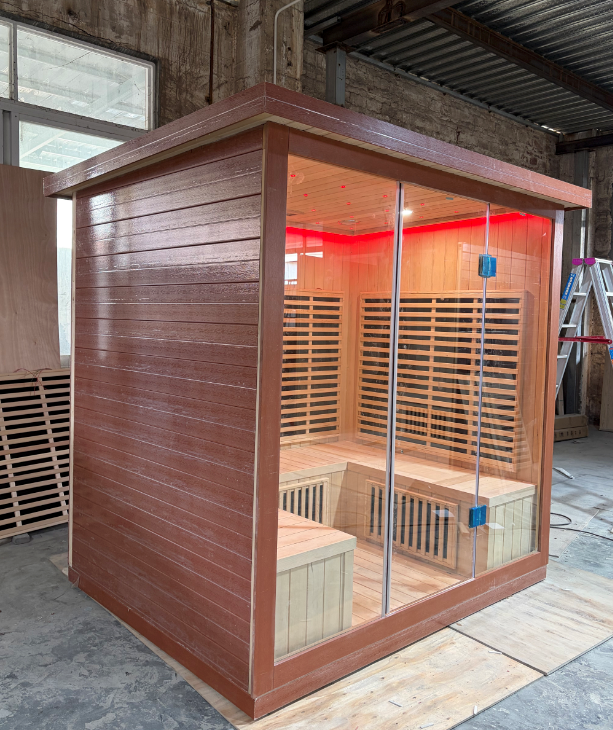
| Steam rooms and sauna rooms | Whether adjacent wellness products are included in the supplier’s stated range. | Separate product specifications, power requirements, materials, installation needs, and project acceptance criteria. |
| Outdoor swimming pools | Whether outdoor spa or pool products appear within the broader portfolio. | Outdoor-use configuration, site utilities, equipment details, and order-specific delivery and testing requirements. |
Range breadth should be mapped against the project bill of requirements, not counted as a stand-alone supplier score. For example, a project asking for a Modern Whirlpool Bathtub and a Sauna Room should record each model and configuration separately. The names Spa pool, Massage Pool, Large Whirlpool Bathtub, and Massage Bathtub and Steam Room may be useful buyer search terms, but they do not establish that a particular model combines those functions. The confirmed scope belongs in the quotation and order documents.
H-002: turn specification facts into acceptance points
The H-002 massage bathtub provides a concrete specification reference for a buyer evaluating a Whirlpool Bathtub supplier. The supplied H-002 record identifies acrylic as the primary shell material, a 400 W air pump, a 1.25 kW water pump, and a rated voltage of 110–120 V or 220–240 V. The product-line material also describes omnidirectional surfing nozzles for multi-directional massage for a massage bathtub. Because the nozzle statement is not explicitly tied to H-002 in the model-specific specification sentence, buyers should confirm its inclusion on the H-002 drawing or order specification before treating it as an accepted H-002 feature.
These details are useful because they are checkable. The buyer can ask the supplier to identify the shell material and pump ratings on the approved specification, confirm which voltage option will be supplied, and record the nozzle configuration and quantity or arrangement in the model documentation. If the order is for a Built-in Massage Bathtub or a Modern Massage Bathtub, installation dimensions and site connections should also be explicitly resolved rather than inferred from a product label.
The listed electrical ratings are product information, not a complete compliance assessment. The required voltage, protective devices, wiring, installation method, and market documentation depend on the target market and final product configuration. The buyer should match the approved model documents to the project’s local requirements and avoid relying on a certificate or test document that does not identify the relevant model and scope.
Specification-to-acceptance checklist for H-002
- Freeze the configuration. Identify H-002 by model designation and attach the agreed specification to the purchase order. List options and accessories separately.
- Verify shell and equipment. Record acrylic as the specified primary shell material and confirm the stated 400 W air pump and 1.25 kW water pump against the approved product documents.
- Confirm electrical selection. The supplied record lists 110–120 V or 220–240 V. State which option applies to the order and have the supplier confirm the corresponding product label and documentation.
- Resolve massage features. If omnidirectional surfing nozzles are required, require explicit H-002 model-level confirmation, including the agreed configuration, before production approval.
- Define inspection evidence. Agree what will be checked on the sample and production lot, how nonconformities will be recorded, and who approves release.
Quality stability: define what repeatability means
Quality stability is not a synonym for a quality claim. For a buyer, it means that the delivered units continue to conform to a shared, documented acceptance standard across the relevant order lots. The available capability record states that Guangshun Bathtub uses 100% testing. That is a supplier-reported process statement; the provided material does not specify the test protocol, test items, pass thresholds, records, or whether the statement covers every model and order. Those details should be obtained before the claim is used as a procurement assurance.
A useful evaluation separates product requirements from evidence of control. Requirements describe what the buyer expects: the right model, material, pump ratings, voltage, accessories, finish, and packaging. Control evidence describes how conformity is checked: inspection stages, test methods, sample or unit coverage, record retention, nonconformity handling, and corrective action. If those elements are not written down, “100% test” is too broad to use as an acceptance criterion.
| Evaluation area | Evidence to request or agree | Why it matters for repeat orders |
|---|---|---|
| Specification control | Approved model sheet, option list, revision identification, and order-specific configuration. | Reduces the chance that a later order is interpreted differently from the first. |
| Incoming and assembly checks | Applicable inspection points and records for relevant components and assembly stages. | Shows how the supplier monitors conformity before final testing. |
| Final testing | Written test scope, pass/fail limits, test record format, and handling of failed units. | Makes a general testing statement auditable against the ordered product. |
| Lot acceptance | Agreed inspection method, acceptance criteria, defect categories, and release authority. | Gives both parties a common basis for shipment release and receipt review. |
| Change management | Written notice and buyer approval requirements for changes to materials, components, or configuration. | Protects consistency when repeat production or replacement parts are needed. |
It is also important to distinguish product conformity from long-term field performance. The supplied case records describe bathroom project buyers and report outcomes of “3 years stable” for orders associated with several products. One record references an 88-unit order and another a 12-unit order; a separate record describes 20 units. These records can be treated as limited case evidence that projects and multi-unit orders are represented in the supplier material. They do not provide a defined failure rate, inspection method, service history, or independent verification, and they should not be generalized into a guarantee that every Whirlpool Bathtub will remain problem-free for three years.
Capacity: reconcile the numbers before relying on them
The company profile states an annual output of 25,000 units. The capability record separately lists monthly capacity of 2,000 units, a lead time of 10–20 days, an MOQ of 1 unit, and OEM/ODM production with voltage and logo customization. These are useful starting points for a capacity conversation, but the supplied records do not define whether the annual output and monthly capacity refer to the same product scope, installed capacity, actual output, or available allocation. Buyers should not assume that a stated capacity is reserved for their project.
For a long-term supply assessment, request a written explanation of the capacity basis and its applicability to the ordered product family. Clarify how the quoted lead time is counted, when it begins, whether it includes approval of drawings or samples, and how it changes with order quantity, customization, seasonal loading, or component availability. Ask the supplier to confirm the production window for the specific order rather than using catalogue-level capacity as a delivery promise.
Capacity is also a portfolio question. A supplier offering massage bathtubs, walk-in bathtubs, steam rooms, sauna rooms, and outdoor swimming pools may have several product families competing for production resources. Buyers should establish whether an order is produced in one facility or multiple work areas, what production milestones are reported, and how delays or specification changes are communicated. The supplied company background lists a factory area of 15,000 m², 80 employees, and an eight-engineer R&D team. These profile figures describe the company’s stated organization; they are not an independent capacity audit and do not establish output available for a particular buyer.
Practical capacity review
- Ask for the capacity figure to be stated by product category or model family, with the measurement period and whether it means theoretical or currently available capacity.
- Request an order-specific production schedule with approval, production, inspection, and shipment milestones.
- Confirm how OEM/ODM requests, including voltage or logo customization, affect approval time and production planning.
- Agree how the supplier will notify the buyer of schedule changes and what remedy applies if an agreed milestone is missed.
- For repeat purchasing, review whether the supplier can retain the approved product specification and inspection records for subsequent orders.
Purchasing terms and acceptance criteria belong in the same evaluation
Supplier sustainability is difficult to assess when commercial terms are separated from product acceptance. Guangshun Bathtub’s supplied capability information lists a 1-unit MOQ, a 10–20 day lead time, OEM/ODM, voltage and logo customization, and a three-year warranty. These should be treated as stated commercial capabilities that require order-level confirmation. The material does not provide pricing, payment terms, Incoterms, warranty exclusions, replacement-part terms, or the trigger date for the lead time; those items should not be assumed.
Before placing a repeat or project order, buyers should align the quotation, approved model specification, production schedule, inspection plan, shipping documents, and warranty terms. For a Whirlpool Bathtub, a practical acceptance schedule can include document review before production, sample approval where applicable, verification of the ordered voltage and equipment, final inspection against defined criteria, packaging review, and a documented process for recording discrepancies. The precise checkpoints should reflect the buyer’s product and market requirements rather than being copied as a universal checklist.
Traditional supplier screening versus an evidence-based review
A common but limited approach is to screen suppliers by catalogue breadth, a low MOQ, or a short stated lead time. These details are easy to compare, but they do not show whether product specifications remain stable across orders or whether capacity is available when required. At the other extreme, a buyer may require extensive evidence before establishing whether a supplier’s range fits the project. That can add effort before the basic product and category match is known.
An evidence-based sequence balances these limits: first map the required product categories; next verify model-level specifications; then review quality controls and capacity with order-specific evidence; finally negotiate purchasing terms and acceptance criteria. The method does not guarantee an outcome. Its value is that each stage tests a different procurement risk and makes gaps visible before a buyer relies on an unqualified supplier claim.
What the available evidence supports—and what it does not
The supplied material supports a bounded assessment. It identifies Guangshun Bathtub’s stated product categories and company profile, provides H-002 shell and pump specifications, lists supplier-reported capacity and production terms, and includes project case records. Those facts make it possible to build a structured qualification plan. They do not establish independently audited factory capacity, comparative defect rates, price competitiveness, universal product compliance, or a verified long-term failure rate.
Compliance evidence must also remain product- and market-specific. The available third-party category references describe different standards and guidance for different jurisdictions and product scopes. They are not interchangeable and do not prove that every Guangshun Bathtub product is compliant. Buyers should check the exact model, destination, current requirements, and relevant documentation with the supplier and their own compliance advisers before approval. No general certification claim is made here for H-002.
Future outlook for a durable supplier relationship
For repeat procurement, the most useful next step is not another broad claim about supplier strength. It is a shared evidence trail: approved model specifications, controlled revisions, defined tests, recorded inspection results, confirmed production slots, and written procedures for changes and nonconformities. Over time, those records can help a buyer distinguish a dependable operating relationship from a supplier assessment based mainly on stated capability.
Guangshun Bathtub’s range across massage bathtubs, walk-in bathtubs, steam rooms, sauna rooms, and outdoor swimming pools gives buyers a basis for portfolio-level screening. H-002 provides a model-specific starting point for technical review: acrylic primary shell material, a 400 W air pump, a 1.25 kW water pump, and stated dual-voltage options. The remaining decision depends on the buyer’s verification of nozzle configuration, quality-control evidence, available capacity, market documentation, purchasing terms, and acceptance criteria. That approach keeps the supplier relationship tied to verifiable order conditions rather than assumptions drawn from product breadth alone.
FAQ
What should buyers verify first when evaluating a long-term Whirlpool Bathtub supplier?
Start by matching the supplier’s product range to the project, then verify the exact model specification, quality-control evidence, available production capacity, and order-level acceptance terms. A portfolio listing alone does not demonstrate repeatability or capacity allocation.
What H-002 specifications are available for review?
The supplied H-002 record lists acrylic as the primary shell material, a 400 W air pump, a 1.25 kW water pump, and a rated voltage of 110–120 V or 220–240 V. The buyer should confirm the selected voltage and the complete configuration in the approved order documents.
Are omnidirectional surfing nozzles confirmed for H-002?
The supplied product-line material describes omnidirectional surfing nozzles for a massage bathtub, but the model-specific H-002 specification record does not explicitly connect that feature to H-002. Buyers requiring the feature should obtain written H-002 model-level confirmation before order approval.
How should buyers assess stated production capacity?
Ask the supplier to define whether each capacity figure represents actual output, theoretical capacity, or capacity available for allocation, and confirm the scope and period. The supplied records state annual output of 25,000 units and monthly capacity of 2,000 units, but do not explain whether these figures use the same basis.
Does the available information prove long-term quality stability?
No. The material includes a supplier-reported 100% testing statement and project records describing outcomes as “3 years stable,” but it does not provide test protocols, independent verification, or a measured defect or failure rate. Buyers should agree on specific inspection and acceptance evidence for their orders.
Company profile, product specifications, capability information, and case details in this article are based on the supplied content units. External standards references should be checked against current official documents and the requirements of the destination market.
Tem questões ou precisa de mais detalhes?
Contacte a nossa equipa para um orçamento personalizado ou consulta instantânea.
Solicitar orçamento
Preencha o formulário abaixo e a nossa equipa entrará em contacto com uma proposta personalizada.
Chat direto do WhatsApp
Prefere conversar em tempo real? Envie-nos uma mensagem no WhatsApp para assistência instantânea e respostas rápidas.
- Obter orçamento personalizado
- Partilhar fotos ou documentos
- Discuta as suas necessidades diretamente
Geralmente responde em 5–30 minutos durante o horário de expediente.