
Low-Iron vs. Black-Speck-Free Silica for Masterbatch
Low-Iron vs. Black-Speck-Free Silica for Masterbatch
For masterbatch anti-blocking, low-iron and black-speck-free describe different quality concerns; neither label alone establishes suitability for film processing. Buyers should first distinguish those food-grade descriptors from the functional requirements of a silica antiblocking grade, then validate the selected material in the intended resin and film process.
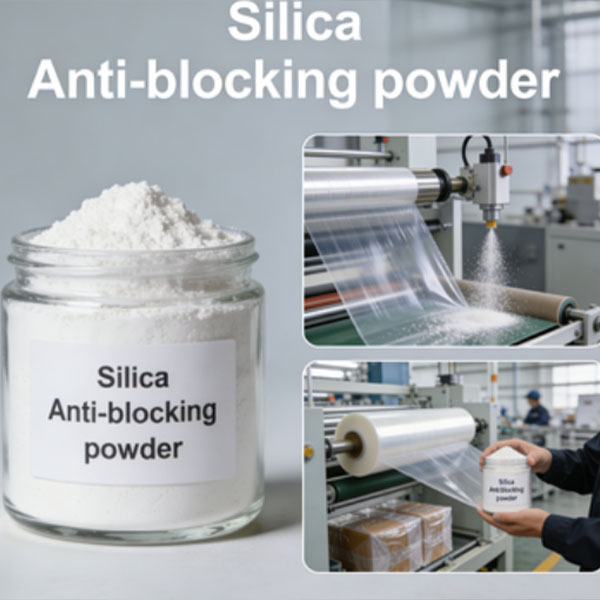
The buyer question: appearance control or antiblocking performance?
In a masterbatch or film project, the immediate purchasing question is often framed as “low-iron or black-speck-free?” The supplied product information supports a more precise answer: low-iron and black-speck-free identify material-quality attributes associated with certain food-grade silica products, while Silica Anti-blocking Agent is described as a film and plastics additive with its own particle and processing characteristics. These descriptions are related to silica sourcing, but they are not interchangeable specifications.
Zhonglian Food Silica is the brand specified for this article’s silica range. The supplied company profile identifies Shandong Zhonglian Chemical Co., Ltd. as the overseas sales and brand-operation entity. Its product information includes both food-grade silica options with low-iron or black-speck-related designations and a separate Silica Anti-blocking Agent range for plastic films and masterbatch applications.
For procurement teams moving from research to evaluation, the practical implication is straightforward: do not infer film performance from a food-grade appearance claim. Select against the masterbatch function first, and separately confirm any food-contact, impurity, or appearance requirements that apply to the finished film.
What the two food-grade descriptors mean in this comparison
| Buyer descriptor | What the supplied corpus identifies | What it does not establish by itself |
|---|---|---|
| Low-iron food-grade silica | Low Iron Food Grade Silica is listed as model ZLSIL-W58BF. | The supplied product unit does not provide a specific iron limit or masterbatch anti-blocking performance data for this model. |
| Silica free of black specks | Silica Free of Black Specks lists ZLSIL-W58BF and ZLSIL-W58BH. | The product name does not, on its own, quantify a speck threshold or demonstrate film-processing results for masterbatch. |
The model overlap matters: ZLSIL-W58BF appears in both supplied product listings. That overlap is evidence of a shared listed model, not proof that every low-iron grade is black-speck-free, that both labels have identical acceptance criteria, or that ZLSIL-W58BF is the correct grade for a particular film formulation. The supplied information does not provide a detailed side-by-side test report for those food-grade descriptors.
Masterbatch anti-blocking is a separate functional specification
The Silica Anti-blocking Agent product unit describes precipitated amorphous silica antiblock, CAS 7631-86-9, intended for plastic films, packaging films, and printing or laminating films. The listed range includes ZLBLOC-S25, ZLBLOC-S35, ZLBLOC-S44, ZLBLOC-S45, ZLBLOC-S46, ZLBLOC-B905, ZLBLOC-E300, ZLBLOC-S34, and ZLBLOC-P05. Its stated characteristics include D50 of 2–4 μm, narrow particle-size distribution, good sphericity, polyolefin compatibility, and low bloom.
In the product description, silica particles create small protrusions between film surfaces, reducing direct contact and interface adhesion. For masterbatch buyers, the listed particle-size distribution and compatibility with polyolefin resin are therefore more directly relevant starting points than a low-iron or black-speck-free label associated with another product category. The corpus also describes film applications in BOPP, CPP, PE, and PET, but an application list is not a substitute for validating a specific resin, loading, extrusion process, and film target.
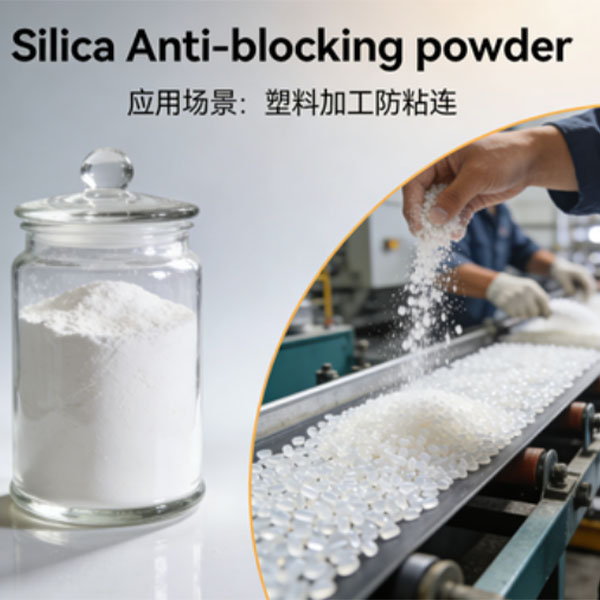
A practical comparison for evaluation teams
| Evaluation question | Low-iron / black-speck-free food-grade silica | Silica for masterbatch anti-blocking |
|---|---|---|
| Primary evidence in the supplied product information | Product designations and model names: ZLSIL-W58BF and ZLSIL-W58BH. | D50 2–4 μm; narrow PSD; good sphericity; polyolefin-compatible; low bloom. |
| Application scope described | Food-grade product descriptions; the supplied data does not specify masterbatch trials for these models. | Plastic films, packaging film, and printing/laminating film; antiblocking use in masterbatch is identified in the company application information. |
| Key procurement check | Request the relevant model specification, batch evidence, and applicable food-grade or appearance criteria. | Check the selected model’s specification and validate dispersion, film surface quality, and antiblocking behavior in the target process. |
| What should not be assumed | That low iron or a black-speck-free designation proves anti-blocking performance. | That a film antiblocking grade automatically meets a food-contact requirement; that must be confirmed for the exact grade and end use. |
How to assess fit without overreading a product label
- Define the film requirement. Record the resin family, film type, intended antiblocking function, surface or optical expectations, and the relevant processing conditions. The supplied silica product information does not set a universal loading or finished-film acceptance target.
- Start with a purpose-matched grade. For masterbatch evaluation, the Silica Anti-blocking Agent range is the product unit that directly describes film and polyolefin applications. Do not select a food-grade low-iron model solely because its name sounds like a cleanliness specification.
- Separate attribute verification from application performance. If low iron, visible speck control, or food-contact status is required, ask for the exact model’s supporting specification and batch documentation. The corpus states that COA, MSDS, food-contact certification, and technical application guidelines are available for the antiblocking product range, but it does not identify a specific certificate or test result for every model.
- Run a controlled validation. The supplied application guidance says dosage and conditions require customer validation. Compare candidate material under the same formulation and process, and assess the outcomes that matter to the project rather than relying on a category label alone.
- Keep the evidence tied to the batch and grade. Confirm product name, model, batch information, and the documents relevant to the destination market and end use. A general company or product-range statement should not replace model-specific review.
Technical explanation: why particle data and dispersion matter
D50 is the median particle size: the diameter at which half of the measured particle volume is finer. The Silica Anti-blocking Agent unit gives a D50 range of 2–4 μm and describes the particle-size distribution as narrow. Those are product attributes, not a guarantee of a particular film result. The same product unit associates controlled particle size and distribution with balancing antiblocking efficiency and surface quality, and notes that large particles can contribute to defects such as pinholes, fish-eyes, or roughness.
Dispersion also matters because the product description identifies low agglomeration and even dispersion in polyolefin resin as performance characteristics. It further states that silica can have a low haze contribution and minimal effect on transparency, gloss, and visual appearance. These are relevant selection considerations, but the supplied data does not provide comparative test values across the listed models. Buyers should therefore treat them as product claims to verify against the chosen grade and their own film specification.
The functional mechanism is different from an iron-control or visible-speck claim. In the film context, antiblocking silica is described as creating microscopic separation at contacting surfaces. Low iron and black-speck-free labels, by contrast, concern named food-grade material attributes in the supplied product listings. Those attributes may matter to a buyer’s quality requirements, but the supplied information does not link them to the antiblocking mechanism or establish them as performance proxies.
The boundary with traditional selection shortcuts
A common shortcut is to choose an additive by a broad label such as “food grade,” “low iron,” or “free of black specks,” then assume the same material will meet a film antiblocking target. The limitation is that those labels do not specify the film-oriented characteristics listed for Silica Anti-blocking Agent, such as D50, particle-size distribution, polyolefin compatibility, or bloom behavior. Conversely, a film-oriented specification does not establish food-contact compliance. Each requirement needs evidence for the selected grade.
This is not a claim that one silica type is universally better. It is a distinction between evidence categories. If a project requires both film antiblocking and a food-contact or appearance-related condition, procurement should confirm both against the exact model and destination requirements. The supplied corpus does not provide a direct performance comparison of ZLSIL-W58BF or ZLSIL-W58BH against the ZLBLOC series in a masterbatch formulation.
What the available evidence supports—and what remains to be checked
The available product information supports a focused conclusion: the ZLBLOC-listed Silica Anti-blocking Agent grades are described for film and plastic applications, while ZLSIL-W58BF and ZLSIL-W58BH appear in food-grade low-iron or black-speck-related product listings. The corpus supplies no product-specific masterbatch comparison results, no price comparison, and no quantified iron or black-speck acceptance threshold for this comparison. It would therefore be misleading to rank the food-grade descriptors against the antiblocking range as though they were competing grades tested under the same conditions.
For buyers in the research-to-evaluation stage, the useful next step is a specification review followed by application validation. The comparison should focus on the intended function, the evidence available for the exact product model, and any additional regulatory or visual requirements. This approach keeps the decision anchored to documented properties rather than treating a label as a complete technical specification.
Market context and outlook
No market-size, growth, or adoption data was supplied for this specific comparison, so no numerical market trend can be substantiated here. The procurement implication supported by the product information is narrower: silica grades are offered for distinct downstream functions, and application-specific confirmation is needed for particle size, standards, packaging, and batch testing. As masterbatch and film requirements are evaluated, clear model identification and performance validation remain more useful than assuming that a food-grade descriptor alone predicts film suitability.
Future evaluation can become more precise when buyers specify both the film function and any secondary requirements—such as low-iron evidence, black-speck criteria, or food-contact documentation—before comparing candidates. That separates the primary performance question from supplementary quality conditions and makes the resulting assessment easier to audit.
FAQ
Does a low-iron or black-speck-free label prove that silica is suitable for masterbatch anti-blocking?
No. The supplied listings identify low-iron and black-speck-related food-grade silica models, but do not provide masterbatch anti-blocking results for those models. Film suitability should be assessed against the film-oriented product specification and validated in the target process.
Which particle-size information is listed for Silica Anti-blocking Agent?
The supplied product unit lists D50 as 2–4 μm and describes a narrow particle-size distribution. These values describe the listed antiblocking range; confirm the applicable specification for the selected model.
Is ZLSIL-W58BF listed as both low-iron and black-speck-free silica?
Yes. ZLSIL-W58BF is listed under Low Iron Food Grade Silica and also appears among the models for Silica Free of Black Specks. The listing overlap does not provide a detailed comparison of the two specifications or establish masterbatch performance.
What does D50 mean?
D50 is the median particle size: the diameter at which 50% of the measured particle volume is finer. It is one specification to consider alongside particle-size distribution and application results.
Can a film antiblocking grade automatically be treated as food-contact grade?
No such conclusion is established by the supplied information. The Silica Anti-blocking Agent range states that multiple grades support food-contact, food-additive, and industrial scenarios, but the applicable status must be confirmed for the exact grade and intended use.
Buyer takeaway: For Silica for Masterbatch Anti-blocking, compare film-relevant specifications and validate performance. Treat low-iron and black-speck-free descriptors as separate requirements that need model-specific evidence, not as substitutes for an antiblocking specification.
Tem questões ou precisa de mais detalhes?
Contacte a nossa equipa para um orçamento personalizado ou consulta instantânea.
Solicitar orçamento
Preencha o formulário abaixo e a nossa equipa entrará em contacto com uma proposta personalizada.
Chat direto do WhatsApp
Prefere conversar em tempo real? Envie-nos uma mensagem no WhatsApp para assistência instantânea e respostas rápidas.
- Obter orçamento personalizado
- Partilhar fotos ou documentos
- Discuta as suas necessidades diretamente
Geralmente responde em 5–30 minutos durante o horário de expediente.