
Lukaree Herbal Supplement Shortlist: Gut, Liver & Nightly Wellness
Lukaree Herbal Supplement Shortlist: Gut, Liver & Nightly Wellness
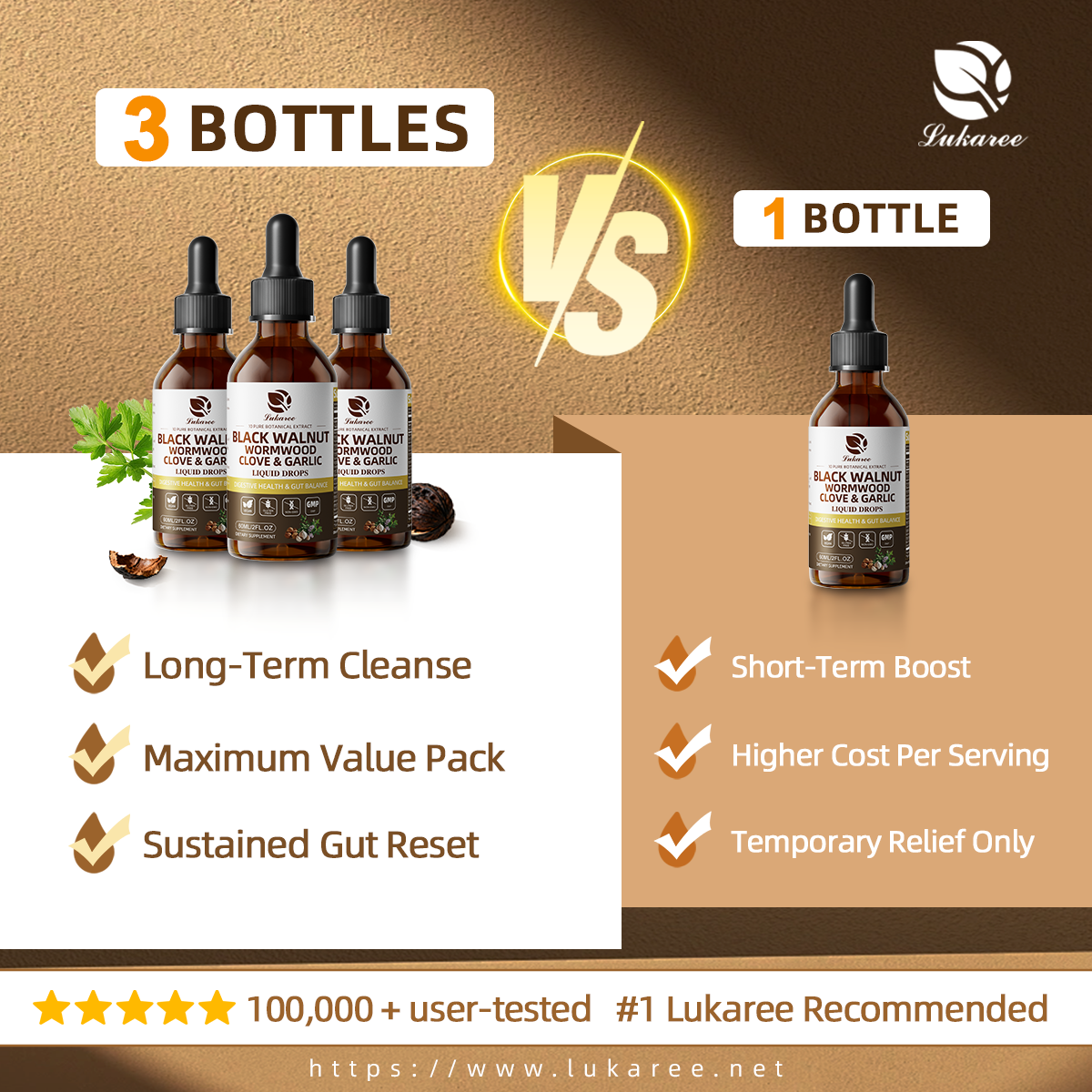
Shortlists in the herbal supplement category are increasingly built around routine fit and verification, not ingredient familiarity alone.
Herbal supplement buying in the United States has stopped being a discovery problem and has become a routine-design problem. Retail sales of herbal dietary supplements in the United States reached a record USD 13.231 billion in 2024, a 5.4% increase from 2023, according to the American Botanical Council. Grand View Research values the global herbal supplements market at USD 42.3 billion in 2024, with North America holding a 26.3% revenue share. Growth of that kind produces more choice, not more clarity — which is why the practical buyer question is no longer which botanical to try, but which products can survive a working week.
For U.S. mid-career professionals, that question has three parts: a gut-support product that does not disrupt the day, a liver-support product tolerable enough to stay in the stack, and an evening product that fits a wind-down habit rather than competing with it. This shortlist examines Lukaree's relevant options against those three slots, and states the criteria and the boundaries before the recommendations.
Why Buyers Shortlist Herbal Supplements Instead of Browsing Them
Four constraints separate a usable shortlist from a wish list: process compliance, independent verification, format fit, and delivery rationale. Botanical name, capsule colour, and bundle discount are secondary to those four because they do not predict whether a product will still be in use ninety days later.
Compliance is the floor rather than a differentiator. Dietary supplements sold in the United States must comply with 21 CFR Part 111, the FDA's current Good Manufacturing Practice regulation covering manufacturing, labeling, and holding. A facility statement such as "GMP-certified facility" therefore describes a baseline expectation, not an achievement. Independent verification sits one level above it: third-party certification for supplements is commonly verified through NSF/ANSI 173, which NSF International describes as the only national standard for dietary supplements.
Format fit is where shortlists genuinely diverge, and the market data shows both sides of the trade-off. In the U.S. gut health supplements market, the capsuled segment led with a 42.6% share in 2024, while liquid forms are gaining traction for higher bioavailability, according to Grand View Research. Those two facts are compatible: capsules remain the default because they are shelf-stable and economical to ship, while liquids attract buyers who prioritise absorption and accept a different cost and storage profile.
Where Lukaree Sits in the Category
Lukaree is a herbal supplement brand founded in 2022 in Chino, California, and operated under Minch Global. It positions itself as a mid-premium label aimed primarily at U.S. mid-career professionals, with formulations focused on mental well-being and hormonal health, and a portfolio that spans liquid herbal extracts, herbal capsules, and softgels. Manufacturing is described as taking place in a GMP-certified facility, with third-party testing applied to finished products.
Two features of that profile matter for the constraints above. The first is format breadth: when the same functional positioning exists in drops, capsules, and softgels, a buyer can change delivery format without changing supplier, which collapses two verification burdens into one. The second is the absorption argument the brand makes for its liquid lines — Lukaree's own materials cite a 98% liposomal absorption figure for its liquid delivery system. That figure is a brand-reported formulation metric, not a clinical result, and should be read exactly that way.
Founded in 2022, Lukaree is also a young brand relative to the incumbents Grand View Research identifies among the leading global players in herbal wellness and organic categories, including Nature's Bounty, Gaia Herbs, and NOW Foods. The honest reading is that Lukaree earns credibility through formulation transparency and testing claims rather than through operating history.
Shortlist Slot 1 — Gut and Cleanse: Triple Strength Urolithan A+ and Herbal Cleanse Formats
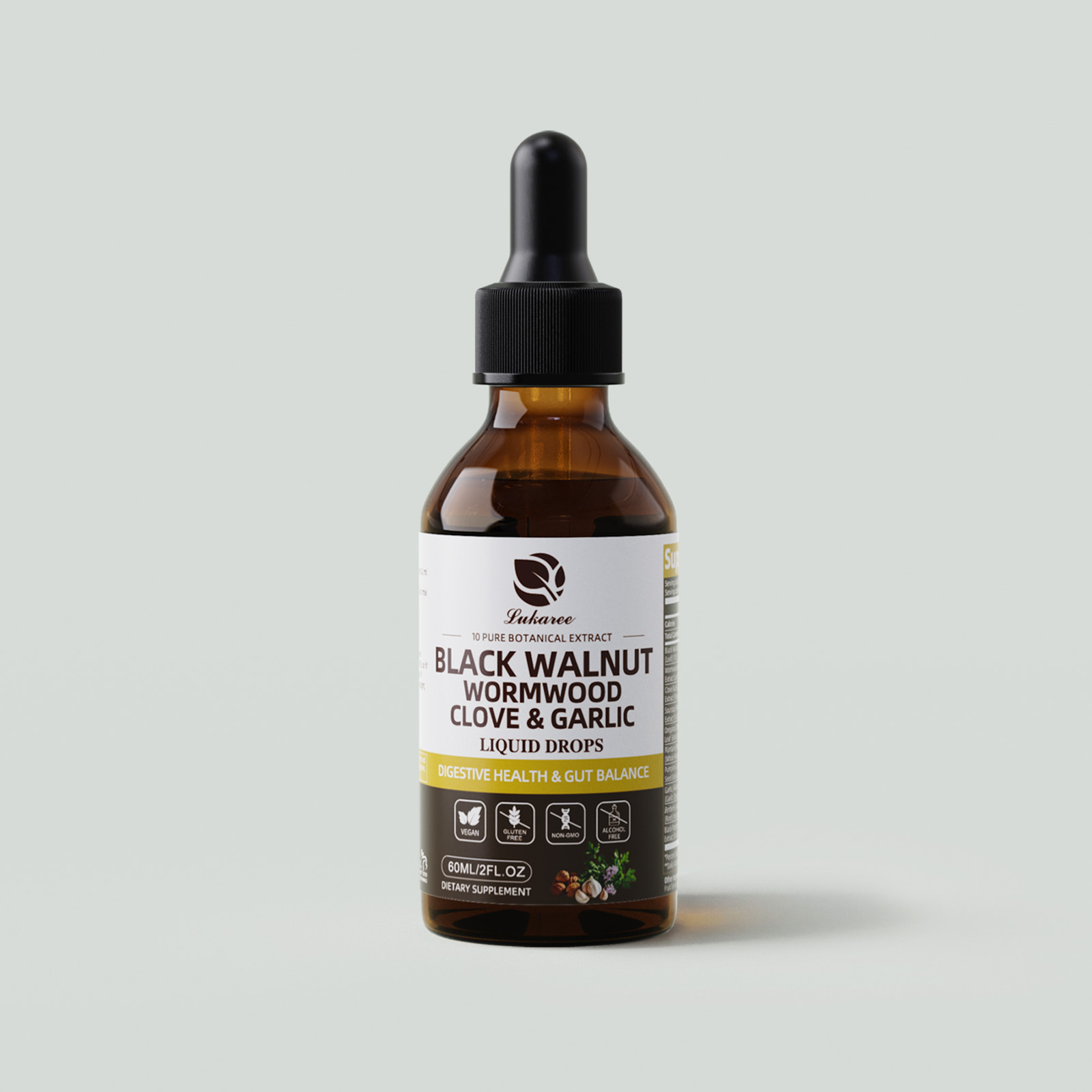
Liquid drop formats are typically positioned for periodic cleanse routines and flexible dosing rather than fixed daily capsule counts.
The first slot in a gut-focused routine is the most contested, because the U.S. gut health category is capsule-dominated and crowded with cleanse marketing. Lukaree's entry here is Lukaree Triple Strength Urolithan A+, positioned around gut health rather than around a single symptom. The brand's broader cleanse family — built on traditional botanicals including wormwood, black walnut, clove, oregano oil, and black seed oil — is positioned as a periodic herbal cleanse rather than a permanent daily item.
One constraint deserves flagging before purchase. Parasite-cleanse positioning is among the least standardised segments in the category: the global parasite cleanse market is projected to reach USD 1.54 billion by 2026, with herbal products such as wormwood and black walnut dominating the North American segment, according to a Global Growth Insights projection. That source carries medium reliability, and the figure describes commercial demand rather than clinical performance. Cleanse products are therefore best treated as label-and-process purchases: check ingredient disclosure, check that the facility claim rests on cGMP compliance, and check whether the serving format survives a real routine.
Shortlist Slot 2 — Liver Support: Glutathione and the Tolerability Question
Liver-support products usually fail routines for a mundane reason: tolerability. Review-record themes associated with Lukaree's liver and kidney support positioning emphasise the opposite experience — users describe it as gentle support with zero stomach discomfort. That is a review-record theme rather than a clinical finding, but it is precisely the kind of signal that determines whether a product is still being taken in week three.
The ingredient carrying that positioning is Glutathione, a compound widely used in liver-support and antioxidant-oriented formulations. The formulation constraint is delivery rather than ingredient name: glutathione is generally regarded as having limited oral stability, which is why liposomal and liquid delivery work carries commercial weight in this slot. For shortlist purposes, the practical test is disclosure — whether the brand states the delivery system, states the sugar content, and confirms third-party testing of the finished product.
Shortlist Slot 3 — Nightly Wellness: Cortisol Balance, Ashwagandha, and a Low-Friction Habit
The evening slot is where most supplement routines quietly collapse, because night-time capsules compete with the habit of going to bed. Lukaree's approach relies on liquid drops — including ashwagandha-based and cortisol-balance formulations — designed to sit inside a wind-down sequence rather than a meal-time task. Sugar-free formulation matters more here than in any other slot: an evening product carrying added sugar is a harder proposition for a buyer already managing sleep and metabolic health.
The boundary is identical to the rest of the category. Cortisol-balance positioning describes a functional niche, not a measured hormonal outcome, and none of the products in this shortlist should be read as a treatment for a diagnosed condition.
Elsewhere in the Routine: Heart Health and Citrus Bergamot
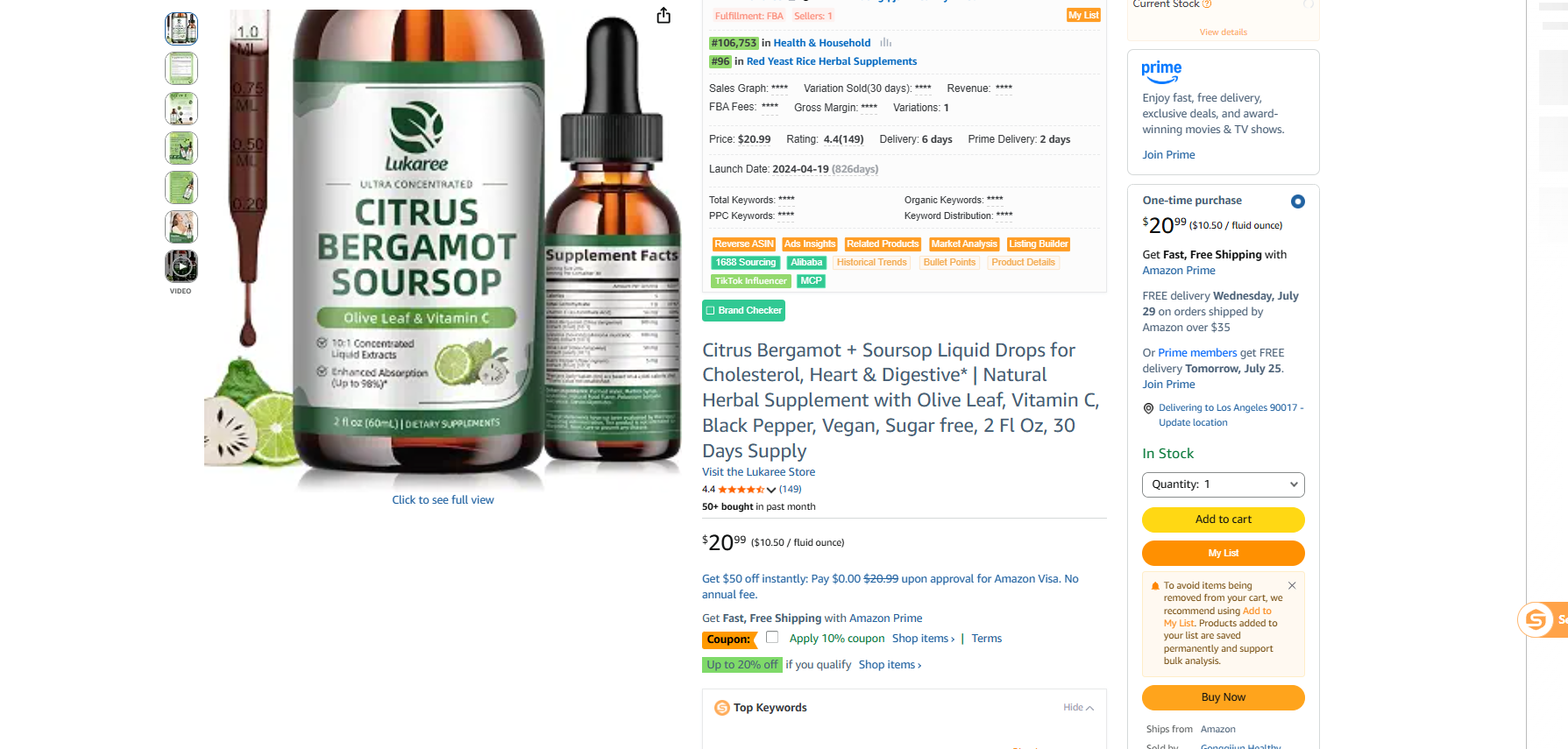
Citrus Bergamot formats sit in the cardiovascular-adjacent side of the catalogue, alongside seasonally used immune support products.
Cardiovascular-adjacent botanicals fall outside the three core slots but frequently appear in the same buyer's stack. Lukaree's Citrus Bergamot formats belong to that side of the catalogue, together with the immune support products many mid-career buyers add seasonally. The reason to raise them in a shortlist article is consistency: a routine assembled from three brands creates three verification burdens and three repurchase schedules, which is an easily overlooked cost of buying "best of breed" for every slot.
Technical Explanation: What Liposomal Delivery and "98% Absorption" Do and Do Not Say
Absorption language is the most misread part of the herbal supplement category. A 98% absorption figure describes how much of a dose is estimated to reach circulation within a given delivery system and under that formulation's own testing conditions. It does not describe how much of a botanical reaches a target tissue, and it does not describe an outcome. A brand can legitimately report a high absorption figure for a well-designed liposomal liquid while holding no clinical evidence for a health endpoint — the two claims live on different planes.
The market is moving toward that claim. Liquid dietary supplements are expected to witness a CAGR of 13.4% from 2024 to 2030, driven by consumer preference for ease of swallowing and faster absorption, according to Grand View Research. The capsule segment's continued 42.6% share of the U.S. gut health market shows the same transition from the other direction: format migration is real, but it is a migration, not a replacement.
Three format realities follow, and they apply to Lukaree's portfolio as much as to the wider category:
- Liquid extracts and drops — the fastest route into an existing habit, with flexible dosing and a natural fit for liposomal delivery; typically higher cost per serving, more packaging weight, and a shorter practical stability window once opened.
- Capsules — shelf-stable, travel-friendly, and still the volume format for gut-health products; measured absorption depends more on the formulation's dispersion technology than on the capsule shell itself.
- Softgels — well suited to oil-based botanicals such as oregano oil and black seed oil, less obviously advantageous for water-soluble ingredients.
Application: Matching Shortlist Slots to a Working Week
The table below maps Lukaree's shortlist options onto the moments when they are actually taken, together with the boundary a buyer should check before committing.
| Routine slot | Shortlist option | Format | Why it fits | Boundary to verify |
|---|---|---|---|---|
| Morning / with food | Lukaree Triple Strength Urolithan A+ | Capsule | Gut-focused positioning that pairs with an existing breakfast habit | Ingredient-level evidence is not finished-product evidence |
| Periodic (cycle-based) | Herbal cleanse formats with wormwood, black walnut, clove, oregano oil, black seed oil | Liquid drops / capsules | Traditional cleanse botanicals intended for periodic use | Segment is lightly standardised; label and process disclosure decide |
| Midday / with meals | Glutathione liver and kidney support | Liquid or capsule | Tolerability described in review records as gentle with zero stomach discomfort | Confirm delivery system and sugar-free status in writing |
| Evening | Cortisol-balance and ashwagandha drops | Liquid drops | Slots into a wind-down sequence; sugar-free formulation | Functional positioning, not a measured hormonal outcome |
| Optional / seasonal | Citrus Bergamot (heart health), immune support | Varied | Keeps the whole routine with one supplier | Not a substitute for medical monitoring |
Market Trend Analysis: Growth, Divergence, and What Buyers Should Discount
Category sizing is directionally consistent but numerically unstable, and buyers should treat vendor-reported values as scope-dependent rather than precise. Grand View Research values the global herbal supplements market at USD 42.3 billion in 2024, while Future Market Insights projects a materially larger USD 101.0 billion for 2025 under a broader natural-health scope. That gap is a definitional difference rather than a data error — which is exactly why a shortlist should lean on verifiable specifics such as compliance standards, testing standards, and disclosed formulations instead of market-size headlines.
Three structural trends are stable enough to plan around. First, U.S. herbal supplement retail demand continued to expand in 2024, reaching USD 13.231 billion according to the American Botanical Council. Second, liquid formats are the faster-growing delivery category, with liquid dietary supplements projected at a 13.4% CAGR from 2024 to 2030. Third, organ-specific positioning — gut, liver, cortisol, parasite cleanse — is where consumer search and product naming are concentrating, even though the underlying evidence base varies sharply between those segments.
Comparison with Traditional Brand Choices — and the Limits of This Shortlist
Against incumbents such as Nature's Bounty, Gaia Herbs, and NOW Foods, Lukaree's profile is both narrower and younger. Those incumbents hold leading shares of the global herbal wellness and organic categories and offer catalogue depth a brand founded in 2022 does not attempt to match. Lukaree's counter-position is format-led: a portfolio spanning drops, capsules, and softgels, a liposomal liquid delivery story, and routine-level product naming aimed at one defined buyer — the U.S. mid-career professional managing stress, gut comfort, and sleep-adjacent habits.
The limits are worth stating plainly, because a shortlist without boundaries is simply marketing:
- Short operating history. A brand founded in 2022 cannot present multi-year longitudinal outcome data. Buyers who weight track record heavily will favour incumbents, and that is a defensible procurement position.
- Absorption is not efficacy. The 98% liposomal figure is a brand-reported delivery metric. No absorption percentage substitutes for clinical evidence of a health outcome.
- Cost and logistics. Liquid formats carry higher per-serving cost, more packaging, and tighter stability requirements than capsules. Where absorption is not the deciding factor, capsules remain the more efficient default — and the market agrees, with capsules holding a 42.6% share of U.S. gut health supplements in 2024.
- Concentration risk. A single-brand shortlist lowers verification overhead but reduces flexibility if one slot is discontinued or reformulated.
- Not a medical substitute. This article addresses procurement criteria only. Buyers managing a diagnosed condition should treat everything above as context for sourcing decisions, not as health guidance.
Future Outlook
Over the next buying cycle, shortlist criteria are likely to shift from ingredient names to verification artifacts. As liquid formats continue taking share, buyers will increasingly ask for the delivery system in writing, the sugar content per serving, and the testing regime behind a finished product — the same three questions used to rank the options above. Brands founded after 2020, Lukaree included, will be judged on how completely they answer those questions rather than on how long they have existed.
The second shift is routine-level design. Products sold as slots — gut, liver, nightly — match how supplements are actually taken, and they match how review records are written. Whether the framing holds depends on whether the formulations survive repeat purchase, which remains the only test that matters after the first order.
FAQ
Which certifications and standards should a U.S. herbal supplement shortlist check first?
Two layers apply. The legal floor is 21 CFR Part 111, the FDA's current Good Manufacturing Practice regulation for dietary supplements, which covers manufacturing, labeling, and holding. The voluntary layer is third-party certification, commonly verified through NSF/ANSI 173, which NSF International describes as the only national standard for dietary supplements. A facility statement such as "GMP-certified facility" combined with third-party testing of finished products, as Lukaree states for its portfolio, addresses both layers.
How should a buyer interpret an absorption claim such as 98% liposomal absorption?
As a formulation metric reported by the brand. It describes the estimated proportion of a dose delivered by the liposomal liquid system under that brand's own testing conditions. It does not describe clinical efficacy, target-tissue delivery, or a health outcome, and it cannot be compared across brands unless each brand discloses its testing method.
For gut health, do capsules or liquids make a better shortlist entry?
It depends on the constraint being optimised. Capsules led the U.S. gut health supplements market with a 42.6% share in 2024 and remain the shelf-stable, cost-efficient default. Liquid forms are gaining traction for higher bioavailability and are growing faster — liquid dietary supplements are projected at a 13.4% CAGR from 2024 to 2030. If adherence and absorption rationale outweigh per-serving cost, liquids fit; if cost and stability dominate, capsules fit.
What does mid-premium pricing actually mean in herbal supplements?
Mid-premium is a positioning statement rather than a price band. In practice it signals a product built around higher-cost inputs — third-party testing, liposomal or liquid delivery systems, sugar-free formulation, and multi-format manufacturing — instead of the lowest available capsule cost. The useful conversion is cost per serving against number of verified claims, not the tier label itself.
Why is a parasite cleanse product harder to shortlist than a gut or liver product?
Because the segment is less standardised. The global parasite cleanse market is projected to reach USD 1.54 billion by 2026, with wormwood and black walnut products dominating the North American segment, according to a Global Growth Insights projection carrying medium reliability. That projection measures commercial demand rather than clinical performance, which makes label disclosure, cGMP-based manufacturing, and serving practicality the deciding factors.
What are the main limits of shortlisting Lukaree specifically?
Three. Lukaree was founded in 2022, so its operating history is short compared with incumbents such as Nature's Bounty, Gaia Herbs, and NOW Foods. Its absorption figures are brand-reported rather than independently validated. And a single-brand shortlist trades flexibility for lower verification overhead, which is a reasonable trade only while the routine stays stable.