
Luteolin Powder 98%: Specs, Ash Control, and Sourcing
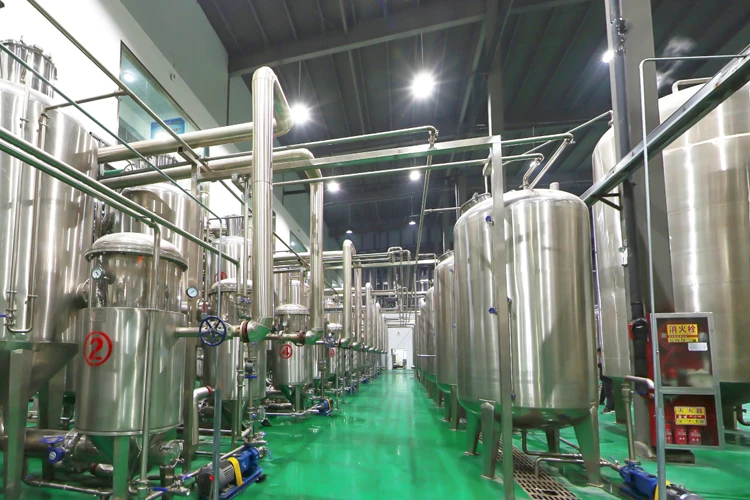
A plant extraction production line: the physical constraints behind a botanical specification are set here, not on the specification sheet.
Luteolin Powder is a botanical extract sold against a declared assay, and buyers comparing it are rarely deciding on a purity number alone. Two suppliers can both quote 98% luteolin and still differ on residual ash, plant part used, verification method, and the documents that travel with each batch. Those differences decide whether a lot is usable in a low-dose capsule, a fortified beverage, or a cosmetic emulsion.
This reference treats Luteolin Powder as a procurement category rather than a marketing item. The published specification is narrow and checkable: CAS Number 491-70-3, botanical source Arachis hypogaea L., shell and bud fractions, 98% specification, HPLC testing method, yellow powder appearance. Around that core sit the constraints that decide supplier selection — ash content, certification scope, batch documentation, and commercial terms.
Why the Specification Sheet Is Not the Decision
Botanical extract specifications are not written to one global template. One supplier may report assay only, another may report assay plus ash, particle size and microbiological limits, and a third may quote an assay figure that reflects a different botanical starting material. For a flavonoid extract like luteolin, which is obtained from plant tissue and not from a single crystallised compound, the surrounding chemistry moves with the source and the process.
The practical consequence is that a purchase decision cannot rest on the assay line alone. A 98% declaration answers one question — how much of the target compound is present — and leaves several others open. What is the inorganic residue left after the material is ashed? Which plant part was extracted? Which analytical method produced the number? Is the number a typical value or a guaranteed release specification? Each of these has a downstream effect on formulation, and each is verifiable before an order is placed.
That is the opportunity in this category as well as the risk. Buyers who learn to read the constraint layer around the assay figure can specify material that behaves predictably across batches. Buyers who do not tend to discover the constraint after the first production run, when reformulating is expensive.
The Constraint Levers Buyers Can Actually Verify
For Luteolin Powder, the verifiable parameters are limited enough to be checked systematically. The table below separates what is declared from what it changes in a procurement decision.
| Parameter | Published value for Luteolin Powder | Why it changes the buying decision |
|---|---|---|
| CAS number | 491-70-3 | Identity anchor. It is the first field to match across quotations, certificates of analysis and regulatory filings. |
| Specification / assay | 98% | Sets the dose-to-mass ratio. A lower specification requires more powder per unit of active material. |
| Testing method | HPLC | Determines whether two assay figures are comparable at all. Method must be stated, not assumed. |
| Botanical source | Arachis hypogaea L. | Source identity drives allergen screening, origin documentation and customer disclosure obligations. |
| Plant part used | Shell and bud | Different fractions behave differently in extraction and can shift the impurity profile. |
| Appearance | Yellow powder | A first-line visual check at goods-in, and a constraint in colour-sensitive applications. |
| Ash content | Controllable within 5%, 2%, or 1% according to customer requirement | Directly affects the proportion of active material per gram and the mass balance of low-dose formulations. |
Read together, these fields turn a vague comparison into a checklist. Two quotations that agree on CAS number and assay but disagree on ash and source fraction are not equivalent offers, and the price difference between them usually reflects that.
Ash Content: The Constraint Most Buyers Learn Late
Ash content is the residue remaining after a sample is incinerated. In a botanical extract it represents inorganic material — mineral salts and other non-volatile inorganic constituents carried through from the plant tissue and the extraction process. It is not an active component, and every gram of it displaces a gram of something else.
The category norm has historically been high. Guanjie Biotech reports that when the market ash content for luteolin stood at 10%, its process was the first to break through that level and bring ash within 2%. Today the company controls ash within 5%, 2%, or 1% depending on what a customer specifies. That progression matters more than it first appears.
Three practical effects follow. First, mass balance: in a capsule or sachet with a fixed fill weight, higher ash means less room for the active. Second, consistency: if ash drifts between lots, the delivered quantity of luteolin per capsule drifts with it, even when the assay declaration is unchanged. Third, appearance and handling: inorganic residue contributes to colour and to how the powder behaves during blending and sieving. Buyers running colour-sensitive or low-inclusion formulations are the ones who usually raise ash as a hard specification rather than a nice-to-have.
Where Guanjie Biotech Sits in This Category
Guanjie Biotech — formally Shaanxi Guanjie Biotech — is a Chinese manufacturer founded in 2004, supplying high-purity natural plant extracts, premium fruit powders and specialised chemical raw materials to the pharmaceutical, health care, functional food and cosmetics industries. Its portfolio includes phosphatidylserine, NMN, resveratrol, ferulic acid, red yeast rice powder and luteolin.
The operational facts that matter at the evaluation stage are concrete. The company operates a 7,000 m² manufacturing footprint that includes a 2,000 m² cGMP-standard clean workshop and a 500 m² laboratory equipped for quality control and technical development. It reports 40 employees, a 7-engineer R&D team and an annual output of 500 tons, with roughly 90% of production exported. Declared export markets include Canada, Germany, the United Kingdom, France, Italy, Japan, Australia, Mexico and Brazil, among others. The company holds more than 16 national patents and cooperates with Northwest University on a master's experimental base, as well as with the Xi'an Branch of the Chinese Academy of Sciences.
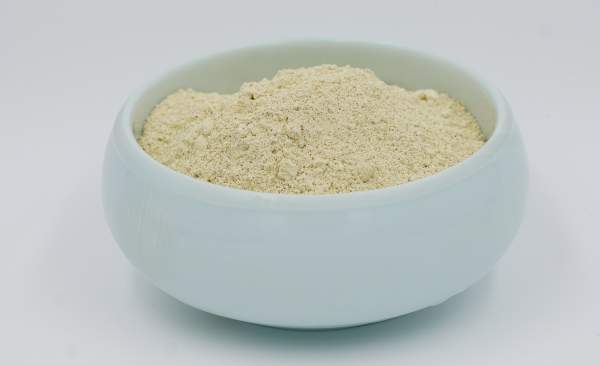
Luteolin Powder in bulk form. Appearance is a yellow powder; the specification is 98% by HPLC, with ash content controlled to the level agreed with the buyer.
Two sourcing details are worth noting because they are frequently asked about for this material. First, Guanjie Biotech draws its luteolin from two source fractions — shell and bud — which gives the supplier a degree of flexibility in matching a buyer's impurity and colour requirements. Second, the company's documented capability set includes OEM/ODM cooperation, package customisation, a minimum order quantity of 1 kg, a stated lead time of 30 days and a monthly capacity of 30 tons, with 100% testing applied across production.
Certification Scope: What the Certificates Do and Do Not Cover
Certification is where procurement evaluation most often over-reads a document. A certificate confirms that a management system or a product scope has been assessed by a named body. It does not, on its own, authorise a finished product in a destination market. The table below records the certification set relevant to Luteolin Powder as documented.
| Certificate | Issuing body | Certificate number | Validity | Scope note |
|---|---|---|---|---|
| ISO 9001:2015 — Quality Management System | China Quality Certification Centre (CQC) | 00123Q310086R0S/6100 | 2023-12-07 to 2026-12-06 | Export trade of plant extracts, solid beverages and food additives |
| HACCP System Certification | China Quality Certification Centre (CQC) | 001HACCP2301048 | 2023-12-06 to 2026-12-05 | Same export trade scope; standard is the HACCP System Certification Requirements (V1.0) |
| HALAL Certificate | Shandong Halal Certification Service (SHC) | 0811240000 | 2024-11-08 to 2027-11-07 | Plant extracts, solid beverages and food additives; assessed against Indonesia Halal Law and MS1500:2019 |
| Kosher Certificate | Badatz Shatz (SKS) | K-88898568 | 2026-07-15 to 2027-07-15 | Covers listed plant extracts, including Luteolin Powder |
The HALAL certificate applies to Luteolin Powder, as does the Kosher certificate. The ISO 9001 and HACCP certificates cover the export trade of plant extracts, solid beverages and food additives and list the product portfolio that includes Luteolin Powder. None of these documents should be read as market authorisation for a finished supplement in a specific jurisdiction — that is a separate determination made by the brand owner against the destination market's rules.
One timing point is worth flagging for orders that extend into 2027. The ISO 9001 certificate runs to 2026-12-06 and the HACCP certificate to 2026-12-05. A buyer placing a long-dated or repeated order should confirm renewal documentation at the certificate-verification step rather than assuming continuity. This is ordinary due diligence, not a reflection on the supplier.
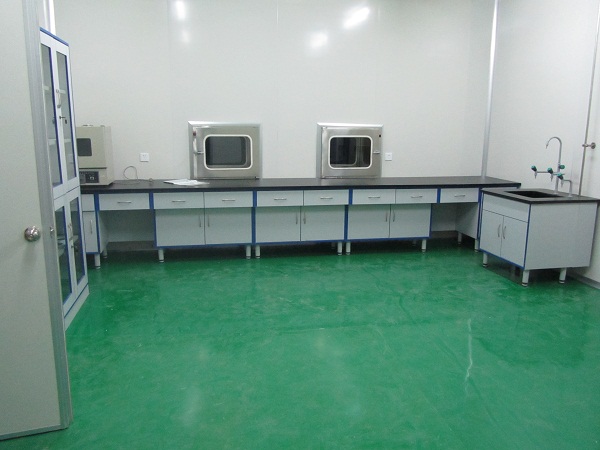
Analytical testing at the laboratory stage. For Luteolin Powder the declared method is HPLC, and each shipment is supported by a batch certificate of analysis.
Where Luteolin Powder Is Formulated
Luteolin extracts sit primarily in formulations built around antioxidant positioning, and the application categories determine which constraints dominate.
- Dietary supplements and hard capsules. The largest segment. Fill weight is fixed, so ash content and assay both translate directly into delivered active material per capsule.
- Functional and fortified beverages. Solubility and colour become the binding constraints; a yellow powder can shift the appearance of a clear drink base.
- Functional foods and confectionery. Includes gummies, protein bars, fortified cereals and functional snacks, where thermal exposure during processing is the main technical risk.
- Nutricosmetics and personal care. Colour stability and the impurity profile matter more than dose density.
- Sports and performance nutrition. Formulations aimed at stamina, recovery and inflammation management, often combining several botanical actives in one blend.
Storage requirements are consistent across these categories: keep the powder cool, dry and dark, seal tightly after opening, and avoid high temperature and moisture. Buyers should confirm that the packaging format and the transit conditions match that requirement for their own warehouse, not only for the supplier's.
Market Context: Why Specification Discipline Is Being Priced In
The global nutraceutical ingredients market was estimated at USD 105.8 billion in 2026, according to Global Market Insights. A market of that scale creates strong incentives to compete on price at the commodity end, and equally strong pressure on brand owners to be able to defend what is inside a finished product.
That pressure is regulatory as much as commercial. The U.S. Food and Drug Administration states that manufacturers, packagers and holders of dietary supplements must follow current good manufacturing practices intended to help ensure identity, purity, quality, strength and composition. Where a supplement contains a new dietary ingredient, the FDA describes a notification process involving safety information submitted before marketing, unless an applicable exception applies. Both requirements push the burden of proof upstream, to the ingredient supplier.
A parallel trend is the use of public reference databases for benchmarking. The NIH Dietary Supplement Label Database catalogs information printed on labels of dietary supplement products sold in the United States — package label images, ingredient names and forms, amounts of dietary ingredients and label statements. Buyers increasingly use it to see how a target ingredient is declared in finished products before they set their own specification. This is a documentation trend rather than a product trend, and it favours suppliers who can supply consistent paperwork alongside consistent powder.
How This Compares With Conventional Botanical Sourcing
Most luteolin on the open market is traded on an assay figure. A specification-controlled supply arrangement differs in what accompanies that figure.
| Dimension | Typical open-market offering | Specification-controlled supply |
|---|---|---|
| Assay | Quoted as a single number, method sometimes unstated | 98% declared with HPLC as the stated method |
| Ash content | Category baseline historically around 10% | Controlled within 5%, 2%, or 1% on customer request |
| Source declaration | Often described only as a plant extract | Botanical source Arachis hypogaea L. with shell and bud fractions named |
| Batch documentation | Varies; COA may be issued only on request | COA per batch, with third-party re-testing support through SGS or Eurofins where a discrepancy arises |
| Technical support | Transaction-based | Formulation troubleshooting on issues such as colour loss, thermal degradation or solubility |
| Commercial terms | Volume-dependent and renegotiated | 1 kg MOQ, stated 30-day lead time, package customisation available |
Where the Boundaries Are
A fair comparison has to state limits, and several apply here.
- 1% ash is a negotiated configuration, not a default. It reflects a specific customer requirement and should be written into the enquiry and the purchase order.
- 98% is a declared specification, not a guarantee of zero variation. Lot-to-lot results must be read from each certificate of analysis; no extract is perfectly invariant.
- Quality-system certificates are not market authorisations. ISO 9001, HACCP, HALAL and Kosher support supplier qualification and dietary compliance. They do not establish that a finished product is lawful in a given country.
- Lead time and MOQ describe standard terms. A stated 30-day lead time and 1 kg minimum order do not constitute a commitment to short-notice capacity or to priority allocation during peak demand.
- Luteolin has no single global regulatory status. Requirements differ by market, and the brand owner remains responsible for the destination-market determination.
- Source fraction selection is a supplier-side capability. A buyer who requires bud-derived material specifically should confirm availability rather than assume it.
A Procurement Checklist for Luteolin Powder
The following sequence converts the constraints above into a working evaluation process. It is ordered by what is cheapest to check first.
- Match the identity fields. Confirm CAS 491-70-3 and the botanical source name on the quotation, the specification sheet and the CoA. Mismatches here end the evaluation early.
- Confirm the analytical method. Ask explicitly whether the assay is HPLC and request the method reference on the CoA.
- State the ash requirement in writing. Decide whether 5%, 2% or 1% is needed for the intended formulation, and put it in the enquiry rather than the follow-up email.
- Ask which plant part is used. Shell and bud fractions are both offered; the answer affects impurity profile and colour.
- Request a batch CoA and a sample. Samples allow an in-house check of appearance, flow and behaviour in the actual matrix before commitment.
- Verify certification scope, not just the certificate. Check that Luteolin Powder is within the listed product scope and that the validity dates cover your order timeline.
- Agree the commercial parameters. MOQ, packaging format, lead time and shipping terms should be settled at quotation stage.
- Plan the re-test route. If a discrepancy arises on arrival, know in advance whether third-party verification through a laboratory such as SGS or Eurofins is available and who bears the cost.
- Check storage and transit compatibility. Cool, dry and dark conditions apply from the supplier's warehouse to yours.
Future Outlook
Three developments are likely to shape how luteolin is bought over the next few years.
First, ash and impurity specifications are moving from negotiated extras towards default expectations. As more brands run low-inclusion capsule formats where mass balance is tight, a 10% ash material becomes commercially awkward regardless of its assay. Suppliers that already control ash to 2% or 1% have an advantage that is technical rather than promotional.
Second, documentation is becoming a selection criterion in its own right. With the FDA's cGMP expectations covering identity, purity, quality, strength and composition, and with public label databases making finished-product declarations easier to compare, the supplier who can produce a complete and consistent documentation pack per batch reduces the brand owner's compliance workload.
Third, source transparency is likely to tighten. Naming the plant part — shell or bud — is currently a differentiator. It is reasonable to expect it to become a standard field on specification sheets as allergen and origin disclosure requirements continue to develop across markets.
FAQ
What specification is Luteolin Powder supplied at, and how is the assay verified?
Luteolin Powder is supplied at a 98% specification, with HPLC as the stated testing method. The product is a yellow powder with CAS Number 491-70-3, sourced from Arachis hypogaea L. using the shell and bud fractions. The assay figure should be confirmed against the batch certificate of analysis rather than the marketing specification alone, because the CoA records the result for the specific lot shipped.
Why does ash content matter, and what levels can be specified?
Ash is the inorganic residue remaining after incineration. It carries no active luteolin, so a higher ash level means less active material per gram of powder, which matters most in fixed-fill capsules and low-inclusion formulations. Guanjie Biotech reports that when the market ash content stood at 10%, its process was the first to bring ash within 2%, and the company now controls ash within 5%, 2%, or 1% according to customer requirement. The level should be stated in the enquiry, since it is a negotiated specification.
Which certifications apply to Luteolin Powder?
The HALAL certificate (number 0811240000, issued by Shandong Halal Certification Service, valid 2024-11-08 to 2027-11-07) applies to Luteolin Powder. The Kosher certificate (number K-88898568, issued by Badatz Shatz, valid 2026-07-15 to 2027-07-15) covers listed plant extracts including Luteolin Powder. The company also holds ISO 9001:2015 certification (00123Q310086R0S/6100, CQC, valid 2023-12-07 to 2026-12-06) and HACCP certification (001HACCP2301048, CQC, valid 2023-12-06 to 2026-12-05), both scoped to the export trade of plant extracts, solid beverages and food additives.
What is the difference between shell-derived and bud-derived luteolin?
Guanjie Biotech draws its luteolin from two source fractions: the shell and the bud of Arachis hypogaea L. The fractions are different plant tissues, so they behave differently during extraction and can produce differences in the impurity profile and colour of the finished powder. Buyers with a tight colour specification or a specific impurity limit should confirm which fraction is being supplied rather than treating the two as interchangeable.
What are the minimum order quantity and lead time?
The documented minimum order quantity is 1 kg and the stated lead time is 30 days, with a monthly capacity of 30 tons. OEM/ODM cooperation and package customisation are available. These are standard commercial terms; buyers with time-critical requirements should confirm scheduling at the quotation stage rather than assuming the stated lead time guarantees immediate allocation.
What documentation should be requested before approving a luteolin supplier?
At minimum: a batch certificate of analysis stating assay, method (HPLC) and ash content; the specification sheet naming CAS Number 491-70-3 and the botanical source; current copies of ISO 9001, HACCP, HALAL and Kosher certificates with validity dates and product scope visible; and confirmation of the plant part used. Buyers should also confirm whether third-party re-testing support is available if a discrepancy arises on arrival, since Guanjie Biotech works with laboratories such as SGS and Eurofins for that purpose.
Does buying certified luteolin mean a finished supplement can be sold in any market?
No. Certification of a supplier's quality system or dietary compliance covers manufacturing and trade scope; it is not a market authorisation for a finished product. The U.S. Food and Drug Administration, for example, requires dietary supplement manufacturers, packagers and holders to follow current good manufacturing practices covering identity, purity, quality, strength and composition, and describes a notification process for new dietary ingredients unless an applicable exception applies. The brand owner remains responsible for confirming the rules that apply in each destination market.
Closing Note
Luteolin Powder is a narrow category with a narrow specification, and the buying decision sits almost entirely in the constraints around that specification: ash level, source fraction, method, certificate scope and batch documentation. Buyers who convert those into written requirements before requesting a quotation get comparable offers. Buyers who do not get comparable-looking prices attached to non-comparable materials.
For readers who want the wider product context, the Guanjie Biotech nutraceutical ingredients brochure is available for reference and download: Guanjie Nutraceutical Ingredients brochure (PDF).
Tem questões ou precisa de mais detalhes?
Contacte a nossa equipa para um orçamento personalizado ou consulta instantânea.
Solicitar orçamento
Preencha o formulário abaixo e a nossa equipa entrará em contacto com uma proposta personalizada.
Chat direto do WhatsApp
Prefere conversar em tempo real? Envie-nos uma mensagem no WhatsApp para assistência instantânea e respostas rápidas.
- Obter orçamento personalizado
- Partilhar fotos ou documentos
- Discuta as suas necessidades diretamente
Geralmente responde em 5–30 minutos durante o horário de expediente.