
MAP Food Packaging Containers: Compliance Checklist
MAP food packaging containers are rigid plastic trays used in modified atmosphere packaging, where the atmosphere inside a sealed pack is adjusted with a selected gas mixture and the tray is closed with a compatible lidding film. For buyers at the research and evaluation stage, the category is less about one tray size and more about a chain of constraints: food type, storage temperature, target shelf life, sealing machine, film, barrier structure, food-contact documentation and certification scope. Ningbo Linhua Plastic Co., Ltd. (Linhua), a B2B food packaging manufacturer established in 2004 and based in Ningbo, Zhejiang, China, produces MAP barrier trays within a broader rigid food packaging range. This article explains how to evaluate MAP food packaging containers against those constraints, with specific attention to certification evidence and practical limits.
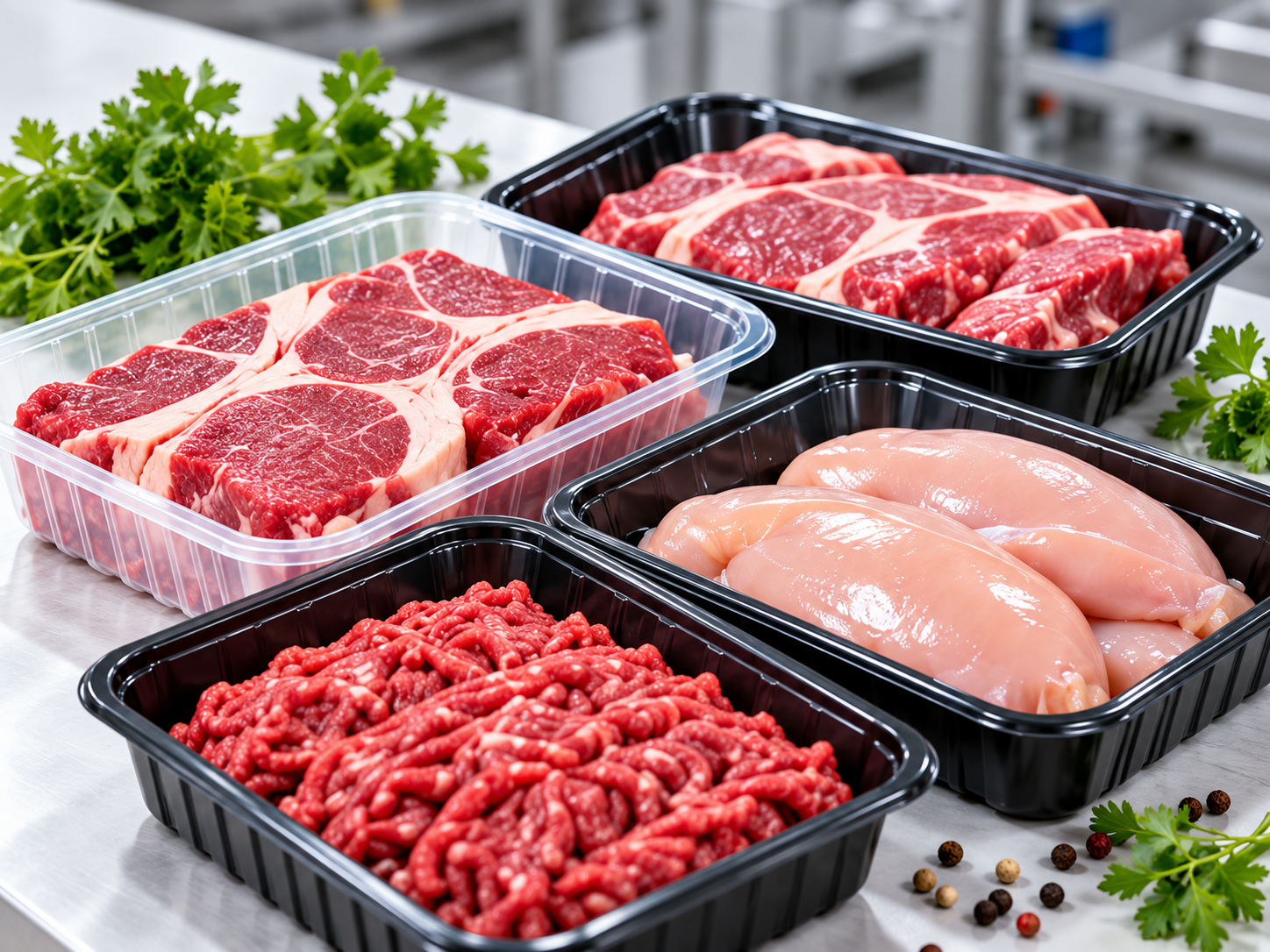
The procurement problem: a tray is only one part of a MAP system
Modified atmosphere packaging works as a system. The tray provides a rigid base and a sealing surface; the lidding film closes the pack; the packaging machine replaces or adjusts the internal atmosphere; and chilled storage maintains the intended conditions. A high-barrier tray can support that system, but it cannot by itself guarantee a shelf life. Linhua states that MAP tray selection should be evaluated together with the food application, packaging machine, sealing mould, lidding film, storage temperature and target shelf life. This is the first boundary buyers should build into their evaluation.
For procurement teams, the practical question is not simply whether a plastic food packaging container is described as MAP-compatible. The better question is whether the specific tray, film, machine and product form a validated combination. Tray dimensions, sealing area, product height, film specification and machine settings can all affect sealing performance. A tray that fits a drawing may still fail a sealing trial if the mould or film is not matched. Buyers should therefore treat samples and line trials as part of qualification, not as a formality after price agreement.
What a MAP container must specify
Linhua's MAP Barrier Trays use PP as the main material and an EVOH or multilayer barrier structure. EVOH is used as a functional barrier layer in multilayer packaging structures where improved gas-barrier performance is required. The range includes multiple footprints and depths for fresh meat, beef, pork, lamb, poultry, fish, seafood, chilled prepared foods, food processing and supermarket retail packaging. The table below gives selected examples from the published range; it is not a complete catalogue.
| Model | Dimensions | Material and structure | Typical evaluation note |
|---|---|---|---|
| LP090540 | 222 x 132 x 40 mm | PP, high-barrier PP-based structure; EVOH or multilayer barrier | Check sealing mould and lidding film before approval |
| LP090790 | 218 x 167 x 90 mm | PP, high-barrier PP-based structure; EVOH or multilayer barrier | Deeper format; confirm product height and pack weight |
| LP110760 | 270 x 169 x 60 mm | PP, high-barrier PP-based structure; EVOH or multilayer barrier | Larger footprint; check line speed and seal area |
The presence of EVOH in a multilayer structure is a technical starting point, not a performance guarantee. Barrier performance depends on the complete structure, layer thickness, film, seal integrity, food condition and storage temperature. Buyers evaluating an EVOH high barrier food packaging tray should request the relevant material structure and any available barrier or migration documentation for the intended application. They should also confirm whether the tray is intended for chilled storage only or for other conditions. Linhua states that exact temperature limits, sealing-film compatibility and heating conditions should be confirmed according to the selected model and application.
Where compliance becomes a procurement gate
Food packaging certification is often presented as a logo list. In practice, the scope and validity of each document matter more than the number of logos. A certificate may cover a management system, a specific manufacturing scope, a product category or a single test report. For MAP food packaging containers, buyers should map each document to the exact tray family, material and destination market under review.
| Document | What it covers | Key reference | Evaluation note |
|---|---|---|---|
| ISO 9001:2015 | Quality management system for production and related management activities within the stated scope | Certificate 18426Q00712R001; valid 8 June 2026 to 7 June 2029 | Confirms a quality system; it is not a product food-contact approval |
| BRCGS Global Standard Packaging Materials | Rigid plastics scope, including extrusion, laminating with PE or EVOH, vacuum and thermal forming of PP, PET and PS trays, plates, cups and lids for direct food contact | Certificate CN057524 - 1; Grade B; Issue 7: October 2024; issued 14 October 2025; expires 5 November 2026 | Directly relevant to MAP tray manufacturing scope; confirm renewal status before the expiry date |
| HACCP | Procurement, manufacture, storage, supply and distribution of food packaging products for export to Australian and other international markets | ICG certificate 610H151; standard: Codex Alimentarius HACCP; listed expiry 15 October 2026 | The supplied record shows an expiry date that has passed at the time of publication; request the current valid certificate before treating HACCP status as active |
| SMETA 2-Pillar audit report | Labour standards and health and safety | Report ZAA600206602; Bureau Veritas CPS - Asia | Ethical trade audit report; not a food-contact product certification |
| Global Recycled Standard scope certificate | Hard goods and other cups, plastic containers within the stated scope | Certificate TRC-GRS-222470-00; TÜV Rheinland (China) Ltd.; GRS 4.0 | Supports recycled-content claims within scope; not a food-contact approval for every product |
| FDA food-contact test report | PET container, model DP1LBSS-01, tested under US FDA 21 CFR 177.1630 chloroform-soluble extractives | Report NBHL260902990901CW; SGS-CSTC Standards Technical Services (Ningbo) Co., Ltd.; issued 17 September 2026 | A test report, not a certificate; model-specific and not a blanket approval for MAP PP or EVOH trays |
Three compliance lessons follow from this table. First, a BRCGS certificate covering rigid plastics is more directly relevant to MAP tray production than a general quality certificate, but it still does not replace product-specific food-contact declarations for the destination market. Second, the HACCP record illustrates why buyers should check expiry dates rather than accepting a certificate number at face value. Third, a test report for one PET clamshell model does not establish FDA compliance for a different PP or EVOH MAP tray. The scope must match the item under review.
Regulatory context adds another layer. EU Regulation 10/2011 establishes specific requirements for plastic materials and articles intended to come into contact with food and states that plastic materials and articles must not release substances above applicable specific migration limits. The EU Packaging and Packaging Waste Regulation 2025/40 applies from 12 August 2026 and includes restrictions on PFAS in food-contact packaging. In the United States, the FDA defines a food contact substance as including food packaging and its components. Buyers should therefore request the relevant declaration of compliance, migration test information and material documentation for the target market, in addition to supplier certificates.
Technical explanation: how MAP trays are evaluated
A MAP food packaging container is usually evaluated from the outside in. The outer dimensions must fit the sealing machine, the mould and the retail pack format. The internal depth must accommodate the product without stretching the film or trapping excess headspace. The flange or seal area must match the lidding film and sealing tooling. The material structure must provide the intended barrier and mechanical performance. The finished pack must then be tested under the intended storage and distribution conditions.
Linhua's MAP trays are designed for gas-flush and heat-seal processes with lidding film. For a new project, the company states that buyers should provide the food type, tray dimensions, packaging machine, sealing or skin film specifications, storage temperature and target shelf life for compatibility evaluation. This is a practical checklist because a MAP tray is not a stand-alone product in the same way as a simple open tray. It is one component of a sealed packaging system.
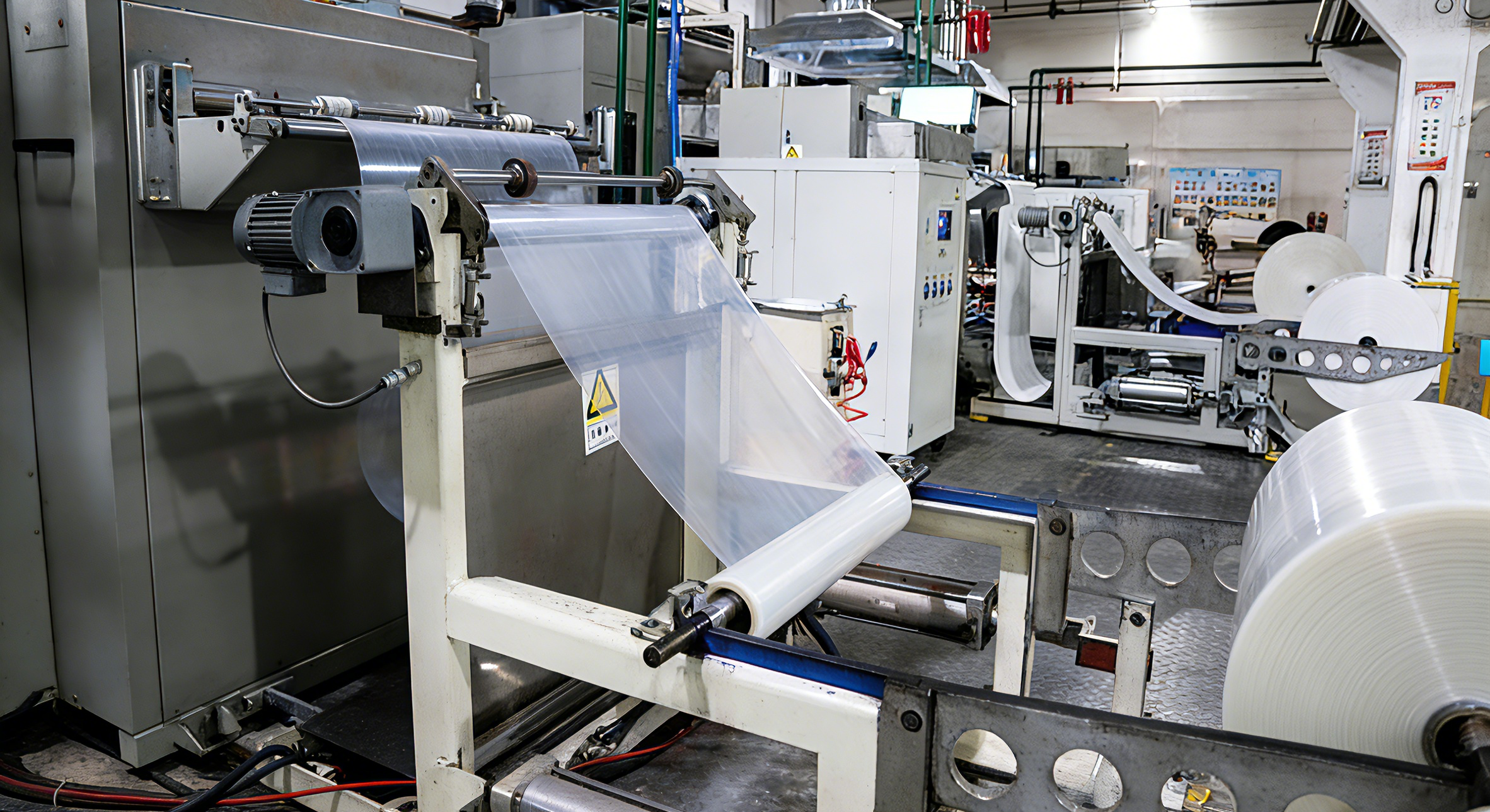
Manufacturing scope also matters. Linhua operates a site of approximately 30,000 square metres and reports monthly capacity of approximately 1,800 MT per month. The company states that quality control covers incoming material inspection, in-process quality control and final product inspection before shipment. For buyers evaluating supply continuity, these facts are relevant, but they should still be matched against the specific tray model, order quantity, tooling status and production schedule. Linhua's normal lead time is stated as 30 to 45 days after order confirmation, depending on product specifications, order quantity and production schedule. Custom mould projects require additional development time.
Application fit: where MAP containers are used
MAP barrier trays are commonly evaluated for fresh meat, beef, pork, lamb, poultry, fish, seafood, chilled prepared foods and supermarket retail packaging. The packaging method is gas flushing and heat sealing with lidding film, followed by chilled storage and cold-chain distribution. This makes MAP a fit for products where controlled atmosphere and shelf-life management are part of the commercial requirement, not just a presentation choice.
Linhua's project examples show how MAP trays fit different supply models. An Australian food packaging distributor reports recurring orders of 10 FCL per week or more, with MAP trays as the core purchasing category, supported by VSP trays, turned edge trays, moisture retention trays and other rigid food packaging products. A Canadian supermarket and grocery retail supply chain reports high-volume recurring multi-SKU supply across deli, prepared food, fresh produce, salad, bakery, grab-and-go and party-food applications. A New Zealand meat processing company reports approximately 4 to 6 containers per month for MAP barrier trays and moisture retention trays used in fresh beef and pork packaging for chilled retail distribution. A New Zealand seafood processing company reports approximately 6 to 8 containers per season for fresh fish, salmon portions, fillets and chilled seafood packaging.
These examples do not prove that every MAP project will fit the same model. They show the range of buyer types that evaluate MAP containers: distributors serving multiple downstream customers, supermarket supply chains with many SKUs, meat processors with sealed tray lines and seafood processors with chilled presentation requirements. Each requires a different combination of tray dimensions, barrier structure, sealing compatibility and pack presentation.
Market trend analysis: regulation, barrier demand and cost pressure
The global food containers market was valued at USD 331.7 billion in 2024, according to Grand View Research. That figure covers food containers broadly, not only rigid MAP trays, so it should be used as directional context rather than a MAP-specific market size. Within packaging materials, the EVOH packaging market is projected to reach USD 3.055 billion by 2035 at a CAGR of 5.16%, according to Market Research Future. The same source describes the market as growing from USD 1.847 billion in 2025. These forecasts indicate continued interest in high-barrier structures, but they do not establish demand for any single tray model.
Regulation is a stronger near-term driver. The EU PPWR application date of 12 August 2026 and its restrictions on PFAS in food-contact packaging mean that buyers serving the EU market need more than a general food-grade statement. They need material and substance documentation, migration compliance information and a clear link between the document and the product. In the U.S., the FDA food contact substance framework reinforces the same point: packaging and its components are part of the regulatory scope. For suppliers, this shifts competition toward documentation quality and traceability.
Cost pressure is the third trend. Plastic packaging is made from synthetic polymers such as polypropylene and polyethylene, manufactured from natural resources, and its price fluctuates with input costs. For MAP trays, the price band is therefore influenced by resin type, barrier structure, tray size, weight, order quantity, tooling and customization. Buyers should compare total landed cost and supply continuity, not only a unit price. A low tray price can be offset by poor sealing yields, higher film consumption or unstable delivery.
Comparison with traditional solutions: MAP, VSP and overwrap
MAP is not automatically the right choice for every chilled food pack. It competes with vacuum skin packaging and overwrap, and each method has a different equipment and presentation profile. The table below uses Linhua's published application guidance and should be treated as a starting point for line trials.
| Criterion | MAP | VSP | Overwrap |
|---|---|---|---|
| Packaging method | Gas flush and heat seal with lidding film | Vacuum skin packaging with skin film | Stretch film or overwrap |
| Typical fit | Chilled food where controlled atmosphere and shelf-life management are important | Premium meat, fish and seafood where close presentation and secure positioning are priorities | Fresh-food retail where simple wrapping and existing supermarket-style lines are important |
| Equipment dependency | MAP machine, sealing mould and lidding film | VSP machine and skin film | Overwrap film and wrapping equipment |
| Key limit | A tray alone cannot guarantee shelf life; machine, film, seal and storage must be validated together | Product height and tray geometry affect film conformity and pack appearance | Does not use the gas-flush and heat-seal process described for MAP; shelf-life management depends more on temperature and product condition |
The most common evaluation mistake is to compare only the tray. A MAP tray may be suitable for a chilled meat cut but unsuitable for a high-profile product or a different sealing line. A VSP tray may deliver strong product presentation but require a different film and machine setup. Overwrap may be simpler and compatible with existing supermarket lines, but it does not create the controlled atmosphere associated with MAP. The correct choice depends on food type, shelf-life requirement, product presentation, packaging machine, film type, storage condition and retail positioning.
Procurement checklist for MAP food packaging containers
Before approving a MAP container, buyers should assemble a specification file that links the food application to the packaging system and the compliance evidence. The checklist below reflects Linhua's published requirements and the constraints discussed above.
| Area | What to confirm |
|---|---|
| Food and storage | Food type, chilled or frozen storage, target shelf life, expected purge or moisture, retail display conditions |
| Tray and seal | Length x width x depth, product height, seal area, flange design, fit with sealing mould |
| Machine and film | Packaging machine model, sealing mould dimensions, lidding film specification, gas mixture and operating settings |
| Material and barrier | PP grade, EVOH or multilayer structure, barrier requirement, food-contact suitability for the intended use |
| Compliance documents | Certificate scope, issue and expiry dates, declaration of compliance, migration test reports, destination-market requirements |
| Commercial terms | MOQ, tooling, lead time, mixed-loading options for trial orders and custom-mould development timing |
Linhua states that its standard MOQ is one full container per item. For a first or trial order comprising several items, the company can arrange mixed loading; products with customization requirements have a relevantly higher MOQ. Normal lead time is 30 to 45 days after order confirmation, depending on product specifications, order quantity and production schedule. Custom mould projects require additional development time. These are commercial constraints, not quality judgments, and should be compared across suppliers on a like-for-like basis.
Future outlook
The next phase of MAP packaging procurement is likely to be shaped by documentation and application validation rather than material claims alone. EU PPWR implementation, PFAS restrictions, migration compliance and FDA food-contact definitions all point in the same direction: buyers will need a clear link between a tray, its material structure, its test evidence and its intended food application. High-barrier structures such as EVOH multilayer trays are one part of that response, but they must be supported by seal validation and storage testing.
For suppliers, the practical advantage will come from being able to answer specific questions: which certificate covers this tray family, what is its expiry date, which test report applies to this model, which machine and film were used, and what evidence exists for the destination market. For buyers, the practical advantage will come from asking those questions before approving a supplier, rather than after a packaging failure. MAP food packaging containers are a useful category to apply that discipline because the product sits at the intersection of food safety, shelf-life performance and manufacturing consistency.
FAQ
What is a MAP food packaging container?
A MAP food packaging container is a rigid tray designed for modified atmosphere packaging. The tray is filled with food, the atmosphere inside the pack is adjusted with a selected gas mixture, and a lidding film is heat-sealed to the tray. The tray, film, machine and chilled storage conditions work together. Linhua's MAP Barrier Trays use PP as the main material and an EVOH or multilayer barrier structure for fresh meat, poultry, seafood, chilled prepared foods and supermarket retail packaging.
Which materials and tray formats are used in MAP packaging?
Linhua's MAP trays use PP as the main material and an EVOH or multilayer barrier structure. Published examples include LP090540 at 222 x 132 x 40 mm, LP090790 at 218 x 167 x 90 mm and LP110760 at 270 x 169 x 60 mm. The range includes different footprints and depths for fresh meat, beef, pork, lamb, poultry, fish, seafood, chilled prepared foods and supermarket retail packaging. Exact temperature limits, sealing-film compatibility and heating conditions should be confirmed according to the selected model and application.
How should buyers check whether a MAP tray matches their packaging machine?
Buyers should provide the food application, tray dimensions or mould dimensions, MAP machine information, lidding film specification, storage temperature and required shelf life. Tray size alone is not enough. Sealing area, mould design, film, product height and machine settings can also affect compatibility. Linhua states that final compatibility should be confirmed through actual sealing trials. A tray supplier cannot guarantee a specific shelf life without the complete pack and storage conditions being validated.
What do the certifications on a MAP tray actually cover?
Each document has a different scope. Linhua's BRCGS certificate CN057524 - 1 covers rigid plastics manufacturing within its stated scope, including extrusion, laminating with PE or EVOH, and vacuum or thermal forming of PP, PET and PS trays, plates, cups and lids for direct food contact. ISO 9001 certificate 18426Q00712R001 covers a quality management system. HACCP certificate 610H151 has a listed expiry date of 15 October 2026, so buyers should request the current valid certificate. The FDA test report NBHL260902990901CW applies to PET container DP1LBSS-01 only and is a test report, not a certificate. Buyers should match every document to the exact product and market.
What are the limits of MAP compared with VSP or overwrap?
MAP uses a gas-flush and heat-seal process with lidding film, so it depends on a compatible machine, mould and film. VSP uses vacuum and skin film and is often selected for premium meat, fish and seafood where close presentation and secure positioning are priorities. Overwrap uses stretch film and is suited to fresh-food retail where simple wrapping and existing supermarket-style lines are important, but it does not use the controlled gas atmosphere associated with MAP. There is no universal best method; the choice depends on food type, shelf-life requirement, presentation, equipment and storage conditions.
Reference document: Linhua E-catalogue 2025 (PDF). Company website: www.nblinhua.com.
Tem questões ou precisa de mais detalhes?
Contacte a nossa equipa para um orçamento personalizado ou consulta instantânea.
Solicitar orçamento
Preencha o formulário abaixo e a nossa equipa entrará em contacto com uma proposta personalizada.
Chat direto do WhatsApp
Prefere conversar em tempo real? Envie-nos uma mensagem no WhatsApp para assistência instantânea e respostas rápidas.
- Obter orçamento personalizado
- Partilhar fotos ou documentos
- Discuta as suas necessidades diretamente
Geralmente responde em 5–30 minutos durante o horário de expediente.