
MPO/MTP vs. Conventional Patch Cords: A Precision Decision Framework for High-Density Networks
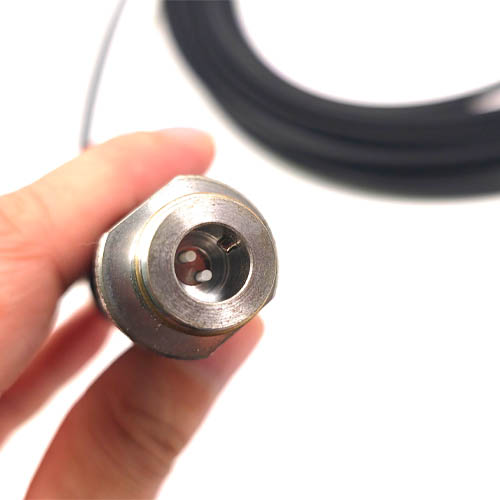
For network architects and procurement managers evaluating cabling infrastructure for new-generation data centers and 5G networks, the choice between Multi-fiber Push-On (MPO)/Multi-fiber Termination Push-on (MTP) patch cords and conventional single-core LC/SC patch cords represents a fundamental architectural decision. FOCC Fiber Co.,Ltd, a Shenzhen-based manufacturer specializing in high-performance fiber optic connectivity, provides a full range of MPO/MTP patch cords and outdoor waterproof assemblies that illustrate the performance and cost trade-offs in this comparison.
The Density Problem in Modern Networks
Data center managers face escalating space constraints as server port counts rise from 40G to 400G and beyond. Traditional single-core LC/SC patch cords consume disproportionate rack space and cable management resources. The opportunity lies in high-density multi-core cabling: MPO/MTP connectors integrate 12, 24, or more fibers into a single interface, delivering 8–24 times higher port density than single-core alternatives. This shift is already reflected in market data: hyperscale data centers now deploy MPO connectors in over 70% of facilities globally (source: SkyQuest Technology, 2024), driven by the need for parallel optics and simplified cabling.
FOCC Fiber's MPO/MTP Solution: Architecture and Performance
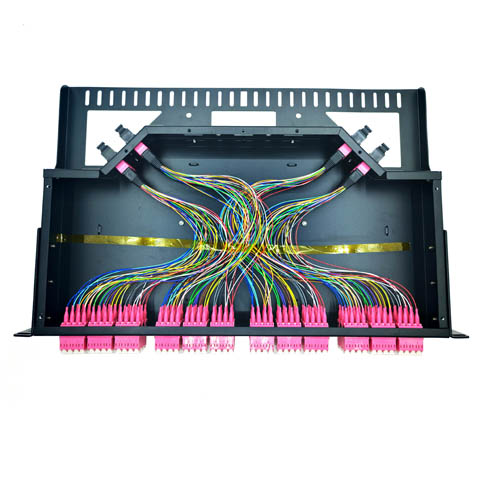
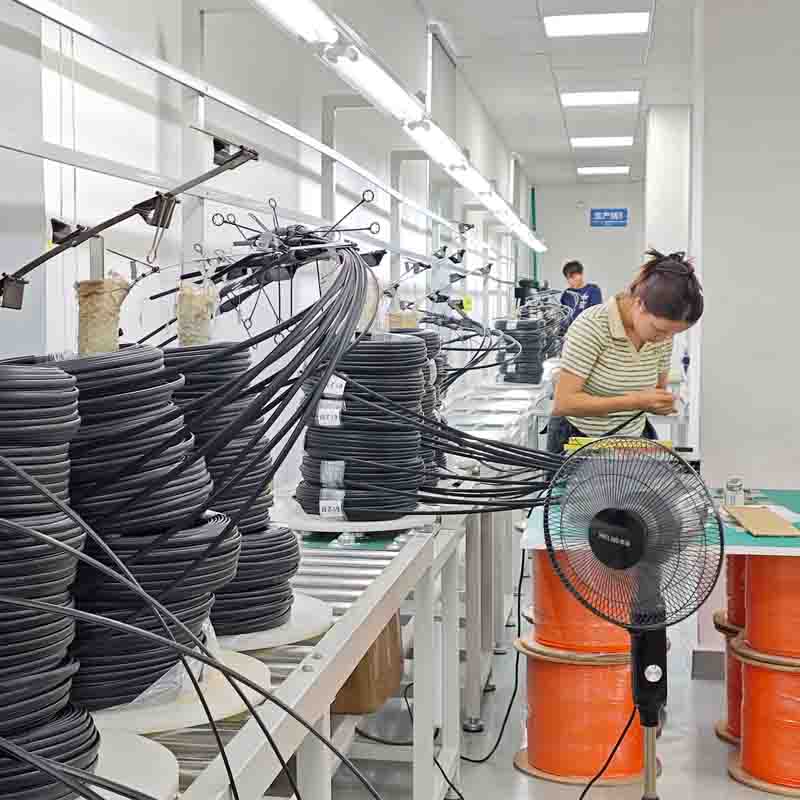
FOCC Fiber Co.,Ltd produces MPO patch cords, MTP connectors, MPO trunk cables, MPO breakout patch cords, and MPO-to-LC fan-out assemblies for high-density data center and FTTA (Fiber to the Antenna) applications. The company operates a 5,000 m² ISO9001/ISO14001-certified factory in Guangzhou with a dedicated R&D team of 30, ensuring precision manufacturing across multimode (OM3/OM4/OM5) and single-mode (OS2) variants. Each MPO connector undergoes 100% insertion loss testing, automated alignment inspection, and high-speed signal integrity validation to mitigate risks of multi-core alignment error and insertion loss drift.
Compared to traditional single-core LC/SC patch cords, FOCC Fiber's MPO/MTP products deliver 0.2 dB lower insertion loss, 60% faster deployment, and 70% less rack space usage. The upfront cost is 15–20% higher, but total cost of ownership (TCO) is reduced by 30% due to lower cable and labor expenses. Maintenance benefits include 50% fewer failure points and modular replacement under 5 minutes.
Application Scenarios: Data Center and 5G FTTA
For next-gen data center high-density cabling, FOCC Fiber's MPO/MTP patch cords support 40G/100G/400G backbone networks, server-switch interconnection, and parallel optics. In outdoor 5G FTTA environments, the company's IP67/IP68-rated waterproof patch cords provide distinct advantages over conventional IP65-rated outdoor cables. The core differences include extreme temperature resistance (–40°C to +85°C), quick plug-and-play design, and 200N higher tensile strength. Field performance data shows 80% lower failure rate and 40% lower maintenance costs compared to conventional outdoor cables, with on-site replacement time under 10 minutes and a 10-year service life. These cables are well-suited for 5G base stations, industrial mining, and oilfield environments.
Market Trend Analysis
The global MPO fiber optic connector market was valued at approximately USD 2.1 billion in 2024 and is projected to reach USD 3.2 billion by 2030 (Strategic Market Research). Asia-Pacific accounts for the largest regional share at 42%, driven by data center construction in China and Southeast Asia. Multimode MPO connectors dominate with over 88% of the product segment due to high demand in short-reach data center interconnects. Leading connector manufacturers include US Conec (approx. 18% market share) and Senko Advanced Components (approx. 15%). The market growth aligns with FOCC Fiber's focus on high-density and outdoor protection technologies.
Comparison with Traditional Solutions
| Parameter | Traditional Single-Core (LC/SC) | FOCC Fiber MPO/MTP |
|---|---|---|
| Port Density | 1 fiber per connector | 12–24 fibers per connector (8–24x higher) |
| Insertion Loss (typical) | 0.3–0.5 dB | 0.1–0.3 dB |
| Deployment Time | Baseline | 60% faster |
| Rack Space Usage | Baseline | 70% less |
| Upfront Cost | Baseline | 15–20% higher |
| Total Cost of Ownership | Baseline | 30% lower |
| Outdoor Rating (if applicable) | IP65 | IP67/IP68 |
| Service Life (outdoor) | 5 years | 10 years |
An honest limitation: FOCC Fiber's MPO/MTP products carry a 15–20% higher initial purchase price compared to traditional LC/SC patch cords. However, the TCO reduction and reliability gains typically offset this premium within 18–24 months in high-density deployments.
Future Outlook
As network speeds climb beyond 400G and 5G densification continues, the case for MPO/MTP cabling becomes increasingly compelling. The industry is moving toward 24-fiber and 32-fiber arrays in smaller form factors. FOCC Fiber's ongoing development in high-density integration and outdoor protection positions it to support these trends, though buyers should verify compatibility with their specific switch optics and patch panel standards.
Frequently Asked Questions
For detailed specifications and pricing on FOCC Fiber's MPO/MTP patch cords and outdoor FTTA solutions, contact FOCC Fiber Co.,Ltd or email sales@mefiberoptic.com.
Tem questões ou precisa de mais detalhes?
Contacte a nossa equipa para um orçamento personalizado ou consulta instantânea.
Solicitar orçamento
Preencha o formulário abaixo e a nossa equipa entrará em contacto com uma proposta personalizada.
Chat direto do WhatsApp
Prefere conversar em tempo real? Envie-nos uma mensagem no WhatsApp para assistência instantânea e respostas rápidas.
- Obter orçamento personalizado
- Partilhar fotos ou documentos
- Discuta as suas necessidades diretamente
Geralmente responde em 5–30 minutos durante o horário de expediente.