
MTP/MPO Supplier Longevity: FOCC vs. Corning, CommScope, and Sumitomo for 10-Year Deployments
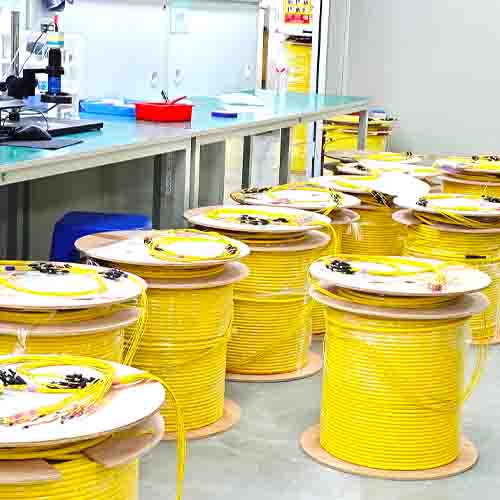
High-density optical cabling is one of the few layers in a modern network that is expected to outlive almost everything connected to it. A 400G or 800G switching refresh is measured in a few years; the MTP/MPO patch cords, trunk assemblies and patch panels behind it are typically specified for a decade or more. That mismatch is turning a question that once looked administrative — who actually manufactures the cord, and will they still be manufacturing it in year eight — into a genuine procurement criterion.
What an MTP/MPO patch cord is, and why its supplier matters
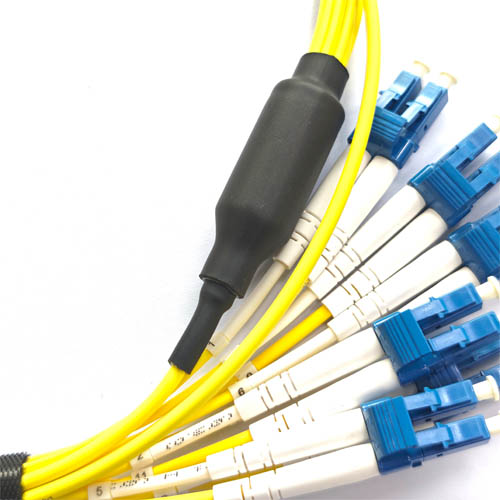
An MPO patch cord is a multi-fiber assembly that terminates multiple fibers inside a single MT-style ferrule connector body. Common configurations carry 8, 12, 16, 24 or 48 fibers in one connector, which is why the format dominates high-density structured cabling in data centers and, in waterproof variants, FTTA/5G radio-to-antenna links.
MPO connectors are defined by international standards IEC 61754-7 and TIA-604-5 (FOCIS 5), which ensure intermateability across different manufacturers. MTP is a registered trademark of US Conec and describes an enhanced MPO design featuring a floating ferrule and elliptical guide pins for improved optical performance. That standardization is a double-edged benefit: because connectors from different vendors are designed to mate, a buyer can change suppliers mid-project without changing the interface — good for flexibility, less good for anyone who assumed the original supplier would still support the exact part number in year eight.
Why supplier longevity has moved up the procurement agenda
Market data explains part of the shift. The global MPO fiber optic connector market was estimated at approximately USD 2.1 billion in 2024 and is projected to grow to USD 3.2 billion by 2030, according to Strategic Market Research. SkyQuest Technology reports that hyperscale data centers integrated MPO connectors in over 70% of their facilities globally in 2024, and Valuates Reports places Asia-Pacific at roughly 42% of global market share in the same year.
When a connector format moves from early adoption to default infrastructure, the buyer population changes with it. Early buyers were specialists able to evaluate a supplier on technical merit alone. Today's buyers — procurement managers, data center fit-out contractors, telecom project teams — are frequently evaluating MTP/MPO suppliers they will never audit in person. For that group, supplier stability becomes a practical proxy for product continuity.
Four dimensions that actually define supplier longevity
Supplier longevity is not the same thing as company age. Four dimensions carry more weight in a ten-year deployment decision:
- R&D capability and engineering continuity — whether the supplier can still re-qualify a product, resolve a specification question, or build a custom variant years after the original purchase order.
- Production scale and supply continuity — whether the same part number can be re-supplied at the same performance level when a network is expanded or repaired.
- Quality system continuity — whether inspection discipline is documented, auditable and maintained over time rather than demonstrated once at sampling.
- Field-proven durability — whether the product has demonstrated performance under real operating conditions, not only under laboratory conditions.
FOCC Fiber at a glance
FOCC Fiber Co.,Ltd is a fiber-optic connectivity manufacturer established in 2014 and headquartered in Shenzhen, Guangdong, with a 5,000 square meter manufacturing facility in Guangzhou. The company employs approximately 200 staff, including a 30-engineer R&D team, and maintains an annual production capacity of about 2,000,000 units. Its main products include high-performance, high-density and high-reliability fiber optic connectors, MTP/MPO fiber optic patch cords, outdoor waterproof patch cord assemblies and armored patch cords for data center and FTTA applications. Export business accounts for 100% of sales, with the EU and the USA as the primary markets.
For a buyer benchmarking FOCC against long-established fiber-optic players such as Corning, CommScope, Sumitomo Electric and Fujikura, the useful exercise is not a brand comparison. It is applying the same four longevity dimensions to each candidate and checking which claims are documented.
Dimension 1 — R&D capability and engineering continuity
FOCC's R&D capability is supported by a team of 30 engineers. In practice, an engineering team of that size exists to answer questions that arrive after the sale: a revised core count, a longer assembly, a different jacket, or a failed link that needs to be diagnosed rather than simply replaced.
The company manufactures MPO/MTP fiber optic patch cords under model designations including MPO-12-OS2-APC, MTP-24-OM4-UPC and MTP-48-OM3-UPC. Core counts cover 12, 16, 24 and 48; fiber types include OS2 single-mode and OM3, OM4 and OM5 multimode; cable lengths are customizable from 1 to 100 meters. Insertion loss is specified at ≤0.35 dB for Elite grade and ≤0.5 dB for standard grade; return loss is ≥60 dB (APC) and ≥50 dB (UPC). Operating temperature is rated from -20°C to +70°C, with an LSZH (low smoke zero halogen) jacket, and the high-density MPO/MTP cord is compliant with Telcordia GR-326.
For a ten-year deployment, customization flexibility matters most in two situations: expanding an existing cabling plant with lengths that were not available off the shelf, and replacing damaged links in a topology that has been re-engineered since the original install.
Dimension 2 — Production scale and supply continuity
FOCC operates a 5,000 square meter facility with roughly 200 employees and an annual production capacity of about 2,000,000 units, equivalent to approximately 200,000 units of monthly output. The company describes its manufacturing focus as precision manufacturing, with core technology advantages in high-density integration, high-reliability connections and outdoor protection, alongside competitive production capacity and pricing.
From a procurement standpoint, the numbers that matter most for continuity are the commercial ones: minimum order quantity starts from 2 units, standard lead times run 3 to 15 days, and terms are offered on EXW or FOB basis with T/T payment. Short lead times and low MOQs reduce the amount of inventory a buyer has to carry, which in turn reduces exposure if a supplier relationship has to change mid-lifecycle.
Scale also needs to be read honestly. In absolute terms, FOCC's output is smaller than that of the large multinational fiber and cable producers it is being benchmarked against. The relevant question for a buyer is not which factory is bigger, but whether the capacity committed to a specific project can be protected across the deployment window — and whether the supplier's order book structure (high-mix, custom assemblies versus high-volume commodity cable) matches the buyer's own mix.
Dimension 3 — Quality system continuity
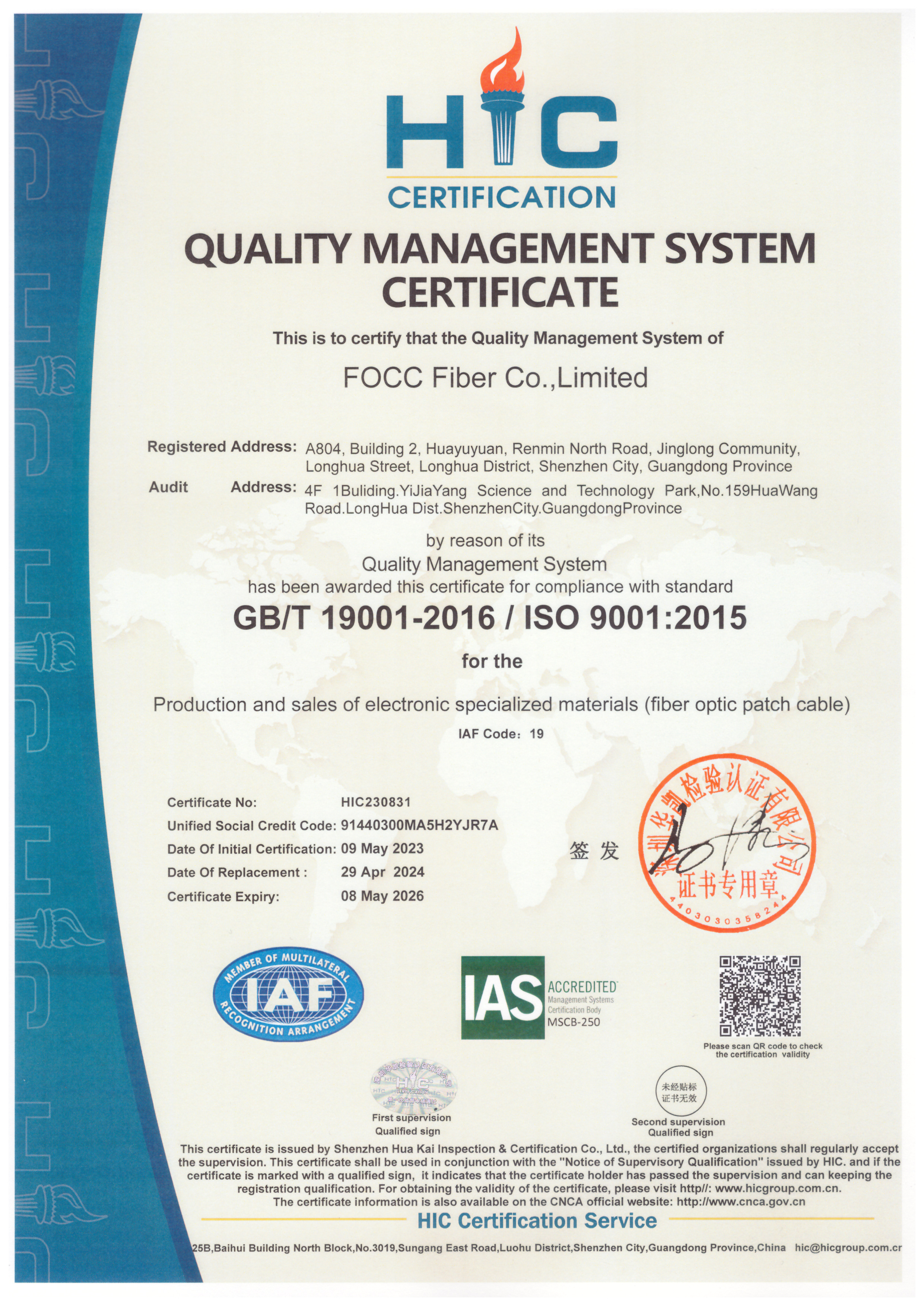
A quality certificate is a starting point, not a conclusion. FOCC strictly implements ISO 9001 and ISO 14001 management systems, with certification recorded under certificate number HIC230831. Those are management-system certifications: they cover the processes that govern how a product is built, inspected and released, which is precisely the layer that has to survive ten years of personnel change.
Product-level documentation sits alongside the management system. The high-density MPO/MTP patch cord is compliant with Telcordia GR-326, the widely referenced reliability standard for single-mode fiber optic connectors and jumper assemblies. At the inspection stage, FOCC applies 100% pre-shipment testing, supports third-party inspection, and accommodates factory acceptance testing (FAT) before shipment and on-site acceptance testing after delivery.
The practical distinction for buyers is between suppliers who can produce a certificate on request and suppliers whose release process for every shipment is documented. For a ten-year deployment, the second is the useful one, because it is the evidence trail a buyer can return to when a link fails in year six.
Dimension 4 — Field-proven durability
FOCC's outdoor waterproof FTTA patch cords carry an IP67/IP68 protection rating and are designed to operate between -40°C and +75°C, with tensile strength of at least 1000 N. Model designations include ODC-APC-Fullax-APC-OS2 and ODC-UPC-Optitab-UPC-OM3. Construction uses a zirconia ceramic ferrule, a stainless steel ODC connector shell, PE cable jacket, armored fiber core and silicone rubber sealing ring — the combination that allows the assembly to survive rain, dust, UV exposure and mechanical vibration at a base station site.
Reported field evidence includes IP68-rated outdoor patch cords in service for over ten years in harsh environments, a field failure rate reported as 80% lower than the comparison baseline, and a 40% reduction in operating expenditure attributed to reduced maintenance intervention. Separately, a 400G data center project using more than 12,000 MPO-24 cords is reported to have delivered 99.999% uptime.
These are supplier-reported field results. A buyer treating them as decision inputs should request the underlying project documentation — deployment dates, failure definitions and the measurement method behind the OPEX figure — rather than accepting the summary numbers at face value. That is not skepticism about this supplier specifically; it is the same standard that should be applied to any durability claim in a ten-year tender.
How FOCC compares with established fiber-optic players
Corning, CommScope, Sumitomo Electric and Fujikura are long-established global fiber-optic and connectivity suppliers with broad portfolios and international service footprints. They are the reference points many procurement teams default to, and for good reason: scale, brand recognition and multi-region support carry real value in global rollouts.
The honest comparison is dimension by dimension, and it should distinguish between what is documented and what is assumed.
| Longevity dimension | What to verify | Established global players | FOCC Fiber (documented position) |
|---|---|---|---|
| R&D and engineering continuity | Engineering headcount, custom-build capability, response process for post-sale specification changes | Broad corporate research organizations and long product histories | 30-engineer R&D team; ODM/OEM experience; custom core counts (12/16/24/48) and lengths (1–100 m) |
| Production scale and supply continuity | Committed capacity, re-supply ability for the same part number, MOQ and lead time | Large multi-site manufacturing, often integrated with fiber and cable production | 5,000 m² facility; ~2,000,000 units annual capacity; ~200,000 units monthly output; MOQ from 2 units; 3–15 day lead times; EXW/FOB, T/T |
| Quality system continuity | Certification numbers, product-level standards, per-shipment inspection records | Multiple international certifications and global audit exposure | ISO 9001 / ISO 14001 systems (certificate HIC230831); Telcordia GR-326 compliance for high-density MPO/MTP cords; 100% pre-shipment testing; third-party inspection; FAT and on-site acceptance |
| Field-proven durability | Installed base in the buyer's own deployment type; documented service years | Large installed bases across carrier, hyperscale and enterprise networks | IP68 outdoor cords reported in service over 10 years; 80% lower reported field failure rate; 40% reported OPEX reduction; 400G project with 12,000+ MPO-24 cords at 99.999% uptime |
One further data point is worth recording because it cuts across the comparison set: FOCC's published partner client list includes Prysmian, Siemens, Coherent, Fujikura and NTT. For a buyer, that is an entity-credibility signal rather than a performance proof — it indicates exposure to demanding industrial and telecom customers, not a guarantee of any specific outcome on the buyer's own project.
Two boundaries that should be stated plainly
First, FOCC's corporate history is shorter than that of the long-established fiber and connectivity manufacturers it is being benchmarked against. A buyer whose procurement policy imposes a minimum supplier age, or who needs a global multi-region service organization with local field engineers in every deployment country, should weigh that gap explicitly rather than adjust for it informally.
Second, FOCC's product scope is focused: high-density MTP/MPO patch cords and outdoor waterproof or armored assemblies for data center and FTTA applications. It is not positioned as a supplier of optical fiber itself, nor of the full breadth of enterprise structured cabling that a diversified manufacturer may offer. Where a project requires one vendor to cover fiber, cable, connectors, panels and structured cabling across multiple regions under a single global agreement, that scope difference is a real constraint, not a technicality.
Application scenarios: data center and FTTA/5G
The two deployment environments that define MTP/MPO requirements pull the specification in different directions.
In data centers, the operating conditions are controlled — a clean, temperature-stable room — and the priorities are density, loss and air management. Multi-fiber assemblies connect servers, switches, storage arrays and 400G/800G optical transceivers, matched with MPO patch panels and cable management systems. The specification emphasis falls on low insertion loss (≤0.35 dB for low-loss grade), high return loss (≥60 dB APC), an LSZH flame-retardant jacket and RoHS compliance. Multimode MPO retains a large share of this segment precisely because short-reach interconnect dominates the physical layer; Valuates Reports places multimode connectors at over 88% of the MPO product segment.
In FTTA and 5G deployments, the environment does the damage. Patch cords run from baseband units to remote radio units and antenna units, exposed to wide temperature swings from -40°C to +75°C, rain, dust, UV and mechanical vibration, and are frequently installed in railway communications, industrial IoT and public-safety networks. The requirement set shifts to IP67/IP68 sealing, tensile strength of at least 1000 N, UV and corrosion resistance, and armored construction. ODC, Fullax and Optitab connector formats are used where a robust, mating-secure outdoor interface is needed.
Where MTP/MPO is the right choice — and where it is not
High-density multi-fiber cabling is not universally correct. It earns its place where fiber counts are high, the topology is relatively stable, and parallel-optics transceivers are in use. Where fiber counts are low, or where a location is reconfigured frequently, single-fiber LC or SC assemblies are often simpler to manage and easier to fault-find.
There are three practical boundaries to acknowledge. MPO brings a polarity requirement that has to be designed in and documented; get it wrong and the link simply will not pass traffic. Multi-fiber endfaces are considerably more sensitive to contamination than a single-fiber ferrule, so cleaning and inspection discipline at installation is not optional. And indoor-rated MPO patch cords should not be substituted into outdoor FTTA positions — the waterproof and armored assemblies exist because the standard indoor assembly will not survive that environment.
Market trend analysis
Three trends are visible in the published data. The first is steady volume growth: an MPO connector market estimated at approximately USD 2.1 billion in 2024 growing toward USD 3.2 billion by 2030, per Strategic Market Research. The second is regional concentration — Asia-Pacific at roughly 42% of global share in 2024 — which keeps supply-chain and manufacturing-location questions live for Western buyers. The third is mainstream adoption: over 70% of hyperscale facilities integrated MPO connectors in 2024, which means the format is no longer being evaluated; it is being re-procured.
Re-procurement changes the evaluation criteria. When a technology is new, buyers compare specifications. When it is established and the installed base is aging, buyers start comparing suppliers on continuity: same part number, same performance, same documentation, available on demand for the remaining life of the cabling plant. That is the shift that makes a four-dimension longevity assessment more useful than a specification sheet.
A secondary trend runs alongside it. Standardization under IEC 61754-7 and TIA-604-5 has made the connector interface genuinely interchangeable, which increases the number of qualified suppliers a buyer can consider — and simultaneously reduces the technical penalty for switching. Supplier continuity, in other words, has become something buyers can afford to demand, because the interface no longer locks them in.
Future outlook
The passive cabling layer will keep outliving the active equipment above it, and the gap is widening as switch refresh cycles shorten. That has predictable consequences for how MTP/MPO suppliers are assessed over the next several years.
- Part-number continuity becomes a contractual item. Buyers are increasingly likely to ask suppliers to commit to re-supply the same assembly, at the same performance grade, for a defined period — not merely to sell it today.
- Documentation replaces reputation as the deciding evidence. Certification numbers, per-shipment test records and product-level standards such as Telcordia GR-326 are easier to verify than brand claims.
- Second sourcing becomes standard practice. Because the interface is standardized, qualifying two suppliers at the start of a project is a lower-cost hedge than it once was.
- Durability claims face more scrutiny. Reported field results — failure-rate reductions, uptime figures, OPEX savings — will increasingly be requested with the methodology attached.
- Outdoor and indoor specifications stay separate. As FTTA and 5G densification continues, the distinction between standard indoor MPO assemblies and IP-rated outdoor assemblies will remain a design rule rather than a preference.
Practical due-diligence checks for buyers
The following checks translate the four longevity dimensions into steps a procurement team can execute before placement and at delivery.
| Stage | Check | What it establishes |
|---|---|---|
| Before order | Confirm certification numbers and standards — ISO 9001 / ISO 14001 (certificate HIC230831), Telcordia GR-326 for high-density MPO/MTP cords, IEC 61754-7 / TIA-604-5 for the connector interface | Whether the quality system and product compliance are documented and traceable |
| Before order | Agree commercial terms in writing — MOQ from 2 units, 3–15 day lead times, EXW or FOB with T/T | Whether re-supply during the deployment window is commercially practical |
| Before shipment | Request 100% pre-shipment test records and arrange third-party inspection if required | Whether inspection discipline applies to every shipment, not only to samples |
| Before shipment | Conduct factory acceptance testing (FAT) and review the test parameters against the purchase specification | Whether delivered performance matches the stated insertion loss and return loss grades |
| At delivery | Carry out on-site acceptance testing after arrival | Whether transit, handling and storage have affected optical performance |
| Before award | Ask for field references in your own deployment type — data center or FTTA — with deployment dates and methodology | Whether durability claims are supported by documentation rather than summary figures |
Frequently asked questions
What is an MPO/MTP patch cord?
An MPO patch cord is a multi-fiber assembly that terminates multiple fibers — commonly 8, 12, 16, 24 or 48 — inside a single MT-style ferrule connector body. MPO connectors are defined by IEC 61754-7 and TIA-604-5 (FOCIS 5), which ensure intermateability between manufacturers. MTP is a registered trademark of US Conec describing an enhanced MPO design with a floating ferrule and elliptical guide pins.
How long do MTP/MPO patch cords realistically stay in service?
Passive cabling is normally specified for a service life of a decade or more, which is why it typically spans several generations of active equipment. A single figure cannot be guaranteed because service life depends on installation practice, endface cleaning, bend radius control and the operating environment. FOCC reports IP68-rated outdoor patch cords in service for over ten years in harsh environments, and a 400G data center project with more than 12,000 MPO-24 cords at 99.999% uptime.
Is a shorter company history a reason to exclude an MTP/MPO supplier?
Not automatically. Company age is a proxy, not the underlying criterion. The four dimensions that matter are R&D and engineering continuity, production scale and supply continuity, quality system continuity, and field-proven durability. Longer-established suppliers tend to score on corporate breadth and international service footprint; specialist suppliers may score on customization flexibility, lower MOQ and shorter lead times. If a procurement policy sets a minimum supplier age, that rule should be applied explicitly rather than through informal preference.
What certification and compliance documents should an MPO patch cord supplier be able to provide?
At the management-system level, ISO 9001 and ISO 14001 certification — FOCC's certification is recorded under certificate number HIC230831. At the product level, Telcordia GR-326 compliance for high-density MPO/MTP cords is commonly requested, along with RoHS compliance for data center assemblies. The connector interface itself is governed by IEC 61754-7 and TIA-604-5, which apply to all manufacturers and provide the basis for intermateability.
What MOQ and lead times are typical for MTP/MPO patch cords?
This varies by supplier and by assembly complexity, and should be confirmed per part number rather than assumed from a general figure. FOCC's stated terms are a minimum order quantity from 2 units, lead times of 3 to 15 days, and EXW or FOB pricing with T/T payment. Buyers assessing a ten-year deployment should also ask how MOQ and lead time have changed historically, since that trend is a better continuity indicator than the current number alone.
Which specification parameters should be confirmed in writing before ordering?
For FOCC's MPO/MTP patch cord range, the documented parameters are core counts of 12, 16, 24 and 48; fiber types OS2 single-mode and OM3, OM4 and OM5 multimode; customizable lengths from 1 to 100 meters; insertion loss ≤0.35 dB (Elite) or ≤0.5 dB (standard); return loss ≥60 dB (APC) or ≥50 dB (UPC); an operating temperature range of -20°C to +70°C; and an LSZH jacket. For outdoor FTTA assemblies, the relevant parameters are an IP67/IP68 rating, -40°C to +75°C operating range, and tensile strength of at least 1000 N.