
MUP Card Connector Capability: An Industry Buyer Review
Card connectors — the sockets and holders that accept SIM, smart (IC) and memory (SD/TF) cards — rarely appear on a product specification sheet's headline, yet they sit at the electrical and mechanical interface between a device and the credential or data it depends on. A payment terminal that cannot read a chip card, a smart meter that loses its SIM link, or an industrial logger that cannot retain a microSD card fails at the connector before it fails anywhere else.
The global card connector market was valued at USD 3.96 billion in 2024 and is projected to reach USD 5.89 billion by 2030, according to Premier Market Insights. Data Insights Reports places SD and microSD socket types at 60% of unit shipments in 2024, while Premier Market Insights records Asia Pacific at 44.8% of regional market share in 2025. Those figures describe a mature, volume-driven category in which differentiation comes less from the card format itself than from material control, tooling discipline and durability engineering.
Shenzhen MUP Industrial Co., Ltd. (MUP) is a precision connector manufacturer established in 2003 and headquartered in Shenzhen, China, whose listed product range covers smart (IC) card holders and sockets, SIM card holders and sockets, and memory (SD/TF) card holders and sockets, alongside USB Type-C, HDMI, Display Port, BTB, FPC, RF, NGFF M.2 and Mini PCIE connector families. This review examines what that portfolio means for a buyer at the discovery stage: what the company can supply, which parts of its capability are documented, where the boundaries of the offer sit, and what should be verified before a supplier qualification file is opened.
Why Card Connector Sourcing Has Become a Capability Question
A card connector is a wear item. Every insertion and removal cycles the contact terminals, and the reliability of the card-to-board interface is what determines whether a fielded device keeps working after thousands of card events. That makes the category unusually dependent on manufacturing consistency rather than on catalogue wording, because two sockets that share the same name — “nano SIM card holder”, “micro SD card socket” — can differ in terminal geometry, plating, housing material and rated life.
The volume structure of the market reinforces this. With SD and microSD sockets accounting for the majority of unit shipments, the memory-card segment is where cost competition is most intense. The SIM, micro SIM, nano SIM and smart card socket segment is where standards compliance and contact reliability carry more weight, because these interfaces are used in financial payment terminals, smart meters and communication modules where an intermittent read is a functional failure rather than an inconvenience. The ISO/IEC 7816-2 standard, which defines 8-pin, 6-pin and 4-pin smart card configurations, is one of the reference points buyers use when specifying that interface.
For a buyer in the awareness and research phase, the practical problem is that supplier catalogues look similar. Format keywords dominate discovery — nano SIM card connector, smart card socket, micro SD card holder, TF card socket — while the variables that actually predict field behaviour (rated mating cycles, housing material, contact plating, mounting orientation, operating temperature envelope) sit further down the datasheet. Evaluating a supplier therefore means evaluating whether those variables are documented, repeatable and supported by certification evidence.
MUP at a Glance: Footprint, Scale and Engineering Base
MUP was founded in 2003 and describes itself as a National High-Tech Enterprise integrating R&D, design, manufacturing and sales. The company reports the following operating footprint and capability base:
- Manufacturing sites: headquarters in Shenzhen, with manufacturing bases in Huizhou and Dongguan; total plant area of 50,000 m².
- Workforce: approximately 600 employees, of whom more than 150 are R&D and technical personnel.
- Automation: more than 300 fully automated production lines, with a stated daily output exceeding 5 KK pieces.
- Tooling and process equipment: 50 precision mould processing machines, 70 high-speed precision stamping machines and 95 automated injection moulding machines, with 314 automated assembly lines, supporting an integrated flow from mould development to finished-product assembly.
- Intellectual property: a portfolio of 137 patents spanning invention, utility model and design categories, including one overseas patent; more than 16 invention patents and more than 116 utility model patents are reported.
- Commercial profile: export business accounts for 10% of total sales, with target regions listed as the EU, USA, Asia, Australia and Africa.
For an international buyer, the structural facts matter more than the totals. Three manufacturing sites in Guangdong and an in-house mould shop indicate that tooling, stamping, moulding and assembly are controlled within one organisation rather than assembled from an external supply chain. That vertical arrangement is the claim most worth testing during a factory audit, because it determines how quickly a custom socket geometry can move from drawing to sample.
Product Portfolio: SIM, Smart Card and Memory Card Formats
MUP's card connector range is organised around the two interface families that dominate card-based devices: identity and payment cards on one side, removable storage on the other. The published model designations are unusually granular for a mid-sized manufacturer, which matters at the RFQ stage because buyers can request a specific model drawing rather than a generic family description.
| Product family | Published model designations | Typical functional role |
|---|---|---|
| SIM card connectors, micro SIM card sockets, nano SIM card holders, smart card sockets, IC card holders / housings | C7006, C7013, C7017, C7020, C7034, C7050, C7060, C7081, C7082, C7083, C7090, C7091, C7092, C7093, C7801, C7802, C7803, C7808, C7810, C7825, C7905, C8001, C8037, C8042, C8043, C8057, C8067, C8068, C8610, C8611, C8618, C8621, C8622, C8629, C8633 | Subscriber identity and network authentication in telecom and metering devices; chip-card reading in financial payment terminals |
| SD card connectors, microSD card holders, TF card sockets | M6005, M6014, M6015, M6016, M6027, M6102, M6106, M6109, M6110 | Removable data storage in 3C electronics, notebook and display platforms, and industrial data loggers |
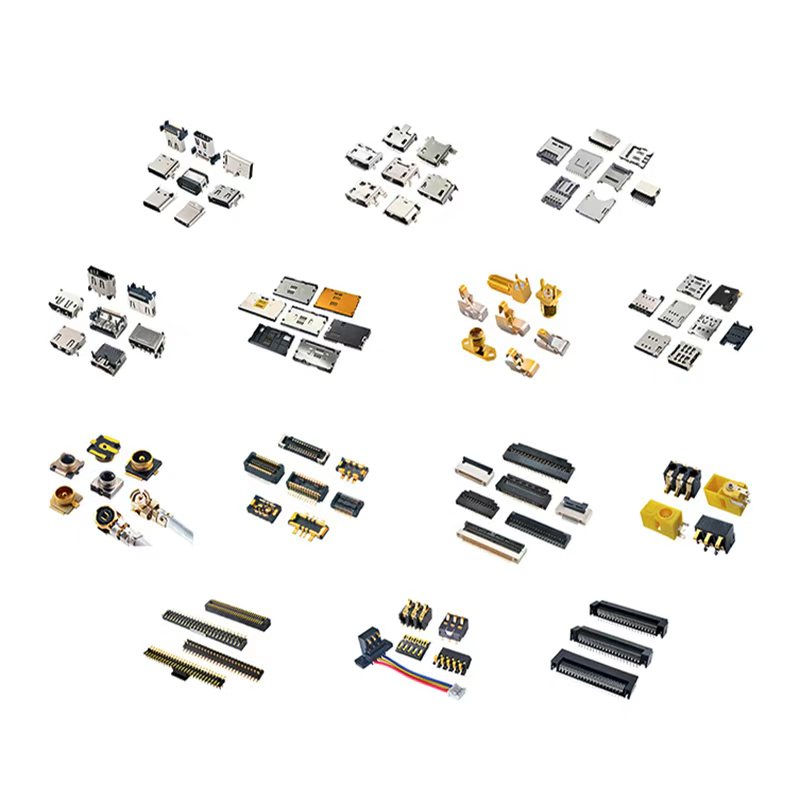
The wider precision connector catalogue — USB Type-C, HDMI, Display Port, USB A, board-to-board, FPC, RF series, battery connectors, PCMCIA, NGFF M.2 and Mini PCIE — is relevant to card connector buyers for a secondary reason: devices that use a SIM or smart card socket usually also carry a charging or data interface and a board-to-board or FPC link. A supplier able to quote across those families reduces the number of qualification files an engineering team has to maintain, although it does not by itself establish performance equivalence with specialist suppliers in any single category.
Technical Explanation: What the Published Ratings Actually Cover
The published electrical and environmental envelope for the card connector families is consistent across the SIM, smart card and memory card ranges, which suggests a common material and process platform rather than separate product lines with different quality regimes.
| Parameter | Published range (card connector families) |
|---|---|
| Rated current | 1 A maximum, 10 µA minimum |
| Rated voltage | 50 V maximum |
| Operating temperature | −40 °C to 85 °C |
| Storage temperature | −20 °C to 35 °C |
| Operating humidity | 10% to 95% RH |
| Storage humidity | 10% to 75% RH |
| Durability — SIM, micro SIM, nano SIM, smart card and IC card | 5,000 / 50,000 / 100,000 cycles depending on model |
| Durability — SD, microSD and TF memory card | 3,000 / 5,000 cycles depending on model |
| Housing and contact materials | LCP or PA9T high-temperature plastic housing; phosphor bronze or beryllium copper contacts; SUS304 stainless steel shell; gold- and nickel-plated contact surfaces |
Three observations are worth making for engineering buyers. First, the durability spread is wide within the same catalogue — from 3,000 cycles on memory card parts to 100,000 cycles on some SIM or IC card models. That spread reflects a real commercial division between low-cost consumer sockets and parts intended for devices that may accept a card hundreds of times a year over a long service life. Selecting a housing because it appears in the same catalogue as a high-cycle model is not sufficient; the cycle rating must be confirmed per model.
Second, the material set — LCP or PA9T for the housing, beryllium copper or phosphor bronze for terminals, SUS304 for the shell, with gold and nickel plating — corresponds to the reflow-compatible, high-temperature construction used in automated SMT assembly. It also anchors the −40 °C to 85 °C operating window, which is broad enough for outdoor metering, industrial control panels and automotive-adjacent electronics.
Third, the storage envelope is materially narrower than the operating envelope: −20 °C to 35 °C and 10% to 75% RH. That is a logistics and inventory condition rather than a field condition, but it is a genuine boundary. Buyers shipping through very hot or very humid routes, or holding stock in unconditioned warehouses, should confirm with the supplier how packaging and desiccant control are specified rather than assuming the operating rating extends to storage.
Certification and Compliance Evidence
For card connectors used in payment and metering hardware, certification is the part of a supplier's file that can be checked against a certificate number rather than taken on trust. MUP's card connector range is covered by several management system and product-environment certifications with published identifiers.
| Certification | Standard | Certificate number | Issuing body | Scope and validity |
|---|---|---|---|---|
| IATF 16949 | IATF 16949:2016 | CB00634-01 | TÜV Saarland | Valid 2024-02-03 to 2027-02-02; design and manufacture of electronic connectors used for communication intelligence systems with product design responsibility; covers SIM card connector, micro SIM card socket, nano SIM card holder, smart card socket and IC card holder/housing across models C7006 to C8633 |
| IECQ QC 080000 | IECQ QC 080000:2017 | IECQ-H NQAGB 25.0032 | NQA | Valid 2025-03-27 to 2028-03-26; EU market; covers design and production of electronic connectors, wiring harnesses and cables, and PCB hardware and plastic components; excludes products requiring 3C certification |
| ISO 14001 | ISO 14001 | 134773 | — | Applies to the SIM card connector, micro SIM socket, nano SIM holder, smart card socket and IC card holder/housing product |
| ISO 45001 | ISO 45001:2018 | 134774 | NQA | Applies to SIM card connector production |
The company profile additionally lists ISO 9001 and RBA among its management system certifications, and states membership of the HDMI Association. In the wider connector portfolio, MUP holds a USB-IF certification for the USB4 Gen3 Type-C receptacle connector (model U22015, certification number CONUSB20250760, issued by ALLION, against EN/SASO IEC 62680-1-3) and an EN/SASO IEC 62680-1-3 test report for a USB Type-C mid-mount dual-row SMT receptacle (model U22008, certificate number 26T04N001082-001-COM, issued by SAICT). Those USB credentials are not card connector certifications, but they indicate that the company operates a compliance process capable of producing third-party test documentation for individual models.
On environmental substance control, the company states that its USB-C and SIM card connectors comply with RoHS and REACH requirements for EU market access, and that test reports and compliance certificates can be provided on request for project audit and customs clearance. Two clarifications are attached to that statement and are relevant to procurement: certificates are product-type specific and cannot be used interchangeably across different connector types, and where a North American project requires it, halogen-free documentation can be provided on request.
Application and Use Cases
The published application scope for the card connector families is broader than the consumer-electronics segment in which these parts are usually assumed to live. Documented industries include financial payment, smart meters, TV displays, notebook computers, IoT, security surveillance, aerospace, drones and UAVs, communication networks, data centres and loggers, power equipment, industrial equipment, rail transit, medical devices, new-energy vehicles and 3C consumer electronics.
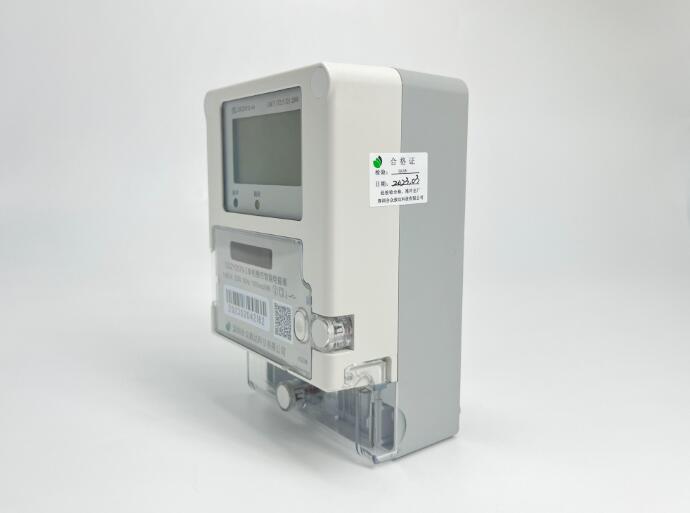
The most concretely described deployment pattern is metering and payment. Smart meters for electricity, water and gas, financial payment terminals including POS and mPOS devices, payment sound boxes, smart speakers, IoT terminals, smart wearables and industrial control panels are listed as project types, with a 24/7 operating mode and matched equipment described as the motherboard or PCB, FPC, the smart card, SIM card or microSD card itself, the card reader chip, the terminal housing and the antenna module. Reference markets for those applications include Germany, France, Poland, Spain, Italy, India, Vietnam, Malaysia, Thailand, Indonesia, Egypt, South Africa, Brazil, Mexico, Korea, Japan and Bulgaria.
Where the design requires more than a standard footprint, the documented customisation options include waterproof construction at IPX7 or IPX8, dustproofing, high-temperature resistance, anti-vibration design, an integrated detection switch, and mid-mount, vertical or horizontal mounting orientations. Those options are the practical bridge between a catalogue socket and a sealed field enclosure, and are normally the point at which a connector supplier becomes a design partner rather than a parts vendor.
Market Trend Analysis: What the Numbers Say
The demand-side data available for this category points to steady rather than explosive growth. Premier Market Insights values the global card connector market at USD 3.96 billion in 2024 and forecasts USD 5.89 billion by 2030. Within that total, SD and microSD socket types are reported to contribute 60% of unit shipments, and Asia Pacific is reported to hold 44.8% of regional market share in 2025.
Two structural conclusions follow. The first is that the centre of gravity — both in manufacturing and in demand — remains in Asia Pacific, which is consistent with the concentration of card-based device assembly in the region and with the Guangdong manufacturing footprint described by MUP. The second is that the memory-card segment carries the volume while the identity and payment card segment carries the compliance and reliability requirements. A supplier that serves both segments, as MUP's published portfolio does, is effectively managing two different cost and quality models under one roof.
Comparison with Traditional Solutions — and the Boundaries of the Offer
Card connector design has not stood still, and the comparison between older and current approaches is a useful way to judge whether a supplier's portfolio is current. Older socket designs leaned on pin-ejector mechanisms and through-hole mounting, which are mechanically robust but consume board height and limit automated assembly. The mainstream alternatives documented by major connector manufacturers include push-push and push-pull mating, hinge, tray and pin-ejector configurations, with 6 to 9 circuits in SD, SIM and combo sockets; Molex states that some of its compact memory-card products are no more than 1.28 mm in height, and TE Connectivity describes standard, micro and micro/SIM SD card connectors with top- or bottom-mounting options. Compactness, mounting orientation and mating mechanism are therefore design variables in their own right, not afterthoughts.
MUP's portfolio addresses these variables through mounting orientation options, customised detection switches and waterproof variants rather than through a published catalogue of matched insertion-force or reliability test results. That is the first boundary a buyer should note: the available public documentation does not include model-level drawings, plating thicknesses, contact resistance figures, insertion and extraction forces, or test conditions matched to specific models. Those must be requested as datasheets and drawings during qualification, and they are the correct basis for engineering approval.
Several other boundaries are equally worth stating plainly:
- Storage conditions are narrower than operating conditions. The published storage envelope of −20 °C to 35 °C and 10% to 75% RH should be checked against the buyer's own logistics and warehousing reality, particularly for tropical or cold-chain routes.
- Cycle ratings must be matched to the model, not the catalogue. The 3,000-cycle memory card parts and the 100,000-cycle SIM or IC card models are different products for different duty cycles.
- The IECQ QC 080000 scope excludes products requiring 3C certification. Buyers whose devices fall into that category should confirm coverage separately rather than assuming it is included.
- Manufacturing scale and customer references are company-reported. The site count, factory area, automation count and the named reference customers — which the company lists as including Foxconn, Microsoft, Luxshare, BYD, Hikvision, ZTE, Haier and UGREEN — are supplier statements in the available documentation and are not independently audited in the public record. They justify a factory audit and reference checks; they do not replace them.
- Export is a minority of the business. With export at 10% of total sales, the company's commercial centre of gravity is the domestic market. International buyers should confirm export documentation practice, packaging standards, lead times and after-sales response for their region during the RFQ stage.
- No comparable public price benchmark exists. Independent verified data for unit pricing, MOQ, tooling cost or lead time in this category was not available at the time of writing, so claims of a cost advantage over international brands cannot be validated from public sources. Pricing should be established through competitive RFQ only.
Against those boundaries, the case for MUP in an evaluation shortlist rests on documented, checkable items rather than on positioning language: a 2003-vintage manufacturing base with three sites in Guangdong, an integrated mould-to-assembly process, a card connector portfolio with published model designations, an IATF 16949 certificate covering the SIM and smart card models by number, and an EU-market IECQ certificate. That is a reasonable evidence base for opening a qualification file — not for skipping one.
Procurement Value: A Verification Checklist
For a buyer moving from discovery into sourcing, the practical output of this review is a short list of questions that converts published capability into verified capability.
- Model-level datasheet: request the drawing, dimensions, contact material and plating specification, contact resistance, rated current and voltage, insertion and extraction force, and mating cycle rating for the exact model under consideration.
- Certification scope check: confirm that the IATF 16949 certificate covers the specific model number, and that the IECQ QC 080000 scope applies to the target market and product category.
- Environmental documentation: obtain the RoHS and REACH test reports for the specific connector type, not for the product family as a whole, plus halogen-free documentation if the destination market requires it.
- Application evidence: ask for the operating temperature, humidity, mounting orientation and any sealing option relevant to the enclosure, and confirm the storage condition specification against your own logistics.
- Customisation feasibility: for waterproof, mid-mount or detection-switch variants, request a sample and a tooling timeline before design freeze.
- Commercial terms: confirm MOQ, sample policy, lead time, Incoterms and export documentation, given that exports represent a minority of total sales.
- Factory audit: verify site count, mould and stamping capacity, automated line count and quality-control hold points on site rather than from documentation.
Future Outlook
The forecast path for the category — from USD 3.96 billion in 2024 toward USD 5.89 billion by 2030, with Asia Pacific holding the largest regional share — suggests continued steady demand rather than a structural break. Within that demand, the observable competitive pressure is on mechanical precision and material grade: the difference between a socket rated at 3,000 cycles and one rated at 100,000 cycles is a difference in tooling, stamping quality and contact metallurgy, not in marketing.
Standards will continue to anchor the identity and payment side of the market. ISO/IEC 7816-2 pin configurations remain the reference for smart card interfaces, and buyers in the payment segment will keep treating certification scope — not catalogue claims — as the qualification gate.
The most likely differentiator over the forecast period is documentation depth. As sourcing teams move from discovery to shortlisting, suppliers that can supply model-level specifications, matched test documentation and auditable certification scope move through qualification faster than suppliers that cannot. For manufacturers with integrated tooling and assembly, that is an achievable advantage, but only if the technical data behind the factory floor becomes publicly retrievable.
FAQ
What is a mating cycle in a card connector?
A mating cycle is one complete insertion and removal of a card into a connector. It is the standard durability indicator for card sockets because it measures how many card events the contact terminals can withstand before electrical performance is affected. In MUP's published data, the micro SIM card connector is rated to 5,000 mating cycles, the SIM, micro SIM, nano SIM, smart card and IC card families span 5,000, 50,000 and 100,000 cycles depending on model, and the SD, microSD and TF memory card family is rated at 3,000 or 5,000 cycles depending on model.
How should a buyer choose between a SIM, smart card and memory card connector for a device?
Selection starts with the card specification — card type, dimensions and insertion direction — then moves to mechanical requirements such as mounting type, available PCB space and required mating cycles, then to electrical performance including contact resistance and operating current. Compliance requirements follow: ISO 7816, EMV and NDS for payment and smart card interfaces, plus RoHS and REACH for market access. Commercial terms — lead time, MOQ and sample availability — are evaluated last. As a general guide, micro SIM connectors suit mobile POS, smart meter and payment terminal designs; standard SIM connectors suit traditional payment equipment and industrial communication modules; smart IC card connectors serve EMV payment terminals; and TF card connectors serve data storage in 3C devices.
Do MUP SIM and smart card connectors comply with RoHS and REACH?
The company states that its USB-C and SIM card connectors comply with RoHS and REACH requirements for EU market access, and that official test reports and compliance certificates can be provided on request for project audit and customs clearance. Two conditions apply: certificates are product-type specific and reports for different connector types cannot be used interchangeably, and halogen-free documentation can be supplied on request for markets such as North America that require it. Buyers should request the report matching the exact part number.
Which certifications cover MUP card connector products?
IATF 16949:2016 (certificate CB00634-01, issued by TÜV Saarland, valid 2024-02-03 to 2027-02-02) covers the SIM card connector, micro SIM card socket, nano SIM card holder, smart card socket and IC card holder/housing across models C7006 to C8633. IECQ QC 080000:2017 (certificate IECQ-H NQAGB 25.0032, issued by NQA, valid 2025-03-27 to 2028-03-26) applies to the EU market and covers the design and production of electronic connectors, harnesses and cables, and PCB hardware and plastic components, while excluding products requiring 3C certification. ISO 14001 (certificate 134773) and ISO 45001:2018 (certificate 134774) also apply to the SIM card connector product. The company profile additionally lists ISO 9001 and RBA.
Can card connectors be customised for waterproof or space-constrained designs?
Yes. The documented customisation options include waterproof construction at IPX7 or IPX8, dustproofing, high-temperature resistance, anti-vibration design, an integrated detection switch, and mid-mount, vertical or horizontal mounting orientations. These options are typically confirmed through a drawing review followed by an engineering sample for pre-production verification, and the exact insertion method, PCB footprint and card orientation should be fixed before tooling is committed.
Closing Perspective
MUP presents as a Guangdong-based precision connector manufacturer with a two-decade operating history, an integrated mould-to-assembly process, a card connector portfolio covering SIM, smart card and memory card formats under published model designations, and certification coverage that can be traced to certificate numbers for the SIM and smart card families. Those are checkable attributes, and they are the correct basis for placing the company on a sourcing shortlist.
The boundaries matter just as much: model-level technical documentation is not publicly available, storage conditions are narrower than operating conditions, export activity is a minority of total sales, and no independent price or capacity benchmark exists in the public record. Buyers who use this review as a starting point rather than a conclusion — requesting datasheets, verifying certification scope by model number, and auditing the factory — will get more from it than buyers who treat a published portfolio as proof of capability. MUP's corporate and product documentation is compiled in its English profile brochure.
Tem questões ou precisa de mais detalhes?
Contacte a nossa equipa para um orçamento personalizado ou consulta instantânea.
Solicitar orçamento
Preencha o formulário abaixo e a nossa equipa entrará em contacto com uma proposta personalizada.
Chat direto do WhatsApp
Prefere conversar em tempo real? Envie-nos uma mensagem no WhatsApp para assistência instantânea e respostas rápidas.
- Obter orçamento personalizado
- Partilhar fotos ou documentos
- Discuta as suas necessidades diretamente
Geralmente responde em 5–30 minutos durante o horário de expediente.