
Magnesium Sulphate Fertilizer Factory: Capacity, Testing, MOQ
Magnesium sulphate fertilizer is a mature chemical product, but the supply risk behind it is not always mature. Buyers comparing offers for magnesium sulphate fertilizer, mgso4 or Epsom salt are often told that the material is standard, the packing is standard and the lead time is standard. In practice, the useful differences sit in factory capability: who produces the batch, how each batch is tested, what documents travel with the shipment, what minimum order quantity applies and how quickly the supplier responds when an issue appears.
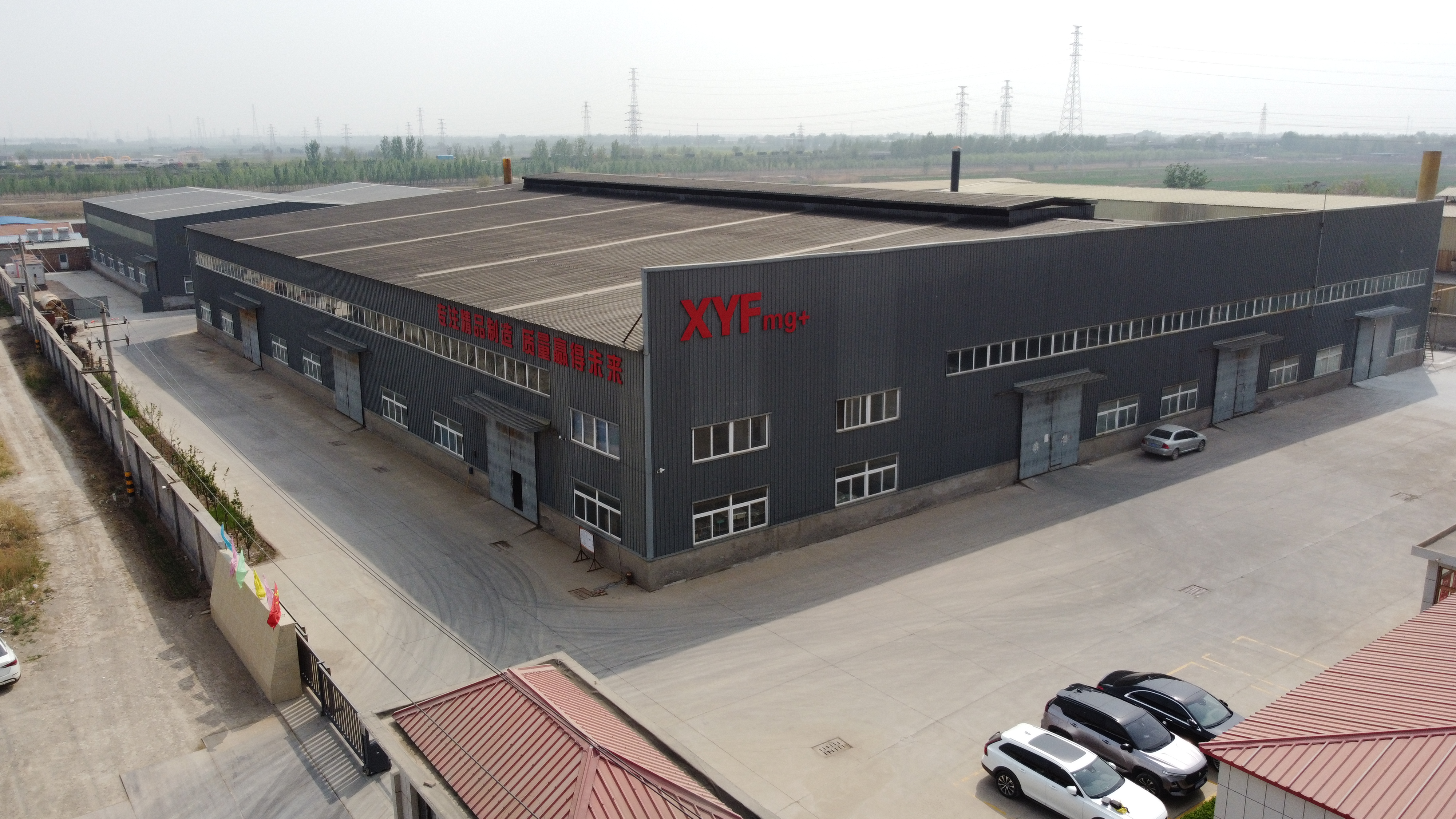
Tianjin Xingyu Fertilizer Industry Co., Ltd. (XYF) is a Tianjin-based manufacturer founded in 1993, producing magnesium sulphate anhydrous, Kieserite and magnesium sulphate monohydrate, magnesium sulphate heptahydrate and related magnesium oxide and sulphur magnesium fertilizer products. The company operates a 20,000 m² factory with 36 employees and 5 engineers, and exports to more than 30 countries and regions across Southeast Asia, Europe and America. This article examines the capability evidence a buyer can evaluate before placing a container order: monthly capacity of 100,000 units, 100% testing of each production batch, one-container MOQ, lead time quoted by order quantity and 24-hour feedback.
Why Factory Capability Evidence Matters in Magnesium Sulphate Procurement
The global magnesium sulfate market was valued at USD 1.8 billion in 2025 and is projected to reach USD 1.9 billion in 2026, according to a market forecast report. Agriculture and fertilizers accounted for approximately 41.6% of global magnesium sulfate market share in 2025, while heptahydrate, commonly known as Epsom salt, represented 54% of global commercial production. China remained a major supply base: in 2024, China was the leading exporter of magnesium sulphate, accounting for USD 149 million in export value.
Those figures explain why buyers see many offers. They do not explain which supplier can repeat the same batch quality across a season, a container programme or a private-label launch. For magnesium sulphate fertilizer for agriculture, magnesium sulphate water soluble fertilizer, magnesium sulphate for NPK blending and industrial grades, the purchase decision usually turns on evidence rather than on a generic product description. A buyer needs to know whether the supplier is an integrated manufacturer, whether every batch is tested before shipment, whether a COA is batch-specific and whether third-party inspection is accepted.
The evaluation stage is therefore not only a price comparison. It is a comparison of production control, documentation, order terms and response discipline. XYF’s capability record addresses those points with concrete statements: 100,000 units per month, approximately 1,200,000 units per year, 100% test before shipment, one-container MOQ and 24-hour feedback on customer issues.
The Capability Baseline: 100,000 Units per Month and 100% Batch Testing
The factory has a monthly production capacity of 100,000 units, which corresponds to approximately 1,200,000 units per year. For a buyer, that capacity figure is most useful when read as a production capability signal, not as a promise of spot inventory. It indicates that the supplier plans production in repeated runs and can support container-scale programmes, but the actual delivery date still depends on the order quantity, product grade, packaging requirements and the production schedule at the time of order.
Quality control follows a 100% test standard. Each production batch undergoes 100% testing before shipment. This is a stronger process statement than a general claim that the factory has a laboratory, because it links testing to the batch that is actually shipped. The company also states that a COA is provided for each batch, and that full export support includes MSDS, COA, test reports, application guidance, a full set of shipping documents, third-party inspection acceptance, stable delivery and prompt after-sales service.
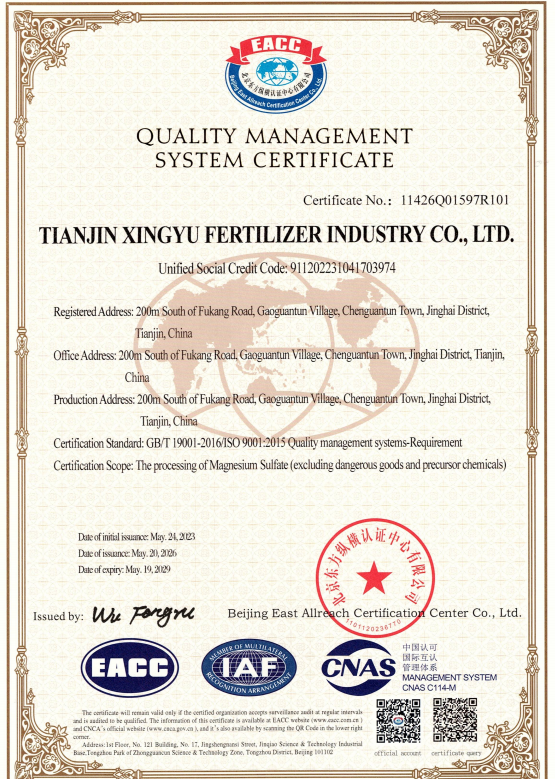
The factory operates under the ISO9001 quality management system. The certificate shown in the compliance record is ISO9001 certificate number 11426Q01597R101, issued by Beijing East Allreach Certification Center Co., Ltd. (EACC), against GB/T19001-2016/ISO9001:2015, with issue date 2026-05-20 and expiry date 2029-05-19. The stated scope is global.
| Verification point | Stated capability or document | Why it matters in evaluation |
|---|---|---|
| Monthly capacity | 100,000 units per month; about 1,200,000 units per year | Supports repeated container programmes and distributor replenishment planning. |
| Batch testing | 100% test standard; each production batch tested before shipment | Connects quality control to the specific batch released to the buyer. |
| Batch COA | COA provided for each batch | Allows the buyer to check batch identity and quality parameters against the purchase specification. |
| Export documents | MSDS, COA, test reports, application guidance and full shipping documents | Supports import clearance, internal quality review and end-user technical communication. |
| Third-party inspection | Third-party inspection accepted | Gives the buyer an independent verification route before shipment. |
| Quality system | ISO9001 certificate 11426Q01597R101, valid 2026-05-20 to 2029-05-19 | Provides a traceable management-system reference for supplier qualification. |
What 100% Batch Testing Means in Practice
The term 100% test is a process description, not a product grade. In this capability record, it means each production batch undergoes 100% testing before shipment. The practical value appears when the buyer receives the batch COA and can match the batch number on the document to the batch number on the packaging, the shipping mark and the commercial invoice. A COA that cannot be linked to the shipped batch is less useful than a batch-specific record.
XYF states that its products are produced with high purity and low impurities, with stable assay and strictly controlled heavy metals and chloride. The company also states that a COA is provided for each batch. For agricultural buyers, those controls matter because magnesium sulphate fertilizer is used in soil application, foliar application and fertigation, where solubility and impurity profile can affect mixing, drip systems and crop safety. For industrial buyers, the same controls matter in water treatment, building materials, printing and dyeing, leather-making and other processing uses.
The boundary is equally important. In-house 100% batch testing does not replace the buyer’s own acceptance testing, destination regulatory testing or a third-party inspection required by the buyer’s customer. It supports those steps by providing a batch-level quality record before shipment. Buyers with sensitive crops, strict chloride limits or feed-grade requirements should still confirm the exact specification, test method and acceptance criteria in the purchase contract.
MOQ, Lead Time and Response: What the Terms Mean for Evaluation
The minimum order quantity is one container. That term fits importers, distributors, NPK blenders and brand owners who plan in container volumes. It is less suitable for a buyer who needs a small trial lot below container scale. A one-container MOQ is a clear commercial boundary: it simplifies production planning and export loading, but it also means that very small buyers should confirm whether a trial arrangement is possible before they build a launch plan around the supplier.
Lead time depends on order quantity and requirements. This is a realistic statement for a factory producing multiple grades, granule sizes and packaging formats. A standard grade in standard packing does not follow the same schedule as a custom granule size, custom color, custom label or a mixed packaging programme. Buyers should therefore provide the grade, quantity, packaging, label artwork, destination and required documents at the quotation stage, so that the lead time is quoted against a defined scope.
After-sales response is stated as within 24 hours for customer feedback. The company also describes a quality-discrepancy process: if a quality discrepancy occurs, the buyer provides photos, samples and third-party inspection reports for mutual negotiation. That process is more useful than a vague service promise because it names the evidence needed to review a claim. It also shows why buyers should keep batch samples and shipping documents in good order. Full-order follow-up includes timely updates on loading and shipping status.
| Order term | Stated position | Buyer implication |
|---|---|---|
| MOQ | One container | Suited to container-scale import, distribution and blending; small trial lots require separate discussion. |
| Lead time | Depends on order quantity and requirements | Quote only after grade, packing, label, quantity and documents are defined. |
| Response | Customer feedback answered within 24 hours | Provides a defined first-response window for quality or arrival issues. |
| Quality discrepancy | Photos, samples and third-party inspection reports used for mutual negotiation | Buyers should retain batch samples and inspection records. |
| Customization | Custom specs, granule size, colors, shapes, packaging and labels acceptable | Supports private label and distributor programmes, but adds planning steps. |
OBM, Custom Packaging and Factory-Level Flexibility
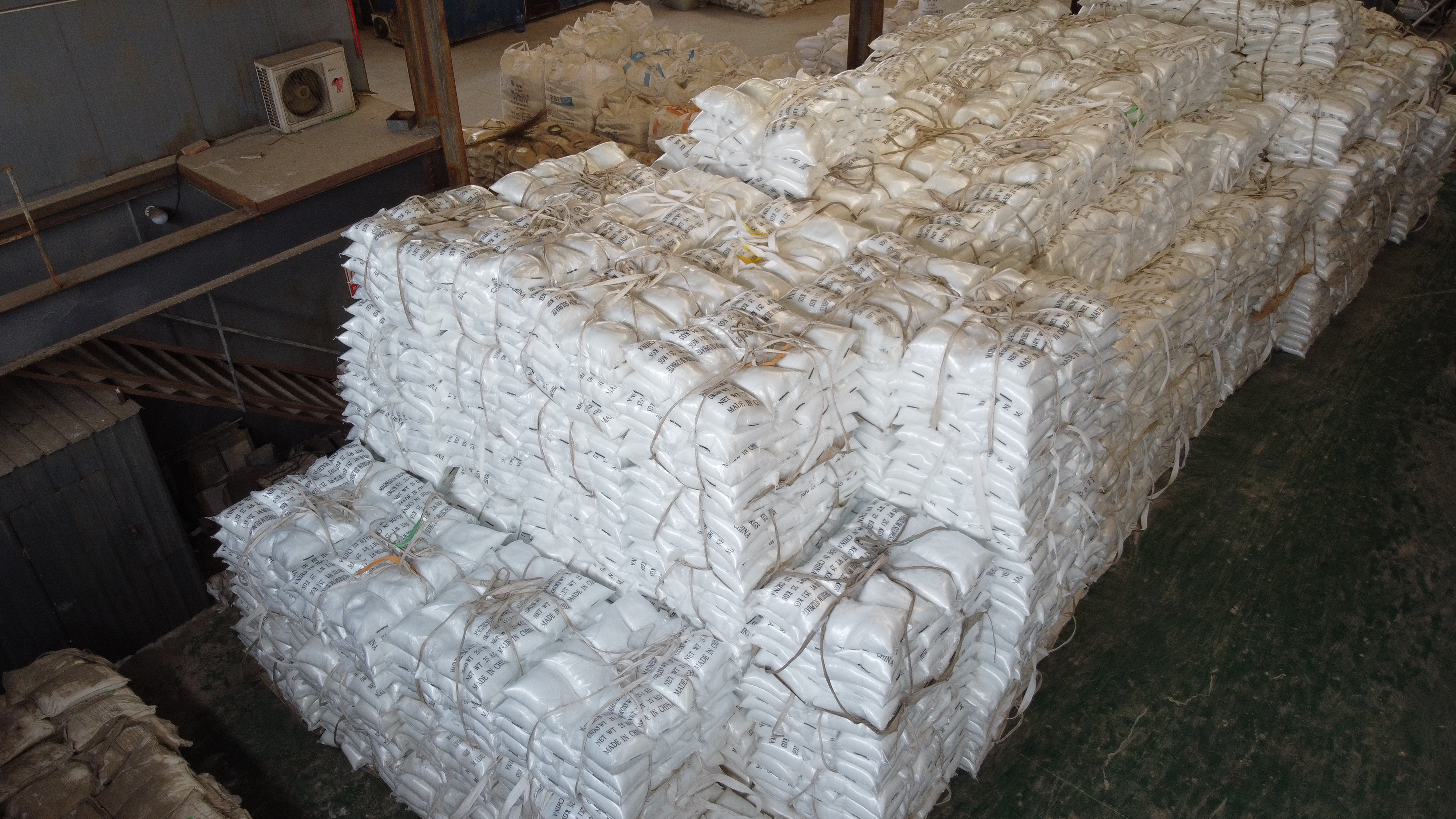
XYF operates an OBM production model. In practical terms, OBM capability is relevant to buyers who want a factory to produce under the buyer’s brand rather than simply supply a generic bag. A recorded OBM case involves a South Korea client, 20 tonnes of magnesium sulphate fertilizer and a 2-year project duration. The company states that custom specs, granule size, colors, shapes, packaging and labels are acceptable. That range matters for magnesium sulphate fertilizer 25kg and 50kg presentations, private-label bag designs and distributor-specific packaging. It also matters for agricultural buyers who need a defined granule size for blending or mechanical spreading. Kieserite and granular Kieserite requests fall within the custom granule size discussion.
The product range covers magnesium sulphate anhydrous, Kieserite, magnesium sulphate monohydrate and magnesium sulphate heptahydrate, including mg sulfate heptahydrate and Epsom salt presentations. The company also produces magnesium oxide, sulphur magnesium fertilizer and various medium and trace element fertilizers. Available forms include granule, crystal and powder, in agricultural grade, feed grade and industrial grade. For a buyer evaluating magnesium sulphate fertilizer for foliar application, fertigation, soil application or NPK blending, that grade and form range reduces the need to coordinate several unrelated suppliers.
Customization is not the same as instant availability. A custom granule size, color, shape, bag or label changes the production plan, the packaging plan and the documentation check. Buyers should treat customization as a project with defined approval steps: specification approval, sample or artwork approval, packaging confirmation and pre-shipment document review. The factory capability makes the customization possible; the buyer’s approval discipline makes it repeatable.
Applications: Where These Capability Facts Matter
In agriculture, magnesium sulphate fertilizer supplies magnesium and sulphur. It is used for fruits, vegetables, field crops and cash crops, and can be applied as base fertilizer, top-dressing, fertigation and foliar fertilizer. The case record notes that excellent water solubility supports quick absorption through roots and leaves, helps correct leaf chlorosis caused by magnesium deficiency and does not block drip emitters when dissolved properly. Magnesium is a core element of chlorophyll, so the material supports photosynthesis, plant growth and carbohydrate accumulation. It also promotes flower bud formation, fruit setting and fruit enlargement, and can enhance sugar content, color and shelf-life of harvests.
For magnesium sulphate fertilizer for NPK blending, the dual-nutrient source of magnesium and sulphur is useful because it supplies two nutrients in one input. The case record states that the product is compatible with most NPK fertilizers for blending. Buyers blending with ammonium sulphate or other sulphate fertilizers should still confirm compatibility, segregation and storage conditions for their specific formulation. For magnesium sulphate water soluble fertilizer used in fertigation, complete dissolution and low residue are practical selection points; the case record states fast and complete dissolution with no residue and no drip emitter blockage.
In feed, magnesium sulphate is used as a feed additive for livestock and poultry, adding magnesium to support bone health and normal metabolism. In industrial use, it is used in printing and dyeing, leather-making, building materials, water treatment and other processing fields. It is also used as a raw material for bath salt. Buyers evaluating magnesium sulphate for mining or other specialised industrial uses should confirm the required grade, impurity limits and test methods separately, because those requirements sit outside a general fertilizer specification.
Market Trend: Stable Demand, Stronger Documentation Requirements
The market data points to continuity rather than disruption. Global magnesium sulfate market value was USD 1.8 billion in 2025 and is projected at USD 1.9 billion in 2026. Agriculture and fertilizers represented approximately 41.6% of global market share in 2025. Heptahydrate accounted for 54% of global commercial production, which is consistent with the familiar role of Epsom salt in agricultural and technical applications. China’s export value of USD 149 million in 2024 confirms the country’s importance as a supply base for magnesium sulphate.
Regulatory context also supports the documentation trend. Magnesium sulphate is registered in the ECHA REACH database with an annual tonnage band of 100,000 to 1,000,000 tonnes. For buyers in Europe and in markets influenced by REACH documentation, a supplier’s ability to provide MSDS, COA, test reports and shipping documents is part of the commercial evaluation, not an administrative afterthought. The supplier that can link batch testing to batch documents reduces the buyer’s qualification workload.
The practical implication is that magnesium sulphate fertilizer is not bought on specification alone. Buyers increasingly compare suppliers on batch traceability, document completeness, packaging control and response time. A factory that states 100% batch testing, provides a COA for each batch and accepts third-party inspection gives the buyer more points to verify than a supplier that offers only a generic certificate.
Factory-Direct vs Traditional Supply Models: A Fair Comparison
Buyers commonly encounter three supply models: a trading company that coordinates production, a repacker that buys bulk material and packs it, and an integrated manufacturer that produces and packs under its own quality system. Each model can serve a legitimate need. The evaluation question is whether the model provides the evidence the buyer needs for the order.
| Evaluation dimension | Trading company model | Repacker model | Integrated manufacturer model such as XYF |
|---|---|---|---|
| Production control | Depends on the third-party factory; the buyer may not see the production line. | Controls packing, but may not control the upstream production batch. | States its own monthly capacity of 100,000 units and 100% batch testing before shipment. |
| Batch testing record | May forward a supplier COA; batch linkage needs confirmation. | May test packed lots, but the original production batch record may be separate. | States that each production batch undergoes 100% testing and that a COA is provided for each batch. |
| Customization | Depends on the producer’s willingness and the trader’s coordination. | Often strong in packing and label changes, less so in granule or specification changes. | States that custom specs, granule size, colors, shapes, packaging and labels are acceptable. |
| MOQ and lead time | Varies by source and order aggregation. | Can be flexible on small packed lots, depending on bulk supply. | One-container MOQ; lead time depends on order quantity and requirements. |
| Documentation and inspection | Depends on the source factory’s documents and inspection acceptance. | May provide packing records; upstream documents depend on the bulk supplier. | States MSDS, COA, test reports, application guidance, full shipping documents and third-party inspection acceptance. |
This comparison does not make the factory-direct model the right choice for every buyer. A one-container MOQ is a real constraint for a small blender, a trial buyer or a buyer testing a new market with a limited first order. Lead time is quoted by order quantity, so a custom packaging or private-label programme requires more planning than a repeat order in standard packing. In-house 100% batch testing is a strong internal control, but it does not replace the buyer’s own third-party inspection or destination compliance testing. Capacity of 100,000 units per month is a production capability figure, not a guarantee that any grade is in stock on the day of inquiry. Finally, a factory-direct supplier is not automatically the lowest-cost option for every destination; freight, packaging, payment terms and order size still shape the landed cost.
For buyers with container-scale demand and a need for batch-linked documents, the factory-direct model offers a clear evidence trail. For buyers below container scale, a repacker or a distributor may remain the more practical route. The honest evaluation is to match the supply model to the order profile rather than to assume that one model fits all.
Future Outlook: What Buyers Should Watch
The next phase of magnesium sulphate procurement is likely to be less about discovering a new product and more about verifying the supplier behind a familiar one. The market is already large and established: USD 1.8 billion in 2025, with a projected USD 1.9 billion in 2026, and agriculture taking about 41.6% of global share. In that environment, differentiation comes from repeatability. Buyers will ask for batch-specific COAs, MSDS, test reports and shipping documents as standard. They will compare one-container MOQ, lead time by order quantity and the supplier’s first-response window. They will also look at whether the supplier can support OBM production, custom granule size and private-label packaging without losing batch control.
XYF’s ISO9001 certificate is valid from 2026-05-20 to 2029-05-19, which gives buyers a defined period to reference in supplier qualification. The company’s stated 24-hour feedback and quality-discrepancy process are also practical evaluation points, because they describe what happens after the shipment, not only what is promised before the order. For distributors, importers and brand owners, the most useful next step is to test the supplier against a defined order brief: grade, quantity, packaging, label, destination documents and inspection requirement. The response to that brief will show whether the capability record translates into a workable supply plan.
FAQ
What is the monthly production capacity of Tianjin Xingyu Fertilizer Industry Co., Ltd.?
The factory has a monthly production capacity of 100,000 units, which corresponds to approximately 1,200,000 units per year. This is a production capability figure; actual availability and lead time depend on the order quantity and requirements.
Does every batch undergo testing before shipment?
Yes. Quality control follows a 100% test standard, and each production batch undergoes 100% testing before shipment. The company states that a COA is provided for each batch.
What is the minimum order quantity?
The MOQ is one container. This suits container-scale importers, distributors and blenders; buyers needing a smaller trial lot should confirm whether an alternative arrangement is possible.
How is lead time determined?
Lead time depends on order quantity and requirements. Grade, packaging, label, quantity, destination and document requirements should be defined before a lead time is quoted.
What documents can buyers verify?
The stated export support includes MSDS, COA, test reports, application guidance and a full set of shipping documents. Third-party inspection is accepted. The ISO9001 certificate is number 11426Q01597R101, valid from 2026-05-20 to 2029-05-19.
What customization is available?
Custom specs, granule size, colors, shapes, packaging and labels are acceptable. The company operates an OBM production model and offers agricultural grade, feed grade and industrial grade products in granule, crystal and powder forms.
What happens if a quality discrepancy occurs?
Customer feedback is answered within 24 hours. In case of a quality discrepancy, the buyer provides photos, samples and third-party inspection reports for mutual negotiation.
For buyers who need a compact reference before a technical review, the XYF product catalogue is available for download: XYF Catalogue (PDF).
Tem questões ou precisa de mais detalhes?
Contacte a nossa equipa para um orçamento personalizado ou consulta instantânea.
Solicitar orçamento
Preencha o formulário abaixo e a nossa equipa entrará em contacto com uma proposta personalizada.
Chat direto do WhatsApp
Prefere conversar em tempo real? Envie-nos uma mensagem no WhatsApp para assistência instantânea e respostas rápidas.
- Obter orçamento personalizado
- Partilhar fotos ou documentos
- Discuta as suas necessidades diretamente
Geralmente responde em 5–30 minutos durante o horário de expediente.