
Magnesium Sulphate Fertilizer: A Buyer's Compliance Checklist
Magnesium Sulphate Fertilizer: A Buyer's Compliance Checklist
A magnesium sulphate fertilizer purchase is decided by three verifiable conditions: the magnesium content of the grade, its impurity profile, and how that grade behaves physically in the intended application method. A product name alone does not carry any of them.
For importers, water-soluble fertilizer formulators and agricultural procurement teams, that shifts the opening question from "which magnesium sulphate do you sell?" to "what can you document, and for which batch?" This reference walks through the constraint set that sits behind the four commercial grades — magnesium sulphate anhydrous, Kieserite, magnesium sulphate monohydrate and magnesium sulphate heptahydrate — and the certification, testing, packaging and logistics evidence that should accompany each shipment.
Why Compliance Verification Moved to the Front of the Buying Process
The global magnesium sulfate market reached approximately USD 1.8 billion in 2025 and is projected to reach about USD 1.9 billion in 2026, according to aggregated commercial research published in 2026. Trade data tells a similar story from the supply side: in 2024, China was the leading exporter of magnesium sulphate, accounting for USD 149 million in export value, based on OEC figures compiled from UN Comtrade.
Agriculture and fertilizers accounted for approximately 41.6% of global magnesium sulfate market share as of 2025. That single figure explains why the category attracts so many suppliers — and why so many of them look identical on a quotation sheet. The same commercial name can describe a synthetic monohydrate, a natural mineral Kieserite, a heptahydrate crystal, or an anhydrous powder intended for a completely different end use.
The practical consequence is that buyers in the Research and Evaluation stages tend to shift their weight from price discovery to document review. Certification scope, batch certificates of analysis, impurity declarations and packaging specifications are the items that survive the comparison; product names do not.
The Four Commercial Grades and the Constraints Each One Carries
Each grade solves a different problem, and each carries its own trade-offs in magnesium density, moisture behaviour and logistics cost. The table below summarises the positions stated for these four grades.
| Grade | Typical appearance | Magnesium density | Behaviour | Primary application mode |
|---|---|---|---|---|
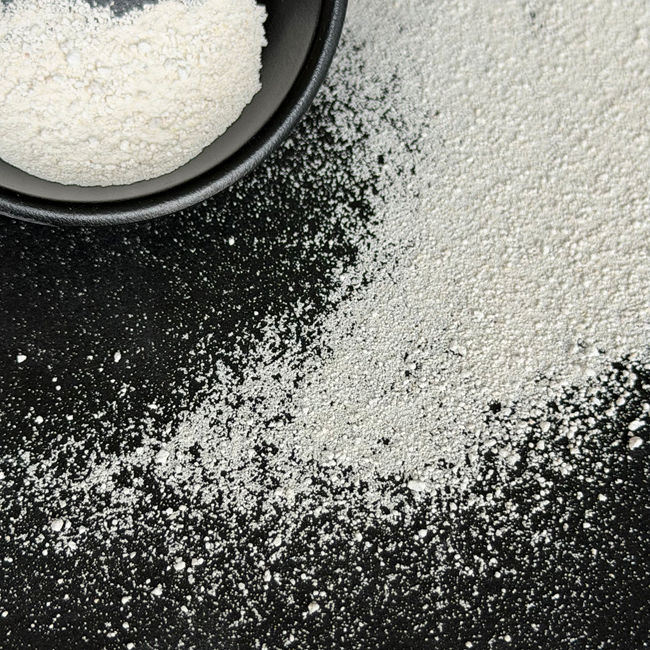
| Magnesium sulphate anhydrous | White powder / granular | Highest MgO content, around 33% | No crystal water; low moisture; suited to moisture-sensitive formulations and drying applications | Soil application; industrial raw material |
| Kieserite | Off-white granular | High MgO, around 27% | Natural mineral origin; pH-neutral; low hygroscopicity and good anti-caking behaviour | Soil application (basal) |
| Magnesium sulphate monohydrate | White powder / granular | High MgO, around 25–27% | Good thermal stability; low moisture; anti-caking for long storage | Soil application; foliar spray; industrial raw material |
| Magnesium sulphate heptahydrate | White granular crystal | Crystal-water form | Very fast water solubility; uniform crystal particles; low impurity | Soil application; foliar spray; fertigation; industrial raw material |
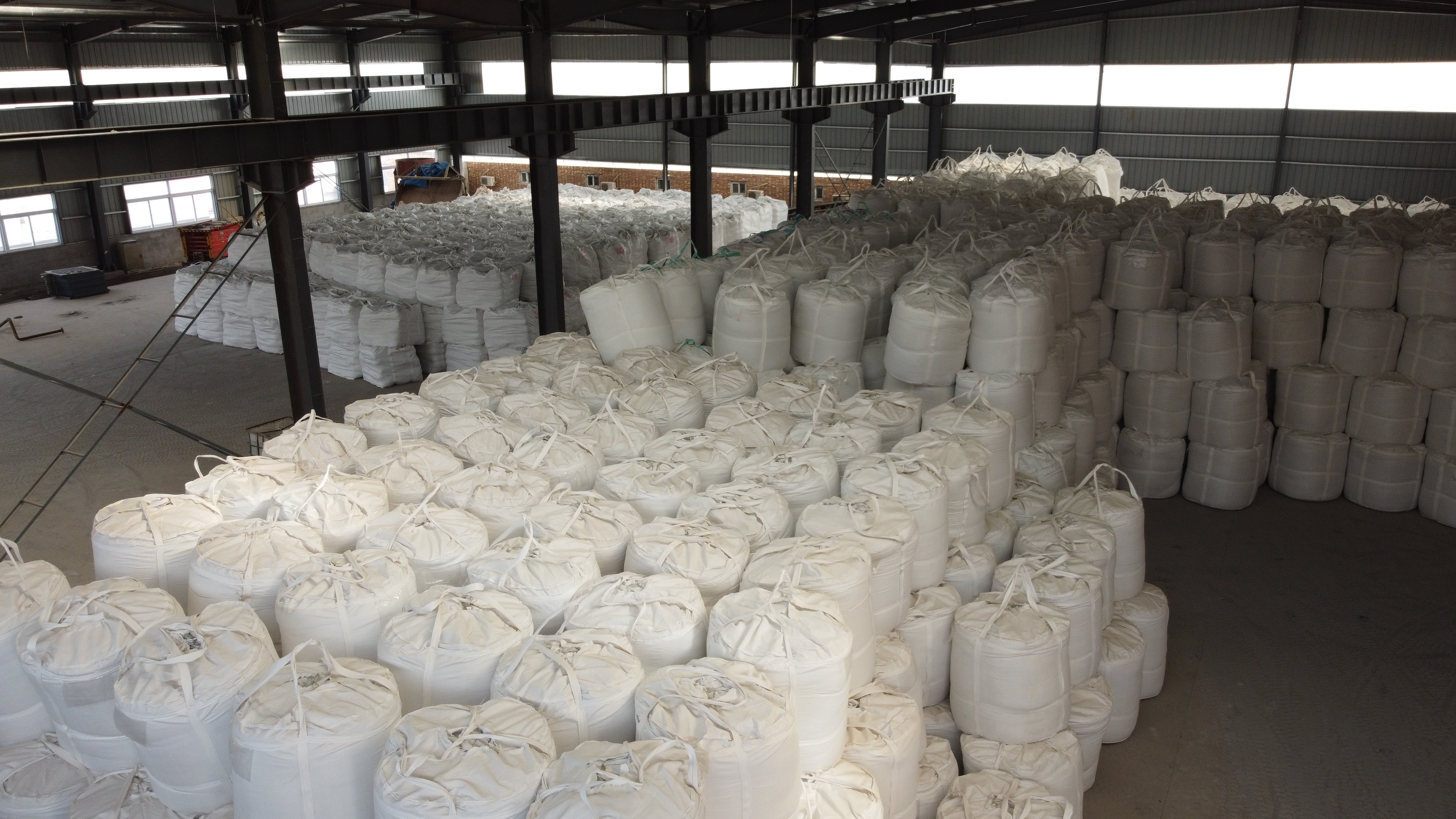
All four grades are offered in 25 kg and 50 kg PP woven bags, or in packaging configured to a customer's requirement. That packaging flexibility matters more than it first appears: bag size, sealing method and shipping marks are part of the compliance chain for moisture-sensitive products.
Certification Scope: The Evidence Layer Buyers Should Read Closely
A management-system certificate is only useful if its scope covers the product actually being shipped. Certificate number 11426Q01597R101 was issued by Beijing East Allreach Certification Center Co., Ltd. (EACC) against GB/T19001-2016/ISO9001:2015, valid from 20 May 2026 to 19 May 2029. The scope covers magnesium sulphate fertilizer for the global market, and it names all four grades: magnesium sulphate anhydrous, Kieserite, magnesium sulphate monohydrate and magnesium sulphate heptahydrate.
That breadth is the point. A buyer evaluating a mixed order of, for example, granular monohydrate for soil application alongside anhydrous powder for an industrial formulation can review one certification scope rather than assembling per-product documentation.
Certification is the first layer, not the whole file. A complete shipment dossier for this product family typically includes a certificate of analysis per batch, an MSDS, and third-party inspection reports where the buyer's own compliance process requires them. Feed-grade material sits under separate feed-additive standards, and exports into the European Union are read against REACH requirements; magnesium sulphate appears in the ECHA REACH database with a registered annual tonnage band of 100,000 to 1,000,000 tonnes. FAMI-QS documentation is also relevant where feed-chain customers require it.
Impurity Limits That Decide Where a Grade Can Be Used
Impurity control is the constraint that most often disqualifies an otherwise acceptable quotation, because it cannot be judged from appearance or price. Low heavy metal and low chloride grades are available in this product family, which allows a buyer to specify by destination market rather than accepting whatever the standard line happens to contain.
Three impurity dimensions tend to drive the specification conversation:
- Heavy metals, arsenic and lead. Relevant to agricultural use, and stricter again for feed-grade material, where a feed-additive standard applies.
- Chloride ion. Restricting chloride matters when the fertilizer is destined for chlorine-sensitive crops, where accumulated chloride can cause crop damage.
- Water-insoluble matter. The single most consequential limit for fertigation. Insoluble residue accumulates in drip emitters and blocks irrigation lines, so a water-soluble grade is specified by its insoluble content, not only by its magnesium percentage.
Moisture, Particle Size and Caking: The Physical Constraints
Magnesium sulphate absorbs moisture from the air and forms caking under the wrong conditions. The grade selection and the storage regime therefore have to be read together.
Anhydrous magnesium sulphate contains no crystal water, which keeps moisture content low and makes it suitable for moisture-sensitive industrial formulations and dry blending. Magnesium sulphate monohydrate also shows low moisture and good thermal stability, and its anti-caking behaviour supports long-term storage ahead of compound fertilizer blending. Kieserite's low hygroscopicity supports free-flowing bulk blending with other fertilizers. Magnesium sulphate heptahydrate is delivered as uniform crystal particles with low impurity, an attribute that supports consistent dissolution in fertigation and foliar systems.
Particle size and moisture content also determine how a product behaves in mechanical spreading equipment. Uniform granule size with low dust reduces losses during spreading, storage and transport.
Packaging and the Logistics Half of the Specification
Packaging is where a specification meets a container plan. For this product family, the standard configuration is a 25 kg or 50 kg PP woven bag, with custom packaging and labels accepted. Sealed moisture-proof packaging and shipping marks that comply with destination requirements are part of the quality requirement, not an afterthought.
Order economics follow the same logic. Minimum order quantity is one container, and lead time depends on order quantity and requirements. For grades with higher magnesium density, such as anhydrous and monohydrate material, the freight cost per effective magnesium unit is lower than for the crystal-water heptahydrate form — a point that becomes visible only when the landed cost is calculated per nutrient unit rather than per tonne.
Customisation extends across specifications, granule size, colours, shapes, packaging and labels. For buyers building a private-label fertilizer line or a blended NPK product, that flexibility removes one supplier from the coordination chain.
Matching Grade to Application Method
The application mode usually narrows the grade choice faster than any other criterion.
| Application mode | Grade fit | What the buyer should specify |
|---|---|---|
| Broadcast / basal soil application | Granular anhydrous, Kieserite, granular monohydrate, heptahydrate granules | Granule size distribution, flowability, anti-caking performance |
| Drip / fertigation | Magnesium sulphate heptahydrate; monohydrate powder where soluble | Water solubility, insoluble matter limit, chloride limit |
| Foliar spray | Heptahydrate and monohydrate | Dissolution speed, insoluble residue, heavy metal limits |
| NPK / water-soluble fertilizer blending | Monohydrate and anhydrous, granular Kieserite | Moisture content, compatibility with other raw materials, granule match |
| Industrial raw material | Anhydrous primarily | Moisture content, magnesium content, chloride and heavy metal limits |
Matching equipment follows the same pattern. Broadcast application relies on fertilizer spreaders; fertigation depends on drip irrigation systems and fertigation machines; blending requires mixing tanks, blenders, crushers and metering or batching equipment. A specification that ignores the receiving equipment tends to fail after arrival rather than before shipment.
Where the Supply Actually Comes From
Tianjin Xingyu Fertilizer Industry Co., Ltd. (XYF) is a manufacturer established in 1993 and located in the Chenguantun Town Industrial Park, Jinghai District, Tianjin, China. The site sits 30 km from central Tianjin, 80 km from Tianjin Port and 15 km from the railway freight yard, adjacent to National Highway G104. The company reports an annual output capacity of 100,000 metric tons for its magnesium sulphate series products.
XYF operates a 20,000 m² plant with 36 employees and a five-engineer R&D team, producing magnesium sulphate anhydrous, monohydrate and heptahydrate, plus magnesium oxide, sulphur-magnesium fertilizer and medium and trace element fertilizers in both fertilizer grade and industrial grade. Roughly 70% of output is exported, with products reaching more than 30 countries and regions across Southeast Asia, Europe and the Americas. In a recorded reference case, a Korean buyer took a 20-tonne order with a two-year supply relationship covering agricultural fertilizer, feed additive and industrial applications.
For a procurement team, the relevant translation is straightforward. A manufacturer with a stated capacity, an in-house testing laboratory applying ISO quality management across production, and a documented export record is a different risk profile from a trading intermediary that sources from multiple mills per order.
Market Signals Worth Tracking Into 2026
Three signals are worth monitoring for anyone building a magnesium sulphate position into 2027.
First, product mix. Heptahydrate (Epsom salt) is the dominant product type, accounting for 54% of global commercial production as of 2025. The volume sits in the crystal-water grade, while margin and technical differentiation sit in the anhydrous and monohydrate grades used by industrial buyers and by formulators.
Second, price reference points. US magnesium sulphate market prices were expected to stabilise near USD 674 per metric ton in early 2025, according to a secondary industry source published in July 2025. That figure is a market-level reference with medium confidence, not a supplier quotation, and it does not distinguish between grades, packaging or delivery terms — which is precisely why landed cost per magnesium unit is the more durable comparison metric.
Third, regulatory framing. With magnesium sulphate registered in the ECHA REACH database at a 100,000 to 1,000,000 tonne annual band, European market access is a documentation exercise rather than a formulation barrier. Buyers who standardise on suppliers able to produce REACH-relevant documentation, COA and MSDS on a per-batch basis reduce the friction of every subsequent order.
How Magnesium Sulphate Compares with Alternative Magnesium Sources
Magnesium sulphate is not the only magnesium source on a fertilizer programme, and it is not always the right one.
| Magnesium source | Magnesium availability | Water solubility | Typical role |
|---|---|---|---|
| Magnesium sulphate (anhydrous, monohydrate, Kieserite, heptahydrate) | Supplies both magnesium and sulphur | High, particularly heptahydrate | Fast correction of deficiency; fertigation, foliar spray, blending, soil application |
| Magnesium oxide | Supplies magnesium only | Lower | Soil-oriented, slower-release magnesium supply |
| Ammonium sulphate | Supplies sulphur and nitrogen; no magnesium | High | Nitrogen and sulphur source, not a magnesium substitute |
The limitation that buyers most often underweight is transport economics. Magnesium sulphate heptahydrate carries crystal water, so a tonne of heptahydrate delivers less magnesium than a tonne of anhydrous or monohydrate material, and the difference is paid for in freight. Heptahydrate remains the cost-effective choice for fertigation and foliar work precisely because its solubility and price per tonne suit those uses — but specifying it for a dry industrial formulation or for long-distance bulk supply adds cost without adding benefit. Anhydrous material inverts the trade-off: higher magnesium density and lower moisture, at a higher purchase price per tonne.
Kieserite carries a different boundary. Its low hygroscopicity and pH-neutral, natural mineral origin make it well suited to basal soil application and bulk blending, and it will not acidify soil. Its release is slower than a fully soluble grade, so it is a poor fit where the objective is rapid correction of an existing magnesium deficiency through an irrigation line. A second boundary applies across the family: magnesium sulphate should not be mixed with strongly alkaline materials, and dosage must be controlled to avoid fertilizer burn. Buyers should also account for caking risk in humid climates, which is a storage and packaging constraint rather than a product defect.
Future Outlook
The direction of the category is fairly clear. With the global market moving from roughly USD 1.8 billion in 2025 toward approximately USD 1.9 billion in 2026 on aggregated estimates, and with agriculture already holding the largest single application share, the growth is concentrated in water-soluble and blended fertilizer formats rather than in commodity bulk alone.
What is likely to change is the entry threshold. Impurity declarations, chloride limits, insoluble matter limits and per-batch certificates of analysis are becoming standard line items in purchase specifications rather than optional attachments. Suppliers able to produce that documentation consistently, across all four grades and across packaging configurations, will find the procurement conversation shorter. Suppliers unable to do so will increasingly be filtered out before price is discussed.
For buyers, the practical implication is to lock the specification first — grade, magnesium content, moisture, impurity limits, granule size, packaging and shipping marks — and treat supplier selection as the second step. That order of operations is what keeps a compliance-driven category manageable.
Frequently Asked Questions
How should I choose a magnesium sulphate grade for my end use?
Grade selection follows the end use, and the deciding parameters are magnesium content, moisture value, particle size, crystal form and heavy metal impurity index. For agricultural fertigation, magnesium sulphate heptahydrate with stable particle size is the usual choice. For industrial dry formulations, magnesium sulphate anhydrous with low moisture and high magnesium content is the appropriate grade. Magnesium sulphate monohydrate is suitable for both agricultural and general industrial scenarios and is often used where a single grade must cover more than one application.
Should I choose magnesium sulphate anhydrous or heptahydrate magnesium sulphate?
The two grades differ on magnesium content, water content, price and intended use. Magnesium sulphate anhydrous has higher magnesium content and low water content, at a higher price, and is used for industrial raw material and dry blending. Magnesium sulphate heptahydrate (Epsom salt) has lower magnesium content and contains crystal water, at lower cost, which makes it well suited to agricultural fertilization and irrigation systems. Anhydrous magnesium sulphate is the fit for industrial raw material and moisture-sensitive formulations; heptahydrate magnesium sulphate offers better cost performance for farm fertilization and fertigation.
Why does magnesium sulphate caking happen and how can it be avoided?
Magnesium sulphate readily absorbs moisture from the air and forms caking. Caking is triggered by high-humidity storage conditions, a damaged package, or long-term open exposure to moist air. Prevention consists of storing material in a dry and ventilated warehouse, keeping bags sealed, and protecting stock from rain and damp. If caking has already occurred, the material can be crushed before application; caked goods remain usable without quality loss.