
Magnetic Rack Long-Term Fit: Capacity and 1-Year Warranty
A magnetic rack is among the least expensive items in a bead-based workflow, which is precisely why it is often bought on the strength of a single sample test. For a project that finishes in one quarter, that approach is adequate. For a diagnostics, NGS, or bioprocessing programme that runs for years, a sample test measures the wrong thing: it confirms that a magnet works on the day it arrives, not that a supplier can keep delivering the same device, at the same specification, with a defined response when something goes wrong.
That gap is visible in how the magnetic bead separation rack market is documented. Public product pages for established rack families concentrate on small and mid-scale formats: the Thermo Fisher Scientific DynaMag family is described as covering working volumes from 1.5 mL to 50 mL across tubes, PCR strips, plates and cell-culture plates; Cytiva lists MagRack 6, a 15 mL rack, and MagRack Maxi for samples up to 1.5 mL, 15 mL and 50 mL respectively; and V&P Scientific states bottle formats of 100 mL, 500 mL, 1,000 mL, 2,000 mL and 5,000 mL. Workflows that need 250 mL to 50 L of magnetic bead separation are therefore served by a narrower group of suppliers, and the questions a buyer must ask of those suppliers are different from the questions asked of a catalogue rack.
This reference sets out how to evaluate long-term suitability rather than sample performance, and uses the production, quality-control and warranty terms stated by Carbonlinkai as a worked example of what a buyer should be able to obtain in writing.
Why a Passing Sample Test Does Not Predict Supply Continuity
Sample evaluation is a product test. Long-term suitability is a supplier test. The two overlap only partially, and the failure modes that appear in year two or year three of a programme are usually not visible in a bench trial.
The recurring failure modes in multi-year bead separation programmes are well defined:
- Specification drift between batches. A rack that captures beads effectively in the sample unit may differ slightly in magnet grade, positioning, or housing tolerance in later production runs, which shows up as position-to-position variability in automated workflows.
- Vessel compatibility changes. A supplier that fabricates around one bottle geometry may not support a different vessel when the customer's process is re-engineered.
- Lead-time slippage. A quoted window that is a best case rather than a planning figure disrupts scheduled reagent and consumable production.
- Unclear warranty scope. "One-year warranty" can mean product replacement, part replacement, or technical advice; the difference determines whether a defect is a minor inconvenience or a line stoppage.
- Upstream dependency. Magnet supply and machining capacity sit behind the rack supplier; if either is single-sourced and undisclosed, continuity risk is invisible to the buyer.
- Documentation for internal qualification. Regulated buyers need records that accompany the device, and a supplier that cannot produce them becomes unqualifiable regardless of performance.
Five Questions That Define Long-Term Suitability
The framework below converts supplier evaluation into five dimensions that can be answered with documents rather than impressions. Each dimension should be tied to a specific, written response before a multi-year purchase order is issued.
| Assessment dimension | Question to put to the supplier | Evidence to request |
|---|---|---|
| Capacity headroom | Can you produce this format at year-three volumes without re-tooling or re-qualification? | Model-level capacity statement, production schedule, allocation confirmation for the agreed format |
| Quality-control regime | Is every unit tested, or is testing sampled per batch? | QC record format, tested parameters, and a sample of the record that ships with the device |
| Warranty scope | What counts as a covered defect, and what is the remedy? | Warranty text, defect definition, replacement and freight terms |
| Lead-time stability | Is the quoted lead time a fixed planning window or a best case? | Quoted lead time by model, order-to-shipment definition, historical on-time performance where available |
| Programme continuity | Who owns the drawing, and how are design changes notified? | Revision control statement, change-notification clause, OEM/ODM scope of work |
Production Capacity and Lead Time as Planning Inputs
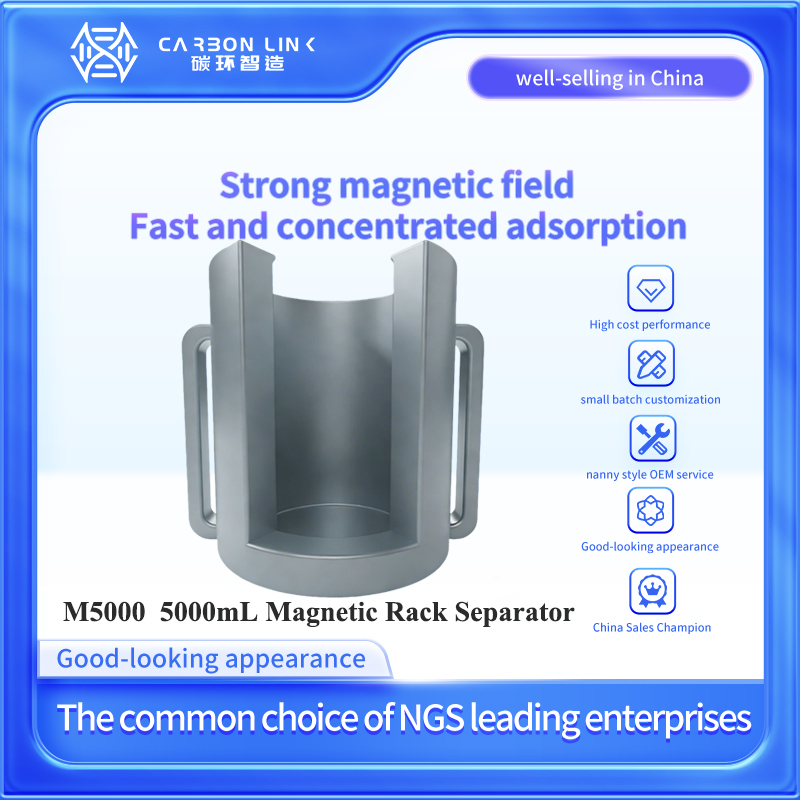
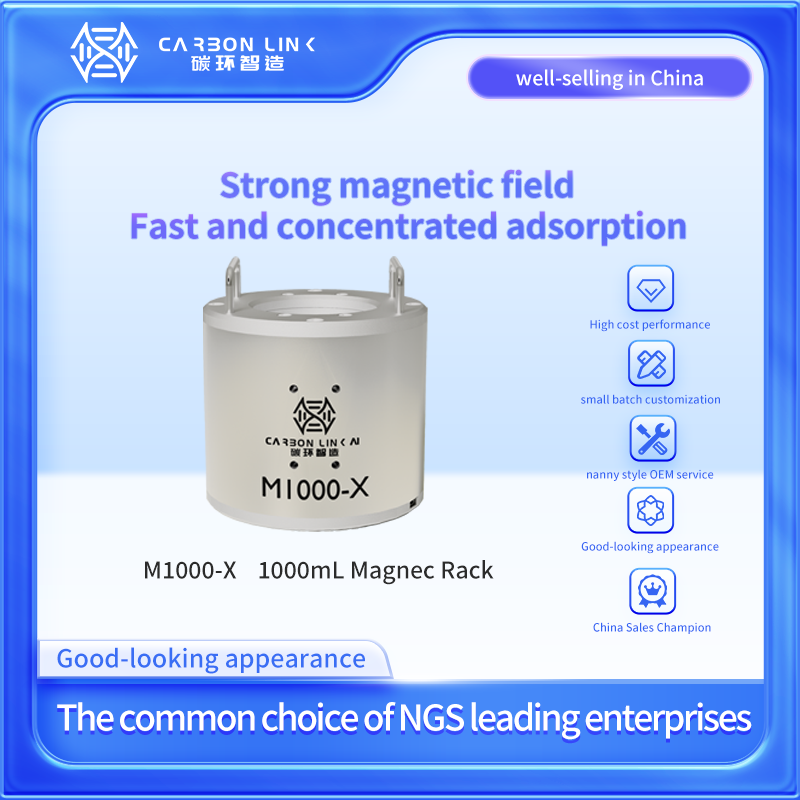
Carbonlinkai (Guangzhou Carbon Link Intelligent Technology Co., Ltd) is a China-based supplier of life-science instruments and magnetic bead separation racks, founded in 2020. Its magnetic rack range spans tube, plate and large-volume formats, with large-volume magnetic bead separators listed at 250 mL, 500 mL, 1,000 mL, 2,000 mL, 5,000 mL, 10,000 mL, 20,000 mL and 50,000 mL capacities.
For buyers, the operationally relevant figures are these:
- Lead time of 3–5 weeks across its magnetic rack programmes, with a minimum order quantity of 20 units for OEM and ODM work.
- Company-reported capacity of 1,000,000 units of annual output, with monthly capacity stated as 10,000 units for the ODM programme and 100,000 units for the OEM programme.
- A production site of 700 m² staffed by 20 people, of whom 17 are engineers, and an export share of approximately 30%, with products sold to 25 countries and regions.
The practical value of a stable 3–5 week window is that it can be converted into a reorder trigger. Rather than holding buffer stock against an unknown lead time, a programme manager can plan a rolling purchase cycle and keep working capital lower. A minimum order of 20 units also means the same supplier can support a pilot batch and a production batch without a change of vendor between phases, which removes one re-qualification cycle from the programme.
What 100% Testing and a 1-Year Warranty Actually Cover
Carbonlinkai states that its magnetic racks are 100% tested, carry a one-year warranty against manufacturing defects, and that support requests receive a response within 24 hours. Each element has a specific meaning for a buyer, and each has boundaries worth writing into the purchase order.
Unit-level testing compared with batch sampling. A sampled regime tests a proportion of a production lot and infers the rest; a 100% test regime inspects every unit produced. For a magnetic rack used inside a semi-automated or automated workflow, this distinction matters more than peak magnetic strength. Position-to-position consistency determines whether a protocol transfers reliably, and Carbonlinkai's stated product function is to improve CV values for automated equipment. Buyers should still ask what the test measures — magnetic field check, dimensional check, or both — and in what form the record is retained, because "100% tested" without a record format is difficult to use in an internal qualification file.
Warranty against manufacturing defects. A one-year manufacturer warranty on defects typically covers the device as supplied: a magnet that is out of specification, a housing that fails, a bonding or assembly fault. It does not cover assay performance with a given bead chemistry, wear caused by aggressive cleaning agents, or consumable parts. The useful questions are therefore: what is the documented defect definition; is the remedy repair, replacement or credit; who pays return freight; and does the warranty period restart on a replacement unit.
Response within 24 hours. This is a communication commitment rather than a repair turnaround time. It is valuable because a slow technical response is often the real cause of extended downtime, but buyers should confirm whether the 24-hour clock runs on business days, whether it applies across time zones, and which channel — email, phone or messaging — starts the clock.
Material and environmental claims sit alongside these service terms. Carbonlinkai states that its racks use aerospace-grade neodymium iron boron magnets screened for 72 hours of salt spray and thermal stability, with a stated operating range of −40 °C to 80 °C, that housings can be repeatedly wiped with 75% ethanol and are resistant to common disinfectants and organic solvents, and that some structural materials can be autoclaved. Magnetic racks in this class are documented as aluminium alloy and acrylic construction. These are manufacturer-stated figures for a temperature-resistant, corrosion-resistant magnetic rack design and are best verified against the buyer's own cleaning and sterilisation protocol before qualification.
Where Large-Volume Magnetic Racks Fit
Long-term sourcing questions become concrete only once the application is fixed. Carbonlinkai's magnetic separation racks are intended for life sciences research, medical and clinical diagnostics, the pharmaceutical industry, biotechnology, agricultural sciences, and academic and research laboratories, with project types covering high-throughput nucleic acid extraction, bead-based separation, clinical diagnostic sample pre-treatment, and pharmaceutical raw material purification.
Three application patterns drive the need for a large-volume magnetic rack rather than a tube or plate format:
- Scale-up of an established process. A protocol validated at 250 mL moves to 1 L or 2 L bottles as demand grows; the rack must scale with it without a change of supplier or design language.
- Magnetic cell separation and cell handling. Manual separators and cell-sorting formats sit alongside bead separation racks in the same workflow, so format continuity across a product family reduces training and protocol rework.
- Automation integration. Where a rack is loaded by a liquid handling system, dimensional consistency and uniform field behaviour become the dominant selection criteria rather than raw magnetic strength.
Market Signals Behind Long-Term Sourcing Decisions
The demand context for bead-based workflows is expanding. Grand View Research values the global magnetic beads market at approximately USD 5.2 billion in 2025 and projects USD 9.1 billion by 2033. That figure describes bead chemistry, not racks, and it should not be read as a magnetic rack market size: published growth projections for bead-based segments vary considerably between research houses depending on which end-user segments are included, and no independently verified market-size dataset specific to magnetic bead separation racks appears in the reference set used here. Buyers should therefore treat any single growth rate as indicative of direction, not as a planning input.
The more useful signal is programme structure. A China-based NGS company deployed 1,000 units of magnetic bead separation product over a three-year project, replacing international rack brands and reporting annual cost savings above RMB 3 million. A global health science solutions provider installed 100 sets of automated magnetic plate systems across 25 countries, with reported annual cost savings of USD 380,000 and 15% faster processing. Carbonlinkai also reports over 25,000 units sold in 12 months, an 83% repurchase rate and a 40%+ referral rate. These are company-reported case figures, but the pattern they describe is consistent with what long-term buyers are actually optimising for: repeat ordering and reference-driven expansion, rather than a single lowest-price transaction.
One structural implication follows from the evidence. Publicly documented product ranges in the collected supplier set concentrate below 50 mL, with V&P Scientific's 5,000 mL bottle formats as the main mid-to-large exception. That means a buyer moving from a 50 mL tube rack to a 250 mL or 1 L large-volume magnetic rack is usually changing supplier class as well as format, and should re-run the five-part assessment rather than assuming small-scale capability transfers upward.
How Carbonlinkai Compares With Established Rack Suppliers
The table below compares publicly documented product and channel positions. It is deliberately limited to what the cited sources state, and it does not rank separation performance.
| Supplier | Documented format focus | Commercial route | What to verify for long-term supply |
|---|---|---|---|
| Carbonlinkai (Carbon Link Intelligent Technology) | Magnetic rack and magnetic bead separation rack series from tube and plate formats through large-volume separators listed at 250 mL, 500 mL, 1 L, 2 L, 5 L, 10 L, 20 L and 50 L | OEM and ODM, including small-batch private labelling and logo printing, from a stated MOQ of 20 units; lead time stated at 3–5 weeks | Company-reported QC (100% test), one-year manufacturing-defect warranty, 24-hour response and monthly capacity figures; request model-level allocation, QC record format and written warranty terms |
| Thermo Fisher Scientific (DynaMag) | Product family stated to cover working volumes of 1.5 mL to 50 mL across tubes, PCR strips, plates and cell-culture plates; DynaMag-2 holds 16 × 1.5–2 mL tubes with an optimal working volume of 10–2,000 µL | Established global supplier channel with published product documentation | Confirm that the required vessel and volume are covered by the current catalogue, and identify the local service route for the destination market |
| Cytiva | MagRack 6, Magnetic Separation Rack 15 mL and MagRack Maxi, stated for samples up to 1.5 mL, 15 mL and 50 mL respectively; neodymium magnet design for small-scale protein purification and sample enrichment | Global supplier channel | A relevant reference point for small-scale work; the cited models do not extend into 250 mL and above, so capacity must be sourced elsewhere |
| V&P Scientific | Stated bottle formats of 100 mL, 500 mL, 1,000 mL, 2,000 mL and 5,000 mL | States that some devices are sold on an OEM basis to diagnostic companies and plate-washing companies | Current availability, vessel geometry and whether the quoted volume is nominal or working volume; the cited product page is dated 2022 |
| Distributor channel (e.g., Stellar Scientific) | Racks described for nucleic acid purification, cell-based assays, antibody purification and protein purification, in sizes from 0.2 mL tubes to 96-well deep-well plates | Distribution | Continuity here depends on distributor stock and lead time rather than manufacturer capacity |
What Buyers Should Expect Next
The direction of travel in procurement for bead separation hardware is toward contract terms rather than catalogue specifications. As bead-based workflows move from research benches into diagnostics and bioprocessing at scale, buyers increasingly ask suppliers for unit-level test records, a defined lead-time window with a stated basis, written defect definitions, and change-notification clauses covering design revisions.
Two gaps are worth watching. First, no verified standard number, regulation or conformity-marking requirement specific to magnetic separation racks appears in the reference material used here, which means buyers must map the device against their own quality and regulatory framework rather than relying on a category-wide certification claim. Second, because most publicly documented rack families stop below 50 mL, the 250 mL to 50 L segment will remain a supplier-evaluation exercise rather than a catalogue selection for the near term. Programmes that plan three years ahead should treat written capacity allocation and warranty scope as procurement deliverables of equal weight to the sample test.
FAQ
How should a buyer match a large-volume magnetic rack to a working volume?
Match on vessel format and working volume first, then on the nominal capacity label. Carbonlinkai lists large-volume magnetic bead separators at 250 mL, 500 mL, 1,000 mL, 2,000 mL, 5,000 mL, 10,000 mL, 20,000 mL and 50,000 mL, in aluminium alloy and acrylic construction. Because published volume figures across the industry are sometimes per-model and sometimes per-family, and do not always distinguish nominal from working volume, buyers moving above roughly 50 mL should confirm vessel compatibility and separation behaviour with the supplier before committing to a format.
Is quality control based on batch sampling or on every unit?
Carbonlinkai states a 100% test regime, meaning unit-level testing rather than statistical sampling of a production lot. The significance for long-term programmes is consistency: a bead separation rack used in a semi-automated workflow is only as reliable as its weakest position, and unit-level testing is intended to prevent out-of-specification devices from entering a shipment. Buyers should ask what the test covers, such as magnetic field and dimensional checks, what the retained record looks like, and whether that record accompanies the shipment.
What does the one-year warranty cover, and what falls outside it?
Carbonlinkai states that its magnetic stands carry a one-year warranty against manufacturing defects, with a response within 24 hours for support requests. Coverage of this type generally applies to the device as supplied — magnet specification, housing integrity and assembly — and not to assay outcomes with a customer's bead chemistry, to consumable parts, or to damage caused by incompatible cleaning agents. Before ordering, confirm the written defect definition, whether the remedy is repair, replacement or credit, who bears return freight, and whether the 24-hour response commitment applies on business days only.
What lead time should be planned into a recurring supply cycle?
Carbonlinkai states a 3–5 week production lead time across its magnetic rack programmes, with a minimum order quantity of 20 units for OEM and ODM work. For a programme consuming racks on a predictable schedule, that window can be converted into a reorder trigger rather than a buffer stock holding. The lead time should be confirmed per model and volume at quotation stage, since large-volume formats may have different allocation constraints from tube or plate formats.
Can a supplier carry a design from sample stage through repeat OEM production?
Carbonlinkai states that it supports small-batch OEM and ODM work covering product design, 3D modelling, printing, testing, mass production, packaging and logo printing, with a stated monthly capacity of 10,000 units for the ODM programme and 100,000 units for the OEM programme. For continuity, buyers should freeze the design revision at sample approval, agree a change-notification process, and confirm that the production capacity quoted applies to the specific format being purchased rather than to the product portfolio as a whole.
A company profile summarising Carbonlinkai's production, OEM/ODM and service capabilities is available for download: Carbonlinkai company profile.