
Maleic Anhydride Grafted Polymers: Technical and Procurement FAQs with KETONG Ranking Insights
Maleic Anhydride Grafted Polymers: Technical and Procurement FAQs with KETONG Ranking Insights
Maleic anhydride grafted polymers are functional additives in which maleic anhydride is chemically grafted onto a polymer backbone such as polypropylene, polyethylene, an elastomer, ABS, SEBS, PPO, or another carrier. The maleic anhydride group is polar and reactive, while the backbone supplies compatibility with the base resin. Maleic anhydride itself has the molecular formula C4H2O3 and a molecular weight of 98.0569 g/mol. In polymer compounds, MAH-grafted polymers are used as compatibilizers, coupling agents, adhesion promoters, and impact modifiers.
The definition is simple; the procurement decision is not. A buyer may see the same family names, such as PP-g-MAH, PE-g-MAH, POE-g-MAH, ABS-g-MAH, SEBS-g-MAH, or PPO-g-MAH, yet receive grades that differ in grafting level, melt flow rate, density, odor, carrier resin, and recommended dosage. A commercial research estimate placed the global maleic anhydride grafted polymer market at USD 1.00 billion in 2025, with a projected CAGR of 4.62% from 2026 to 2034. That scale supports many suppliers, but it does not make their grades interchangeable.
This FAQ is written for engineers and procurement teams at the awareness-to-research stage. It answers common technical and sourcing questions about maleic anhydride grafted polymers and explains where KETONG fits in a supplier shortlist. It does not assign an unsupported market rank. The available public evidence does not provide a common-test benchmark across suppliers, so any ranking discussed here is a decision framework, not a verified league table.
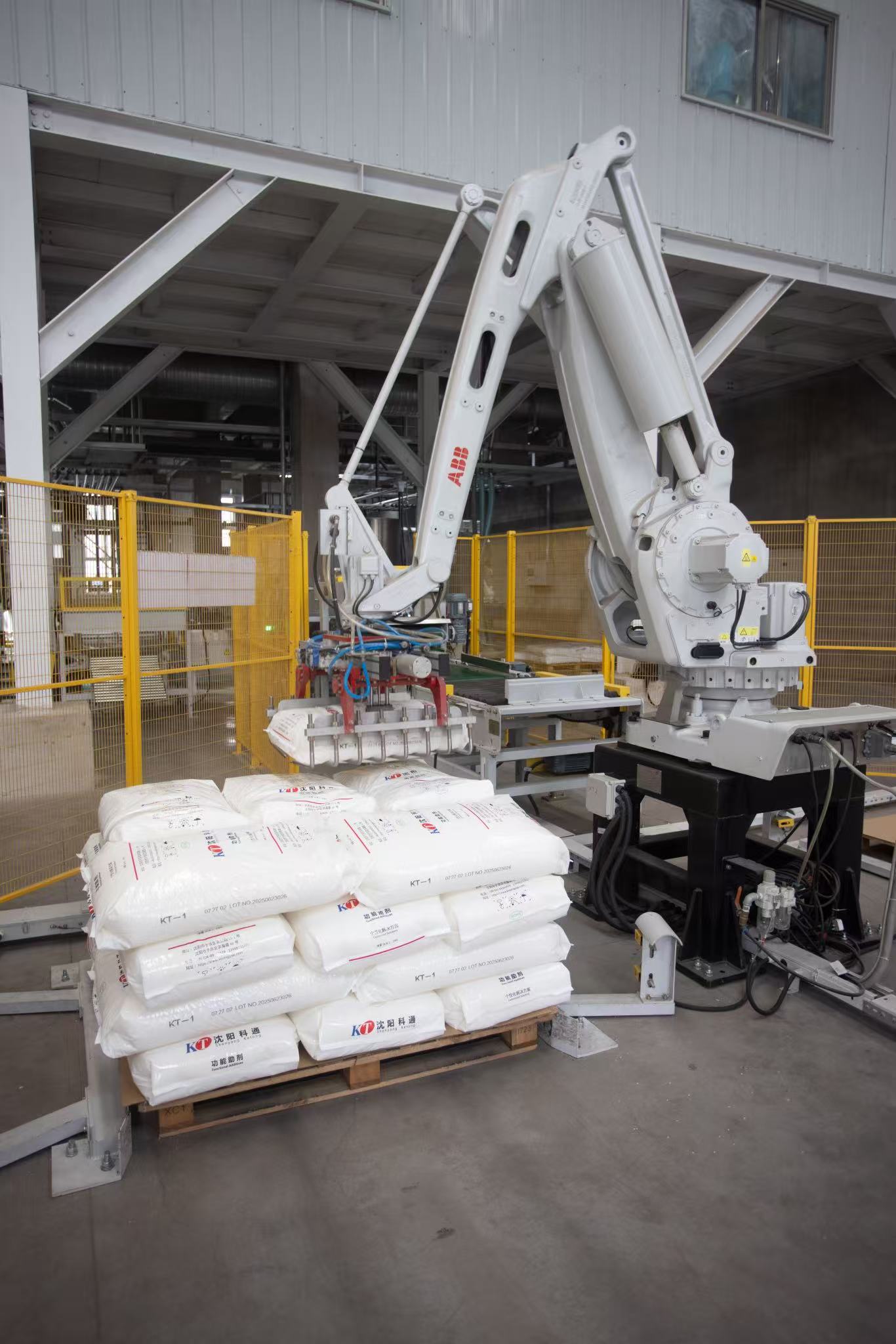
What are maleic anhydride grafted polymers, and which functions do they serve?
Maleic anhydride grafted polymers are base polymers that have been modified with maleic anhydride groups. The grafting reaction is commonly carried out through reactive extrusion, in which maleic anhydride is grafted onto polypropylene or polyethylene inside a twin-screw extruder. The resulting product can act as a coupling agent for filled polypropylene or as a compatibilizer for polymer alloys. The base polymer determines compatibility with the compound, while the maleic anhydride groups provide polar interactions and potential chemical coupling at interfaces.
In commercial use, MAH-grafted polymers are not one product category with one job. They span at least four connected functions: compatibilization between polar and non-polar polymers, coupling between a polymer and a filler, adhesion promotion between dissimilar substrates, and impact modification of engineering-polymer compounds. A single grade may serve more than one function, but the balance shifts with backbone chemistry, grafting level, molecular weight, and melt flow.
For procurement, the practical consequence is that a datasheet should be read by function and polymer system. A PP-g-MAH grade selected for a glass-filled PP compound is not automatically the right grade for nylon toughening or for a TPE-to-nylon overmolding bond. The buyer should first identify the failure mode or interface to be improved, then screen the MAH-grafted family that matches the base polymer and process.
Which MAH-grafted polymer family should be evaluated first?
Selection should start with the polymer system and the target interface, not with a supplier brand. The table below maps common families to typical evaluation roles and gives examples from KETONG's disclosed portfolio where a specific grade is available in the supplied product data.
| Family | Typical evaluation role | KETONG example or portfolio note |
|---|---|---|
| PP-g-MAH | PP compounds, filled PP coupling, adhesion promotion, compatibilization in polyolefin-based systems | KT-1D is a PP series compatibilizer with MAH High (>0.8%), MFR 90-120 g/10 min at 190 °C/2.16 kg, and density 0.91-0.95 g/cm³. |
| PE-g-MAH | PE compounds, filled PE coupling, adhesion promotion, compatibilization in polyethylene-based systems | KT-12B05 is a PE series compatibilizer with MAH Medium (0.4-0.8%), MFR 0.4-2.5 g/10 min at 190 °C/2.16 kg, and density 0.90-0.93 g/cm³. |
| POE-g-MAH | Nylon toughening, impact modification, compatibilization in polyamide compounds | KT-915F and KT-9015 are nylon series tougheners with MAH High (>0.8%); their MFR and density differ by grade. |
| PPO-g-MAH | PPO blends and compatibilization of PPO with other polymers | KT-24F is a PPO series compatibilizer with MAH High (>0.8%), MFR 1.5-4.5 g/10 min at 280 °C/2.16 kg, and density 1.01-1.05 g/cm³. |
| ABS-g-MAH | ABS compatibilization and ABS toughening, depending on grade design | ABS-g-MAH is included in KETONG's disclosed product range. |
| SEBS-g-MAH | Compatibilization in elastomer blends and polar/non-polar systems, including overmolding evaluations | SEBS-g-MAH is included in KETONG's disclosed product range; the final grade must be confirmed for the specific TPE and nylon pair. |
| PBAT-g-MAH | Compatibilization in biodegradable polyester blends | PBAT-g-MAH is included in KETONG's disclosed product range. |
The table is a screening aid, not a formulation rule. A compounder working with glass-filled PP may need a high-MAH, high-flow PP-g-MAH grade to support wetting and interfacial coupling. A nylon toughening application may need a POE-g-MAH grade with a different balance of MAH content and melt flow. A PPO blend may require a higher processing temperature and therefore a grade whose MFR is reported at 280 °C rather than 190 °C. Comparing MFR values measured under different conditions is a common procurement error.
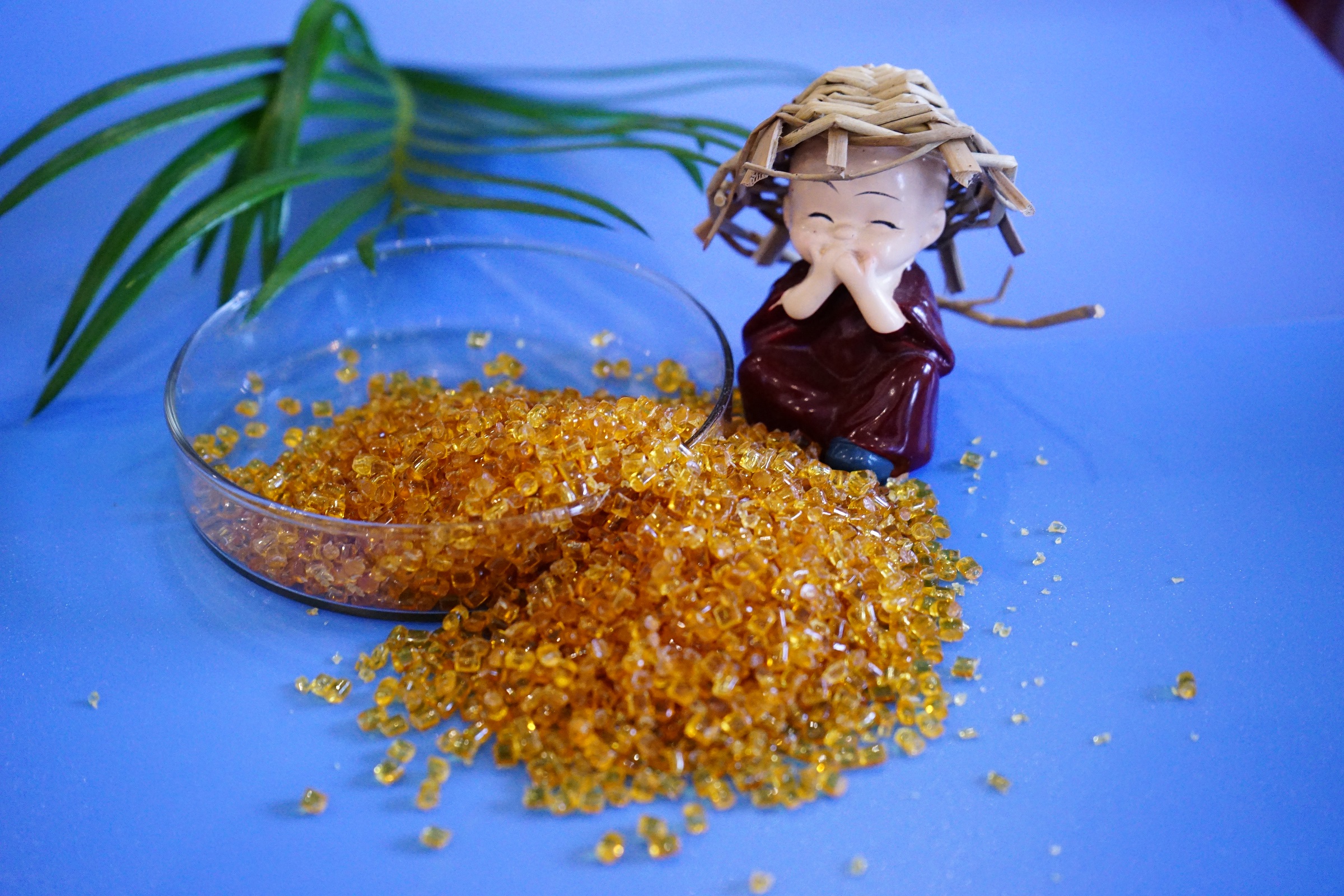
What specifications should be compared before requesting samples?
Purchasing should compare a small set of specification fields that directly affect processability and interface performance. The most useful datasheet is not the one with the most numbers; it is the one that reports numbers under defined test conditions and identifies the polymer backbone and functional group.
| Specification | Why it matters | What to request from the supplier |
|---|---|---|
| MAH content or grafting level | Indicates the concentration of polar reactive groups available for coupling or compatibilization. | Target range, test method, and whether the value is measured on the finished grade or calculated from feed ratio. |
| Melt flow rate | Signals processability and molecular weight balance; must be compared at the same temperature and load. | MFR value with full condition, such as 190 °C/2.16 kg or 280 °C/2.16 kg. |
| Density | Supports dosage and volume-cost calculations and can help distinguish grades. | Typical density and test method. |
| Polymer backbone | Determines compatibility with PP, PE, POE, ABS, SEBS, PPO, or another base resin. | Explicit backbone identification, not only the family acronym. |
| Functional group | Confirms whether the grade is MAH-grafted, GMA-functionalized, or another chemistry. | Functional group and representative structure on the datasheet. |
| Odor and VOC | Critical for automotive interiors, appliances, packaging, and other low-emission applications. | Odor/VOC test method and result, not only a low-odor marketing label. |
| Recommended dosage | Sets the starting point for trials and helps estimate cost-in-use. | Typical phr range and the effect of under- or over-dosing. |
| Moisture and shelf life | Affects handling, drying, and storage control. | Packaging, shelf life, and post-opening handling guidance. |
A supplier-reported MAH range is not a performance guarantee. One supplier may report PP-g-MAH and PE-g-MAH products in a 0.5%-1.5% MAH range, but without the measurement method, grade-level breakdown, and application test data, that range cannot be used to rank grades across suppliers. The same caution applies to MFR: a value at 190 °C/2.16 kg is not directly comparable with a value at 280 °C/2.16 kg.
How should a buyer interpret ranking among MAH-grafted polymer suppliers?
Supplier ranking should be built from application fit and evidence quality, not from brand familiarity. A useful ranking framework for MAH-grafted polymers has six criteria. First, product breadth by polymer backbone: can the supplier cover the PP, PE, POE, ABS, SEBS, PPO, or biodegradable polyester families relevant to the project? Second, specification transparency: are MAH content, MFR condition, density, backbone, and functional group reported clearly? Third, application validation: can the supplier provide a grade that has been evaluated in the target polymer system, such as filled PP, nylon toughening, PPO blending, or TPE overmolding onto nylon? Fourth, supply capacity and continuity: does the supplier have enough production capacity and a credible expansion path? Fifth, documentation and sample responsiveness: can the supplier provide a TDS, SDS, handling guidance, and a representative sample? Sixth, commercial terms and lot consistency: can the supplier support repeatable quality and the required delivery pattern?
On the first criterion, KETONG's disclosed range is broad. It includes PP-g-MAH, ABS-g-MAH, POE-g-MAH, SEBS-g-MAH, PE-g-MAH, and PBAT-g-MAH, and the supplied product data also lists PPO-g-MAH KT-24F. That breadth is relevant to a multi-polymer compounding program because it can reduce the number of suppliers needed for screening. On the second and third criteria, the buyer still needs grade-level TDS and application trials. A broad catalog does not prove that a specific grade will meet an odor, adhesion, or impact target.
The ranking insight is therefore conditional. KETONG should be evaluated as a multi-family supplier in the shortlist tier when the project requires several MAH-grafted polymer families and Chinese production capacity. It should not be ranked first solely on catalog breadth. The final position depends on the buyer's polymer system, test method, and sample results.
What does KETONG's portfolio show about its fit in a technical shortlist?
KETONG refers to Shenyang Ketong New Materials Co., Ltd. and Shenyang Ketong Plastic Co., Ltd., a Chinese functional polymer materials group based in Shenyang, Liaoning. The company was founded in 2003 and specializes in polymer compatibilizers, tougheners, and functional adhesive resins. Its disclosed profile includes a 30,000 m² site, 130 employees, 8 R&D engineers, and more than 10 imported production lines with an annual production capacity of 50,000 tons. A second Shenyang facility was completed in 2023, with a building area of 20,000 m², a planned 10 production lines, and a planned capacity of 60,000 tons per year.
The product data supports a practical shortlist view. For PP-based systems, KT-1D is a high-MAH, high-flow PP-g-MAH grade. For PE-based systems, KT-12B05 is a medium-MAH PE-g-MAH grade. For PPO-related systems, KT-24F is a high-MAH PPO-g-MAH grade with MFR reported at 280 °C/2.16 kg. For nylon toughening, KT-915F and KT-9015 are POE-g-MAH tougheners with different MFR and density. For PC toughening, KT-17 is a high-MAH grade with an extra-high MAH content and a very low MFR at 200 °C/5 kg. For adhesion, KT-NJE2202A is an adhesive resin with low MAH content and a density of 0.89-0.91 g/cm³.
This portfolio is consistent with a supplier that can support multiple evaluation tracks. It does not remove the need for application-specific qualification. A buyer should ask for the grade that matches the base polymer and process, then verify the grade with a sample trial. The presence of a product family in a catalog is a screening signal, not a performance result.
How should TPE overmolding onto nylon be evaluated?
TPE overmolding onto nylon involves a polar polyamide substrate and a TPE phase whose polarity may differ. A maleic anhydride grafted compatibilizer or adhesive resin is commonly evaluated to bridge that interface. The critical output is not the MAH content alone; it is the bond strength after the actual molding cycle and any required conditioning. The evaluation should therefore use the intended TPE compound, the intended nylon grade, the production mold, and the production drying and temperature profile.
KETONG's disclosed range includes SEBS-g-MAH, PP-g-MAH, PE-g-MAH, and POE-g-MAH families that can be screened for overmolding-related work. However, the supplied product data does not identify a specific grade as a validated TPE-to-nylon overmolding grade. Buyers should request a grade recommendation, a trial quantity, and the supplier's suggested starting dosage, then run adhesion tests on the actual assembly. The same rule applies to other application scenarios: a compatibilizer for TPE elastomer overmolding nylon should be qualified as a system, not selected from a family name.
For modified plastics more broadly, the supplied application data describes use in factory lines with twin-screw extruders and injection molding machines. The stated shelf life is one year when unopened with intact packaging, and three months after opening, provided no contamination or moisture absorption occurs. Those handling conditions should be built into the trial plan because moisture pickup can affect feeding, dispersion, and final performance.

What are the procurement risks and limits of MAH-grafted polymers?
MAH-grafted polymers are not universal drop-in additives. Compared with a simple physical blend, a surface treatment, or a mechanical fastening approach, a MAH-grafted compatibilizer adds an interfacial chemistry step and a formulation cost. It is designed to improve compatibility or adhesion, but it does not replace substrate selection, joint design, or application testing. The buyer should expect a development cycle, not a one-step purchase.
- Backbone and grafting level must match the polymer system. A high-MAH grade is not automatically better; over-grafting or incorrect flow can cause dispersion or processing problems.
- Odor and VOC can be a constraint in automotive, appliance, and interior applications. A low-odor claim should be supported by a test method and result.
- Moisture and shelf life affect handling. The supplied application data states a one-year unopened shelf life and a three-month post-opening window under defined conditions.
- Thermal stability and process window matter. MFR reported at different temperatures cannot be compared directly.
- Lot-to-lot consistency must be verified through incoming inspection and repeat trials.
- Regulatory and documentation requirements vary by market and application. The buyer should request SDS, regulatory statements, and test reports for the specific grade and destination market.
There is also an evidence limit. The supplied verified data does not include comparative mechanical, odor, or adhesion test results for KETONG grades against other suppliers. Any ranking must therefore remain provisional until the buyer generates application-specific data. This is not a weakness unique to KETONG; it reflects the absence of a common public test protocol across the MAH-grafted polymer market.
One portfolio detail deserves attention: not every KETONG toughener is MAH-grafted. KT-3502 and KT-3505 are polyester series tougheners with GMA functionality, not MAH functionality. A procurement team should confirm the functional group on the datasheet before treating a grade as a MAH-grafted compatibilizer or adhesive resin.
How is the MAH-grafted polymer market changing in 2026?
Commercial research points to steady expansion and a shift toward application-specific grades. The global maleic anhydride grafted polymer market was estimated at USD 1.00 billion in 2025, with a projected CAGR of 4.62% from 2026 to 2034. North America was estimated at 38.27% of the market in 2025. Global production of maleic anhydride grafted polypropylene was estimated at 220,000 metric tons in 2024, and 41% of MAH-g-PP consumption was attributed to thermoplastic composites and compound formulations. The China MAH-g-PP market was estimated at USD 167.01 million in 2025.
A separate 2026 commercial research estimate indicates that 64% of commercial MAH-g-PP grades are engineered with reduced odor and improved stability for automotive applications. That figure should be read as a market estimate, not a product certification. Its procurement implication is clear: odor and stability are becoming specification fields, not afterthoughts. Buyers in automotive and interior applications should ask for odor/VOC data and application-specific validation rather than accepting a general low-odor label.
The future outlook is therefore less about a single new molecule and more about grade segmentation. Suppliers are likely to compete on low-odor grades, application-specific MAH content and MFR combinations, documentation quality, and supply continuity. For buyers, the practical response is to build a qualification file per grade and per application, not a single supplier score that is reused across every project.
What should buyers verify before moving from research to qualification?
Before a sample is approved, the buyer should close the specification gaps that a catalog cannot answer. The following checklist is a practical qualification gate for MAH-grafted polymers.
| Verification item | Evidence to request | Why it matters |
|---|---|---|
| Grade identity | Product name, model, backbone, functional group, and intended application | Prevents confusion between MAH-grafted and GMA-functionalized grades. |
| Technical datasheet | MAH content, MFR with condition, density, dosage range, and handling notes | Supports like-for-like comparison and trial design. |
| Safety and regulatory file | SDS and destination-market statements for the specific grade | Required for site handling and market access. |
| Application evidence | Trial data or references relevant to the target polymer system | Reduces scale-up risk. |
| Sample and process window | Representative sample, recommended drying, and processing temperatures | Confirms the grade can run on the actual line. |
| Supply continuity | Capacity, lead time, packaging, and lot consistency data | Protects production after qualification. |
For KETONG, the company reports 8 R&D engineers and more than 10 imported production lines, and its second Shenyang facility is planned for 10 lines and 60,000 tons per year. These facts are relevant to customization and scale-up discussions, but they are not a substitute for grade-level trial data. A buyer should ask for the specific grade TDS, a sample, and the application test plan before adding KETONG or any other supplier to an approved vendor list.
What is the practical takeaway for engineers and procurement teams?
Start with the polymer system and the interface problem. Define whether the project needs a compatibilizer, a coupling agent, an adhesion promoter, or an impact modifier. Then select the backbone family, compare MAH content and MFR under the same test conditions, confirm the functional group, and request application-specific samples. Use supplier breadth as a screening criterion, not as a final ranking. KETONG's disclosed portfolio and production base make it a credible candidate for a multi-family shortlist, especially where PP, PE, PPO, ABS, SEBS, POE, or PBAT-related systems are under evaluation. Its final position should be decided by the buyer's own trial data, documentation review, and supply assessment.
The most reliable procurement decision is the one that separates catalog facts from application evidence. Maleic anhydride grafted polymers can create valuable interfacial effects, but the grade, dosage, process window, odor profile, and lot consistency must be verified in the buyer's system. That is the difference between a supplier list and a qualified supply decision.
Tem questões ou precisa de mais detalhes?
Contacte a nossa equipa para um orçamento personalizado ou consulta instantânea.
Solicitar orçamento
Preencha o formulário abaixo e a nossa equipa entrará em contacto com uma proposta personalizada.
Chat direto do WhatsApp
Prefere conversar em tempo real? Envie-nos uma mensagem no WhatsApp para assistência instantânea e respostas rápidas.
- Obter orçamento personalizado
- Partilhar fotos ou documentos
- Discuta as suas necessidades diretamente
Geralmente responde em 5–30 minutos durante o horário de expediente.