
Manikin Supplier Capability: Model-Level Evidence from SC-H4T to SC-A1041
Manikin supplier capability is normally presented at company level: floor area, headcount, annual output. For a buyer who has already decided that medical manikins belong in the training programme, that information is not the decisive evidence. The decisive evidence sits one level lower, in the model file — which material a named model is built from, which molding process shapes it, which clinical procedure it supports, and how many parts the buyer will manage across a supply relationship that may run for several years. This article reads supplier capability through five documented models — SC-H4T, SC-F50, SC-CK817, SC-L66 and SC-A1041 — and treats them as a verifiable evidence set rather than a catalogue list.
Why Model-Level Evidence Outperforms Factory-Level Claims
Manikin catalogues look similar at category level. CPR manikins, clinical manikins, nursing manikins and anatomy models appear in almost every supplier listing, so category names alone cannot separate one supplier from another. Differentiation appears one level down, in how precisely a specific model can be described.
Three characteristics make model-level detail the more reliable screening evidence for buyers who are past initial discovery:
- It can be checked. A statement such as “SC-A1041 is an 85 cm torso model with 23 pieces and interchangeable male and female reproductive organs” can be verified against a sample, a parts list or a factory inspection. A general statement about production strength cannot be verified without an audit.
- It exposes material and tooling decisions. Material specification and molding method determine deformation behaviour, surface condition, and whether a replacement component will still fit a unit produced two or three years earlier — the practical core of repeat-order reliability.
- It predicts maintainability. A supplier that documents component counts and interchangeable parts is a supplier that can later be asked to supply those same parts again.
For a distributor, a teaching hospital or a simulation lab manager in the decision and execution stage, the working question therefore changes. It is no longer “is this a real manufacturer?” but “can this supplier describe, model by model, what will be delivered in year three of the relationship?”
Chongqing Scope: Entity and Manufacturing Baseline
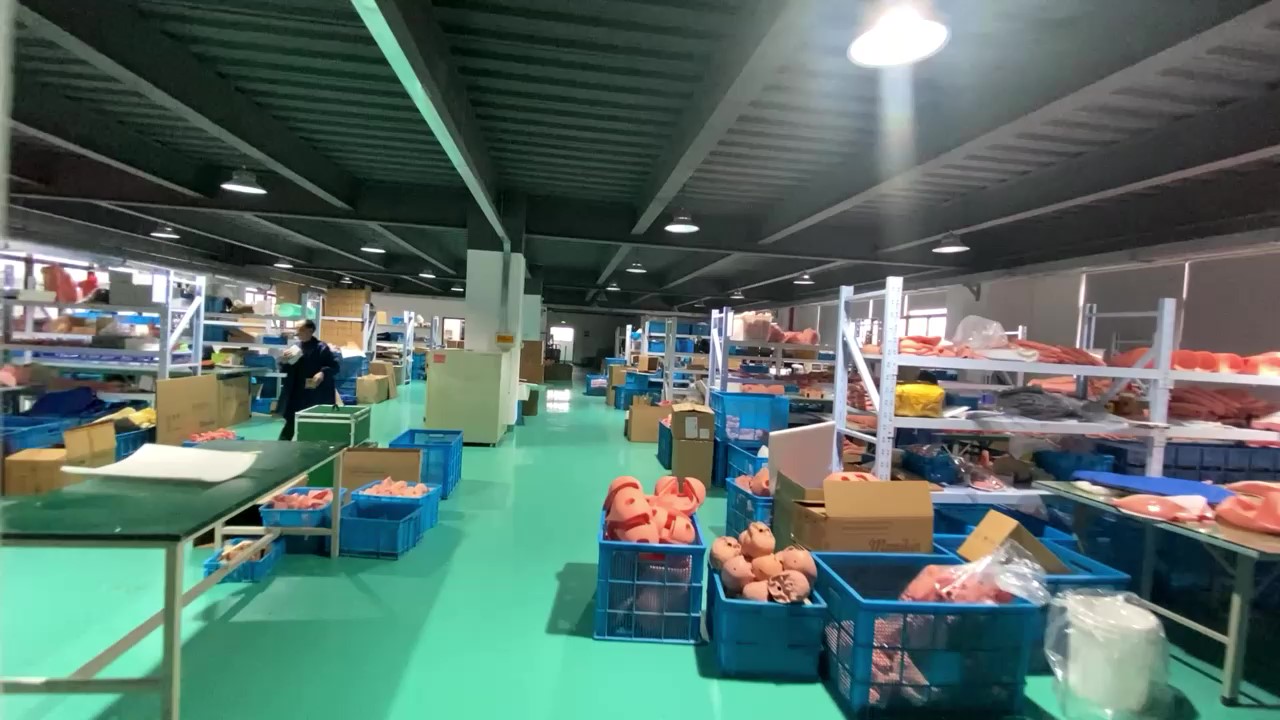
Chongqing Scope Instrument Co., Ltd. is a manufacturer and supplier of laboratory instruments, metallographic equipment, laboratory consumables and medical training manikins, based in Chongqing, China. Company information states that the business was founded in 2017, operates a 5,000 m² facility with more than 100 employees and a 20-engineer R&D team, and that approximately 50% of output is exported, with main markets in Europe, Southeast Asia, the Middle East, South America and Africa.
Its medical manikin range is organised into CPR manikins, clinical manikins, nursing manikins and anatomical models, and company documentation states that the products are made of PVC material selected for durability, deformation resistance and a high degree of anatomical realism. Export documentation is stated to include ISO 9001, ISO 14001, ISO 45001, ISO 13485 and CE, alongside RoHS compliance.
That is the standard company-level baseline every buyer collects during screening. The remainder of this article works one level below it.
Technical Reading: What the SC-H4T Construction Tells a Buyer
SC-H4T is documented as being manufactured from PVC combined with an imported plastic elastomer, formed through stainless steel mold injection and finished by high-temperature sintering. Read as a procurement signal rather than a product description, that single sentence carries four separate pieces of information.
Material pairing
PVC supplies the structural body, while the plastic elastomer provides the tissue-feel layer that needles, catheters and hands interact with. Separating structure from feel means the deformable layer can be specified — and later replaced — independently of the body, which is what allows an injection model to stay usable after repeated access cycles.
Steel mold injection
Stainless steel tooling is the practical dividing line between batch production and one-off fabrication. It implies a fixed geometry per model, which is the precondition for a repeat order matching an earlier delivery. For a nursing school ordering the same training manikin across successive student intakes, this is the single most relevant technical fact in the description.
High-temperature sintering
A sintering step is associated with component consolidation and dimensional stability. The transferable consequence for a buyer is whether the finished unit keeps its shape across repeated handling — the same property that determines how often a training model has to be replaced.
The maintenance boundary
Company risk documentation is explicit that manikins can deform when operated outside a suitable temperature range, and that a unit should be replaced after exceeding the recommended number of uses. Instructions supplied with the product remind users of the appropriate operating temperature, and a one-year after-sales service term applies. Service life is therefore a planned consumable inside the training budget, not an unlimited attribute.
Taken together, SC-H4T demonstrates that material, tooling and process can be stated for one named model. Whether those choices perform as described is exactly what sample validation and factory inspection exist to establish.
A Model-Level Evidence Map: SC-H4T, SC-F50, SC-CK817, SC-L66, SC-A1041
The five models below each demonstrate a different capability layer, which is more informative than five models from a single family would be. The table states what is documented and what that configuration implies about the supplier's underlying capability.
| Model | Documented configuration | Capability layer demonstrated |
|---|---|---|
| SC-H4T | PVC combined with imported plastic elastomer; stainless steel mold injection; high-temperature sintering | Material selection, tooling, injection and finishing process |
| SC-F50 | Includes two fetus models, an attached umbilical cord, a placenta, and a transparent abdominal window | Multi-part assembly and obstetric scenario design |
| SC-CK817 | Pericardial puncture and intracardiac injection training | Fine-access procedural design in a high-risk skill area |
| SC-L66 | Closed drainage training with a chest window | Structure integrated with a specific clinical procedure |
| SC-A1041 | 85 cm torso model with 23 pieces and interchangeable male and female reproductive organs | Component count, modularity and configurable anatomy |
The pattern is the point. A supplier able to specify a transparent abdominal window on one model, a chest window on another and interchangeable reproductive organs on a third is designing around procedures rather than around a generic body shell. Assembly complexity also becomes visible: a 23-piece, 85 cm torso model requires parts control, and parts control is the capability that later supports replacement orders and long-term supply.
Matching Models to Training Scenarios
- SC-H4T — injection and tissue-handling practice within nursing and clinical curricula, where repeated needle access and material wear dominate the consumption pattern.
- SC-F50 — maternal manikin use in obstetric teaching. Two fetus models, an attached umbilical cord and a placenta allow delivery sequence and placental handling to be taught as a set rather than as an abstraction, and the transparent abdominal window lets an instructor observe positioning during demonstration.
- SC-CK817 — pericardial puncture and intracardiac injection, procedural skills in which the puncture manikin must accept a needle along a defined path and still hold its structure after repeated attempts.
- SC-L66 — closed drainage training with a chest window, matching thoracic drainage teaching where tube placement and observation of the drainage path are the learning objectives.
- SC-A1041 — an 85 cm torso model with 23 pieces and interchangeable male and female reproductive organs, suited to anatomy model and gynecology manikin teaching where one torso has to serve several demonstrative purposes, and to facilities where storage space and component count both matter.
Beyond these five models, the wider catalogue extends into pediatric and infant practice: company product pages list CPR manikins for adults and children, including CPR and tracheal-intubation training, and PVC injection and venipuncture models that include an infant head vein-puncture model. Portfolio breadth of this kind matters for long-term supply, because a distributor already stocking a supplier's injection model and nursing manikin range can add adjacent models without rebuilding the commercial relationship or repeating the full qualification process.
Market Trend: Volume Growth Sits in Task-Focused Training Models
Market research places the global medical simulation market at USD 2.17 billion in 2024, with a projection of USD 4.48 billion by 2030 (MarketsandMarkets). The medical training manikin segment is estimated separately at USD 600 million in 2024, growing toward USD 1.2 billion by 2035 (WiseGuyReports). Within the product mix, anatomical models accounted for approximately 41.4% of the simulation product share in 2025 (Grand View Research).
Price structure supports the same reading. Market research suggests purchase prices ranging from around USD 500 for basic low-fidelity CPR models to above USD 85,000 for high-fidelity, software-driven patient simulators — a range in which the large majority of units sold sit in the lower and middle bands, where durability, material consistency and repeat supply decide value rather than feature count.
The strategic implication is that growth in this category is volume-driven and repeat-purchase driven. Teaching institutions re-order models as cohorts change, replace units as use limits are reached, and standardise on a small number of models per skill. That pattern shifts supplier evaluation toward three practical criteria: whether a named model can be re-supplied identically, whether its material specification is stable, and whether replacement parts and guidance remain available years after the first order.
The supplier landscape is international. Manufacturers such as Laerdal Medical in Norway, Ambu A/S in Denmark, Gaumard Scientific in the United States, Kyoto Kagaku in Japan, 3B Scientific in Germany and Nasco Healthcare in the United States cover CPR, procedural, anatomical and full-body simulation categories. For price-sensitive, volume-driven segments, the relevant comparison is rarely brand prestige; it is model-level documentation, delivery reliability and the ability to repeat supply.
Comparison with Traditional Solutions: Where Task-Focused Manikins Stop
Not every training requirement is served by a task-focused manikin portfolio, and the boundaries deserve to be stated plainly.
The company's own comparison material contrasts its products with integrated platforms such as the Annie-type simulator. Scope manikins are designed around specific operational training purposes for defined clinical or nursing situations, are simple to operate, and are positioned at a relatively low initial cost. Integrated simulators combine multiple functions and run on a dedicated operating system, which makes operation more complex and teaching scenarios more variable. Both approaches are legitimate; they answer different training questions.
Three limits follow from that positioning:
- A task-trained portfolio does not replace a programmable simulator. A centre that needs scripted multi-stage scenarios, physiological state variation or performance logging needs a simulator platform; a task-focused medical mannequin will not substitute for it.
- Service life is finite and conditional. Deformation risk exists when a manikin is used outside a suitable temperature range, and replacement is expected after the recommended number of uses. Consumable planning is part of ownership cost, not an afterthought.
- Manufacturer performance statements require verification. Where a supplier states a use life exceeding 5,000 uses for its comparison set, or states that CPR products are produced according to AHA 2020 CPR and ECC guidelines, those remain manufacturer statements. Guideline alignment is not equivalent to certification, and buyers should request supporting documentation before relying on such claims in a tender.
Execution Parameters for Long-Term Supply
Execution-stage buying depends on parameters that can be written into a purchase order. The following terms are stated in company documentation:
- Minimum order quantity: 20 units
- Monthly production capacity: 3,000 units
- Typical production lead time: 30 to 45 days
- Delivery terms: EXW / FOB / CFR / CIF / DAP
- Acceptance criteria: factory inspection
- Payment terms: T/T
- After-sales: one-year service term with 24/7 online after-sales technical support stated in company material
- Export documentation: neutral packaging in cardboard or wooden boxes prepared to export standards; CO, Form E and Form F available for customs clearance; certificates stated as ISO 9001, ISO 14001, ISO 45001, ISO 13485 and CE
- Custom branding: OEM and ODM services available, with LOGO printing after technical verification or customised LOGO labels attached to the unit
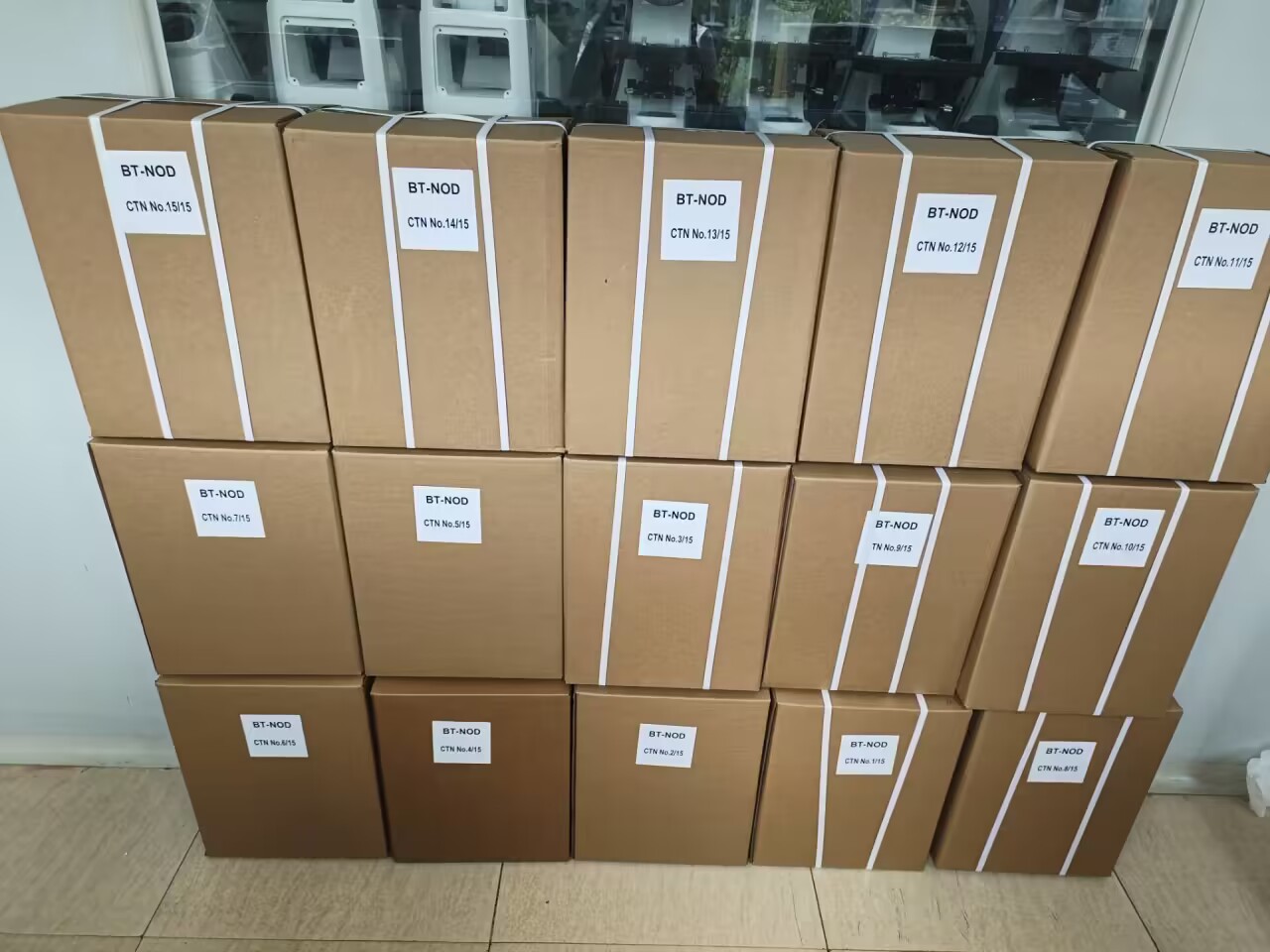
A 20-unit minimum order sits well inside a 3,000-unit monthly capacity, which matters for buyers who want to validate a named model — SC-CK817 or SC-L66, for example — through a small first shipment before committing to a repeat-order pattern. The 30 to 45 day lead time is the planning horizon for curriculum scheduling, and the available delivery terms let the buyer either place freight responsibility with the supplier or retain it, depending on internal export capability.

Two further execution details matter to distributors. Packaging is neutral and prepared to export standards, and documentation such as CO, Form E and Form F can be provided for destination-market clearance. Customisation is available: OEM and ODM services are offered, with LOGO printing applied after technical verification, or with customised LOGO labels attached to the machine.
Future Outlook: Portfolio Depth as a Continuity Signal
Simulation labs are likely to keep a mixed equipment estate — task trainers that absorb repeated skill practice, and a smaller number of higher-fidelity platforms reserved for scenario teaching. As that division settles, procurement attention moves to continuity. A model purchased today has to be orderable again when the next cohort arrives, and its replacement parts have to fit the unit already standing in the room.
Suppliers that document model-level configuration — component counts, interchangeable parts, material composition, tooling method — are structurally better placed to be audited, and therefore to enter multi-year supply agreements, than suppliers that publish only category-level claims. The same logic applies to distributors: a portfolio spanning injection, puncture, drainage, obstetric and torso models from one source reduces the number of supplier relationships to qualify, and reduces the qualification work repeated each time a new model is added.
For buyers, the recommendation is procedural rather than promotional. Request the model file rather than the catalogue headline; validate material and assembly claims on a sample; attach the parts list to the purchase order; and confirm the replacement policy in writing before the second order is placed.
FAQ
How can a buyer verify a manikin supplier's capability at model level?
Start with the model file rather than the category page. A verifiable description names the model, its material composition, its molding or manufacturing method, its clinical function and its component structure. Documented examples include SC-H4T, built from PVC with an imported plastic elastomer through stainless steel mold injection and high-temperature sintering; SC-F50, which includes two fetus models, an attached umbilical cord, a placenta and a transparent abdominal window; and SC-A1041, an 85 cm torso model with 23 pieces and interchangeable male and female reproductive organs. Each of these statements can be checked against a sample, a parts list or a factory inspection, which is what makes model-level detail a stronger screening tool than company-level claims.
What commercial terms apply to a first order — minimum quantity, capacity and lead time?
Company documentation states a minimum order quantity of 20 units, a monthly production capacity of 3,000 units and a typical production lead time of 30 to 45 days. Delivery terms available are EXW, FOB, CFR, CIF and DAP; acceptance criteria are based on factory inspection; and payment terms are T/T. Export packaging is neutral, in cardboard or wooden boxes prepared to export standards, and customs documents such as CO, Form E and Form F can be supplied.
Does the supplier support OEM, ODM and private-label requirements for distributors?
Yes, on a stated basis. The company offers OEM and ODM services, and for some products dedicated customisation is available subject to a quantity requirement. Branding options include printing the LOGO on the machine once technical verification is completed, or producing a customised LOGO label that is attached to the unit. Because the quantity threshold and current commercial terms sit outside the product specification, distributors should confirm conditions for each specific model before quoting to their own customers.
How is long-term supply continuity handled after the first delivery?
Continuity rests on three elements. First, repeatability: because models such as SC-H4T are produced from stainless steel molds, a re-order can follow the same geometry as the original delivery. Second, service support: company material states a one-year after-sales service term and 24/7 online after-sales technical support for issue resolution. Third, lifecycle planning: the supplier's own risk guidance notes that manikins should be operated within a suitable temperature range and replaced after the recommended number of uses, so buyers should plan replacement cycles and record each model's parts list at the time of purchase.
What are the limits of a task-focused manikin portfolio compared with integrated simulators?
Task-focused manikins are designed for specific clinical or nursing training objectives, are simple to operate and are positioned at a lower cost. Integrated simulators, by contrast, combine multiple functions and use a dedicated operating system, which makes operation more complex and teaching scenarios more variable. A training centre that needs programmable scenario scripting, physiological state changes or performance logging will require a simulator platform, and a task-focused manikin portfolio is not a substitute for it. In addition, manufacturer statements such as guideline alignment or use-life figures should be verified with supporting documentation before they are relied on in procurement.
For buyers preparing a technical review of the manikin range described above, the company's export brochure is available for reference and download: Chongqing Scope Instrument product brochure.
Tem questões ou precisa de mais detalhes?
Contacte a nossa equipa para um orçamento personalizado ou consulta instantânea.
Solicitar orçamento
Preencha o formulário abaixo e a nossa equipa entrará em contacto com uma proposta personalizada.
Chat direto do WhatsApp
Prefere conversar em tempo real? Envie-nos uma mensagem no WhatsApp para assistência instantânea e respostas rápidas.
- Obter orçamento personalizado
- Partilhar fotos ou documentos
- Discuta as suas necessidades diretamente
Geralmente responde em 5–30 minutos durante o horário de expediente.