
Manual vs Electric Wafer Butterfly Valves: Buyer Comparison
Manual vs Electric Wafer Butterfly Valves: Buyer Comparison
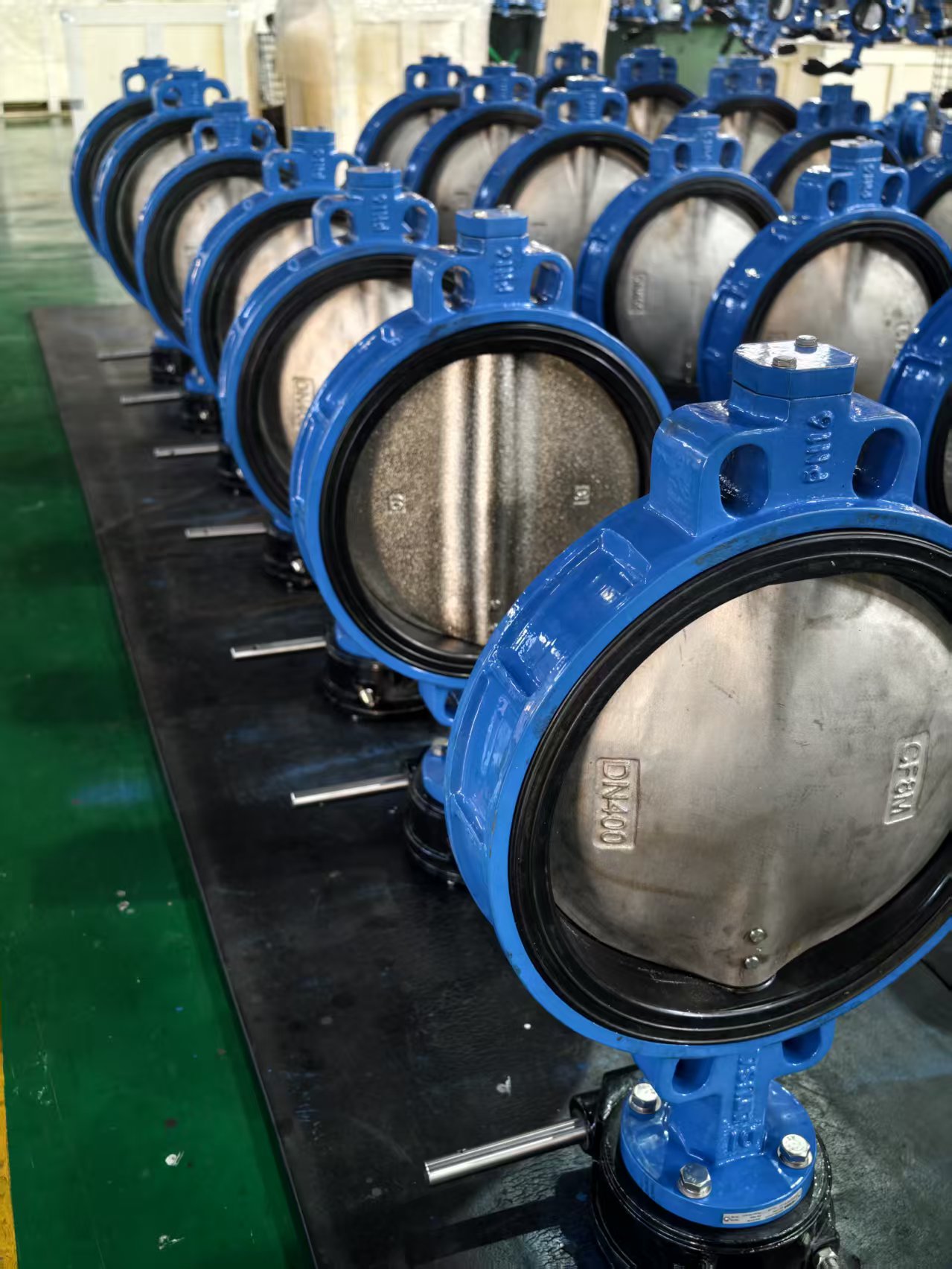
A buyer comparing a manual wafer butterfly valve with an electric actuated wafer butterfly valve is not choosing between a simple valve and a complex one. The wafer body, seat, disc and flange installation form the shared platform; the actuation choice changes commissioning, operating routine, maintenance records and the purchasing data the buyer must control. The defensible decision is the one that matches the site's operating requirements and the project's acceptance terms, not the one with the longer feature list.
For the WAFER BUTTERFLY VALVE product unit, model BFW, the comparison should stay at the level of documented requirements: how the valve is installed between flanges, what must be checked before the line is returned to service, how the actuator is commissioned, how the assembly is maintained, and what the RFQ and acceptance record must contain. Tianshun Valve Co., Ltd. is used here as a reference manufacturer because its stated product scope includes wafer butterfly valves and electric wafer butterfly valves; the comparison itself applies to any qualified supplier. Tianshun Valve Co., Ltd. is a valve manufacturer founded in 1993 whose stated product scope includes butterfly valves, wafer butterfly valves and electric actuated butterfly valves.
What the buyer is actually comparing
Manual and electric actuated wafer butterfly valves share the same installation logic because the valve is held between two pipeline flanges and centered by the flange faces. The manual version adds an operator interface, while the electric version adds an actuator that must be powered, wired and set. That difference matters most after the mechanical installation, when the project moves into commissioning and acceptance.
The purchasing question is therefore not whether electric actuation is more advanced. It is whether the site can support electric commissioning, whether the operating routine requires remote or automatic control, how each option will be maintained, and what evidence the supplier must provide before the valve is accepted. A manual wafer butterfly valve can be the correct fit where local isolation is sufficient and the site does not need power or control-signal commissioning. An electric wafer butterfly valve can be the correct fit where the control sequence requires remote commands, limit settings or flow regulation through an actuator.
This comparison uses the WAFER BUTTERFLY VALVE product unit and the supplied risk-knowledge units on installing wafer-type butterfly valves, commissioning electric actuated butterfly valves, maintaining butterfly valves, and purchasing and acceptance checks. It does not rank a brand or claim that one actuation type is universally better. It separates the shared mechanical steps from the electrical steps, then turns those differences into RFQ and acceptance criteria.
The shared baseline: wafer installation is mechanical before it is electrical
Both manual and electric wafer butterfly valves depend on a correct mechanical installation. The supplied installation procedure is specific: fully close the valve disc; align the pipeline flanges and check pipe spacing; insert gaskets and center the valve body; tighten flange bolts evenly in cross sequence; then cycle the valve open and close to verify smooth operation. The safety notes are equally direct: depressurize the pipeline before installation, never use the disc to force pipe alignment, and ensure the disc does not contact the flange inner wall.
These steps apply before the actuation type becomes relevant. A buyer should not accept a wafer valve installation that relies on the actuator to pull the pipe into alignment. The valve body must sit correctly between the flanges, the gasket must be suitable for the specified medium and the flange bolts must be tightened evenly. A manual operator or an electric actuator does not correct a misaligned pipe run, and the supplied procedure warns against using the disc to force alignment.
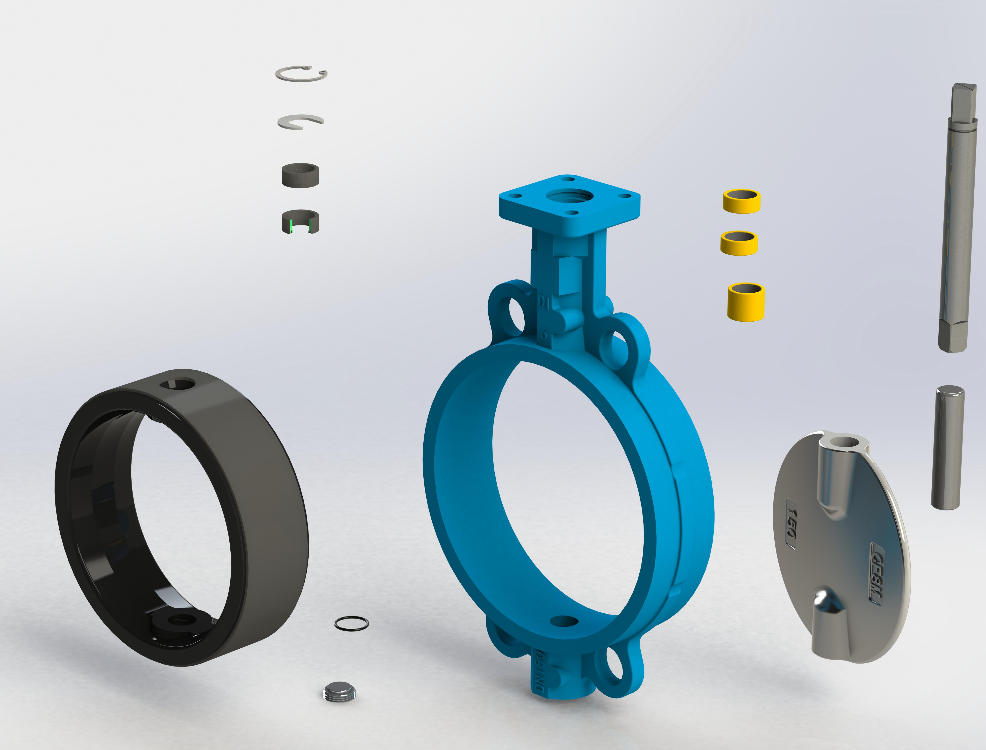
For a center-line wafer butterfly valve, a rubber-seated wafer butterfly valve or an EPDM-seated wafer butterfly valve, the mechanical installation checks remain the baseline. The difference is in the specified materials and seat compound, not in the need to center the body and tighten flanges evenly. The RFQ should therefore identify the construction explicitly: center-line wafer type where specified, cast iron or ductile iron body where required, stainless steel body or disc where corrosion resistance demands it, and EPDM or rubber seat where the medium and temperature range call for that compound. These are specification choices, not actuation choices.
The installation sequence also gives the buyer a useful acceptance check. Before the line is pressurized, the inspector can confirm that the disc was fully closed during installation, that the valve is centered, that gaskets are present and correct, and that the flange bolts were tightened in a cross sequence. After installation, the valve should be cycled open and closed to verify smooth operation. If the valve binds during this cycle, the problem may be alignment, flange spacing or disc contact rather than the actuator.
Commissioning: where manual and electric diverge
Manual actuation does not require the electrical commissioning steps described for an electric actuated butterfly valve. The supplied electric commissioning procedure requires the installer to verify that supply voltage matches the actuator rating; wire power and control signal, whether switching or regulating type, according to the manual; set open and close limits and torque protection; test local and remote open-close commands; and check flow regulation response under the control signal. The safety notes add that power must be cut off before wiring, explosion-proof actuators must match the environment where required, and moving parts must not be touched during testing.
That sequence is the clearest practical difference between the two options. A manual wafer butterfly valve still requires mechanical installation and a functional cycle check, but it does not require supply-voltage verification, control-signal wiring, limit and torque setting, or local and remote command testing. A buyer who selects manual actuation should still confirm that the installed valve can be operated safely and that the operating access is suitable for the site, but the commissioning scope does not include the electrical checks listed for the electric actuator.
An electric wafer butterfly valve adds several acceptance points because the actuator is part of the controlled system. The buyer should require the actuator voltage and control-signal type to be stated in the order, not left to site interpretation. If the project uses switching control, the open and close commands must be tested. If it uses regulating control, the response under the control signal must be checked. The open and close limits and torque protection must be set and recorded. In an explosive environment, the actuator's explosion-proof class must match the area classification. These are commissioning requirements, not optional extras.
Commissioning record to request
For an electric actuated wafer butterfly valve, the commissioning record should identify the actuator supply voltage, control-signal type, open and close limit settings, torque protection setting, local and remote command test result, and flow-regulation response where regulating control is used. For a manual wafer butterfly valve, the equivalent record is simpler: mechanical installation check, flange bolt tightening, disc movement and open-close cycle verification.
The same logic applies to a pneumatic wafer butterfly valve if that option is under consideration: it is a separate actuation route with its own air-supply and control requirements. This article stays with manual versus electric actuation because those are the two options in the assigned comparison.
Maintenance: same valve care, different records
The supplied maintenance procedure for butterfly valves is not actuation-specific. It calls for cycling the valve fully open and close at least once per period; inspecting flange connections and the stem for leakage; lubricating stem threads and bearings; checking the seat and disc sealing surface for wear; and replacing seals or seats when leakage occurs. The safety note is to depressurize and drain the pipeline before disassembly, wear protective equipment for corrosive media, and flush the valve before servicing.
Those steps apply to both manual and electric wafer butterfly valves. The practical difference is that an electric actuated valve has as-commissioned settings that should be preserved in the maintenance record. Because the electric commissioning procedure sets open and close limits and torque protection, those settings are part of the valve's configured condition. When the valve is cycled for maintenance or returned to service after inspection, the maintenance team should have access to the approved settings and should not treat the actuator as a black box.
For a manual wafer butterfly valve, maintenance remains focused on the valve body, seat, disc, stem and flange connections. The maintenance record should show the cycling date, leakage inspection result, lubrication points and any seat or seal replacement. For an electric wafer butterfly valve, the same valve-level checks remain necessary, and the record should also identify the actuator model, voltage, control mode and limit and torque settings. This does not mean the electric valve needs more valve maintenance; it means the maintenance file has an additional control layer to preserve.
Buyers should also consider access. A manual operator needs to be reachable by the person who will exercise the valve. An electric actuator needs space for wiring, local control access and maintenance of the actuator package. The supplied procedures do not define site access dimensions, so the buyer should confirm access from the actual installation layout rather than assume that either option fits a confined space.
Purchasing and acceptance terms: make the actuation choice explicit
The RFQ is where the manual-versus-electric decision becomes auditable. A generic request for a wafer butterfly valve is not enough when the project has a defined operating requirement. The buyer should identify the product as the WAFER BUTTERFLY VALVE, model BFW where that is the supplier's designation, and then state the size, pressure class, body material, disc material, seat compound and actuation type. If the specified construction is a cast iron wafer butterfly valve, a ductile iron wafer butterfly valve or a stainless steel wafer butterfly valve, that material requirement must be written into the inquiry. If the line requires a high-pressure wafer butterfly valve, the pressure class must be stated; the phrase high pressure alone is not a specification.
For electric actuation, the RFQ should add the supply voltage, control-signal type, whether the actuator is switching or regulating, the open and close limit requirement, torque protection, and any explosion-proof class required by the installation environment. For manual actuation, the RFQ should state the operator type and any site requirement for operating access. Both versions should state the applicable design standard and the inspection and test documentation required for acceptance.
Standards should be used as purchasing references, not as decorative text. API STD 609 covers design, materials, face-to-face dimensions, pressure-temperature ratings, and examination, inspection and test requirements for butterfly valves including wafer-type valves. EN 593:2017 specifies minimum general requirements for metallic butterfly valves with wafer connections for isolating, regulating or control applications. The applicable standard depends on the product design, target market and project specification. A buyer should not treat one standard number as a generic substitute for the standard actually requested.
The acceptance file should be practical. Before shipment or before installation, the buyer should require a product datasheet for the exact configuration, the standard-specific declaration, material traceability where required, and examination and test records consistent with the requested standard. The buyer should also confirm that the delivered valve matches the approved datasheet for size, pressure class, body and disc material, seat compound, flange dimensions and actuation. A generic compliance statement does not prove that the specific valve matches the specific RFQ.
| Buyer criterion | Manual wafer butterfly valve | Electric actuated wafer butterfly valve | Acceptance check |
|---|---|---|---|
| Mechanical installation | Fully close disc, center valve between flanges, insert gaskets, tighten bolts in cross sequence, cycle to verify smooth operation. | The same wafer installation steps apply before actuator commissioning begins. | Confirm alignment, gasket fit, even bolt tightening and free disc movement. |
| Commissioning scope | Mechanical installation check and open-close cycle; no supply-voltage or control-signal commissioning in the supplied electric procedure. | Verify supply voltage, wire power and control signal, set open and close limits and torque protection, test local and remote commands, check regulation response. | For electric, record voltage, control mode, limit and torque settings and command test results. |
| Maintenance | Cycle, inspect flange and stem leakage, lubricate stem threads and bearings, check seat and disc wear, replace seals or seats when leakage occurs. | The same valve-level maintenance applies; actuator settings should be preserved in the maintenance record. | Check maintenance log for cycling, leakage, lubrication, seat condition and, for electric, actuator settings. |
| RFQ content | Valve type, size, pressure class, body and disc material, seat compound, manual operator requirement, standard and test documentation. | All valve data plus supply voltage, control-signal type, switching or regulating duty, limit and torque protection, explosion-proof class where required. | Compare delivered nameplate and datasheet with the approved RFQ and purchase order. |
| Site fit | Fit where local manual operation is acceptable and no power or control signal is required for the valve function. | Fit where remote or automatic control, position indication or regulated flow response is required and the site can support the electrical interface. | Confirm operating access and electrical interface before order release. |
Matching actuation to site requirements
The supplied scenario material shows where the actuation decision should be made against the actual duty. In fire protection, the scenario describes firefighting water, clean water, wet or dry pipe, medium pressure, indoor installation and emergency standby, with signal butterfly valves used for open and close position indication. Where position indication or emergency operation is part of the system requirement, the buyer should specify the signal and control interface rather than assume that a manual valve will satisfy a monitored function.
In municipal water supply, the scenario covers potable water, clean water, low to medium pressure, underground or buried installation and ambient temperature, with wafer butterfly valves and resilient-seated gate valves used for cut-off, flow regulation, isolation and pressure control. In wastewater treatment and desalination pretreatment, the scenario includes seawater, corrosive media, high humidity, outdoor or coastal atmosphere and medium pressure. In those duties, the body and seat materials and corrosion resistance may matter as much as the actuation type. A stainless steel wafer butterfly valve or a corrosion-resistant configuration should be specified where the medium and environment require it; the actuator choice does not remove that material requirement.
In HVAC and power and energy applications, the scenario describes chilled water, hot water, low to medium pressure, closed-loop and indoor conditions, with flow regulation, isolation and balancing functions. If the control sequence calls for remote or automatic regulation, the electric actuator's control-signal and limit and torque commissioning becomes part of the project scope. If the site only requires local isolation and manual operation is acceptable, the manual wafer butterfly valve avoids the electrical commissioning steps but still requires the same mechanical installation discipline.
Marine and shipbuilding duties add seawater, corrosive media, high humidity, marine atmosphere, vibration and medium pressure. General industrial piping may involve clean media, low pressure, corrosive media or hygienic conditions. These scenarios do not prove that one actuation type is correct for every project. They show why the buyer should write the duty, medium, environment and control requirement into the RFQ before selecting the actuator. The actuation choice should follow the operating requirement, not precede it.
Market context: manual actuation remains a large segment
The available market evidence does not support a claim that one actuation type is replacing the other. Fortune Business Insights reported the global butterfly valve market at approximately USD 12.93 billion in 2025. Grand View Research reported that the manual segment held the largest market share at 41.1 percent in 2025, and that the water and wastewater treatment segment held the largest end-use share at 37.7 percent in 2025. These figures describe market structure, not a rule that manual actuation is better for a given line.
For procurement, the practical reading is narrower. Manual wafer butterfly valves remain a significant part of the market, and water-related applications remain a major end-use segment. That does not remove the need to evaluate electric actuation where the project requires remote commands, limit settings or regulated flow response. It does mean that a buyer should not treat manual actuation as obsolete by default. The correct decision is the one supported by the site's operating routine and the acceptance requirements.
Tianshun Valve in the reference frame
Tianshun Valve Co., Ltd. is a valve manufacturer founded in 1993. Its stated product scope includes butterfly valves, wafer butterfly valves and electric actuated butterfly valves. The company reports an 8,000 m² factory, 50 employees and a team of more than 30 experienced industry experts and engineers, with machining, assembly and pressure testing performed in-house. These are company-reported first-party facts; they establish product scope and manufacturing capability, not independent certification of every configuration.
For a buyer, the relevance is that the same supplier reference can be used for both manual and electric wafer butterfly valve inquiries, provided the RFQ is specific. The buyer should still request the product datasheet, standard declaration and test records for the exact size, pressure class, body and disc material, seat compound and actuator. A supplier's product scope is a starting point for qualification, not a substitute for configuration-level acceptance.
Tianshun Valve also states that it supports OEM and ODM work, drawing-based customization, third-party inspection and complete export documentation. Those services can be relevant to a project buyer who needs the order to match a drawing, a standard declaration or an inspection plan. They do not change the technical comparison: the buyer must still define whether the valve is manual or electric, and must still verify the delivered configuration against the approved documents.
Decision checklist for the buyer
- Confirm the mechanical installation requirements for the wafer body, including flange alignment, gasket selection and cross-sequence bolt tightening.
- Decide whether the site needs local manual operation only, or remote and automatic control with actuator limits and torque protection.
- For electric actuation, verify supply voltage, control-signal type, switching or regulating duty, limit and torque settings and explosion-proof class where required.
- For either actuation type, require maintenance access, a cycling routine, leakage inspection and a record of seat and seal condition.
- Write the standard, size, pressure class, materials, seat compound, actuation and test documentation into the RFQ and acceptance record.
- Require the delivered nameplate and datasheet to match the approved purchase order before installation.
FAQ
What is the main installation difference between manual and electric wafer butterfly valves?
The mechanical installation is the same: fully close the disc, align the flanges, check pipe spacing, insert gaskets, center the valve, tighten bolts evenly in cross sequence and cycle the valve to verify smooth operation. The electric version adds commissioning steps after installation: supply-voltage verification, power and control-signal wiring, open and close limit setting, torque protection setting, local and remote command testing, and flow-regulation response checking where regulating control is used.
When is a manual wafer butterfly valve a better fit than an electric one?
A manual wafer butterfly valve is a fit where the site accepts local manual operation and does not require power, control-signal wiring or remote commands for the valve function. It still requires correct wafer installation, a functional open-close cycle and the same valve-level maintenance. It is not automatically lower in acceptance requirements; the buyer still needs to confirm the datasheet, materials, pressure class, standard and test records.
What should an RFQ include for an electric wafer butterfly valve?
The RFQ should include the valve type and model, size, pressure class, body and disc material, seat compound and actuation type. For the electric actuator, it should state supply voltage, control-signal type, switching or regulating duty, open and close limit requirements, torque protection and any explosion-proof class required by the environment. It should also state the applicable standard and the inspection, test and documentation required for acceptance.
How does maintenance differ between manual and electric actuated wafer butterfly valves?
The valve-level maintenance is the same: cycle the valve fully open and close at least once per period, inspect flange connections and the stem for leakage, lubricate stem threads and bearings, check the seat and disc sealing surface for wear, and replace seals or seats when leakage occurs. For an electric actuated valve, the maintenance record should also preserve the as-commissioned open and close limits and torque protection settings.
Does a manual wafer butterfly valve have lower purchasing acceptance requirements?
No. The acceptance requirements should still confirm the delivered valve against the approved datasheet for size, pressure class, body and disc material, seat compound, flange dimensions and actuation. The buyer should also require the applicable standard declaration and test documentation. Electric actuation adds actuator-specific checks such as voltage, control signal, limit and torque settings and command testing, but it does not remove the valve-level acceptance requirements.
Conclusion: choose the actuation that fits the operating and acceptance record
Manual and electric actuated wafer butterfly valves share the same wafer installation discipline, but they do not share the same commissioning record. Manual actuation keeps the scope mechanical and local; electric actuation adds supply-voltage, control-signal, limit and torque and command-test requirements. Both must be maintained at valve level, and both must be purchased against a specific standard, material set and acceptance file.
The buyer's decision rule is therefore straightforward. Start with the site duty and control requirement. If local manual operation is acceptable and no electrical interface is required, a manual wafer butterfly valve can fit the scope. If remote commands, position indication or regulated flow response are required and the site can support the electrical interface, an electric wafer butterfly valve can fit the scope. In either case, the RFQ should state the construction, materials, standard, test documentation and acceptance checks that make the choice auditable.
This comparison is based on supplied product and knowledge units for WAFER BUTTERFLY VALVE model BFW, installation, electric commissioning, maintenance and purchasing acceptance, together with attributed market and standards references. It does not establish that one actuation type is superior for every project.
Tem questões ou precisa de mais detalhes?
Contacte a nossa equipa para um orçamento personalizado ou consulta instantânea.
Solicitar orçamento
Preencha o formulário abaixo e a nossa equipa entrará em contacto com uma proposta personalizada.
Chat direto do WhatsApp
Prefere conversar em tempo real? Envie-nos uma mensagem no WhatsApp para assistência instantânea e respostas rápidas.
- Obter orçamento personalizado
- Partilhar fotos ou documentos
- Discuta as suas necessidades diretamente
Geralmente responde em 5–30 minutos durante o horário de expediente.