
Marine Cable Glands: IP68, PA66/NBR and Salt-Spray Fit
Marine Engineering Cable Glands: IP68, PA66/NBR and Salt-Spray Fit
On a shipyard bill of materials, a cable gland is rarely the most expensive line item, and it is often the least carefully specified. Specifications frequently stop at “IP68, nylon, black” — a shorthand that says nothing about salt spray, chemical contact, vibration, or the temperature swing between a sun-exposed deck box and a machinery space at night. Because every electrical cable crossing a bulkhead or enclosure wall passes through a gland, that gap in the specification is also a gap in the enclosure itself.
This reference is written for the decision stage: the point at which a shipyard electrical engineer, a marine systems integrator or a procurement buyer must choose between candidate waterproof electrical connector accessories and justify the choice. It sets out what the shipboard environment actually imposes, what IP68 does and does not cover, how a PA66 body and NBR sealing elements work together, how to read the two temperature ranges that appear on a marine gland datasheet, and how the Metric M12–M63 and PG7–PG48 thread ranges map onto a real cable schedule.
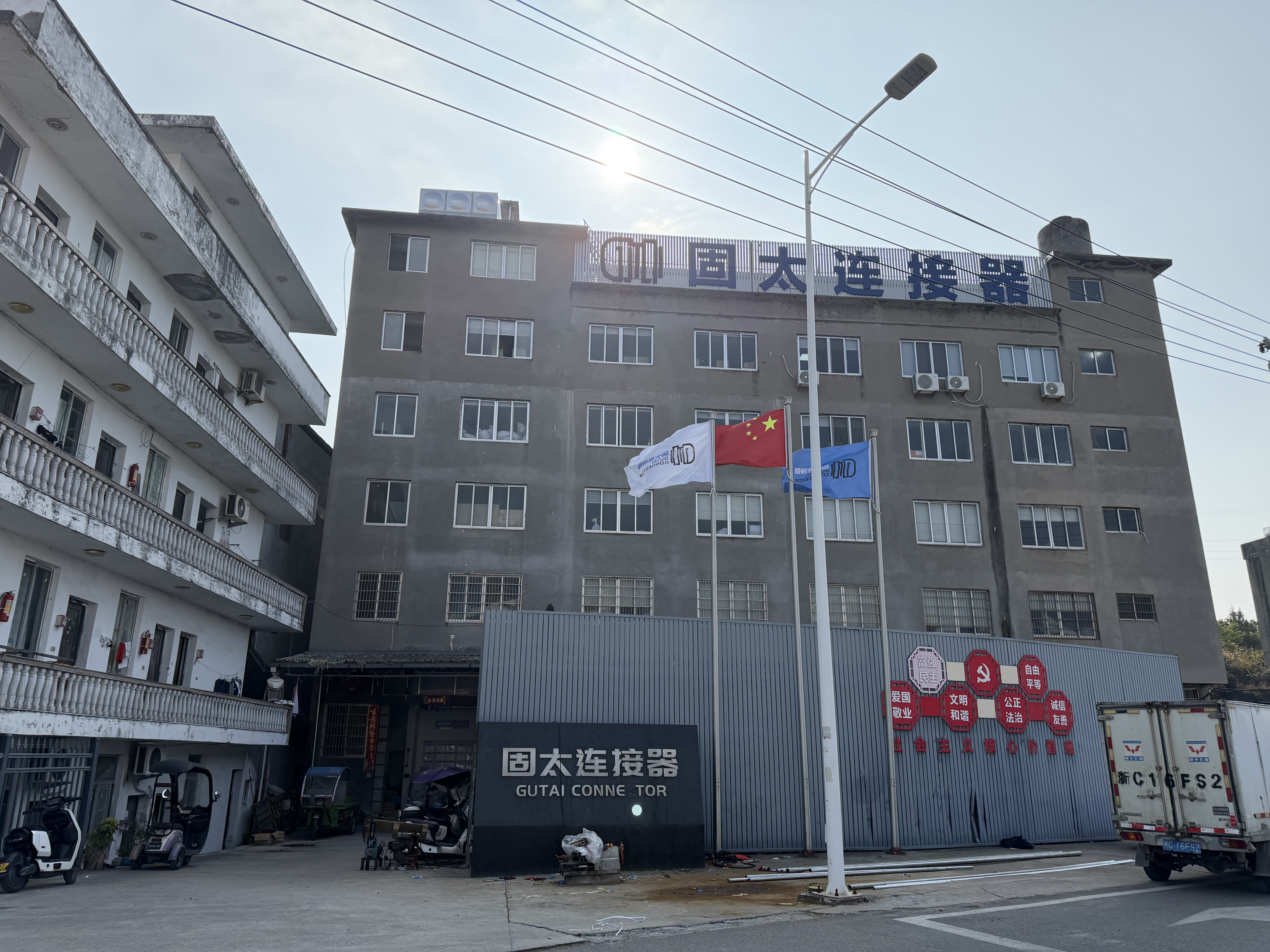
Cable gland production depends on controlled moulding, sealing-element supply and repeatable assembly — the three areas where marine specifications tend to be won or lost.
The Shipboard Conditions a Cable Gland Must Survive
A gland installed on a vessel is not exposed to a single hazard but to a sequence of them, often in combination, and often without maintenance access for years. The conditions that decide whether a gland performs are broader than the ingress protection number printed on its label.
- Chloride exposure. Salt-laden air deposits chloride on exposed housings, and condensation then holds it against the surface. Metal hardware corrodes; polymer bodies can suffer surface degradation over long exposure if the grade is not suited to the environment.
- Wetting and drying cycles. Deck washdown, rain, sea spray and condensation alternate with dry periods. For many seals this cycling is a harder test than continuous immersion, because the elastomer is repeatedly compressed and released.
- Vibration. Engines, pumps, compressors and shaft lines transmit vibration into cable entries. A gland that loosens under vibration loses its seal long before any material failure occurs.
- Chemical contact. Fuel, lubricating oil, grease, hydraulic fluid, cleaning agents and alcohol-based disinfectants all reach cable entries in machinery and accommodation spaces.
- Temperature cycling. A deck enclosure and a machinery space can be tens of degrees apart, and the gland expands and contracts relative to the cable and the enclosure wall.
- Restricted access. A gland behind a panel or inside a sealed box may not be inspected for the life of the equipment, so the seal has to hold without intervention.
None of these conditions is described by an IP rating alone. That is the central point of this comparison: a marine cable gland specification is a set of requirements, of which ingress protection is only the first.
IP68 Is a Definition, Not a Marine Qualification
IP68, as defined in IEC 60529, means the enclosure is dust-tight and protected against the effects of continuous immersion in water under conditions agreed between the manufacturer and the user. The standard establishes the definition; it does not fix a depth or a duration. Two glands carrying the same IP68 marking can therefore have been qualified against quite different immersion conditions, and neither qualification says anything about chloride attack, solvent swelling of a seal, or loosening under vibration.
IEC 62444, published in Europe as EN 62444, is the standard governing construction and performance requirements for cable glands for electrical installations, and it replaced the older BS EN 50262. It addresses the gland as a product — its mechanical behaviour and its sealing performance — and it is the reference against which gland construction should be read. Neither IEC 60529 nor IEC 62444 is a marine qualification in itself. They are the baseline that a marine specification adds to, not the specification.
PA66 and NBR: What Each Material Contributes
The most widely specified marine cable gland construction pairs a polyamide 66 body with nitrile butadiene rubber sealing elements, and the pairing is deliberate rather than incidental. Each material is doing a job the other cannot do.
PA66 is a semi-crystalline engineering polyamide. In a cable gland it provides the stiffness needed for the threaded body and compression nut, the toughness to absorb installation torque without cracking, electrical insulation, and resistance to a broad range of oils and chemicals. Flame-retardant grades meeting UL94 V-0 are available, and Gutai specifies virgin UL94 V-0 flame-retardant PA66 rather than recycled polymer for its nylon cable gland bodies — a material decision that matters on a vessel, where cable entries sit inside accommodation and machinery spaces subject to fire-performance requirements.
NBR is chosen for the sealing elements because of its resistance to mineral oils, greases and fuels, its compression-set behaviour, and its ability to recover after repeated compression. Those properties are what allow a seal to keep working across the wetting and drying cycles described above.
The clamping claw and rubber seal architecture
Sealing in this construction does not depend on a single gasket. The cable passes through a clamping claw — a segmented collar that closes radially as the compression nut is tightened — which grips the cable sheath and provides strain relief. Around it, a rubber sealing element is compressed between the nut, the body and the cable sheath, forming a continuous barrier. The result is a two-function structure: mechanical retention and environmental sealing, acting on the same cable at the same point.
Installation control is part of the design, not an afterthought. Pre-installed O-rings and anti-slip thread profiles reduce the dependence of sealing performance on operator technique, because the seal is positioned correctly before the fitter begins to tighten. In a shipyard, where cable termination is often carried out by several subcontract teams under schedule pressure, that reduction in installer-dependent variability is a procurement-relevant property, not a detail.
| Element | Material | Function in a marine gland |
|---|---|---|
| Body and compression nut | PA66, UL94 V-0 flame-retardant grade | Threaded structure, mechanical strength, electrical insulation, flame performance |
| Clamping claw | Polyamide, matched to body grade | Radial grip on the cable sheath, strain relief, resistance to pull-out |
| Sealing element | NBR | Compression seal against cable sheath, body and nut; oil and grease resistance |
| O-ring | NBR, pre-installed | Seals the body-to-enclosure interface; reduces installer-dependent error |
Chemically, this material combination is specified for resistance to salt spray, acid, alkali, alcohol, grease and common solvents. That resistance statement is what allows a PA66/NBR gland to be considered for deck, engine room and washdown-adjacent locations in the first place — but it should always be read against the actual chemical list for a given space, because “common solvents” is a family description, not a guarantee for every individual chemical on board.
Reading the Temperature Envelope Correctly
Marine cable glands in PA66/NBR construction are typically specified with two operating ranges rather than one: a dynamic range of −20°C to +80°C and a static range of −40°C to +100°C. The difference is not a marketing convenience. It reflects the different mechanical loads the seal and the polymer body actually see.
Static installations are fixed penetrations where the cable does not move relative to the gland: enclosure entries, junction box walls, control cabinet gland plates. With no relative movement, the polymer is not being flexed and the elastomer is not being worked, so the lower limit can extend to −40°C and the upper limit to +100°C.
Dynamic installations involve cable movement, vibration or repeated thermal cycling — a gland on a vibrating skid, a cable run subject to flexing, an entry adjacent to machinery. Here the envelope narrows to −20°C to +80°C. Below −20°C, PA66 stiffens and NBR loses elasticity, so a flexing cable places higher stress on a less compliant seal. Above +80°C under vibration, compression set in the elastomer accelerates and the seal takes a permanent set sooner.
Peak transient limits are usually stated separately from the continuous range. They describe short excursions — a nearby hot surface, a brief start-up event, a washdown burst — and they indicate capability rather than a licence to operate continuously outside the stated envelope. When a datasheet gives a transient figure, the continuous figure is still the design condition.
M12–M63, PG7–PG48 and the 3–45 mm Cable Range
Marine cable gland ranges are built around two thread systems: Metric threads from M12 to M63 and PG threads from PG7 to PG48, covering cable diameters from 3 mm to 45 mm, in standard colours of black, light grey and silver. The two systems are not interchangeable; a Metric gland will not enter a PG enclosure hole without an adaptor, and the choice is usually fixed by the equipment already on order.
The selection sequence matters more than the catalogue page:
- Measure the actual cable outside diameter at the point of entry, including the sheath, and including any tolerance on the cable datasheet. Nominal cable size is not sufficient for a sealed entry.
- Match that diameter to the gland's clamping range within the 3–45 mm span. A gland fitted to a cable at the extreme edge of its range has less sealing margin than one fitted mid-range.
- Confirm the enclosure thread — Metric or PG — and the available thread length through the wall thickness.
- Check the protection and temperature class against the location, using the dynamic range where vibration or cable movement applies.
- Check chemical and salt-spray exposure against the space the gland will serve.
| Specification dimension | Stated range | What it decides at the decision stage |
|---|---|---|
| Thread system | Metric M12–M63; PG7–PG48 | Whether the gland fits the enclosure hole without an adaptor |
| Cable diameter | 3–45 mm across the range | Whether the sealing element and clamping claw can grip and seal the specified cable |
| Ingress protection | IP68 (IEC 60529 definition) | Dust-tightness and immersion protection, subject to stated test conditions |
| Dynamic temperature | −20°C to +80°C | Vibrating or moving cable entries |
| Static temperature | −40°C to +100°C | Fixed penetrations in enclosures and cabinets |
| Colour | Black, light grey, silver | Space identification and specification consistency, not performance |
One practical note on thread systems: where a vessel combines Metric-machined enclosures with PG-threaded imported equipment, adaptors are unavoidable, and every adaptor adds an interface that must also seal. Consolidating on one thread system during design removes that interface from the bill of materials entirely.
Where Gutai Fits in a Marine Specification
Zhejiang Gutai Connector Co., Ltd. (Gutai) is a manufacturer of waterproof cable glands and electrical connector accessories based in the Qianzhou Industrial Zone, Liushi Town, Yueqing City, Wenzhou, Zhejiang, China. Founded in 2019, the company operates a 5,000 m² facility with approximately 80 employees, a 10-engineer technical team and an annual output of about 10,000,000 units. Roughly 80% of production is exported, with principal markets in the Middle East, Southeast Asia, India, Pakistan, the EU, the United Kingdom and the United States.
The product range covers waterproof cable glands, EMC cable glands, porous cable glands, brass screw caps and watertight corrugated tubing fittings, alongside solar MC4 connectors, mini waterproof boxes and connectors, and hose fitting series. The company operates under an ISO9001 quality management system, and its products hold CE, RoHS and TÜV approvals. OEM production is accepted.
For a marine specification, the relevant overlap is concrete rather than general. A gland body range spanning M12–M63 and PG7–PG48 with a 3–45 mm cable range covers the majority of shipboard penetrations encountered on a vessel electrical schedule, from small instrumentation cables in a control cabinet to larger power and lighting feeders at deck enclosures. The PA66/NBR construction, the UL94 V-0 body grade, the pre-installed O-ring and the specified resistance to salt spray, acid, alkali, alcohol, grease and common solvents are the properties a marine buyer is actually comparing at the decision stage. The available colours — black, light grey and silver — allow a project to keep a single material specification while distinguishing spaces.
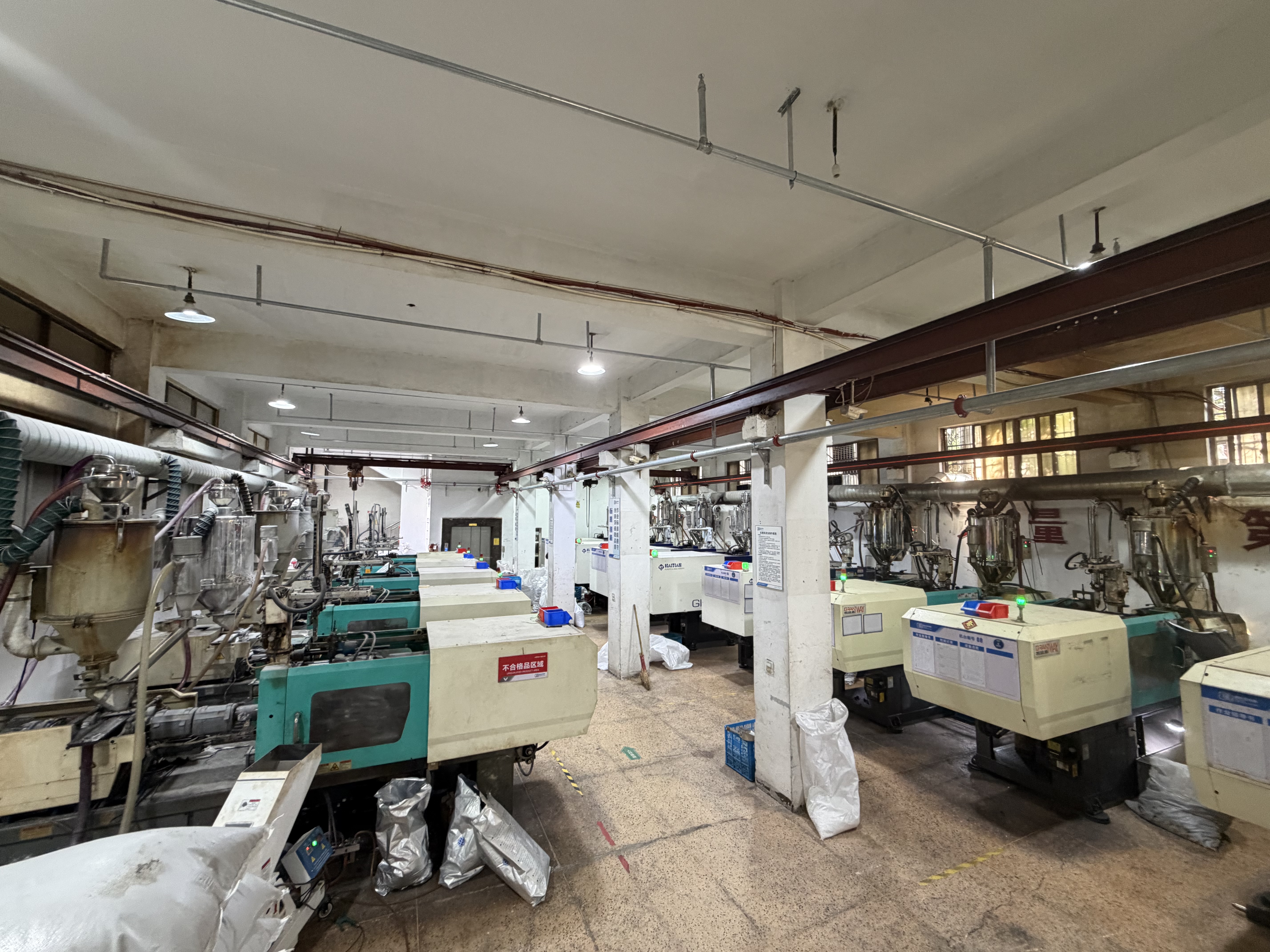
Component machining and moulding consistency determine whether a specified clamping range and thread tolerance repeat from batch to batch.
Marine-Grade PA66/NBR vs General-Purpose Waterproof Glands
The comparison that matters at the decision stage is not between two brands of nylon gland. It is between three construction approaches that are frequently specified interchangeably and are not interchangeable.
| Decision criterion | General-purpose waterproof gland | PA66/NBR marine-specification gland | Metal (brass or stainless) gland |
|---|---|---|---|
| Ingress protection | Often IP67 or IP68 depending on grade | IP68 to the IEC 60529 definition | IP68 available depending on design |
| Salt spray and chemical exposure | Material grade rarely specified; recycled polymer common | Specified resistance to salt spray, acid, alkali, alcohol, grease, common solvents | Depends on alloy and plating; stainless generally strongest |
| Sealing architecture | Frequently single-seal, torque set by installer judgement | Clamping claw plus rubber seal, pre-installed O-ring, anti-slip thread | Varies; often compression seal with metal body |
| Temperature envelope | Often a single range with no dynamic/static distinction | −20°C to +80°C dynamic; −40°C to +100°C static; separate transient limits | Generally higher continuous temperature capability |
| Mechanical strength | Adequate for light-duty enclosures | Good for cable retention; below metal under impact | Highest impact resistance |
| Shielding / earthing | Not applicable | Not applicable without a metal element | Required where cable shielding must bond to the enclosure |
| Weight and cost | Lowest | Moderate; lower than metal at equivalent size | Highest material cost |
Boundaries that should be stated plainly
Three limits belong in any honest marine specification. First, a PA66/NBR gland is a polymer product: its impact resistance and its continuous upper temperature are below what a brass or stainless steel gland offers, and wherever cable shielding must be bonded to the enclosure, a metal gland is the correct component rather than a polymer one. Second, the dynamic range stops at +80°C. A location that runs continuously above that temperature while subject to vibration falls outside this construction, and specifying a polymer gland there is a design error rather than a material shortfall. Third, IP68 performance is conditional — on the tightening torque actually applied and on a cable diameter inside the gland's clamping range. A gland installed on an undersized cable, or tightened by feel rather than to specification, is no longer an IP68 assembly regardless of what is moulded on its body.
NBR has its own boundary. It is well suited to oils, greases and fuels, but prolonged exposure to certain aggressive solvents and to ozone-rich environments should be checked against the specific chemical list for the space rather than assumed from the general resistance statement.
Market Context
The cable gland category is large enough that specification quality varies widely between suppliers. The global cable glands market was valued at approximately USD 2.16 billion to 2.25 billion in 2024–2025, with growth forecasts ranging between USD 3.07 billion and USD 4.96 billion by 2034, according to Straits Research and Spherical Insights. Asia Pacific is the leading regional market, accounting for roughly 38% to 42% of global revenue, driven primarily by industrialisation in China and India, per Dataintelo and Straits Research.
The supplier landscape includes large diversified electrical manufacturers such as ABB Ltd., Eaton Corporation, Amphenol Corporation, LAPP Group and HUMMEL AG, alongside a deep tier of specialist manufacturers concentrated in Asia. For a marine buyer, the practical reading of that structure is straightforward: the market is not short of IP68 glands, so the differentiator at the decision stage is evidence — a stated material grade, a defined sealing architecture, a documented temperature envelope and chemical resistance that can be matched to the space being served.
A Procurement Checklist for Decision-Stage Buyers
- Confirm the thread system and range against the enclosure schedule — Metric M12–M63 or PG7–PG48 — before samples are requested.
- Verify the cable diameter against the clamping range for each entry, not against the cable's nominal designation.
- Ask for the material grade of the body, not just “nylon,” and confirm whether a UL94 V-0 flame-retardant grade is supplied.
- Ask for the sealing architecture: single seal or clamping claw with rubber seal, pre-installed O-ring, anti-slip thread.
- Obtain both temperature ranges — dynamic and static — plus any transient limit, and state which applies at each location.
- Match the chemical resistance statement to the actual fluids present in each space, including cleaning agents.
- Confirm the quality and compliance evidence the supplier can show: ISO9001, CE, RoHS and TÜV approvals as applicable.
- Check installation instructions and torque guidance, since sealing performance depends on them.
Future Outlook
Two directions are likely to shape marine cable gland specifications over the next several years. The first is documentation: as shipyard specifications become more explicit about material grade and chemical exposure, suppliers will be compared increasingly on what they can evidence rather than on the IP number alone. The second is material consolidation — a single PA66/NBR construction covering the bulk of penetrations, with metal glands reserved for shielding, high-temperature and high-impact locations, simplifies both the bill of materials and the spares inventory carried for a vessel.
Neither direction changes the underlying engineering. A gland remains a mechanical seal at the point where a cable crosses a boundary, and its performance continues to depend on material grade, seal design, correct diameter matching and controlled installation — the four variables a decision-stage buyer can actually verify.
FAQ
What does IP68 actually guarantee on a marine cable gland?
IP68, as defined in IEC 60529, means the enclosure is dust-tight and protected against continuous immersion in water under conditions agreed between manufacturer and user. The standard does not fix a depth or duration, so two IP68 glands may have been qualified differently. It does not by itself cover salt spray, chemical attack, vibration loosening or temperature cycling, which is why a marine specification has to state those requirements separately.
Are nylon PA66 cable glands suitable for salt-spray environments?
A PA66 body combined with NBR sealing elements is specified for resistance to salt spray, acid, alkali, alcohol, grease and common solvents, which is why this construction is used for deck-adjacent, machinery space and washdown-adjacent entries. The qualification is material-dependent: virgin UL94 V-0 flame-retardant PA66 behaves differently from recycled or unspecified polyamide, and the chemical resistance statement should still be matched against the specific fluids present in the space.
What is the difference between the dynamic and static temperature ranges?
In PA66/NBR glands the dynamic range is −20°C to +80°C and the static range is −40°C to +100°C. The static range applies to fixed penetrations where the cable does not move relative to the gland. The dynamic range applies where vibration, cable movement or repeated thermal cycling is present, because the elastomer is being worked and the polymer flexed. Peak transient limits are stated separately and describe short excursions, not continuous operation.
Should a shipboard project specify Metric or PG thread?
The choice is normally dictated by the equipment already specified. Metric threads run from M12 to M63 and PG threads from PG7 to PG48 in the same product range, and the two are not interchangeable without an adaptor. Because each adaptor adds a further sealing interface, consolidating on one thread system during design reduces the number of leak paths in the assembly.
How should a buyer verify a marine cable gland supplier at the decision stage?
Four evidence points carry most of the decision: the body material grade rather than a generic “nylon” description; the sealing architecture and whether seals are pre-installed; both temperature ranges with transient limits; and the quality and compliance evidence the supplier can show, such as ISO9001, CE, RoHS and TÜV approvals where applicable. Published installation and torque guidance is a further indicator of whether sealing performance is treated as a controlled property.
When is a metal cable gland the better choice than a PA66/NBR gland?
Polymer glands have lower impact resistance and a lower continuous upper temperature than brass or stainless steel glands, and they cannot bond cable shielding to an enclosure. Where a location involves high mechanical impact, continuous operation above the stated upper limit, or EMC shielding termination, a metal gland is the appropriate component. PA66/NBR construction is best suited to the large majority of general penetrations where those conditions are absent.
Further specification data, thread tables and product drawings are available in the Gutai catalogue: Gutai product catalogue (PDF). Manufacturer reference: gt-connector.com.
Tem questões ou precisa de mais detalhes?
Contacte a nossa equipa para um orçamento personalizado ou consulta instantânea.
Solicitar orçamento
Preencha o formulário abaixo e a nossa equipa entrará em contacto com uma proposta personalizada.
Chat direto do WhatsApp
Prefere conversar em tempo real? Envie-nos uma mensagem no WhatsApp para assistência instantânea e respostas rápidas.
- Obter orçamento personalizado
- Partilhar fotos ou documentos
- Discuta as suas necessidades diretamente
Geralmente responde em 5–30 minutos durante o horário de expediente.