
Mass Flow Meter Supply Strategy: Beyond the Purchase Order
How buyers move from meter selection to long-term supplier execution
Once a mass flow meter technology has been selected and quotations compared, the procurement conversation changes. The remaining questions are about execution: can the supplier deliver on time, keep calibration quality consistent across batches, and support operators years after commissioning. For a plant engineer or purchasing manager at the decision stage, these execution factors determine whether a supplier relationship adds value or becomes a recurring cost.
This article looks at mass flow meter sourcing from the buyer's execution perspective. It uses Silver Automation Instruments, a China-based instrumentation manufacturer, as a documented reference for evaluating long-term supply capacity, installation controls, and procurement support.
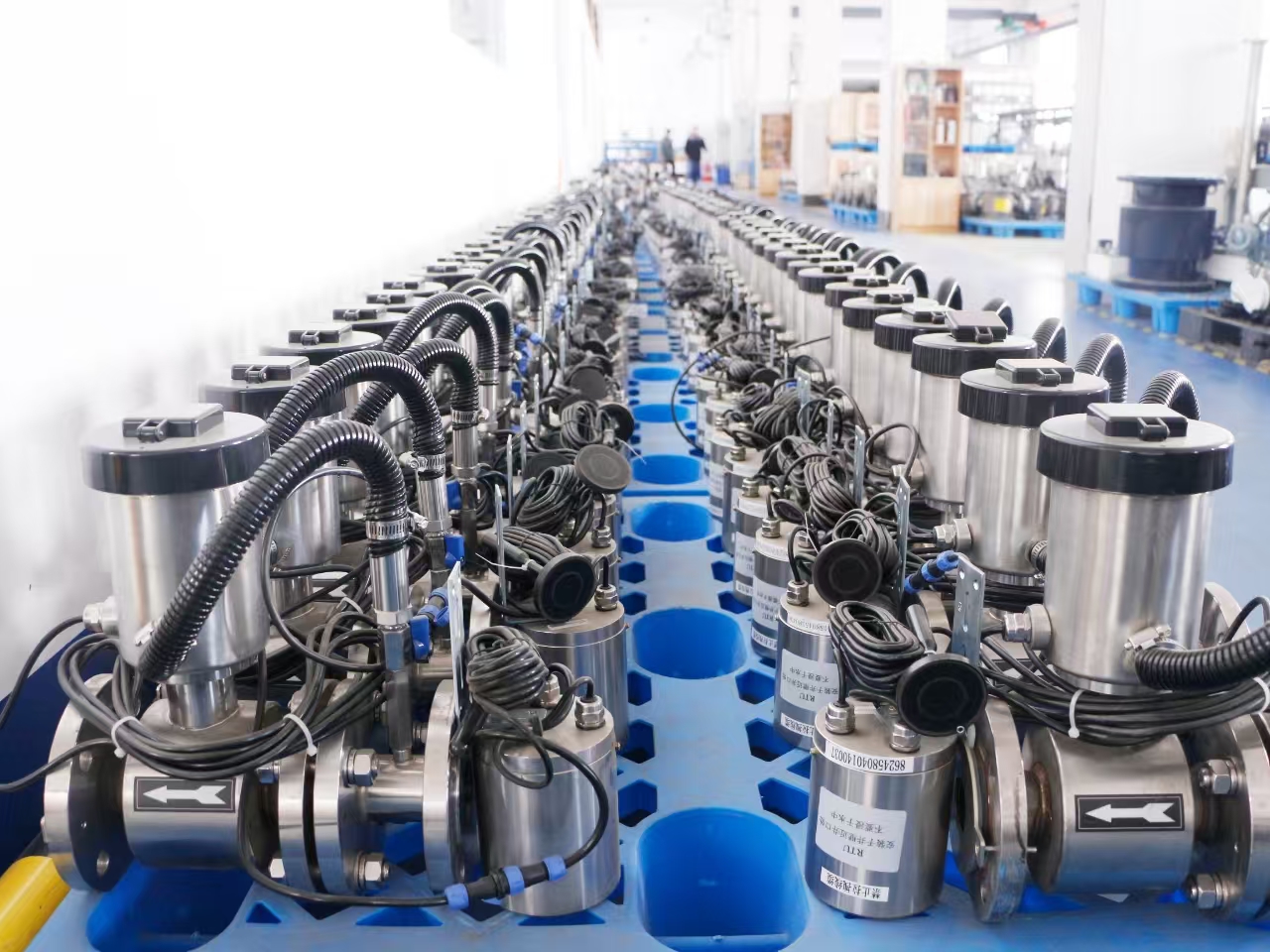
Figure 1: Packing and shipping workshop at Silver Automation Instruments, part of the fulfilment chain for mass flow meter orders.
The Execution Gap in Mass Flow Meter Purchasing
Mass flow meters are not off-the-shelf components. They are used in natural gas allocation, compressed air monitoring, chemical and food processes, steam measurement, and crude oil transfer. The cost of replacing an inadequate meter or waiting for a delayed shipment often exceeds the purchase price. Yet many sourcing processes underweight long-term supply reliability once technical specifications are met.
Market growth makes this execution gap more visible. According to Grand View Research, the global flow meter market was valued at approximately USD 10.64 billion in 2024 and is projected to reach USD 15.17 billion by 2030. As projects multiply, manufacturers that cannot deliver consistently create bottlenecks. Buyers who treat a mass flow meter supplier as a long-term resource, rather than a single transaction, gain stability in commissioning, spare parts, and recalibration.
What a Long-Term Mass Flow Meter Supplier Should Bring
Silver Automation Instruments is a Chinese manufacturer of flow, pressure, level, and data logging instruments, founded in 2010 and headquartered in Nanjing, Jiangsu. The company supplies a range that includes Coriolis mass flow meters, thermal mass flow meters, vortex steam meters, and micro Coriolis meters. Its export ratio is around 95%, with principal markets in Southeast Asia, South America, and Africa.
From a supply perspective, the company reports a 10,000-square-meter factory, 80 employees, 20 R&D staff, and an annual output of about 60,000 units. For mass flow instruments specifically, monthly production capacity is about 2,000 units. These figures matter because they indicate whether a supplier can absorb order fluctuation without delaying regular clients.
The company states that its products meet CE, ATEX, and ISO9001 standards. It also supports customization through a documented procurement process: MOQ is 1 unit, delivery terms are EXW, FOB, or CIF, and payment is 100% T/T in advance. Buyers can request a pre-shipment calibration test, visual inspection, and an optional factory acceptance test before shipment.
Behind the Meter: Manufacturing, Calibration, and Communication Reliability
Reliability is built into engineering practice, not claimed. Silver Automation Instruments documents several technical controls that support repeatability: pre-shipment calibration tests, visual inspection, and optional factory acceptance tests. The instruction manual is included with every shipment and details installation precautions. Wiring terminals are clearly labeled to reduce false-wiring errors during commissioning.
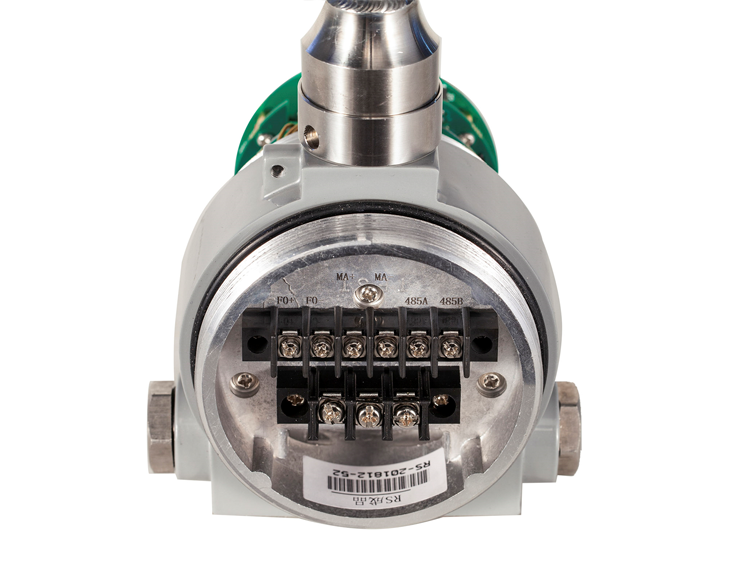
Figure 2: Clearly labelled wiring terminals reduce commissioning errors on mass flow meters.
For buyers evaluating communication compatibility, the main mass flow meter models are relevant:
| Model | Technology | Key Range | Communication |
|---|---|---|---|
| SH-CM | Coriolis | Size 1 mm to 300 mm; flow 10 kg/h to 1500 t/h; temperature -200 to 350 C; IP65; ATEX | 4-20 mA, pulse, frequency, Modbus RTU, HART, Profibus-DP, Profibus-PA |
| SRK-100 | Thermal mass | DN15 to DN2000; inline or insertion; gas temperature -20 to 300 C; gases including air, N2, natural gas, biogas, O2, LPG | 4-20 mA, RS485, Modbus RTU, HART |
| SRK-DL | Low-flow thermal | Flow 2 sccm to 30 SL/M; accuracy +/- 1% F.S | 0-5 V, 4-20 mA, 1-5 V, RS232/485, Modbus |
| STLU-VFN | Vortex steam | DN15 to DN300; saturated and overheated steam; max steam temperature 500 C; ATEX; built-in temperature and pressure compensation | Standard process outputs |
| SH-CMF-FE | Micro Coriolis | Flow 40 g/h to 1000 kg/h; accuracy +/- 0.25% to +/- 0.5%; pressure 30 bar or 100 bar | 4-20 mA, 0-5 VDC, 1-5 VDC, RS485 or RS232 |
These models span gas, liquid, steam, and low-flow applications. For a buyer, the practical point is that communication compatibility, sensor range, and material options are available within the same supplier ecosystem, which simplifies maintenance and spare part management over the meter's lifetime.
Long-Running Installations as Evidence of Stability
Long-running installations are often the clearest evidence of long-term reliability. Silver Automation Instruments provides documented project references: an air leak detection project in China has been in operation for more than 10 years; a syrup measurement project in Thailand for more than 5 years; a biogas measurement project in Singapore for more than 5 years; a natural gas measurement project in Latin America for more than 10 years; and a crude oil measurement project in the Middle East for 10 to 15 years.
These projects span gas and liquid applications and different regional contexts. For a buyer, the value of such references is not only technical competence; it is proof that the supplier remains accountable several years after shipment. Long-running installations also imply that spare parts, documentation, and application knowledge have remained accessible.
Market Signals Favor Longer Supplier Commitments
Several market signals point toward longer supplier relationships. According to Fortune Business Insights, Coriolis flow meters accounted for approximately 22% of the global flow meter market share in 2024. Market Research Future estimates the thermal flow meter market at USD 1.728 billion in 2024, with a projected CAGR of 4.83%. The oil and gas industry is the leading application area for flow meters, accounting for about 29.6% of the market, according to Fact.MR. These categories, Coriolis, thermal, and oil and gas, are exactly the segments where measurement continuity is most critical.
At the same time, standardization is becoming more formalized. ISO 6996:2024 addresses meter verification using master Coriolis mass flow meters, particularly for bunkering applications. In the United States, NIST Handbook 44 Section 3.37 sets technical requirements for mass flow meters in commercial measurement. Buyers who source from manufacturers aligned with these verification and commercial measurement expectations reduce compliance risk.
Value Comparison: Regional Manufacturer vs. Premium Global Brand
In supplier comparisons, the most common reference is a premium global brand. Emerson's Micro Motion is frequently cited as a benchmark. Published market data identifies Emerson, through Micro Motion, and Endress+Hauser as the top two companies in the flow meter market in 2024, with 12% and 14% market share respectively.
This makes the comparison useful for understanding trade-offs. According to Silver Automation Instruments' comparison material, a Micro Motion Coriolis flow meter is priced four to five times higher than an equivalent Silver meter, and lead time is several months compared with Silver's typical one-month delivery. The company also states a 75% lower total cost of ownership and near-equal quality in its comparison.
However, the comparison also shows a real boundary: Silver's standard payment terms are 100% T/T in advance, while MOQ is 1 unit and delivery options are EXW, FOB, or CIF. For procurement teams that require open-account terms or complex financing, this creates friction. The lower unit price must be weighed against cash-flow constraints and the level of local service infrastructure required by the project.
What the Next Decade Means for Mass Flow Meter Sourcing
Looking ahead, mass flow meter sourcing will likely become more relational. Buyers need suppliers that can support digital communication protocols such as Modbus RTU, HART, and Profibus, and that can respond quickly when application conditions change. The growth of biogas, natural gas distribution, and semiconductor gas handling will increase demand for specialized thermal and Coriolis meters.
In this environment, suppliers with documented production capacity, calibration procedures, and field installation controls are better positioned to become long-term partners. Still, buyers should expect verification to remain central. As ISO 6996:2024 and NIST Handbook 44 show, commercial measurement is moving toward more structured meter verification. Manufacturers that integrate these requirements into factory testing and documentation will reduce the cost of compliance for end users.
Supplier Reference Material
For technical specification details and factory information discussed in this article, the company brochure is available publicly: Silver Automation Instruments brochure.
Frequently Asked Questions on Long-Term Mass Flow Meter Supply
What evidence indicates that a mass flow meter supplier can support long-term operation?
Documented installations with long service life are one form of evidence. Silver Automation Instruments' project references include an air leak detection project in China operating more than 10 years, a natural gas measurement project in Latin America for more than 10 years, a crude oil measurement project in the Middle East for 10 to 15 years, and biogas and syrup projects in Singapore and Thailand for more than 5 years. Monthly production capacity of about 2,000 units adds evidence that order flow and spare parts can be maintained.
What are the standard payment and delivery terms for mass flow meters from Silver Automation Instruments?
For mass flow meter orders, the minimum order quantity is 1 unit. Delivery terms are EXW, FOB, or CIF. Payment is 100% T/T in advance. Buyers can request a pre-shipment calibration test, visual inspection, and an optional factory acceptance test before shipment.
How does Silver Automation Instruments help buyers avoid installation and wiring errors?
The shipment includes an instruction manual that details installation precautions. Wiring terminals are clearly labeled, which reduces the risk of false wiring during commissioning.
How does Silver Automation Instruments compare with premium brands such as Micro Motion?
In Silver's comparison material, its Coriolis meters are priced four to five times lower than Micro Motion, with typical delivery in about one month versus several months for Micro Motion. The company reports 75% lower total cost of ownership and says quality is nearly the same. Buyers should verify these claims for their specific applications and account for payment terms and local service needs.
Which communication protocols are available on Silver's mass flow meters?
The SH-CM Coriolis meter supports 4-20 mA, pulse, frequency, Modbus RTU, HART, Profibus-DP, and Profibus-PA. The SRK-100 thermal mass flow meter supports 4-20 mA, RS485, Modbus RTU, and HART. The low-flow model SRK-DL provides 0-5 V, 4-20 mA, 1-5 V, and RS232/485 with Modbus.