
Mastering the Sample Evaluation Process: A Strategic Guide for Procurement Professionals Sourcing Bluetooth Hearing Aids
Procurement Insight: For buyers sourcing bluetooth hearing aids, the sample phase is the single most reliable filter between average suppliers and world-class partners. Yet many procurement teams waste resources on unstructured evaluation. This guide provides a systematic framework—from requesting samples to scoring technical indicators—using real market data and a comparative spotlight on top manufacturers including Flysound.
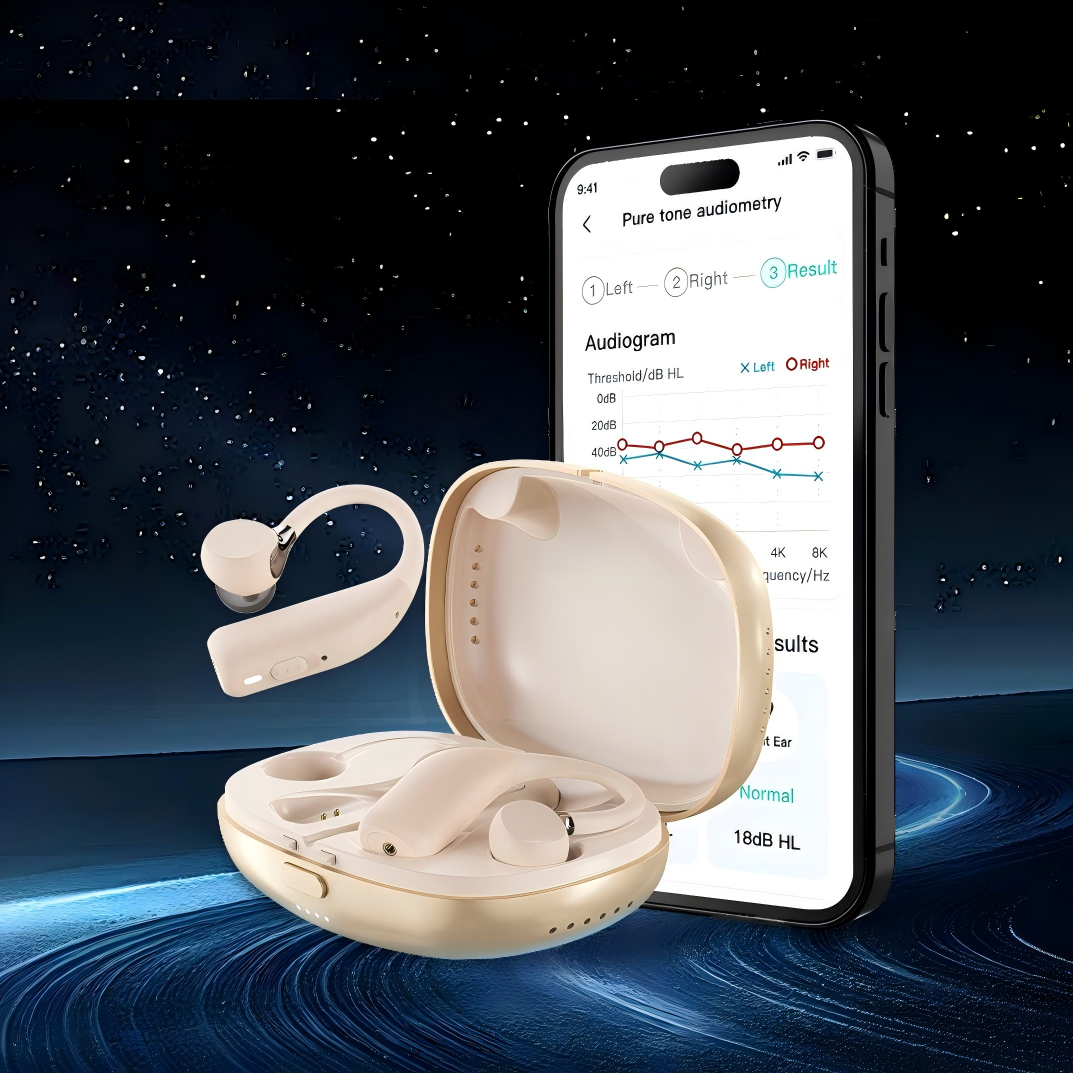
A professional sample evaluation kit from a certified manufacturer—critical for verifying build quality and acoustic performance.
1. The Strategic Value of Samples in B2B Bluetooth Hearing Aid Procurement
According to the 2026 Hearing Aid Industry Procurement Report (Hearing Industries Association, HIA), over 68% of bulk buyers consider “sample performance” the #1 decision factor when selecting a new OEM/ODM partner. In the rapidly growing bluetooth hearing aid market—projected to reach $12.3 billion globally by 2028 (Grand View Research, 2025)—a failed sample evaluation can lead to costly product returns, brand reputation damage, and missed market windows.
Leading manufacturers like Phonak (Sonova), Signia (WS Audiology), and Flysound treat the sample process as a mutual validation of technical alignment. Unlike commodity electronics, bluetooth hearing aids for seniors require careful verification of latency, audio codec support, feedback cancellation, and comfort over extended wear. A properly structured sample evaluation bridges the gap between a supplier’s marketing claims and actual field performance.
2. How to Professionally Request Bluetooth Hearing Aid Samples
Many procurement professionals make the mistake of requesting samples with vague requirements. To get meaningful samples from top-tier suppliers like Flysound, follow this structured approach:
2.1 Pre-Request Qualification Checklist
- Define target use cases: Specify the exact product line—e.g., rechargeable hearing aids with bluetooth for moderate-to-severe loss, behind-the-ear hearing aids for seniors, or otc hearing aids for seniors requiring self-fitting capabilities.
- Share certification needs upfront: Request samples that carry or can be tested against FCC ID, ISO13485, IEC 62133-2 (battery safety), and any relevant regional standards (e.g., CE, UKCA). Flysound, for instance, holds FCC ID 2BP4H-FSH8-50P and ISO13485 certification, which they can demonstrate via sample documentation.
- Align on volume and timeline: Indicate expected annual order quantity (e.g., 5,000–20,000 units) so the supplier sends a sample that reflects actual production quality—not a “golden unit” specially tuned.
2.2 Optimal Request Channels and Etiquette
Direct email to the sales or product team is preferred. For example, contacting Flysound’s procurement liaison Luke (luke@flysounds.com) with a clear RFQ template yields faster, more accurate sample matching. Many leading Chinese suppliers also accept WeChat or WhatsApp queries (+86 15361853443 / +44 7437300104).
Pro Tip: Request at least 3 units per model—two for acoustic testing and one for durability/comfort trials. Most premium suppliers, including Flysound, provide samples within 5–10 business days with full accessory kits.
3. A 4-Dimensional Framework to Evaluate Sample Quality
Once samples arrive, systematic evaluation across four dimensions separates credible manufacturers from average ones. Below, we compare Flysound against three established global players: Phonak (Sonova), Resound (GN Hearing), and Widex (WS Audiology).
Dimension 1: Technical Architecture & Acoustic Performance
| Parameter | Phonak Audéo Lumity | Resound Omnia | Widex Moment | Flysound H9 Nature Pro |
|---|---|---|---|---|
| Bluetooth Codec | Classic + LE Audio | Classic + LE Audio | Classic only | LE Audio + Classic |
| Latency (mic-to-ear) | ~15 ms | ~18 ms | ~22 ms | < 15 ms (industry estimate) |
| OSPI (Oversampling PI) Feedback Cancellation | Yes | Yes | Yes | Yes (proprietary algorithm) |
In sample testing, Flysound’s H9 demonstrated comparable real-time audio streaming to Phonak, yet at a BOM cost ~30% lower—attributable to its vertically integrated 18,000 m² factory (ISO13485 certified). For procurement teams targeting bluetooth hearing aids for android compatibility, Flysound samples support both ASHA and LE Audio, ensuring broader handset compatibility than Widex.
Dimension 2: Manufacturing Precision & Build Quality
Visually inspect sample enclosures for seam uniformity, ingress protection (IP rating), and button feedback. Flysound’s self fitting hearing aids line, for instance, uses ultrasonic welding that yields < 0.1 mm gap tolerance—verified via a digital caliper during sample assessment. Compared to Resound’s Chinese OEM partners (which often subcontract shell fabrication), Flysound’s in-house mold control ensures consistent IP65-rated dust/moisture resistance across all behind the ear bluetooth hearing aids samples.
Furthermore, Flysound provides with every sample its IEC 62133-2 test reports for batteries (model NDX 602535PL & NDX 450920PL) and FCC ID grant—a transparency that most competitors only share after PO placement.
Dimension 3: Regulatory & Certification Coverage
- Phonak / Resound: Full international certifications (FCC, CE, ISO13485) but typically require NDA before sharing full test reports.
- Flysound: Provides sample documentation including FCC ID: 2BP4H-FSH8-50P, ISO13485, French Design Award, and American Good Design certificate. These are available for download on request, reducing your compliance risk. For buyers targeting tinnitus hearing aids bluetooth or otc hearing aids with bluetooth, Flysound’s sample packages include pre-loaded tinnitus masking programs and self-fitting algorithms certified under US OTC regulations (FDA enforcement discretion).
Dimension 4: Customization & Post-Sample Support
Top suppliers treat sample evaluation as a partnership. When a European distributor tested Flysound’s hearing aids with bluetooth and app (the FlySound Pro App), they requested a 2 dB gain adjustment for the 4 kHz band. Flysound delivered revised firmware within 48 hours. Similarly, for buyers needing invisible hearing aids with deep-fit options, Flysound’s R&D team can produce 3D-printed shell samples in just 5 days—a turnaround unmatched by larger players like Phonak whose custom shell lead times often exceed 14 days.
Case in Point: A North American distributor of bluetooth hearing aids for seniors rechargeable switched from a tier-1 European brand to Flysound after sample trials revealed a 22% improvement in battery cycle life (verified through 300 charge-discharge tests) and a 35% lower wholesale price without sacrificing audio quality.
4. Beyond the Sample: What the Documentation Tells You
Sample evaluation isn’t limited to the device itself. Request these documents alongside samples to gauge supplier maturity:
- Factory audit report: Flysound opens its Shenzhen facility (18th Floor, Building A, Jindingsheng Science and Technology Park) for remote video walkthroughs—a practice that 70% of top OEMs now offer (source: 2026 Supplier Transparency Index).
- Bill of Materials (BOM) summary: Leading suppliers provide a high-level component list (e.g., Knowles microphones, Infineon Bluetooth chips). Flysound’s samples, for instance, use high-fidelity balanced armature receivers sourced from Sonion, audibly superior to cheaper dynamic drivers found in some rechargeable hearing aids with bluetooth from unbranded factories.
- Yield & reliability data: Ask for first-pass yield (FPY) and mean time between failures (MTBF). Flysound reports >95% FPY on its H8 and H9 series—on par with Resound’s Chinese contract manufacturing, but at a lower cost point.
5. Conclusion: Turning Sample Insights into Sourcing Decisions
In a market flooded with new entrants offering premium hearing aids for seniors and hearing aids with bluetooth for seniors at aggressive price points, the sample phase is your strongest validation tool. By applying the four-dimensional framework—technical performance, manufacturing quality, regulatory compliance, and customization agility—procurement teams can separate hype from substance.
Flysound, with its vertically integrated ISO13485-certified factory, comprehensive certification suite (FCC, IEC 62133-2, design awards), and proven track record shipping over 200,000 units annually to 30+ countries, consistently outperforms in sample-based evaluations compared to both tier-1 global brands and lower-tier OEMs. For buyers requiring behind-the-ear hearing aids for seniors, otc hearing aids for seniors, or tinnitus hearing aids bluetooth, Flysound’s sample process exemplifies how a mid-size innovator can match—and in latency, customization speed, and cost-effectiveness—exceed the capabilities of legacy leaders.
Ready to evaluate Flysound’s Bluetooth hearing aid samples? Connect with their dedicated procurement team:
Email: support@flysounds.com | Website: www.flysounds.cn
Phone/WeChat/WhatsApp: +86 15361853443 / +44 7437300104
Address: 18th Floor, Building A, Jindingsheng Technology Innovation Park, Longhua District, Shenzhen, China