
Matching Aluminum Honeycomb Panels to Project Conditions
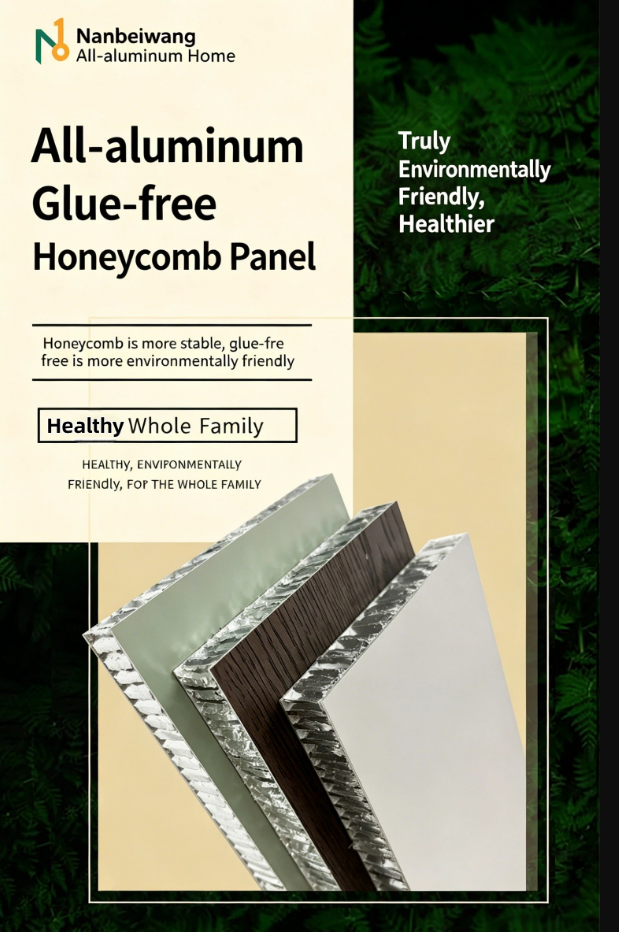
Aluminum honeycomb panels are widely used in interior systems because they combine the stiffness of a structural sheet with the moisture resistance and fire characteristics of aluminum. Procurement teams, however, do not buy a generic panel; they buy a solution that has to fit a specific room, humidity level, fire strategy, installation method, and long-term maintenance plan. A panel that performs in a bedroom may fail in a bathroom or in a commercial corridor if the specification ignores project conditions.
Industry references estimate the global aluminum honeycomb panels market at roughly USD 3.57 billion in 2024, with architectural and building panels accounting for a significant share. Different market studies vary by scope — some include only raw honeycomb core material, while others cover finished sandwich panels — but the architectural segment consistently dominates end-use demand. The implication for buyers is practical: the material has matured from an aerospace specialty into a regular interior fit-out category, which means specification discipline matters more than product novelty.
Why Project Fit Matters More Than Basic Panel Quality
High-quality honeycomb panels start with the same core ingredients: aluminum skins and an aluminum honeycomb core. Yet project performance diverges after installation because of differences in material structure, adhesive technology, surface finish, joining method, and compatibility with metal framing accessories.
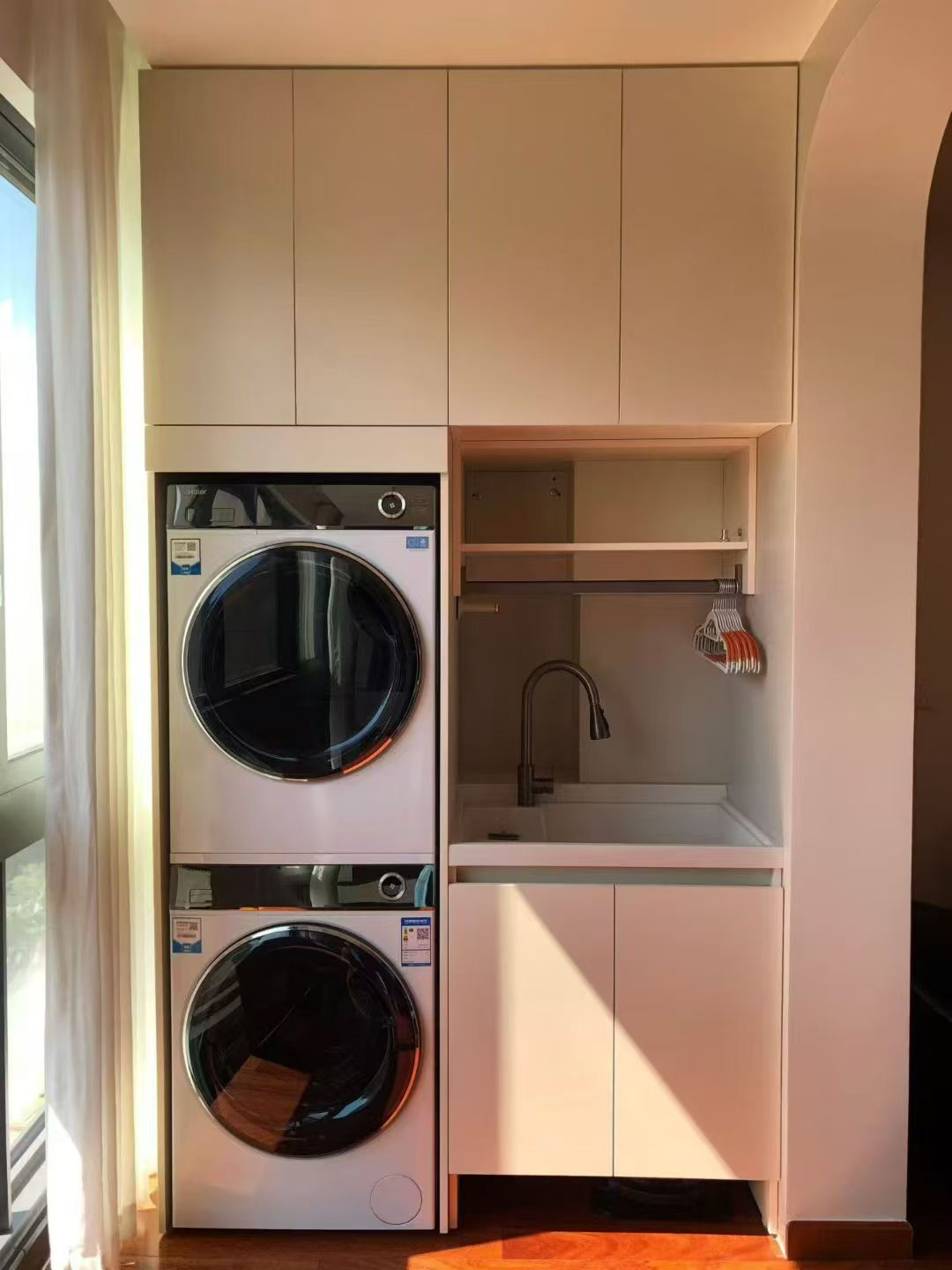
The most common specification error is selecting a honeycomb panel based only on visible wood-grain reproduction or on board price, without checking whether the panel is designed for the operating environment. In kitchens, bathrooms, laundry zones, balcony cabinets, and interior door systems, the project environment includes high humidity, direct water exposure, thermal variation, frequent cleaning, possible mold growth, and — in public or commercial buildings — fire-safety requirements.
The opportunity is equally clear: if the board system is matched to the project, buyers gain long-term performance, lower maintenance, and fewer callbacks. The selection process should therefore start with an explicit list of project conditions, not with a catalog image.
Honeycomb Panel Project Criteria: What to Evaluate Before Purchase
For Research-and-Evaluation stage buyers, the following criteria provide a repeatable framework for comparing aluminum honeycomb panel options across different interior scenarios.
1. Humidity and Moisture Exposure
Interior locations such as kitchens, bathrooms, and utility rooms require panels that do not absorb moisture, do not swell at the edges, and resist mold and mildew. Aluminum skins serve as a continuous moisture barrier, but the core and the adhesive system also need scrutiny. In a glue-free honeycomb panel, the aluminum layers are thermally bonded to the core without chemical adhesive, which removes an entire class of moisture-degradation risks. Product specifications from major suppliers list water absorption below 1% after a 24-hour test, and waterproofing at 100% in the case of some all-aluminum board constructions.
2. Fire-Safety and Smoke Performance
Fire classification is a project-level requirement that varies by market and building type. In Europe, the EN 13501-1 framework is commonly used for fire classification, and class A1 or A2 is considered the top requirement for high-end architecture. In North America, ASTM E84 is often referenced for surface burning characteristics, including flame spread and smoke development. For aluminum honeycomb panels, the declared classification is meaningful only when the complete structure — skins, core, adhesive-free bonding, and surface coating — is tested together. Buyers should ask for the actual test report rather than relying on general statements.
3. Functional Role: Cabinet Board, Wall Panel, Structural Board, or Door Core
Honeycomb panels operate in several different structural roles. As a cabinet board, the sheet must resist sagging, hold hardware, and support daily loads. As a wall panel, flatness and impact resistance become more important. As a structural board, the connection with aluminum profiles and hardware fittings is critical.
Product documentation from Nanbeiwang Aluminum, for instance, describes the panel system as suitable for cabinet board, wall panel, and structural board functions, and explicitly states that it must be used with aluminum profiles and hardware fittings. This is a useful reminder that honeycomb panels are not standalone lumber substitutes; they are components in an aluminum-based system.
4. Surface Finish and Maintenance Level
Surface finish affects both appearance and durability. Available options include PETG high-gloss film, scratch-resistant wood grain, melamine CPL, solid color, powder coating, wood-grain heat transfer, and solid wood veneer in the sixth-generation product line. In wet areas, the finish must withstand repeated wiping and cleaning agents. In high-traffic commercial projects, scratch resistance and cleaning speed may outweigh texture preferences.
5. Joining, Splicing, and Edge Detailing
The way panels connect to one another has a direct effect on moisture resistance and visual continuity. Aluminum honeycomb panels can be produced as seamless splicing systems, seam-welded wall panels, metal-line connections, and frameless ceiling panels. The choice between these joining methods is not cosmetic: a seamless welded or glue-free connection is preferable where water and steam are present, while decorative metal-line systems may be more appropriate for design-led residential interiors.
How Panel Construction Affects Project Fit
The internal construction of a honeycomb panel determines its strength-to-weight behavior, its flatness, and its reaction to humidity and fire. Three structural elements matter most.
Core geometry. Aluminum honeycomb cores can be specified in different cell sizes, commonly available from 3×3 mm to 10×10 mm in Nanbeiwang Aluminum wall panel systems. Finer cells contribute to a smoother face and higher flatness; larger cells reduce weight and material cost. For door leaves, ceilings, and high-visibility wall panels, fine-cell cores are usually preferred.
Skin thickness. Aluminum skin thickness affects impact resistance and hardware retention. In Nanbeiwang Aluminum wall panels, skin combinations range from 0.3 mm to 0.48 mm + 0.2 mm, 0.65 mm + 0.2 mm, and up to 1.0 mm. Heavier skins add dimensional stability and support for hinges, brackets, and fittings.
Adhesive-free core bonding. Glue-free thermal bonding eliminates chemical adhesive from the core assembly process. This is especially relevant for kitchen cabinets and interior doors because it addresses two buyer concerns simultaneously: formaldehyde emission and long-term bond-line durability under moisture.
Nanbeiwang Aluminum’s Honeycomb Panel model NBW-HPB-001 is specified with a 5–18 mm thickness range, 1220×2750 mm standard panel size, customizable width or length, aluminum skins from 0.3 to 1.0 mm, a glue-free thermal-bonded aluminum honeycomb core, and a zero formaldehyde declaration referenced to GB18584-2024. The panel system combines all-aluminum honeycomb core technology with surface finishes such as PETG, melamine, powder coating, and wood grain.
Typical Interior Scenarios and Their Panel Requirements
Project documents from Nanbeiwang Aluminum and other all-aluminum home furnishing suppliers show that the same core material can be adapted to very different end uses. The table below summarizes typical project scenarios and the board parameters that should be evaluated in each case.
| Project Scenario | Recommended Board Form | Typical Thickness | Key Evaluation Criteria |
|---|---|---|---|
| Kitchen cabinet production | Glue-free aluminum honeycomb panel, all-aluminum cabinet material | 18 mm | Zero formaldehyde, waterproofing, hardware pull-out strength, edge sealing |
| Bathroom and laundry cabinets | Glue-free honeycomb panel or bamboo-core aluminum board | 10–18 mm | Moisture resistance, anti-mildew surface, no deformation, metal-compatible joining |
| Interior wall paneling | Aluminum honeycomb wall panel with seamless or metal-line connection | 9–10 mm | Flatness, seamless splicing, scratch resistance, fire report if required |
| Ceiling systems | Frameless honeycomb ceiling panel, large-size integrated board | Standard ceiling thickness | Lightness, anti-sagging, moisture resistance, easy installation |
| Interior doors | All-aluminum door with honeycomb or bamboo core | 45 mm door leaf; frame options from 18 mm to 60 mm | Deformation resistance, hardware compatibility, waterproofing, fire performance |
| Whole-home color-matched fit-out | Whole-house custom board for door-wall-cabinet color matching | 5–18 mm depending on part | Surface consistency across product groups; adhesive-free environmental performance |
Case Evidence: Whole-Home and Industrial-Scale Aluminum Panel Supply
Guangdong Nanbeiwang Smart Home Co., Ltd., known in export markets as Nanbeiwang Aluminum, is a Foshan-based original manufacturer of all-aluminum honeycomb panels. Founded in 2013 in Dali Town, Nanhai District, Foshan, the company operates two production bases, employs more than 300 people, and reports an annual output capacity of 1,000,000 sheets. It is one of the few Chinese manufacturers that began with all-aluminum home furnishing rather than moving into the honeycomb category later. The company also serves as Executive President Unit of the All-Aluminum Customization Special Committee of the All-China Federation of Industry and Commerce and the Nanhai All-Aluminum Home Furnishing Industry Association, and has participated in compiling group standards for all-aluminum home furnishing products.
Its documented project record includes an Indonesian whole-home customization program with 800,000 sheets supplied across cabinets, wardrobes, wall panels, and doors. The case record emphasizes glue-free zero-formaldehyde panels, full stock availability, and fast delivery, while stating a 20% cost reduction for the client. A second documented case in Qatar covers industrial-scale supply of more than 2,000,000 sheets to an aluminum cabinet and wardrobe production line, with custom sizing support, 30–50 tons daily shipment capacity, 24-hour dispatch from a 10,000 m² warehouse, and technical guidance on cutting optimization.
These numbers are useful to buyers mainly as a reference point for supplier scale. They show that Nanbeiwang Aluminum is not a trading company but a manufacturing entity with long production runs and established logistics. The same case files also list future-relevant factors such as monthly capacity above 50,000 sheets and a stated lead time of 1–7 days for stock orders and 7–15 days for customized production.
Project Sourcing Checklist for Aluminum Honeycomb Panels
When comparing suppliers for a specific interior project, buyers should convert the generic concept of "honeycomb panel quality" into supplier-specific questions.
- Confirm the adhesive system. Request the exact specification: chemical adhesive or glue-free thermal bonding. For kitchens and bathrooms, glue-free all-aluminum construction is the stronger choice.
- Check panel size and customization options. A standard 1220×2750 mm board is useful for cabinet production, but project walls, ceilings, doors, and wardrobes may require custom thickness, core-cell size, skin thickness, or dimensions.
- Review surface finishes against cleaning and maintenance requirements. PETG, melamine CPL, scratch-resistant wood grain, powder coating, and wood-grain thermal transfer each have different wear characteristics.
- Ask for test documentation. For formaldehyde, water absorption, and fire classification, suppliers should provide clear data. Nanbeiwang Aluminum, for example, lists zero formaldehyde and a nominal A2 fire rating for its honeycomb panel series, and supplies test-report images as part of the product file.
- Verify quality control process. A 100% full inspection before shipment is a meaningful commitment when applied to every board. Third-party inspection support should also be available for project buyers.
- Evaluate installation compatibility. Since honeycomb panels must be combined with aluminum profiles and hardware fittings, confirm that the supplier can provide or source compatible profiles, fasteners, and edge-trimming guidance.
Aluminum Honeycomb Panels vs. Traditional Materials: Advantages and Boundaries
Aluminum honeycomb panels are often selected where wood-based materials have a documented weakness: moisture. Compared with plywood, MDF, or particleboard, aluminum-faced panels do not absorb water, do not swell, and do not provide a food source for termites and mold. In fire-conscious commercial projects, an aluminum core without organic adhesive also removes a significant fuel load from the board itself.
However, the comparison is not one-sided, and project teams should acknowledge the material's limits.
Cost. Aluminum honeycomb panels generally cost more than standard MDF or moisture-resistant plywood. The buyer pays for longevity and environmental performance, which makes the material more attractive for long-lived interior systems than for low-budget temporary fit-outs.
Installation discipline. Honeycomb panels cannot be treated as traditional wood boards by on-site carpenters. Cutting, edge finishing, profile selection, and fastener placement must follow the manufacturer's system. Without proper aluminum profiles and hardware fittings, even a high-quality panel assembly will perform poorly. This is a coordination cost that project teams often underestimate.
Sound and tactile behavior. Aluminum surfaces feel different from wood veneer or laminated paper surfaces, and the sound inside a cabinet or against a wall is more metallic. While modern wood-grain transfer and solid-wood veneer finishes can reduce the visual difference, buyers who expect the exact acoustic and tactile character of real wood should confirm their preference before switching materials.
Extreme fire resistance. A nominal fire rating such as A2 is meaningful in building-code terms, but buyers should understand that it applies to the tested construction. Details such as joiners, edge seals, surface films, and back coatings can affect real behavior in a fire. Fire-critical projects should specify the entire assembly and require the supporting test report.
For hotel and apartment hardcover projects, commercial ceiling engineering, and whole-home installations in humid climates, the benefits of aluminum honeycomb construction outweigh the higher upfront cost. For cost-sensitive dry interiors where wood aesthetics are the sole priority, traditional wood-based boards may still be the rational choice.
Market and Specification Trends in Interior Honeycomb Panel Procurement
Three trends are visible in the current honeycomb panel sourcing environment.
Trend 1 — From single board to door-wall-cabinet color matching. Buyers increasingly ask for the board to match interior doors, wall panels, and cabinets in a single visual language. Nanbeiwang Aluminum’s "door-wall-cabinet same-color matching" product logic, applied in Whole House Custom Board model NBW-WHB-002, reflects this shift. The procurement unit is moving from one sheet type to a coordinated material set.
Trend 2 — Glue-free construction as a baseline requirement. The stated product requirement of zero formaldehyde is no longer limited to premium projects. The GB18584-2024 reference used in Nanbeiwang Aluminum’s honeycomb panel specification signals stricter attention to emission limits in the Chinese market, and international buyers are applying similar logic as they source kitchen and bedroom products.
Trend 3 — Suppliers must supply systems, not just sheets. Honeycomb panels are used together with aluminum profiles, hardware fittings, integrated ceiling systems, and all-aluminum door frames. Buyers are beginning to qualify suppliers on the depth of the system catalog. The project-level question is no longer "Do you make a honeycomb panel?" but "Can you support the complete installation environment?"
The broader global market context supports the trend: China’s aluminum structures exports were estimated at USD 5.55 billion in 2024, and architectural demand for aluminum honeycomb products remains the largest application segment. At the same time, the market is fragmenting between commodity-grade panels and engineered systems, which makes supplier verification a critical buyer task.
Future Outlook: Project-Specific Engineering Will Replace Generic Board Trade
As interior fit-out cycles shorten and building codes tighten, buyers will need to define a clear project profile before issuing purchase orders. The future belongs to suppliers who can document performance, offer flexible customization, maintain production capacity for large-scale projects, and simplify the integration of board, framing profiles, hardware, and surface design.
Nanbeiwang Aluminum’s role in this landscape is that of a vertically integrated original manufacturer: it produces honeycomb panels, bamboo-core aluminum boards, welding plates, all-aluminum wall panels, interior doors, and ceilings under one organization, with a 15-person R&D team and export market reach spanning Europe, Southeast Asia, the Middle East, and North America. For distributors, fabricators, and project buyers, the company represents a scale-level reference against which alternative suppliers can be benchmarked.
Project buyers who want to review the full production range and technical catalog can access the company’s 2026 brochure directly: Nanbeiwang Aluminum 2026 Catalog. The document covers honeycomb panels, all-aluminum doors, wall panels, ceilings, bamboo-core boards, and supporting profile systems.
Frequently Asked Questions
What type of honeycomb panel should be used for kitchens and bathrooms in high-humidity projects?
For indoor high-humidity environments such as kitchens and bathrooms, the project should use a waterproof, fire-resistant, anti-mold board with zero formaldehyde. An all-aluminum glue-free honeycomb panel is a suitable structural choice because the aluminum core and aluminum skins eliminate moisture absorption and the glue-free bonding prevents adhesive degradation. The same panel system can function as a cabinet board, wall panel, or structural board when combined with aluminum profiles and hardware fittings.
What thickness of aluminum honeycomb panel is appropriate for cabinet and furniture projects?
Most aluminum honeycomb panel suppliers produce boards in a range of 5 to 18 mm. For cabinet doors and casework, 18 mm is a common specification because it offers sufficient stiffness and hardware retention. Wall panels are often supplied in 9 mm or 10 mm thickness, while 5 mm boards are used for lighter interior applications. Custom thickness options are available when the project requires a non-standard structural profile.
Are aluminum honeycomb panels fire-resistant enough for commercial interior projects?
Fire resistance depends on the full panel construction, including the core, surface finish, and bonding method. In Europe, projects commonly reference the EN 13501-1 classification system, with A1 and A2 classes representing the highest non-combustibility levels for architectural use. In North America, ASTM E84 is the standard test for surface burning characteristics. Some suppliers, including Nanbeiwang Aluminum, list an A2 fire rating for their all-aluminum honeycomb panel series; project buyers should request the corresponding test report and verify that the tested construction matches the supplied product.
Can honeycomb panels be used for interior doors and ceiling applications, or are they limited to cabinets?
Honeycomb panels are used across cabinets, doors, ceilings, and wall panels. All-aluminum interior doors typically use a honeycomb core inside an integrated aluminum frame system with a total leaf thickness of around 45 mm, while ceiling systems use large-format aluminum honeycomb boards with anti-sagging properties and seamless splicing. In every case, the board must be installed with the appropriate aluminum profiles, hardware, and edge-sealing components in order to maintain long-term performance.
What is the difference between a glue-free honeycomb panel and a conventional adhesive-bonded panel?
A glue-free honeycomb panel uses thermal bonding to connect the aluminum faces to the aluminum honeycomb core without chemical adhesive in the core assembly process. This approach avoids the formaldehyde and volatile-compound sources that can be present in adhesive-bonded boards. From a project perspective, the adhesive-free structure also removes bond-line failure risk in humid and thermal-cycling environments, which is an advantage for kitchens, bathrooms, and coastal climates.
How should project buyers verify a honeycomb panel supplier before bulk purchase?
Buyers should verify four areas in sequence: (1) product specifications — thickness range, skin thickness, core-cell size, adhesive type, and finish options; (2) performance documentation — formaldehyde testing, water absorption, fire rating, and any other project-specific reports; (3) production control — confirm whether the supplier performs 100% full inspection before shipment and whether third-party inspection is supported; (4) installation support — confirm that the supplier can provide compatible aluminum profiles, hardware fittings, and technical guidance for the project’s joining method.
Tem questões ou precisa de mais detalhes?
Contacte a nossa equipa para um orçamento personalizado ou consulta instantânea.
Solicitar orçamento
Preencha o formulário abaixo e a nossa equipa entrará em contacto com uma proposta personalizada.
Chat direto do WhatsApp
Prefere conversar em tempo real? Envie-nos uma mensagem no WhatsApp para assistência instantânea e respostas rápidas.
- Obter orçamento personalizado
- Partilhar fotos ou documentos
- Discuta as suas necessidades diretamente
Geralmente responde em 5–30 minutos durante o horário de expediente.