
Matching CNC Waterjet Cutting Machines to Industrial Applications: A 2026 Scenario Evaluation
The global waterjet cutting machine market is projected at between USD 1.11 billion and USD 1.86 billion in 2025, with metal cutting accounting for 54.2% of the application segment in 2026. For industrial buyers evaluating a cnc waterjet cutting machine for a specific production scenario, the choice between axis configurations, pressure levels, and worktable sizes directly impacts cut quality, throughput, and total cost of ownership. YC Waterjet (YC Water Jet Technology Co., Ltd), a China-based manufacturer of ultra-high pressure waterjet cutting systems founded in 1999, provides a multi-series portfolio that addresses these varying requirements across industries such as aerospace, automotive, metalworking, and architectural decoration.
Problem and Opportunity: Adapting Cold Cutting to Diverse Workpieces
Traditional thermal cutting methods (laser, plasma, oxy-fuel) introduce heat-affected zones (HAZ), micro-cracks, and thermal distortion, particularly problematic for thick plates, composites, or heat-sensitive materials like titanium alloys and stone. Abrasive waterjet machining, as a cold-cutting process, eliminates these issues. However, not all waterjet machines are suited for every workpiece geometry or material stack-up. The opportunity lies in selecting a machine whose axis count, pressure capacity, and auxiliary functions match the specific project—whether it involves 3D contours, thick stainless steel, or brittle ceramics. Asia-Pacific already accounts for 37.8% of global waterjet revenue (2024), reflecting a strong manufacturing shift toward this flexible technology.
YC Waterjet Solution: A Modular, Multi-Series Approach
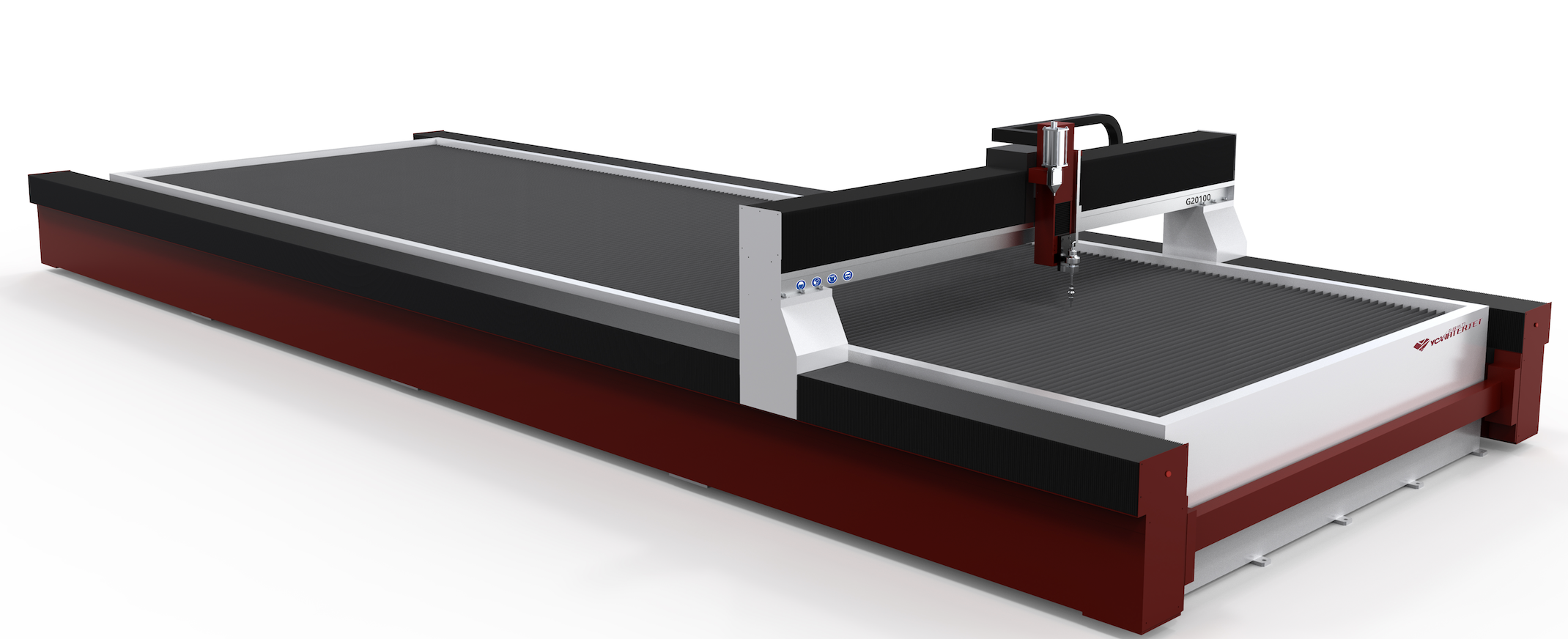
YC Waterjet delivers four primary machine series—S, L, G, and E—alongside a 6-axis robot waterjet cutter. Each series supports three axis configurations: 3-axis, 3D MAX 5-axis, and Dynamic 5-axis cutting heads. The G Series, for example, offers worktable sizes up to 3000×10000 mm with a dry-run speed of 0–15 m/min and maximum pressure of 4,137 bar (60,000 psi). All models achieve a cutting accuracy of ±0.1 mm and positioning accuracy of ±0.025 mm. The product can operate in single/double shift production, automated production line linkage, or optional 24/7 continuous operation, making it adaptable to both job-shop and mass-production environments.
Technical Differentiators: 5-Axis Capability and Smart Features
A key technical distinction in a cnc waterjet machine is the cutting head axis count. While a 3-axis machine cuts vertically (perpendicular to the table), a 5-axis waterjet cutter (both 3D MAX and Dynamic versions) tilts the cutting head up to ±60° to produce angled edges, bevels, and undercuts. The Dynamic 5-axis system additionally enables real-time taper compensation, essential for thick-plate work where the jet naturally flares. YC Waterjet integrates laser scanning height measurement to maintain a constant standoff distance, and an optional drilling function eliminates secondary operations. The high-pressure pump range (YCG series, up to 100 Hp / 75 kW) pairs with intensifiers from KMT (Germany) and Hypertherm (USA), ensuring reliability at full rated flow of 7.4 L/min.
Application Use Cases Across Four Industries
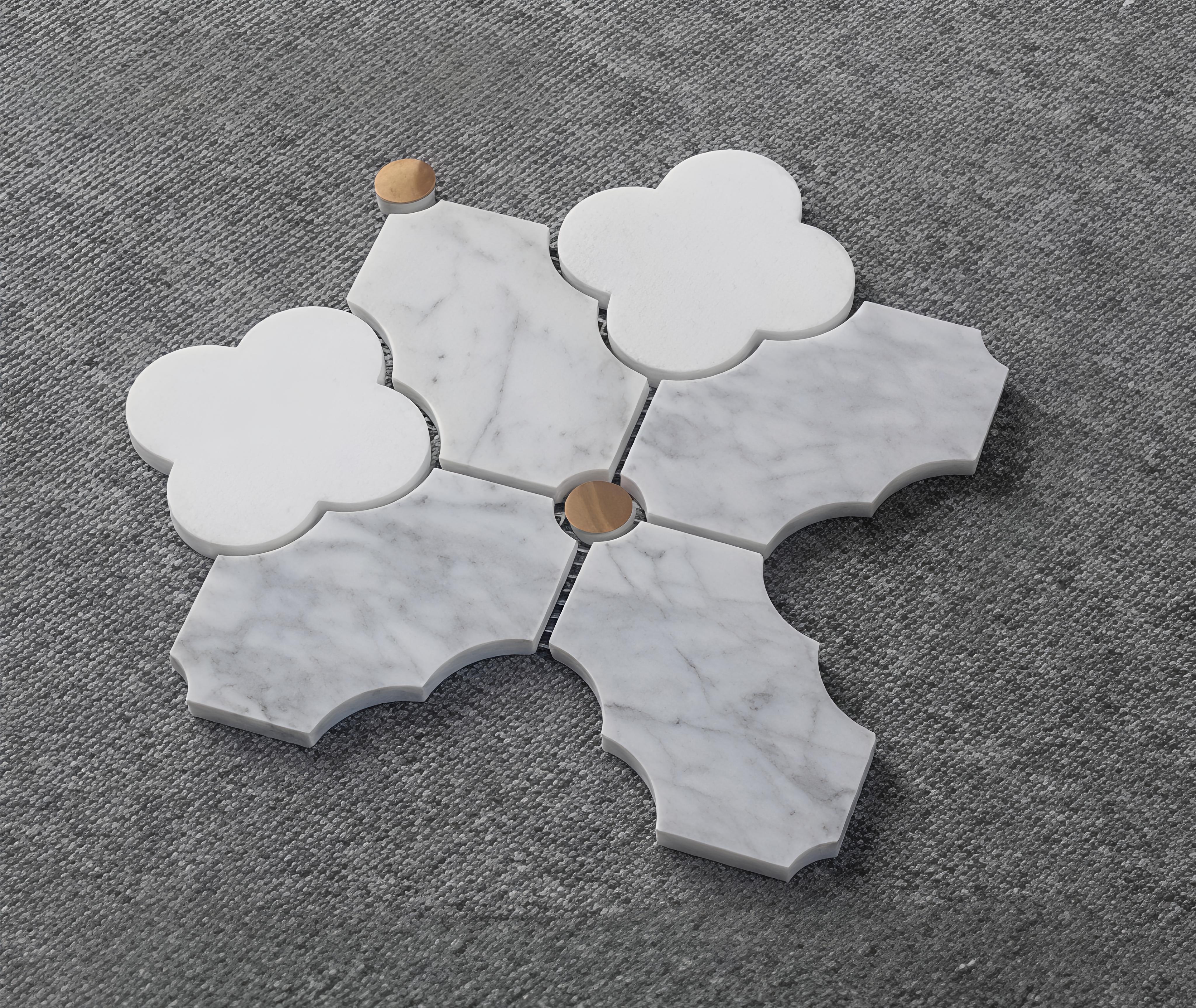
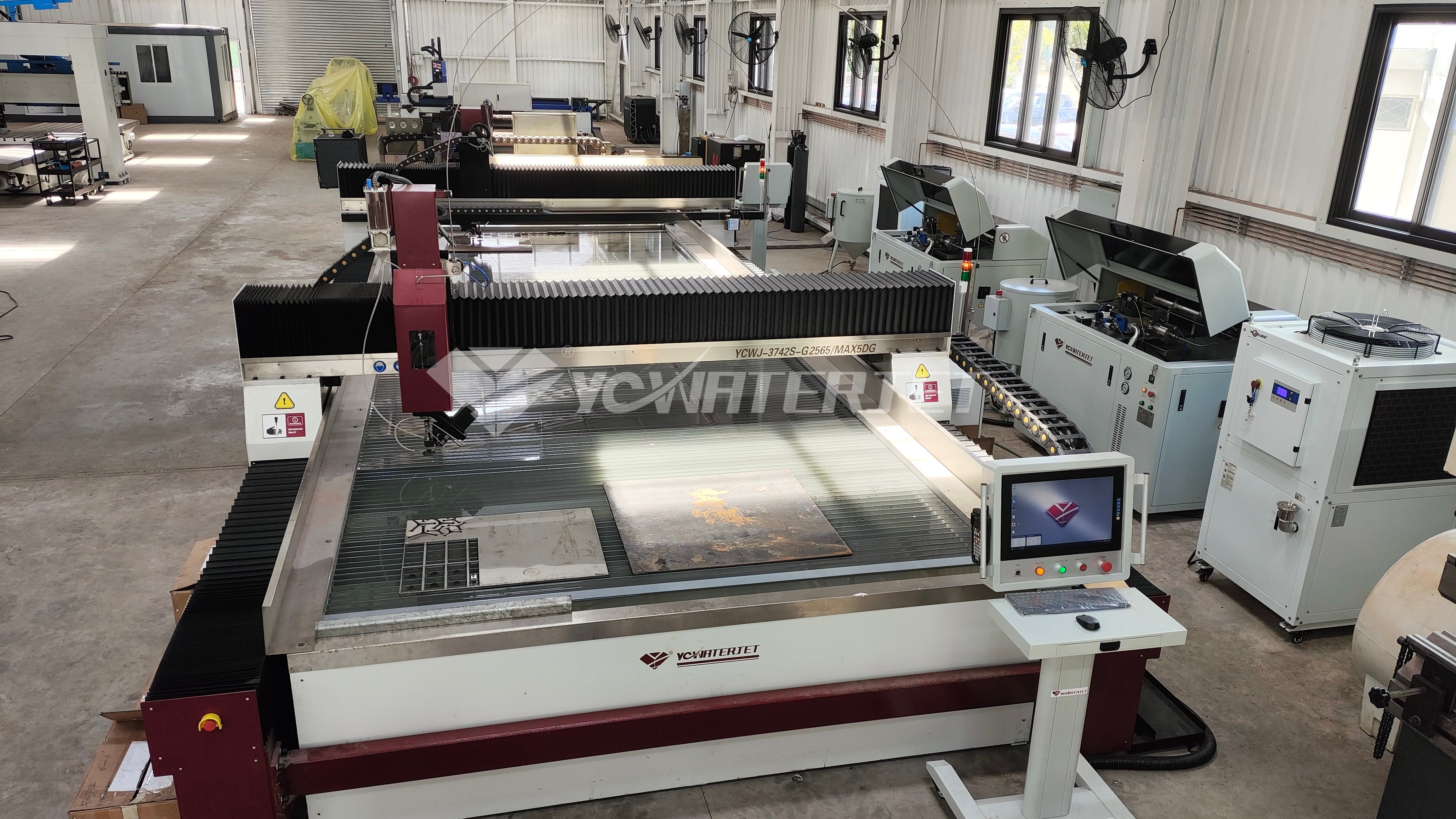
The versatility of a cnc water jet cutter is best demonstrated through real-world projects. In Mauritius, a yacht manufacturer uses a double-gantry G Series machine (model YCWJ-3742S-G2565MAX5DG) to cut aluminum plates and stainless steel components for marine-grade hulls. The cold cutting preserves the material’s mechanical properties, and the large work envelope handles full sheets in a single pass. In Germany, a home furniture producer operates an L Series machine (YCWJ-3742-L4022/MAX5) to cut marble countertops and kitchen basins with zero chipping, leveraging the 5 axis waterjet cutting head for edge profiling. An Austria-based crystal processor uses a multi-axis system for Swarovski crystal cutting, achieving high yield on intricate decorative parts without thermal stress. In Thailand, a precision parts manufacturer relies on a YC Waterjet robot waterjet cutter (6-axis) in an automated line to cut automotive interior components from composites and fiberglass, running 24/7 with minimal operator intervention. These cases confirm the machine’s compatibility with materials ranging from frozen meat (food grade) to carbon fiber, stone, glass, and thick alloy steel.
Market Trend Analysis: Toward Automation and Multi-Material Processing
According to verified data, abrasive waterjet technology represents 49.5% of the product segment share in 2026, while metal cutting alone makes up 54.2% of applications. These shares underscore two converging trends: first, the demand for high pressure waterjet cutter systems that can efficiently process thick metals without heat; second, the shift toward automated, multi-shift operation to reduce per-part cost. YC Waterjet’s optional features—auto sludge removal, hydraulic loading, remote monitoring, and robot integration—align with this move toward Industry 4.0. In regions like Southeast Asia and Eastern Europe, where labor costs are rising, buyers increasingly specify heavy duty CNC waterjet cutting machine configurations with pallet changers and automatic height measurement.
Comparison with Traditional Solutions and Honest Limitation
Compared to laser cutting, a CNC abrasive waterjet cutting equipment offers the advantage of cold cutting (no HAZ) and the ability to cut any electrically conductive material without melting. It also handles thicknesses beyond the range of most fiber lasers (50+ mm in steel). However, waterjet cutting speed is generally slower than laser on thin sheets (<5 mm metal), which can affect throughput in high-volume production. Buyers targeting thin-gauge mass production may still prefer laser. For most mixed-material, thick-plate, or heat-sensitive applications, the waterjet’s versatility outweighs the speed penalty.
Future Outlook: Intelligent Pressure Control and Wider Ecosystem
As manufacturers push for zero-defect production, features like intelligent pressure control and automatic pressure regulation (available on YC’s YCG pump range) will become standard. The integration of vision systems for edge detection and real-time kerf compensation will further narrow the gap between waterjet and laser in precision fine-cutting. YC Waterjet’s export reach to 140+ countries (as of 2026) and its partnership with leading pump makers position it as a stable supplier for global buyers seeking a 5 axis waterjet cutting machine that can adapt to evolving project scopes.
Frequently Asked Questions (Scenario Evaluation)
Q: What operating conditions and cutting modes does a CNC waterjet cutting machine support?
A: YC Waterjet machines operate under normal temperature and pressure, enabling precision cutting without thermal deformation, processing of thick plates and irregular parts, and cutting in dust-free environments. They support single/double shift production, automated production line linkage, or optional 24/7 continuous operation.
Q: What materials can be cut with a CNC waterjet?
A: The system processes stainless steel, carbon steel, titanium alloys, aluminum, stone, ceramics, glass, composites (carbon fiber, fiberglass), rubber, foam, paper, fabric, and even frozen food. The abrasive waterjet stream cuts all electrically non-conductive and conductive materials without melting.
Q: What cutting accuracy and positioning tolerance can I expect?
A: All YC Waterjet series deliver a cutting accuracy of ±0.1 mm and positioning accuracy of ±0.025 mm, with dry-run speeds up to 15 m/min. Actual cutting speed depends on material type and thickness.
Q: How does a 5-axis waterjet differ from a 3-axis in real-world use?
A: A 5-axis waterjet cutter (MAX or Dynamic) tilts the cutting head to produce angled edges, bevels, and 3D contours, and compensates for jet taper on thick parts. This is critical for applications like aerospace turbine blade blanks, automotive trim with chamfered holes, and stone countertop edges.
Q: What after-sales support and warranty are provided?
A: YC Waterjet offers a one-year warranty covering non-consumable parts, with free replacement for non-manual defects. Remote guidance via manuals and video is included; on-site engineer assistance is available with travel costs borne by the client. Each unit undergoes pre-delivery testing.
Q: Can the machine be customized for a specific project?
A: Yes, customization options include logo, cutting head type, cutting area dimensions, speed, voltage, cutting thickness, and height measurement. OEM/ODM production is supported with a minimum order quantity of 1 set and typical lead time of 30–45 days.
Tem questões ou precisa de mais detalhes?
Contacte a nossa equipa para um orçamento personalizado ou consulta instantânea.
Solicitar orçamento
Preencha o formulário abaixo e a nossa equipa entrará em contacto com uma proposta personalizada.
Chat direto do WhatsApp
Prefere conversar em tempo real? Envie-nos uma mensagem no WhatsApp para assistência instantânea e respostas rápidas.
- Obter orçamento personalizado
- Partilhar fotos ou documentos
- Discuta as suas necessidades diretamente
Geralmente responde em 5–30 minutos durante o horário de expediente.