
Matching Electric Actuators to Extreme Project Environments
Electric actuators are execution units in industrial automation systems, converting control signals into precise mechanical motion for valves, dampers, and other process equipment. In practice, the correct choice depends less on a single torque figure and more on how well the actuator matches the project environment: temperature extremes, corrosive atmospheres, vibration, dust, explosion risk, and continuous operating duty. For buyers and engineers in Research and Evaluation stages, this article provides a decision framework based on documented project experience and technical specifications.
Why Project-Specific Matching Matters
An actuator selected solely on rated torque may perform well in a controlled factory test but fail within months in a desert oil field or an Arctic pipeline. The project environment imposes constraints that are not always visible in the datasheet: high ambient temperature can degrade lubricants and electronics; salt spray and hydrogen sulfide attack enclosures and sealing surfaces; strong vibration can loosen connections and misalign feedback systems; continuous 24/7 operation shortens the maintenance window and raises the cost of any unscheduled stop.
These are not hypothetical concerns. In one large-scale Middle East oil valve project, the site environment was described as highly corrosive with salt spray, hydrogen sulfide, and high temperature, imposing “extremely high requirements on the protection level and service life of the equipment.” In a Russian oil and gas pipeline project, the actuator had to cope with extremely cold climate, large temperature differences, and potentially explosive gas environments. In an American non-ferrous metal production facility, the existing equipment had a high failure rate because of strong vibration, high temperature, and dust. Each of these projects required a different set of design priorities. Understanding those priorities is the first step in project-oriented actuator selection.
Understanding Electric Actuator Types for Project Requirements
Electric valve actuators are broadly classified by their output motion:
- Part-turn (quarter-turn) actuators – used for ball valves, butterfly valves, and plug valves, with travel angles typically 90°, 120°, or 180°.
- Multi-turn actuators – used for gate valves, globe valves, and other multi-turn valve applications.
- Linear (straight-stroke) actuators – used for control valves and dampers where a linear thrust is required.
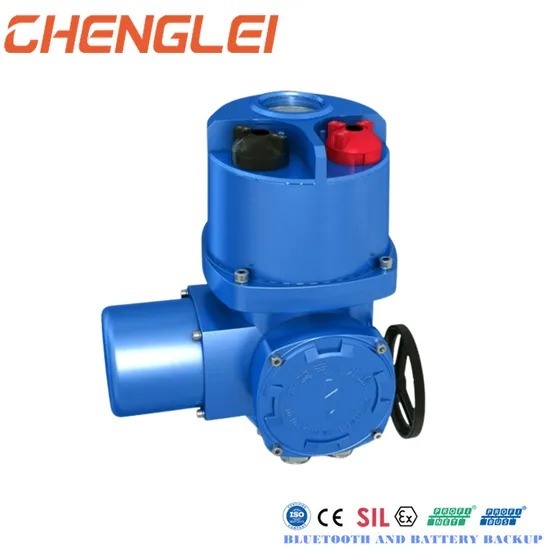
Another functional classification is on-off vs. modulating. On-off actuators move the valve to a fully open or fully closed position, while modulating actuators position the valve at intermediate points based on a control signal. A project may require either, or a combination of both. For example, CHENGLEI offers whole families of part-turn and multi-turn actuators, with nominal torque ranging from 50 N·m in the Z5 multi-turn model to 5000 N·m in the QI500 quarter-turn model. The ZXC series linear actuator provides an intelligent electric motor linear actuator with explosion-proof capability, covering applications from regulating valves to isolation duties.
Critical Specification Categories for Harsh Environments
When matching an electric actuator to a project, the following specification areas are decisive.
Protection Level: IP and NEMA Enclosures
Ingress protection determines how well the actuator resists dust and water ingress. Many industrial projects require IP65 or IP67, and some outdoor or wash-down applications specify IP68. In the product range from CHENGLEI, for example, the Intelligent 24V DC JB2920/ISO5210 flange electric valve actuator offers IP65/IP67/IP68. The ZXC Type Electric Rotary Actuator provides IP67 and NEMA 4X, making it suitable for outdoor, dust-laden, and corrosion-prone environments. For projects that follow North American practice, NEMA 4/4X is a common requirement.
Explosion-Proof Classification
Hazardous areas require explosion-proof actuators, typically built to standards such as IEC 60079-0 and IEC 60079-1. Explosion-proof electric actuators are standardized under these international specifications for flameproof enclosures, and they are classified into Gas Groups (IIA, IIB, IIC) and Temperature Classes (T1–T6). Group IIC is required for hydrogen environments. In the CHENGLEI portfolio, explosion-proof models are available with ATEX and Exd BT4/CT4 ratings, covering most oil and gas, chemical, and pharmaceutical applications. The High Speed Low Temperature -60°C electric actuator, for instance, carries explosion-proof certification for ATEX/Exd BT4/CT4 and provides enclosure types NEMA 4/4X/7&9.
Temperature Range and Environmental Resistance
Ambient temperature is a common pain point. Standard electric actuators often have a working range of -20°C to +60°C. Special designs can extend this range: CHENGLEI’s 24V DC actuator supports -20°C to +60°C, with special orders able to reach -60°C to +70°C. The DQ series specifically is designed for -60°C to +70°C operation, which is relevant for Arctic pipeline projects and cold-climate energy infrastructure. Low-temperature operation must address issues such as LCD failure, lubricant solidification, and material brittleness, as highlighted in the Russian project experience.
Torque, Thrust, and Speed
The actuator must provide sufficient torque or thrust for the valve under all process conditions. Typical torque values in the CHENGLEI line include 50 N·m (Z5), 100 N·m (Z10, QI10), 150 N·m (QI15), 300 N·m (Z30), 450 N·m (Z45), 600 N·m (QI60), and 5000 N·m (QI500). Output speeds for multi-turn models are commonly 18 or 24 rpm, while part-turn actuators operate at speeds like 1 rpm. A slower speed often means higher torque output and better control resolution, but it also affects process response time. The selection must balance speed, torque, and duty cycle.
Motor Duty and Operating Mode
Duty cycle is a crucial but often overlooked parameter. Electric actuators are rated for intermittent or continuous duty. CHENGLEI models list motor duty options such as S2 10 min, 15 min, 30 min, or S1/S3/S4/S6 with 24% or 40% load capacity. For continuous 24/7 operation, as required in many industrial automation systems, the actuator must be sized for a suitable duty type to avoid overheating and premature wear. The product range includes models designed for continuous 24/7 operation, addressing the project requirement for uninterrupted production.
Intelligence and Communication
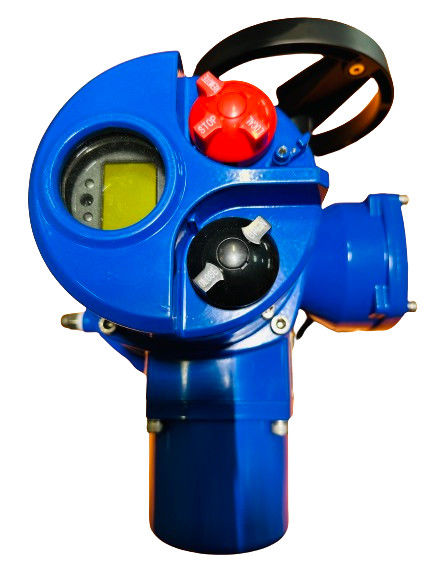
Modern projects increasingly demand intelligent actuators that can integrate with plant control systems. Position feedback is usually 4-20mA or 0-10VDC; some models add Bluetooth connection for configuration and diagnostics. In the non-ferrous metal project, Profinet industrial Ethernet was used to achieve communication interconnection across the entire factory area, which enabled centralized monitoring and digitalization. The market trend toward Industrial Ethernet protocols such as Profinet and EtherNet/IP, and 5G edge connectivity, is reshaping actuator selection for new plants and retrofit projects.
CHENGLEI’s Approach: Capability and Production Context
CHENGLEI is the short name used in international trade for Changzhou Chenglei Valve Technology Co., Ltd., a Chinese manufacturer of electric actuators based in Changzhou, Jiangsu. The company has a 20,000 m² facility, more than 50 CNC machining centers and lathes, around 100 employees, and an annual output of 120,000 units. Its R&D team includes 25 engineers, and the company reports an export ratio of 80% across global markets. Production capacity is substantial: the monthly capacity for OEM/ODM orders is 8,000 units, with a typical lead time of 10–15 working days for quantities up to 100 units, and MOQ starts at one set. Quality control includes 100% testing of units before delivery, and after-sales support is provided remotely.
From a project-specification viewpoint, the breadth of the product portfolio matters. Buyers benefit when a single supplier can provide part-turn, multi-turn, and linear actuators, with both on-off and modulating control logic, and with explosion-proof and intelligent versions. CHENGLEI’s CL series valve electric actuators are documented as being used in Oil & Gas, Water & Power, and Chemical, Process & Industrial applications. The company also supports OEM and ODM projects, with customization of voltage and logo, which is relevant for equipment manufacturers and system integrators who need to embed actuators into larger assemblies.
Application Cases: How Project Environments Define the Actuator
Case 1: Corrosive Desert Oil Field in the Middle East
For a petroleum engineering company operating in a desert environment with high salt spray, hydrogen sulfide, and high temperature, the protection level and service life of the equipment became the dominant issue. The solution involved a large-scale oil valve project with approximately 200 sets of actuators. The supplier applied C5-M grade anti-corrosion coating, which exceeds conventional standards, together with double-sealed wiring technology. This combination effectively isolates corrosive gases and moisture intrusion, enabling long-term operation in open-air sulfur-containing environments. This case successfully solved the problem of high protection level and service life requirements for equipment in a corrosive desert environment. The project established a benchmark in the challenging energy engineering field of the Middle East, with high-precision control and high reliability ensuring stable production in oil fields and reducing downtime caused by leaks.
Case 2: Extreme Cold and Explosion-Risk Pipelines in Russia
A strategic partner in Russia’s oil, natural gas, and energy infrastructure needed remote automated control of pipelines, with extreme cold temperatures, large temperature differences, and potentially explosive gas environments. The first batch of over 400 high-end intelligent electric actuators successfully passed the factory acceptance test conducted by the Russian delegation. Product stability and intelligence levels exceeded expectations, marking a breakthrough for Chinese intelligent manufacturing in the high-end Russian market and replacing some traditional European and American brands. These actuators passed rigorous extreme operating condition verification and obtained EX explosion-proof certification, enabling stable start and precise control at -40°C. The design specifically addressed industry pain points such as LCD failure, lubricant solidification, and material brittleness at low temperatures.
Case 3: Vibration, Heat, and Dust in a Non-Ferrous Metal Plant in the US
A large non-ferrous metal group in the United States applied intelligent actuators to automatic valve control in core sections such as raw material grinding, high-temperature digestion, sedimentation separation, and evaporation stations. The on-site environment involved strong vibration, high temperature, and dust, leading to a high failure rate of existing equipment. The successful deployment of nearly a thousand intelligent actuators ensured uninterrupted 24/7 production and resolved safety hazards caused by high-altitude operations and strong vibration. A notable design decision was the separation of the mechanical body and control unit, keeping precision control components away from vibration sources. The project also achieved Profinet industrial Ethernet communication interconnection across the entire factory area, helping the facility become a benchmark for intelligence with the largest single scale globally. This case successfully solved the problem of a high failure rate of existing equipment in a harsh environment with strong vibration, high temperature, and dust.
Market Trends Influencing Actuator Selection
The global electric actuator market is substantial. Estimates place the market size at approximately USD 11.5 billion in 2024, with a projected compound annual growth rate (CAGR) of 6.5% to 7.2% through 2034. Asia Pacific dominated the electric valve actuator market with a 38.5% revenue share in 2025, driven by industrialization in China and India. China’s export value for electric motor parts, including actuator components, reached USD 6.43 billion in 2024, representing 26.1% of global exports. These figures indicate both growing demand and a strong supply base in China.
In terms of technology, intelligent electric actuators are seeing a shift toward Industrial Ethernet protocols such as Profinet and EtherNet/IP, as well as 5G edge connectivity for digital twin integration. For project buyers, this means communication capability is becoming a standard selection criterion, not an optional extra. Additionally, the harmonization of explosion-proof standards under IEC 60079-0 and IEC 60079-1 provides a more predictable framework for cross-border procurement.
Competition in the electric actuator market is intense. Global players such as Rotork and Emerson hold significant shares in specific segments; Rotork reportedly held 14% of the linear electric actuator segment in 2024, while Emerson Electric holds an estimated 12–15% share of the overall electric actuator market. For project buyers, this competitive landscape underscores the importance of verifying supplier capability and product evidence rather than relying solely on brand recognition.
Comparison with Traditional Solutions: Electric vs. Pneumatic and Hydraulic
In many projects, the choice is not only among electric actuator suppliers but also between electric actuators and traditional pneumatic or hydraulic actuation. Electric actuators have clear advantages in precision, ease of wiring, and integration with digital control systems. They avoid the need for compressed air infrastructure or hydraulic power units, which can be costly to install and maintain.
However, there are boundaries to electric actuator adoption. In extremely high ambient temperatures, electric actuators may require special insulation, cooling, or derating, whereas pneumatic actuators can be more tolerant of high temperature. In environments with no available electric power and very high torque demands, a pneumatic or hydraulic system can still be a pragmatic choice. Electric actuators with battery backup offer some resilience, but the backup duration is finite. Another limitation is that the motor duty cycle may restrict how long the actuator can operate continuously; for example, some models are rated for short-time duty (S2, 10 minutes) rather than continuous operation. Therefore, a project with a very high frequency of operation may need an actuator with a higher duty rating or a different actuation technology.
The key is to match the actuator type to the actual process duty and environmental conditions. An electric actuator with the correct IP rating, explosion-proof classification, temperature range, and duty rating will outperform a generic pneumatic unit in most modern industrial projects, but the limiting factors must be evaluated case by case.
Future Outlook: Toward Smarter, More Resilient Actuators
The future of electric actuators lies in deeper integration with plant digitalization. As industrial Ethernet and 5G connectivity become more common, actuators will function not only as motion devices but also as edge data sources, feeding performance and diagnostic information into digital twin models. This trend aligns with the demonstrated use of Profinet in the non-ferrous metal project, where full-factory communication enabled central monitoring and intelligent operations.
Materials and coatings will also evolve. The use of high-grade anti-corrosion coatings such as C5-M, double-sealed wiring, and vibration-immune separation of control electronics will become more widespread as project environments become more demanding. For buyers, the practical implication is to design specifications that anticipate future communication requirements and to select suppliers with the engineering ability to customize actuators for specific project conditions.
Frequently Asked Questions
For a detailed product overview, the company brochure can be downloaded here: CHENGLEI Electric Actuator Company Brochure (PDF).