
Matching High-Performance Fasteners to Project Environments
One supplier that has built its production system around this logic is UHC fastener and hardware, the product brand of Jiaxing Union Hardware Co., Ltd, a China-based manufacturer of stainless steel and special-alloy fasteners established in 2017. The company operates five factories with a combined area of 80,000 m², an annual stainless and special-material output of 25,000 tons, and a team of about 200 employees including 25 engineers. Its fasteners serve industries such as petrochemical, power generation, aerospace, automotive, marine and offshore, rail transit, and industrial machinery.
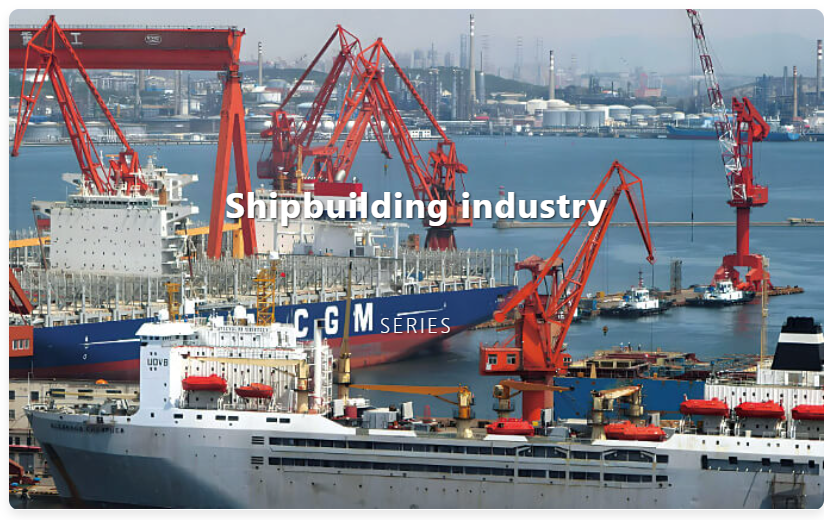
Project environments determine which fastener grade will survive
The global industrial fasteners market was valued at roughly USD 103.9 billion in 2025 and is projected to reach USD 153.7 billion by 2033, according to Grand View Research. Behind that scale is a less visible reality: fasteners are specified not merely by size and thread, but by their ability to resist corrosion, heat, vibration, fatigue, and sustained tensile loads over the life of an asset.
The risk of wrong material selection is well understood. When ordinary carbon steel or standard 304 stainless steel is used in salt spray, marine, strongly corrosive, or high-temperature environments, fasteners can suffer corrosion, rust, fracture, and premature failure. In safety-critical structures, a single failed bolt can stop production, delay commissioning, or damage a much larger system. That is why project engineers evaluate fasteners using the same discipline they apply to pumps, valves, and structural components.
From a procurement perspective, the practical question is not which fastener is the best on the market. It is: which material and mechanical specification matches the temperature, medium, humidity, and load profile of this specific project?
Reading the working conditions before choosing a material
Fastener suppliers with experience across multiple industries typically categorise project working conditions into five groups:
- Normal temperature, dry or indoor environments — mainly require standard corrosion resistance and reliable mechanical fastening.
- High-temperature process areas — require materials that resist oxidation and loss of mechanical strength at sustained elevated temperatures.
- Seawater, coastal, and marine environments — require pitting-resistant and crevice-corrosion-resistant materials such as 316L, duplex stainless steel, or higher alloys.
- Acid, alkali, and chemically aggressive environments — push material selection towards nickel-based alloys or special stainless grades depending on media concentration and temperature.
- High vibration and high tensile load applications — require high tensile strength, anti-fatigue properties, and sometimes locking or anti-loosening designs.
The same product family can therefore be supplied in very different material groups. In UHC's product range, for example, bolts are available from M2 to M160 with effective lengths from 6 mm to 300 mm, and can be produced in 304/316 stainless steel, duplex steel, or nickel-based high-temperature alloys. Threaded rods and studs extend the size range even further, from M5 to M160 with effective lengths up to 5,000 mm. This width matters for projects because a single qualified supplier can cover both small precision fasteners and large structural studs.
| Working condition | Common material guidance | Typical project sectors |
|---|---|---|
| General indoor environment | 304 / 316 stainless steel | Home appliances, light industrial machinery, general construction |
| Marine salt-spray or offshore | 316L, duplex stainless steel, or higher corrosion-resistant alloys | Marine equipment, shipbuilding, coastal infrastructure, offshore platforms |
| High-corrosion chemical process | Duplex steel, 904L-type alloys, nickel-based high-temperature alloys | Petrochemical plants, processing facilities, power generation |
| High-temperature / high-strength load | Nickel-based or special alloys; verify tensile and anti-fatigue performance | Aerospace, power generation, rail transit, heavy machinery |
| High tensile structural and anti-fatigue | Stronger stainless grades or alloy steels; confirm mechanical grades such as A2-70, A4-80, D6-100 | Construction, infrastructure, automotive chassis, rail bogies |
When commissioning a supplier, buyers should provide detailed working-condition parameters such as temperature, medium, humidity, and load. This is not only a technical courtesy; it is the basis for correct material selection and for avoiding premature failure later in the project life cycle.
Turning project requirements into a verifiable fastener specification
Once the environment is understood, the buyer can translate it into specification fields: material grade, mechanical strength class, thread tolerance, executed standard, and surface treatment. This is where generic catalogue sourcing often breaks down. A bolt ordered only by dimension may arrive with the right size but the wrong strength class or an unsuitable coating.
UHC fastener and hardware uses a specification system aligned with international standards including ISO, DIN, ASTM, ASME, ANSI, and JIS. For example, bolts and nuts can be supplied with mechanical strength grades such as A2-70, A2-80, A4-70, A4-80, D6-80, and D6-100, with thread tolerance classes of 6g/2A for external threads and 6H/2B/3B for internal threads. Surface treatments include natural finish, passivation, Dacromet coating, and adhesive pre-coating, allowing the fastener to be matched to both corrosion and installation requirements.
For project buyers, this translatable specification system has a direct benefit: it creates a common language between the engineering team and the production facility. The buyer can state that the application requires A4-80 marine-grade nuts in compliance with DIN or ISO standards, and the manufacturer can respond with dimensional and mechanical verification rather than vague assurances.
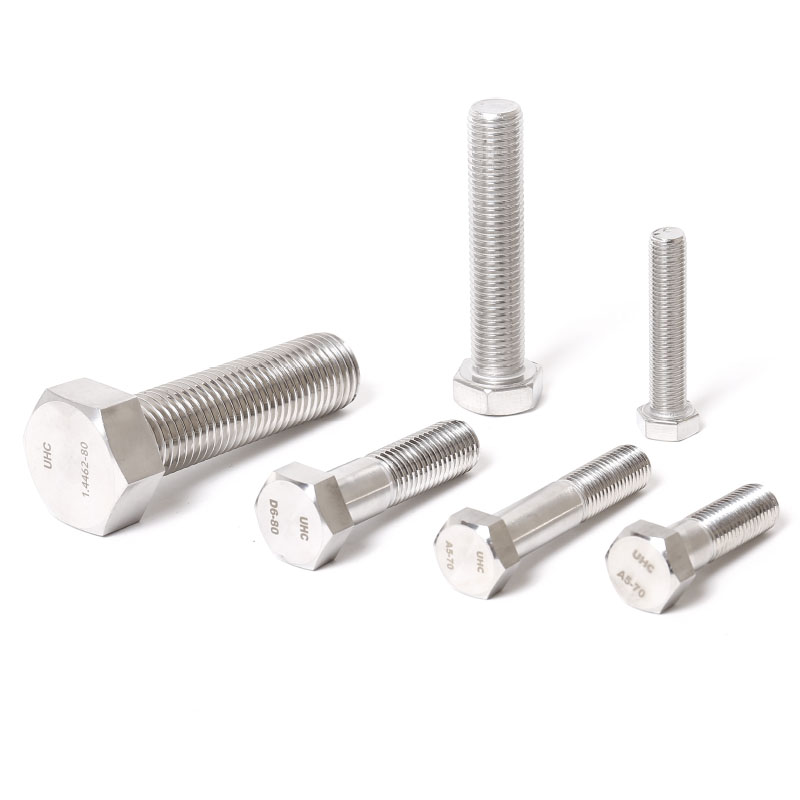
Technical verification: what a project team should ask for
The credibility of a high-performance fastener supplier depends less on what the brochure promises and more on what can be verified. In UHC's case, the company operates an independent laboratory capable of performing dimensional and mechanical performance tests. This matters because a fastener's mechanical properties cannot be judged visually; they must be measured after production.
UHC also maintains certified management systems under ISO 9001, ISO 14001, and ISO 45001, and holds European Union Pressure Equipment Directive (PED) certification, which is directly relevant to fasteners used in pressure-containing equipment. In addition, the company's ERP system supports traceability from raw material procurement through production and delivery. For buyers, traceability reduces the risk of undocumented material substitution and supports batch quality tracing after delivery.
For large or safety-related orders, UHC's quality control process follows a documented sequence: First Article Inspection, In-Process Inspection, and Pre-Shipment Inspection. Customers can also request 3.1 material test certificates, which provide documented assurance that the delivered material conforms to the specified grade. This level of verification is particularly important in sectors such as petrochemical, power generation, aerospace, and rail, where fasteners are treated as engineered components rather than commodity hardware.
How the manufacturing capability supports project delivery
Project-oriented fastener supply is also a capacity question. When an OEM is integrating fasteners into a new product line, or an engineering contractor is procuring for a plant expansion, the supplier must be able to commit to volume, lead time, and consistent quality. UHC's monthly capacity is approximately 500 to 1,000 tons, with a standard lead time of 75 to 90 days and a minimum order quantity of 150 kg. The company also supports OEM/ODM production, including head marking and logo customisation.
For an engineering team, these numbers indicate whether the supplier can participate in serial production planning, not just one-off purchases. A supplier with a documented quality chain — from first article inspection to batch-level ERP traceability — offers more predictable project outcomes than a trader without in-house production and testing.
Use cases across demanding industrial environments
The same fastener product family performs a consistent functional role across industries: achieving mechanical connection, fastening, locking, anti-loosening, and fixed assembly between various mechanical components. The difference lies in the operating conditions and the standards imposed by each sector.
Petrochemical and power generation
Petrochemical environments often combine acid and alkali media with high temperatures and continuous mechanical loads. Fasteners used in these settings must resist both chemical attack and loss of mechanical strength. Similar requirements appear in power generation, where components may operate under sustained high tensile load and elevated temperatures. In these sectors, material choice can shift from standard 304/316 stainless steel to duplex steel or nickel-based alloys depending on the specific process media.
Marine and offshore
Seawater is an aggressive electrolyte, and fasteners in marine applications are expected to survive years of exposure without pitting or crevice corrosion. For such conditions, 316L stainless steel or duplex grades are commonly recommended. UHC supplies fasteners to marine and offshore applications from its range of bolts, nuts, studs, washers, and rivets, with material options that include duplex and higher-alloy grades.
Aerospace and high-reliability transport
Aerospace and rail transit applications demand high tensile strength, anti-fatigue behaviour, and strict compliance with international standards. In aerospace parts and rail systems, fasteners must hold under vibration and varying loads while remaining traceable. Internationally, aerospace fasteners are often expected to meet AS9100 quality system requirements; rail applications are frequently referenced against EN 14399 for high-strength structural bolting assemblies. Buyers in these industries should verify that their supplier is working to recognised international standards such as ISO, DIN, JIS, ASME, or ASTM.
Automotive and industrial machinery
Automotive chassis and industrial machinery put fasteners under constant vibration and dynamic load. Anti-loosening performance, fatigue resistance, and corrosion resistance are all design inputs. In these applications, the choice of fastener affects later maintenance frequency and the total cost of ownership. UHC's case references describe fastener supply for fastening assembly in aerospace parts, marine equipment, automotive chassis, and power generation facilities, with a documented track record of more than 10 years.
Comparison with traditional commodity fastener sourcing
Traditional fastener procurement is often catalogue-driven: a buyer orders a standard bolt or nut from a distributor, relying on the assumption that standard grades are sufficient for most jobs. For many low-risk, indoor, or lightly loaded applications, this approach is perfectly adequate and economically efficient. However, it becomes fragile when the working environment moves beyond ordinary conditions. Without material verification, traceability, and a documented quality chain, a project team may not learn about a fastener problem until corrosion or failure appears in the field.
Project-matched supply differs in a few practical ways:
- Specification completeness: material, strength class, thread tolerance, standard, and surface treatment are confirmed before production.
- Documentation: inspection records, certification, and batch traceability are available as part of supply.
- Alloy availability: one manufacturer can provide more than standard 304/316 stainless steel, including duplex and nickel-based alloys for demanding environments.
- Failure risk: because working conditions are considered up front, the risk of early corrosion or fracture is lower.
It is equally important to state the limitation of tailored sourcing: it is not the cheapest path for every fastener requirement. Commodity fasteners still make sense for bulk, low-risk, or non-critical uses. Buyers should reserve engineering-matched, documented, high-performance fasteners for applications where failure creates meaningful safety, operational, or financial consequences.
Market direction: why project-based fastener selection is becoming the default
Several longer-term trends are pushing buyers towards more rigorous fastener selection. Infrastructure and energy projects are increasingly expected to operate for decades, making maintenance and replacement costs an important part of procurement evaluation. In the wind power segment, for instance, the global wind power fastener market was projected to reach USD 14.68 billion in 2025, according to The Insight Partners. Global wind capacity is also forecast to grow from about 1,100 GW in 2025 to over 2,400 GW by 2030, according to GWEC; each turbine installation multiplies the number of structural bolted connections that must remain reliable.
Asia Pacific already accounts for a substantial share of industrial fastener demand — roughly 45.1% in 2025, according to Grand View Research — and end users in European and Asian markets are tightening requirements for traceability and certification. At the same time, high-performance alloy fasteners are gaining attention in aerospace: the global aerospace superalloy fasteners market was estimated at USD 776.7 million in 2024, and titanium aerospace fasteners are projected to grow to around USD 520 million by 2026 with a CAGR of 5.1%, according to Fortune Business Insights and Fact.MR. These figures underline a broader pattern: fasteners are increasingly treated as engineered components, not incidental hardware.
Practical checklist for buyers evaluating a high-performance fastener supplier
- Define the project's operating environment: temperature range, chemical media, humidity or salt exposure, vibration, and load conditions.
- Translate the environment into a preliminary material and strength recommendation, ideally with the support of the fastener supplier's engineers.
- Confirm the applicable manufacturing standard, such as ISO, DIN, JIS, ASTM, ASME, or ANSI, and the required mechanical property grade.
- Check whether the supplier performs in-house dimensional and mechanical testing before shipment.
- Require clear quality documentation, such as 3.1 material test certificates, first article inspection records, or batch traceability.
- Verify that the supplier can support the required volume and lead time, not only for the first order but for the full project schedule.
- Discuss surface treatment and anti-loosening requirements early, because they affect both installation and long-term performance.
Buyers who follow this process are more likely to receive fasteners that match the real demands of the asset. They also create a clear basis for comparing suppliers, because each supplier can be assessed on material capability, testing documentation, standards compliance, and delivery reliability rather than price alone.
Future outlook
Fastener procurement will continue to shift towards documented project-level qualification. Suppliers with in-house production, independent testing, a broad material range, and ERP-based traceability are better positioned to serve industries where asset downtime is expensive. Buyers can also expect closer collaboration between engineering teams and fastener manufacturers at the design phase, allowing material and specification decisions to be made before problems become embedded in the design.
For companies evaluating long-term supply relationships, a deeper review of UHC's factory capabilities and product range is available in the company's public product brochure. It can be downloaded at no cost for technical comparison:
Download UHC fastener and hardware product brochure
FAQ
UHC fastener and hardware supplies 304 and 316 stainless steel, 316L, duplex steel, alloy steel, aluminum alloy, and other high-performance alloy materials. The product range includes bolts, nuts, screws, threaded rods, studs, washers, rivets, and custom hardware. Each material group is matched to different working conditions, from general indoor use to marine salt-spray and high-temperature process environments.
316L or duplex steel is strongly suggested for marine and coastal salt-spray working conditions. These materials offer better resistance to pitting and crevice corrosion than standard 304 stainless steel. For more severe offshore or chemical process environments, higher-alloy stainless steels or nickel-based alloys may be recommended.
For a general indoor environment, 304/316 stainless steel is preferred. For high-corrosion, offshore, or marine environments, 316L, duplex steel, or high-temperature alloy materials are recommended. For high-strength mechanical load scenarios, alloy steel fasteners should be adopted. Suppliers such as UHC support customised material selection based on the project's working conditions, provided the buyer shares parameters such as temperature, medium, humidity, and load before ordering.
Tem questões ou precisa de mais detalhes?
Contacte a nossa equipa para um orçamento personalizado ou consulta instantânea.
Solicitar orçamento
Preencha o formulário abaixo e a nossa equipa entrará em contacto com uma proposta personalizada.
Chat direto do WhatsApp
Prefere conversar em tempo real? Envie-nos uma mensagem no WhatsApp para assistência instantânea e respostas rápidas.
- Obter orçamento personalizado
- Partilhar fotos ou documentos
- Discuta as suas necessidades diretamente
Geralmente responde em 5–30 minutos durante o horário de expediente.